Mississippi
Jackson, MS, Wants Curfew Centers to Cut Crime. Here’s What Others Did.


After a 17-year-old was charged with the fatal shooting of 14-year-old Eugene Kelly in Jackson, Mississippi’s first murder of 2024, one council member made a familiar demand: Impose a nighttime youth curfew to “stop these kids from becoming killers.”
Mayor Chokwe Antar Lumumba then offered an even stronger response: The city should create “youth engagement centers” to keep children off the streets after dark.
Curfews have been imposed and abandoned numerous times in Jackson over the decades. Lumumba invoked the last temporary curfew in 2021, following a surge in violence during the COVID-19 pandemic. The planned youth centers, he said, will get “to the root cause of why that young person may be on the street,” instead of “detaining them and becoming part of the problem.”
Other U.S. cities have enacted curfews and set up youth centers, with mixed results. National studies have shown that curfews usually don’t stop violent crime. The Marshall Project – Jackson examined the practices of youth centers in Baltimore and Philadelphia. A summary of the findings is below.
In Jackson, city officials believe the engagement centers would become a safe space to keep kids away from potentially dangerous situations. The children would have to agree to be taken to the centers or go home; police cannot force kids on the street to attend after the curfew.
The city’s curfew ordinance, which passed the city council unanimously in January, said youth cannot be out past 10 p.m. on weekdays and midnight on weekends. The ordinance expires in January 2025. However, Hinds County Youth Court Judge Carlyn Hicks deemed it unenforceable, as youth cannot be arrested for violating the curfew because adults cannot be charged under the same law. Youth between the ages of 10 and 19 make up 14%, or around 20,000, of the city’s 146,000 residents, according to the U.S. census.
Fighting youth crime is a political cry often used by elected officials, law enforcement and city leaders across the nation. Councilman Kenneth Stokes, who pleaded to stop kids from becoming killers at a January council meeting, has been demanding curfews since as early as 1991.
Jackson’s budding plan for centers, however, faces a challenge in winning the trust of young people, who are already skeptical of police and feel that they are villainized in conversations that don’t include them, youth advocates say.
Gus Daniels-Washington said young people often face outsized blame for crime while not enough is done to fix what pushes youth to violence. Daniels-Washington is the founder of JXNOLOGY, a nonprofit, youth-led arts and advocacy community in the city.
“It really just takes the responsibility off of our community leaders, because who is teaching these young people?” Daniels-Washington said of a curfew. “It’s not like there’s a class in murder.”
In their first public meeting of the summer on June 27, the city police’s precinct captains presented crime statistics that showed more theft and more 911 calls than from the previous week. Police Chief Joseph Wade attributed the rise in crime to youths.
“We know what the issues are,” Wade said. Kids are out of school, “and some of them are finding something productive to do, like stealing your stuff.”
Violent crime committed by and against young people has been a long-term concern in the city. Less than a month into the summer, 18-year-old Daivion Myles was killed in a drive-by shooting. Four teenagers, including a 13-year-old girl, were charged with his murder.
However, according to police records obtained by The Marshall Project – Jackson from the first half of the year, the majority of people arrested for violent crimes were adults. Though the city shares poignant examples of youth violence, it provides no evidence to the public that youth violence is actually on the rise. The police department does not report data to the FBI system that tracks crime data nationwide. Nationally, youth only accounted for 7% of arrests for violent crimes in 2020, according to the Bureau of Justice Statistics.
According to Judge Hicks, about 20% of the youth court docket in 2023 involved “juvenile delinquency,” or youth crimes. The remaining almost 80% of cases involved child welfare, including abuse or neglect. At a juvenile justice forum held on April 27, Hicks said that while news stories portray rampant crime among young people that captures the public’s attention, “the true underbelly of concern in Hinds County,” is that many of the children are vulnerable to abuse and neglect.
Darius Nelson, a 26-year-old organizer with the youth group JXNOLOGY, and several other young adults interviewed said they felt isolated, unheard and overpoliced. Nelson uses they/them pronouns. Young people in Jackson are tired of being “the big, bad, boogeyman,” they said. “That’s followed me all my life.”
Keisha Coleman, director of the city’s Office of Violence Prevention and Trauma Recovery, said she is designing the youth engagement centers with multiple factors in mind. Children living in the city are dealing with trauma, poverty and a criminal justice system that has been historically unfair, she said. Many are growing up in neighborhoods that haven’t seen new investments of resources in decades. Although the centers were supposed to be open from Memorial Day to Labor Day, the plans were pulled from the city council’s agenda ahead of its July 2 meeting. No budget has been presented, and the city has given no reason for the delay.
JXNOLOGY gathered teenagers and young adults ahead of a May council meeting to speak on their concerns about what they called “curfew centers” and hoisted signs for the council members and the public to see. One read, “Y’all couldn’t come up with something that actually works?” Another asked if they would curfew adults.
The Marshall Project – Jackson looked at what worked and what didn’t for similar youth programs in other U.S. cities. Leaders in Baltimore and Philadelphia offered the following suggestions as Jackson plans for its youth centers:
1. Curfews and curfew centers are not standalone solutions for youth violence.
Across the country, curfew ordinances have come and gone with crime waves throughout history. It’s an often repeated cycle. When a handful of violent crimes or a single high-profile crime catches the city’s attention, leaders often impose curfews.
However, academic research shows that curfews do not impact crime rates. Coleman said that violence among youth between the ages of 12 and 24 in Jackson happens mostly between 3 p.m. and 8 p.m., before nighttime curfews usually start, which aligns with national findings from the Office of Juvenile Justice and Delinquency Prevention.
Still, generations of Jacksonians have lived under curfew ordinances. Jackson Police Captain Christian Vance remembers growing up with a curfew in Jackson. While he said the curfew did not affect him, “as a kid who lived within boundaries,” he believes that limiting the hours a youth can be outside is useful. It’s not a magic elixir, he said, but a curfew does give police the opportunity to find kids who need help. Vance runs the department’s youth programs, including the summer Youth Citizens Academy and Police Athletic League.


While curfew centers add another layer to the strategy, they are also not enough.
In Baltimore, for example, no young people went to that city’s engagement centers during the first three weeks of this summer’s curfew. Last year, the city had “less than a handful” of young people come in, according to Shantay Jackson, former director of the Mayor’s Office of Neighborhood Safety and Engagement, who developed the centers.
Low attendance is common across cities with similar programs. Instead of going to the centers, teens may opt to go home or, in Baltimore, attend other city-sponsored events. Jackson said she views the summer strategy as a success despite low attendance at the centers. Baltimore’s officials touted an 83% decrease in youth homicides from Memorial Day to Labor Day in 2023, though there is no firm evidence that the curfew efforts caused the drop. Murders decreased significantly across the nation in 2023, according to FBI data.
Similarly, of the more than 1,000 youth who attended a Philadelphia community evening resource center from the start of the curfew in July 2022 to November 2023, about nine out of 10 children were walk-ins who participated in the centers’ programs, which included driver’s ed classes, boxing, music production and culinary classes.
The key to success, leaders in both cities said, was assessing each child’s needs and offering them something interesting to do. Children are not inherently violent. Angelic Bradley, who runs one of Philadelphia’s six centers, said kids often violate curfew out of boredom. In other cases, they may be trying to escape abuse or other unsafe situations at home.
2. Police shouldn’t be heavily involved.
Although Jackson police officer Vance and others said they want to help children stay safe, young people interviewed said they fear more police encounters could open doors for harassment, violence and over-policing. Some say they have had violent encounters with police. Others have watched widely shared videos of police killing young people like 15-year-old Ryan Gainer in California and shooting 11-year-old Aderrien Murray in Indianola, Mississippi.
If police lead the engagement center efforts, “it’ll be questioning, it’ll be harassment, and just making young people feel like they don’t have a space where they can go and feel safe,” said 25-year-old Eboneé Beard of Jackson. Beard is part of the Youth Action Initiative, a group that hosted a forum for young people to share their issues and brainstorm solutions.
In Baltimore, Shantay Jackson said it’s important to consider how Black communities have been over-policed for decades and not criminalize young people for just wanting to have fun.
Instead of police cars with flashing lights, the city used a bus with youth ambassadors and social workers to disperse kids hanging out after curfew. In Baltimore and Philadelphia, the centers were staffed with social workers, mentors and trained young adult ambassadors. Bradley’s center has one armed security guard, but no police officers present.
3. Kids need a stake in creating their own safe spaces.
When creating a space with young people in mind, it is important to involve youths in the planning, leaders in all three cities and young adults said.
“If we trust the young people to make informed decisions about their future, I think that we would see that young people are able to articulate their issues, and they’re also able to articulate solutions,” said Nelson of Jackson’s JXNOLOGY. They believe kids should be given not only a say-so, but the resources to create their own solutions.
Jackson, of Baltimore, said her team met with hundreds of youth to learn what they wanted. The results, in addition to the connection centers, were social events like pool parties, concerts and rollerskating.
4. Food and simple offerings go a long way.
In Baltimore and Philadelphia, the centers provided hot meals. At one center in Baltimore, which saw only two kids last summer, both asked for food. In Philadelphia, Bradley offers information about housing programs and grant applications that she helps families fill out. Her center also provides transportation for kids wanting to participate in their programs.
In Jackson, both Coleman and Daniels-Washington agreed that young people have basic safety needs that must be addressed.
Coleman said the city cannot continue to try and “arrest away” youth violence.
Daniels-Washington said if the city does not listen to its youth, “Jackson will become a dying city.”



STARKVILLE — Mississippi State baseball could have its first position player picked in the first round of the MLB draft since 2020.
That’s where star third baseman Ace Reese is ranked ahead of the 2026 MLB Draft. He has two years of eligibility remaining but is not expected back with the Bulldogs because of his high draft ranking.
There are other draft outcomes that can impact MSU’s 2027 roster for coach Brian O’Connor’s second season. The draft begins July 11 (noon, NBC/Peacock) with Rounds 1-4 and continues July 12 with Rounds 5-20.
Here’s a look at where Mississippi State players are ranked for the draft, including high school signees.
MLB draft rankings for Ace Reese, other Mississippi State players
MLB.com’s list of the top 250 prospects has Reese at No. 18. He’s the highest-ranked third baseman. USA Today’s mock draft predicts the Miami Marlins to select Reese with the No. 14 pick, which has a slot value of nearly $5.5 million.
If Reese is picked in the top 10, he’d be Mississippi State’s first top 10 pick since Paul Maholm in 2003.
The only other Mississippi State player in MLB.com’s top 250 is relief pitcher Ben Davis at No. 232. Davis does not have any college eligibility remaining.
That does not mean there won’t be more MSU players drafted. MSU has two starters in particular, catcher Kevin Milewski and outfielder Aidan Teel, who are draft eligible. If they are drafted, they’ll have to decide whether to sign with the pro team or return to Mississippi State. Relief pitcher Maddox Webb is in the same situation.
None of Mississippi State’s incoming transfers are ranked as top 250 draft prospects.
Mississippi State baseball signees rankings for MLB draft
Mississippi State has the No. 6 recruiting class, according to Perfect Game, and there are many players who are draft risks.
Eight of the signees are ranked inside MLB.com’s top 250 with four in the top 100.
Catcher Will Brick is the top signee at No. 46 after reclassifying to the 2026 class. Shortstop Rocco Maniscalco is just behind him at No. 49, followed by pitchers Landon Brown (No. 77) and Denton Lord (No. 80).
Other signees in the top 250 are pitcher Wilson Andersen (No. 111), outfielder Martin Shelar (No. 175), pitcher Jake Carbaugh (No. 203) and shortstop Noah Danza (No. 239).
Last summer, Mississippi State got signees Jack Bauer and Jacob Parker to turn down the MLB draft and play for the Bulldogs. Bauer was ranked as the No. 44 prospect and Parker, who turned into a freshman All-American, was No. 109.
The deadline for draftees to sign contracts with pro teams is July 27 at 4 p.m. CT.
Sam Sklar is the Mississippi State beat reporter for the Clarion Ledger. Email him at ssklar@usatodayco.com and follow him on X @sklarsam_.


Mississippi teen found dead on Horn Island. Investigation is ongoing
Authorities ID’d a body found on Horn Island as Mississippi teen Nolan Wells, who went missing on July 4. Deputies are investigating what happened.
Attorney Ben Crump says Nolan Xavier Wells’ family is pursuing an independent autopsy. Investigators continue working to determine what happened to the 18-year-old after his body was found on Horn Island this week.
Wells, 18, went missing on Saturday, July 4, after taking a boat to the island with friends. A body was found Monday, ending a two-day search.
Jackson County Coroner Bruce Lynd told the Sun Herald on Tuesday that the body was identified as Wells. The State Medical Examiner’s Office used dental records to confirm his identity. Officials did not release his cause of death.
In an exclusive interview with Don Lemon on Wednesday, Crump said the body was being flown to Washington, D.C., for a medical examiner to study.
Wells’ disappearance led to an outpouring of prayers, volunteer efforts and community support. By Wednesday morning, a GoFundMe to help the family had raised more than $237,000.
There are still many questions about why Wells was on the island after the boat with his high school friends left. What happened before his death remains unclear.
On Tuesday, his family hired nationally known civil rights attorney Crump and his team to help them find answers in the case.
What was Nolan Wells’ cause of death?
Crump said the second autopsy will find out “if he had any physical injuries to his body beyond drowning.” He was unaware of the physical condition of the body at the time of the interview.
The remains were being flown to Washington on Wednesday. Crump said his team expects the results on Friday.
Crump said investigators in Mississippi have not given them information about the state’s autopsy.
Crump says family is living in a nightmare
Crump told Lemon the family is living in a nightmare, and they still have many questions about the young man’s death.
He was clear, however, that his investigation is still in very early stages and they are not sure yet if they will find signs of foul play. If they do, he said, they will work with local law enforcement and the state if there’s anyone who should face criminal charges.
According to the attorney, the sheriff’s office has not shared information with the family about what happened and whether the sheriff’s office suspects criminal behavior.
“There’s no information that we have right now that would lead us to believe that a crime has occurred,” Jackson County Sheriff John Ledbetter told ABC News earlier this week.
He said the family has concerns about “inconsistencies” including texts deleted from Wells’ phone. They don’t want Wells’ death to be called an accident and swept under the rug if it wasn’t.
Crump said Wells had a tryout to play Division I football on Monday. The teen was reportedly avoiding substances that could affect his performance. His family said he was an extraordinary athlete and strong swimmer.
There was allegedly an argument on the island, Crump said. Now, Wells’ family isn’t accepting that his death could be a coincidence.
Lemon asked if they knew what the argument was and if Wells and his group were involved. Crump said they have an investigator talking to Wells’ friends. He plans to share the information when the issue becomes clear.
Crump said investigation, not speculation, is the goal.
Questions remain after Horn Island death
Ledbetter said the county’s investigation is still active.
According to reporting from TMZ, the sheriff’s office was investigating a video shared on social media that appears to show people arguing on Horn Island on the holiday. It’s unclear if the footage, which shows a crowded beach, is related to the case.
Crump and his legal team are planning their independent review. They have committed to urging “the timely release of all records, witness accounts, and autopsy findings.”
What investigators know so far
Wells was reported missing over the holiday weekend after traveling to Horn Island with friends on July 4. The barrier island is part of Gulf Islands National Seashore.
Wells, who also went by Nono, was last seen on the northwest tip of Horn Island on the afternoon of Saturday, July 4. He did not come back to the mainland with his group, and his mom reported him missing that night.
The Jackson County Sheriff’s Office led a search on land and water Sunday and Monday. The Mississippi Department of Marine Resources, National Park Service employees and the U.S. Coast Guard helped with the search. The United Cajun Navy and other volunteers also worked to find Wells.
His mother, Christine Wonsley, said during the search that she and his father had received Wells’ phone. Location tracking wasn’t an option while they looked for him.
A park ranger found the body Monday morning. The identification was confirmed Tuesday following an autopsy.
Investigators are still trying to determine why he didn’t leave the island and who he was with. They’re limiting the information released at this time as deputies work to find witnesses and collect evidence.
Authorities seek witnesses, photos and video
Ledbetter issued a statement saying rumors, commentary and unchecked information spreading on social media have been a challenge in the investigation.
Deputies need to speak to people who were at Horn Island. They’re also looking for original photos, video or sound recordings.
They are asking anyone who saw or heard an “argument, disturbance or other unusual activity” on the island to come forward.
Call 228-769-3065 during regular business hours or 228-769-3063 after hours if you have firsthand information about the case.
Bonnie Bolden is the Deep South Connect reporter for Mississippi with USA TODAY Network. Email her at bbolden@usatodayco.com.

PEARL, Miss. (WLBT) – Mississippi’s first Dutch Bros is now open in Pearl!
The coffee shop had its grand opening on Wednesday, July 8, around 5 a.m. It is located at 200 Bass Pro Dr.
To celebrate the grand opening, customers can enjoy $3 medium drinks on Wednesday.
Store hours are Sun-Thurs: 5 a.m.- 10 p.m., Fri-Sat: 5 a.m.- 11 p.m.
Dutch Bros now has stores in 26 states.
Want more WLBT news in your inbox? Click here to subscribe to our newsletter.
See a spelling or grammar error in our story? Please click here to report it and include the headline of the story in your email.
Copyright 2026 WLBT. All rights reserved.
-

 Utah5 minutes ago
Man suspected in 2006 Utah murder left suicide note in Las Vegas jail cell: police
-
 Vermont8 minutes ago
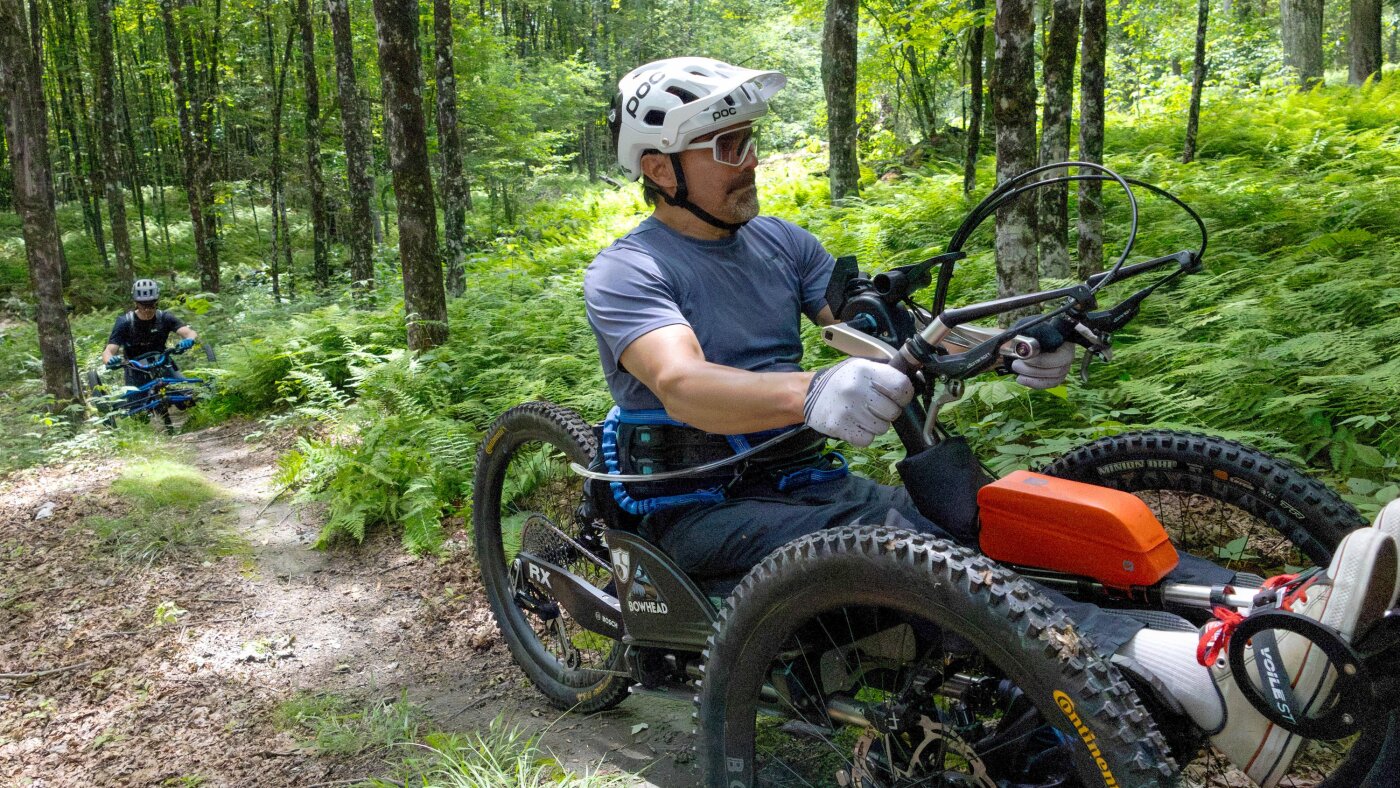
OUTDOOR ACCESS FOR DISABLED IN VERMONT
-
 Virginia13 minutes ago
4 indicted in Virginia double homicide; second victim ID’d as grandmother of 6
-

 Washington20 minutes ago
Washington Commanders are retiring Hall of Famer John Riggins’ No. 44
-

 Wisconsin23 minutes ago
Wisconsin State Patrol rides with truck and bus drivers to spot violations in five areas
-

 West Virginia28 minutes ago
West Virginia town fires entire police force after chief resigns, sergeant alleges evidence room break-in
-

 Wyoming35 minutes ago
WHP: July 5 single-vehicle rollover north of Riverton resulted in one death, one injury
-

 Crypto38 minutes ago
British Airline Jet2 Shares Jump 9% After $536M Fuel Hedge Gain Offsets Middle East Travel Fears

