Mississippi
Incarceration to stable habitation — California students learn Mississippi lessons


In Mississippi, where 97% of incarcerated individuals eventually return to society, stable reentry housing plays a critical role in determining success or failure.
Sadly, over 75% of those released from prison find themselves back behind bars within five years. This sobering reality prompted a group of UC Berkeley Law students, including myself, to collaborate with the MacArthur Justice Center during a spring 2024 visit to Mississippi. There were three reasons we wanted to make the long trip from California to Mississippi for an in-depth exploration of reentry housing for those who have paid their “debt to society.”
First, we have a strong working relationship with the MacArthur Justice Center at the University of Mississippi School of Law, and together we identified reentry housing as an area that could use the kind of landscape analysis we were well-situated to tackle.
Second, we wanted to see if Mississippi had any ideas on how to fix housing, because, let’s be honest, California isn’t a shining example of effective housing policy. And third: blues, delicious food and Southern hospitality. We found all three.
Our years-long partnership with the MacArthur Justice Center focuses on discrete projects about criminal justice reform, culminating with a spring break Mississippi trip. This year, we sought to understand Mississippi’s reentry housing issues from the perspectives of the government, private sector, nonprofits, faith communities and incarcerated individuals. We condensed our findings into a report with policy recommendations, which can be found at https://law.olemiss.edu/macarthur-justice-clinic/.
Our stakeholder discussions produced three main policy recommendations: addressing barriers for returning citizens, infrastructure improvements to Mississippi’s reentry ecosystem and reframing the reentry narrative. Each of these contain multiple, actionable suggestions to be considered by policymakers and community leaders throughout the state. I’ve summarized each bucket below, but I encourage you to read our report to learn more about specific recommendations.
The first issue, addressing barriers to reentry, analyzes the experience of incarcerated individuals getting ready to go home. Finding a safe, stable place to live after prison is extremely difficult for most incarcerated people: many come from circumstances where going “home” is not an option but can’t access resources to find somewhere else to live. Fortunately, improving access to information and connection to existing resources will cost the state little or nothing while removing significant hurdles for incarcerated people.
Secondly, improving the infrastructure of Mississippi’s reentry system encompasses a broad spectrum of initiatives, ranging from interagency cooperation to data management regarding homelessness.
While it is impossible to explain all seven sub-sections here, the takeaway is that some policies (or lack thereof) create perverse incentives or undermine agencies’ and organizations’ abilities to achieve their goals. The good news is that there are some creative fixes underway. For example, Mississippi’s pilot work release program is already being implemented and seeing noteworthy improvements in outcomes.
Lastly, reentry needs a reframe from kitchen tables to the Capitol Building. Shifting public perception — from viewing returning citizens as liabilities to recognizing their potential contributions — can foster bipartisan support for rehabilitation efforts, as it has in neighboring states. Emphasizing the value of investing in reentry not only benefits individuals seeking to rebuild their lives but also strengthens communities as a whole.
It is truly a blessing for us Californians to get to learn from the Mississippians working on these issues. In our state, we often throw money at our problems, but not always strategically. What I found in Mississippi is that the lack of government funds necessitates a certain creativity and scrappiness that you won’t find in the Golden State.
I won’t lie and say things are going great in Mississippi — there’s work to be done (as with anywhere). What I will say is that, as I left this state to head back out West, I had an unshakeable feeling that Mississippi’s fledgling work-release program might be the blueprint that could get our country out of this endless cycle of over-incarceration and recidivism, blue and red states alike.
Hopefully our report offers value to the smart and dedicated people working on these issues in Mississippi. We offer it not because we have anything to teach, but instead as a compilation of the many things you taught us. Whether in Berkeley or Brandon, Malibu or McComb, we’re in this together!
— Niki Kates is a third-year law student at the University of California at Berkeley. She is from Truckee, California and received her undergraduate degree in psychology from Willamette University.



STARKVILLE — Mississippi State baseball could have its first position player picked in the first round of the MLB draft since 2020.
That’s where star third baseman Ace Reese is ranked ahead of the 2026 MLB Draft. He has two years of eligibility remaining but is not expected back with the Bulldogs because of his high draft ranking.
There are other draft outcomes that can impact MSU’s 2027 roster for coach Brian O’Connor’s second season. The draft begins July 11 (noon, NBC/Peacock) with Rounds 1-4 and continues July 12 with Rounds 5-20.
Here’s a look at where Mississippi State players are ranked for the draft, including high school signees.
MLB draft rankings for Ace Reese, other Mississippi State players
MLB.com’s list of the top 250 prospects has Reese at No. 18. He’s the highest-ranked third baseman. USA Today’s mock draft predicts the Miami Marlins to select Reese with the No. 14 pick, which has a slot value of nearly $5.5 million.
If Reese is picked in the top 10, he’d be Mississippi State’s first top 10 pick since Paul Maholm in 2003.
The only other Mississippi State player in MLB.com’s top 250 is relief pitcher Ben Davis at No. 232. Davis does not have any college eligibility remaining.
That does not mean there won’t be more MSU players drafted. MSU has two starters in particular, catcher Kevin Milewski and outfielder Aidan Teel, who are draft eligible. If they are drafted, they’ll have to decide whether to sign with the pro team or return to Mississippi State. Relief pitcher Maddox Webb is in the same situation.
None of Mississippi State’s incoming transfers are ranked as top 250 draft prospects.
Mississippi State baseball signees rankings for MLB draft
Mississippi State has the No. 6 recruiting class, according to Perfect Game, and there are many players who are draft risks.
Eight of the signees are ranked inside MLB.com’s top 250 with four in the top 100.
Catcher Will Brick is the top signee at No. 46 after reclassifying to the 2026 class. Shortstop Rocco Maniscalco is just behind him at No. 49, followed by pitchers Landon Brown (No. 77) and Denton Lord (No. 80).
Other signees in the top 250 are pitcher Wilson Andersen (No. 111), outfielder Martin Shelar (No. 175), pitcher Jake Carbaugh (No. 203) and shortstop Noah Danza (No. 239).
Last summer, Mississippi State got signees Jack Bauer and Jacob Parker to turn down the MLB draft and play for the Bulldogs. Bauer was ranked as the No. 44 prospect and Parker, who turned into a freshman All-American, was No. 109.
The deadline for draftees to sign contracts with pro teams is July 27 at 4 p.m. CT.
Sam Sklar is the Mississippi State beat reporter for the Clarion Ledger. Email him at ssklar@usatodayco.com and follow him on X @sklarsam_.


Mississippi teen found dead on Horn Island. Investigation is ongoing
Authorities ID’d a body found on Horn Island as Mississippi teen Nolan Wells, who went missing on July 4. Deputies are investigating what happened.
Attorney Ben Crump says Nolan Xavier Wells’ family is pursuing an independent autopsy. Investigators continue working to determine what happened to the 18-year-old after his body was found on Horn Island this week.
Wells, 18, went missing on Saturday, July 4, after taking a boat to the island with friends. A body was found Monday, ending a two-day search.
Jackson County Coroner Bruce Lynd told the Sun Herald on Tuesday that the body was identified as Wells. The State Medical Examiner’s Office used dental records to confirm his identity. Officials did not release his cause of death.
In an exclusive interview with Don Lemon on Wednesday, Crump said the body was being flown to Washington, D.C., for a medical examiner to study.
Wells’ disappearance led to an outpouring of prayers, volunteer efforts and community support. By Wednesday morning, a GoFundMe to help the family had raised more than $237,000.
There are still many questions about why Wells was on the island after the boat with his high school friends left. What happened before his death remains unclear.
On Tuesday, his family hired nationally known civil rights attorney Crump and his team to help them find answers in the case.
What was Nolan Wells’ cause of death?
Crump said the second autopsy will find out “if he had any physical injuries to his body beyond drowning.” He was unaware of the physical condition of the body at the time of the interview.
The remains were being flown to Washington on Wednesday. Crump said his team expects the results on Friday.
Crump said investigators in Mississippi have not given them information about the state’s autopsy.
Crump says family is living in a nightmare
Crump told Lemon the family is living in a nightmare, and they still have many questions about the young man’s death.
He was clear, however, that his investigation is still in very early stages and they are not sure yet if they will find signs of foul play. If they do, he said, they will work with local law enforcement and the state if there’s anyone who should face criminal charges.
According to the attorney, the sheriff’s office has not shared information with the family about what happened and whether the sheriff’s office suspects criminal behavior.
“There’s no information that we have right now that would lead us to believe that a crime has occurred,” Jackson County Sheriff John Ledbetter told ABC News earlier this week.
He said the family has concerns about “inconsistencies” including texts deleted from Wells’ phone. They don’t want Wells’ death to be called an accident and swept under the rug if it wasn’t.
Crump said Wells had a tryout to play Division I football on Monday. The teen was reportedly avoiding substances that could affect his performance. His family said he was an extraordinary athlete and strong swimmer.
There was allegedly an argument on the island, Crump said. Now, Wells’ family isn’t accepting that his death could be a coincidence.
Lemon asked if they knew what the argument was and if Wells and his group were involved. Crump said they have an investigator talking to Wells’ friends. He plans to share the information when the issue becomes clear.
Crump said investigation, not speculation, is the goal.
Questions remain after Horn Island death
Ledbetter said the county’s investigation is still active.
According to reporting from TMZ, the sheriff’s office was investigating a video shared on social media that appears to show people arguing on Horn Island on the holiday. It’s unclear if the footage, which shows a crowded beach, is related to the case.
Crump and his legal team are planning their independent review. They have committed to urging “the timely release of all records, witness accounts, and autopsy findings.”
What investigators know so far
Wells was reported missing over the holiday weekend after traveling to Horn Island with friends on July 4. The barrier island is part of Gulf Islands National Seashore.
Wells, who also went by Nono, was last seen on the northwest tip of Horn Island on the afternoon of Saturday, July 4. He did not come back to the mainland with his group, and his mom reported him missing that night.
The Jackson County Sheriff’s Office led a search on land and water Sunday and Monday. The Mississippi Department of Marine Resources, National Park Service employees and the U.S. Coast Guard helped with the search. The United Cajun Navy and other volunteers also worked to find Wells.
His mother, Christine Wonsley, said during the search that she and his father had received Wells’ phone. Location tracking wasn’t an option while they looked for him.
A park ranger found the body Monday morning. The identification was confirmed Tuesday following an autopsy.
Investigators are still trying to determine why he didn’t leave the island and who he was with. They’re limiting the information released at this time as deputies work to find witnesses and collect evidence.
Authorities seek witnesses, photos and video
Ledbetter issued a statement saying rumors, commentary and unchecked information spreading on social media have been a challenge in the investigation.
Deputies need to speak to people who were at Horn Island. They’re also looking for original photos, video or sound recordings.
They are asking anyone who saw or heard an “argument, disturbance or other unusual activity” on the island to come forward.
Call 228-769-3065 during regular business hours or 228-769-3063 after hours if you have firsthand information about the case.
Bonnie Bolden is the Deep South Connect reporter for Mississippi with USA TODAY Network. Email her at bbolden@usatodayco.com.

PEARL, Miss. (WLBT) – Mississippi’s first Dutch Bros is now open in Pearl!
The coffee shop had its grand opening on Wednesday, July 8, around 5 a.m. It is located at 200 Bass Pro Dr.
To celebrate the grand opening, customers can enjoy $3 medium drinks on Wednesday.
Store hours are Sun-Thurs: 5 a.m.- 10 p.m., Fri-Sat: 5 a.m.- 11 p.m.
Dutch Bros now has stores in 26 states.
Want more WLBT news in your inbox? Click here to subscribe to our newsletter.
See a spelling or grammar error in our story? Please click here to report it and include the headline of the story in your email.
Copyright 2026 WLBT. All rights reserved.
-
 Business3 minutes ago
California soccer fans sue StubHub after it fails to deliver expensive World Cup tickets
-
 Entertainment6 minutes ago
Lucas Museum to give free annual passes to South L.A. neighbors, host community preview day
-
 Lifestyle11 minutes ago
Meow Wolf taps famed L.A. animation house for its new Los Angeles venue
-
Politics18 minutes ago
Column: Trump decries ‘communism’ while his government takes ownership of companies
-
 Science21 minutes ago
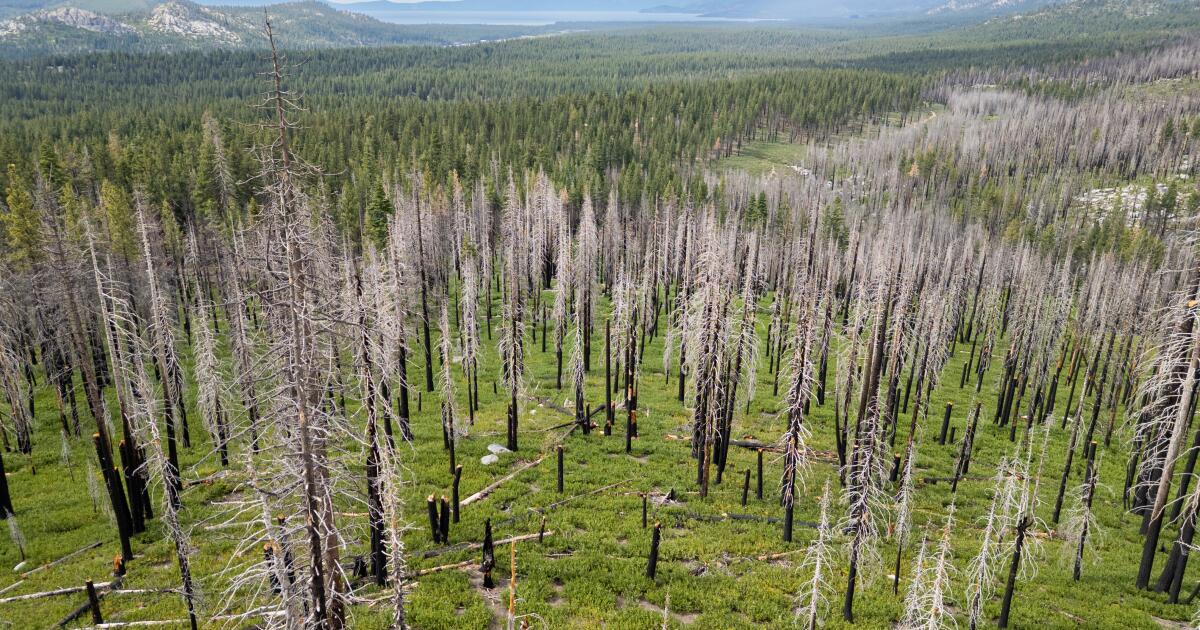
‘I’d rather my house burn down than get cancer’: Herbicide use upends California’s fight to save forests
-
 Sports26 minutes ago
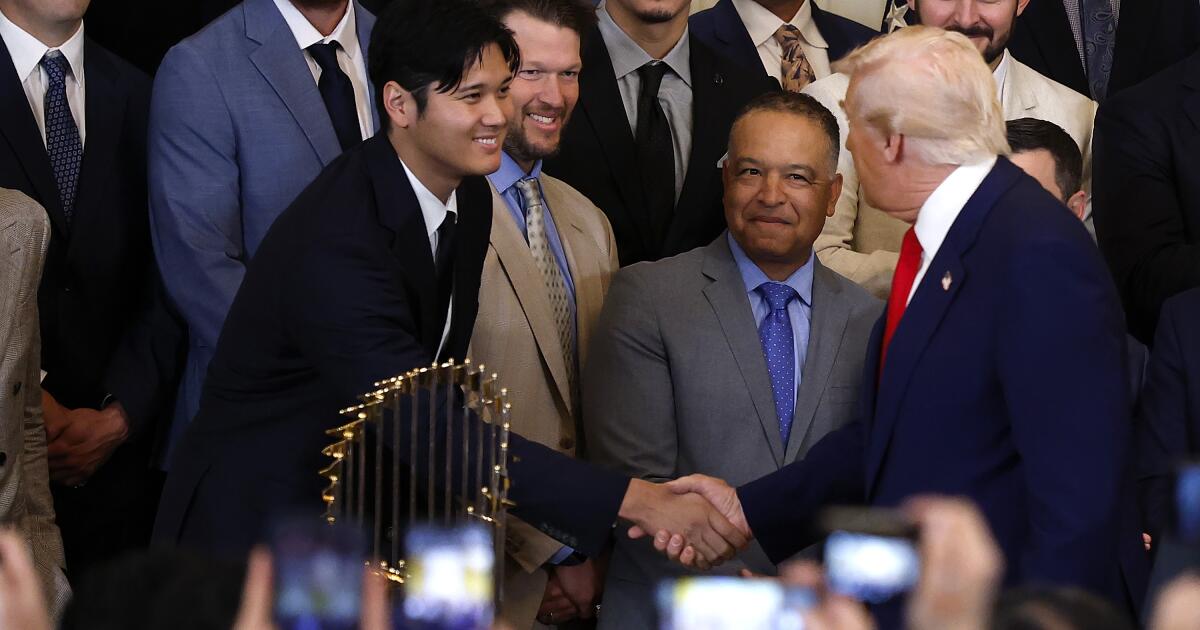
Dodgers scheduled to visit White House in late July to celebrate 2025 World Series win
-

 World36 minutes ago
Former US Olympian pleads not guilty in DC reflecting pool vandalism case
-
 News1 hour ago
Former Olympian pleads not guilty in reflecting pool vandalism charges


