Mississippi
Full-strength Cedar Rapids Washington rolls to MVC Super Meet team title


CEDAR RAPIDS — They all showed up and showed out.
The Cedar Rapids Washington girls’ golf team showed the potential of its best lineup.
The Warriors had their top team available and carded a total of 322, winning the title at the Mississippi Valley Conference Super Meet on Monday at Ellis Golf Course. Washington topped runner-up Western Dubuque by eight strokes, while Linn-Mar’s Morgan Rupp shot 1-under 71 for medalist honors.
“It’s nice to see them playing their game,” Washington assistant coach Ronnie Blocklinger said. “They’re having fun.”
The Warriors’ Mya Messenger placed third with 76 and Jane Petersen was two shots back for fifth. Messenger and Lily Belle Barker juggle both varsity golf and tennis in the spring, causing some scheduling conflicts.
Everybody was on hand.
“I think we have great potential and we’re firing on all cylinders and at full strength,” Messenger said. “We’ve all been working really hard over the winter.
“It also helps that we’re a tight-knit group. We’ve brought everyone in and all were firing today on our A-Game.”
Good camaraderie and strong chemistry also play a big part in success. The relationships extend beyond rounds, putting greens and driving ranges. Petersen said her best friends are on the team and most of the golfers have fun together on the course.
“It’s not just best team score-wise,” Petersen said. “I think we have a great team connection. I love the girls.”
Messenger, listed as the team’s No. 3 golfer, led Washington this round. She tallied three birdies, including the Nos. 11 and 16 holes for an even-par 36 on the back nine.
Attention to her short game allowed her to perform well, despite the chilly and windy conditions.
“I know my teammates and I have been out weekends and after practice and stayed late to focus on our short game — our putting and chipping,” Messenger said. “I really worked hard on that and focused on that today to convert on a lot of birdie putts and getting up and down better than I have been.
“I got up and down a lot on the back nine. I had a couple birdies that helped my round. I gave myself a little cushion to where if I did bogey I wouldn’t have too much stress.”

Washington placed all four of its scorers in the top 15 of the individual standings. In addition to Messenger and Petersen in the top five, Barker posted an 83 for 12th and freshman Shaylin Munson rounded out the foursome with an 85.
“At this point, I think we can make a run for state,” said Petersen, who was the Class 4A state runner-up last season. “It’s just really exciting to have four scores and a fifth, if we need it, which is amazing.”
Linn-Mar’s Morgan Rupp is MVC Super Meet medalist
Rupp shared medalist honors with Messenger at the MVC Super Meet a year ago. She was the only golfer to break 75, sinking an 8-foot putt on her final hole and breaking par.
“The difference between even par and 1-under is quite a bit,” the Lions’ 2023 4A state champion said. “It feels like it’s more than one stroke, at least. I told myself to make this. End with a birdie and you’ll feel better about your round.”
It was the second of bookend birdies to her round. She birdied No. 16 to start the meet. She added two more on the front, notching birdies on the Nos. 5 and 9.
Rupp won by four strokes over Iowa City Liberty’s runner-up Isabella Pettersen. The field had eight of the top 25 ranked golfers, according to Bound’s combined adjusted averages.
“I feel like this is a really good win for me,” Rupp said. “There are a lot of really good players in this meet. The field is stacked. I’m proud of the score I put up.”
Mississippi Valley Conference girls’ golf Super Meet
At Ellis Golf Course
(Par 72)
Teams – 1. C.R. Washington 322, 2. Western Dubuque 330, 3. Dubuque Wahlert 339, 4. Cedar Falls 340, 5. Linn-Mar 344, 6. C.R. Xavier 363, 7. Iowa City High 374, 8. Iowa City Liberty 375, 9. Dubuque Senior 381, 10. Waterloo West 390, 11. C.R. Prairie 406, 12. Iowa City West 415, 13. Dubuque Hempstead 417, 14. C.R. Kennedy 470, 15. C.R. Jefferson 471
Individuals – 1. Morgan Rupp (LM), 71, 2. Isabella Pettersen (ICL), 75, 3. Mya Messenger (CRW), 76, 4. Molly Ratchford (CF), 77, 5. Jane Petersen (CRW), 78
C.R. WASHINGTON (322): Messenger 76, Petersen 78, Lily Belle Barker 83, Shaylin Munson 85
LINN-MAR (344): Rupp 71, Gabby Mercure 90, Jayden Schumacher 91, Riya Anand 92
C.R. XAVIER (363): Mehar Julka 80, Meehar Julka 89, Lauren Kram 95, Josie Kramer 99
CITY HIGH (374): Haleigh Nelson 84, Hannah Cronk 92, Tully Campion 97, Olivia Neuzil 101
I.C. LIBERTY (375): Pettersen 75, Leona Rupp 91, Ella Burns 104, Sydney Hested 105
C.R. PRAIRIE (406): Kylie Wachtl 80, Morgan Burhans 96, Malian Armour 115, Millie Manternach 115
I.C. WEST (415): Whitney Noeller 101, Gretchen Van Iddekinge 102, Sophie Bodin 105, Lily Schmid 107
C.R. KENNEDY (470): Ellie Nurre 85, Aliya Ballard 117, Audrey Ingraham 130, Paige Maas 138
C.R. JEFFERSON (471): Ava Erger 104, Rachel Johnson 113, Peyton Kindrade 125, Kiyaree Cooper 129, Aiyana Moeller 129
Comments: kj.pilcher@thegazette.com


GPS data from the Mississippi Department of Marine Resources, obtained by CBS News, tracks the movements of the boat that carried Nolan Wells to Horn Island on July 4. Wells was found dead after going missing following an outing on the island.
The vessel left a dock at approximately 9:56 a.m. that morning and arrived at Horn Island at 11:14 a.m. CBS News has previously reported that Wells was not on the boat when it departed the island.
According to the GPS data, the boat left Horn Island at 4:31 p.m. and returned to its original departure dock. It then traveled into Fort Bayou around 5:52 p.m. before returning to the dock at 6:06 p.m.
Later that evening, the boat went to the Fort Bayou boat launch at 7:19 p.m., according to the MSDMR report. From there, it traveled over land — presumably towed by a vehicle — to the Biloxi, Mississippi, residence of the boat’s owners.
The MSDMR report indicates that the boat’s owner, his mother and one other individual who was reportedly with Wells on the day of the incident have cooperated with the investigation.
The department’s report ends on July 5, following notification that the Jackson County Sheriff’s Office would take over as the lead investigative agency.
Wells, 18, was last seen on July 4 on Horn Island, where he had taken a boat trip with friends to celebrate the holiday, officials said. Wells traveled to the island with his friends but did not return to the mainland with them that afternoon, Jackson County Sheriff John Ledbetter has said.
He was last seen on the island at 3 p.m., according to attorney Ben Crump’s office. His mother reported him missing later that night and a search began.
His body was discovered July 6 off the coast of the island, which is about 10 miles south of the Mississippi mainland, following a search that involved the U.S. Coast Guard, the Mississippi Department of Marine Resources and the National Park Service.
Dental records confirmed the body was Wells, Jackson County coroner Bruce Lynd told CBS News. An autopsy took place on July 7, Lynd said, but the results were not immediately made public. Wells’ body was flown to Washington, D.C., for an independent autopsy, according to Crump.
Wells’ parents have said they don’t believe their son would’ve stayed behind on the island by choice when his friends left by boat.
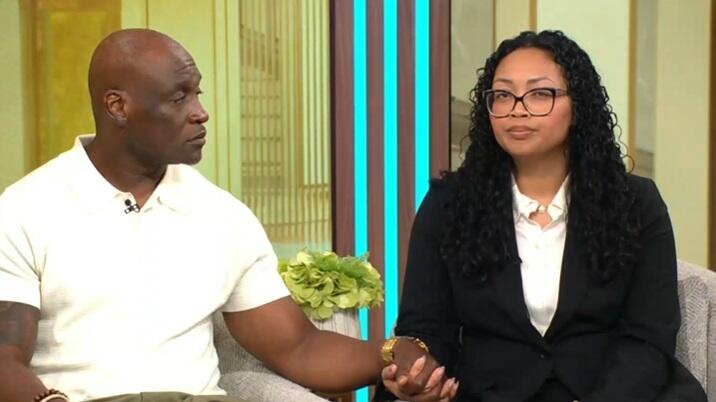
“No, he wouldn’t. Nolan always stays with the group,” Elmore Wonsley, Nolan’s father, told “CBS Mornings” last week. “If you be with me, you come back with me. So that I don’t understand, and with me being a parent, if I was in that situation, I would have told them, ‘You’re going to get back on this boat with me because I don’t want to answer to your parents if something happens to you.’”
When directly asked if he believed Nolan was left behind on the island, his father responded, “Yes. I don’t believe he decided to stay on the island by himself. It just doesn’t — that’s not his character.”
Wells went to Ocean Springs High School and was a rising sophomore on Southwest Mississippi Community College’s football team. Crump said Wells was a good swimmer.

Permanent daylight saving time in New Jersey
House approves permanent DST: NJ gets later sunsets year-round but darker winter mornings; sunrise could be ~8:25 a.m.
Are Americans finally done changing the clocks twice a year? Congress moved a step closer to ending the ritual after the U.S. House passed legislation that would make daylight saving time permanent.
It hasn’t been approved by the Senate yet, but it did pass the House with broad support (308-117). If it passes the Senate, it could be signed by President Donald Trump or become law without his signature, unless he vetoes it.
Trump has previously backed ending twice-a-year time changes.
“I am going to work very hard to see The Sunshine Protection Act signed into Law. It’s time that people can stop worrying about the ‘Clock,’” he wrote in a May Truth Social post.
A few versions of the Sunshine Protection Act were introduced in Congress. Rep. Vern Buchanan, R-Florida, introduced the one that’s gaining ground last year.
Here’s what to know about daylight saving time and the move to change it.
What is daylight saving time and why do we use it?
Daylight saving time is the practice of setting clocks forward an hour from March until November in an effort to gain more sunlight during the summer months.
According to the Library of Congress, it was first enacted in 1918 as a fuel cost-saving measure during World War I.
Daylight saving time became federal law under the Uniform Time Act of 1966. Under the law, some states can opt to exempt themselves from daylight saving time.
Would Mississippi keep daylight saving time year-round?
In 2021, the Mississippi Legislature passed a law saying the state plans to stick with daylight saving time year-round. But that only takes effect if Congress changes the federal law to let states adopt it all the time. A bill updating the effective date died in committee in the 2026 session.
Nineteen states, including Mississippi, are ready to make daylight saving time permanent if Congress changes the law to make the twice-a-year time shift optional, according to the National Conference of State Legislatures (NCSL).
How later sunrises would affect Mississippi
Sunrise and sunset times in summer would look the same.
But the period from November to March would be different. The amount of daylight would be the same, just shifted an hour later than usual.
Mississippi could expect the latest winter sunrises around 7:59 a.m. in mid-January. The earliest sunsets would shift from about 4:46 p.m. in early December to 5:46 p.m., according to timeanddate.com.
Why permanent daylight saving time failed before
Yes. Congress did drop Daylight Saving Time before.
The move failed in 1974 after parents worried about kids going to school before dawn, risking more vehicle crashes.
Some parts of the country, like Michigan or Indiana, don’t see sunrise until after 9 a.m. with the permanent daylight saving time.
When clocks fall back in 2026
Clocks will “fall back” from 2 a.m. to 1 a.m. on Sunday, Nov. 1, 2026, unless Congress changes the law.
Daylight saving time ends on the first Sunday in November each year, under current law. That’s when we get back that missing hour of sleep from the spring time change.
Does Mississippi change clocks twice a year?
Yes. Mississippi, which is in the Central time zone, observes daylight saving time.
What time is it in Mississippi?
Visit timeanddate.com to see the current time in Jackson.
Which states don’t observe daylight saving time?
Most of the U.S. participates in daylight saving time except for Hawaii and most of Arizona. The Navajo Nation in the northeast corner of the state does participate.
Bonnie Bolden is the Deep South Connect reporter for Mississippi with USA TODAY Network. Email her at bbolden@usatodayco.com.
Melina Khan is a national trending reporter for USA TODAY. Keep up with her on X @melinakh and Instagram @bymelinakhan.
Mississippi
Mississippi teen accused of killing elderly couple had worked for them before shooting: family

A teenager in Mississippi knew the elderly couple he’s accused of killing before sparking a standoff with law enforcement, according to new testimony in court.
Cordarius Hobbs, 17, is charged with killing 74-year-old Billy Blair and his 71-year-old wife Virginia Carol Blair during a home break-in on June 3 in Mendenhall, Mississippi.
Family members of Hobbs testified during the Thursday preliminary hearing that he knew the couple.
Family members testified that Hobbs did work for the Blairs for things like cleaning around the house before the alleged shooting, according to WAPT.
Billy Newsome, Hobbs’ grandfather, said he believes his grandson was called to work on the day of the alleged shooting but believes he’s innocent.
“My grandson used to work for the man, why you gone rob a man that you work for,” Newsome said. “Why you gone stay there that long and you know the police out there, and then you gone wait until everybody gets there to run, it just ain’t adding up, something just ain’t right here.”
On June 3, three contractors installing a generator at the Blairs’ home discovered Carol Blair’s car door open with several guns on the seats around 10 a.m., prompting them to call the Simpson County Sheriff’s Department for a welfare check at 11:30 a.m, according to a Mississippi Bureau of Investigation investigator.
By noon, the investigator said that officers arrived and were met with shots fired at them, starting a nearly two-hour-long standoff.
Hobbs was captured after trying to run away from officers, the official said, adding that the teen was unarmed when he was caught.
Carol Blair was found in a bedroom curled in the fetal position and had three gunshots to the back of her head. Bill Blair was found lying on his back in the kitchen with three gunshot wounds to his face.
The state investigator said three firearms were found inside the home as well as 280 shell casings, all owned by Bill Blair.
Hobbs’ defense attorney, Zachary Vaugh, argued that there’s a lack of direct forensic evidence connecting the teenager to the shooting.
“There was nothing to say he’s a principal, he’s the one that pulled the trigger on these things,” Vaugh said. “One of the things alone was, one of the victims was shot twice on one side of the head and once on the other. I think that’s pretty compelling that somebody else may have been in there. There’s a lot of things that are possible, just a tremendous amount of things.”
“When you have an officer say there’s no one that can identify him at the time of the shooting, I just don’t see how that adds up,” he said.
Hobbs is charged with two counts of capital murder and one count of burglary, in addition to 10 other charges. He was denied bond.
In a statement on Facebook, the couple’s family previously said, “We are crushed in spirit, bruised, and brokenhearted, but we are not alone.”
Jason Busby, who was friends with the couple, remembered them as being extremely selfless when speaking with WLBT.
“The man would’ve given you the shirt off his back, his wife is the same, and they’re just great people. It’s just a tragedy,” Busby said. “Everybody around here is still in shock. They were just good people.”
-

 Health4 minutes ago
Game-changing cholesterol pill wins FDA approval after cutting LDL nearly 60%
-

 Sports10 minutes ago
2026 AL, NL MVP Odds: Ohtani Favored; Alvarez Holding Off Challengers
-

 Technology16 minutes ago
Tesla helped save a driver. Is your car ready?
-
 Business22 minutes ago
SpaceX stock erases all its gains and slides below IPO price in intraday trading
-
 Entertainment28 minutes ago
Contributor: Hollywood will stop fueling racism when audiences demand better
-
 Politics40 minutes ago
Trump seeks prime-time spotlight for election claims, sparking concerns he’ll intervene
-
 Science46 minutes ago
California employer health premiums will cost as much as a new car in 2027
-
 Sports52 minutes ago
How Spain ‘recaptured the spirit of 2010’ in its run to the World Cup final

