Mississippi
First Black Woman Named To Lead Episcopal Diocese Of Mississippi


by Daniel Johnson
July 22, 2024
Rev. Dorothy Sanders Wells made history on July 20 when she was formally installed as the newest bishop of the Episcopal Diocese of Mississippi, becoming the first Black person and the first woman to hold the position.
Rev. Dr. Dorothy Sanders Wells made history on July 20 when she was formally installed as the newest bishop of the Episcopal Diocese of Mississippi, becoming the first Black person and the first woman to hold the position. Wells has held the position since being elected in February 2024 and has been active in the role since May, but it now becomes formally acknowledged by the church with her installation.
According to Al.com, Wells doesn’t focus on the historical significance of her appointment, instead, she wants the congregation she serves to showcase radical love and hospitality to their neighbors. “If it ends when our time together ends on Sunday mornings, then we have already missed the message,” Wells told the outlet. “That should be the beginning. When we walk out the doors, that becomes the beginning of us showing that radical love and hospitality.”
According to USA Today, Wells replaces Brian Seage, who guided the state’s Diocese through the COVID-19 pandemic and the Jackson, Mississippi, water crisis. Shortly after Wells’ election, Seage told the outlet, “This is a historic moment and this marks a new chapter in our history. It’s the first time we have elected a woman and the first time we have elected an African American as the bishop of the diocese. I think this speaks dramatically for this movement within our church.”
The installation was presided over by Michael Curry, who was the first Black person to be the presiding bishop of the Catholic Church and gained worldwide acclaim for his sermon at Prince Harry and Megan Markle’s wedding in 2011.
Wells’ election came after Sharma Lewis became the first Black woman to serve as bishop of the Mississippi United Methodist Church in 2022.
After her election, Wells told USA Today, “I am truly humbled by the confidence that the council has placed in me, and I am so looking forward to working with the good people of the Diocese of Mississippi. We are reading all kinds of statistics and reports about declining church attendance and declining church engagement, but we know God is in the midst of all of this and I am looking forward to exploring with this Diocese all of the ways we can continue love God and love one another and serve our neighbors and care for the people around us.”
Wells hails from Mobile, Alabama, and earned a degree in vocal performance from Rhodes College in Memphis, Tennessee. She also holds a Juris Doctorate from the Cecil C. Humphreys School of Law at the University of Memphis, a master’s degree in divinity from Memphis Theological Seminary, and a doctorate in ministry from the Candler School of Theology at Emory University.
Wells expressed her desire to engage with the community and familiarize herself with the various congregations in Mississippi, telling USA Today, “When we had our meet and greets when I was able to get to know some of the people in the Diocese, I said then that I really want to get out into the districts.”
Wells added, “I want to meet people. I want to meet clergy and I want to meet lay folks in these different convocations. I want to see what is happening in their ministry, and I want to get some good conversations going so that we can be good relationship builders together and be about the business of exploring the ways that we can serve God.”
RELATED CONTENT: Episcopal Church of New York Apologizes For Participating In The Transatlantic Slave Trade, Pledges $1 Million Against Racism



Mississippi
Mississippi homeowners blame a noisy data center plant for sleepless nights. The mayor’s advice? “Consider selling.”

It was 4 a.m. on a Sunday and 46-year-old Jason Haley was once again wide awake.
The suburban silence that Haley had grown used to in his two decades as a resident of Southaven, Mississippi, had, for the last few months, been replaced by a constant whirring, like an airplane hovering over his home, he said.
The noise keeping Haley awake was coming from a plant powering Elon Musk’s xAI data centers in the area, according to a lawsuit filed in June against the company and its subsidiary, MZX Tech. Haley and two other Southaven residents, who live within a mile of the plant, allege in the suit that “near-constant” noise and vibrations are causing negative physical and psychological health effects.
The filing comes amid growing resistance toward data center development, with the majority of Americans opposing local construction of a data center, according to a Gallup poll published earlier this year.
Similar disputes are playing out across the country, like in Mount Pleasant, Wisconsin, where a lawsuit this month filed by residents alleges a data center emits “unreasonable and excessive noise” onto residents’ properties and in Lowell, Massachusetts, where noise from a data center’s cooling center “disrupts neighbors’ sleep,” according to an April suit.
There are more than 4,000 data centers in the U.S., according to a recent United Nations report. To power the data centers, developers are building their own plants, sometimes with little warning to residents like Haley.
Haley reached out to Southaven Mayor Darren Musselwhite about the noise in emails he shared with CBS News. In one last November, he urged Musselwhite to drive through the neighborhood “and take a listen to the constant high pitch noises.”
“I am aware of the noise and working on a solution with xAI officials,” Musselwhite had responded to Haley an hour later. “It is a problem,” he said in another email later in the day.
But soon, another sleepless night rolled around and Haley was emailing the mayor again.
“Anyone else I can reach out to?” Haley wrote to Musselwhite. “It’s almost 4 am and I can hear it from my bed. The high pitch and roaring combined is full force at this time. My ears are ringing. I can’t live in this. How was this ever approved?”
“I don’t care that this is Elon’s project”
Just north of Southaven, which sits on the Mississippi-Tennessee border, xAI’s data center Colossus went online in Memphis in September 2024. The company dubbed it “the world’s largest AI supercomputer.”
By late July 2025, Musk was announcing that another data center, Colossus 2, was set to begin operation in the area within weeks.
Days later, an announcement popped into the Facebook feeds of Southaven residents: An energy facility that had been dormant for decades will be revived to support xAI’s expanding data center operations in the area, Musselwhite said.
The post was met by a flood of comments, with some lauding the development and others expressing concern about the plant’s impact on the environment and strain on local resources.
Meanwhile, Haley started hearing sounds.
“My first thought was somebody’s got a leaf blower going all the time,” he said.
By December, the noise had become a fixture. He started getting headaches, stopped getting sleep and slipped into feelings of hopelessness and depression. The noise was inescapable, he said, and despite his best efforts to drown it out (sleeping with earplugs, getting a box fan for white noise), it continued to drone on.
So Haley began speaking up — at city government meetings, on Facebook and through TikTok, where he posts videos of himself measuring the noise with a sound meter. He later became involved in a grassroots coalition called Safe and Sound, drawing awareness to concerns surrounding xAI’s undertakings in the region.
The “activist” label is one he’s reluctantly accepted.
“I’ve never been into any kind of activism, never really kept up with politics a whole lot,” he said. “I’m just a guy that has a problem with this noise, and started speaking out and trying to raise awareness.”
When he emailed Musselwhite about the noise again in December, his message came with a disclosure: “I am not a republican or democrat, I don’t care that this is Elon’s project. I didn’t know whose it was when I started complaining about the noise that started in August.”
Musselwhite responded a few days later.
“As I mentioned to you in the public meeting, you seem to be a reasonable person,” he said. “I will give you some unsolicited advice from an older man, be careful with whom you associate so you don’t damage your credibility.”
By January, xAI was expanding its footprint with a third data center in Southaven, MACROHARDDR. As residents like Haley continued pushing back online and in city meetings, Musselwhite had a new message.
Southaven, he said in a Facebook post, was “under attack by all who choose to oppose Elon Musk because of his high-profile political stances.” He warned residents to “beware of the smokescreen of radical politics.”
In his emails to Haley, Musselwhite continued to acknowledge the noise as a problem.
“The noise issue is one of my highest priorities and I have been in detailed discussions with xAI and many independent professionals to resolve this,” he wrote in March.
But in the same email, he offered Haley more advice: “I know they want houses for employees, so you may want to consider selling your home.”
CBS News made multiple attempts to speak with Musselwhite and did not receive a reply.
Migraines, ringing ears and sleepless nights
Moving isn’t Haley’s preference, but he said he is in the financial position to do so if he chooses.
That’s not the case for everyone.
A little over a decade ago, 31-year-old Taylor Logsdon bought a home for her growing family in Southaven and began building her life around it.
“We loved it here,” she said. “It was peaceful, it was quiet, didn’t have to worry about nothing.”
But that was before the noise, so loud, she said, that it sometimes shakes her home. Logsdon, who is also involved in the Safe and Sound coalition and is suing xAI with Haley and one other Southaven resident, said she has experienced migraines and anxiety as a result of the noise.
She said she has persistent ringing in her ears and so do her children. A full night of sleep has become rare for the family.
“I would move tomorrow if I could,” she said, adding that she needs to save money before she can afford to move.
Her children, all under the age of 13, are having trouble staying awake at school.
“One of them is extra angry all the time — never, never has been that way, but he’s just irritable like all the time,” she said. “I feel like I’m snappier too.”
xAI spent millions of dollars trying to mitigate the sound with a sound wall, a berm and evergreen trees, Musselwhite said in a February Facebook post.
“It still hasn’t helped. It hasn’t even put a dent in it,” Logsdon said.
People living in areas where there is “constant humming or buzzing” report headaches, stress and sleep disturbance, said Dr. Samoon Ahmad, a clinical professor of psychiatry at New York University.
A 2023 study found that environmental noise exposure can lead to adverse associations for cardiovascular disease and mortality, diabetes, hearing impairment, neurological disorders and adverse reproductive outcomes.
“People think of annoyance as an abstract term,” Ahmad said. “It’s not an abstract term because it has real physiological ramifications.”
The World Health Organization recommends less than 40 decibels of annual average nighttime noise outside of bedrooms to prevent adverse health effects. Haley has recorded noise levels over 60 decibels as late as 10:15 p.m. from his Southaven backyard.
Musk’s Memphis
Even before Logsdon and Haley decided to take action against xAI, Musk’s growing presence in the Memphis area garnered attention from advocacy groups over health and environmental concerns.
The National Association for the Advancement of Colored People filed a lawsuit in April against xAI claiming the Southaven plant emits “significant” amounts of harmful pollutants from its 27 gas turbines, which has since increased to 59, according to a court filing reviewed by CBS News. The NAACP has also filed an appeal to challenge the Mississippi Department of Environmental Quality’s decision to issue an air permit allowing the Southaven plant to operate 41 permanent methane gas turbines. An independent study found their operation would increase air pollution in an area already grappling with a disproportionate number of asthma-related emergency room visits.
CBS News has reached out to xAI for comment.
Musk’s investment in the latest Southaven data center brings his company’s contribution to the area to $20 billion, according to the office of Mississippi Gov. Tate Reeves. The governor called it “the largest economic development project in Mississippi’s history.”
Musk’s financial footprint has also extended beyond the data centers — MZX Tech donated over $1.3 million to the Southaven Police Department in February, according to the donation agreement obtained by CBS News, and has offered half-priced Starlink for those in the Memphis region.
But Logsdon says the cost to her and her family’s health has her wondering why it feels like her city is willing to “hurt the few to get the benefits.”
“We were not a failure town before,” Logsdon said. “It’s not like our economics were terrible here.”
Southaven had a median household income of over $70,000 in 2024, according to the U.S. Census Bureau — $20,000 more than the state average.
Logsdon, currently a stay-at-home mom, will be searching for work this fall so she and her husband can start saving up to move away from the plant. For now, her goal is a full night’s sleep.
“I hope that my family can go back to having our normal,” she said. “Being able to sleep at night, being able to enjoy my backyard, being able to go swimming.”

GPS data from the Mississippi Department of Marine Resources, obtained by CBS News, tracks the movements of the boat that carried Nolan Wells to Horn Island on July 4. Wells was found dead after going missing following an outing on the island.
The vessel left a dock at approximately 9:56 a.m. that morning and arrived at Horn Island at 11:14 a.m. CBS News has previously reported that Wells was not on the boat when it departed the island.
According to the GPS data, the boat left Horn Island at 4:31 p.m. and returned to its original departure dock. It then traveled into Fort Bayou around 5:52 p.m. before returning to the dock at 6:06 p.m.
Later that evening, the boat went to the Fort Bayou boat launch at 7:19 p.m., according to the MSDMR report. From there, it traveled over land — presumably towed by a vehicle — to the Biloxi, Mississippi, residence of the boat’s owners.
The MSDMR report indicates that the boat’s owner, his mother and one other individual who was reportedly with Wells on the day of the incident have cooperated with the investigation.
The department’s report ends on July 5, following notification that the Jackson County Sheriff’s Office would take over as the lead investigative agency.
Wells, 18, was last seen on July 4 on Horn Island, where he had taken a boat trip with friends to celebrate the holiday, officials said. Wells traveled to the island with his friends but did not return to the mainland with them that afternoon, Jackson County Sheriff John Ledbetter has said.
He was last seen on the island at 3 p.m., according to attorney Ben Crump’s office. His mother reported him missing later that night and a search began.
His body was discovered July 6 off the coast of the island, which is about 10 miles south of the Mississippi mainland, following a search that involved the U.S. Coast Guard, the Mississippi Department of Marine Resources and the National Park Service.
Dental records confirmed the body was Wells, Jackson County coroner Bruce Lynd told CBS News. An autopsy took place on July 7, Lynd said, but the results were not immediately made public. Wells’ body was flown to Washington, D.C., for an independent autopsy, according to Crump.
Wells’ parents have said they don’t believe their son would’ve stayed behind on the island by choice when his friends left by boat.
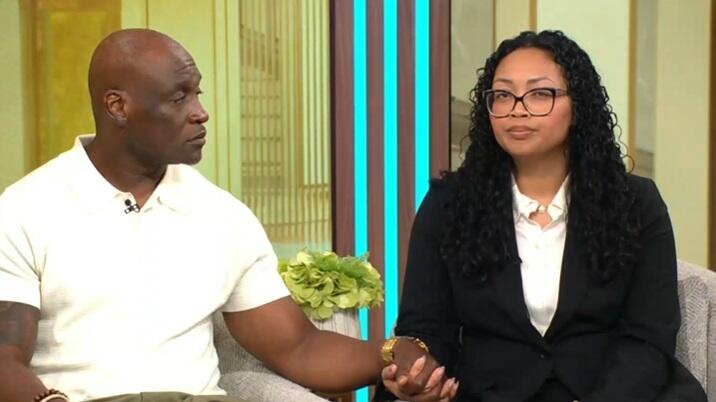
“No, he wouldn’t. Nolan always stays with the group,” Elmore Wonsley, Nolan’s father, told “CBS Mornings” last week. “If you be with me, you come back with me. So that I don’t understand, and with me being a parent, if I was in that situation, I would have told them, ‘You’re going to get back on this boat with me because I don’t want to answer to your parents if something happens to you.’”
When directly asked if he believed Nolan was left behind on the island, his father responded, “Yes. I don’t believe he decided to stay on the island by himself. It just doesn’t — that’s not his character.”
Wells went to Ocean Springs High School and was a rising sophomore on Southwest Mississippi Community College’s football team. Crump said Wells was a good swimmer.


Permanent daylight saving time in New Jersey
House approves permanent DST: NJ gets later sunsets year-round but darker winter mornings; sunrise could be ~8:25 a.m.
Are Americans finally done changing the clocks twice a year? Congress moved a step closer to ending the ritual after the U.S. House passed legislation that would make daylight saving time permanent.
It hasn’t been approved by the Senate yet, but it did pass the House with broad support (308-117). If it passes the Senate, it could be signed by President Donald Trump or become law without his signature, unless he vetoes it.
Trump has previously backed ending twice-a-year time changes.
“I am going to work very hard to see The Sunshine Protection Act signed into Law. It’s time that people can stop worrying about the ‘Clock,’” he wrote in a May Truth Social post.
A few versions of the Sunshine Protection Act were introduced in Congress. Rep. Vern Buchanan, R-Florida, introduced the one that’s gaining ground last year.
Here’s what to know about daylight saving time and the move to change it.
What is daylight saving time and why do we use it?
Daylight saving time is the practice of setting clocks forward an hour from March until November in an effort to gain more sunlight during the summer months.
According to the Library of Congress, it was first enacted in 1918 as a fuel cost-saving measure during World War I.
Daylight saving time became federal law under the Uniform Time Act of 1966. Under the law, some states can opt to exempt themselves from daylight saving time.
Would Mississippi keep daylight saving time year-round?
In 2021, the Mississippi Legislature passed a law saying the state plans to stick with daylight saving time year-round. But that only takes effect if Congress changes the federal law to let states adopt it all the time. A bill updating the effective date died in committee in the 2026 session.
Nineteen states, including Mississippi, are ready to make daylight saving time permanent if Congress changes the law to make the twice-a-year time shift optional, according to the National Conference of State Legislatures (NCSL).
How later sunrises would affect Mississippi
Sunrise and sunset times in summer would look the same.
But the period from November to March would be different. The amount of daylight would be the same, just shifted an hour later than usual.
Mississippi could expect the latest winter sunrises around 7:59 a.m. in mid-January. The earliest sunsets would shift from about 4:46 p.m. in early December to 5:46 p.m., according to timeanddate.com.
Why permanent daylight saving time failed before
Yes. Congress did drop Daylight Saving Time before.
The move failed in 1974 after parents worried about kids going to school before dawn, risking more vehicle crashes.
Some parts of the country, like Michigan or Indiana, don’t see sunrise until after 9 a.m. with the permanent daylight saving time.
When clocks fall back in 2026
Clocks will “fall back” from 2 a.m. to 1 a.m. on Sunday, Nov. 1, 2026, unless Congress changes the law.
Daylight saving time ends on the first Sunday in November each year, under current law. That’s when we get back that missing hour of sleep from the spring time change.
Does Mississippi change clocks twice a year?
Yes. Mississippi, which is in the Central time zone, observes daylight saving time.
What time is it in Mississippi?
Visit timeanddate.com to see the current time in Jackson.
Which states don’t observe daylight saving time?
Most of the U.S. participates in daylight saving time except for Hawaii and most of Arizona. The Navajo Nation in the northeast corner of the state does participate.
Bonnie Bolden is the Deep South Connect reporter for Mississippi with USA TODAY Network. Email her at bbolden@usatodayco.com.
Melina Khan is a national trending reporter for USA TODAY. Keep up with her on X @melinakh and Instagram @bymelinakhan.
-

 West Virginia3 minutes ago
West Virginia to conduct comprehensive review of all bridges as state targets repairs
-

 Wyoming9 minutes ago
NWSR issues Flood Watch advisory for portions of Central, Northwest Wyoming
-

 Crypto15 minutes ago
DeFi’s Newest Threat: How Malicious Liquidity Pools Are Trick-Quoting Ethereum and Polygon Users
-

 Finance21 minutes ago
Gold Purchases Accelerate as Dollar Confidence Wanes
-

 Fitness27 minutes ago
Strength training over decades linked to longer life – Harvard Health
-

 Movie Reviews39 minutes ago
Movie Review: “The Odyssey” by Nolan
-
World51 minutes ago
US strikes bridges and collapses a tower at a key port as its Iran campaign expands
-
 Lifestyle2 hours ago
An eco-journalist takes on a Big Tech in this modern twist on the heist novel


