Mississippi
A vision for Mississippi’s educational opportunity. See details here


As Mississippians, we are bound together by a shared commitment to fostering a brighter future for our state. Today, we find ourselves with numerous opportunities for growth, innovation and reimagining the American dream in our state.
At Americans for Prosperity-Mississippi, our mission is clear: to increase those opportunities for prosperity for all Mississippians, regardless of race, creed, economic background or zip code. That’s a mission that transcends political and idealistic divides. At the end of the day, we all want a more prosperous, thriving Mississippi.
In the pursuit of our mission, we recognize that education serves as the bedrock upon which the prosperity of our state is built. A thriving education system not only empowers individuals but also fuels economic growth, nurtures communities and fosters good governance. When it comes to educating the next generation of Mississippians, one thing is clear: there is no one-size-fits-all approach.
As state leaders enhance their focus on increasing educational attainment and improving outcomes, we understand that the success of our educational system is intertwined with the health of our business community.
A well-educated workforce is a key driver of economic development and innovation. By supporting policies that enhance educational opportunity, we are not only investing in the future of our children but also cultivating a skilled workforce that will attract businesses, create jobs and drive economic prosperity in Mississippi.
Policies that increase educational opportunity, like universal Education Savings Accounts, can be transformative tools that empower parents and students to tailor their educational experiences to individual needs. By putting families in the drivers’ seat of their students’ education, we can enable parents to choose the educational setting that best suits their child’s unique learning requirements.
Increased competition among educational institutions incentivizes innovation and excellence, leading to an overall improvement in the quality of education throughout the state. America was built on an economic system that encourages and thrives on competition, as it leads to improved products and services and drives down costs. These principles are as true in education as they are in industry.
As we advocate for more opportunity across the educational spectrum, we are mindful of the role of government in shaping policies that can either facilitate or hinder progress. AFP-MS wants to work collaboratively with policymakers to implement reforms that prioritize the needs of each Mississippian.
While we strive to advance policies that work for all Mississippians, we invite everyone to come together to build a Mississippi where creating more opportunity is the catalyst for prosperity, where businesses thrive, communities flourish, and government serves the interests of its citizens. Together, we can unleash the full potential of our great state and ensure a brighter, more prosperous future for all Mississippians.
— Starla Brown is the State Director for Americans for Prosperity-Mississippi.



OXFORD – No. 6 Mississippi State carries momentum and confidence into one of college baseball’s fiercest rivalries this weekend, traveling to face No. 18 Ole Miss in a three-game Southeastern Conference series at Swayze Field.
The Diamond Dawgs arrive in Oxford riding a five-game winning streak and carrying plenty of momentum into one of the league’s premier matchups. MSU sits at 21-4 overall and 4-2 in conference play, while the Rebels enter at 19-6 and 3-3 in the SEC.
Mississippi State has been one of the most complete teams in the country through the first half of the season. The Bulldogs are hitting .347 as a team with a .452 on-base percentage and 39 home runs, consistently putting pressure on opposing pitching staffs. Ole Miss counters with plenty of power of its own, already launching 46 homers while posting a .500 slugging percentage.
The engine for State’s offense has been graduate outfielder Bryce Chance, who leads the SEC with a .452 batting average and has struck out just three times all season. All-American infielder Ace Reese continues to anchor the middle of the lineup with a team-high seven home runs and 34 RBIs, while Noah Sullivan and Aidan Teel provide consistent production around them to give the Diamond Dawgs one of the deepest lineups in the league.
Mississippi State will lean on its weekend rotation that has begun to separate itself as a strength. Left-hander Charlie Foster is expected to get the ball in Friday’s opener. The Bulldogs will then turn to sophomore standout Tomas Valincius on Saturday. The southpaw has been dominant, going 5-0 with a 1.04 ERA and 47 strikeouts, highlighted by a 14-strikeout performance in his last outing. Right-hander Duke Stone is slated for Sunday and brings a 4-0 record with him into the series.
Ole Miss is expected to counter with left-hander Hunter Elliott in the opener, a veteran arm with a 3-0 record and 44 strikeouts, followed by right-hander Hudson Calhoun on Saturday. The Rebels have yet to announce a starter for the series finale. As a staff, Ole Miss owns a 3.56 ERA with 293 strikeouts, setting up a matchup between two pitching groups capable of missing bats at a high level.
While the Bulldogs have dominated at home — winning 19 straight games at Dudy Noble Field dating back to last season — this weekend presents another opportunity for State to prove itself away from Starkville. MSU is 1-3 in true road games this year but has shown the ability to compete against elite competition throughout the early part of the schedule.
The rivalry history leans in Mississippi State’s favor, with the Bulldogs holding a 268-213-5 advantage in the all-time series. State has also won two straight meetings between the programs, adding another layer of confidence heading into the weekend.
Visit www.HailState.com for the latest news and information on the baseball program. Fans can also follow the program on social media by searching ‘HailStateBB’ on X, Facebook and Instagram.Top of Form

‘I would call him a hybrid between a smoke phase and a red phase. He’s not a true smoke phase because of all the red in him.’

Hilarious video shows turkeys chasing delivery driver
Wild turkeys chased a UPS driver in Branford, Connecticut, as he tried to deliver packages.
A Mississippi turkey hunter’s season wasn’t off to a good start, but with a change in plans, a little scouting, some luck thrown in, he bagged a rare reddish-colored turkey and it’s considered a bird of a lifetime.
“I’d been hunting the same bird since opening day,” said Barrett Clark of Strong, which is located near West Point. “He finally frustrated me enough to where I just needed to go look for another bird.”
Clark wasn’t able to connect with the gobbler he was after. So, on Friday, March 20, he decided to check another property. He located a few gobblers that afternoon, but one looked different. It appeared to have a lighter color than normal, but Clark figured it was just the way the sunlight was hitting the bird.
The following morning, Clark and his father, Larry Clark, returned to the area in hopes of getting a shot at one of the birds.
A turkey hunt that was almost ruined
“We met and went in early Saturday morning,” Clark said. “We were probably 300 yards away from him when he started gobbling. It was right at sunrise. He was gobbling off the roost.”
The gobbler flew off the roost and continued to gobble. Clark said he lightly called the bird. Then, a gunshot rang out from a nearby property and the gobbling stopped. To make matters worse, minutes later a coyote appeared and it looked like he was after the turkey that had been gobbling.
“That coyote came within 15 feet of my dad and ran straight to where the turkey had been gobbling,” Clark said. “We thought our hunt was boogered up.”
MS hunter shoots turkey with strange colors
The hunt wasn’t over, though. About 10 or 15 minutes later the gobbling resumed and Clark lightly called back. A little later, Clark saw a turkey through the trees in the neighborhood of 100 yards away.
“I was really just seeing his head move,” Clark said. “I would see his fan occasionally, but it was mostly just his head. I could tell he was lighter, but I really wasn’t focused on that. I was trying to stay still and make a good shot.”
Clark said he was hunting in pines that were maybe 10 years old, and the understory was thick. The bird came within 50 yards of him, but there was no shot. The bird began to walk away but stepped into an opening, and Clark pulled the trigger of his 20-gauge shotgun.
Clark still didn’t understand what he’d shot. He said it was only when he and his father got closer that they realized how unusual it was.
“We could tell it was something that neither of us had ever seen,” Clark said.
What is it, and how rare is this turkey?
The bird is a light rust or cinnamon color and lacks any normal coloration, but putting a label on it isn’t easy.
“I would call him a hybrid between a smoke phase and a red phase,” said Caleb Hinton, Wild Turkey Program coordinator for the Mississippi Department of Wildlife, Fisheries and Parks. “He’s not a true smoke phase because of all the red in him.”
Hinton couldn’t put a number on it, but he said a genetic trait like this is very rare.
“Like all the genetic mutations, it’s exceedingly rare in the wild,” Hinton said.
And for a gobbler to express such a genetic trait is even more rare. Hinton said that upwards of 95% of the turkeys that express such traits will be hens, not gobblers.
“It’s just a once-in-a-lifetime trophy for the hunter,” Hinton said.
A lifelong outdoorsman and wildlife enthusiast, Brian Broom has been writing about hunting, fishing and Mississippi’s outdoors for the Clarion Ledger for more than 14 years. He can be reached at 601-961-7225 or bbroom@gannett.com.

Subscribe to Clarion Ledger: Local journalists covering local stories
Clarion Ledger journalists cover the important moments in Mississippi. Support local journalism by subscribing.
Staff
Another portrait of a Mississippi Speaker of the House is set to grace the walls of the chamber.
More than 200 family members, legislators and Capitol staff came together March 25 to see the new portrait of former Speaker Philip Gunn. Gunn, who became the first Republican to occupy the position in more than 130 years when he was elected in 2012, served five terms in the body before opting not to seek re-election in 2023.
Gunn’s portrait is the sixth of the speaker series, and it was painted by Oxford-based artist Jason Bouldin, who also contributed the portrait of Gunn’s predecessor, former Speaker Billy McCoy. Bouldin and his father, Marshall Bouldin III, painted all six of the Speaker of the House portraits hanging in the Capitol.
“Painting contains an inherent challenge for us as the viewer,” Bouldin said at the portrait unveiling ceremony. “By its very nature, it lacks words. That doesn’t mean that paintings are necessarily silent.”
Bouldin brought viewers’ eyes to details in the painting, like the new Mississippi state flag, which Gunn led efforts to change in 2020, emblazoned in the corner. He placed Gunn on a simple, armless chair, he pointed out, the same chair that House junior pages use.
“I wanted this portrait to capture him as more of a person than as a speaker,” Bouldin said. “The goal for any portrait is not simply to look like somebody… That’s a relatively easy thing to do. It’s more important to get the feelings of a person.”
Gunn, he said, was surprised when Bouldin requested a day and a half to paint his portrait.
“I said, ‘My God, what are we going to do for a day and a half? Just take a picture and go paint,’” Gunn recounted at the ceremony. “But no, he wanted to get to know me and Lisa (Gunn’s wife). He wanted to find out what our values are and who I am as a person.”
Gunn thanked countless people in his speech, including his family, former colleagues in the House and Gov. Tate Reeves, who sat alongside him during the ceremony. He singled out the members of the Senate in attendance, emphasizing the importance of cooperation between the chambers to turn bills into laws.
He also touted what he considered the biggest successes of his tenure as speaker, including the change of the state flag and the legislation that led to the reversal of Roe v. Wade.
“Brighter days are ahead for Mississippi, but that bright future is not guaranteed,” he told the audience. “It took leadership for us to get here, and it’s going to take leadership for us to get there. I want to be a part of that.”
Bea Anhuci is the state government reporter for the Clarion Ledger. She has covered the Mississippi state legislature, and the people who make it run, since the start of the session. Email her at banhuci@usatodayco.com.
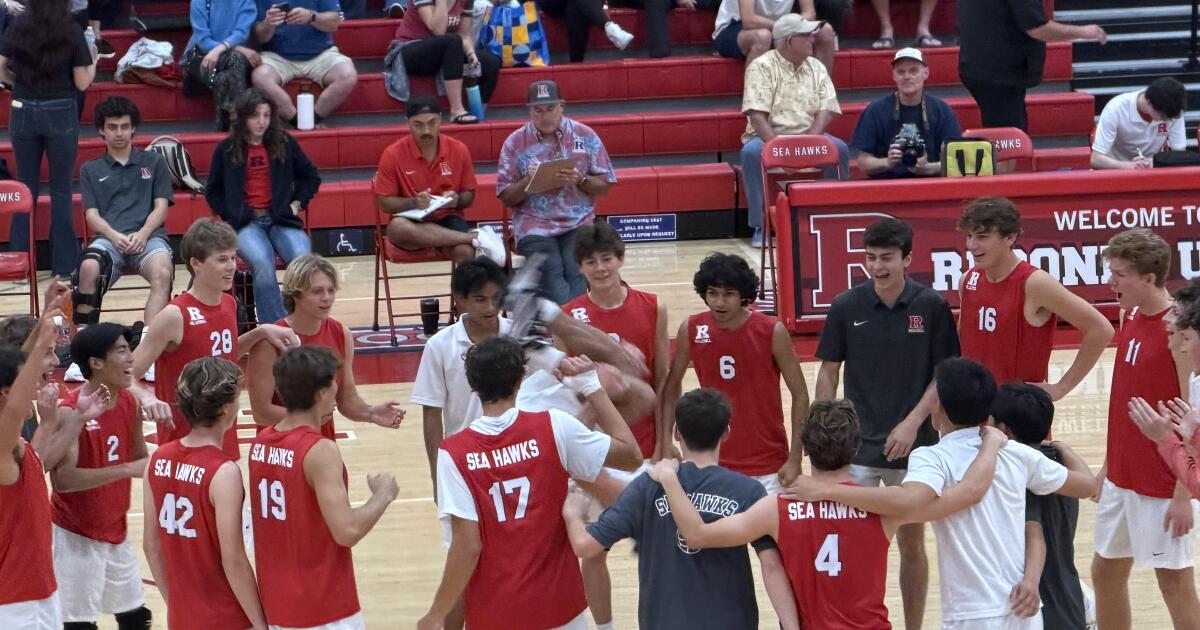
Prep sports roundup: Redondo Union takes down No. 1 Mira Costa in boys volleyball

Rubio joins crucial G7 talks as Iran war set to dominate second day

A surprise resignation could open the door for an independent to win a Montana Senate seat

Metro Detroit weather forecast, March 26, 2026 — 11 p.m. Update

Man convicted in the deadly 2021 assault of a Thai grandfather in San Francisco avoids prison

Florida High School Football Rankings: Top 25 teams – Oct. 21

How old is Bo Nix? What to know about Oregon quarterback ahead of 2024 NFL Draft

Cleary's 21 help Le Moyne down Central Connecticut State 69-64 in OT

99th annual Pony Swim held in Virginia

Indiana Members Credit Union announced as new anchor tenant at Bottleworks District
Rubio joins crucial G7 talks as Iran war set to dominate second day
A surprise resignation could open the door for an independent to win a Montana Senate seat

Video: Savannah Guthrie Says She Believes Her Mother Was Taken for Ransom

Stefanik grills University of Michigan leader on lack of audit after string of Chinese national arrests

Photos: More than one million displaced by Israel’s evacuations in Lebanon
-

 Detroit, MI1 week ago
Drummer Brian Pastoria, longtime Detroit music advocate, dies at 68
-

 Science1 week ago
How a Melting Glacier in Antarctica Could Affect Tens of Millions Around the Globe
-

 Movie Reviews1 week ago
‘Youth’ Twitter review: Ken Karunaas impresses audiences; Suraj Venjaramoodu adds charm; music wins praise | – The Times of India
-
 Science1 week ago
I had to man up and get a mammogram
-

 Sports6 days ago
IOC addresses execution of 19-year-old Iranian wrestler Saleh Mohammadi
-

 New Mexico4 days ago
Clovis shooting leaves one dead, four injured
-

 Texas7 days ago
How to buy Houston vs. Texas A&M 2026 March Madness tickets
-

 Tennessee3 days ago
Tennessee Police Investigating Alleged Assault Involving ‘Reacher’ Star Alan Ritchson