Miami, FL
How the Miami Herald Got the Epstein Documents


Last week, a judge began to release hundreds of pages of previously sealed court documents related to Jeffrey Epstein. Speculation about the anticipated contents abounded, with various corners of the internet hyping a presumed “Epstein client list” naming high-profile associates of the disgraced financier and convicted sex offender. Yet most of the names revealed in the filings—including Donald Trump and Bill Clinton—were already publicly known. That there was no smoking gun list of stars tied to Epstein’s trafficking of minors seemed, for some, to be the biggest takeaway. Take The New York Times’ write-up, which noted that while “the documents “appeared to add a bit more context” to Epstein’s relationship with powerful men, “they provided little, if any, new fodder for conspiracy theorists who remain fixated on Mr. Epstein’s dealings more than four years after his death.”
The Miami Herald’s Julie Brown, however, has a different perspective. “It is all part of the story,” she says, of “our criminal justice system and how we allow rich, famous, influential people to manipulate” it—a story she has been trying to tell for years. Brown is the reporter who, in a three-part investigation in 2018, questioned the 2008 plea deal that allowed Epstein to avoid federal charges and identified dozens of victims who accused Epstein of seeking and paying underage girls for sex. Her reporting returned Epstein to the spotlight and helped prompt his 2019 arrest. “It’s missing the point if all you want is names of famous people,” she says. “It’s about understanding the web of human trafficking and sex trafficking in our country.”
In recent days, the Herald has reported that the records contained “several full depositions that had not previously been public, subpoenas, witness lists, and court motions.” Among them was a June 2016 deposition by a girl whose name was redacted and was about 16 or 17 when she was lured to Epstein’s room. “I was just there, and all of a sudden something horrible happened to me,” the girl recalled, explaining that she was vague on details because she “worked very, very hard to not recall anything specific about my sexual encounters with this person as one of his victims.” Another new revelation was testimony given by a witness, Johanna Sjoberg, who worked for Epstein for five years and said she once overheard him on the phone talking about the hairdresser Frédéric Fekkai. “I heard him call someone and say Fekkai is in Hawaii. Can we find some girls for him?” she said. (Fekkai has denied knowing of Epstein’s conduct in the past.) The Herald also reported that the documents released “provide a deeper window into [Virginia] Giuffre’s quest to get the FBI and federal prosecutors to arrest Epstein,” including through “emails to FBI agents and a former federal prosecutor.”
The unsealed documents come from a 2015 defamation lawsuit filed against Ghislaine Maxwell—the British socialite and Epstein associate who is currently serving a 20-year sentence for her role in aiding Epstein’s abuse—by Giuffre, one of Epstein’s victims. The Herald has been fighting since 2018 to make documents in the case public. Thousands of pages of documents have been released as a result of their legal fight, and the latest batch, unsealed January 9, “are just the last of them,” says Brown. “They’ve been coming out in dribs and drabs for years now, and I think that you have to look at the totality of the information,” she says, which “is that this was a much bigger operation than just two dozen girls being sexually abused in Palm Beach.” She says the Herald was “never under the delusion that we were going to learn all these big names.” But “these documents are important to these victims. They want the truth to come out.”
The 2015 defamation case was settled out of court in 2017, but lots of information in it remained sealed. When Brown was working on her series for the Herald, she heard from sources that “there were documents in this lawsuit that would reveal more about the scope of what [Maxwell and Epstein] were doing,” she says. “Up until then, it was really only known that the crime happened in Palm Beach and there were victims in Palm Beach.” Now, she notes, “Of course, we know that the crimes were much more expansive than that”—thanks in part, she says, to the Herald’s legal fight. “Some of the first documents that were released were the most revealing,” says Brown, “and they were released on August 9, 2019, which was the day before Epstein was found dead.” The Herald’s original motion to intervene in the case and unseal the documents, in April 2018, came at the advice of former Herald attorney Sandy Bohrer, says Casey Frank, the Herald’s investigations editor. “We don’t like to throw money at lawsuits that are likely losers, but here’s a case where our lawyer was telling us, everything I see here tells me that you ought to sue,” says Frank, who has been with the paper for more than 40 years. “You may lose at the first level, but I think you’ll win at the second level,” Frank recalled Bohrer saying. “And by gosh, we won at the appeal level.”
Herald reporters have acknowledged the limits of the unsealed records while also maintaining their value. “Though none of the records directly implicate anyone beyond Epstein and Maxwell in illegal or improper activities, witnesses—mostly young women—testified that Epstein bragged about his sexual prowess with virgins and boasted of his long list of famous acquaintances,” the Herald wrote of the latest batch of documents. That list included Trump, Clinton, Prince Andrew, and the late Michael Jackson. (Neither Trump nor Clinton are accused of any wrongdoing involving Epstein, and a spokesperson for Clinton has referred to a statement issued on behalf of the former president in 2019, which stated he had no knowledge of Epstein’s “terrible crimes.” In 2022, Prince Andrew settled a sexual abuse lawsuit brought by Giuffre, though he has insisted he never met Giuffre and denied any wrongdoing.) “As is often the case with Epstein,” Brown wrote for the Herald, the documents “included salacious but largely unproven allegations by women who have lived traumatic lives, made more difficult by their involvement with Epstein.”
I ask Brown if she thinks that Epstein’s death and Maxwell’s imprisonment have dampened the media’s interest in the story, even as mainstream publications such as the Times and Wall Street Journal have conducted investigations in recent years. “Not only the media’s interest, but, more importantly, the government’s interest,” she says. “We know the names of some of the people that helped him and who worked for him.” She acknowledges that Maxwell’s case was a “very difficult” one to prosecute. But, she adds, “It just boggles my mind that there is only one person paying the price for this horrific crime.”



Miami, FL
I went to 2 famous Miami restaurants, a flashy steakhouse and a Cuban hot spot. Here’s how they compared.

Café La Trova celebrated the city’s Cuban heritage through live music, warm hospitality, and dishes that felt deeply rooted in local culture.
Papi Steak, meanwhile, embraced Miami’s flashy, see-and-be-seen reputation with theatrical presentations, celebrity appeal, and an atmosphere that often felt more like a nightclub than a standard steakhouse.
Despite Papi Steak’s over-the-top reputation, nearly every dish I tried — from the wagyu pastrami to the hamachi crudo — was thoughtfully prepared and tasted just as good as it looked. If you’re looking for an indulgent, special-occasion dinner where the spectacle is part of the fun, it’s easy to understand why the restaurant has become such a phenomenon.
Still, if I could only recommend one restaurant to a first-time visitor, I’d choose Café La Trova.
While Papi Steak offered the more decadent, once-in-a-lifetime meal, Café La Trova delivered a more authentic Miami experience, pairing outstanding food and cocktails with a genuine sense of the city’s history and culture.
Miami, FL
7 more women arrested at southwest Miami-Dade massage parlors, accused of prostitution in undercover sting

Seven more women have been arrested at massage parlors across Miami-Dade, following a wave of arrests in an undercover prostitution sting operation run by the Miami-Dade Sheriff’s Office.
All seven women appeared in bond court facing prostitution charges as well as running a massage business without a license. The arrests come a day after seven other women were arrested at massage parlors in southwest Miami-Dade. Those locations were closed after the first round of arrests.
According to arrest reports, the women would offer sexual acts to an undercover detective after a massage. They would also charge, according to the reports, prices ranging from $50 to $150.
The women’s ages ranged from 46 to 67 years old:
- Yaoying Lin, 58
- Xiufen Lin, 51
- Yan Xi, 48
- Zixuan Wang, 46
- Mei Hui Lin, 49
- Quirong Xu, 67
- Hongli Ren, 63
Judge Mindy Glazer presided over the bond court appearances. During the proceedings, she referenced charges of “committing a lascivious act and engaging in prostitution,” according to CBS News Miami’s reporting from the courthouse.
Yaoying Lin’s attorney, Paul Petruzzi, persuaded the judge to reduce her charge from a felony to a misdemeanor.
“She’s resided in Miami for many years. Married. And has never failed to appear,” Petruzzi said.
“They had my client held overnight. She was charged with a felony unfairly. To the point where a judge on her own dismissed it. It’s either real bad, bad, bad police work. Or it’s something else. A little bit more nefarious. I’m afraid the latter,” Petruzzi said.
The Miami-Dade Sheriff’s Office said that they will not be providing any interviews regarding this undercover sting at this time.

This is the eighth edition of Miami Hurricanes on SI’s breakdown of each team on the 2026-27 Miami Hurricanes football schedule.
Miami, to this point, is coming off its biggest test of the year against Pitt. Now they will turn their attention to Bill Belichick and what he has accomplished to this point in his second season as a college football head coach.
North Carolina should be better than last season after a disappointing 4-8 2025 outcome. However, the Hurricanes also understand that this is the ideal trap game before they head on the road to face Notre Dame in one of the biggest games of the season, which could hold massive playoff implications.
Miami can’t look forward. All eyes will be on what the new season and another fun home game against a rising contender.
Here’s everything you need to know about UNC and its 2026 unit.
The Offense
Petrino03 | USA TODAY Network via Reuters Connect
Thursday 17, 2014
After coming off one of the worst offensive outputs in the country last season, Belichick knew that he needed to make a move quickly. It started with hiring veteran coach Bobby Petrino as the teams offensive coordinator.
It won’t be the 126th ranked offense, but how much better could it get with Petrino making the calls? The Tar Heels will also have a new quarterback under center, but so far, no one knows who exactly it will be.
The most talented player in the quarterback room is Travis Burges. A 6-foot-4 freshman dual-threat quarterback with unlimited potential, but they also went into the transfer portal and landed some experience in former Wisconsin QB, Billy Edwards Jr., is expected to start, but the change could be made halfway through the season if things don’t work.
Two new starting receivers also entered from the transfer portal, but the consistency in the room was provided by Jordan Shipp. Last season, he led the team in receiving yards (671) and touchdowns (6), even with how bad the team was at scoring.
UNC’s rushing attack was also highlighted by returning sophomore Demon June. He rushed for nearly 500 yards in his limited snaps, averaging 5.5 yards a carry with two touchdowns.
Defense
Defense should be the calling card of the Tar Heels next season, led by their star pass rusher, Melkart Abou-Jaoude. The 6-foot-5, 260-pound rusher totaled 10.5 sacks and 47 tackles last season. Another year learning under Belichick would likely push him to be a first or second round pick in the 2027 Class, one that the Canes are paying close attention to.
Moreover, some familarity will be on the sideline and a likely starter during his freshman year in Keton Dopson, the former Miami Hurricanes commit. He reclassifed to the 2026 class, and flipped his commitment knowing that there is a better chance to get on the field quicker at UNC than the depth that he would have had to wait behind at least for this season.
UNC’s secondary is one of the more sound groups in the country compared to the rest of its roster. However, their linebacking core who rack up tackles, are transfers who have to learn the Belichick system.
Schedule
Schedule-wise, this game is the biggest trap game of the season for the Canes. If Miami finds its way past Pitt, it will be 7-0, and this game stands between the Canes and a rematch with the Fighting Irish.
This is the perfect time for Belichick to get his first signature win against a returning program like Miami, which puts a ton of pressure on the Canes to get the job done. However, the Canes can’t afford it, knowing what is coming next.
Moreover, this is the perfect chance for Darian Mensah to have a better game than last season’s outing against the Tar Heels. His one touchdown performance was one of his weaker games of the season, but it could be a step for him to get control of the Heisman conversation.
Outlook
MIami will be favored in this game, similar to how it will be for the rest of the season. UNC will give the Canes one of the better defensive matchups this season that will also test the offense.
Miami’s history against UNC in the Mario Cristobal era has shown it can have a high-flying offense but has to avoid self-inflicted wounds.
The Game
Date: October 31
Time: TBA
TV: TBA
Location: Hard Rock Stadium
Series History: UNC leads 16-11
Last Meeting: 2023
The Team
The Coach: Bill Belichick
Offensive Coordinator: Bobby Petrino
Defensive Coordinator: Steve Belichick
2025 Record: 4-8
2025 Rankings: 126th Total Offense, 70th Total Defense
Players to Watch: Melkart Abou-Jaoude, R-Sr, EDGE
Top Newcomer: C.J. Sadler, WR, Freshman
Biggest Question: How will Belichick adjust in his second year as a college football head coach?
The School
Location: Chapel Hill, North Carolina
Founded: 1789
Enrollment: 32,099
Nickname: Tar Heels
Colors: Power Blue and White
Mascot (Symbols): Rameses the Live Ram
The Program
Last Win in the Series: 2023
Last ACC Title: 1980
National Championships: NA
Playoff Appearances: NA
Last missed bowl season: 2025
Heisman Trophies: NA
The Schedule
October 31, Time TBA, Pitt Panthers @ Miami Hurricanes
This is the eighth story in Miami Hurricanes on SI’s early preview series of all 12 regular-season opponents for Miami football in 2026.
Follow all social media platforms to stay up to date with everything Miami Hurricanes- Twitter, Facebook, Instagram, Youtube, and BlueSky.
 Add us as a preferred source on Google
Follow
-
Culture21 minutes ago
Which Version of the ‘Odyssey’ Should You Read?
-
 Lifestyle24 minutes ago
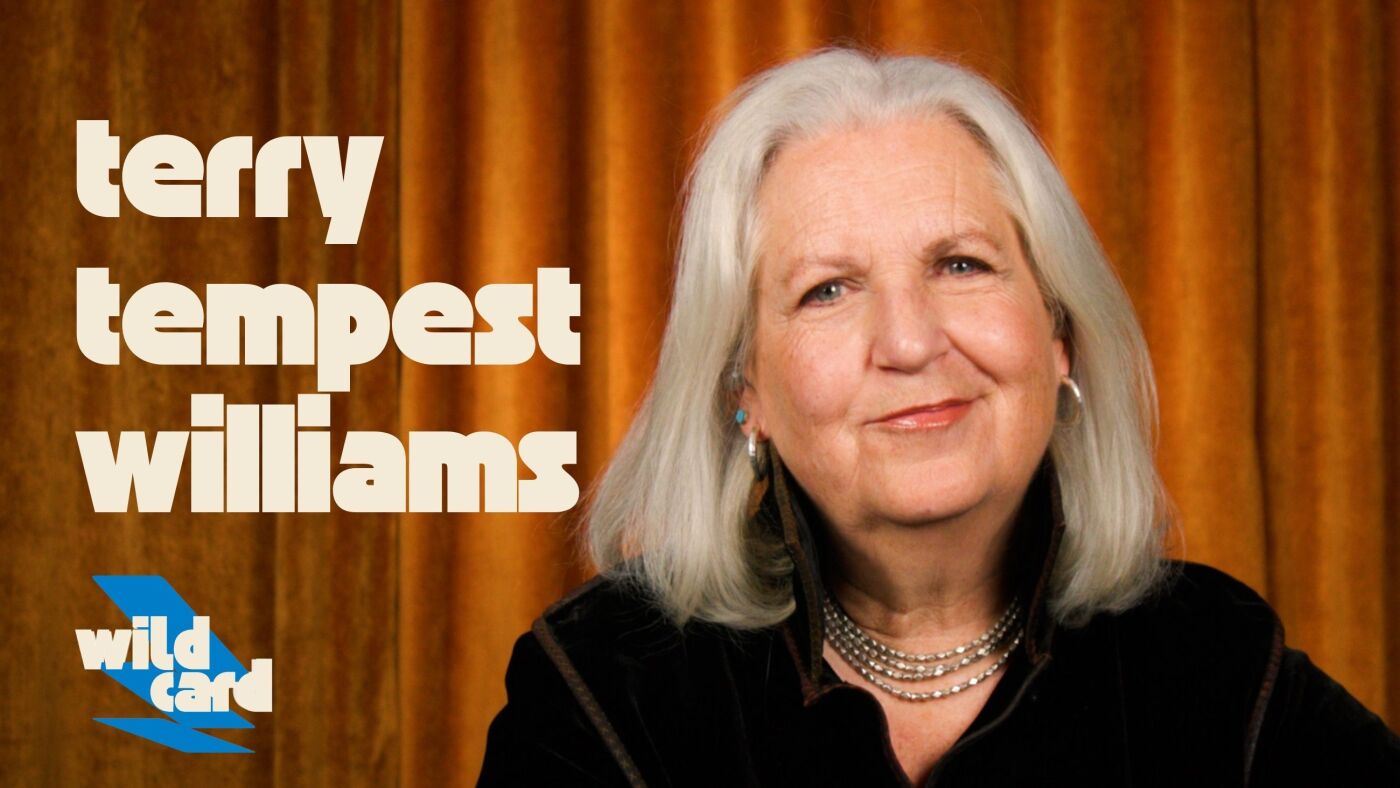
Terry Tempest Williams on why women with big ideas get labeled ‘crazy’ : Wild Card with Rachel Martin
-

 Technology36 minutes ago
Google’s Nest Thermostat has hit its best price of the year
-

 World39 minutes ago
Argentinian flight instructor jumps to death from plane, 22-year-old student forced to land alone
-

 Politics44 minutes ago
Omar’s disclosures erased millions, leaving her with potential negative net worth. She won’t explain why.
-

 Health51 minutes ago
Dr Oz links obesity to chronic disease surge, says GLP-1s can ‘jumpstart’ better health
-

 Sports54 minutes ago
Pirates star pitcher makes unfortunate history after being taken out in middle of perfect game bid
-

 Technology59 minutes ago
Medical identity theft follows you into the doctor’s office

