Maryland
Gestures are easy, reform is hard.


Going back to the 1980s and the escalation of the war on drugs, how many times did we sit in a city or county courtroom as prosecutors called the names of defendants accused of having marijuana in their pockets?
And how many times did we wonder why the state – through local police and prosecutors – bothered to bring these cases to Maryland District Court? They were victimless crimes. Most of the defendants, having been arrested and sent to a detention center, pleaded guilty. In my observations, most of the Baltimore judges gave lenient sentences.
It seemed like a waste of time and expense, having little to do with public safety.
And, of course, the defendants came out of the courtrooms with criminal records – or yet another misdemeanor added to the records they already had. And what was the consequence?
Forever and a day, criminal convictions of any kind barred people from getting decent jobs and renting decent apartments. The problem persisted for years after prison, too. Business owners refused to hire people with criminal records, leaving many of them exasperated and frustrated in their efforts to go straight after prison.
Once upon a time, even a marijuana misdemeanor could be an obstacle to employment, though to what extent in Maryland in more recent years, I am not sure. I’ll tell you why.
I had an intensive period of contact with hundreds of adults with criminal records for about five years, starting in June 2005. The war on drugs was still a thing, though law enforcement’s main focus was on heroin and cocaine, not so much marijuana.
I reported frequently on the futile struggles of ex-offenders, mostly from the Baltimore area, in trying to find jobs after prison. The problem was related to what at the time was a high recidivism rate in Maryland – that is, the percentage of inmates who returned to the Division of Corrections within three years of their release from prison. It ranged at one point from 50% to 60%.
As you might imagine, the men who had the most trouble had the worst records – attempted murder, assault, armed robbery, theft and distribution of heroin and cocaine.
Getting arrested with weed caused problems for people trying to find work and housing. But, at least among the many ex-offenders I communicated with over the last two decades, not as much. They had more serious criminal records that scared off prospective employers and landlords.
Considering how attitudes and policies have changed in the years since then – fewer arrests for marijuana possession, the legalization of it for medical and now recreational use – I can’t imagine that a history with cannabis hurts job hunters as much these days.
I note this in light of the Gov. Wes Moore’s grand move – his pardons for thousands of Marylanders who were convicted of a marijuana possession misdemeanor. It’s good that the governor is clearing the books, and no doubt some will benefit directly from his action. And while it looks made for national headlines, Moore’s executive order erases some of the damages from the war on drugs and symbolizes the progressive thinking that has come, slowly and finally, to criminal justice, at least in this blue state.
Partly as a result of actions by the General Assembly, prison populations have fallen along with the recidivism rate.
“Since the 2018 implementation of the Justice Reinvestment Act, the lessening of penalties for some theft and drug possession offenses diverted inmates away from state incarceration,” says a report from the Department of Public Safety and Correctional Services. “From fiscal year 2015 to fiscal year 2022, the percentage of inmates serving sentences for these crimes within DOC custody dropped by 75% (theft) and 75% (drug offenses) respectively.”
The result of that, for the public, is a focus on inmates who committed more serious, often violent crimes.
While some of those inmates will be in prison for decades, if not life, the majority will be released at some point, and most, at least at first, will return to the communities where they started.
So, even with the progress that has been made, there’s a lot more work to be done, here and everywhere, if we want better results from the billions we pay for police, prosecutors and prisons.
The nation’s incarcerated population stands at 1.2 million, according to the Bureau of Justice Statistics. In Maryland, we have about 15,000 inmates in prison and, at any given time, another 12,000 state residents in local jails, according to the non-profit Prison Policy Initiative.
To make reform complete, the governor should push for an overhaul of our correctional system and a restart with a fully holistic focus – that is, ensuring that inmates leave prison in better shape than when they arrived.
All prisons should be restructured to be intensely therapeutic. Hire more social workers, psychologists, life coaches and vocational specialists to change lives behind the walls.
Gestures are easy, reform is hard.
Reform means changing the way we do things, putting corrections in corrections. The governor can pardon people who got caught with marijuana; he can also turn our prisons into places that, while satisfying the demand for punishment, provide a solid second chance for men and women who got off to a bad start in life.



In the modern era of college football, the recruiting cycle is a relentless 24/7 arms race where the standing still is the same as falling behind. While most programs are still flirting with 2027 targets, Mike Locksley is playing chess. By securing 20 “Hard Commits” for the 2027 cycle, Maryland has effectively built the skeleton of an entire class before some sophomores have even picked up their varsity letters.
Currently sitting at No. 37 in the national rankings, the Terrapins are signaling a massive shift in roster construction. This isn’t just about early-cycle momentum. It’s about a calculated, high-volume strategy designed to raise the program’s floor. The “Shell” is being fortified from the inside out, and the data suggests a staff that is more organized than ever.
Maryland’s 2027 recruiting class is already one of the most fascinating early builds in the Big Ten cycle, a 20‑man foundation built on receiver depth, national reach, trench size, and two legitimate blue‑chip cornerstones. But even with all that momentum, the class is still incomplete. The next phase of Maryland’s board, July through August, will determine whether this group becomes simply “solid” or truly transformational.
Below is a full breakdown of what’s missing, why it matters, and how it fits into the broader identity Maryland is constructing.
No. 1: WR/ATH: One More Game‑Breaker to Complete the Takeover
Maryland has already executed one of the boldest position‑group strategies in the country with six wide receivers in a single class. It’s a volume play designed for the transfer‑portal era, ensuring the Terps always have explosive depth regardless of attrition. Even with Myles McAfee (four-star), Davion Vanderbilt (three-star), Kyren Caldwell (three-star), Anthony Henderson (three-star), Alex Fontenot (three-star), and Mason McClure (three-star), the staff still wants one more finishing piece, a true matchup‑breaker.
Why? Because the Big Ten is becoming a “basketball‑on‑grass” league. Locksley wants a room where any of the top four receivers can win a game. The final WR/ATH spot is about securing a player with elite burst or positional versatility, someone who can line up inside, outside, or in the backfield and tilt the field. This isn’t about quantity anymore. It’s about finding the one athlete who raises the ceiling of the entire group.
No. 2: Defensive Back Flexibility: A Hybrid Safety/Nickel
Kenaz Sullivan, the class headliner, gives Maryland a legitimate CB1 with national credibility, but the modern Big Ten requires more than boundary corners. Maryland still needs a hybrid safety/nickel defender who can cover slot receivers, fill alleys, and disguise coverages.
Maryland already holds four defensive back commitments, but none fully match the “Swiss Army knife” profile the staff is targeting, a hybrid safety‑nickel who can cover in space, trigger downhill, and disguise looks. That role has become essential as Big Ten offenses lean heavily on motion, spread formations increasingly require a third coverage‑capable defender, and Maryland’s own scheme thrives on versatility and post‑snap deception. Adding a flexible nickel defender would round out the secondary and give the Terps the adaptability needed to counter the conference’s evolving offensive trends.
No 3: Edge/DL Upside: One More Pass‑Rush Body With Length
Maryland has addressed the interior with Jayden Agberodiola, a 6‑foot-3, 340‑pound space‑eater built for November football, and added versatility with Zeke Walkup and Levi Babin, but the class still lacks one more true pass‑rush body with length and twitch.
This is the missing ingredient for a Big Ten defense. A pass‑rusher who can consistently win one‑on‑one on third down, possesses the frame to grow into a 250‑plus‑pound edge, and complements the interior size Maryland has already secured. While the Terps have made clear strides under Brian Williams, climbing into the conference’s top tier requires more natural, high‑ceiling rushers who can change games in obvious passing situations. That final edge/DL spot is all about upside, landing a long, developmental athlete with the traits to eventually become a true difference‑maker.
No. 4: Offensive Line: The Most Important Remaining Need
This is the big one. Maryland has three offensive linemen committed, including Alabama tackle Caleb Canty, who brings true SEC‑level size and movement skills, but the staff knows the Big Ten is won in the trenches, and the offensive line remains the most important remaining priority. July camps will ultimately shape the board, yet the Terps still need a true left‑tackle frame, more interior depth, and higher‑rated linemen to raise the class’s per‑player average. The offensive line is where Maryland can make its biggest leap. The class has depth everywhere else, but now it needs quality and long‑term upside in the trenches to match.
More from Maryland On SI
Stay up to date with the Terrapins by bookmarking Maryland On SI and follow us on Twitter.
 Add us as a preferred source on Google
Follow

We’ll see a few afternoon and early evening scattered storms today followed by a drier end to the weekend. Highs today will reach the mid 80s with overnight lows in the upper 60s to lower 70s.
Mainly sunny and drier for the end of the weekend
Sunday is trending drier with lower humidity and a high near 85. Our temperaturs stay warm but comfortable on Monday with afternoon temperatures peaking the mid-80s. The chance of rain remains slim through much of next week.
Hot weather returns to Maryland by midweek
Temperatures start an upward trend beginning Tuesday. By midweek temperatures soar into the mid and upper 90s both Wednesday and Thursday afternoons. Humidity won’t be as bad as the July 4th week but heat indices could still reach near or above 100° during the afternoon hours for a few days. Heat will gradually ease heading into next weekend.

MARYLAND (WBFF) — Art D’Amico remembers when a bushel of crabs cost about $35 in the mid-1970s. Today, the president of the Annapolis Anglers Club pays nearly $400 a bushel — a price he says has climbed by at least $150 in the past five years.
“Everything’s more expensive,” said D’Amico, who has been involved in Chesapeake Bay fishing and crabbing since 1973, adding that he’s never seen crab prices like this before.
The soaring cost reflects more than inflation. Watermen, seafood dealers and economists say higher operating costs, shifting markets and concern about Maryland’s blue crab population are pushing prices higher, making one of the state’s signature summer traditions more expensive. But many Marylanders are still buying crabs, even at record prices.
“It’s definitely not what we’re accustomed to this time of year as far as quantity and price,” said John Ecker, a managing partner of Conrad’s Crabs, which has four locations in Maryland. “I’ve been here for 19 years doing this and, yeah, they’re getting higher.”
Read the full story on The Baltimore Sun.
-

 Sports3 minutes ago
Conor McGregor’s long-awaited Octagon return cut short by apparent knee injury seconds into UFC 329
-

 Technology8 minutes ago
Robotaxi pit stops could pop up near you
-
 Business15 minutes ago
‘Moana’ debuted just 10 years ago. Why Disney is remaking it as a live-action movie
-
 Entertainment18 minutes ago
Wes Anderson’s needle-drop genius gets its due at his Hollywood Bowl tribute
-
 Lifestyle23 minutes ago
‘The Odyssey’ is the mother of bad-trip tales. Why are we obsessed with travel disasters?
-
 Politics30 minutes ago
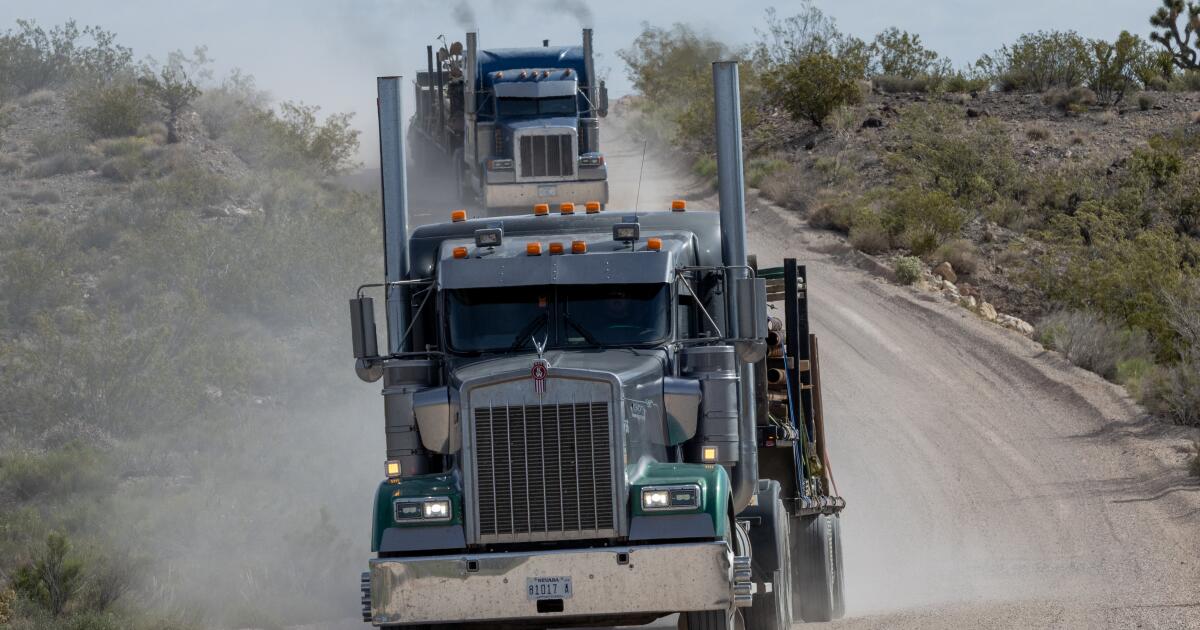
Trump slashes wildlife protections, putting endangered California animals at risk
-
 Sports38 minutes ago
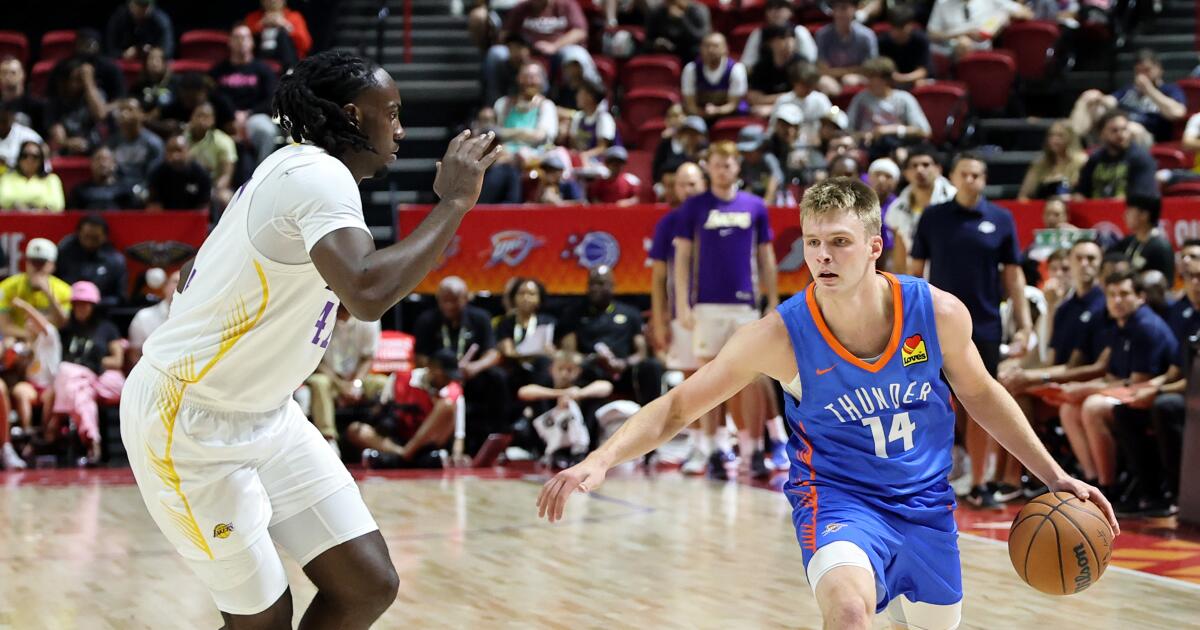
Lakers’ Arthur Kaluma erupts for 34 points in breakout Summer League performance
-

 World48 minutes ago
Sheikh Hamad bin Khalifa Al Thani, architect of modern Qatar

