Maryland
Advocates, Lawmakers Hope 2025 Will Be the Year Maryland Stops Subsidizing Trash Incineration – Inside Climate News


For more than a decade, Maryland Sen. Karen Lewis Young tried to get the state to pull the plug on public subsidies for trash incineration, a form of energy that’s considered dirtier than coal. None of the bills have crossed the finish line.
Then came a phone call as she was pulling into her driveway a few weeks ago. On the other end of the line was Bill Ferguson, the Senate president. “He said, ‘This is the year I’m not only going to support the bill, I want to sponsor that bill,’” recalled the Democrat from Frederick County.
On Oct. 18, Ferguson announced he will sponsor legislation in the upcoming General Assembly session to remove waste incineration from the Renewable Portfolio Standard (RPS), the state’s incentives program for renewable energy projects.
“I’ve become increasingly concerned about emissions from the BRESCO incinerator as a public health and environmental justice issue for surrounding neighborhoods,” Ferguson said of the WIN Waste incinerator (formerly known as Wheelabrator and BRESCO), the largest stationary source of industrial air pollution in Baltimore.

Explore the latest news about what’s at stake for the climate during this election season.
Located off I-95, next to the city’s most disadvantaged communities, the incinerator emits hazardous pollutants including mercury, lead, carbon monoxide, nitrogen oxides and fine particulate matter. Those noxious emissions contribute to respiratory issues, heart conditions and other serious health problems, particularly in adjoining neighborhoods.
“As we take steps to incentivize true, clean energy in Maryland, 2025 must be the year that we remove waste incineration from our Renewable Portfolio Standard,” Ferguson declared.
Under Maryland law, electricity providers can buy renewable energy credits (RECs) sold by energy providers—including trash incinerators—and pass the costs of those credits on to consumers in their energy bills. RECs are issued when one megawatt-hour of electricity is generated and delivered to the grid from a renewable energy source.


Lewis Young said she was happy to see Ferguson go from being on the fence a year ago to fully supporting the efforts to deny millions in public dollars to incineration companies.
She’d opposed trash incineration before she entered the Maryland General Assembly in 2015. “For me, the No. 1 issue was the negative environmental effects of burning trash,” she said. “We were spending, on average, $17 million a year to incentivize dirty energy. That money could be better spent elsewhere, not only financial resources but job growth in clean energy industries.”
She said her research led her to believe that more than 80 percent of dirty energy sources like incinerators were located in communities where 25 percent or more of the population identified as either minority or lived below the federal poverty line. “Because of those reasons, I got increasingly enthusiastic and determined to get trash incineration removed as clean energy,” she said.
In the 2024 legislative session, Lewis Young sponsored the Reclaim Renewable Energy Act, which proposed excluding energy derived from burning waste from the RPS. The bill failed to advance out of committee in either chamber.
It was the seventh consecutive year a bill seeking an end to a public subsidy for trash incineration failed to pass. In 2023, a similar bill proposing the removal of trash incineration, factory farm gas and woody biomass from the RPS met the same fate. Because the 2024 bill focused solely on ending credits for trash incineration, advocates were hopeful about its passage. But Maryland Gov. Wes Moore, a Democrat, refused to get behind the bill, attracting the ire of environmentalists.
It’s anyone’s guess if the Moore administration will act differently in the 2025 legislative session. Carter Elliott, a press secretary for the governor, provided a written comment that did not answer the question: “The governor looks forward to working with the state legislature, local leaders, and advocates on behalf of all Marylanders this upcoming session. The Moore administration is working with all partners involved to ensure that we are continuing to put forward legislation that will make Maryland safer.”
Incinerators have been eligible for public subsidies through the state’s clean energy credit system since then-Gov. Martin O’Malley signed legislation in 2011 declaring the electricity generated from burning trash a “tier one” renewable energy, on par with wind and solar.
Also called “waste-to-energy” facilities, trash incinerators like those operated by WIN Waste convert non-hazardous, non-recyclable materials into usable energy through combustion. They also release hundreds of thousands of tons of climate-warming carbon dioxide every year in addition to PM2.5—extremely small particles that get into blood and lungs.
With Ferguson’s support, Lewis Young is hopeful the General Assembly will finally remove trash incineration as “tier one” renewable energy.
Del. Lorig Charkoudian, a Democrat from Montgomery County, said she was thrilled to hear of the Senate president’s commitment. “It’s a very good sign, and I look forward to working with all of my colleagues to make it a reality. Nothing’s a done deal until the entire General Assembly votes to make it happen. And while I join in the optimism, we’re going to continue to work to make sure that it happens.”


Charkoudian stressed that the 2024 legislation was about ending the public subsidy for incineration and is unrelated to the question about waste management. Incineration companies wrongly asserted at the time that removal of the subsidy will lead to waste management problems, she said.
She said that incineration does not belong in the RPS and public dollars should be used to increase the amount of real clean energy on the grid: solar, onshore and offshore wind and hydro.
She said that taking away this subsidy will not make a difference in whether these plants continue to operate. “If you look at their profits and revenue statements, there’s zero evidence to suggest that taking this subsidy away would result in the closure of the plants.”
Charkoudian is also working on a separate “Clean Resource Adequacy Bill” to be introduced in the upcoming session that aims to restructure the RPS, bringing in as much new clean energy generation to the grid as possible while rapidly adding energy storage.
Mary Urban, communications director for WIN Waste Innovations, said the company has recently invested nearly $50 million to upgrade the facility. “Similar legislation has been introduced over the past several years, but each proposal undermined the Renewable Portfolio Standard program’s goal to reduce our reliance on fossil fuels,” she said in emailed comments.
Urban added that Maryland generates minimal energy from wind and solar and relies predominantly on energy from nuclear, natural gas and coal. “Excluding waste-to-energy (WTE) from the RPS requires Marylanders to subsidize out-of-state businesses while ignoring the work WIN does to divert waste from landfills and reduce greenhouse gases while avoiding fossil fuels,” she added.
Between 2012 and 2030, Maryland is set to pay more than $300 million to trash incinerators, according to a March analysis by the nonprofits Public Employees for Environmental Responsibility, Clean Water Action and Progressive Maryland. It showed that the participating trash incinerators emitted more CO2 per megawatt-hour than any other energy sources included in the RPS. Among the facilities operating in Maryland, the WIN Waste incinerator in Baltimore City emitted the highest amount of CO2, estimated at 690,033 tons per year.
In 2022, the most money went to Covanta, which owns and operates a trash incinerator in Lorton, Virginia, and pocketed $11.7 million, the data showed. WIN Waste Innovations, which owns and operates the incinerator in Baltimore, received about $4.2 million through the sale of RECs.
In the past 10 years, the report said, the price of RECs sold by trash incinerators increased more than sevenfold. They are now more expensive than RECs affiliated with wind, a clean, renewable energy source.
Ferguson’s announcement has energized community groups and environmental organizations who have long voiced their opposition to burning trash for energy at public expense.
Jennifer Kunze, Maryland director for Clean Water Action, called Ferguson’s statement a “game changer” and the result of his constituents making sure this issue remains a priority. She said the communities impacted by trash incineration have been “really loud and consistent for years” in highlighting it as a major climate and environmental justice problem that needs to be addressed.
This story is funded by readers like you.
Our nonprofit newsroom provides award-winning climate coverage free of charge and advertising. We rely on donations from readers like you to keep going. Please donate now to support our work.
Donate Now
She said that there’s still a lot of work that needs to happen between now and the end of the legislative session in April, particularly for making sure that the bill moves forward in both House and Senate committees. “We are really looking for the House now to make it known early that this bill is going to be an environmental justice priority,” Kunze said, adding that a lot depends on House Speaker Adrienne Jones and C. T. Wilson, chair of the House Economic Matters Committee.
“We’re really looking to Gov. Moore, the Maryland Department of the Environment and the Maryland Energy Administration to issue a similar public statement that trash incineration needs to come out of the RPS and won’t be part of the state’s clean energy plan,” Kunze said.
Separately, the U.S. Environmental Protection Agency is investigating a federal civil rights complaint alleging that Baltimore City’s 10-year solid waste plan failed to commit necessary resources to end the city’s reliance on the WIN Waste incinerator.
The South Baltimore Community Land Trust, the community group that filed the complaint along with the Chesapeake Bay Foundation and the Environmental Integrity Project, called Ferguson’s announcement “a critical step forward for environmental justice.” In a statement, the group said: “South Baltimore residents have long suffered the health and development impacts of the BRESCO incinerator—the largest single source of air pollution in Baltimore and the source of toxic ash filling the city’s landfill also located in the neighborhood.”
Kim Coble, executive director of the Maryland League of Conservation Voters, said the lack of progress on trash incineration during the last legislative session was listed in her group’s 2024 environmental scorecard as an impediment to the state’s transition to clean energy.
Coble said the inability to remove polluting energy sources from the RPS was one of the many bills with environmental justice implications that the 2024 General Assembly session failed to make progress on.
“Unfortunately, none of the bills passed that were directly related to environmental justice. So that’s a problem. The same with climate and energy,” she said. “And none of the three bills related to generating revenue [for climate action] got out of the committee.”
Lewis Young said issues of energy and climate action will take center stage during the upcoming General Assembly session. She expects bills calling for making polluters pay—that type of proposal “met some pushback” from the administration last year, she said, alluding to the Responding to Emergency Needs from Extreme Weather (RENEW) Act. The bill, which failed to pass, aimed to make oil and gas companies pay for their pollution.
Other bills calling for new penalties and incentives will also likely drop next year to generate momentum for meeting the state’s climate and emissions reduction goals, she said.
About This Story
Perhaps you noticed: This story, like all the news we publish, is free to read. That’s because Inside Climate News is a 501c3 nonprofit organization. We do not charge a subscription fee, lock our news behind a paywall, or clutter our website with ads. We make our news on climate and the environment freely available to you and anyone who wants it.
That’s not all. We also share our news for free with scores of other media organizations around the country. Many of them can’t afford to do environmental journalism of their own. We’ve built bureaus from coast to coast to report local stories, collaborate with local newsrooms and co-publish articles so that this vital work is shared as widely as possible.
Two of us launched ICN in 2007. Six years later we earned a Pulitzer Prize for National Reporting, and now we run the oldest and largest dedicated climate newsroom in the nation. We tell the story in all its complexity. We hold polluters accountable. We expose environmental injustice. We debunk misinformation. We scrutinize solutions and inspire action.
Donations from readers like you fund every aspect of what we do. If you don’t already, will you support our ongoing work, our reporting on the biggest crisis facing our planet, and help us reach even more readers in more places?
Please take a moment to make a tax-deductible donation. Every one of them makes a difference.
Thank you,


Aman Azhar
Reporter, Washington, D.C.
Aman Azhar is a Washington, D.C.-based journalist who covers environmental justice for Inside Climate News with focus on Baltimore-Maryland area. He has previously worked as a broadcast journalist and multimedia producer for the BBC World Service, VOA News and other international news organizations, reporting from London, Islamabad, the United Arab Emirates and New York. He holds a graduate degree in Anthropology of Media from University of London’s School of Oriental and African Studies (SOAS) and an MA in Political Science from the University of the Punjab, and is the recipient of the Chevening scholarship from the UK government and an academic scholarship for graduate studies from the Australian government.


Calling all outdoorsmen and women — Maryland’s Lower Shore is home to some of the best hiking, walking and running trails on the East Coast.
Here’s a closer look at four picturesque parks and preserves with nature trails in the Berlin, Salisbury and Ocean City area.
Assateague Island
Assateague Island offers a wide variety of paved and unpaved trails open for hiking and 37 miles of flat beach terrain for wandering and beachcombing. Assateague Island’s Maryland District features a Life of the Dunes trail, Life of the Forest trail, Life of the Marsh trail.
Furnace Town
Furnace Town is nestled between the Pocomoke State Forest and Nature Conservancy’s Nassawango Creek Preserve. The popular historical site offers three Nature Conservancy Trails, three Maryland Forest service Trails, and a 26-acre outdoor museum and recreation area.
Pemberton Historical Park
Pemberton Historical Park, a 262-acre area featuring a trail system, outdoor amphitheater and more, was created in the 1980s. The park offers 4.5 miles of nature trails for walking and hiking only, allowing visitors to explore wetlands, forests and more of the natural world.
Nassawango Creek Preserve
Nassawango Creek Preserve’s primeval forest has an abundance of bald cypress and black gum trees. Visitors are invited to indulge in its four trails, the Nassawango Joe, Prothonotary Warbler, Ron Wilson Memorial Trail and Leifer Trail, as well as self-guided audio tours.
Olivia Minzola covers communities on the Lower Shore. Contact her with tips and story ideas at ominzola@delmarvanow.com.

The 21-year-old second baseman and 11th overall pick in the 2026 MLB Draft has deep ties to the D.C. region.
(Courtesy Washington Nationals)
Courtesy Washington Nationals

(Courtesy Washington Nationals)
Courtesy Washington Nationals
(Courtesy Washington Nationals)
Courtesy Washington Nationals
(Courtesy Washington Nationals)
Courtesy Washington Nationals
(Courtesy Washington Nationals)
Courtesy Washington Nationals
(Courtesy Washington Nationals)
Courtesy Washington Nationals
Washington Nationals’ first-round draft pick Chris Hacopian inked his first professional contract Wednesday, a moment made sweeter by the fact it was just a 30-minute drive from home to get to Nationals Park and put pen to paper.
The 21-year-old second baseman and 11th overall pick in the 2026 MLB Draft has deep ties to the D.C. region. He’s from Potomac, Maryland, and played his high school ball at Winston Churchill, where he was named the 2022 Maryland Gatorade Player of the Year and a 2022 Washington Post All-Met selection.
According to MLB.com, Hacopian grew up a Nationals fan, admiring the likes of Ian Desmond, Danny Espinosa and others. He also played his first two collegiate seasons at the University of Maryland, where his father Derek played before him, before transferring to Texas A&M for his junior season.
With the Aggies, Hacopian hit .319 with 11 home runs and 41 RBI across 42 games en route to being named First-Team All-Southeastern Conference and a Third-Team All-American by Baseball America, the Nationals said in a news release.
After inking his contract Wednesday, Hacopian donned his new jersey and ball cap and stepped onto D.C.’s beloved diamond as a part of the Nationals organization for the first time.
“That was so cool, oh my gosh. I’ve been in the stands like, 100 times, but being on the field is so different,” he said.
Hacopian was ranked 14th among MLB Draft prospects by MLB.com. The 6-foot-1-inch, 210-pound second baseman boasted one of the best bats in college baseball, according to MLB.com, with excellent control over the strike zone and feel for the barrel, along with solid pop.
Get breaking news and daily headlines delivered to your email inbox by signing up here.
© 2026 WTOP. All Rights Reserved. This website is not intended for users located within the European Economic Area.

The state said the five recently traveled together to “a location in the U.S. experiencing an active measles outbreak.”
Maryland health officials confirmed five more measles cases, all in Carroll County.
“These individuals recently traveled together to a location in the U.S. experiencing an active measles outbreak,” the state Department of Health said in a release.
The agency said others may have been exposed on the afternoon of July 13 in the emergency department waiting room at Carroll Hospital Center in Westminster.
Another measles case recently prompted warnings from health officials in Maryland, Virginia and the District. On June 17, a Maryland resident traveled through Dulles International Airport and visited a D.C. urgent care clinic.
Measles is highly contagious. It can spread through the air through coughs, breathing, and sneezes. Early symptoms can include fevers of over 101 degrees, coughs, runny noses, watery eyes and face or body rashes.
It can take up to 21 days after exposure for the first symptoms to appear, and those who are not fully vaccinated or otherwise immune to measles are especially vulnerable.
The five new measles cases in Maryland bring the state’s year-to-date total to nine. The state health department confirmed three cases in 2025, and one in each of the previous two years.
“All Marylanders should review potential exposure times, watch for symptoms, and confirm they are up to date on their measles, mumps and rubella (MMR) vaccinations,” the health department said.
Get breaking news and daily headlines delivered to your email inbox by signing up here.
© 2026 WTOP. All Rights Reserved. This website is not intended for users located within the European Economic Area.
-

 Detroit, MI10 minutes ago
Livestream: Mayor Sheffield, Detroit health chief to address wildfire smoke threat
-
 San Francisco, CA22 minutes ago
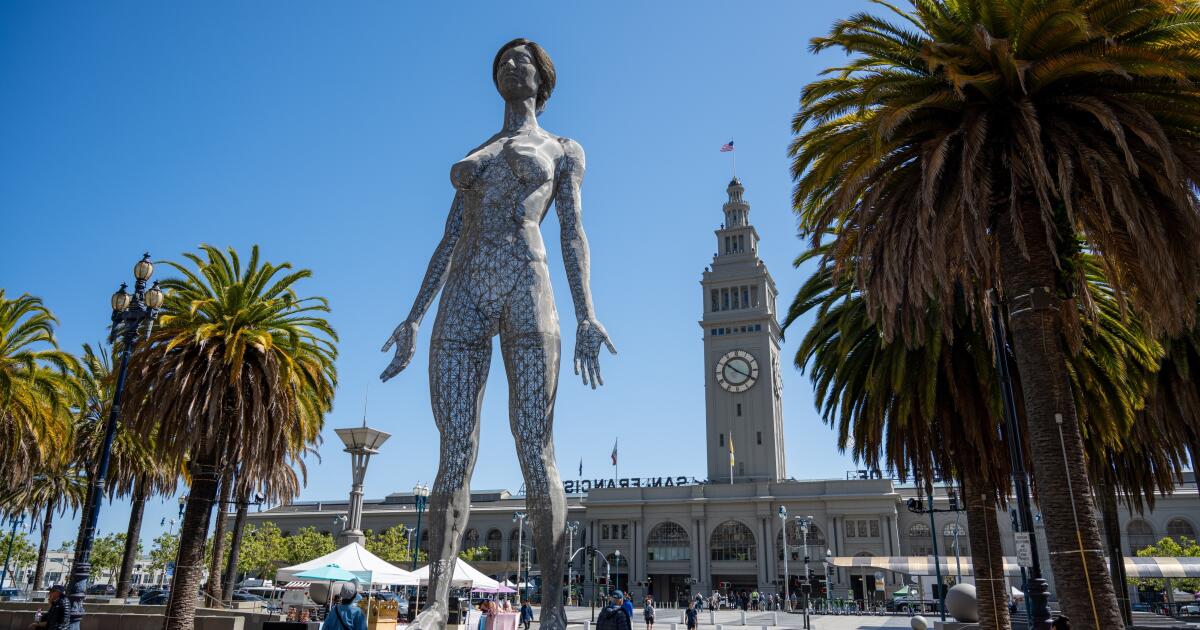
A sculpture of a giant naked woman goes on sale in San Francisco. Bring a crane
-

 Dallas, TX28 minutes ago
No ‘straight answer’: Why Pioneer Cemetery is the latest battleground at City Hall
-

 Miami, FL34 minutes ago
TSA hosts news conference ahead of World Cup third place match at Miami Stadium
-

 Boston, MA40 minutes ago
ICE Boston arrests Barbados national during targeted operations in Attleboro
-

 Denver, CO46 minutes ago
Denver Broncos training camp is 2 weeks away
-

 San Diego, CA58 minutes ago
Daily Business Report: July 17, 2026, San Diego Metro Magazine
-
 Milwaukee, WI1 hour ago
‘You can see God’s hand in it’: How Milwaukee women are building a double Dutch community through sisterhood and fitness

