
Connect with us

Louisiana

Our Lady of the Lake expands lifesaving care in South Louisiana with advanced ECMO program

Published

on

Our Lady of the Lake expands lifesaving care in South Louisiana with advanced ECMO program


Our Lady of the Lake Regional Medical Center is saving more lives in the Baton Rouge region with the use of a complex medical therapy that is only available at four hospitals in Louisiana.

Last year, Our Lady of the Lake implemented an extracorporeal membrane oxygenation (ECMO) program to provide life support to patients with respiratory or heart failure. ECMO allows a patient’s heart and/or lungs to rest when the body does not respond to other medical treatments and the organs cannot properly support normal body functions.

So far, Our Lady of the Lake has successfully used ECMO in a wide range of patient cases, including individuals with heart failure, pneumonia, pulmonary embolisms, Covid, trauma and more.

Advertisement

“Patients who otherwise may have died are able to have their lives sustained here by using ECMO as a bridge to other treatment. I’ve seen many of them ultimately recover and walk out of the hospital, which is amazing,” said Dr. Federico Guillermo De Puy, a cardiologist at Our Lady of the Lake. “ECMO also allows us to perform higher-risk procedures that we would otherwise not be able to offer at this location.”


Advertisement

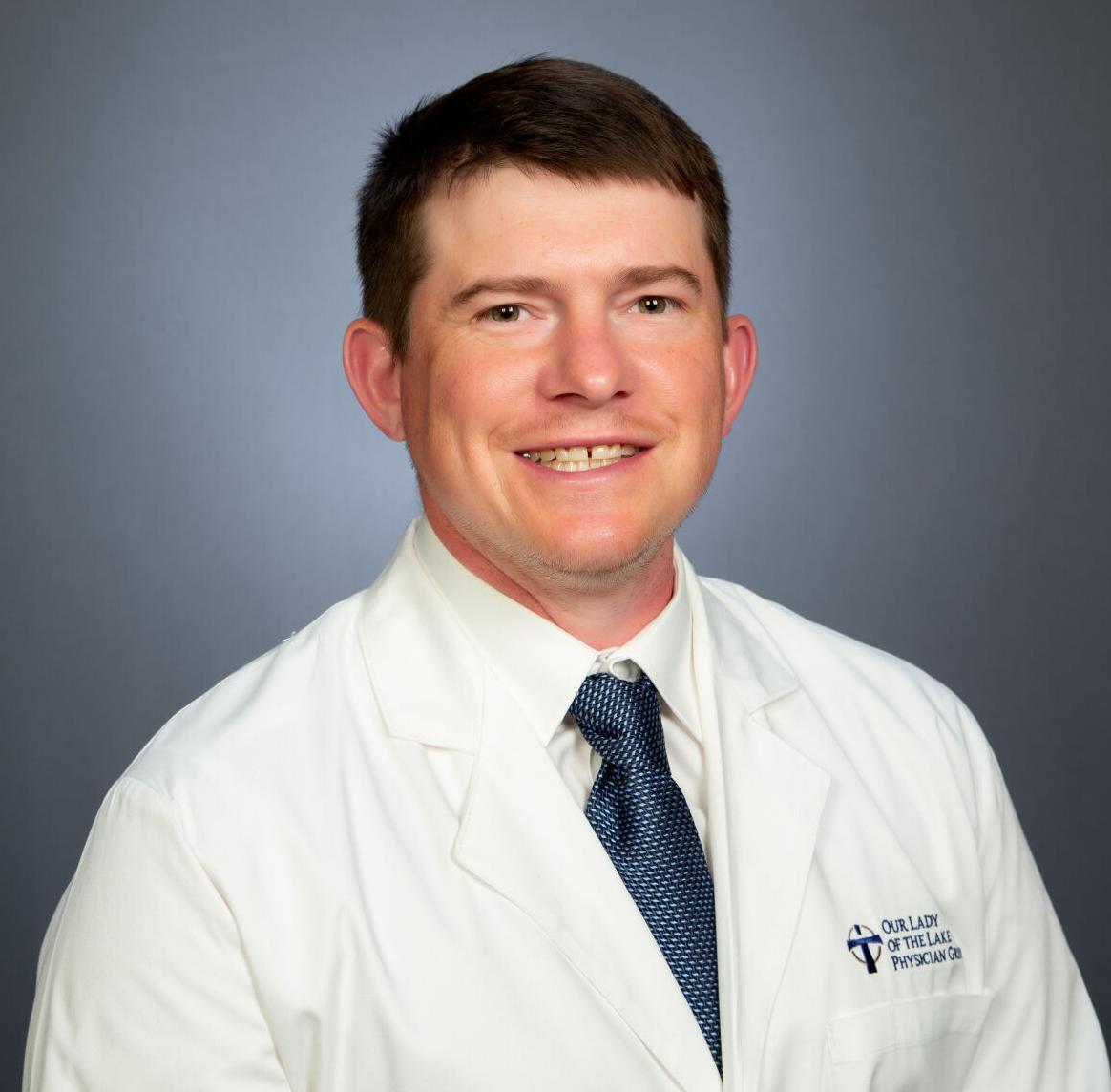
Dr. Federico Guillermo De Puy, a cardiologist at Our Lady of the Lake


Up to three patients can be on ECMO at any given time at Our Lady of the Lake. Dr. Owen Stell, medical director of the hospital’s ECMO program, said that in some cases, particularly among patients with severe respiratory illnesses, doctors may spend several hours trying other treatments before deciding to use ECMO. However, that decision may be made more quickly among patients with cardiac problems, particularly if they are unstable and not responding to medication.

“This is the highest level of life support you can provide,” Dr. Stell said. “In a lot of cases, people have failing hearts that can’t be maintained with smaller pumps or medications. For patients with respiratory failure, ECMO is used when a ventilator alone isn’t working. I credit the leadership at Our Lady of the Lake with understanding that ECMO is an important service, especially when it comes to keeping patients closer to home.”

A patient can remain on ECMO support for anywhere from a few days to several weeks. Once lab tests and imaging shows improvement, the patient is gradually weaned off of the ECMO support before being removed from it entirely as their heart and lungs are able to work on their own.

Advertisement

By having an ECMO program in Baton Rouge, Our Lady of the Lake is able to treat patients from the capital region, as well as cities like Lafayette that are within driving distance. Dr. Stell said the benefits are twofold, as it eliminates health risks associated with transporting critically ill patients and allows their family members to remain by their bedside without traveling long distances.


Stell, Owen_012.jpg

Dr. Owen Stell, medical director of the ECMO program at Our Lady of the Lake

Advertisement


“These patients are so critical that anything could change at any moment,” he said. “They may also need to be on ECMO for up to a month at a time. If their loved ones had to drive five hours to see them or spend money on a hotel room for several days, that’s an added cost and stress that families don’t need. The fact that we can keep them in Baton Rouge is a huge benefit to them.”

In order to ensure the ECMO program is providing the best possible care, Our Lady of the Lake has provided extensive training to doctors, nurses and therapists who are responsible for working with patients who are in the program. The qualified ECMO team at Our Lady of the Lake has more than 30 years of experience with ECMO management and transport, as well as close affiliations with the Extracorporeal Life Support Organization and the American Society of Extracorporeal Technology.

“Some of us received training about ECMO during our initial training to become a physician. Others learned about it on the job,” Dr. De Puy said. “I think we did a really good job with our nursing staff as far as bringing in highly trained personnel to explain the nuances of the program. It makes me feel proud to be a part of Our Lady of the Lake.”


Source link

Advertisement

Louisiana

Louisiana’s disappearing coast could shape Baton Rouge’s future

Published

on

Louisiana’s disappearing coast could shape Baton Rouge’s future


BATON ROUGE, La. (WAFB) – South Louisiana’s coast has long served as a natural buffer between communities and rising water.

But since the 1930s, Louisiana has lost nearly 2,000 square miles of coastal land.

Dr. Torbjorn Tornqvist, a professor at Tulane University, said Louisiana is one of the most vulnerable coastal areas in the world because of climate change, sea level rise and subsidence.

“Louisiana is arguably one of the most vulnerable… perhaps the most vulnerable coastal zones in the world when it comes to climate change and sea level rise… and there are several reasons for that but one important reason is that we have high subsidence rates, and that means sea level rise here is a lot faster than the average around the world,” Tornqvist said.

Advertisement

Tornqvist is the lead author of a recently published study examining the long-term impacts of sea level rise across south Louisiana.

He said the issue is no longer limited to communities closest to the Gulf Coast.

“People are leaving the coast of Louisiana, but it’s going to accelerate over the course of the century. And those people are going to have to go somewhere, and it’s likely that a significant number are going to look at a place like Baton Rouge to move to,” Tornqvist said.

Since Hurricane Katrina, Louisiana has invested billions of dollars in large-scale restoration projects designed to reduce flood risk and strengthen the coast.

Some researchers believe those projects are important but not permanent fixes.

Advertisement

“We have…right now we have a pretty high-quality flood protection system that’s obviously way better than it was during Katrina and we should certainly keep investing in upkeep, but we also have to recognize that’s only going to take us so far,” Tornqvist said.

State officials say those investments remain critical as Louisiana adapts to future flood risks.

Micheal Hare, executive director of the Coastal Protection and Restoration Authority, said the state’s coastal plan is designed to balance restoration work with protection projects, including levees.

“Our 2023 master plan certainly incorporates the best science available to us to then come up with a balanced approach between how do we effectively spend money on restoration as well as money on protection projects like levees,” Hare said.

Hare said those projects will continue to evolve as future risks change. CPRA and the Army Corps of Engineers are re-evaluating portions of the West Bank and Vicinity levee system in New Orleans to meet projected future flood risks within the next half-decade.

Advertisement

“Morganza to the Gulf is a great example, location communities came together, they started funding it…so that protection is critical…It will constantly be maintained and constantly elevated to meet the new levels of threats and risks that are out there,” Hare said.

Coastal officials and researchers agree that what happens along Louisiana’s coast will continue to affect communities far beyond the shoreline for generations.

“And so maybe you don’t live behind the levee, but I promise you want those coastal communities to stay there and to keep working, and to stay productive and engaged…so that we don’t have to have these flood fights further north or lose parts of our economy,” Hare said.

Tornqvist said the decisions made now could shape the future of Louisiana communities.

“What’s really important to recognize is that the next few decades are basically going to decide the long-term future of cities like Baton Rouge,” Tornqvist said.

Advertisement

Louisiana has always lived with water. As the coast changes and sea levels rise, the challenge is how communities across south Louisiana continue adapting for generations to come.

From the Gulf Coast to Baton Rouge, the future of Louisiana’s coastline is a conversation that impacts the entire state.

Click here to report a typo. Please include the headline.

Click here to subscribe to our WAFB 9 News daily digest and breaking news alerts delivered straight to your email inbox.

Watch the latest WAFB news and weather now.

Advertisement


Source link

Continue Reading

Louisiana

Louisiana is the eighth most affordable state to retire, study says

Published

on

Louisiana is the eighth most affordable state to retire, study says


Louisiana ranks among the top 10 most affordable states to retire, according to a new study from Retirement Living, a national journal of retirement research.

Researchers analyzed each state’s housing costs, living expenses and tax friendliness to compile the ranking. Louisiana, they say, is the eighth most affordable state for retirees.

In Louisiana, the median monthly rent for a one-bedroom apartment is $932, the median home sale price is $255,000, monthly grocery spend per capita is $272, the average price per gallon of regular gas is $4, the average Medicare Advantage monthly premium is $13.35 and the average effective property tax rate is 0.55%.

Advertisement

West Virginia is the most affordable state to retire, followed by Mississippi, Alabama, Oklahoma, Arkansas, Kentucky, Missouri, Louisiana, Indiana and Kansas. Researchers describe the South as “the sweet spot for an affordable retirement.”

The most expensive state to retire, meanwhile, is California, followed by Hawaii, Washington, Oregon, Colorado, New Jersey, Massachusetts, Utah, New York and Minnesota.

Read Retirement Living’s full report here.


Source link

Advertisement
Continue Reading

Louisiana

Louisiana agencies urge hurricane preparation ahead of season start

Published

on

Louisiana agencies urge hurricane preparation ahead of season start


BATON ROUGE, La. (WAFB) – With hurricane season approaching, the Louisiana Coastal Protection and Restoration Authority is bringing the community together to prepare before a storm forms.

“We can’t stop disasters from happening. We can’t stop hurricanes from happening. But what we can do is equip our communities with the resources that they need to prepare for these storms ahead of time,” said Jayda Morris, CPRA outreach manager.

The agency hosted an event featuring interactive storm simulations and a full model of the Mississippi River.

“If you do it now, like on a sunny day like today, you’re ready to go for the rest of the season,” Jay Grymes said.

Advertisement

El Niño may reduce storms, but Louisiana still at risk

State Climatologist Jay Grymes said an El Niño pattern may reduce the number of storms in the Atlantic but warned against a false sense of security.

“In those 25 years, Louisiana, some part of the state has been impacted by 29 storms. That’s one a year, regardless of El Niño. So that should tell you something,” Grymes said.

He said the bigger concern is storms that can form in the Gulf with little warning.

“If we’re going to get a storm, it very possibly could be one that bubbles up in the Gulf and doesn’t give us five or seven days to track it coming our way. It gives us 40 hours to get ready for a landfall. So it’s imperative that you go ahead and do it now,” Grymes said.

Advertisement

Preparation goes beyond stocking water

Preparing now includes walking through yards, checking trees, and knowing whether everyone in the family can survive two weeks without power.

PhD students with the LSU College of the Coast and Environment gave the community a virtual reality experience that puts users inside a storm.

“If they wear the goggles or play with the Apple Vision Pro, they can understand how high will the flood be, and they can know how dangerous is the hurricane scenario,” said Yixuan Wang.

The VR simulation uses real historical data to show users what compound flooding looks like in New Orleans and surrounding areas. The goal is to make the science real for people who can’t picture what a flood map means.

Advertisement

“It’s just to let you understand the environment. We will add the audios, the different sound of the wind and the storm. And you can see how tense of the rainfall around you,” Wang said.

Organizers said the event is about making sure that when a storm threatens the area, families already know their plan.

Information from the event is available on CPRA’s website. Hurricane season runs through Nov. 30.

Click here to report a typo. Please include the headline.

Click here to subscribe to our WAFB 9 News daily digest and breaking news alerts delivered straight to your email inbox.

Advertisement

Watch the latest WAFB news and weather now.


Source link

Continue Reading
Advertisement

Trending
