Louisiana
New Orleans artist Hannah Chalew imagines a postapocalyptic Louisiana through reclaimed oil wells


Hannah Chalew salvaged an old oil well from the Poland Avenue scrap yard in New Orleans. She coated it with bagasse, or sugar cane pulp, from Grow Dat, the urban farm in City Park. The paint is recycled, from another nonprofit, the Green Project, and the plants — palmettos, cypress, elephant ear — are largely from the Coalition to Restore Coastal Louisiana’s greenhouse.
The embedded plastic trash — a toothbrush, a COVID-19 test, an old burned CD — “came from my life,” she said. “Plastic will be a fossil marker of our time, here long after we’re gone.”
The result is an artwork that gestures at what humans might leave behind, a sculpture called “Orphan Well Gamma Garden.” It’s a window into the post-apocalypse, where the stuff of civilization has coagulated around Chalew’s reclaimed steel wellheads, that questions the kind of future that humans are creating, and what might survive us.

Trash is packed into an art piece called, “Orphan Well Gamma Garden” in the back of artist Hannah ChalewÕs studio in New Orleans, Wednesday, July 16, 2025. The piece was on display the the CAC in New Orleans during Prospect. 6. (Photo by Sophia Germer, The Times-Picayune)
“I felt kind of like a reverse archaeologist, imagining how some person in the distant future would think about this, like, disembodied sippy-cup top,” Chalew said. “What will the people, or the creatures, who encounter this make of it?”
That work turned out to be only the first in a series of orphan-oil-well-inspired work. A new piece, “Christmas Tree” — named after the Christmas Tree wellheads that pockmark Louisiana’s coastline and are so called because they taper somewhat like a tree — was inspired by a June trip to the mouth of the Mississippi River. There, Chalew saw wells that had become “orphaned.” The companies that owned them had gone bankrupt and responsibility for plugging them had fallen to the state. Some were leaking oil.
She wonders, too, what kind of plant life might recolonize old wells. She embedded “Christmas Tree” with oak wood and resurrection fern — a plant that can dry out and enter into a desiccated, dormant state, and remain that way for up to a century. When exposed to water, the fern comes back to life.

Artist Hannah Chalew poses in a studio in New Orleans, Wednesday, July 16, 2025. (Photo by Sophia Germer, The Times-Picayune)
She said she wanted to imagine “what might recolonize” old, abandoned fossil-fuel infrastructure.
Chalew’s “Christmas Tree” was just on display at Good Children Gallery part of a show called “Mining for Wonder in the Humdrum.” The show closes Dec. 7. She has work on display as part of another exhibition, called “Fragile Matter,” at the Hilliard Art Museum in Lafayette.
“I realized that this is a body of work,” she said. “These totemic sculptures are part of an eventual show that will be a kind of ‘orphanage’ of old well sculptures.”

Hannah Chalew’s new sculpture, “Christmas Tree,” on display at Good Children Gallery on St. Claude Ave. in New Orleans. (Photo by Alex Lubben, The Times-Picayune)
‘You don’t need to worry about the radon’
The ‘gamma garden’ in the title is an allusion to the post-World War II, U.S.-led initiative called Atoms for Peace, which sought to find peaceful uses for nuclear technology. The idea was to speed evolution in plants by planting them around a pole made of radioactive metal. (Most of the plants died.)
Chalew named her work after this practice because old oil wells can themselves be radioactive, which she learned as she was building the sculpture. She called up a friend who works at an environmental advocacy group, who told her, “You don’t need to worry about the radon. You need to worry about the benzene,” another carcinogenic chemical that can waft off oil wells.
She tested her wells for both and found them to be free of radiation and toxins.
The legacy of the petrochemical industry has been the focus of Chalew’s work. In one of her recent paintings, “Feedback LOOP,” now on display at the Hilliard, Chalew paints plants as intertwined — as they often are in south Louisiana — with industrial pipes and valves.

An art piece called, “Orphan Well Gamma Garden” stands in the back of artist Hannah Chalew’s studio in New Orleans, Wednesday, July 16, 2025. The piece was on display the the CAC in New Orleans during Prospect. 6. (Photo by Sophia Germer, The Times-Picayune)
An oak tree, downed in Hurricane Ida, almost appears to be fighting against the pipes that make up LOOP, an offshore oil hub connected to pipelines that weave their way through Louisiana’s coastal wetlands. As with her orphan well sculptures, the materials are natural or salvaged, with ink made from oak trees and paper made from sugar cane and used plastic.
Her critique extends further, calling out industry’s affiliation with the arts.

Artist Hannah Chalew poses near a pile of dumped metal near Venice, La., Thursday, June 5, 2025. (Photo by Sophia Germer, The Times-Picayune)
She emblazoned the words “HELIS OIL + GAS” on each of the wells, a reference to the one-time Louisiana oil and gas company, which, through its charitable foundation, is a major patron of the arts in Louisiana. By centering this particular well in her work, she is critiquing how the arts in New Orleans are funded. She’s refused funding from grant-making institutions that are linked to the oil and gas industry, she says, and won’t accept support from Helis.
She also logged the carbon footprint of producing and transporting the sculpture at 2.5 tons of carbon dioxide, which she’s tried to offset by planting cypress trees. She considers this a challenge to other artists to consider the environmental impact of their work.
“I want to create these visions that are beautiful, but then as you explore them, sort of unsettling,” she said. “Is this the future we want our descendants to inherit?”



Louisiana
Red, Rock & Blue: Registration deadline approaches for tournament benefitting La. military charities

BATON ROUGE, La. (WAFB) – The Red, Rock & Blue charity softball tournament to benefit Louisiana military charities is quickly approaching.
SLOW-PITCH SOFTBALL TOURNAMENT
- April 17 – April 19
- BREC Oak Villa | Baton Rouge
Each team will get a three-game guarantee. There are different divisions for different skill levels.
Team registration is open to the public. You can register a team online.
The deadline to register is Friday, April 10.
Click here for more information about the 32nd annual charity slow-pitch softball tournament.
Past tournaments have been held in July, but the 2026 tournament was moved to spring for the cooler temperatures.
Red Rock and Blue typically gives $50,000 or more to military charities like The Blue Star Mothers of Louisiana and Gulf Coast Veterans each year.
The Caterie Reunion IV to benefit Red Rock and Blue is also set for August 15 at The Texas Club in Baton Rouge. More information on that event, including the musical lineup and ticket sales, is coming soon.
*WAFB is a sponsor and supporter of the Red, Rock & Blue non-profit organization.
Click here to report a typo. Please include the headline.
Click here to subscribe to our WAFB 9 News daily digest and breaking news alerts delivered straight to your email inbox.
Watch the latest WAFB news and weather now.
Copyright 2026 WAFB. All rights reserved.

Retired U.S. Air Force Col. Mark T. Guillory, second from right, speaks to fellow members of Save My Louisiana and, on the far left, State Treasurer Dr. John Fleming on Thursday, Nov. 21, 2025, outside the 19th Judicial District courthouse in downtown Baton Rouge. The group sued the state of Louisiana to challenge a law that allows companies seeking to do carbon capture to store the gas under private land. Fleming, a critic of carbon capture who is running for U.S. Senate, was present for the news conference held immediately after the lawsuit was filed. Guillory, a Rapides Parish resident, is one of the plaintiffs. Gary Musgrove, president of the group, is fifth from the right.

‘That’s Mr. Indiana’: Steve Alford back in Indy for Final Four. His luster hasn’t worn off

Iowa State basketball names veteran Tim Buckley as new assistant coach

Kansas City Chiefs heiress Gracie Hunt gets engaged to ex-NFL player’s son

Our top 5 Kentucky Derby contenders as Run for the Roses 2026 nears

Louisiana closed primary system raises voter questions ahead of May 16 election

Florida High School Football Rankings: Top 25 teams – Oct. 21

How old is Bo Nix? What to know about Oregon quarterback ahead of 2024 NFL Draft

Cleary's 21 help Le Moyne down Central Connecticut State 69-64 in OT

99th annual Pony Swim held in Virginia

Indiana Members Credit Union announced as new anchor tenant at Bottleworks District

GOP races to pass ICE, Border Patrol funding bill as priorities pile up, divisions emerge
Jet fuel crisis: Rationing triggered at four airports in Italy
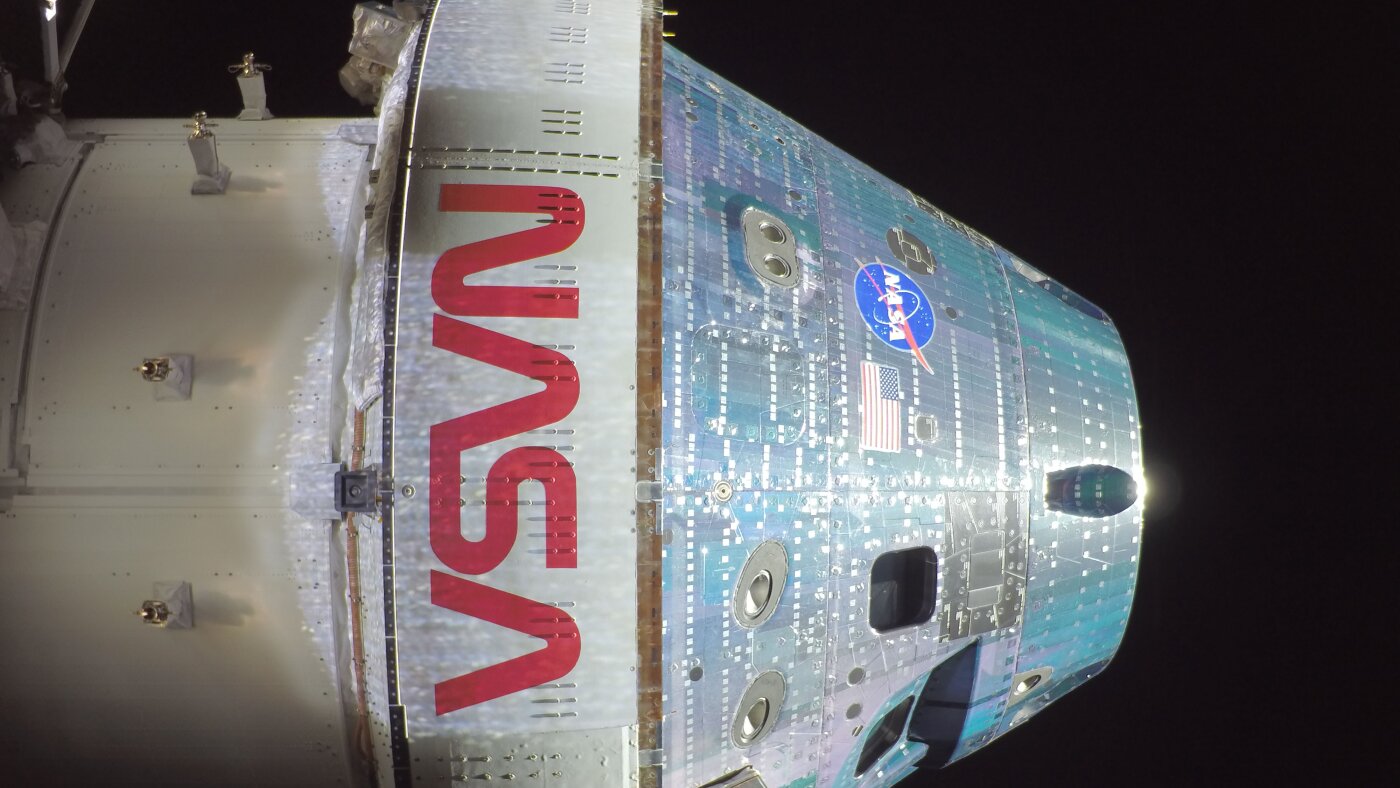
NASA’s Artemis II crew readies for Monday’s lunar flyby. Here’s what you need to know

Tax day is next week: Avoid these 5 common mistakes that can cost you money

Hamas armed wing says disarmament demands not acceptable
-

 South-Carolina1 week ago
South Carolina vs TCU predictions for Elite Eight game in March Madness
-

 Atlanta, GA1 day ago
1 teenage girl killed, another injured in shooting at Piedmont Park, police say
-

 Vermont1 week ago
Skier dies after fall at Sugarbush Resort
-

 Movie Reviews4 days ago
Vaazha 2 first half review: Hashir anchors a lively, chaos-filled teen tale
-

 Politics1 week ago
Trump’s Ballroom Design Has Barely Been Scrutinized
-
 Entertainment4 days ago
Inside Ye’s first comeback show at SoFi Stadium
-

 Atlanta, GA1 week ago
Fetishist ‘No Kings’ protester in mask drags ‘Trump’ and ‘JD Vance’ behind her wheelchair
-

 Politics1 week ago
JD Vance says he was ‘obsessed’ with UFOs, believes aliens are actually ‘demons’