Kentucky
Lawmakers question presidents of several universities in Kentucky about DEI practices on college campuses

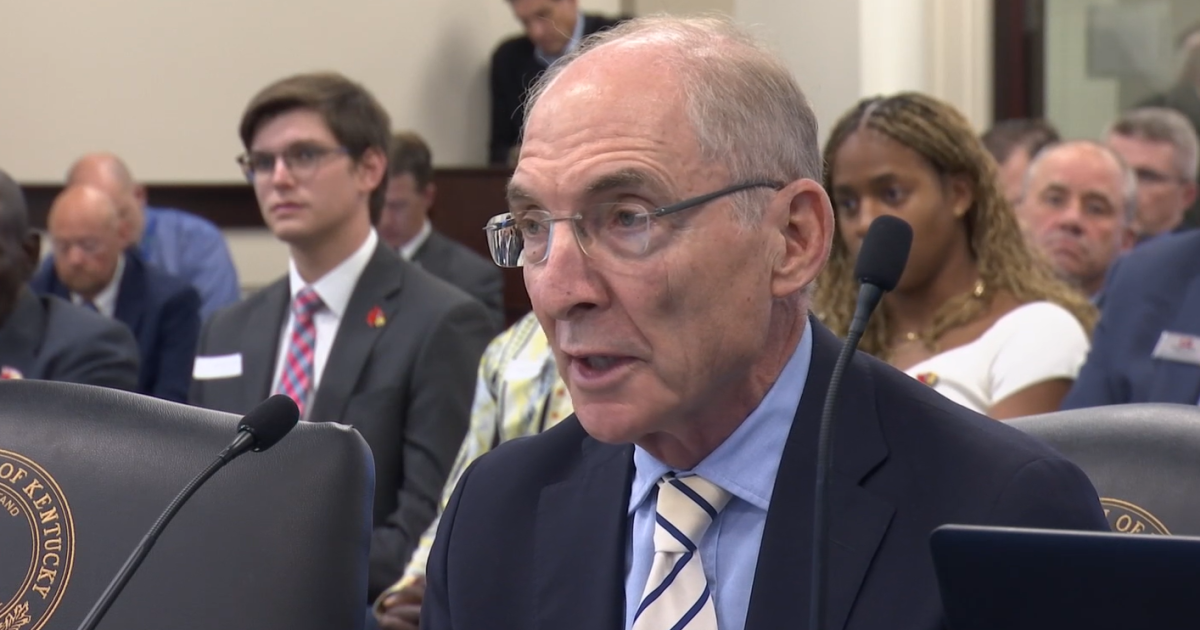
Lawmakers questioned the presidents of several universities in Kentucky about diversity, equity, and inclusion practices on college campuses during a meeting of the Interim Education Committee on Tuesday.
This happened a few weeks after Dr. Eli Capilouto, the president of the University of Kentucky, announced that the school would disband its office promoting diversity and inclusion efforts. The school took action after state lawmakers debated whether to limit diversity, equity and inclusion practices at public universities.
In a campus-wide lettersent in August, Capilouto said the Office of Institutional Diversity (OID) would shut its doors, and diversity training and diversity statements for staff and faculty would no longer be required.
A new office, the Office for Community Relations, would take the place of OID.
“If we are to be a campus for everyone, we must demonstrate to ourselves and to those who support and invest in us our commitment to the idea that everyone belongs — both in what we say and in what we do,” Capilouto wrote.
Capilouto stressed that the school’s core values remain intact — to protect academic freedom and promote a “sense of belonging” for everyone on campus, regardless of background or perspective.
“But we’ve also listened to policymakers and heard many of their questions about whether we appear partisan or political on the issues of our day and, as a result, narrowly interpret things solely through the lens of identity,” he said. “In so doing, the concern is that we either intentionally or unintentionally limit discourse. I hear many of those concerns reflected in discussions with some of our students, faculty and staff across our campus.”
In February, Capilouto called anti-DEI bills lawmakers were considering at the time “deeply concerning.”
“We don’t speak as an institution on public policy unless the issues will impact our entire community in potentially significant ways,” Capilouto said in a campus-wide letter sent in February. “This is one of those moments.”
“As the University of Kentucky’s president, let me be clear: I am opposed to the legislation regarding both DEI and tenure,” he added then. “I have voiced my stance in a manner that I hope is respectful and thoughtful. I will continue to do so.”
But in August, Capilouto said the school would change course and eliminate its DEI office as the issue was not going away.
“Kentucky legislators have made clear to me in our conversations that they are exploring these issues again as they prepare for the 2025 legislative session,” he said.
So, did UK make its changes due to pressure from Kentucky lawmakers? Capilouto did not answer LEX 18’s question regarding the situation.
However, Sen. Reggie Thomas said he believes the school read “the tea leaves,” realized the legislature was not going to stop, and took action.
“It was clear that the legislature still wasn’t going to let DEI go. They still wanted to do something to reduce the emphasis on diversity, equity, and inclusion,” Thomas said. “So, UK got ahead of it.”
On Tuesday, some lawmakers expressed concern that the General Assembly is demonizing DEI programs.
“This entire process isn’t a micro-aggression. It’s a macro-aggression against universities who are trying to ensure that all of their students are being met – their needs are being met,” said Rep. Tina Bojanowski. “I’m uncomfortable with the situation and I’m, honestly, embarrassed that we are here today.”
“From my perspective, the problem is the demonization of diversity, equity, and inclusion programs by certain members of this body,” she added.
But some lawmakers expressed concern that DEI is causing division on college campuses.
Rep. Steve Rawlings said while people understand the value of DEI, he has concerns with some of the concepts “taught within that bubble.”
“Some examples of that like victim ideology, micro-aggressions, intersectionality which includes white privilege, toxic masculinity, and I could go on — there are so many things, so many accounts that are so disheartening to hear about,” Rawlings said.
Sen. Lindsey Tichenor said that while DEI was intended to create a more inclusive environment, she worries it has done the opposite.
“Last session, we had some testimony regarding our DEI legislation we pushed forward for post-secondary education and one of the students that came and testified was sharing her story as an applicant to be an RA, that she was not chosen because [she’s] too white and too Christian,” Tichenor said.
“The efforts of DEI, I think at their beginning, were not to be divisive but to create a more inclusive environment,” she added. “But unfortunately, we see that it has created divisive and exclusive situations for a student to be told she couldn’t be hired because too white and too Christian.”
Supporters of DEI initiatives believe they provide critical opportunities for people who have been marginalized or face hurdles because of their identity. They worry getting rid of DEI could roll back gains in minority enrollments and stifle campus discussions about past discrimination.
Critics of DEI believe they are counterproductive and unfair, leading universities to make decisions based on factors like race and gender, instead of merit.
——————-
The Associated Press contributed to this report.



CLARKSVILLE, In. (WKYT) — The remains of a Kentucky veteran who was the subject of a Green Alert were found in a park.
The remains of Jyronna Dione Parker, 54, were found March 22 by officers from the Clarksville Police Department. His body was found in Ashland Park on the river’s shoreline.
In late 2025, a Green Alert was issued for Parker. This alert was cancelled by the Lexington Police department after they determined he was not at risk.

Despite the cancellation of the alert, Parker had been reported missing from Lexington since Oct 17.
What is a Green Alert?
Under Kentucky law, a Green Alert is issued when a veteran at risk goes missing. It’s designed to help first responders and the public locate missing veterans who may be in danger by quickly notifying emergency management agencies, search and rescue teams, and local media outlets.
Copyright 2026 WKYT. All rights reserved.


Facts About the Kentucky General Assembly
Discover key facts about the Kentucky General Assembly, including its history, structure, and state government functions.
FRANKFORT, Ky. — A revamped bill unveiled late on the final day to pass legislation in the 2026 Kentucky General Assembly with the ability to later override a veto would significantly alter the makeup of Louisville’s public school board.
The new Senate Bill 4 would cut the number of seats on the Jefferson County Board of Education from seven to five. It includes an emergency clause, meaning it would go into effect immediately if passed — Rep. Jason Nemes, R-Middletown, who introduced the new bill in the House, said the legislation includes new district maps to be used when voters head to the ballot box this year but added JCPS would be able to redraw its own maps after that.
The bill passed in the House on a 72-21 vote mostly along party lines, with three Republicans (Rep. Vanessa Grossl, R-Georgetown, Rep. Patrick Flannery, R-Olive Hill, and Rep. Kim Holloway, R-Mayfield) joining Democrats in opposition.
It quickly passed 25-7 in the Senate a few minutes later, with Sen. Brandon Smith, R-Hazard, and Sen. Robin Webb, R-Grayson, joining Democrats in voting no.
A copy of the bill was not immediately available.
The bill, sponsored by Sen. Stephen West, R-Paris, originally aimed to create a principal leadership and mentorship program. But after changes in the House, new provisions were added that would affect the makeup of boards for large school districts, including Jefferson County Public Schools and Fayette County Public Schools.
SB 4 is one of many education bills introduced this session, several of which have specifically targeted JCPS. Senate Bill 1, also passed on April 1, gives more power to JCPS’s superintendent while requiring the board to focus on long-term strategies.
The bills come as JCPS navigates an ongoing financial crisis, with a $188 million shortfall expected in the next budget. Prior to the revisions, the SB 4 would have required two new members with “expertise in finance” to be appointed by the state treasurer, Republican Mark Metcalf. That provision was removed during deliberations between the House and Senate.
In an interview after the votes, board Vice-Chair James Craig told The Courier Journal a five-member board “has made sense to me for a number of reasons.” It’s in line with every other district in the state, he said, and it can be difficult to find qualified candidates who have the bandwidth in their lives to devote enough effort to do the job right.
“I think given the realities of what the legislature could have done, how other districts are governed and the challenges that we’ve faced, Senate Bill 4 reflects a compromise that should be workable,” Craig said. “… But I have significant concerns about Senate Bill 1 and the way it interacts with Senate Bill 4.”
Lawmakers have listened to concerns he and other education advocates have raised, he said, removing some of the “problematic provisions” that had been floated as ones that could be included in SB 1. But the bill takes power from the elected board, he noted, and gives it to an unelected superintendent — in Louisville’s case, he added, someone who is “new to the city of Louisville in the last year.” JCPS Superintendent Brian Yearwood testified against SB 1 earlier this session in Frankfort.
“In my opinion, voters in the city of Louisville do not want a super-empowered superintendent. They want a democratically elected Board of Education that is accountable to them,” Craig added.
Board members will have a discussion with their attorney about potentially challenging SB 1 in court, he said. A similar bill passed in 2022 was struck down late last year by the state Supreme Court after previously being upheld by the high court.
JCPS leaders and board members have raised concerns about the earlier iteration of SB 4 and the removal of two board positions. Three members of JCPS board — Craig, Chair Corrie Shull and Linda Duncan — are scheduled to be up for reelection in November.
Craig does not plan to run again this year, he added.
“Eight years of intense, uncompensated public service have been fulfilling,” he wrote in a text message. “It is time for me to return to the full time practice of law.”
This story will be updated.
Reach Lucas Aulbach at laulbach@courier-journal.com. Reach reporter Keely Doll at kdoll@courierjournal.com or follow her on X at @keely_doll.
Kentucky
Final gargoyle returned to its perch atop rehabbed Kentucky cathedral modeled after Notre Dame

COVINGTON, Ky. (AP) — The last stone gargoyle has been returned to its perch as part of a two-year restoration of a Kentucky cathedral with a facade modeled after Notre Dame in Paris.
The rehab project at the Cathedral Basilica of the Assumption was sorely needed to repair deteriorated stone, metal and glass that adorns the limestone exterior. The project included 32 recreated gargoyles along with repairs of deteriorated finials, arches and balustrades.
The 125-year-old church, in Covington just across the Ohio River from Cincinnati, offers the experience of a European gothic cathedral in the Midwest, said the Very Rev. Ryan Maher, the cathedral’s rector. The cathedral has an “intimate connection to what is really the most popular and most well-known cathedral outside of Rome itself,” he said.
“I think it’s very special and very unique,” said Maher, who watched from the sidewalk as the last gargoyle was raised to top of the facade on Monday.
The renovation price tag was nearly $8 million, and most came from donations, Maher said.
Brian Walter, CEO of Trisco Systems, the contractor, said the final gargoyle going in was “a symbol of the accomplishment of all our facade work.”
“That’s a big, monumental occasion for not only people here, but for us. That kind of symbolized the last stone we’re putting in,” Walter said.
Restoration plans grew out of Maher’s discovery in 2018 of a large piece of stone that fell from the exterior.
“We realized at that time that we needed to investigate not only the source of that one piece of stone that had fallen, but to take a look at the overall facade of the cathedral,” Maher said.
Workers will continue with smaller tasks around the facade, including the installation of chimeras that sit on the roofline, but the heavy lifting has been completed, Walter said.
“This is kind of a once or twice in a lifetime project,” Walter said.

Helen Rankin, the first Black woman in the Ohio House, dies at 89

Can a Local Product Emerge as Oklahoma’s Answer to Depth at Linebacker?

Audit finds missed safety checks at Oregon state parks

Disturbing footage | Pa. pediatric nurse faces charges for allegedly abusing infant

Crash closes Route 146 north in Lincoln

Florida High School Football Rankings: Top 25 teams – Oct. 21

How old is Bo Nix? What to know about Oregon quarterback ahead of 2024 NFL Draft

Cleary's 21 help Le Moyne down Central Connecticut State 69-64 in OT

99th annual Pony Swim held in Virginia

Indiana Members Credit Union announced as new anchor tenant at Bottleworks District

GOP rails against ‘s— sandwich’ deal as all eyes turn to House to end DHS shutdown

Planning commission approves Trump’s White House ballroom plans

Trump does not have to turn over presidential records, Justice Department says

Map: 4.6-Magnitude Earthquake Shakes Northern California

What you need to know: 5 key takeaways from Trump’s Iran address
-

 South-Carolina5 days ago
South Carolina vs TCU predictions for Elite Eight game in March Madness
-

 Education1 week ago
Video: Trader Joe’s Dip Head-to-Head Taste Test
-

 Miami, FL1 week ago
Jannik Sinner’s Girlfriend Laila Hasanovic Stuns in Ab-Revealing Post Amid Miami Open
-

 Culture1 week ago
Wil Wheaton Discusses ‘Stand By Me’ and Narrating ‘The Body’ Audiobook
-

 Minneapolis, MN1 week ago
Boy who shielded classmate during school shooting receives Medal of Honor
-

 Culture1 week ago
What Happens When We Die? This Wallace Stevens Poem Has Thoughts.
-

 Vermont5 days ago
Skier dies after fall at Sugarbush Resort
-

 Politics5 days ago
Trump’s Ballroom Design Has Barely Been Scrutinized