Kentucky
Lawmakers question presidents of several universities in Kentucky about DEI practices on college campuses

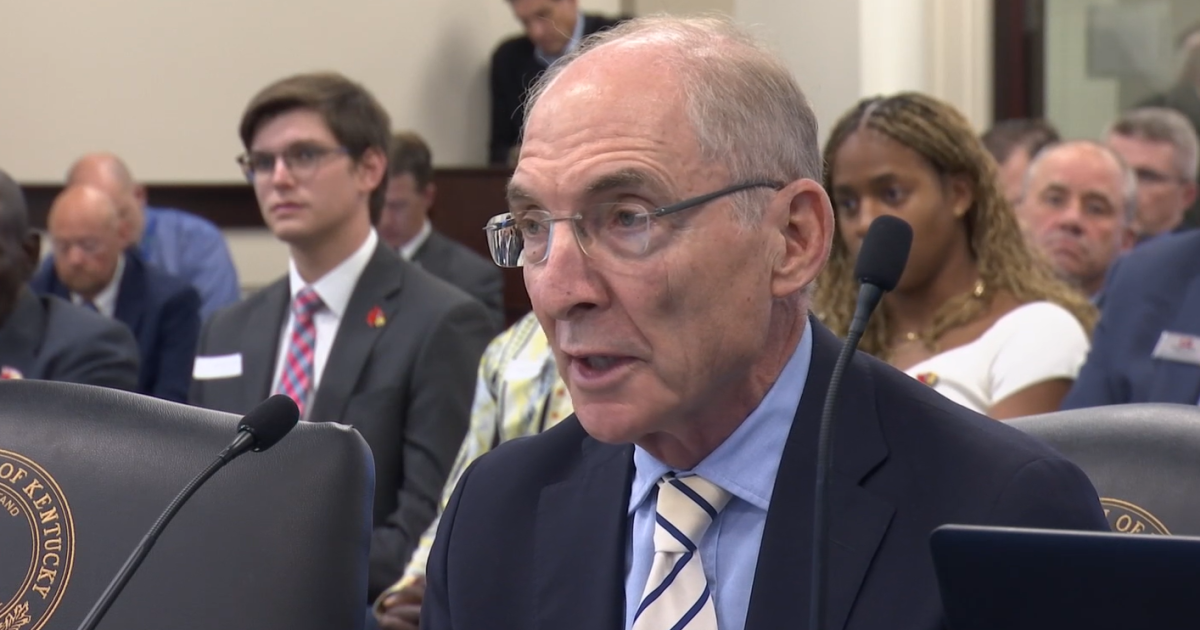
Lawmakers questioned the presidents of several universities in Kentucky about diversity, equity, and inclusion practices on college campuses during a meeting of the Interim Education Committee on Tuesday.
This happened a few weeks after Dr. Eli Capilouto, the president of the University of Kentucky, announced that the school would disband its office promoting diversity and inclusion efforts. The school took action after state lawmakers debated whether to limit diversity, equity and inclusion practices at public universities.
In a campus-wide lettersent in August, Capilouto said the Office of Institutional Diversity (OID) would shut its doors, and diversity training and diversity statements for staff and faculty would no longer be required.
A new office, the Office for Community Relations, would take the place of OID.
“If we are to be a campus for everyone, we must demonstrate to ourselves and to those who support and invest in us our commitment to the idea that everyone belongs — both in what we say and in what we do,” Capilouto wrote.
Capilouto stressed that the school’s core values remain intact — to protect academic freedom and promote a “sense of belonging” for everyone on campus, regardless of background or perspective.
“But we’ve also listened to policymakers and heard many of their questions about whether we appear partisan or political on the issues of our day and, as a result, narrowly interpret things solely through the lens of identity,” he said. “In so doing, the concern is that we either intentionally or unintentionally limit discourse. I hear many of those concerns reflected in discussions with some of our students, faculty and staff across our campus.”
In February, Capilouto called anti-DEI bills lawmakers were considering at the time “deeply concerning.”
“We don’t speak as an institution on public policy unless the issues will impact our entire community in potentially significant ways,” Capilouto said in a campus-wide letter sent in February. “This is one of those moments.”
“As the University of Kentucky’s president, let me be clear: I am opposed to the legislation regarding both DEI and tenure,” he added then. “I have voiced my stance in a manner that I hope is respectful and thoughtful. I will continue to do so.”
But in August, Capilouto said the school would change course and eliminate its DEI office as the issue was not going away.
“Kentucky legislators have made clear to me in our conversations that they are exploring these issues again as they prepare for the 2025 legislative session,” he said.
So, did UK make its changes due to pressure from Kentucky lawmakers? Capilouto did not answer LEX 18’s question regarding the situation.
However, Sen. Reggie Thomas said he believes the school read “the tea leaves,” realized the legislature was not going to stop, and took action.
“It was clear that the legislature still wasn’t going to let DEI go. They still wanted to do something to reduce the emphasis on diversity, equity, and inclusion,” Thomas said. “So, UK got ahead of it.”
On Tuesday, some lawmakers expressed concern that the General Assembly is demonizing DEI programs.
“This entire process isn’t a micro-aggression. It’s a macro-aggression against universities who are trying to ensure that all of their students are being met – their needs are being met,” said Rep. Tina Bojanowski. “I’m uncomfortable with the situation and I’m, honestly, embarrassed that we are here today.”
“From my perspective, the problem is the demonization of diversity, equity, and inclusion programs by certain members of this body,” she added.
But some lawmakers expressed concern that DEI is causing division on college campuses.
Rep. Steve Rawlings said while people understand the value of DEI, he has concerns with some of the concepts “taught within that bubble.”
“Some examples of that like victim ideology, micro-aggressions, intersectionality which includes white privilege, toxic masculinity, and I could go on — there are so many things, so many accounts that are so disheartening to hear about,” Rawlings said.
Sen. Lindsey Tichenor said that while DEI was intended to create a more inclusive environment, she worries it has done the opposite.
“Last session, we had some testimony regarding our DEI legislation we pushed forward for post-secondary education and one of the students that came and testified was sharing her story as an applicant to be an RA, that she was not chosen because [she’s] too white and too Christian,” Tichenor said.
“The efforts of DEI, I think at their beginning, were not to be divisive but to create a more inclusive environment,” she added. “But unfortunately, we see that it has created divisive and exclusive situations for a student to be told she couldn’t be hired because too white and too Christian.”
Supporters of DEI initiatives believe they provide critical opportunities for people who have been marginalized or face hurdles because of their identity. They worry getting rid of DEI could roll back gains in minority enrollments and stifle campus discussions about past discrimination.
Critics of DEI believe they are counterproductive and unfair, leading universities to make decisions based on factors like race and gender, instead of merit.
——————-
The Associated Press contributed to this report.

Kentucky
June unemployment rate shows slight increase in Kentucky Center for Statistics latest report


LEXINGTON, Ky. (WKYT) – Recent heavy rainfall has left soil across the state completely soaked, contributing to localized flooding in some areas.
When rain falls, some water soaks into the ground through a process called percolation.
Soil can only hold a limited amount of water. Once the small air spaces within the soil fill with water, the ground becomes saturated and additional rainfall has nowhere to go.
Soil type plays a role in how quickly water drains.
Much of Kentucky has clay-heavy soil, which is made up of very small, flat particles packed tightly together.
That composition makes it harder for water to move through. In clay soil, water may drain at a rate of only 0.02 to 0.17 inches per hour.
When rainfall comes down faster than the ground can absorb it and water cannot drain into a stream or storm drain quickly enough, it begins to build up.
That buildup is what leads to localized flooding.
Copyright 2026 WKYT. All rights reserved.

BOWLING GREEN, Ky. (WBKO) – Cyclosporiasis is a microscopic parasite that can contaminate food and water — is making people sick across several states, including Kentucky.
Dr. Patricia Tellez-Watson said, the illness is caused by Cyclospora cayetanensis and spreads when someone ingests contaminated food or water. “It is an intestinal infection caused by this water-borne, food-borne microscopic parasite,” she said.
Symptoms can include diarrhea, nausea and vomiting.
Tellez-Watson said, cases are often sporadic, but outbreaks can happen — especially during hot, wet months, when the parasite can survive in the environment long enough to become infectious.
Health experts recommend taking extra precautions with food and water. Washing hands and thoroughly rinsing produce before eating or cooking can reduce risk.
Watson also urged people to be cautious with fresh produce, particularly pre-packaged items, and to consider using bottled water.
Officials have confirmed cases in Bowling Green, though it’s unclear how many.
Copyright 2026 WBKO. All rights reserved.
-
 Lifestyle15 minutes ago
‘I Want You to Be Happy’ takes on modern-day dating
-

 Technology27 minutes ago
Apple’s plot to crush OpenAI
-

 World33 minutes ago
Leaked Iran report finds record public anger as regime focuses on holding power
-

 Politics39 minutes ago
White House dishes out new election security jab over Olive Garden’s pasta pass ID policy
-

 Health45 minutes ago
Doctors warn your ‘stomach bug’ may actually be a parasite that’s harder to detect
-

 Sports51 minutes ago
AEW star Kenny Omega blasts social media user over Charlie Kirk comment
-

 Technology57 minutes ago
New bank scam laws could stop suspicious payments
-
 Business1 hour ago
Environmental groups press to halt Imperial Valley lithium venture

