Kentucky
A look at biggest greenhouse gas polluters in Kentucky, Indiana and nearby states

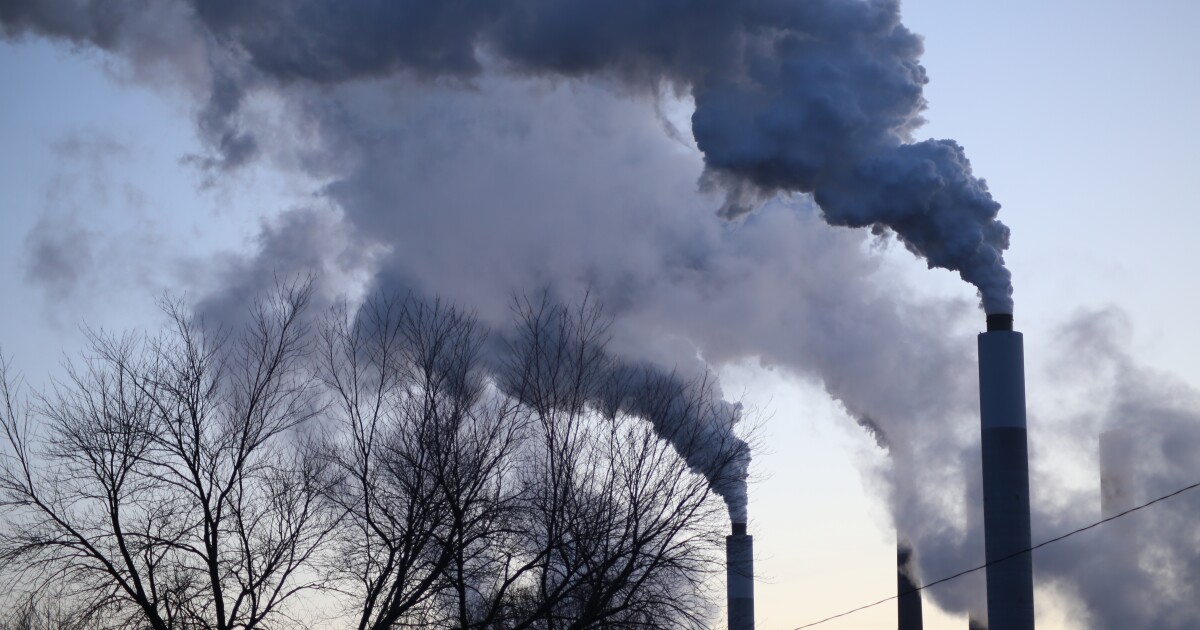
The Kentucky Center for Investigative Reporting analyzed a federal dataset to find the industrial facilities that directly released the most greenhouse gases – mainly carbon dioxide – in each of the following states: Kentucky, Illinois, Indiana, Iowa, Missouri, Ohio, Oklahoma, Tennessee and West Virginia.
More than two-thirds of the facilities are power plants and most — more than 70% — burn coal to make electricity, while more than a third use natural gas. Several plants burn both fuels.
Oil refineries, chemical manufacturers and steel mills are also among the region’s largest individual sources of greenhouse gas emissions.
Extensive scientific research shows climate change poses long-term threats to air, food and water quality. It makes extreme weather more frequent and dangerous, worsens the spread of some infectious diseases and endangers public health in many more ways.
The data KyCIR analyzed came from the U.S. Environmental Protection Agency’s Greenhouse Gas Reporting Program, which tracks about 7,500 facilities that collectively account for about half of America’s annual greenhouse gas emissions. The agency released its 2023 report in October.
In 2023, facilities tracked by the federal program directly released about 2.6 billion metric tons of carbon dioxide equivalent, which is a standard used to measure gas emissions based on their global warming potential.
KyCIR, in partnership with Side Effects Public Media and NPR’s Appalachia + Mid-South Newsroom, analyzed EPA data for nine states that are part of their news coverage areas.
The top 10 facilities in each of the states KyCIR analyzed, considered altogether, accounted for 14.5% of the facility emissions tracked by the EPA.
“The interesting part about greenhouse gas emissions is … it’s not a local pollutant, it’s a global pollutant,” said Daniel Zimmerle, director of Colorado State University’s Methane Emissions Program. “So those CO2 emissions by themselves, you know, don’t affect your neighborhood any more than CO2 emissions in China.”
He said there is often overlap between operations that emit a lot of carbon dioxide and those that release toxic pollutants that can hurt local residents’ health and environment more immediately.
Greenhouse gases hold in heat near Earth’s surface, and humans are changing the global climate by pumping too much of these gases into the atmosphere.
The connections between industrial facilities like power plants, climate change and community conditions within inland states can seem obscure, but the harm is already happening across the Midwest and South, said Tim Darst, who directs Earth literacy programs at the Passionist Earth and Spirit Center in Louisville.
For example, Tornado Alley is shifting east, hitting Western Kentucky more often, he said. Just last September, Hurricane Helene caused devastating flooding in Tennessee and North Carolina, far from the Florida coastline where the storm made landfall.
“It’s impacting us more and more,” Darst said of climate change. “And as long as we keep burning fossil fuels, we’re going to contribute to that.”
Who owns the facilities?
For the nine states KyCIR analyzed, EPA data list parent companies that, as of 2023, owned a stake in each industrial facility included in the states’ top 10 greenhouse gas polluters.
The three organizations with the most facilities on the states’ top 10 lists are:
- The U.S. government, via the Tennessee Valley Authority, owns nine facilities – two in Kentucky and seven in Tennessee.
- American Electric Power Co. Inc. owns six facilities – three in West Virginia and one each in Indiana, Ohio and Oklahoma.
- Vistra Corp. owns six facilities – four in Illinois and two in Ohio.
Tennessee Valley Authority spokesperson Scott Fiedler told KyCIR it makes sense the TVA has plants on these high-emissions lists because it provides power to seven Southeastern states.
He said the TVA is taking many steps to reduce its carbon emissions, with plans to close its remaining coal plants – all were among Tennessee and Kentucky’s top greenhouse gas polluters in 2023 – by 2035 or sooner. Its Bull Run Fossil Plant, which also was among Tennessee’s top 10 for emissions, shut down in late 2023.
Fiedler told KyCIR the TVA is working to hit net-zero carbon emissions by 2050 through a mix of strategies, including investing more in solar power and researching other emerging technologies.
“As energy demand grows due to greater reliance on electricity, new residents moving to this region and new economic investment, we need a diverse fleet that leverages multiple generation sources. The answer to keeping our energy secure, affordable and reliable is a well-rounded portfolio that is increasingly carbon-free and substantially expandable,” he said.
American Electric Power spokesperson Scott Blake told KyCIR the company is one of the nation’s largest electricity producers and its facilities listed among these states’ top greenhouse gas polluters are “capable of providing 24/7/365 generation.”
“Our nation’s power grid relies on these critical resources to keep power flowing,” Blake said via email. “Recently we’ve taken steps that could add a small modular nuclear reactor, wind, and solar facilities to our fleet. Additionally, we are looking for approvals to convert two coal plants in Texas to natural gas. Our diverse mix of resources allows us to provide customers with affordable, reliable power.”
KyCIR requested a comment from Vistra Corp. but did not receive a response by deadline.
Recent trends in industrial operations’ greenhouse gas pollution
Burning fossil fuels like coal and natural gas has powered the economies of the U.S. and other countries for more than 200 years. But doing so generates greenhouse gases. Scientific research shows the environmental tradeoffs are becoming catastrophic on a global scale.
Extensive research, including a recent United Nations Environment Programme report, indicate the world will likely surpass 1.5 degrees Celsius of average warming compared with the preindustrial era, unless countries like the U.S. greatly reduce their use of fossil fuels and drastically lower carbon emissions by 2030. Above that threshold, various effects of climate change will become more dangerous and potentially irreversible.
Still, scientists say many lives can be saved with each fraction of a degree of increased warming society avoids.
Greenhouse gas pollution varies from year to year, but EPA data show a 22% decrease in emissions by large industrial facilities from 2011 to 2023, primarily due to emissions reductions at power plants.
In the nine Midwestern and Southern states analyzed by KyCIR, large facilities tracked by the EPA program altogether released 36% less greenhouse gas pollution in 2023 than they did in 2011.
Facility emissions in Illinois and Kentucky showed the biggest drop when comparing those years, with 48% and 47% less emissions, respectively, in 2023 versus 2011, according to KyCIR’s analysis.
With power plants, in particular, Zimmerle, the Colorado State University researcher, said there are regional differences in how much that sector has shifted from fossil fuels to renewable energy.
“But the power industry has been steadily greening up because solar and wind are quite competitive in price now relative to other energy sources,” he said.
Lowering carbon emissions is a more complicated shift in technology for other operations, like cement production, he said, due to various factors.
Across industries, he said customer demand is a key factor in business decisions on clean energy investments.
“Your customers better be concerned about what’s happening to the planet because the corporate entity is only going to do what their stakeholders are pushing them to do,” he said.
Local clusters
Northwest Indiana is home to a cluster of operations that are counted among the state’s top 10 greenhouse gas polluters.
U.S. Steel’s Gary Works, Cleveland-Cliffs’s Burns Harbor and Indiana Harbor steel mills and BP’s Whiting oil refinery all are situated along a 30-mile stretch near Lake Michigan.
Lisa Vallee lives a couple miles from the BP refinery and is the organizing director for an environmental justice organization called Just Transition Northwest Indiana.
“It would come as no surprise to most people that the communities that are most affected – the frontline communities – are mostly working-class poor and communities of color, especially Gary, which has a really big population of those industry giants,” Vallee said.
She estimates the majority of residents aren’t necessarily worried about the carbon footprint of local industry “as much as I would be, (as) someone who’s working in this field and every day is faced with hearing stories from all across the globe on what is happening with our climate.”
What they do worry about, she said, is toxic chemicals released into their communities by big industrial facilities. In early 2024, for example, leaks in tanks at the BP refinery sent benzene and hydrogen sulfide airborne.
“That’s when people, I think, get really up in arms and get a little bit more scared and distrustful of the facilities,” Vallee said.
In Louisville, Kentucky, a pair of power plants under the same ownership that were among the state’s top 10 facilities for greenhouse gas pollution for 2023, Mill Creek Generating Station and Cane Run Generating Station, are just 11 miles apart on the banks of the Ohio River.
Louisville Gas and Electric and Kentucky Utilities, which are owned by Pennsylvania-based PPL Corp., run two other power plants ranked among Kentucky’s top 10 greenhouse gas polluters — the Ghent Generating Station and Trimble County Generating Station — both located roughly an hour northeast of Louisville.
“We’re proud of the progress we’ve made over the years to significantly improve air quality and reduce greenhouse gas emissions associated with our power plants,” LG&E/KU spokesperson Liz Pratt told KyCIR via email. “Our plan includes steps toward net-zero carbon emissions by 2050, while preserving reliability and affordability for our 1.3 million customers.”
Overall, Pratt said, LG&E/KU reduced greenhouse gas emissions at their plants by 19% since 2010. And more changes are on the way.
The Cane Run operation once ran on coal but switched to natural gas in 2015. Meanwhile, at Mill Creek, LG&E/KU broke ground in November on a new natural gas power-generating unit and made plans to retire two coal-fired units – one at the end of 2024 and one in 2027.
Transitioning to different power sources – whether from coal to natural gas or from natural gas to solar – generally requires substantial planning, financial investment and regulatory approval.
Pratt said “simply ceasing existing operations of power generating units would result in reliability and affordability concerns for customers.”
“As a regulated utility, we have an obligation to provide our customers with reliable electricity at the lowest reasonable costs,” she said. “Generation capacity can transition to lower emitting resources on a timeline that is supported by the regulatory process.”
The Cane Run facility is a stop on a local environmental justice tour led by Darst, the educator who works at Louisville’s Passionist Earth and Spirit Center.
“They used to burn a trainload of coal every single day in the summer in Cane Run,” Darst said.
Industrial facilities lower their greenhouse gas emissions by switching from coal to natural gas, like LG&E/KU did with Cane Run, Darst said. But that won’t halt climate change because natural gas is still a fossil fuel.
Scientific research shows a massive, global shift to renewable energy sources is necessary to drastically slow the pace of climate change. That’s because using renewable energy emits little, if any, greenhouse gases.
“Internationally, the plan is: Electrify everything. So move away from gas furnaces, gas stoves … gasoline-powered cars,” Darst said. “And then fuel-switch on the grid. The grid needs to keep moving toward 100% renewables – wind, water and sun.”
Growth in renewable energy is underway and supported by economic headwinds. However, research indicates the shift is happening too slowly to avoid crossing dangerous thresholds like the 1.5-degrees Celsius target.
A lot of coal power plants have closed in recent years and more are slated for retirement. Such closures could ramp up under federal regulations President Joe Biden finalized this year, tightening restrictions on greenhouse gas emissions for some coal and natural gas power plants.
However, President-Elect Donald Trump has rejected the well-established scientific evidence on climate change and wants to expand fossil fuel production and roll back environmental regulations. His administration’s decisions could change the calculus for businesses.
In the meantime, research makes it clear society is running out of time to stop climate change from becoming a runaway train, with catastrophic impacts on people and their planet.

Kentucky
June unemployment rate shows slight increase in Kentucky Center for Statistics latest report


LEXINGTON, Ky. (WKYT) – Recent heavy rainfall has left soil across the state completely soaked, contributing to localized flooding in some areas.
When rain falls, some water soaks into the ground through a process called percolation.
Soil can only hold a limited amount of water. Once the small air spaces within the soil fill with water, the ground becomes saturated and additional rainfall has nowhere to go.
Soil type plays a role in how quickly water drains.
Much of Kentucky has clay-heavy soil, which is made up of very small, flat particles packed tightly together.
That composition makes it harder for water to move through. In clay soil, water may drain at a rate of only 0.02 to 0.17 inches per hour.
When rainfall comes down faster than the ground can absorb it and water cannot drain into a stream or storm drain quickly enough, it begins to build up.
That buildup is what leads to localized flooding.
Copyright 2026 WKYT. All rights reserved.

BOWLING GREEN, Ky. (WBKO) – Cyclosporiasis is a microscopic parasite that can contaminate food and water — is making people sick across several states, including Kentucky.
Dr. Patricia Tellez-Watson said, the illness is caused by Cyclospora cayetanensis and spreads when someone ingests contaminated food or water. “It is an intestinal infection caused by this water-borne, food-borne microscopic parasite,” she said.
Symptoms can include diarrhea, nausea and vomiting.
Tellez-Watson said, cases are often sporadic, but outbreaks can happen — especially during hot, wet months, when the parasite can survive in the environment long enough to become infectious.
Health experts recommend taking extra precautions with food and water. Washing hands and thoroughly rinsing produce before eating or cooking can reduce risk.
Watson also urged people to be cautious with fresh produce, particularly pre-packaged items, and to consider using bottled water.
Officials have confirmed cases in Bowling Green, though it’s unclear how many.
Copyright 2026 WBKO. All rights reserved.
-

 Detroit, MI21 minutes ago
Livestream: Mayor Sheffield, Detroit health chief to address wildfire smoke threat
-
 San Francisco, CA33 minutes ago
A sculpture of a giant naked woman goes on sale in San Francisco. Bring a crane
-

 Dallas, TX39 minutes ago
No ‘straight answer’: Why Pioneer Cemetery is the latest battleground at City Hall
-

 Miami, FL45 minutes ago
TSA hosts news conference ahead of World Cup third place match at Miami Stadium
-

 Boston, MA51 minutes ago
ICE Boston arrests Barbados national during targeted operations in Attleboro
-

 Denver, CO57 minutes ago
Denver Broncos training camp is 2 weeks away
-

 San Diego, CA1 hour ago
Daily Business Report: July 17, 2026, San Diego Metro Magazine
-
 Milwaukee, WI1 hour ago
‘You can see God’s hand in it’: How Milwaukee women are building a double Dutch community through sisterhood and fitness

