Georgia
‘We need to do better’: Georgia football ranks last in FBS in latest NCAA graduation rates


WATCH: Kirby Smart and players after Georgia football Orange Bowl win
WATCH: Kirby Smart, Kendall Milton, Kamari Lassiter at postgame press conference after Georgia football Orange Bowl win on Dec. 30, 2023
The University of Georgia proclaims it is a powerhouse in academics and athletics.
The Georgia football team is certainly a perennial championship contender with back-to-back national titles in 2021 and 2022 and ranking as high as No. 3 after this season.
The program, though, is at the bottom of more than 130 FBS programs when it comes to the latest NCAA graduation rate metric.
Why is that?
More: Georgia football coach Kirby Smart on Nick Saban: ‘Nobody in this business works as hard’
More: Where Georgia football finished in final 2023 polls. No. 1 projections all around for 2024
Only three years earlier, the school trumpeted that UGA athletics set a record with an 87 percent Graduation Success Rate (GSR) across all of its teams with 25 full-time staff members who worked in their Student Services department at the Rankin Smith Academic Center and more than 100 tutors and mentors.
In 2015, it sent out a press release that mentioned Georgia football’s 73 percent GSR rate were among its teams rated in the top seven in the SEC.
“At the University of Georgia, we are committed to supporting the success of our student-athletes on the field of play but also — and more importantly — in the classroom and in life after graduation,” UGA President Jere Morehead said then.
In the latest GSR rate released in December, Georgia football posted a 41 GSR rate, lagging far behind others in the conference. LSU was next closest in the SEC at 69.
“It hits hard and we know we need to do better,” David Shipley, Georgia’s faculty athletic representative since 2010, said last week in an interview. “In a way, I think we saw this coming with that particular cohort… you had a coaching change.”
The current data reflects six-year graduation rates for those entering the school from 2013-16 which were the final three seasons under coach Mark Richt and the first season under Kirby Smart.
Football power Alabama came in at 93 and Florida at 92, trailing only Vanderbilt’s 95.
What Kirby Smart said about the Georgia football GSR rate
Among Power Five Conference schools, UCLA had the next lowest GSR after Georgia at 64.
Shipley said Georgia focuses on how it compares to other SEC schools and state rival Georgia Tech, which had an 88.
“Bottom line is we need to do better,” Shipley said. “Hopefully it will start showing up better in the next couple of years.”
Only FCS member Texas A&M Commerce was lower among NCAA schools at 39.
“There are a lot of factors that impact those numbers, some are in our control and some are not,” Smart said in a statement to the Athens Banner-Herald through an athletics spokesperson. “Our academic people do a great job with our players. We are very proud of the fact that we had 19 student-athletes eligible to wear the graduate patch on their chest during the Orange Bowl.”
The NCAA graduation success rate, unlike the federal rates required by the U.S. Department of Education, does not penalize schools whose athletes leave as transfers in good academic standing and counts transfers into their schools in the calculation.
“Since I have been the head coach, we have had five players return to the University and finish their degree and we have four former players enrolled in classes this spring,” Smart said. “We understand we have to continue to improve in this area and we will.”
Sedrick Van Pran-Granger, who entered the program in 2020 and is an early-round NFL draft prospect this year after three years as a starting center, is one semester away from earning his degree.
“I can definitely say this, I think everybody in that building pushes guys to get degrees,” he said. “I’ve heard Coach Smart say multiple times football doesn’t last forever. Obviously, some guys may not take that as serious just because you’re currently playing. There’s definitely a focus for guys to get their degrees. … At the end of the day, it’s your own personal choice. If you want to take the money for football and you want to be an entrepreneur, that doesn’t mean you’re a bad person because you didn’t get a degree.”
How Georgia athletics is addressing improving the GSR rate
In 2019, the Georgia Athletic Association stepped up its continuous academic progress monitoring and intervened more to keep athletes on track academically. The focus became more on frontloading credits rather than a minimum credit model.
Shipley said former deputy director for academics Magdi El Shahawy put an emphasis then on players taking 15 credits per semester and if a player struggles, he could drop a class and still be at 12.
“I think you could say the philosophy before is what can we do to boost GPAs but maybe what we’ve decided now is what’s more important is raise those graduation rates and the emphasis on the credit hours per term,” Shipley said.
Georgia had 34 players who did not graduate during the 4-year cohort, of which 13 of those arrived after Smart was hired in December of 2015
“We have worked hard to be thoughtful and intentional about implementing strategies that will hopefully lead to better GSR outcomes,” athletic director Josh Brooks said in a statement. “But it should be made clear that GSR is not the most reliable indicator of our student-athletes’ academic success — our efforts are not limited to a six-year window. Graduation along with providing targeted, differentiated and informed support for our student-athletes continues to be the goal. We have made significant progress in this area and acknowledge there is more work to be done to ensure that our vision is realized.”
It was 10 years ago that Georgia was recognized by the American Football Coaches Association along with Rice, Stanford and Tulane for a 100 percent graduation rate for members of the 2006 freshman class.
Why graduation still matters for some Georgia Bulldogs pursuing NFL careers
Running back Kendall Milton, the Orange Bowl MVP, played four seasons for the Bulldogs and graduated in December with a degree in consumer economics.
“That was something I kind of set before I even committed to a school,” he said. “Education was a very important aspect to me just because for me I know football is going to end at some point and I have my goals, things I want to do in terms of business and certain things in my career. I feel like having my degree in higher education was going to be kind of a foot ahead, a kind of big step in reaching that.”
Milton said both his parents and a brother have college degrees so he “kind of just felt that was mandatory. There was no other option,” he said. “Even if it was a situation where I went out in three years, I would have 100 percent come back and got my degree.”
Milton said graduating probably meant more to his mother than anything else he accomplished at Georgia.
Wide receiver Marcus Rosemy-Jacksaint, who entered Georgia in 2020 and is now an NFL draft prospect, said he’d be the first from his family to get a college degree. He said he has one semester to go.
“It’s always been a big deal for me,” he said. “To do something that nobody in my family ever did.”
Shipley said experienced counselors are working with Georgia players and he think incrementally the GSR rates can go up.
Georgia said nine teams, including football (2.83), received their highest fall GPA in 2022.
“We try to identify who’s having a problem at an earlier stage,” Shipley said. “We’re in person for counseling sessions and tutoring sessions. We didn’t do that for a couple of years (during the pandemic) and I think in person is better than doing those things online.”
He said players moving on to the NFL without completing their degrees has an impact, but Georgia’s not alone in that.
“That’s not unique to us,” he said. “Alabama has a lot of kids go to the draft, so does LSU. We’re not the only school that’s had great success in the NFL draft so that’s not an excuse.”
Van Pran-Granger said even if he has a long NFL career, he wants to get his college degree because it’s important to his mother.
“I definitely want to honor her and make sure I get that for her,” he said.
Shipley said he speaks to Morehead about particular teams underachieving in the classroom.
“He’s aware of it and he wants us to improve,” said Shipley, a UGA law school professor since 1998. “There’s no doubt about it. Campus-wide, he promotes, touts our great first to second year retention rate, our four-year graduation rate, our six-year graduation rate, points of pride. President Morehead very much wants our athletics to be much closer to those numbers than they are now. With most sports, we’re doing fine.”
Milton said running backs coach Dell McGee told players, “it’d be honestly dumb to come to a school and a let the school use you without getting anything out of it. That’s something he’s been saying since my freshman year.”



This Sentell’s Intel rep on Georgia football recruiting shares an overview of what recruits have told DawgNation about spring practice so far this month.
Recruits can get a 5-star ranking. That’s the same set of evaluation criteria that was often used for hotels, movie reviews and restaurants, among other things.
When it came to the big screen, the 5-star ranking for a movie was reserved for the elite. Those were the masterpieces.
That’s a convenient connection here with what DawgNation has heard from the elite recruits who have visited Georgia football practices so far this month.
They are very much like a focus group invited in for a private screening of the 2026 Georgia football team.
While DawgNation has to wait for G-Day to get their first looks, several prospects have now seen UGA for multiple practices, including back-to-back sessions. Not even Magill Society members have seen that much of the Dawgs.
What are they saying? What were their movie reviews? Here’s a listing of several breakout quotes we’ve heard so far.
We were listening for the stuff that would have been at the top of all those movie theatres at the Cineplex.
The program culture at the UGA “Pro Day” workout
“That was the underlying thing you saw today. All the other Dawgs that have already been able to succeed, then want to see the next ones go.”
— 3-star OT commit Ty Johnson (Mount Pleasant, SC)
Does the physicality of spring practice at UGA stand out?
“100 percent. I feel like Georgia is just different. The way they run stuff. The aggression they play with. The tempo they play with. I feel like all of that leads up to the game. I think a cool thing Coach Smart does, and he really emphasized it, is giving everyone reps. Giving freshmen reps. Giving a fifth-year senior reps. He’s a big big coach on just getting people reps.”
“I think that’s a big reason why Georgia develops so well because they play everyone. You can’t get better if you’re on the sideline watching and I think that’s why Georgia emphasizes getting people on the field. That’s why they’ve been so successful over the past couple of years.”
— 4-star OL Jimmy Kalis (Pittsburgh, Pa.)
“Georgia’s practice is like no other I’ve seen. They were hitting like they had pads on and they didn’t have any pads on. That’s just straight development at its finest.”
— 3-star IOL Elijah Morrison (Dacula, Ga.)
“I watched a kid on a one-on-one rep. I saw one of their O-lineman slam the D-lineman to the ground and I was like ‘I want some of that’ and ‘I want some of that work’ because it was crazy to see.”
— 4-star DL Karlos May (Birmingham, Ala.)
“I want to play for a team that physical. I’ve never seen a team practice that physical. It looked like a gameday. Like a rivalry game. Georgia is the most physical team in the country.”
— 4-star DL Marvin Nguetsop (Oakdale, Conn.)
The meetings have also stood out to recruits
“Man, just the meeting itself did it for me, honestly. You are ready to go for our spring ball. Very high energy over there. Tight-knit group. Everybody’s like family there, so it’s very fun to be there at practices and watch them go throughout the day and it’s very exciting when you watch them practice and hit. I was there for the first day with full pads on, so you know the energy was there.”
— 4-star LB Jalaythan “JJ” Mayfield (Lincolnton, NC)
“We sat in a pretty long meeting. I took an entire notebook full of pages and I filled the entire thing up. It was actually pretty cool. Coach Smart, he looked at my notebook and he was really impressed with my note-taking skills. So that was a pretty cool memory, too.”
— 4-star OT Jimmy Kalis (Pittsburg, Pa.)
Junior OT Jah Jackson has attracted a lot of attention
“Jah Jackson is probably the tallest tackle I’ve seen. He’s 6-foot-11 and probably seven feet with cleats on.”
— 4-star OL Jimmy Kalis (Pittsburgh, Pa.)
“He’s a big dude to watch. For sure. He’s definitely exciting to watch on both sides. The left side and the right side. He’s definitely a top guy. For sure.”
— Class of 2029 OT Landon Ghea
“Jah is a leader in my eyes. That’s what I see right now. I feel like he’s figured it out.”
— 3-star IOL Elijah Morrison (Dacula, Ga.)
“The kid’s name was Jah, I think. Man was huge. I’ve never. He is humongous. I couldn’t believe it when I first saw him, I was like ‘Damn’ for real.”
— 4-star WR Khalil Taylor (Pittsburgh, Pa.)
Georgia offensive lineman Jahzare Jackson (64) blocks against Austin Peay defensive lineman Davion Hood (17) during their game at Sanford Stadium, Saturday, September 6, 2025, in Athens, Ga. Georgia won 28-6. (Jason Getz / AJC) (Jason Getz/AJC Freelancer)
What Kirby Smart adds to every UGA practice visit
“There’s just a standard that everybody is held to. Coach Smart was on the microphone. Just pointing out everybody’s mistakes. Just making sure everybody is locked in.”
— Class of 2029 OT Landon Ghea (Milton, Ga.)
“He was just telling me you’ve got to be ready to come here and play. Like I can’t be weak. He’s going to test me mentally and physically and just to be ready. It makes me want to turn up even more. I love being coached hard. It lets me know that he wants me to be great.”
— 4-star WR Sean Green (Kingsland, Ga.)
“He’s a very genuine guy and you can tell that he’s got a real sense of that he’s going to win. I think that’s definitely something that he and I both see eye-to-eye on. We both value winning. He clearly values winning and he does it at a high level.”
— 4-star IOL Carter Jones (Poquoson, Va.)
“A Georgia practice is different. It definitely is. The energy level is way higher. When Kirby gets on that microphone, it just changes something in the atmosphere and there aren’t many places that do that. There are some coaches that try to replicate that, but they don’t do it at the level that he does.”
–4-star LB Jalaythan “JJ” Mayfield (Lincolnton, NC)
Do they look elite?
“I can just see why Georgia is just so elite in what they do. They take a pro approach to everything. They are very serious about what they do. They are passionate about the way they do it. Georgia is going to have a great year.”
— 4-star OL Jimmy Kalis (Pittsburgh, Pa.)
“I feel like it is a factory for the NFL. Their pipeline is and that’s what the end goal is for every athlete of my caliber. So why wouldn’t you check out a place like Georgia?
— 4-star LB Jalaythan “JJ” Mayfield (Lincolnton, NC)
“When I think of Georgia, I just think of relentlessness. Just the way they play. The whole team. It’s not like they got a couple of dudes on there that are Dawgs. Like, literally the whole team is Dawgs. They all want to win and pretty much every single year they’re in the running for a national championship.”
–4-star LB Kenneth Simon II (Brentwood, Tenn.)
“Georgia is different. Like, SEC ball is different. They’re very aggressive, and with the attention to detail, they are very focused. is like you can definitely tell the difference between the Big Ten and the ACC and the different conferences and stuff like that. They’re huge. They’re very aggressive, and with the attention to detail, they are very focused. They’re on their ‘Ps’ and ‘Qs,’ and they know what they’re doing. Everything down there was just great.
— 4-star WR Khalil Taylor (Pittsburgh, Pa.)
2026 breakouts: The names we’ve heard that have impressed the recruits so far this spring
- LB Chris Cole
- QB Ryan Montgomery
- WR Craig Dandridge
- OL Juan Gaston
- DL Elijah Griffin
- IOL Zykie Helton
- OT Jah Jackson
- TE/WR Kaiden Prothro
- OL Mason Short
- DL Valdin Sone
- WR Talyn Taylor
- WR Sacovie White-Helton
- TE Elyiss Williams
Have you subscribed to the DawgNation YouTube channel? If so, you will see special 1-on-1 content with key 2027 recruits like Chance Gilbert, KJ Jackson, Kemon Spell and Donte’ Wright.
Check out this week’s “Before the Hedges” weekly Georgia football recruiting special on YouTube below

The New York Jets have been named a perfect fit for a Georgia wide receiver.
The NFL draft is less than a month away. Teams are finalizing their draft boards as most of the pre draft work is in the rear view mirror now. The Georgia Bulldogs have a list of players who are expected to be selected in this year’s draft.
One of the more intriguiing prospects coming out of Georgia this year is wide receiver Zachariah Branch. He doesn’t have the typicalf frame of an NFL wide receiver, but the playmaking abilities he showcased last season with the Bulldogs are hard to ignore.
It’s often hard to place a player like Branch in the draft and determine where he would fit best in the league, but ESPN’s Matt Bowen named one NFL team as the perfect fit for Branch.
Why the New York Jets Should Draft Georgia’s Zachariah Branch
Bowen believes the New York Jets should draft Branch with the 47th overall pick in the second round of the draft.
“The Jets need to add receiving talent opposite Garrett Wilson, so Branch makes sense as a dynamic slot target who is electric after the catch,” Bowen wrote. “Branch lacks the size to make contested catches at a high rate, but he can produce explosive plays on routes that allow him to run away from coverage (crossers, overs) with his 4.33 speed. Plus, new coordinator Frank Reich can also scheme touches for Branch as a motion/movement target on screens, fly sweeps and RPOs.”
Branch was the focal point of Georgia’s offense last season. He had 81 receptions last season and the next highest on the team was Dillon Bell who had 27 on the season. The Bulldogs’ offensive identity in the passing attack essentially became “How many ways can get Branch the ball?”
His short area quickness and elusivness in the open field make him one of the hardest players to tackle. The only question as he enters the league is will it translate?
If Branch’s next team can replicate what Georgia was able to do at the collegiate level, then Branch will likely be a successful professional. Will he lead his new team in receptions? Likely not. But there is no denying that Branch’s speed and ability to create yards after the catch ca translate to the next level. It all boils down to him finding the right fit, and that could be with the Jets.

Three men from Georgia are behind bars after police say they tried to break into the home of reality TV star Larsa Pippen in Pinecrest — and it was all caught on camera.
According to the Pinecrest Police Department, the attempted burglary happened Sunday afternoon along Southwest 113th Street.
Surveillance video shows two men trying to force their way into the home. Authorities say Pippen was not inside at the time — but was watching the situation unfold live through her security cameras.
“The resident of the house was not home at the time — was actually watching live on her security cameras,” said Pinecrest Police Chief Jason Cohen.
Police identified the suspects as Elijah Russell, Treison Booker, and Cortez Johnson.
Investigators say after attempting to break into the home, the men fled in a getaway car — but crashed near Southwest 94th Street and 57th Avenue. From there, they ran into the surrounding neighborhood.
“At this point, the occupants of the vehicle scatter into the neighborhood,” Cohen said.
A large police response followed, with assistance from Coral Gables Police Department, South Miami Police Department, and the Miami-Dade Sheriff’s Office.
Authorities say a K-9 unit tracked down one suspect in a nearby yard, while another ran across 57th Avenue and jumped into a canal. A third suspect was later found hiding in a neighbor’s bushes after a resident called police.
Cohen says he personally chased that suspect, who also jumped a fence and into a canal before being taken into custody.
All three men are now facing burglary charges and remain in custody. Police say each suspect has a prior criminal history.
During a court appearance Monday, a judge noted Russell had an active warrant out of Georgia tied to felony armed robbery and aggravated assault with a weapon.
Prosecutors also cited Cortez Johnson’s prior probation violations, failures to appear, and past convictions. Treison Booker was also described as having a criminal history in Georgia.
Police estimate the damage to the home at around $1,000.
A person close to Pippen told CBS News Miami it has been a difficult few days for her.
No injuries were reported.
Authorities say additional charges could still be filed as the investigation continues.

Raiders coach Klint Kubiak favors veteran QB, hesitant to start rookie early in season

10 things to stop paying for to save money now
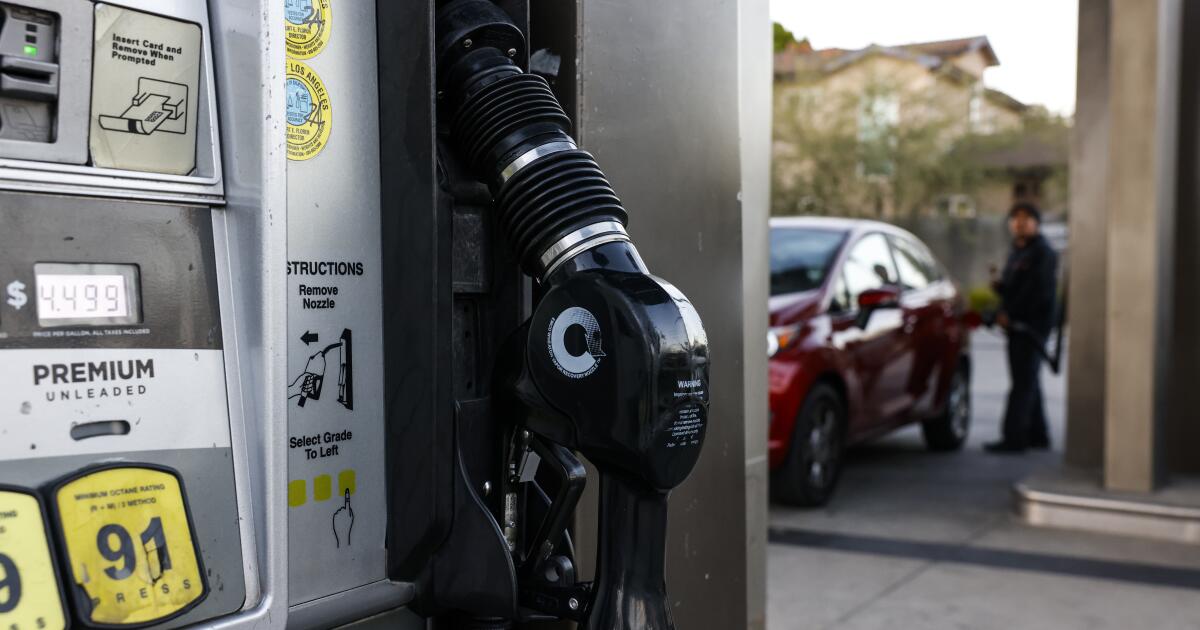
Gas just hit $6 in Los Angeles. Here’s where you can still find it for $5

‘The Super Mario Galaxy Movie’ post-credits scene is justice for a beloved character

How to have the best Sunday in L.A, according to Thundercat

Florida High School Football Rankings: Top 25 teams – Oct. 21

How old is Bo Nix? What to know about Oregon quarterback ahead of 2024 NFL Draft

Cleary's 21 help Le Moyne down Central Connecticut State 69-64 in OT

99th annual Pony Swim held in Virginia

Indiana Members Credit Union announced as new anchor tenant at Bottleworks District

Newsletter: Energy shock has Brussels on edge

Suspension lifted for helicopter pilots who hovered near Kid Rock’s home

Read the Judge’s Decision on the Trump Administration’s Subpoena Against Penn

Man wearing ICE uniform brutally beaten in Honolulu not affiliated with agency, DHS says

Analysis: Hezbollah backs Iran ambassador as conflict deepens Lebanon rifts
-

 South-Carolina3 days ago
South Carolina vs TCU predictions for Elite Eight game in March Madness
-

 Miami, FL6 days ago
Jannik Sinner’s Girlfriend Laila Hasanovic Stuns in Ab-Revealing Post Amid Miami Open
-

 New Mexico1 week ago
Clovis shooting leaves one dead, four injured
-

 Minneapolis, MN6 days ago
Boy who shielded classmate during school shooting receives Medal of Honor
-

 Tennessee1 week ago
Tennessee Police Investigating Alleged Assault Involving ‘Reacher’ Star Alan Ritchson
-

 Culture1 week ago
Do You Know the Comics That Inspired These TV Adventures?
-
 Science1 week ago
As mosquitoes go year-round in L.A., a promising fix hits a snag
-

 Technology1 week ago
YouTube job scam text: How to spot it fast