Georgia
Georgia: ‘Foreign Influence’ Bill Threatens Rights


(Berlin, May 9, 2024) – The Georgian parliament’s introduction of a bill obliging certain nongovernmental groups and media outlets to register as “organizations serving the interests of a foreign power” threatens fundamental rights in the country, Human Rights Watch said today.
The bill, under debate since mid-April 2024, prompted harsh criticism from Georgia’s bilateral and international partners and led to some of the largest peaceful protests in the country in recent decades. There have been multiple, credible reports of unjustified police use of violence to disperse them. The bill has passed two readings and is scheduled for its final adoption the week of May 13.
“Georgian parliamentarians and government officials formally defend the bill as providing transparency, but they make no secret of its intended purpose,” said Hugh Williamson, Europe and Central Asia director at Human Rights Watch. “By labeling independent groups and media as serving foreign interests, they intend to marginalize and stifle critical voices in the country that are fundamental for any functioning democracy.”
Parliament should reject the bill at its final reading. The government should ensure respect for fundamental rights to freedom of assembly and expression and effective investigations of all allegations of excessive use of police force.
The bill, the Law on Transparency of Foreign Influence, is nearly identical to a draft law the Georgian parliament tried to adopt in 2023 but withdrew following mass protests. In the new version, the ruling party, Georgian Dream, substituted the term “agents of foreign influence” with “organizations serving the interests of a foreign power.”
The bill requires nongovernmental groups and print, online, and broadcast media that receive 20 percent or more of their annual revenue – either financial support or in-kind contributions – from a “foreign power” to register with the Ministry of Justice as “organizations serving the interest of a foreign power.”
If adopted, the bill will impose additional onerous, duplicative reporting requirements, inspections, and administrative liability, including the equivalent of up to US$9,300 in fines for violations.
Georgian legislation already requires nongovernmental organizations to register grants with the tax authorities, including the amounts and duration of the projects, to benefit from certain tax exemptions. They also file monthly financial reports that include information on the number of employees and service contracts and income tax paid. Media outlets also file monthly reports on their income and expenses to the Communications Regulatory Commission. All information that the nongovernmental groups and media outlets file is public and anyone could request a copy.
The bill’s initiators and the ruling party leaders have made clear in public statements that they intend the law to be used against groups and media that criticize the government, advocate for lesbian, gay, bisexual, and transgender (LGBT) rights, or engage in other work that irritates the authorities.
Prime Minister Irakli Kobakhidze justified the need for the bill by pointing to initiatives that criticize the authorities or challenge government policies, claiming that some civic groups tried to “organize a revolution” in 2020 and 2022, “engage in LGBT propaganda,” and “discredit the police, judiciary, and the Georgian Orthodox Church.”
Georgian Dream introduced the bill amid other efforts to restrict rights as the country heads toward parliamentary elections, scheduled for October. In late March, the ruling party introduced another bill that would restrict the rights of LGBT people and ban, among other things, “gatherings aimed at popularizing same-sex family or intimate relationships… and non-use of gender-specific terminology.”
Bidzina Ivanishvili, the Georgian Dream founder and leader, in a rare public speech on April 29, said that by introducing the “transparency law” now, the ruling party aimed to exhaust the political opposition in advance of parliamentary elections. He also vowed to punish the National Movement, the opposition party that ruled Georgia under Mikhael Saakishvili from 2003 until 2012. Ivanishvili also attacked Georgia’s political opposition and civic groups, painting the latter in one broad stroke as “having no homeland” and accusing foreigners of plotting to bring the political opposition to power through “non-transparent NGO funding.”
The bill’s supporters falsely allege that the bill is similar to the United States Foreign Agent Registration Act. But the US law does not equate receiving foreign funding, in part or in whole, with being under the direction and control of a foreign principal. It primarily regulates lobbyists and does not serve as a mechanism for weakening civil society organizations and media. Russia also uses this false equivalence argument to justify its draconian and abusive legislation.
Tens of thousands of people have protested the bill continuously in recent weeks, in Tbilisi and several other cities. On multiple occasions during especially large demonstrations in front of the parliament building in Tbilisi, police used tear gas, water cannons, and pepper spray to disperse mainly nonviolent protesters, including on the night of April 30, the eve of bill’s second reading. There were credible reports of police using rubber bullets at least once on the night of May 1.
Human Rights Watch spoke with three people, including a 17-year-old high school student, who were all beaten viciously by police in separate incidents the night of April 30 to May 1. They each said that multiple police officers at the protest grabbed them unprovoked, then kicked them to the ground, beat them for several minutes, and then detained them. The authorities charged them with misdemeanor disobedience or petty hooliganism and released them. If the charges are not dropped, the three will face trial.
Ted Jonas, a 62-year-old lawyer who has been living in Georgia for 30 years, had numerous bruises, including a black eye, abrasions, and a bloody nose. Forty-nine-year-old Vakhtang Kobaladze had multiple bruises on his back, chest, hand, legs, and jaw. The 17-year-old said that five police officers dragged him to the ground and beat and kicked him repeatedly, leaving him with head trauma, a broken lip, and bruises on his left eye and all over his chest, shoulders, back, and hands.
The Georgian Special Investigation Service reported receiving 80 calls to its hotline from protesters and journalists alleging police violence. It said it had initiated a criminal investigation.
The bill, police violence, and detentions triggered statements of concern and criticism within Georgia and from multilateral organizations and Georgia’s international partners. In a public statement, Georgia’s human rights ombudsperson said there were no grounds for the police to use pepper spray to disperse protesters at the entrance to parliament and that police used water cannons and tear gas without adequate warning or reason, as “the rally had a peaceful character and there was no reason to terminate it….” A statement by 10 Georgian civic organizations called on Georgian authorities to investigate “cases of disproportionate use of force by law enforcement officers” that night.
In a May 2 statement, the United Nations high commissioner for human rights, Volker Turk, urged Georgian authorities to “conduct prompt and transparent investigations into all allegations of ill-treatment” and urged Georgian authorities to withdraw the bill, [which] “… poses serious threats to the rights to freedom of expression and association.”
On April 16, Joseph Borrell, the European Union’s foreign policy chief, and Olivér Várhelyi, its commissioner for EU enlargement, jointly urged authorities to withdraw the bill, which if adopted, they said would “negatively impact” Georgia’s EU candidacy. On May 1, Borrell condemned the violence against protesters.
In a letter to the chair of Georgia’s parliament, the Council of Europe human rights commissioner, Michael O’Flaherty, asked parliament to refrain from adopting the draft law because, if adopted, it would “likely result in the stigmatization and discreditation of the civil society organizations.”
The draft law is incompatible with legal obligations under the European Convention on Human Rights and the International Covenant on Civil and Political Rights, to which Georgia is a party. While certain limitations on the rights to freedom of expression and association are permissible under international law, the proposed bill far exceeds any legitimate interference with these rights, Human Rights Watch said.
In 2022, the European Court of Human Rights found Russia’s “foreign agents” law, which is similar to the Georgian bill, in violation of article 11 of the European Convention, protecting the right to association. The court ruled that creating a special status and legal regime for organizations that receive funding from international or foreign sources was not justified, and that such restrictions interfered with their legitimate functions. The right to seek, receive and utilize resources from national, international, and foreign sources is an inherent part of the right to freedom of association.
“The foreign influence bill tramples on fundamental rights and Georgian authorities should drop it,” Williamson said. “They should also promptly and effectively investigate the allegations of police violence and safeguard the rights to freedom of peaceful assembly and expression.”



For a long time it seemed the Atlanta Falcons were purposefully avoiding drafting prospects from Georgia for some reason. There are signs that’s changing with the new front office regime, though. Last month Kirby Smart commented on how his program is developing a relationship with the Falcons.
That’s a good sign for Atlanta’s defensive front-seven, because that group needs all the help they can get and it’s where the Bulldogs have thrived the most in recent years. Jalon Walker is helping to reinvigorate their pass rush, and more help could be on the way soon.
In a new five-round mock draft from NFL.com, the Falcons hit up that local resource again and take Georgia defensive tackle Christen Miller at No. 48 overall.
At the combine Miller checked in at 6-foot-4, 321 pounds with 33″ arms and 10″ hands. Here’s the highlight reel.
Like most nose tackle prospects, Miller’s college production (four sacks, 11.5 TFL) doesn’t exactly jump off the page.
However, the scouting report on Miller mentions both upper and lower body power in addition to good balance. Those traits should make him a solid nose tackle at the next level.
If the Falcons do end up drafting Miller, he should project to be starting up front in Week 1.

A Delta flight was delayed after a massive alligator plopped itself on the taxiway of a Georgia airport, according to reports.
Recently unearthed air traffic control audio captured the unusual moment the Delta pilot noticed the lazing gator at the Savannah-Hilton Head International Airport on the evening of March 20, WDSU reported.
“There’s a six-foot gator sitting on his two legs,” the pilot said over the radio.
“Six foot?” the tower controller asked, to which the pilot replied, “Yeah. He’s about six foot.”
“He just laid down,” the pilot added.

Airport crew responded and safely removed the alligator to the airport, then relocated it outside the airport grounds, the outlet reported.
No one was injured during the incident, authorities added. It’s unclear how the alligator managed to wander into the airport unchecked.
Flight operations resumed shortly after the reptile was removed, the outlet said.
Georgia
Passover ad featuring challah sparks backlash for Georgia Senate candidate | The Jerusalem Post

A Georgia Democratic candidate for the state Senate came under ridicule over the weekend after a Passover ad published in the Atlanta Jewish Times reportedly featured challah, a leavened bread traditionally avoided during the holiday. The controversy spread on Saturday after Atlanta Journal-Constitution political reporter Greg Bluestein posted about the ad on X.
Nathalie Kanani is running for Georgia State Senate District 14, and has publicly described herself as a candidate focused on affordability, healthcare, housing, education, and workers’ issues. In a LinkedIn post published about a month ago, she said she had officially qualified to run for the seat.
The issue appears to have stemmed from a holiday greeting in the Atlanta Jewish Times Passover edition, which was published this past week and included a wide range of Passover-themed community content and messages.
Bluestein wrote on X that a Georgia Senate candidate’s Passover ad in that week’s Atlanta Jewish Times “features challah,” adding, “It’s the thought that counts, I guess.” His post helped push the item into broader political and Jewish social media circles.
The mockery built quickly. Raw Story, which aggregated the reaction, quoted conservative commentator Jonah Goldberg joking that the image was like serving a “Yom Kippur BLT sandwich,” while progressive commentator Molly Jong-Fast called it “incredible” and added that “Veep was a documentary.” The same report also cited Georgia state Rep. Esther Panitch criticizing the mistake and noting that, as the only Jewish member of the Georgia General Assembly, she was available for “holiday consults.”
During Passover, Jews avoid hametz (leavened grain products), and bread is among the clearest examples of foods excluded from the holiday. Matzah, the flat unleavened bread eaten during Passover, is one of the most recognizable symbols of the festival.
That made challah, a braided bread commonly associated with Shabbat and other Jewish occasions, an especially awkward choice for a Passover greeting. For many Jewish readers, it signaled a basic misunderstanding of one of Judaism’s best-known observances.
As of Sunday, Kanani’s campaign had not issued any publicly visible response in the sources reviewed for this report.

Denver police arrest man suspected in fatal shooting on E. Virginia Avenue

WA Supreme Court to consider Let’s Go Washington lawsuit challenging ‘millionaires tax’

DPI report highlights difficulties retaining teachers in Wisconsin

West Virginia Treasurer Allocates Medical Marijuana Revenue Despite Governor’s Veto – Marijuana Moment

Wyoming’s data center boom prompts lawmakers to address electricity consumption and resource management.

Florida High School Football Rankings: Top 25 teams – Oct. 21

How old is Bo Nix? What to know about Oregon quarterback ahead of 2024 NFL Draft

Cleary's 21 help Le Moyne down Central Connecticut State 69-64 in OT

99th annual Pony Swim held in Virginia

Indiana Members Credit Union announced as new anchor tenant at Bottleworks District

Map: Minor Earthquake Strikes Near San Diego

Trump claims he’d win as the president of Venezuela — just needs to ‘quickly’ learn Spanish

US Supreme Court clears path for Steve Bannon criminal case dismissal
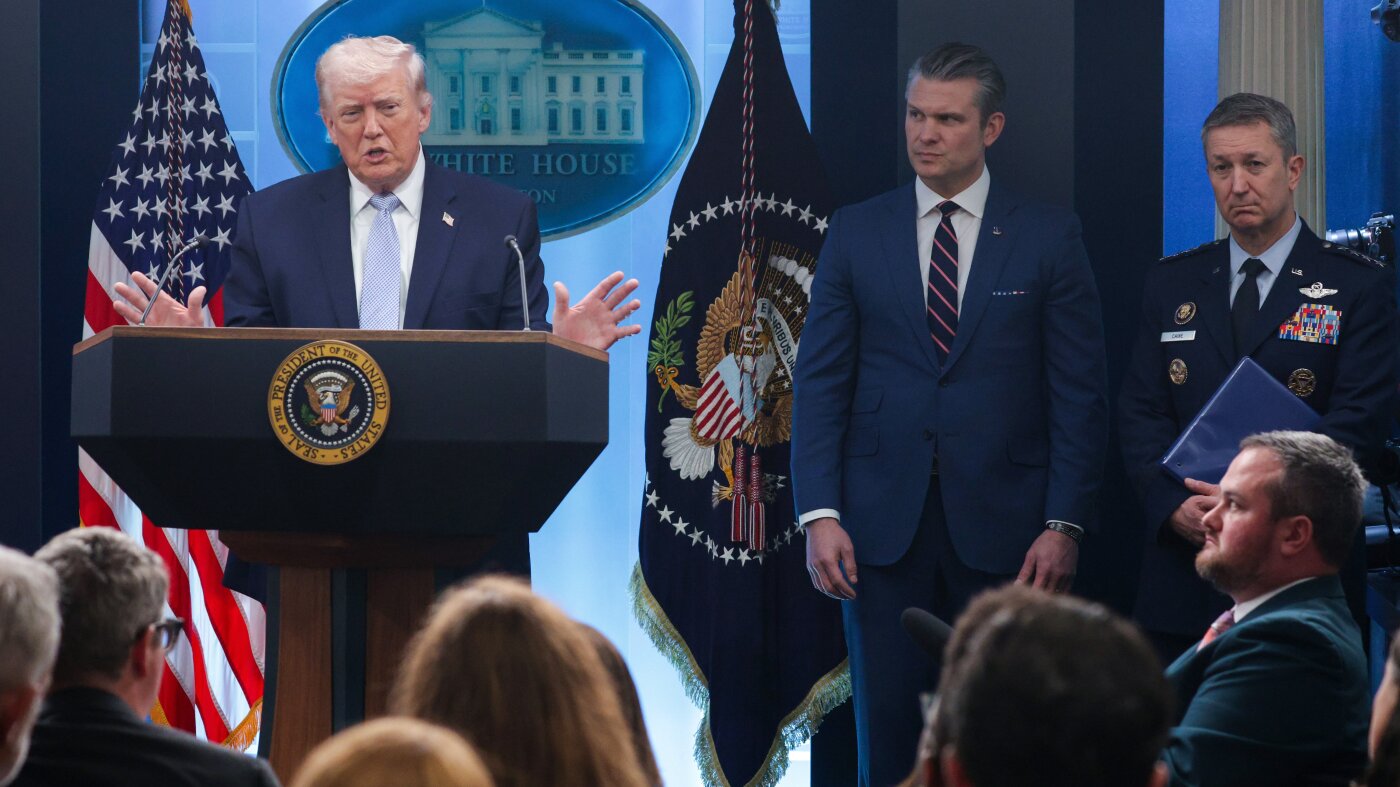
Trump reiterates threats to bomb Iran’s power plants and bridges

Trump threatens Iranian infrastructure over Strait of Hormuz | BBC News
-

 Atlanta, GA2 days ago
1 teenage girl killed, another injured in shooting at Piedmont Park, police say
-

 South-Carolina1 week ago
South Carolina vs TCU predictions for Elite Eight game in March Madness
-

 Vermont1 week ago
Skier dies after fall at Sugarbush Resort
-

 Movie Reviews5 days ago
Vaazha 2 first half review: Hashir anchors a lively, chaos-filled teen tale
-

 Politics1 week ago
Trump’s Ballroom Design Has Barely Been Scrutinized
-

 Politics1 week ago
JD Vance says he was ‘obsessed’ with UFOs, believes aliens are actually ‘demons’
-

 Atlanta, GA1 week ago
Fetishist ‘No Kings’ protester in mask drags ‘Trump’ and ‘JD Vance’ behind her wheelchair
-
 Entertainment5 days ago
Inside Ye’s first comeback show at SoFi Stadium