Georgia
Georgia and Albania’s presence at Euro 2024 is sign of eastern resurgence | Jonathan Wilson


On 14 July, the European champions will be crowned in Berlin. No one really expects a former communist country to win in the city whose division once symbolised the cold war but perhaps, finally, 35 years after the Wall came down, the eastern part of the continent is beginning from a football perspective to regather its strength.
Not including Germany (two players in their provisional squad were born in the east), 11 of the 24 teams at the Euros will be from the former Soviet bloc, as opposed to eight in 2020 and 2016. Even including the two hosts, Poland and Ukraine, five of the 16 were from the east in 2012; there were five in 2008, 2004 and 1996 and four in 2000.
Individual countries have impressed at tournaments – the Czech Republic in 1996 and perhaps even more so in 2004, Russia in 2008, Croatia repeatedly – but this is the first time since the heyday of the Mitropa Cup that anywhere near half of the participants at any major finals have been from the Soviet bloc.
That may in part be to do with the expansion of the tournament to 24 teams – there are not many western European countries that did not make it. The Nations League essentially offers a short cut for a rising in-form side with a low coefficient, rather than having to slowly improve, advancing from seeding pot to seeding pot before getting a manageable draw.
That has favoured smaller countries (but not absolute minnows) who have a footballing heritage, often as part of a larger entity, but without the population to be successful consistently. For North Macedonia last time, read Georgia this.
Whatever the impact of changes in the competition format, an increase of more than a third on four years ago is not insignificant. But even to speak of the post-communist sides as one bloc these days feels anachronistic. If the situation in Poland or Romania ever had much in common with the situation in Slovenia or Ukraine, which is debatable, they do not now.
After 1989, the state-run academies that had once produced players lost their funding. The Romania and the Bulgaria of 1994, the Croatia of 1996 and 1998, even the Dynamo Kyiv team that reached the Champions League semi-final in 1999, were a hangover of those state institutions, based around the last players to receive that state training. After that came the dearth. But now sides from the east are, slowly, unsurely, beginning to emerge again.
Hungary’s rise has perhaps been the most dramatic, if only because they were coming from the lowest base. The extended golden age when they reached World Cup finals in 1938 and 1954 had long since collapsed, undermined by the attacks on the two great well-springs of the culture that had produced it: the far-right government shut down MTK Budapest in 1940 because it was perceived as a Jewish club and the communists, after nationalising football in 1949, deliberately downgraded Ferencvaros because they were seen as the team of the ethnically German working classes.
When Ferenc Puskas, Sandor Kocsis and Zoltan Czibor, plus the entire under-21 squad, defected as a result of the brutal Soviet repression of the Uprising in 1956, there was nothing to replace it.
Largely through tax breaks, the autocratic prime minister, Víktor Orban, has encouraged investment in football while establishing an academy in his home village of Felcsut. Since his return to power, in 2010, more than 40 stadiums have been constructed or renovated, including the 65,000-capacity Puskas Arena that will host the Champions League final in 2026, while 1,590 new pitches have been laid and 2,800 others refurbished.
The result has been a distinct upturn. In 2016, Hungary reached their first major tournament in 30 years and have qualified for both Euros since, while their league has risen from 32nd to 24th in the Uefa rankings.
The picture in Serbia is similar, if not so dramatic. The big two Belgrade clubs, Red Star and Partizan, have received state backing in recent years. Red Star have further benefited from a lucrative sponsorship deal with Gazprom and both have focused on their academies.
The result is that in 2021 the CIES football observatory ranked Serbia sixth globally for player production, although they have fallen slightly since. Serbia’s league, though, is ranked 19th by Uefa; theirs is still largely an export economy.
after newsletter promotion
Georgia will be the lowest-ranked side in Germany and even if they finished their qualifying group behind Spain, Scotland and Norway, their progress via the Nations League should not be regarded as the equivalent of winning a raffle.
As part of a general focus on youth development, Georgia has hosted Uefa under-19 and under-21 tournaments in the past seven years. The number of male players playing the game has increased by a factor of 2.5 in that time (and the number of female players by a factor of 10) as investment, some of it from Uefa grants, has improved facilities. That the Georgian league ranks 46th of 55 in Europe, which suggests there is some way to go.
If the rise of Hungary and, to a lesser extent, Serbia and Georgia, feels sustainable, based on solid foundations, Albania’s does not. They won one of 11 games in 2022, but have been inspired by their coach, the former Arsenal full-back Sylvinho, who promoted a string of previously unheralded players and produced an eight-game unbeaten run to finish top of their qualifying group.
Their league is ranked 47th. Sometimes teams simply come together and that perhaps indicates the wider point. The greatest testament to how far the post-communist bloc has moved on is, while they may all have been facing a similar problem 30 years ago, how their cases feel remarkably varied.
The old model of state control has gone and while forms of state investment has returned in some areas, new ways of funding development have been found. Not all will endure.
But as the shadow of Soviet control retreats further into the past, the most striking aspect of the 11 post-communist qualifiers is how little they have in common.



Trump proposes privatizing TSA screening operations
President Donald Trump proposed to begin privatizing airport security operations handled by the Transportation Security Administration, in an effort to save money.
Transportation Security Administration officers from the country’s busiest airport are catching a break after weeks of uncertainty during a partial government shutdown.
Federal funding for the Department of Homeland Security lapsed in February, leaving TSA officers across the nation’s airports working without pay. Congress was gridlocked as they debated appropriations for ICE, and the shutdown dragged on. Lines to get through security at major airports got longer and longer, and TSA officers began calling out of work as the financial burden became too great.
In the weeks since, ICE officers were deployed to airports to help the staffing shortages, and the president passed an order to pay TSA officers while the shutdown continues. TSA officers are largely back to work as normal and they have been receiving paychecks, but backpay from prior weeks won’t come until the shutdown is over.
Now, public service officials in Georgia are trying to make sure TSA officers can keep the lights on as the shutdown has no clear end in sight.
Georgia commission stops utility cutoffs
On Monday, the Georgia Public Service Commission announced an order had been filed to “ensure TSA agents who are living in Georgia will not have their utility service cut off for nonpayment and will not pay late fees for missed utility bills until the partial government shutdown ends,” according to a news release.
The motion was approved unanimously after being put forward by Commissioner Tricia Pridemore.
“Georgia is home to the world’s busiest airport and many regional airports where TSA agents work to keep us safe,” Pridemore said in the release. “During the partial shutdown, many TSA agents are taking up second jobs driving Ubers and utilizing other gig-economy jobs just to make rent or mortgages and to put food on the table. I’m hoping this order will give them one less thing to worry about.”
How can TSA officers get support?
TSA officers can qualify for the utility protection by verifying their employment with the TSA, then making sure the balances are paid once the shutdown is over.
“Their past-due balances must be paid within 30 days after the shutdown ends and TSA agents’ back pay is restored,” according to the commission. “Although many agents received a paycheck Friday, the U.S. Department of Homeland Security has cautioned TSA agents that future pay remains in limbo as the partial government shutdown continues.”
The order only applies to utilities that fall under the jurisdiction of the Georgia Public Service Commission. This includes Georgia Power and Atlanta Gas Light. There are several natural gas marketers in the state, but the commission said Atlanta Gas Light is still responsible for the pipelines and connecting and disconnecting service.
“TSA officers at Hartsfield-Jackson are showing up every day to keep Georgia safe, even as they go without a paycheck,” Commissioner Peter Hubbard said. “They shouldn’t have to worry about coming home to a dark house.”
When will the shutdown be over?
It’s unclear when the partial government shutdown may come to an end as Congress appears locked in debate over funding for immigration enforcement, also under the purview of DHS.
The shutdown could end Tuesday as the House returns from a recess, and they will be back in session at noon on April 14. Voting on the funding is not currently listed on the House weekly schedule, according to reporting from USA TODAY, but it could possibly be included in a section noted “additional legislative items.”
The Senate passed a bipartisan plan to fund DHS before the House went on recess, but some conservative House members have made it clear they wouldn’t support the plan that excludes funding for immigration and border control operations.
Irene Wright is following the partial government shutdown’s impact on TSA at Hartsfield-Jackson Atlanta International Airport. Find the Atlanta Connect reporter on X @IreneEWright or email her at ismith@usatodayco.com.

A McDuffie County man is facing multiple felony charges after Georgia authorities say he trafficked and sexually exploited a 17-year-old girl.
Georgia Attorney General Chris Carr announced Monday that Jimmy Mance, 40, of Thomson, has been charged with trafficking a minor for sexual servitude and sexual exploitation of a child.
According to the Attorney General’s Office, the case stems from allegations that the teenager was sold for sex, with the victim later recovered in December 2025.
“This is yet another step in our ongoing efforts to combat human trafficking in every corner of this state,” Carr said in a statement. “If you buy or sell a child for sex, we will find you, arrest you and prosecute you to the fullest extent of the law.”
Charges filed
Authorities say Mance is facing several charges, including:
- Trafficking of persons for sexual servitude (harboring a minor)
- Trafficking of persons for sexual servitude (providing a minor)
- Two counts of sexual exploitation of a child involving explicit material
Warrants were taken out on April 13 by the Attorney General’s Human Trafficking Prosecution Unit.
Multiple agencies assisted in the investigation and arrest, including the Georgia Bureau of Investigation, McDuffie County Sheriff’s Office, Thomson Police Department, and sheriff’s offices in Columbia and Bibb counties.
Statewide crackdown on trafficking
The case highlights Georgia’s ongoing efforts to combat human trafficking, particularly involving minors.
The Attorney General’s Human Trafficking Prosecution Unit — created in 2019 — has secured more than 70 convictions and helped rescue or assist over 200 children, according to state officials.
Carr expanded the unit last year to include additional prosecutors and investigators serving Augusta and surrounding counties, part of a broader push to target trafficking networks statewide.
Officials say the unit works alongside local and state law enforcement to investigate and prosecute cases involving sexual exploitation and forced labor.
What happens next
Authorities emphasize that the charges are allegations, and Mance is presumed innocent unless proven guilty in court.
The case remains under investigation.

Hurst’s development could go in two distinct directions. If he emphasizes precision, refines his routes, and adds a little muscle to his frame, Hurst could become an aspiring A.J. Green – a big-play primary receiver who can defeat press-man coverage and run the full route tree.
If Hurst bulks up further and his route tree is limited, he could become a big-play possession option like Tee Higgins who isn’t asked to run as full of a route tree and wins with his size at the boundary.
There’s reason for optimism that Hurst will become a weekly contributor in the league. It’s probably a stretch to believe Hurst will become a top-end primary receiver, but others with his athletic gifts have done it before.
Hurst has a medium-high floor with a high ceiling. That’s worth the investment.

Two Detroit Pistons Facing Uncertain Roles in NBA Playoff Rotation

Meet the District 2 candidates: How should SFUSD students be assigned to schools?

Stephen Jones’ Comments Add Fuel To Dallas Cowboys NFL Draft Trade Rumors

Forward Brant Byers leaving Miami RedHawks for Penn State | Report

Biddeford woman runs Boston Marathon in honor of late mother

Florida High School Football Rankings: Top 25 teams – Oct. 21

How old is Bo Nix? What to know about Oregon quarterback ahead of 2024 NFL Draft

Cleary's 21 help Le Moyne down Central Connecticut State 69-64 in OT

99th annual Pony Swim held in Virginia

Indiana Members Credit Union announced as new anchor tenant at Bottleworks District

Video: How Stephen Miller Is Adjusting Trump’s Immigration Agenda

Biden DOJ weaponized FACE Act against pro-life Americans, 882-report alleges

Mass drone warfare is Europe’s rising security threat
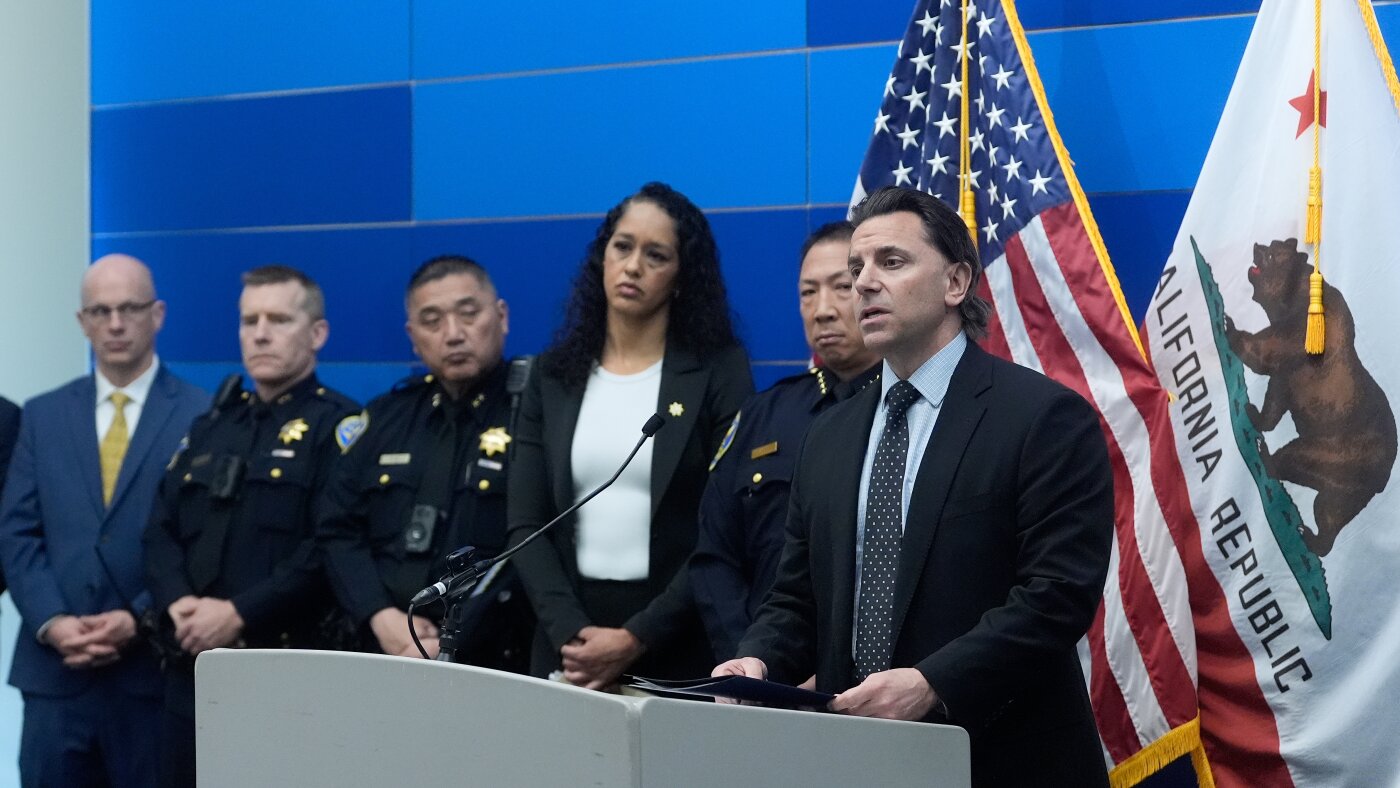
Man accused in Molotov cocktail attack of OpenAI CEO’s home charged with attempted murder

Embattled Rep Tony Gonzales announces plans to resign amid sexual misconduct allegations
-

 Atlanta, GA1 week ago
1 teenage girl killed, another injured in shooting at Piedmont Park, police say
-

 Georgia1 week ago
Georgia House Special Runoff Election 2026 Live Results
-

 Arkansas4 days ago
Arkansas TV meteorologist Melinda Mayo retires after nearly four decades on air
-

 Pennsylvania1 week ago
Parents charged after toddler injured by wolf at Pennsylvania zoo
-
 Milwaukee, WI1 week ago
Potawatomi Casino Hotel evacuated after fire breaks out in rooftop HVAC system
-

 Austin, TX7 days ago
ABC Kite Fest Returns to Austin for Annual Celebration – Austin Today
-

 World1 week ago
Zelenskyy warns US-Iran war could divert critical aid from Ukraine
-

 Politics1 week ago
FBI’s Patel delivers blunt warning to law enforcement attackers: ‘We’re going to put you down’