Georgia
Georgia and Albania’s presence at Euro 2024 is sign of eastern resurgence | Jonathan Wilson


On 14 July, the European champions will be crowned in Berlin. No one really expects a former communist country to win in the city whose division once symbolised the cold war but perhaps, finally, 35 years after the Wall came down, the eastern part of the continent is beginning from a football perspective to regather its strength.
Not including Germany (two players in their provisional squad were born in the east), 11 of the 24 teams at the Euros will be from the former Soviet bloc, as opposed to eight in 2020 and 2016. Even including the two hosts, Poland and Ukraine, five of the 16 were from the east in 2012; there were five in 2008, 2004 and 1996 and four in 2000.
Individual countries have impressed at tournaments – the Czech Republic in 1996 and perhaps even more so in 2004, Russia in 2008, Croatia repeatedly – but this is the first time since the heyday of the Mitropa Cup that anywhere near half of the participants at any major finals have been from the Soviet bloc.
That may in part be to do with the expansion of the tournament to 24 teams – there are not many western European countries that did not make it. The Nations League essentially offers a short cut for a rising in-form side with a low coefficient, rather than having to slowly improve, advancing from seeding pot to seeding pot before getting a manageable draw.
That has favoured smaller countries (but not absolute minnows) who have a footballing heritage, often as part of a larger entity, but without the population to be successful consistently. For North Macedonia last time, read Georgia this.
Whatever the impact of changes in the competition format, an increase of more than a third on four years ago is not insignificant. But even to speak of the post-communist sides as one bloc these days feels anachronistic. If the situation in Poland or Romania ever had much in common with the situation in Slovenia or Ukraine, which is debatable, they do not now.
After 1989, the state-run academies that had once produced players lost their funding. The Romania and the Bulgaria of 1994, the Croatia of 1996 and 1998, even the Dynamo Kyiv team that reached the Champions League semi-final in 1999, were a hangover of those state institutions, based around the last players to receive that state training. After that came the dearth. But now sides from the east are, slowly, unsurely, beginning to emerge again.
Hungary’s rise has perhaps been the most dramatic, if only because they were coming from the lowest base. The extended golden age when they reached World Cup finals in 1938 and 1954 had long since collapsed, undermined by the attacks on the two great well-springs of the culture that had produced it: the far-right government shut down MTK Budapest in 1940 because it was perceived as a Jewish club and the communists, after nationalising football in 1949, deliberately downgraded Ferencvaros because they were seen as the team of the ethnically German working classes.
When Ferenc Puskas, Sandor Kocsis and Zoltan Czibor, plus the entire under-21 squad, defected as a result of the brutal Soviet repression of the Uprising in 1956, there was nothing to replace it.
Largely through tax breaks, the autocratic prime minister, Víktor Orban, has encouraged investment in football while establishing an academy in his home village of Felcsut. Since his return to power, in 2010, more than 40 stadiums have been constructed or renovated, including the 65,000-capacity Puskas Arena that will host the Champions League final in 2026, while 1,590 new pitches have been laid and 2,800 others refurbished.
The result has been a distinct upturn. In 2016, Hungary reached their first major tournament in 30 years and have qualified for both Euros since, while their league has risen from 32nd to 24th in the Uefa rankings.
The picture in Serbia is similar, if not so dramatic. The big two Belgrade clubs, Red Star and Partizan, have received state backing in recent years. Red Star have further benefited from a lucrative sponsorship deal with Gazprom and both have focused on their academies.
The result is that in 2021 the CIES football observatory ranked Serbia sixth globally for player production, although they have fallen slightly since. Serbia’s league, though, is ranked 19th by Uefa; theirs is still largely an export economy.
after newsletter promotion
Georgia will be the lowest-ranked side in Germany and even if they finished their qualifying group behind Spain, Scotland and Norway, their progress via the Nations League should not be regarded as the equivalent of winning a raffle.
As part of a general focus on youth development, Georgia has hosted Uefa under-19 and under-21 tournaments in the past seven years. The number of male players playing the game has increased by a factor of 2.5 in that time (and the number of female players by a factor of 10) as investment, some of it from Uefa grants, has improved facilities. That the Georgian league ranks 46th of 55 in Europe, which suggests there is some way to go.
If the rise of Hungary and, to a lesser extent, Serbia and Georgia, feels sustainable, based on solid foundations, Albania’s does not. They won one of 11 games in 2022, but have been inspired by their coach, the former Arsenal full-back Sylvinho, who promoted a string of previously unheralded players and produced an eight-game unbeaten run to finish top of their qualifying group.
Their league is ranked 47th. Sometimes teams simply come together and that perhaps indicates the wider point. The greatest testament to how far the post-communist bloc has moved on is, while they may all have been facing a similar problem 30 years ago, how their cases feel remarkably varied.
The old model of state control has gone and while forms of state investment has returned in some areas, new ways of funding development have been found. Not all will endure.
But as the shadow of Soviet control retreats further into the past, the most striking aspect of the 11 post-communist qualifiers is how little they have in common.


Georgia leaders from both political parties are paying tribute to longtime U.S. Sen. Lindsey Graham following the South Carolina Republican’s death at age 71, remembering him as a dedicated public servant whose influence stretched far beyond his home state.
U.S. Sen. Jon Ossoff said he joined others across the country in mourning Graham’s passing.
“I join in mourning Senator Lindsey Graham and extend my deepest condolences to the Senator’s family, friends, and staff,” Ossoff said.
Ossoff praised Graham’s military service and lengthy congressional career.
“Senator Graham dedicated his life to the United States, from his service in the U.S. Air Force to his representation of the State of South Carolina in the U.S. House and Senate. Lindsey was an energetic leader who loved South Carolina. May Lindsey’s memory be a blessing.”
Sen. Raphael Warnock also shared condolences, calling Graham a man of faith who served his state with determination.
“I am deeply saddened by the passing of my colleague, Senator Lindsey Graham,” Warnock wrote on X. “He was a man of great faith who served the people of South Carolina with passion and tenacity. I am praying for his family and his loved ones as they mourn this tremendous loss.”
Gov. Brian Kemp described Graham as a patriot and a friend whose impact reached across Washington.
“Senator Lindsey Graham was a patriot, an impactful public servant, and a friend,” Kemp said. “His love of this nation, unyielding belief in its possibilities, and defense of its values made him a true force to be reckoned with in Washington.”
Kemp added that he, First Lady Marty Kemp and their family were praying for Graham’s loved ones and for South Carolina during what he called a difficult time.
Republican U.S. Rep. Mike Collins, who is challenging Ossoff in November’s U.S. Senate election, also reflected on Graham’s legacy.
“Leigh Ann and I are praying for Senator Graham’s loved ones during this time of immeasurable grief and reflecting upon his many years of public service,” Collins said.
Collins added that while he did not know Graham well personally, he admired the senator’s defense of Supreme Court Justice Brett Kavanaugh during his 2018 confirmation hearings, calling it “a commitment to our nation and the truth that should be admired.”
Graham served South Carolina in the U.S. Senate for more than two decades after previously representing the state in the U.S. House. Throughout his career, he became one of Senate Republican’s leading voices on national security, foreign policy and immigration, while emerging as one of the Republican Party’s most influential lawmakers.
His death has prompted an outpouring of tributes from leaders across the country.

Numerous to widespread thunderstorms capable of producing damaging wind gusts, large hail, frequent lightning, localized flash flooding, and dangerous heat are expected across much of north and central Georgia today and tonight, according to the National Weather Service. A Heat Advisory is also in effect for portions of east central Georgia from noon until 8 p.m., with heat index values up to 106 degrees expected.
The National Weather Service issued a hazardous weather outlook for north and central Georgia for Sunday, July 12, 2026.
Bonus for the more weather-curious among you … To read an article about interpreting a weather news report with some of the typical terminology defined, follow this link.
What is in the Hazardous Weather Outlook?
The hazardous weather outlook states the following:
558 AM EDT Sun Jul 12 2026
This Hazardous Weather Outlook is for north and central Georgia.
.DAY ONE…Today and Tonight…
A few thunderstorms will remain possible through the morning,
capable of producing lightning and brief heavy rainfall.Numerous to widespread thunderstorms are likely this afternoon and
evening. Some storms may become strong to severe and capable of
producing gusty to damaging winds, frequent lightning, large hail,
and localized flash flooding concerns.A Heat Advisory is in effect for portions of east central Georgia
from noon to 8PM. Heat index values up to 106 are expected..DAYS TWO THROUGH SEVEN…Monday through Saturday…
Numerous to widespread thunderstorms are likely on Monday and
Tuesday. Some storms may become strong to severe and capable of
producing gusty to damaging winds, frequent lightning, and
locally heavy rainfall.Scattered afternoon thunderstorms are likely each day through
Saturday.
Counties included in the alert
- Baldwin
- Banks
- Barrow
- Bartow
- Bibb
- Bleckley
- Butts
- Carroll
- Catoosa
- Chattahoochee
- Chattooga
- Cherokee
- Clarke
- Clayton
- Cobb
- Coweta
- Crawford
- Crisp
- Dade
- Dawson
- DeKalb
- Dodge
- Dooly
- Douglas
- Emanuel
- Fannin
- Fayette
- Floyd
- Forsyth
- Gilmer
- Glascock
- Gordon
- Greene
- Gwinnett
- Hall
- Hancock
- Haralson
- Harris
- Heard
- Henry
- Houston
- Jackson
- Jasper
- Jefferson
- Johnson
- Jones
- Lamar
- Laurens
- Lumpkin
- Macon
- Madison
- Marion
- Meriwether
- Monroe
- Montgomery
- Morgan
- Murray
- Muscogee
- Newton
- North Fulton
- Oconee
- Oglethorpe
- Paulding
- Peach
- Pickens
- Pike
- Polk
- Pulaski
- Putnam
- Rockdale
- Schley
- South Fulton
- Spalding
- Stewart
- Sumter
- Talbot
- Taliaferro
- Taylor
- Telfair
- Toombs
- Towns
- Treutlen
- Troup
- Twiggs
- Union
- Upson
- Walker
- Walton
- Warren
- Washington
- Webster
- Wheeler
- White
- Whitfield
- Wilcox
- Wilkes
- Wilkinson
What is meant by “isolated” and “scattered”?
The NWS defines “isolated” as follows:
A National Weather Service convective precipitation descriptor for a 10 percent chance of measurable precipitation (0.01 inch). Isolated is used interchangeably with few.
“Scattered” has the following definition:
When used to describe precipitation (for example: “scattered showers”) – Area coverage of convective weather affecting 30 percent to 50 percent of a forecast zone(s).
Isolated thunderstorms and scattered thunderstorms are two terms used to describe different distributions of thunderstorm activity within a particular area. The main difference lies in the extent of coverage and how the thunderstorms are spatially distributed:
- Isolated Thunderstorms:
- Isolated thunderstorms are relatively rare occurrences that happen sporadically and are generally confined to a limited area.
- These thunderstorms are often characterized by being few and far between, with significant gaps between individual storm cells.
- Typically, isolated thunderstorms cover less than 20% of the forecast area.
- Despite their isolated nature, these storms can still be intense and may produce heavy rain, lightning, gusty winds, and possibly hail.
- Scattered Thunderstorms:
- Scattered thunderstorms are more widespread than isolated thunderstorms and cover a larger portion of the forecast area.
- In a scattered thunderstorm scenario, numerous individual thunderstorms develop, but they are not continuous or widespread enough to be classified as a “line” or “cluster” of storms.
- Scattered thunderstorms generally cover between 30% to 50% of the forecast area.
- Although scattered thunderstorms are more widespread, they still leave considerable gaps between storm cells, and not everyone within the forecast area will necessarily experience a thunderstorm.
In summary, isolated thunderstorms are fewer in number and more localized, covering a smaller area with significant gaps between storms, while scattered thunderstorms are more widespread, covering a larger area with numerous individual storms occurring somewhat randomly across the forecast area.
About the National Weather Service
The National Weather Service (NWS) is a part of the National Oceanic and Atmospheric Administration (NOAA).
The NWS describes its role as follows:
The National Weather Service (NWS) provides weather, water, and climate forecasts and warnings for the United States, its territories, adjacent waters and ocean areas, for the protection of life and property and the enhancement of the national economy.
These services include Forecasts and Observations, Warnings, Impact-based Decision Support Services, and Education in an effort to build a Weather-Ready Nation. The ultimate goal is to have a society that is prepared for and responds to weather, water and climate events.

HOOVER, AL – MAY 21: A general view of a Georgia Bulldogs baseball glove during the 2024 SEC Baseball Tournament game between the Georgia Bulldogs and the LSU Tigers on May 21, 2024 at the Hoover Metropolitan Stadium in Hoover, Alabama. (Photo by Mic
ATHENS, Ga. – Three University of Georgia baseball stars were selected on the first day of the MLB Draft on Saturday, capping off a historic season for the baseball program.
Major League Baseball selections
What we know:
Bulldog catcher Daniel Jackson, pitcher Joey Volchko and outfielder Rylan Lujo were all chosen during the first four rounds of the draft in Philadelphia.
Jackson was selected 37th overall in the first round by the Colorado Rockies.
The Chicago White Sox drafted Volchko in the third round with the 77th pick, and the Los Angeles Angels took Lujo in the fourth round with the 109th pick.
Jackson, a Sandy Springs native, swept every major award this past season, including the Golden Spikes Award and Dick Howser Trophy. He hit .379 with 32 home runs and 87 RBI.
Volchko served as the team’s pitching ace, going 11-2 with 119 strikeouts, while Lujo started 52 games in centerfield and hit .358.
The draft choices follow a school-record 53-win season where Georgia captured the SEC regular season and tournament titles before finishing third at the College World Series.
Draft rounds and rules
The draft featured four rounds and 135 total picks on Saturday. Major league teams have until 5 p.m. July 27 to sign players drafted out of high schools and four-year colleges. Georgia has now had at least one player selected in the draft every year since 1987.
What we don’t know:
Officials have not yet confirmed the financial details of the minor league contracts or signing bonuses for the three drafted players. It is also unknown if any additional Georgia players will be selected during the later rounds of the draft.
What’s next:
The draft will conclude Sunday with rounds 5 through 20.
The Source: The information in this story was gathered from the University of Georgia Sports Communications, which released the official draft results and player statistics.
-
 Lifestyle44 minutes ago
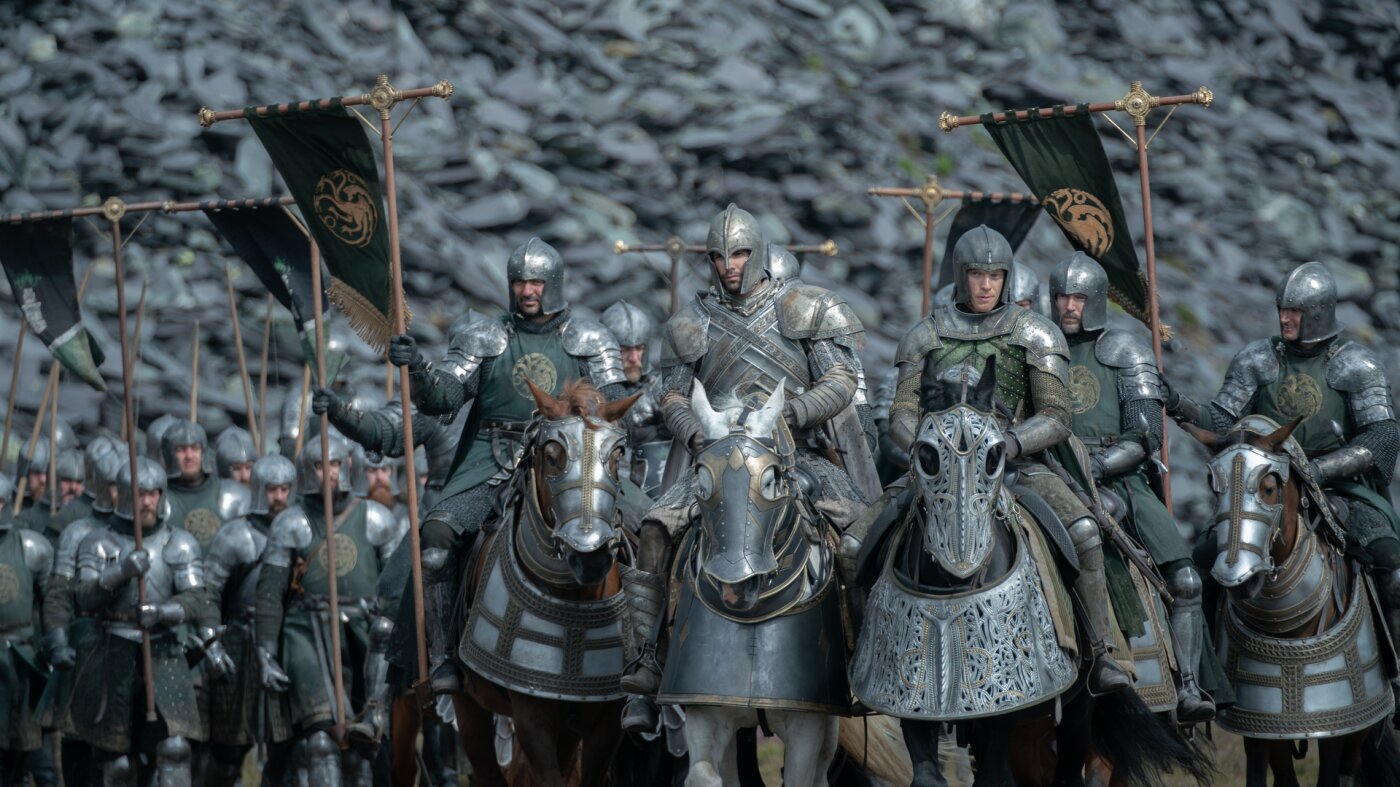
‘House of the Dragon,’ Season 3, Episode 4: “Now we begin?” It’s Season 3!
-

 Technology56 minutes ago
Lorde says Ray-Ban Meta AI glasses are ‘not sexy’
-

 World1 hour ago
Four Americans caught in horrific Mexico highway pileup that killed at least 10
-

 Politics1 hour ago
Medical examiner releases preliminary findings in Lindsey Graham’s death as death certificate remains pending
-

 Health1 hour ago
Terminally ill man marries longtime love in hospital as final wish comes true
-

 Sports1 hour ago
Stefon Diggs, still seeking new NFL home, insists no team has a better No 2 receiver ‘than me’
-

 Technology1 hour ago
Google may use your photos and voice to train AI
-
 Business2 hours ago
‘Moana’ loses its way at the box office with a $43-million domestic opening

