Florida
Texas throttled by No. 5 Florida in 84-60 loss


As the Texas Longhorns made the program’s first trip to Gainesville in almost 30 years, the No. 5 Florida Gators chomped the Longhorns in a XX-XX victory that saw a seven-point halftime deficit reach as many as 24 points in the second half at the Exactech Arena.
If there’s any relief for the Longhorns after a brutal loss, it’s the end of the brutal start to SEC play that featured a road game against the No. 13, home games against the No. 1 and No. 2 teams, a road rivalry game, and the trip to Gainesville.
When Texas returns to Austin to play Missouri on Tuesday at the Moody Center, it will come against a program that merely received votes in the AP Top 25 poll last week.
Four players scored in double digits for the Horns, including 12 points from senior forward Ze’Rik Onyema and a team-high 16 points from freshman guard Tre Johnson, who was 1-of-5 shooting from three as Texas managed just four made threes on 16 attempts, finishing minus-12 in that category as Florida sunk eight from distance.
The biggest difference came in the paint, however — the Gators dominated around the basket, outscoring the Longhorns 44-20 in points in the paint with the help of 14 layups and five dunks.
Florida was also better in transition with a 12-4 edge in fast-break points.
The opening stretch of the game featured some ugly offensive play by both teams as the officiating crew allowed physical battles to take place in the paint — Texas was 2-of-8 shooting and Florida was 1-of-10 with five straight misses at the under-16 timeout as the Horns led 4-3. Both teams were having some trouble finishing defensive possessions with rebounds as the Gators corralled four offensive rebounds and the Longhorns turned two into a second-chance basket byOnyema.
Out of the timeout, both teams showed signs of finding some rhythm as Johnson and senior wing Tramon Mark hit threes for Texas and Florida made one of its own prior to a turnover. Johnson unquestionably found his rhythm in hitting consecutive jumpers to score nine of the first 14 points for the Longhorns.
By the time that Onyema made a layup on the final Texas possession before the second media break, the Horns had made six consecutive shots in addition to Onyema making two free throws to lead 18-13.
A scoring drought hit the Longhorns after the hot streak with the misses coming on contested shots around the rim or good looks from three as the Gators took a three-point lead and Texas head coach Rodney Terry had to use his use-it-or-lose-it timeout to slow the home team’s momentum following a layup.
But senior forward Jayson Kent had a careless turnover and another seal around the rim produced another layup by Florida as Texas went through a stretch that featured eight straight misses shots during a 15-0 run by the Gators that opened up a 10-point lead and threatened to bury the Horns.
An 8-2 response by Texas steadied the team and trips to the free-throw line by Mark and senior guard Julian Larry cut the deficit to five points. Florida took a seven-point lead into halftime after a layup, a poor, contested shot by Johnson that missed badly, and some luck for the Longhorns when a three-point attempt by the Gators at the halftime buzzer rimmed out.
Texas finished the half with only six three-point attempts, three offensive rebounds, and six turnovers as Pope, senior forward Kadin Shedrick, and senior forward Arthur Kaluma combined for two points on 0-of-7 shooting as Johnson paced the team with 11 points.
And while Onyema played well off the bench in scoring eight points, his best conference performance at Texas, but Larry, Kent, and sophomore wing Devon Pryor combined for two points and three turnovers as Pryor finished minus-10 in his three minutes on the court.
Kaluma finally scored on a three less than two minutes into the second half, but Florida kept producing quality looks against the Texas defense in extending the lead back to double digits as the Horns went into another scoring drought with turnovers a bigger problem than missed shots.
During that important stretch of the second half, Florida didn’t create more separation against Texas, but the Horns also didn’t cut into the deficit, so when the Gators hit a big three before the under-eight timeout, it pushed the margin back to 10 points because the Longhorns didn’t do better than a 5-0 run in the second half.
So when Texas missed six straight shots in a stretch of four and a half minutes without a made basket as Florida stretched the lead to 18 points on a made three in transition, prompting a timeout by Terry with 3:51 remaining and the game firmly out of reach.



-
Myron Medcalf
Close
Myron Medcalf
ESPN Staff Writer
- Covers college basketball
- Joined ESPN.com in 2011
- Graduate of Minnesota State University, Mankato
Multiple Authors
The opening weekend of the 2026 men’s NCAA tournament featured its fair share of heartbreaking losses.
Among them? Reigning national champion and No. 1 seed Florida dropped a close battle with scrappy 9-seed Iowa. Kansas was eliminated on a buzzer-beating layup by St. John’s. Kentucky suffered its worst NCAA tournament loss since 1972. And North Carolina surrendered a 19-point lead to fall to VCU in overtime.
With some of the most storied college basketball programs ending their seasons earlier than expected, ESPN’s Jeff Borzello and Myron Medcalf detail what’s next for each. Here’s your guide to their expected departures, returnees, top incoming recruits and where that leaves their personnel priorities for when the transfer portal opens April 7.
Record: 27-8 (16-2 in SEC)
How their season ended: Lost to Iowa in second round
Expected departures
Thomas Haugh (17.0 PPG)
Xaivian Lee (11.4 PPG)
Micah Handlogten (4.2 PPG)
Players with remaining eligibility
Alex Condon (14.9 PPG)
Boogie Fland (11.7 PPG)
Rueben Chinyelu (11.2 PPG)
Urban Klavzar (9.7 PPG)
Isaiah Brown (5.6 PPG)
CJ Ingram (2.2 PPG)
Viktor Mikic (1.3 PPG)
Alex Lloyd (1.2 PPG)
Alex Kovatchev (0.5 PPG)
AJ Brown (redshirt)
Top incoming recruit: Jones Lay (three-star)
Florida has essentially eschewed immediate impact freshmen under Todd Golden, landing only two top-100 recruits in the past four recruiting classes combined. The incoming class is no different, with only the unranked Lay in the fold. He will very likely be a depth player early in his career, then his future will depend on development. The Gators did take a couple of swings at recruiting top-50 prospects, but will instead go to the portal or overseas for the rest of their newcomers.
Portal priorities: Before Florida fully goes into the portal, the Gators will need to figure out which of their starters are returning to Gainesville. Haugh has played himself into a potential NBA draft lottery pick, so we can project him to leave for the NBA. But both Condon and Chinyelu were projected second-round picks in ESPN’s most recent mock draft, leaving their short-term futures more uncertain. Condon was a borderline first-round pick in 2025 and opted to return to school. It probably would cost at least $3 million to retain each, but they’ve been anchors for back-to-back No. 1 seeds, and Golden could see value in building around them again. Fland should return to school after also withdrawing from the NBA draft last spring.
If Condon, Chinyelu and Fland all return, Golden would need a Haugh replacement and additional shooting on the perimeter. Klavzar could move into the starting lineup with Lee gone, but he proved to be incredibly useful as a sixth man. Could any of the seldom-used roster players make a sizable jump and move into a consistent rotation role the way Isaiah Brown did from 2024-25 to 2025-26? It wouldn’t be a surprise to see Florida go into the portal or look at international players to bring in at least two or three more perimeter players. — Borzello
Record: 24-11 (12-6 in Big 12)
How their season ended: Lost to St. John’s in second round
Expected departures
Darryn Peterson (20.1 PPG)
Tre White (13.8 PPG)
Melvin Council Jr. (12.6 PPG)
Jayden Dawson (2.1 PPG)
Players with remaining eligibility
Flory Bidunga (13.3 PPG)
Bryson Tiller (8.1 PPG)
Elmarko Jackson (4.8 PPG)
Jamari McDowell (3.4 PPG)
Kohl Rosario (3.3 PPG)
Paul Mbiya (1.1 PPG)
Samis Calderon (0.4 PPG)
Top incoming recruit: Taylen Kinney (No. 19)
Kinney is one of the best point guards in the 2026 class, and will step in immediately as the playmaking focal point of the offense with Peterson’s departure. He’s better as a scorer at this point in his development, especially when taking his defender off the dribble and attacking the rim. Kinney has improved as a passer and creator over the past year, so the next step on offense is becoming more consistent from the perimeter. His length should help him early as a defender.
Portal priorities: The frontcourt should be in good shape if Bidunga and Tiller both return; it would make sense for both to be retention priorities. Bidunga developed into one of the best defensive players in the country this season while also proving to be a capable scorer in the post. And Tiller showed very impressive flashes despite struggling down the stretch.
With Kinney coming in to run the show at point guard, that leaves the wings as areas to improve for Kansas. It’s worth keeping in mind that the Jayhawks are considered the frontrunner to sign SC Next 100’s top overall recruit Tyran Stokes. If they do land him, that could change the calculus for their offseason roster construction. But with or without Stokes, they will need an immediate impact player on the perimeter — Rosario showed promise early in the season, and though he could take a step forward, Kansas would benefit from more proven production.
There’s also the elephant in the room: Bill Self’s status. Self said after the loss to St. John’s that he hasn’t decided on whether he will return next season. If he doesn’t come back, it’s entirely unclear how the Kansas roster will look. — Borzello
Record: 22-14 (10-8 in SEC)
How their season ended: Lost to Iowa State in second round
Expected departures
Denzel Aberdeen (13.5 PPG)
Otega Oweh (18.6 PPG)
Jayden Quaintance (5.0 PPG)
Players with remaining eligibility
Jaland Lowe (8.0 PPG)
Collin Chandler (9.7 PPG)
Mouhamed Dioubate (8.8 PPG)
Brandon Garrison (4.7 PPG)
Kam Williams (6.0 PPG)
Malachi Moreno (7.8 PPG)
Jasper Johnson (4.9 PPG)
Andrija Jelavic (5.5 PPG)
Trent Noah (3.0 PPG)
Top incoming recruit: None
You’re reading that right: Kentucky does not have a single commitment from the 2026 class as of Tuesday. The Wildcats pursued Tyran Stokes, but as Jeff detailed above, it seems the No. 1 recruit is leaning toward Kansas. It appears that coach Mark Pope will again construct a roster comprising returnees and transfers — but as he learned this season, that’s a risk. The Wildcats reportedly spent more than $20 million on their 2025-26 roster yet finished only two games above .500 in SEC play and advanced to the second round of the NCAA tournament only because of a miracle buzzer-beater.
Portal priorities: This season’s roster never jelled the way Pope anticipated, which means he might end up building another from scratch, depending on who stays or goes.
The backcourt has to be his top priority. Aberdeen and Oweh are out of eligibility, which means that not only will Pope need elite guards who are capable playmakers and scorers, but he’ll also need depth — especially at point guard. The latter has been a problem throughout his tenure. Even if Lowe returns, Pope will need multiple players at both guard positions to anchor next season’s roster.
The next priority: a big man. Though Moreno could take the next step as a sophomore, and Dioubate has been solid for stretches, the Wildcats didn’t have a dominant big with Quaintance contending with knee injuries. The teams still competing for this year’s national championship — Michigan, UConn, St. John’s and Duke — have imposing big men. Kentucky can’t enter another season without a strong inside presence.
Finally, with Chandler the only reliable 3-point shooter on this season’s squad, Kentucky also needs more support on the perimeter. — Medcalf
Record: 24-9 (12-6 in ACC)
How their season ended: Lost to VCU in first round
Expected departures
Caleb Wilson (19.8 PPG)
Seth Trimble (14.0 PPG)
Players with remaining eligibility
Henri Veesaar (17.0 PPG)
Luka Bogavac (9.8 PPG)
Jarin Stevenson (8.1 PPG)
Derek Dixon (6.5 PPG)
Jonathan Powell (4.8 PPG)
Kyan Evans (4.0 PPG)
Zayden High (3.4 PPG)
Isaiah Denis (1.9 PPG)
Jaydon Young (1.8 PPG)
Top incoming recruit: Dylan Mingo (No. 9)
Mingo is one of the elite guards in the 2026 class, despite being hampered by injuries for most of the high school season. He has great positional size and length, and projects to make an impact at both ends of the court. With Evans potentially leaving for the portal after struggling this season, Dixon and Mingo could share playmaking duties in the backcourt — if Mingo opts to keep his commitment, should Hubert Davis depart. Mingo didn’t pick Carolina until mid-February.
Portal priorities: Though Wilson is probably off to the NBA and Trimble is out of eligibility, Davis or his potential replacement will have to make Veesaar the priority. He had an early second-round projection in ESPN’s most recent mock draft, but he could opt to return to Chapel Hill for a substantial amount of money. If Veesaar is back at UNC, he and Stevenson should form one of the better frontcourt duos in the ACC. If Veesaar leaves, the Tar Heels will need to target a high-level big man in the portal.
In addition to a potential Veesaar replacement, the Tar Heels also probably will need an upgrade when it comes to perimeter shotmaking and explosiveness. None of Bogavac, Powell or Young were overly consistent as scorers. And though Mingo is a terrific addition — as is four-star forward Maximo Adams — neither is a knockdown shooter. If the roster falls apart following Davis’ potential departure, Veesaar, Stevenson and Dixon should be the retention priorities for a new coach. — Borzello
Florida
Judge cites ‘stand your ground’ law in clearing 3 more Florida officers in shooting of a UPS driver

FORT LAUDERDALE, Fla. (AP) — A South Florida judge on Monday cleared three more police officers of wrongdoing in the shooting death of a UPS driver who had been taken hostage during a 2019 robbery.
Broward Circuit Judge Ernest Kollra ruled that Miami-Dade police officers Richard Santiesteban, Leslie Lee and Rodolfo Mirabal — who had been charged with manslaughter in the death of UPS driver Frank Ordonez — could not be prosecuted because Florida’s “stand your ground” law justified the shooting. The same judge cleared officer Jose Mateo in September for the same reason.
The Broward State Attorney’s Office said it will appeal all four rulings.
“Immunity from prosecution is not the same as a defense presented to a jury from this community,” the state attorney’s statement said. “It is our belief that Stand Your Ground immunity does not apply in matters involving innocent bystanders, like Frank Ordonez and Richard Cutshaw, who presented no danger to officers. In this incident, two innocent men were killed, and the lives of numerous other innocent bystanders were endangered.”
Cutshaw was also killed in the barrage of gunfire that afternoon.
Ordonez, 27, had been delivering packages in Miami-Dade County on Dec. 5, 2019, when police said two would-be jewelry store robbers abducted him and forced him to drive from the scene. A rush-hour police chase ended at a busy intersection in neighboring Broward County.
Prosecutors said Mateo fired the shots that killed Ordonez. The two robbers and a passerby were also killed in a hail of gunfire at an intersection in Miramar, Florida.
Footage from a body camera that was played in court showed Mateo’s pursuit of the UPS truck that afternoon. His partner could be seen in the passenger seat with a long gun drawn. The video also showed Mateo approaching the UPS truck. He emptied his firearm’s magazine, reloaded and then pulled Ordonez from the vehicle.
The judge ruled the officers had reason to believe deadly force was necessary to end the confrontation.
The four officers are currently suspended from the their jobs.

After a beautiful weekend across South Florida, the warm weather continues for the workweek.
A cool start mostly in the lower to mid-60s will lead to a warm and sunny afternoon with highs in the lower to mid-80s.
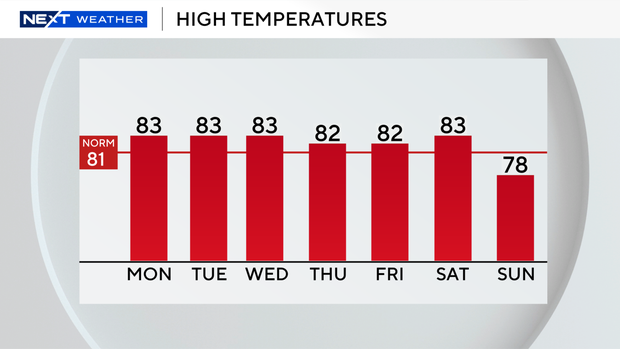
Afternoon highs linger in the lower to mid-80s each day for the workweek with changes not arriving until the weekend.
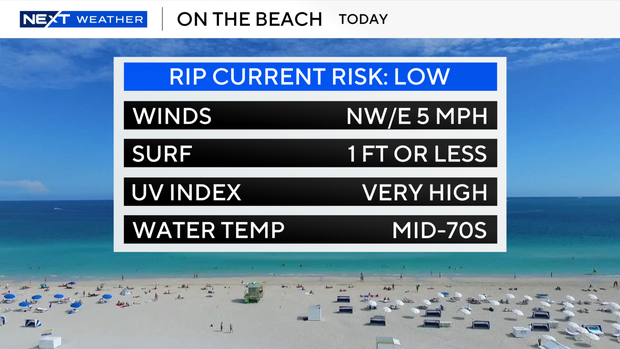
Beachgoers can expect excellent conditions with a low rip current risk as water temperatures remain in the mid-70s.
The NEXT Weather Team will continue to monitor an enhanced fire weather risk due to dry air and the ongoing drought conditions.
While there are no major wildfires being reported in South Florida, light north and northwesterly winds overnight have been bringing smoke from ongoing fires along the Gulf Coast and the Southeast U.S. into South Florida, lowering our air quality for the morning hours.
Conditions improve by midday as the wind shifts.
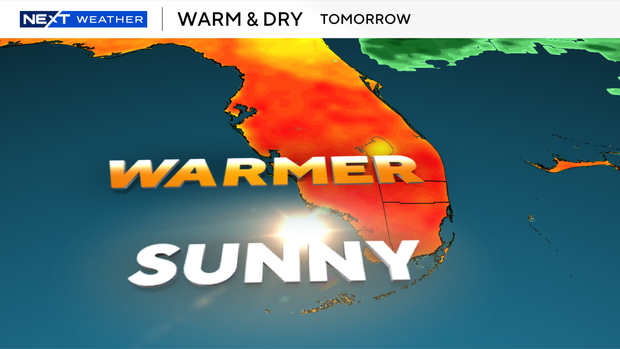
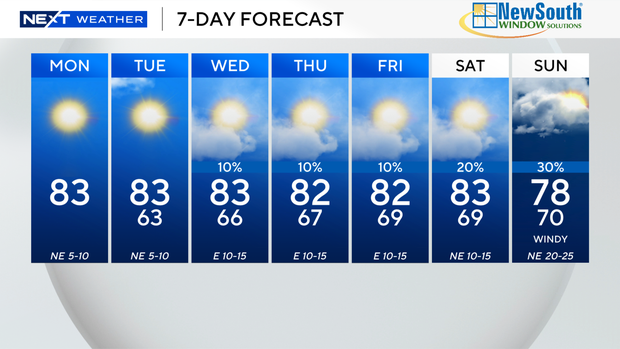
No significant rain chances will be found throughout the workweek with just a slim 10% shower chance Wednesday through Friday.
However, rain chances will be on the rise over the weekend as our team monitors a possible disturbance bringing the potential for scattered showers on Sunday.
These showers could help lower afternoon highs to upper 70s by the end of the weekend.

Missouri Senate committee hears bill on private school bathroom policies for transgender students

‘Hannah Montana’ fans question Starbucks drink. ‘She hates raspberry’.

More than 300 attend Concordia Nebraska church work student luncheon

Jeff Choate evaluates spring camp following Nevada’s first padded scrimmage

Democrats gain ground in NH, new St. Anselm poll shows

Florida High School Football Rankings: Top 25 teams – Oct. 21

How old is Bo Nix? What to know about Oregon quarterback ahead of 2024 NFL Draft

Cleary's 21 help Le Moyne down Central Connecticut State 69-64 in OT

99th annual Pony Swim held in Virginia

Indiana Members Credit Union announced as new anchor tenant at Bottleworks District

Video: Passengers Wait in Long Security Lines at LaGuardia After Deadly Crash

King Charles to address Congress in historic first state visit to Washington

Iran names successor to security chief killed in US-Israeli attack

See How the LaGuardia Plane Crash Unfolded

Mullin confirmed as DHS chief as lawmakers near solution on shutdown standoff
-

 Detroit, MI6 days ago
Drummer Brian Pastoria, longtime Detroit music advocate, dies at 68
-

 Georgia1 week ago
How ICE plans for a detention warehouse pushed a Georgia town to fight back | CNN Politics
-

 Movie Reviews6 days ago
‘Youth’ Twitter review: Ken Karunaas impresses audiences; Suraj Venjaramoodu adds charm; music wins praise | – The Times of India
-

 Alaska1 week ago
Police looking for man considered ‘armed and dangerous’
-

 Education1 week ago
Video: Turning Point USA Clubs Expand to High Schools Across America
-
 Science1 week ago
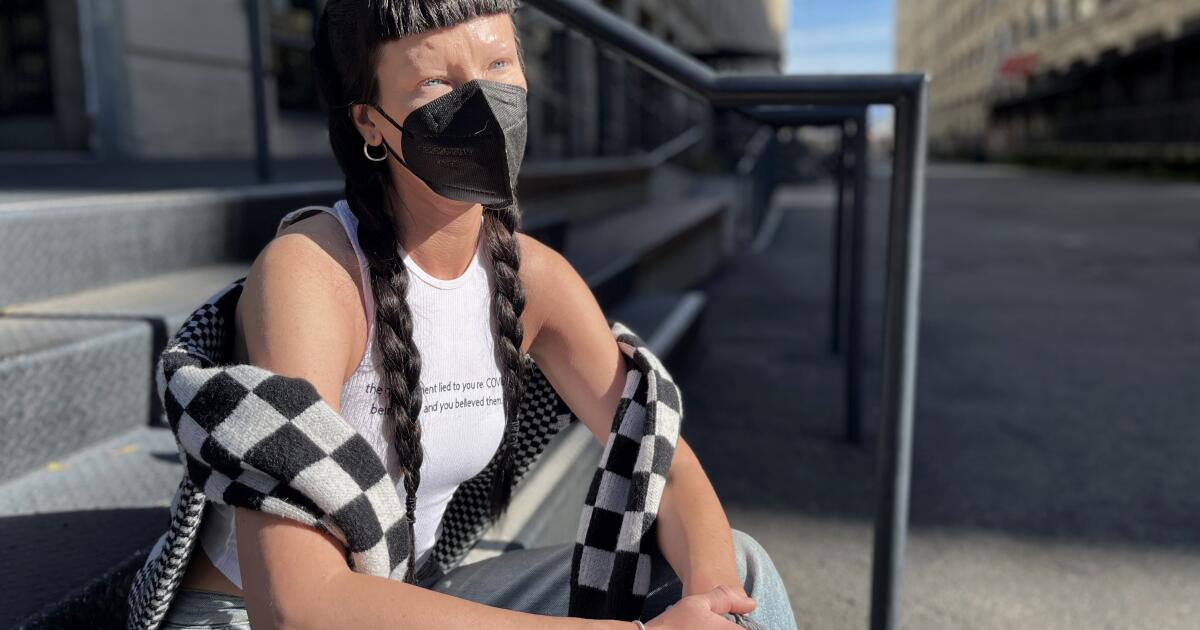
Long COVID leaves thousands of L.A. county residents sick, broke and ignored
-

 Sports3 days ago
IOC addresses execution of 19-year-old Iranian wrestler Saleh Mohammadi
-
 Science1 week ago
Industrial chemicals have reached the middle of the oceans, new study shows