Florida
Outrage over ‘cruel’ Florida move to ban undocumented students from college


Immigration advocates in Florida have decried a “cruel and harmful” new rule by education officials aligned to hard-right Republican governor Ron DeSantis to ban undocumented students from state colleges and universities.
The Florida board of education voted on Tuesday to bar access to its 28 state-funded institutions to anybody not a US citizen or “lawfully present” in the country. It follows Florida’s move last year to strip discounted in-state tuition rates for certain immigrant students.
Opponents on Wednesday assailed the new directive, which some analysts estimate could cost Florida up to $15m annually in lost tuition and other fees. They also questioned if it was legal, given that it was approved by DeSantis’s hand-picked board of seven, instead of the elected state legislature.
“The rule-making process is supposed to implement existing legislation and laws that were passed, not create its own, and not create its own policies, which is exactly what the department is trying to do,” said Alexis Tsoukalas, senior analyst of the Florida Policy Institute, at a press conference hosted by the Florida Immigrant Coalition.
She said the action ran contrary to DeSantis’s own “Sail to 60” goal, a 2019 policy that sought to lift the number of Florida residents with “high-value” post-secondary education from below 50% to at least 60%.
“The Florida college system is already struggling with declining enrollment, this has been the case for the past several years, and it’s only gotten worse,” she said.
“It’s not like there are students waiting in the wings to enroll when others are denied admission. Florida cannot reach its attainment goal if a shrinking share are enrolling, so it is very much a concern for the state.”
Alexander Vallejos, a so-called Dreamer and computer science student at the University of Central Florida, who came with his family from South America in 2001 as a one-year-old, said it was cruel to dash the hopes of immigrant children who worked though the school system to graduate high school, only to find their pathway to higher education blocked.
“This ruling sends a painful message to young people who have done everything right,” he said. “It tells them that their hard work isn’t enough, and that their dreams are less because of something they have no control over.
“Behind every policy is a real person, a student’s story, where they’re staying up late to study, a young person working two jobs to pay just to pay for college, a future engineer, teacher, nurse, entrepreneur. They just want the chance to succeed.”
Luisa Santos, an elected member of the Miami-Dade school, who was brought to the US by her family from Columbia as an eight-year-old, said the state faced “serious consequences” for moving ahead with the ban.
“[It’s] everything from the $15m in lost tuition and fees estimated as a result of this, and even our governor getting in his own way of stated goals like Sail to 60, which so many school districts around Florida have worked so hard to try to accomplish,” she said.
“What I really want to focus on is how cruel, harmful, and just unnecessary this rule is right now. These rule changes took me back to the darkest days of high school, where, like Alexander, I felt the world caving in on me.
“No matter how hard I worked, I felt like opportunities were being taken away.”
Republican state senator Don Gaetz told the Florida Phoenix that only citizens and documented immigrants should be allowed to attend the state’s colleges and universities.
“The policy issue is: should illegal aliens receive taxpayer-funded higher education in Florida? And in my view, the answer to that question should be no,” he said.
“And if necessary, I will file legislation to ensure that the decision of the state board is enshrined in statute.”
But Anna Eskamani, a Democratic state representative running to become Orlando mayor, spoke by telephone during the public comment section of Tuesday’s board of education meeting to denounce the policy, according to the outlet.
“The attempt to restrict a child’s access to higher education based on the documentation status that is no fault of their own is un-American, it’s unfaithful, and it’s absolutely also constitutionally concerning because, obviously, we did not pass legislation on this matter,” she said.



Florida
New Florida domestic violence laws take effect, adding tougher penalties and new victim protections

Several new Florida laws aimed at strengthening the state’s response to domestic violence and dating violence took effect Wednesday, including tougher penalties for repeat offenders.
The changes come right after as investigators in Jacksonville responded to a Northside shooting that police say stemmed from a domestic dispute and left a 4-year-old girl dead and her 2-year-old sister and their mother in life-threatening condition.
The new laws also arrive months after a high-profile domestic violence case in Bradford County. Deputies said a mother, Rachael Kerr, was killed in an apparent murder-suicide on Jan. 29 after her estranged husband shot her. Investigators said their two children were inside the home at the time.
Below is a breakdown of what’s changing under the new laws.
Tougher penalties for repeat domestic violence offenders (HB 277)
One of the biggest changes is a new penalty enhancement for people who commit a domestic violence crime and already have a prior domestic violence conviction.
Under HB 277, the penalty level for a new domestic violence offense can be reclassified upward if the person has a prior conviction for domestic violence.
Here’s the breakdown in the new law:
-
A second-degree misdemeanor can be reclassified to a first-degree misdemeanor
-
A first-degree misdemeanor can be reclassified to a third-degree felony
-
A third-degree felony can be reclassified to a second-degree felony
-
A second-degree felony can be reclassified to a first-degree felony
-
A first-degree felony can be reclassified to a life felony
Electronic monitoring pilot programs for certain domestic violence and injunction cases (HB 277)
HB 277 also creates new electronic monitoring pilot programs that can apply in certain cases involving domestic violence crimes and violations of protective injunctions when a court has issued a no-contact order as a condition of probation.
The law creates:
-
A misdemeanor-level pilot program in Pinellas County (July 1, 2026 through June 30, 2028)
-
A felony-level pilot program in Florida’s Sixth Judicial Circuit (July 1, 2026 through June 30, 2028)
In those pilot areas, the law allows a judge to order electronic monitoring as a condition of probation. It also requires monitoring in certain situations if a judge finds clear and convincing evidence the defendant poses a threat of violence or physical harm to the victim.
The law also requires evaluations and reports to the Legislature on how the pilot programs are working.
Expanded address confidentiality protections for dating violence victims (SB 296)
Another new law, SB 296, expands Florida’s Address Confidentiality Program to include victims of dating violence, not just domestic violence.
The Address Confidentiality Program is designed to help victims keep their residential, work or school addresses from being publicly disclosed through records requests.
SB 296 also defines “dating violence” in state law for purposes of the program, describing a range of violent acts or threats committed by someone in a continuing and significant romantic or intimate relationship with the victim.
New 911 alert system feasibility study (SB 296)
SB 296 also directs the state to explore the creation of a web-based 911 alert system for victims of domestic violence and dating violence.
The law says the study should look at whether an alert system could do things like:
-
Create a unique telephone number for each user that connects to a public safety answering point (PSAP)
-
Allow a user to enter a code or phrase after contacting 911 to indicate they need immediate law enforcement help
-
Support real-time data sharing between 911 centers and law enforcement agencies
The Division of Telecommunications within the Department of Management Services must report the results of that study to the Legislature by Jan. 31, 2027, according to the law.
Help is available
If you or someone you know is experiencing domestic violence, help is available 24/7 through the National Domestic Violence Hotline at 1-800-799-SAFE.
Resources
If you or someone you know is experiencing domestic violence — help is available 24/7 through the National Domestic Violence Hotline at 1-800-799-SAFE.
Additionally, there are a number of resources in the Jacksonville area that provide help for victims of domestic violence.
Hubbard House
The Hubbard House has a hotline open 24/7 with operators who will talk confidentially to anyone experiencing domestic violence or questioning aspects of their relationship.
Operators can be contacted at 904-354-3114.
Victim services
The City of Jacksonville’s Social Services Division provides referral and victim advocacy services to victims of crime. Services are intended to help reduce trauma associated with domestic violence crimes.
Calls made to 904-630-6300 are all confidential.
InVEST (Intimate Violence Enhanced Services Team)
InVEST is a program aimed at increasing victim safety in the most potentially lethal cases. It’s a joint effort by the Jacksonville Sheriff’s Office, City of Jacksonville, and Hubbard House.
On a daily basis, InVEST staff review police reports and assess cases for lethal indicators. They then contact the victim to offer services.
For further information, please call (904) 255-3388.
Trinity Rescue Mission
Trinity Rescue Mission offers services to women who are trying to escape from dangerous circumstances and situations. It’s not a certified shelter, but it will provide assistance.
Copyright 2026 by WJXT News4JAX – All rights reserved.

A 37-year-old man was jailed June 29 after Port St. Lucie Police reported finding nearly 5 ounces of cocaine, other drugs and firearms at his home, according to an affidavit.
Wallick Cooper, of the 800 block of Southwest Monica Street in Port St. Lucie, was arrested on charges including a single count of cocaine trafficking; two counts of possession of controlled substance without prescription; and three counts possession of firearm or ammunition by a felon.
Police conducting surveillance June 25 at a gas station in the 300 block of Southwest Port St. Lucie Boulevard reported a Mercedes-Benz arrived and backed in. Detectives reported seeing a suspected drug transaction between the driver and a man who approached the driver’s window.
Investigators stopped the Mercedes after it left, alleging the window tint was illegal. Cooper, the only occupant, reportedly “immediately began lying about where he was coming from and where he was heading,” an affidavit states.
He let police search the vehicle. They found no drugs but turned up about $1,000 they suspected came from drug sales, though Cooper “smirked and denied accusations,” the affidavit states.
Cooper was released from the scene.
Police told his probation officer about the encounter, and the probation officer on June 29 reported finding suspected drugs in Cooper’s home.
Ultimately, police got a search warrant, and they reported finding about 4.92 ounces of cocaine; about 12.9 ounces of marijuana; three firearms; and a small amount of pills.
Cooper has a medical marijuana card, but hadn’t gotten pot since February, according to police. Police reported the recovered marijuana wasn’t packaged “consistent with legally possessed marijuana.”
Cooper was held July 1 in the St. Lucie County Jail on no bond, a jail official said.
Will Greenlee is a breaking news reporter for TCPalm. Follow Will on X @OffTheBeatTweet or reach him by phone at 772-267-7926. E-mail him at will.greenlee@tcpalm.com.
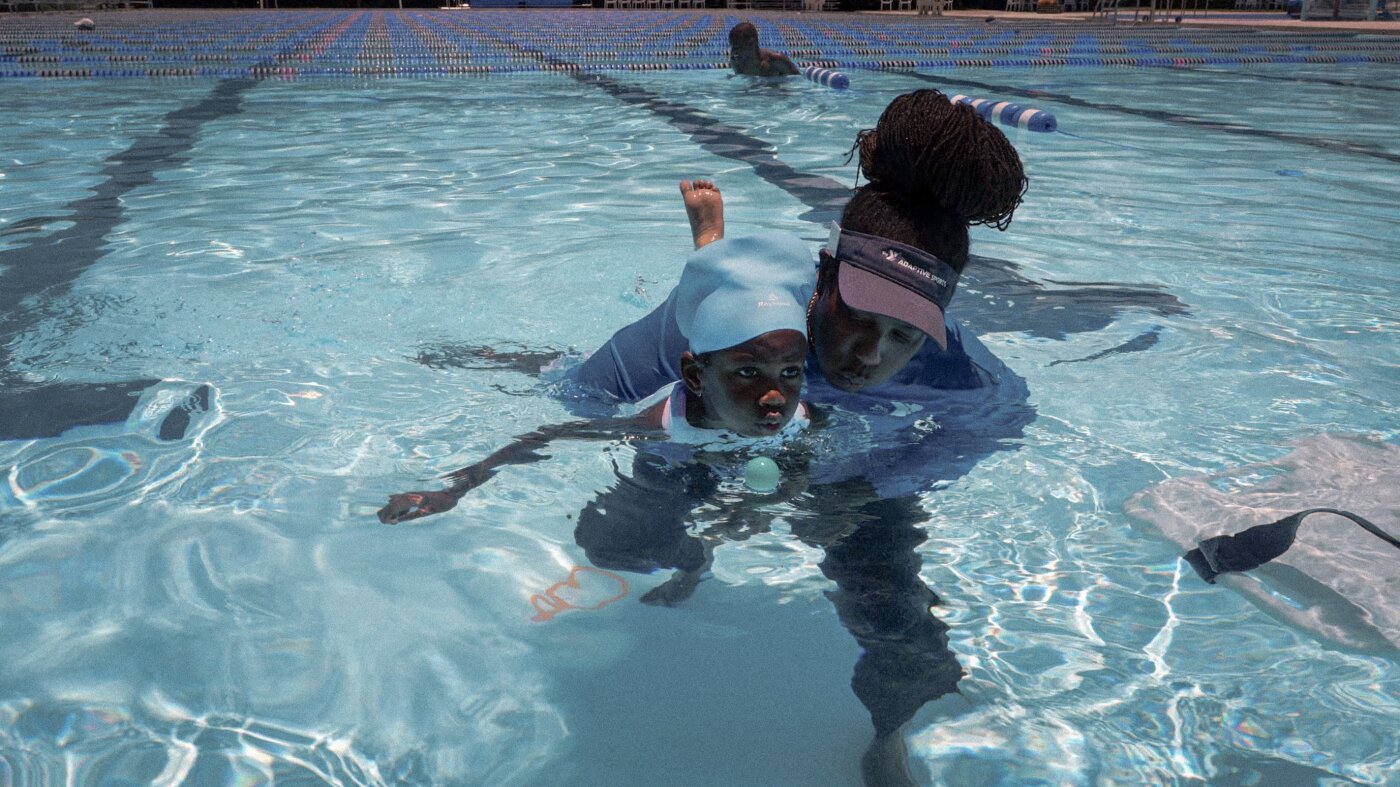
Garland Jones, recreational therapist and senior program director of the YMCA of South Florida’s special needs program, teaches Mackenzie Wesley, 5, to breathe safely in water by using a ping pong ball as a visual aid.
LA Johnson/NPR
hide caption
toggle caption
LA Johnson/NPR
WESTON, Fla. — Mackenzie Wesley sports a big grin and bright blue Lilo & Stitch swim gear as she runs into her weekly swim lessons. It’s fitting, because the 5-year-old has something in common with movie character Lilo: She adores water.
“Whether it’s the pool or beach, she enjoys it fully,” says her dad Steven Wesley.
Mackenzie isn’t alone: Many kids with autism share a natural love for water because it can be sensory bliss — the feeling on their skin, the pressure and the sparkle of the water can all be soothing. Lucky for her, Mackenzie lives here, less than an hour outside of Miami in a state that’s dotted with bodies of water.

But there’s a tragic reality tied to that fact, as Mackenzie’s mom, Brittany Bucknor, is all too aware. “In Florida, there’s water everywhere, and also with kids her age, and also just being on the spectrum, it’s a very — way higher — rate of having an incident of drowning.”
Kids with autism are 160 times more likely than other children to die from drowning, according to a seminal 2017 study from Columbia University. In fact, in Florida, most children drown in backyard pools. That’s largely because about half of autistic children have a tendency to wander from safe settings. That fact, combined with an attraction to water can make for a dangerous combination. Quality swim lessons can help.
That’s one of the reasons Mackenzie’s parents enrolled her in Swim Buddies, the YMCA of South Florida’s low-cost program aimed at children with disabilities. It’s also why the state of Florida, which has one of the highest childhood drowning rates in the nation, is expanding a voucher program on July 1 that will put children ages 1-7 who have autism at the front of the line for subsidized swim lessons. “We have tragic circumstances and stories across the state of Florida of young children with autism that are wandering away, they’re eloping from their homes, from their classrooms,” says Florida state Rep. Anna Eskamani, a Democrat, and one of the lawmakers who sponsored the bipartisan bill that changed the state’s swim vouchers.
“These [tragedies] are so preventable, but if that child at an early age does not have access to drowning prevention and swimming lessons, then those statistics will only continue.”
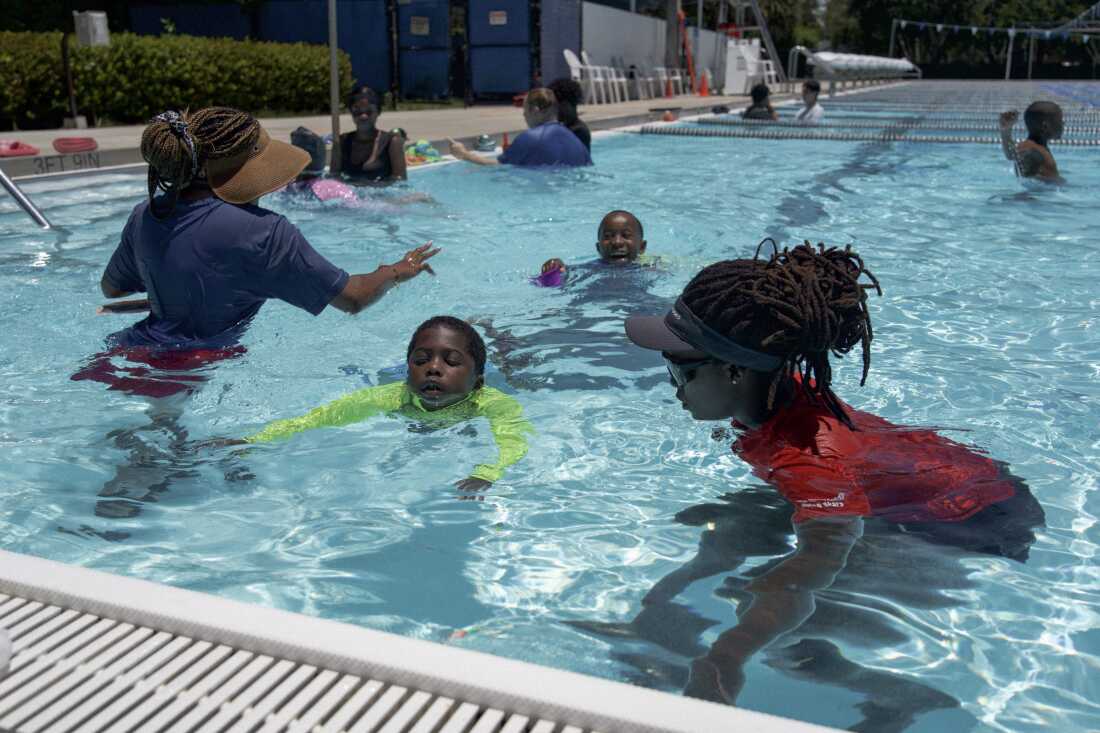
Recreational therapist Tiera Chaney works with Amir Williams, 6, during a recent Swim Buddies session.
LA Johnson/NPR
hide caption
toggle caption
LA Johnson/NPR
Once the updated law takes effect, many healthcare providers across the state will begin providing parents of newborns with information about drowning prevention and the state swim program, Eskamani says. Generally, the voucher comes out to about $200, she says, and pays for up to eight swim lessons.
A “whole-person” approach
The YMCA of South Florida has one of the largest adaptive recreational programs for kids with special needs in the area, including those with autism, who make up the fastest-growing group of children with disabilities. “We provide this program for those with a variety of disabilities, primarily over 60 percent of our youth who do come have a diagnosis of autism,” says Alison Bregman-Rodriguez, vice president of the YMCA of South Florida, where she oversees 64 locations, 27 of which serve children with learning differences. “This program, however, does serve all who want to feel like they belong.”
When Mackenzie’s parents learned that their local YMCA already had a robust and low-cost program for one-on-one instruction with kids with disabilities in mind, they jumped on the opportunity. “I really appreciate the program and specifically Miss Garland. She’s been very patient with Mackenzie and challenged her too,” Bucknor says.
She is referring to Garland Jones, who oversees the special needs recreational program here and also spends time working directly with swimmers, alongside other recreational therapists and trained volunteers. Jones agrees that patience is key in working with kids with disabilities, something that’s emphasized in the training for instructors. “We come at everything with a whole-person approach instead of just a physical approach. We do the physical, the emotional, the social.”

A selection of colorful, sparkly toys are often used for positive reinforcement and redirection in Swim Buddies lessons.
LA Johnson/NPR
hide caption
toggle caption
LA Johnson/NPR
The program’s hallmarks are individualization and one-on-one instruction rather than traditional group lessons. Staffers assess each child to learn about their needs and tailor their lessons in response. “We might have a kid who loves to get in the bathtub and splash around in the water or we might have a child who is very fearful of getting in the water,” Jones says.
On this recent summer Sunday, Tania Santiago Perez is sitting poolside, observing the Swim Buddies lessons. She is a professor at Florida International University who studies effective swim instruction for children with autism, including at this YMCA, with research partner and professor Tana Carson. Their research shows that when done right, swim instruction for kids with autism can help save lives. “The fact that we have been seeing that in five or six sessions they’re able to improve swim skills, to us, is very powerful,” Santiago Perez says.
Each lesson begins with group introductions to help swimmers build trust with the teachers and fellow participants in the pool. “That’s one thing to promote group cohesion and then the socialization with other kids,” says Santiago Perez. “Because with kids with autism, sometimes they’re very to themselves and that social behavior is one thing we want to develop.”
After the meet-and-greet, each child must wait to be explicitly told it’s safe to enter the water.

The adaptive swim lessons at the YMCA of South Florida serve more than 600 children with disabilities, but the program is overwhelmed with requests. Jones says she hopes the state will provide more funding to help facilities like theirs meet the need.
LA Johnson/NPR
hide caption
toggle caption
LA Johnson/NPR
Because many autistic children are prone to “eloping,” or running away suddenly, Santiago Perez says instructors are trained to stay no more than an arm’s length from each swimmer.
During one Swim Buddies session, a swimmer dashes out of the pool. “So the therapist is trying to redirect him back to get inside the pool,” says Santiago Perez as she points to the instructor gently but firmly guiding the child physically and with clear verbal commands.
Next, the instructor tries luring the child back into the pool with a sparkly pink rubber duck, which does the trick. “Toys help a lot because at the end of the day, they’re kids and kids learn by play and positive reinforcement,” Santiago Perez says.
In another corner of the pool, Garland Jones is working with Mackenzie Wesley on safe breathing techniques above the water because, in the past, putting her face under water has been uncomfortable and led to choking. Jones is using a bright blue ping pong ball in front of Mackenzie so she can see how her breath is physically moving the ball.
Once Mackenzie is eased in, Jones helps her practice blowing bubbles in the water, making a humming noise to show what it should sound like. “Hmmmm,” mimics Mackenzie. Then she ducks her head under water and pops back up, with a smile on her face. “Mackenzie has grown so much. I’m so proud of her,” says Jones, who’s been working with her in Swim Buddies for over a year. “We had a couple of instances where she was [swallowing] water a lot.” Now, she blows bubbles and goes under water like a pro.
Demand overwhelms supply of lessons
Parents looking on during Swim Buddies lessons have heard about the swim voucher program, and many were excited that it could make life-saving lessons affordable for lower-income families. “People who don’t have kids on the spectrum don’t take in mind that we’re paying a lot already for stuff like behavioral therapy, speech, occupational therapy,” says Augusto Sandino, whose son David has been in Swim Buddies for a year and a half. “All the programs, everything is money, man. So every little bit helps, and also, creating these inclusive communities is a big win.”
While Florida maintains a list of approved providers around the state, Jones and Santiago Perez both share the concern that many facilities lack enough qualified instructors. “You have people who are biters, spitters, who will scratch, things of that nature,” Jones says. “I just think we need more individuals who are trained in working with individuals with special needs so that they can be successful.”
The YMCA of South Florida is already overwhelmed with requests for its specialized swim lessons. Alison Bregman-Rodriguez, the vice president, says they do their best to find a spot for every child, but they don’t want to compromise the quality of lessons they provide. And while the voucher may increase demand, facilities like this often have to leverage other sources of money to keep programs like Swim Buddies afloat.

Researcher Tania Santiago Perez of Florida International University helped train some of the instructors at the Swim Buddies program. Her research has found that even after five or six quality lessons, most kids with autism showed improvement.
LA Johnson/NPR
hide caption
toggle caption
LA Johnson/NPR
Even before the new priority for children with autism, demand for swim lessons outstripped supply. “The problem is access,” says Santiago Perez. In the program’s first year, only about a third of families who applied for vouchers actually got them. She worries that the gap will only increase.
NPR reached out to the Florida Department of Health for details about how the changes to the swim program will work. They declined an interview and did not answer questions about how many vouchers would be available.
As Mackenzie Wesley’s swim lesson comes to an end, her parents wrap her in a towel and share that just a few weeks ago, she had a big milestone: She was invited to her very first pool party. “She was in the pool like she was a pro, an expert,” her mom says. “She had her little floatie and she was doing her own thing, so she’s been a lot more confident in the water and a way stronger swimmer for sure.”
This, says Garland Jones, is the kind of milestone that makes her work so rewarding. It means Mackenzie is on her way to having the skills that will allow her to embrace her natural love for water, and to do it safely.
Edited by: Nirvi Shah
Visual design and development by: LA Johnson
-
Indianapolis, IN38 seconds ago
2026 Indianapolis Colts Fantasy Preview: All eyes on Daniel Jones
-

 Pittsburg, PA4 minutes ago
“Mayor of Kingstown” wraps up filming final season in Pittsburgh
-

 Augusta, GA16 minutes ago
Augusta leaders hold public meetings on data center ordinance
-
 Washington, D.C19 minutes ago
Hegseth faces protests at ‘Safe and Beautiful’ Washington, DC ceremony
-
Cleveland, OH24 minutes ago
Nichole Milanovich Obituary Jul 1, 2026 – Slone and Co. Funeral Directors
-

 Austin, TX31 minutes ago
‘Rising Waters: One Year After the Floods’ airing Friday on CBS Austin
-

 Alabama34 minutes ago
Potential for Severe Storms Through Early Evening – Alabama Emergency Management Agency (EMA)
-

 Alaska39 minutes ago
Alaska is celebrating America’s 250th in the fast lane… off a cliff

