Florida
Here’s how Florida is already feeling the effect of Trump’s tariffs


Abigail StClair was juggling two big purchase decisions.
The first was whether to order 150 kilos of seasonal teas from China — enough to last her business, TeBella Tea Co., until August. The second was related to a potential location in North Carolina, part of a major expansion for the Davis Islands-based company. But with shifting international trade policies and looming tariff costs, she didn’t know if the plan would fit her budget.
“It causes you to pump the brakes,” said StClair, when she would normally be “full-speed ahead.”
As of this week, there’s a 10% universal tariff on all other U.S. trading partners except China. President Trump’s announced tariffs on Chinese exports had escalated to 145% before he dropped them to 30% weeks later.
Trump had paused certain higher tariffs until July 9. With that deadline looming, economists say there could be strain on some of the state’s economy.
With trade partners from China to South Sudan and $117 billion in commodities — not including goods transported from other states — Florida last year was the 10th largest importer in the U.S., according to international trade data from the Census Bureau.
“This is impacting local businesses,” said Abby Hall, an economics professor at the University of Tampa. “This is impacting local consumers in a way that people are going to feel.”
The Tampa Bay Times asked economists and business leaders what consequences the tariffs could bring to Florida residents — and if any of them are happening yet. Here’s what we learned.
Costs for construction and manufacturing materials may rise
For imports and exports, Florida’s most valuable goods traded internationally are in manufacturing, whether for automobiles or other mechanics.
Growth in Florida’s manufacturing sector has outpaced most other states, driven by aviation, medical devices and the marine industry. A 2023 report by Florida Commerce and FloridaMakes estimated that there are more than 68,000 manufacturing jobs in Tampa Bay alone.
The sector has benefited from Florida’s population gains and business-friendly tax structure, said Kevin Carr, CEO of FloridaMakes, a group that represents manufacturers.
Some manufacturers are more prepared than others to weather challenges, Carr said. Especially since the COVID-19 pandemic, companies have already taken steps toward moving their suppliers to the U.S. to avoid disruptions.
Still, these are long-term, slow-moving changes. Companies that rely heavily on certain products, like imported steel and semiconductor chips, could be more vulnerable.
But ambiguity around duty rates is the biggest roadblock.
“The uncertainty,” Carr said. “That’s what seems to be rattling the cages of manufacturers. If we have to adapt to a new price structure, tell us what it is, and we’ll move on from there.”
Development and construction also account for roughly 659,000 jobs in Florida, and during Tampa Bay’s explosive post-pandemic growth, homes sold in the region were more likely to be new construction than in the U.S. as a whole.
But much of the supplies come from outside the U.S. According to census data, Florida ports imported more than $1.4 billion in wood products in 2024. Nearly a quarter of it originated in Brazil, and about 12% came from Canada.
The U.S. does not produce enough lumber to meet demand, a construction industry trade group noted in April. Tariffs on Canadian softwood lumber are at 14.5% — part of an ongoing trade dispute — but that number could rise.
Industry groups have championed a federal order to increase timber production, including on federal forest lands. But due to logistics like the limited capacity at U.S. sawmills to process the lumber, the impacts of this plan will likely take months or years to grasp. Environmental groups criticize the plan, saying it bypasses protections for endangered species and natural habitats.
Leisure spending is the first to feel consumers pull back
Like the rest of the U.S., bar and restaurant owners around Tampa Bay rely on certain imported products that simply can’t be replaced domestically.
Census trade data shows Florida ports imported $1.7 billion in alcohol and liquors last year — of which at least $435 million was tequila, for example. There was $613 million in coffee and $13 million in tea.
“We’re talking about a commodity that grows outside the United States,” said Roberto Torres, owner of the Blind Tiger Cafe, which has seven locations throughout Tampa and Hillsborough County. “That‘s my dilemma. How do I fix that?”
He imports coffee from Brazil, Columbia, Nicaragua and several other South American countries — each source now strapped with a 10% tariff. Torres also buys from Mexico, where there’s a 25% tariff for some beans.
He hasn’t found a U.S. company to produce paper cups at the same cost as those he imports from China. Price increases at the Blind Tiger are inevitable at this rate, he said.
Consumers might not see prices go up immediately. Hall noted some businesses might be stocking up on foreign products ahead of time, in an attempt to dampen or delay the impacts. Torres confirmed this is something he’s doing — but this represents an entirely new “math problem,” he said, involving bulk purchases and potential lines of credit.
“How can we absorb the cost of something that, overnight, just happened? We cannot sustain it,” Torres said.
Small businesses feeling impacts
Since February, there’s been an uptick in the use of the Foreign Trade Zone at Port Tampa Bay, an area where companies can hold goods before paying tariffs. They may be spreading out costs over time or waiting for lower rates, said the zone’s director, Torrey Chambliss.
But it’s probably too soon to see any broad changes in the supply chain. There hasn’t been a notable drop in vessels at the port or demand for cargo space, spokesperson Lisa Wolf-Chason said.
But some small businesses are already feeling pinched. TeBella, for instance, imports tea from at least a half-dozen countries. StClair said a $16,000 shipment of branded tea tins arrived in April that she ordered last fall. Though she made the purchase months before the tariffs, she paid an additional $11,000.

All purchases made during this time have a different calculus, she said. If she buys before more favorable tariffs are put in place, she’ll have to pay more. But after tariffs are lifted or reduced, she fears an influx of orders will create competition for cargo space.
“It‘s really challenging for small businesses, because we don’t have the negotiating power or the buying power that large businesses do,” StClair said.
When she learned last week that tariffs on Chinese goods had been reduced from 145%, she told her business manager to place the order they’d been considering. There was no time to waste, she said.
“If you’d told me six months ago I’d be paying a 30% tariff on everything I bring in from China, I would have said, ‘Absolutely not.’ Now I’m thinking that‘s great news,” StClair said.
Uncertainty causing hesitation
Much is still undecided, said Sean Snaith, an economist at the University of Central Florida, and that prevents business owners from making decisions about adjusting their supply chains or the prices levied for goods.
“The sooner we can get to what the new set of rules is going to be, the sooner we can get to the adjustment process, and consumers and businesses will make adjustments,” he said.
Torres, at Blind Tiger, said this is one of his biggest frustrations.
“We cannot program, we cannot plan,” he said. “We cannot exert our influence or talk to our vendors and partners and come up with a plan if we don’t know what the strategy is.”
The not-knowing can lead to a stagnation economists refer to as “regime uncertainty,” though it‘s not quite possible to quantify those potential lost opportunities.
“It‘s hard for us to see the very real costs associated with businesses, entrepreneurship that would have taken place, but effectively gets snuffed out or gets re-channeled as a result of policy,” Hall said.
StClair has noticed belt-tightening. She and other business owners can’t help but worry how customers’ cautiousness will hurt them in the long run. Data from the University of Florida’s Bureau of Economic and Business Research shows consumer sentiment has been declining for the last three months.
StClair is hopeful that, even if tariffs remain in place, exemptions will be made for products that don’t have a competitive American market — like tea.
In the meantime, there are signs posted around TeBella shops explaining the price increases. And she is still moving forward with expansion plans: She gave a counter-offer for the North Carolina location she’d been eying, and signed a lease for a location in Sarasota.
“It’s me and a team of maybe two or three others making these decisions and trying to figure out what’s best for the business today, tomorrow and next year,” StClair said. “That’s a big responsibility to carry around.”


Both men were in their 20s.
Two men are dead following a shooting early July 19 in Port St. Lucie, police said.
Officers responded at about 3:30 a.m. to the 1300 block of Southeast Rivergreen Circle and found two men suffering from bullet wounds in a driveway of a home.
The men were taken to separate hospitals where they died, according to police. Dead are 24-year-old Carl Loubeau and 22-year-old Juliun Stokes, police said.
Loubeau and Stokes were apparently arguing outside the home over a key and entrance to the home when they exchanged gunfire, according to police. Loubeau and Stokes knew each other and neither lived at the home, police said.
The shooting was an isolated event, and no threat to the public exists, according to police.
Keith Burbank is TCPalm’s watchdog reporter covering Martin County. He can be reached at keith.burbank@tcpalm.com.

For the first time since the end of 2024, Florida’s unemployment rate went down last month.
A report released Friday by the Department of Commerce shows the state’s jobless rate for June at 4.7%, a reduction from 4.8% the prior two months. The rate is still 0.5 percentage points higher than the national average.
Driven by increases in restaurant, hotel, health care, transportation, and warehousing jobs last month, the state saw an 11,100 increase, 0.1%, in overall new positions from May to June.
The June numbers show 525,000 Floridians qualified as out-of-work, up 107,000 from a year earlier, from a workforce of 11.14 million, up 56,000 in the same time.
The state’s unemployment rate had been on a gradual upward trend since ticking down from 3.5% in November 2024 to 3.4% in December 2024.
Nationally, the jobless rate stands at 4.2%, up from 4.1% a year earlier.
Even with the one-month decline, the state’s unemployment rate stands 0.9 percentage points higher than a year ago.
Construction jobs have decreased by 3,200 over the past year, including a 900 drop from May to June. Positions in the retail trade were up 100 from May to June but still are down 5,900 from a year earlier.
The field of finance and insurance reported adding 1,600 positions in the past month, but is still down 8,700 over the year.
Real estate jobs dropped by 1,000 and are down 4,200 over the last 12 months.
Governments in Florida shed 900 jobs in the past month and 10,500 over the year, with the federal government accounting for 7,700 of the decrease over the past year.
The biggest gain over the past year involved health care and social assistance, adding 5,500 in the past month and 32,400 on the year.
The area of transportation, warehousing, and utilities grew by 4,100 in June, which put the field at a positive 900 over the past year.
Manufacturing is up 400 on the year after reporting the addition of 600 positions in June.
Educational services, which are up 6,600 jobs on the year, posted a drop of 500 jobs in the June report.
Hotel and food service jobs grew by 4,000 in the June report but remain down 2,700 from a year earlier.
South Florida continues to have the lowest unemployment rate, with the Miami-Fort Lauderdale-West Palm Beach metropolitan statistical area at 3.9%, up from a revised 3.7% in May and 3.3% in June 2025.
The Orlando and Panama City regions were next at 4.6%.
The Tampa-St. Petersburg-Clearwater area was at 4.7%. Jacksonville, Naples and Melbourne were at 4.8%. Pensacola and Sarasota both stood at 4.9%.
Tallahassee has a 5 % unemployment rate, followed by Daytona Beach at 5.3%, Gainesville at 5.5%, Vero Beach at 5.6% and Lakeland at 5.7%.
The Wildwood region, including The Villages has the highest unemployment rate at 7.8%, followed by Homosassa Springs at 6.7% and Sebring at 6.6%.
Copyright 2026 WUWF

The Florida Lotto jackpot has been climbing steadily for weeks. On Saturday, July 18, 2026, the prize had grown to $2.75 million.
Recently, a trip to the grocery store really paid off: A $2 Florida Lotto ticket made someone a multimillionaire.
Because as they say in the lottery business, “it could happen to you.”
One ticket matched all six numbers in the $6.75 million Florida Lotto drawing on Wednesday, July 1, 2026, a few days before July Fourth.
After four rollovers, including the most recent one on Wednesday, July 15, the Florida Lotto has grown to $2.75 million for Saturday, July 18. That follows the National Lottery Day holiday, which was Friday, July 17. Check back after 11:15 p.m. ET for Saturday’s winning numbers. We’ll see if there’s a winner or another rollover.
In case you’re wondering, Wednesday’s winning Florida Lotto numbers were 13-17-31-37-38-45. Double Play numbers were 3-8-18-22-35-38.
Who won $6.75 million Florida Lotto drawing Wednesday, July 1, 2026?
Was it you?
The Wednesday, July 1, 2026, winning Florida Lotto numbers were 4-5-25-33-42-52. Double Play numbers were 7-17-22-44-46-47. According to the Florida Lottery’s site, there was another perfect match in Fort Lauderdale just before the July Fourth holiday.
The quick pick ticket was purchased from Publix, 1415 E. Sunrise Blvd., Fort Lauderdale, Florida, and is worth $6,750,000. On Saturday, July 11, the ticket was reported as claimed with the Fort Lauderdale winner opting for the one-time lump sum of $3.6 million, the state’s lottery posted on its site.
Below is what to know about lottery odds, how long to claim the cash option if you bought a ticket in Florida, and what happens to unclaimed prize money, according to the Florida Lottery.
Winning Florida Lotto numbers for Saturday, July 18, 2026?
Florida Lotto drawings are at 11:15 p.m. ET every Wednesday and Saturday, including holidays. Check back for Saturday, July 18, winning Florida Lotto numbers. We’ll see if there’s a winner or another rollover.
How do you play the Florida Lotto?
According to Florida Lottery game rules, Florida Lotto players pick 6 numbers between 1 and 53 or select a Quick Pick ticket. There are prizes for matching three to six numbers. Players who match two of 6 winning Florida Lotto numbers get a free ticket.
The Florida Lottery site states game add-ons include Double Play for $1, a bonus drawing where players could win up to $250,000 using the same numbers (Double Play drawings are held immediately after Florida Lotto drawings). Another Florida Lotto game add-on is EZmatch for $1 per play. If players match any EZmatch number to their Florida Lotto numbers, they instantly win that prize.
Tickets start at $2. Good luck!
When was the last Florida Lotto won? How long has the jackpot rolled over?
Florida Lotto drawing for the 2026 July Fourth holiday started fresh at $1 million after a ticket from a Fort Lauderdale Publix store won the Wednesday, July 1, 2026, drawing.
The new streak for Florida Lotto reset to $1 million for the Saturday, July 4, 2026, drawing. Below is a recap of lottery drawings for the latest streak.
When is the next Florida Lotto drawing? What are the odds, chances of winning Florida Lotto lottery?
Florida Lotto drawings are held at 11:15 p.m. ET on Wednesdays and Saturdays, including holidays. According to floridalottery.com, players have a 1 in 22,957,480 chance to match all six numbers whether the jackpot is $1 million or $36 million. Prizes range from $2 to the grand prize jackpot, which varies.
The next Florida Lotto drawing will be on Wednesday, July 22.
How long do you have to cash in a Florida Lottery ticket?
Prizes for Florida Lottery must be claimed within 180 days (six months) from the date of the drawing. To claim a single-payment cash option, a winner has within the first 60 days after the applicable draw date to claim it.
Does the Florida Lottery reveal lottery winners? Can you stay anonymous if you win lottery in Florida?
According to Florida Lottery’s website, winners cannot remain anonymous: “Florida law mandates that the Florida Lottery provide records containing information such as the winner’s name, city of residence; game won, date won, and amount won to any third party who requests the information.”
However, the site states, the “names of lottery winners claiming prizes of $250,000 or greater will be temporarily exempt from public disclosure for 90 days from the date the prize is claimed, unless otherwise waived by the winner.”
Does Walmart sell lottery tickets? Where to buy lottery tickets in Florida
In Florida, most gas stations and some grocery stores sell lottery tickets. It’s harder to find a gas station that doesn’t sell Powerball, Mega Millions, Florida Lottery and scratch-off tickets than it is to find one that does.
Publix also sells lottery tickets and is known for selling many winning tickets. A lesser-known location is Walmart. Whether the Walmart location closest to you sells lottery tickets depends on your state and the store. Many Walmart locations in Florida have self-service lottery ticket vending machines or sell lottery tickets at the customer service desk.
You can use the “Where to Play” search tool on the Florida Lottery website to find a grocery store or gas station near you that sells lottery tickets.
(This story will be updated to include new information.)
Lianna Norman and Jennifer Sangalang are trending reporters for the USA TODAY NETWORK-Florida, covering pop culture, lotteries, rocket launches, Florida wildlife, breaking news and more. You can get all of Florida’s best content directly in your inbox each weekday by signing up for the free newsletter, Florida TODAY, at https://floridatoday.com/newsletters.
-
 California2 minutes ago
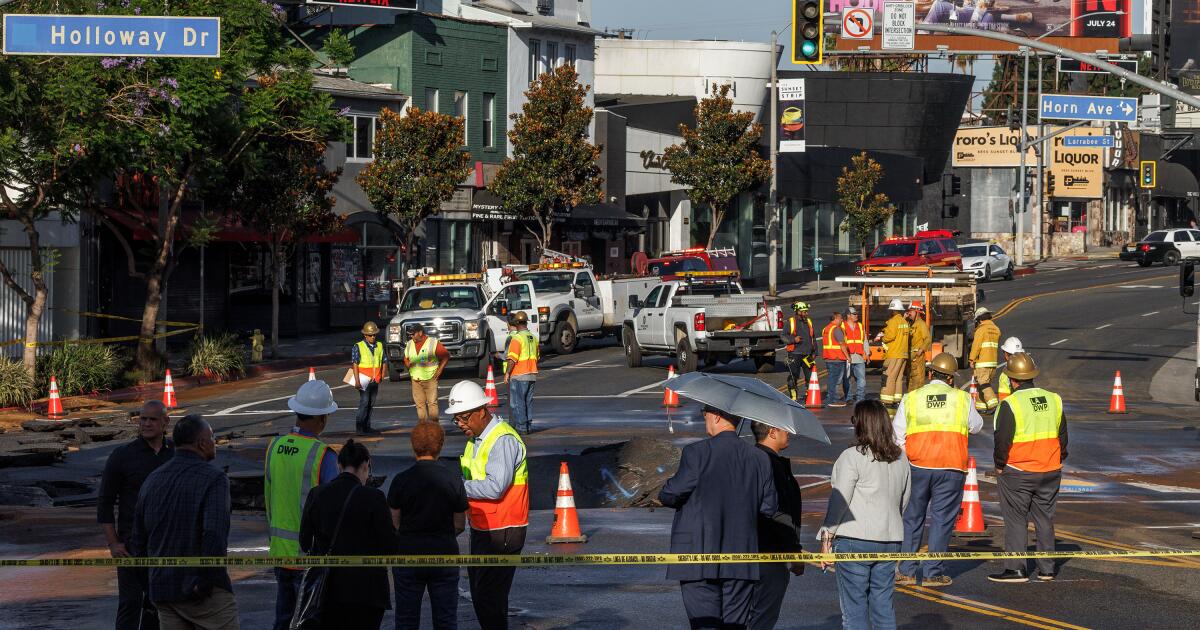
More water pipes burst in Venice, Hollywood as Sunset Strip repairs enter Day 4
-

 Colorado8 minutes ago
Police searching for suspect after shooting at gas station in Denver metro area
-

 Connecticut14 minutes ago
Meriden police shoot suspect in fatal baseball bat attack
-

 Delaware20 minutes ago
Man’s body found in retention pond near Christiana Hospital in Newark, Delaware
-

 Florida26 minutes ago
Two men die after shooting in Florida city over key and home entry
-

 Georgia32 minutes ago
Another Georgia officer arrested over alleged Flock camera misuse as internal audits continue uncovering cases
-

 Hawaii38 minutes ago
What It Takes to Retire in Hawaii at 62 on $1.5 Million Without Touching Your Principal
-

 Idaho43 minutes ago
‘Skeletal remains’ found in Idaho river identified as 24-year-old single mom who vanished in December

