Florida
FSU hires Evan Cooper as safeties coach


Florida State has hired NFL and college coaching veteran Evan Cooper as the football program’s safeties coach, FSU head coach Mike Norvell announced Saturday.
Cooper, a Miami native who attended American Heritage, brings more than a decade of coaching experience and reunites with FSU defensive coordinator Tony White, who he was with at Nebraska in 2023, and defensive line coach Terrance Knighton, his college teammate and fellow coach with the Carolina Panthers and at Nebraska.
“I’m happy to have Evan Cooper joining our Nole Family,” Norvell said. “It’s great to have another Dade County native back working in his home state. Our safeties will benefit from his experience and expertise, and he will be a tremendous collaborator with Tony White, Patrick Surtain and the rest of our defensive staff to reestablish the dominant defense Florida State is known for. I’m incredibly excited for the future here at Florida State.”
The 2023 Nebraska defense, with Cooper serving as the defensive passing game coordinator and secondary coach, produced four All-Big Ten defensive backs. The quartet was led by Tommi Hill, whose 13 passes defended were the most in the conference. Hill also ranked third in the Big Ten with nine pass breakups while posting the conference’s fifth-highest individual interceptions total.
The Huskers held opponents to only 6.1 yards per pass attempt, ninth-lowest in the country, and had the nation’s 15th-best passing efficiency defense. Nebraska kept seven of 12 opponents to less than 200 passing yards, including two under 100 yards. The Huskers allowed only 92.9 rushing yards per game, the No. 8 rushing defense in the country and the best at Nebraska this century, while also ranking 11th nationally in total defense and 13th in scoring defense. Hill led the team with 85 tackles and fellow defensive back Omar Brown tied for second among Huskers with 51 tackles.
“I’m excited to join the Florida State football program,” Cooper said. “FSU has an elite history among the best programs in college football, and I’m looking forward to working with Coach Norvell and the rest of the staff. I can’t wait to get started with our players and contribute to upholding the DBU legacy.”
Cooper was the Carolina Panthers’ cornerbacks coach and director of player evaluation from 2020-22. In 2021, Carolina had the NFL’s No. 2 total defense, allowing 305.9 yards per game. Cooper’s cornerbacks contributed to the league’s No. 4 pass defense, holding opponents to only 192.1 passing yards per game, and the fifth-lowest completions allowed total in the NFL.
Cooper spent three seasons at Baylor and helped lead a major transformation in the program that resulted in a trip to the Sugar Bowl in his last year in Waco. He spent the 2017 season as the Bears’ director of player personnel before joining the on-field staff working with the secondary and defensive line in 2018. In 2019, he was promoted to cornerbacks coach and recruiting coordinator and helped the Bears post an 11-3 record with an appearance in the Big 12 Championship Game and Sugar Bowl. That year, Baylor’s 17 interceptions ranked fifth in the country and contributed to a group that ranked 18th nationally in pass efficiency defense and 19th in scoring defense.
After a brief stint as the assistant director of player personnel at Miami early in 2015, Cooper was hired as Temple’s director of player personnel. He served in that role in 2015 and 2016, helping the Owls reach 10 wins both years and qualify for bowl games in consecutive seasons for the first time in program history. The 2016 team also won the AAC, Temple’s first conference title in 48 years, by defeating No. 19 Navy in the conference championship game.
Cooper began his coaching career as the defensive backs coach for Westminster Academy in Fort Lauderdale for the 2011 and 2012 seasons. He then accepted a graduate assistant position at Temple in 2013 and moved to the role of director of external operations for the Owls in 2014.
Cooper was a four-year letterman at defensive back for Temple and earned his bachelor’s degree in sport and recreational management from Temple in 2009. He and his wife, Andisha, have one son, Evan III, and one daughter, Madison.
Evan Cooper Coaching History
2025- Florida State Safeties Coach
2023 Nebraska Defensive Passing Game Coordinator/Secondary Coach
2020-22 Carolina Panthers Cornerbacks Coach/Director of Player Evaluation
2019 Baylor Cornerbacks Coach/Recruiting Coordinator
2018 Baylor Secondary/Defensive Line Coach
2017 Baylor Director of Player Personnel
2015-16 Temple Director of Player Personnel
2014 Temple Director of External Operations
2013 Temple Graduate Assistant
2011-12 Westminster Academy (Fla.) Defensive Backs Coach



ORLANDO, Fla. – Ahead of the coldest temperatures in years for Central Florida, the National Weather Service has issued a freeze watch for Friday morning.
A freeze watch means temperatures of 32 degrees or lower are possible.
Exterior pipes should be protected in Marion, Sumter and northern Lake counties where temperatures could be below freezing for four to six hours.
Plants sensitive to the cold should be covered or brought inside by Thursday evening.
It’s also a good idea to bring pets inside.
A strong Arctic cold front is expected to arrive Thursday morning. Temperatures top out in the upper 50s and lower 60s early in the day, but are expected to fall for most of the afternoon.
Temperatures will bottom out in the 20s and 30s across Central Florida.
This does not include the wind.
Parts of Central Florida could again dip below freezing Saturday morning.
A reinforcing shot of cold air arrives Sunday which could send parts of Central Florida back below freezing Monday morning.
A big warmup arrives late next work week and into the following weekend.
Copyright 2026 by WKMG ClickOrlando – All rights reserved.

TAMPA, Fla. (WFLA) — A cruise ship that departed Florida has been hit by a norovirus outbreak, according to the Centers for Disease Control and Prevention.
The CDC reported that 94 people fell ill on the Holland America Line cruise ship Rotterdam during its voyage between Dec. 28, 2025, and Jan. 9, 2026.
Those affected by the norovirus outbreak showed the typical symptoms of vomiting and diarrhea.
The virus, which is highly contagious, is the number 1 cause of foodborne illnesses in the United States, according to the Cleveland Clinic. Symptoms appear between 12 and 48 hours after exposure and can include other symptoms like stomach pain, headaches, and fevers.
According to the CDC, 85 passengers out of 2,593 reported being sick. Nine of the 1,005 crew members reported being ill as well.
The CDC said Holland America Line and the Rotterdam crew increased cleaning and disinfection measures and quarantined those who fell ill to prevent the disease from spreading further.
CruiseMapper.com showed that the ship departed Fort Lauderdale on Dec. 28. The cruise line’s website also has several future voyages out of Fort Lauderdale as well.
8 On Your Side has reached out to Holland America for more information on the outbreak.

After a push to nearly the end of the launch window, a SpaceX Falcon 9 rocket took off on Florida’s third launch of 2026.
The rocket lifted off at 4:08 p.m. Monday, January 12 from Launch Complex 40 in Cape Canaveral Space Force Station. It had originally been scheduled for earlier in the afternoon, but the launch time was repeatedly pushed back. SpaceX did not give a reason for the change in timing.
The Falcon 9 carried 29 Starlink internet satellites to orbit on the booster’s 25th mission. No sonic booms were heard in Brevard County, as the booster landed on the Just Read the Instructions drone ship in the Atlantic Ocean.
Next SpaceX rocket launch from Cape Canaveral
The next Falcon 9 rocket launch from Florida is scheduled for no earlier than 1:01 p.m. Wednesday, January 14 from Launch Complex 40 in Cape Canaveral Space Force Station.
The mission is the next batch of SpaceX Starlink internet satellites, titled Starlink 6-98.
Brooke Edwards is a Space Reporter for Florida Today. Contact her at bedwards@floridatoday.com or on X: @brookeofstars.
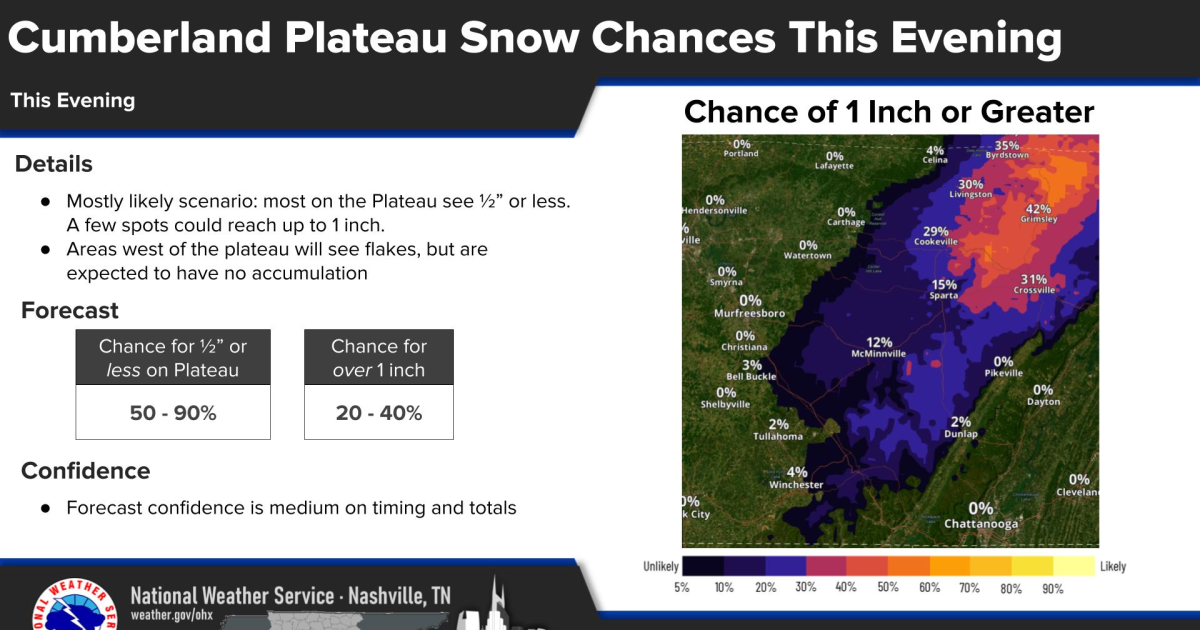
Cold patrols scheduled as dangerous cold moves into Middle Tennessee

Texas Tech softball coach rejects ‘rat poison’ preseason No. 1 ranking

Longtime Utah Valley University President Astrid Tuminez is stepping down

Vermont medical cannabis patients on the rise

Don Scott re-elected as Speaker of Virginia House of Delegates

Florida High School Football Rankings: Top 25 teams – Oct. 21

Cleary's 21 help Le Moyne down Central Connecticut State 69-64 in OT

How old is Bo Nix? What to know about Oregon quarterback ahead of 2024 NFL Draft

99th annual Pony Swim held in Virginia

Video: ‘It Didn’t Have to Happen This Way:’ U.Va. Faculty Call for Review of Police Response to Protests

Republicans light cigars, cigarettes on burning photos of Khamenei to show support for Iranian protesters

EU Parliament questions defence loan’s ‘€17 billion gift’ to Hungary

Trump administration sends letter wiping out addiction, mental health grants

Video: Clashes With Federal Agents in Minneapolis Escalate

Venezuela releases multiple American citizens from prison following military operation
-

 Montana4 days ago
Service door of Crans-Montana bar where 40 died in fire was locked from inside, owner says
-

 Technology1 week ago
Power bank feature creep is out of control
-

 Delaware5 days ago
MERR responds to dead humpback whale washed up near Bethany Beach
-

 Dallas, TX6 days ago
Anti-ICE protest outside Dallas City Hall follows deadly shooting in Minneapolis
-

 Dallas, TX1 week ago
Defensive coordinator candidates who could improve Cowboys’ brutal secondary in 2026
-

 Virginia4 days ago
Virginia Tech gains commitment from ACC transfer QB
-

 Iowa1 week ago
Pat McAfee praises Audi Crooks, plays hype song for Iowa State star
-

 Education1 week ago
Video: This Organizer Reclaims Counter Space