Florida
Florida lawmakers pass bill boosting high school coaches’ pay, cracking down on transfers


TALLAHASSEE, Fla. – A major bill aimed at raising pay for high school coaches and tightening student-athlete transfer rules is headed to Gov. Ron DeSantis’ desk after lawmakers approved the final version of legislation originally filed as CS/HB 731.
The House debated and advanced its version before taking up the Senate companion bill, which ultimately passed both chambers and now awaits the governor’s signature.
The legislation allows school districts to approve booster clubs using voluntary donations to help compensate coaches and other extracurricular sponsors. It also gives superintendents the authority, at a coach’s request, to designate them as administrative personnel, allowing their coaching compensation to be negotiated independently.
What they’re saying:
“The bill cleans up student eligibility and participation requirements,” sponsor Rep. David Abbott said on the House floor. It also “fixes the transfers for athletics issues we are experiencing” and allows booster clubs “to compensate coaches, directors and sponsors of extracurricular activities.”
In closing, Abbott emphasized the measure extends beyond athletics.
“It’s not just coaches,” he said. “This extracurricular sponsor — I can’t imagine what the next STEM club’s going to look like when some of the engineers in town start sponsoring that STEM club sponsor.”
He added, “Coaches and band directors and sponsors many times have the most profound effect on the outcome of our students’ lives. It’s time that we start addressing compensating them fairly.”
Rep. Adam Anderson called the proposal “truly game-changing.”
“We’re losing some of the most valuable mentors to our students every single day to our neighbors,” Anderson said. “When we support the next generation of Floridians, Florida wins.”
Rep. Kimberly Daniels shared her personal story.
“If it were not for coaches in my life, I don’t know where I would be right now,” she said.
“When I was too embarrassed to call my mother, my father… I called that coach,” she said. “Coaches are part of the fabric of our community.”

READ: Florida law to require EKG screenings for high school athletes: Here’s when it goes into effect
Big picture view:
The proposal sparked debate over whether it prioritizes athletics over academics and whether it could create inequities between schools.
One Democratic lawmaker warned the bill “sends the wrong message,” arguing it could “create Title IX issues” and widen gaps between wealthier schools and lower-income districts.
“You’re gonna create ‘have-and-have-not’ issues because schools in high socioeconomic areas will be able to raise more money,” she said. “This isn’t what education’s about.”
At one point, a critic questioned whether the bill signals that “we’re valuing sports over academics.”
Abbott pushed back.
“No, we are not,” he said earlier in the debate. “Matter of fact, we’re doing exactly the opposite. We’re putting academics before athletics.”
Lawmakers also pressed Abbott about potential legal exposure tied to booster-funded compensation.
“They’re not going to sue coaches, they’re going to sue the school districts, because the school district are the ones who put the policies in place,” he said.
The bill does not explicitly spell out liability protections.
In addition to compensation changes, the legislation tightens student eligibility and transfer rules amid concerns about a growing “transfer culture” in high school sports.
It requires the Florida High School Athletic Association to adopt sport-specific manuals and formalizes appeals procedures for eligibility decisions.
What’s next:
The final version of the legislation has cleared both chambers and now heads to DeSantis.
If signed, it will take effect July 1, 2026.
The Source: Information in this story comes from debate on CS/HB 731 in the Florida House and final legislative action on its Senate companion bill.



A 37-year-old man was jailed June 29 after Port St. Lucie Police reported finding nearly 5 ounces of cocaine, other drugs and firearms at his home, according to an affidavit.
Wallick Cooper, of the 800 block of Southwest Monica Street in Port St. Lucie, was arrested on charges including a single count of cocaine trafficking; two counts of possession of controlled substance without prescription; and three counts possession of firearm or ammunition by a felon.
Police conducting surveillance June 25 at a gas station in the 300 block of Southwest Port St. Lucie Boulevard reported a Mercedes-Benz arrived and backed in. Detectives reported seeing a suspected drug transaction between the driver and a man who approached the driver’s window.
Investigators stopped the Mercedes after it left, alleging the window tint was illegal. Cooper, the only occupant, reportedly “immediately began lying about where he was coming from and where he was heading,” an affidavit states.
He let police search the vehicle. They found no drugs but turned up about $1,000 they suspected came from drug sales, though Cooper “smirked and denied accusations,” the affidavit states.
Cooper was released from the scene.
Police told his probation officer about the encounter, and the probation officer on June 29 reported finding suspected drugs in Cooper’s home.
Ultimately, police got a search warrant, and they reported finding about 4.92 ounces of cocaine; about 12.9 ounces of marijuana; three firearms; and a small amount of pills.
Cooper has a medical marijuana card, but hadn’t gotten pot since February, according to police. Police reported the recovered marijuana wasn’t packaged “consistent with legally possessed marijuana.”
Cooper was held July 1 in the St. Lucie County Jail on no bond, a jail official said.
Will Greenlee is a breaking news reporter for TCPalm. Follow Will on X @OffTheBeatTweet or reach him by phone at 772-267-7926. E-mail him at will.greenlee@tcpalm.com.
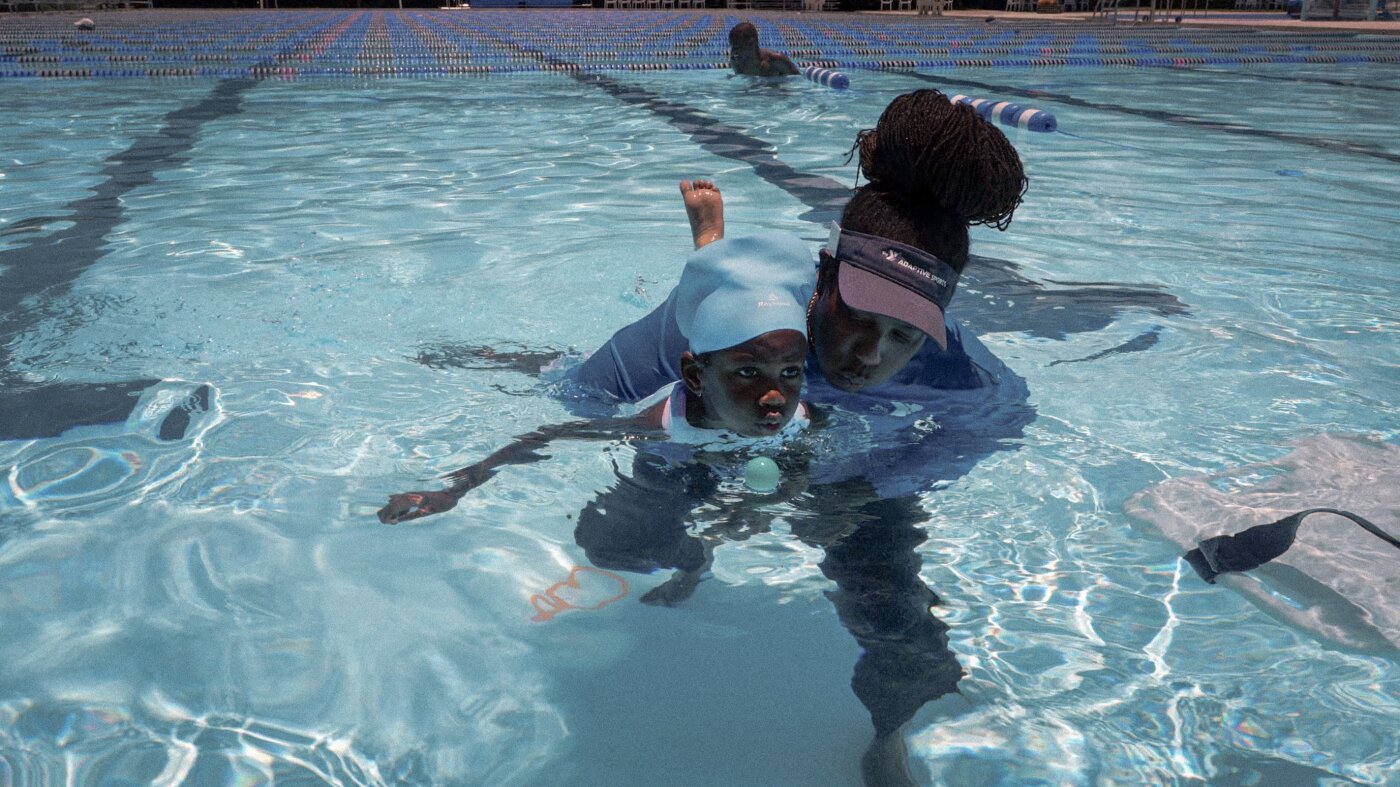
Garland Jones, recreational therapist and senior program director of the YMCA of South Florida’s special needs program, teaches Mackenzie Wesley, 5, to breathe safely in water by using a ping pong ball as a visual aid.
LA Johnson/NPR
hide caption
toggle caption
LA Johnson/NPR
WESTON, Fla. — Mackenzie Wesley sports a big grin and bright blue Lilo & Stitch swim gear as she runs into her weekly swim lessons. It’s fitting, because the 5-year-old has something in common with movie character Lilo: She adores water.
“Whether it’s the pool or beach, she enjoys it fully,” says her dad Steven Wesley.
Mackenzie isn’t alone: Many kids with autism share a natural love for water because it can be sensory bliss — the feeling on their skin, the pressure and the sparkle of the water can all be soothing. Lucky for her, Mackenzie lives here, less than an hour outside of Miami in a state that’s dotted with bodies of water.

But there’s a tragic reality tied to that fact, as Mackenzie’s mom, Brittany Bucknor, is all too aware. “In Florida, there’s water everywhere, and also with kids her age, and also just being on the spectrum, it’s a very — way higher — rate of having an incident of drowning.”
Kids with autism are 160 times more likely than other children to die from drowning, according to a seminal 2017 study from Columbia University. In fact, in Florida, most children drown in backyard pools. That’s largely because about half of autistic children have a tendency to wander from safe settings. That fact, combined with an attraction to water can make for a dangerous combination. Quality swim lessons can help.
That’s one of the reasons Mackenzie’s parents enrolled her in Swim Buddies, the YMCA of South Florida’s low-cost program aimed at children with disabilities. It’s also why the state of Florida, which has one of the highest childhood drowning rates in the nation, is expanding a voucher program on July 1 that will put children ages 1-7 who have autism at the front of the line for subsidized swim lessons. “We have tragic circumstances and stories across the state of Florida of young children with autism that are wandering away, they’re eloping from their homes, from their classrooms,” says Florida state Rep. Anna Eskamani, a Democrat, and one of the lawmakers who sponsored the bipartisan bill that changed the state’s swim vouchers.
“These [tragedies] are so preventable, but if that child at an early age does not have access to drowning prevention and swimming lessons, then those statistics will only continue.”
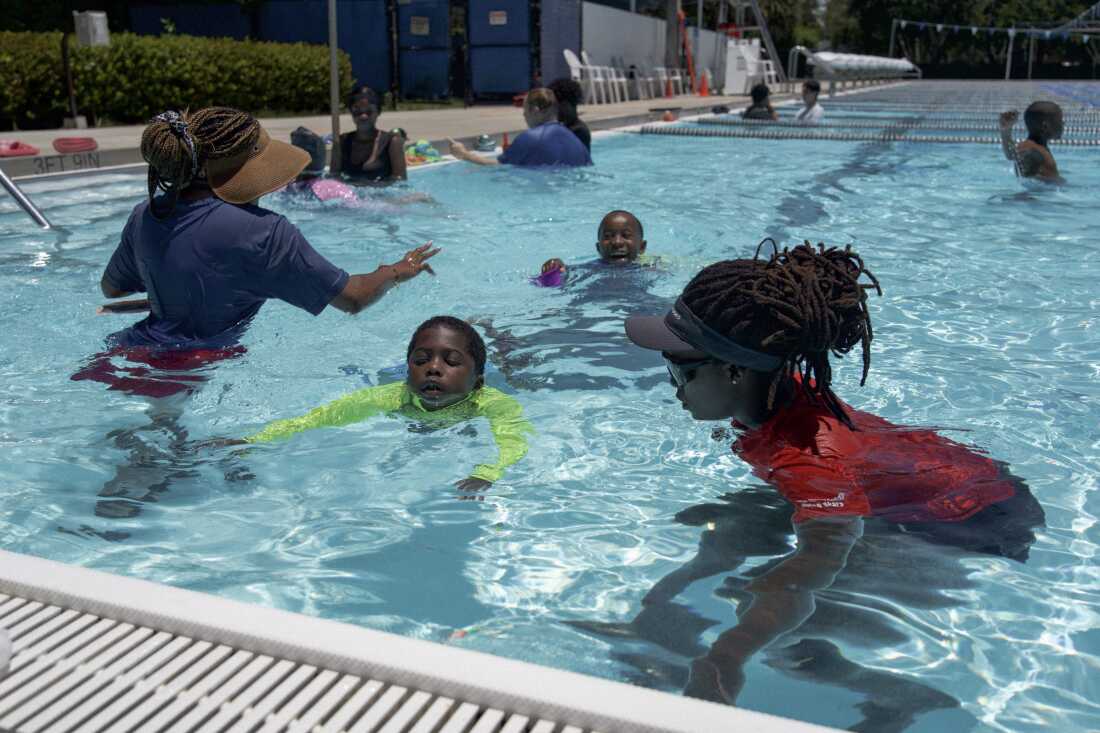
Recreational therapist Tiera Chaney works with Amir Williams, 6, during a recent Swim Buddies session.
LA Johnson/NPR
hide caption
toggle caption
LA Johnson/NPR
Once the updated law takes effect, many healthcare providers across the state will begin providing parents of newborns with information about drowning prevention and the state swim program, Eskamani says. Generally, the voucher comes out to about $200, she says, and pays for up to eight swim lessons.
A “whole-person” approach
The YMCA of South Florida has one of the largest adaptive recreational programs for kids with special needs in the area, including those with autism, who make up the fastest-growing group of children with disabilities. “We provide this program for those with a variety of disabilities, primarily over 60 percent of our youth who do come have a diagnosis of autism,” says Alison Bregman-Rodriguez, vice president of the YMCA of South Florida, where she oversees 64 locations, 27 of which serve children with learning differences. “This program, however, does serve all who want to feel like they belong.”
When Mackenzie’s parents learned that their local YMCA already had a robust and low-cost program for one-on-one instruction with kids with disabilities in mind, they jumped on the opportunity. “I really appreciate the program and specifically Miss Garland. She’s been very patient with Mackenzie and challenged her too,” Bucknor says.
She is referring to Garland Jones, who oversees the special needs recreational program here and also spends time working directly with swimmers, alongside other recreational therapists and trained volunteers. Jones agrees that patience is key in working with kids with disabilities, something that’s emphasized in the training for instructors. “We come at everything with a whole-person approach instead of just a physical approach. We do the physical, the emotional, the social.”

A selection of colorful, sparkly toys are often used for positive reinforcement and redirection in Swim Buddies lessons.
LA Johnson/NPR
hide caption
toggle caption
LA Johnson/NPR
The program’s hallmarks are individualization and one-on-one instruction rather than traditional group lessons. Staffers assess each child to learn about their needs and tailor their lessons in response. “We might have a kid who loves to get in the bathtub and splash around in the water or we might have a child who is very fearful of getting in the water,” Jones says.
On this recent summer Sunday, Tania Santiago Perez is sitting poolside, observing the Swim Buddies lessons. She is a professor at Florida International University who studies effective swim instruction for children with autism, including at this YMCA, with research partner and professor Tana Carson. Their research shows that when done right, swim instruction for kids with autism can help save lives. “The fact that we have been seeing that in five or six sessions they’re able to improve swim skills, to us, is very powerful,” Santiago Perez says.
Each lesson begins with group introductions to help swimmers build trust with the teachers and fellow participants in the pool. “That’s one thing to promote group cohesion and then the socialization with other kids,” says Santiago Perez. “Because with kids with autism, sometimes they’re very to themselves and that social behavior is one thing we want to develop.”
After the meet-and-greet, each child must wait to be explicitly told it’s safe to enter the water.

The adaptive swim lessons at the YMCA of South Florida serve more than 600 children with disabilities, but the program is overwhelmed with requests. Jones says she hopes the state will provide more funding to help facilities like theirs meet the need.
LA Johnson/NPR
hide caption
toggle caption
LA Johnson/NPR
Because many autistic children are prone to “eloping,” or running away suddenly, Santiago Perez says instructors are trained to stay no more than an arm’s length from each swimmer.
During one Swim Buddies session, a swimmer dashes out of the pool. “So the therapist is trying to redirect him back to get inside the pool,” says Santiago Perez as she points to the instructor gently but firmly guiding the child physically and with clear verbal commands.
Next, the instructor tries luring the child back into the pool with a sparkly pink rubber duck, which does the trick. “Toys help a lot because at the end of the day, they’re kids and kids learn by play and positive reinforcement,” Santiago Perez says.
In another corner of the pool, Garland Jones is working with Mackenzie Wesley on safe breathing techniques above the water because, in the past, putting her face under water has been uncomfortable and led to choking. Jones is using a bright blue ping pong ball in front of Mackenzie so she can see how her breath is physically moving the ball.
Once Mackenzie is eased in, Jones helps her practice blowing bubbles in the water, making a humming noise to show what it should sound like. “Hmmmm,” mimics Mackenzie. Then she ducks her head under water and pops back up, with a smile on her face. “Mackenzie has grown so much. I’m so proud of her,” says Jones, who’s been working with her in Swim Buddies for over a year. “We had a couple of instances where she was [swallowing] water a lot.” Now, she blows bubbles and goes under water like a pro.
Demand overwhelms supply of lessons
Parents looking on during Swim Buddies lessons have heard about the swim voucher program, and many were excited that it could make life-saving lessons affordable for lower-income families. “People who don’t have kids on the spectrum don’t take in mind that we’re paying a lot already for stuff like behavioral therapy, speech, occupational therapy,” says Augusto Sandino, whose son David has been in Swim Buddies for a year and a half. “All the programs, everything is money, man. So every little bit helps, and also, creating these inclusive communities is a big win.”
While Florida maintains a list of approved providers around the state, Jones and Santiago Perez both share the concern that many facilities lack enough qualified instructors. “You have people who are biters, spitters, who will scratch, things of that nature,” Jones says. “I just think we need more individuals who are trained in working with individuals with special needs so that they can be successful.”
The YMCA of South Florida is already overwhelmed with requests for its specialized swim lessons. Alison Bregman-Rodriguez, the vice president, says they do their best to find a spot for every child, but they don’t want to compromise the quality of lessons they provide. And while the voucher may increase demand, facilities like this often have to leverage other sources of money to keep programs like Swim Buddies afloat.

Researcher Tania Santiago Perez of Florida International University helped train some of the instructors at the Swim Buddies program. Her research has found that even after five or six quality lessons, most kids with autism showed improvement.
LA Johnson/NPR
hide caption
toggle caption
LA Johnson/NPR
Even before the new priority for children with autism, demand for swim lessons outstripped supply. “The problem is access,” says Santiago Perez. In the program’s first year, only about a third of families who applied for vouchers actually got them. She worries that the gap will only increase.
NPR reached out to the Florida Department of Health for details about how the changes to the swim program will work. They declined an interview and did not answer questions about how many vouchers would be available.
As Mackenzie Wesley’s swim lesson comes to an end, her parents wrap her in a towel and share that just a few weeks ago, she had a big milestone: She was invited to her very first pool party. “She was in the pool like she was a pro, an expert,” her mom says. “She had her little floatie and she was doing her own thing, so she’s been a lot more confident in the water and a way stronger swimmer for sure.”
This, says Garland Jones, is the kind of milestone that makes her work so rewarding. It means Mackenzie is on her way to having the skills that will allow her to embrace her natural love for water, and to do it safely.
Edited by: Nirvi Shah
Visual design and development by: LA Johnson

-
Freight train derailment near Philadelphia sparks hazmat scare
01:37
-
Now Playing
New details in deadly Florida alligator attack
01:19
-
UP NEXT
173 million people under extreme heat alerts as fires rage out west
01:49
-
Trump praises Supreme Court ruling upholding bans on transgender athletes in female sports
01:43
-
Great Americans: A conversation with Alex Cole, Legacy Flight Academy
02:27
-
Supreme Court rejects Trump’s push to end birthright citizenship
02:03
-
Man killed by crocodile on popular Puerto Vallarta beach
01:32
-
Alex Murdaugh in court after double murder conviction is overturned
01:59
-
New details on Taylor Swift’s wedding
01:00
-
Around 162 million under heat alerts
02:01
-
Great Americans: A conversation with Carter Beard, Annin Flagmakers
02:22
-
Pilot says he hit drone on final approach to JFK airport
01:14
-
Miraculous rescues days after deadly earthquakes
02:09
-
Rising cost of youth sports across the country
02:18
-
Trump’s deal to end war in question after Iran retaliates to US strikes
02:14
-
Good News: ‘America’s Tapestry’ project celebrates nation’s 250th anniversary
02:06
-
More than $4 million worth of wagers made ahead of Taylor Swift’s wedding
01:38
-
Dangerous fire, flood conditions prompt states of emergency
01:34
-
Death toll grows to more than 1,400 after Venezuela quakes
02:32
-
Aircraft crashes into a Beijing skyscraper
01:09
Nightly News
-
Freight train derailment near Philadelphia sparks hazmat scare
01:37
-
Now Playing
New details in deadly Florida alligator attack
01:19
-
UP NEXT
173 million people under extreme heat alerts as fires rage out west
01:49
-
Trump praises Supreme Court ruling upholding bans on transgender athletes in female sports
01:43
-
Great Americans: A conversation with Alex Cole, Legacy Flight Academy
02:27
-
Supreme Court rejects Trump’s push to end birthright citizenship
02:03
Nightly News
Nightly News
Nightly News
Nightly News
Nightly News
Play All
-

 Georgia6 minutes ago
Georgia launches address protection program for violence, trafficking survivors
-

 Hawaii9 minutes ago
BBC Audio | Witness History | Hawaii becomes the 50th American state
-
 Idaho14 minutes ago
Idaho State Board appoints David W. Hahn as eighth president of Boise State University
-
 Illinois21 minutes ago
Illinois 250 invites every resident to help tell the state’s story | Ep. 1 of 6
-

 Indiana24 minutes ago
Submit your nature art for DNR hard card licenses
-

 Iowa29 minutes ago
Cubs Minor League Wrap: Aaron Bummer, Liam Hendriks pitch for Iowa
-

 Kansas36 minutes ago
Man pleads guilty to murder, kidnapping in estranged wife’s death in northeast Wichita
-

 Kentucky39 minutes ago
Kentucky Adds Three More International Swimmers to Women’s 2026 Recruiting Class

