Delaware
Why Delaware is one of the few states that doesn’t compensate wrongfully incarcerated


‘Long time coming’ Delaware man released after 39 years in prison
57-year-old Elmer Daniels released from prison after 39 years after state dismisses rape indictment.
John J. Jankowski Jr. and Daniel Sato, Delaware News Journal
When Elmer Daniels left Delaware prison 39 years after a court ruled in 2018 that he was wrongfully convicted, he was turned out into the world in the middle of winter with little more than the shirt on his back, according to his attorney.
That’s because Delaware is one of about a dozen states that has no mechanism to compensate individuals who wrongfully spent portions of their lives locked behind bars. These are people who spent years, or in some cases, decades making no real money in prison as the world and their connections on the outside have moved on without them.
Once again this year, some Delaware lawmakers want to create a compensation program to acknowledge the unfairness of being wrongfully locked up. Senate Bill 169 is the latest effort to do that.
The bill has passed a Senate committee. It’s main sponsor, Kyra Hoffner, a Smyrna Democrat, said she is revising the bill and hopes it will be up for a vote in the Senate in the coming weeks.
How would it work?
The proposed program has been revised multiple times, but Hoffner explained how the program would work.
The bill would set up a compensation fund for individuals whose convictions were overturned and either dismissed, dropped or retried resulting in an acquittal. These situations most commonly occur when people locked up work for years to present to the court flaws in their original conviction and in some cases, new evidence pointing to their innocence.
In some cases, like the situation faced by Mark Purnell in recent years, the courts can overturn someone’s conviction, and prosecutors, who often have the choice of whether to retry or drop the case, will dangle freedom in front of the individual if they plea to a lesser crime.
So people who also plead no-contest after their conviction is overturned and remanded for further proceedings are also eligible to apply for compensation. Purnell’s case was ultimately dropped by prosecutors. He spent 16 years wrongfully locked up.
Released: Mark Purnell, who spent 16 years in prison due to unjust trial, suddenly released
The legislation includes protections to disqualify people convicted of other crimes tied to the overturned conviction or people who purposefully take the blame for someone else in a criminal case. People who have a conviction the court has not deemed illegitimate and who are simply pardoned would not be eligible, Hoffner said.
Those who qualify would be allowed to file a court petition seeking compensation. It would be up to them to make a showing to the court of their innocence, Hoffner said. This showing would be judged by what’s called a “preponderance of the evidence,” a lower standard than the ”beyond-reasonable-doubt” standard used to convict people, she said.
Prosecutors in the Delaware Department of Justice would have the opportunity to refute and present evidence in opposition to the person’s claim.
James Moreno is the executive director of the Delaware Innocence Project, a nonprofit that investigates and pursues claims of wrongful incarceration. He emphasized that it’s only fair for the state to help people when they’ve taken away their time and freedom unfairly.
“Nobody is saying let’s hand out a pot of money; there is a standard that must be met and it is about fairness,” Moreno said.
How much money are we talking about?
Individuals who clear the court hurdle will be eligible to receive compensation based on their years spent wrongfully behind bars and a few other factors.
Those who served time on death row are eligible for $100,000 for each year wrongfully locked up. Those who served time off death row, which is most people who would qualify, would be eligible for $75,000 per year.
Those wrongfully put on probation or those paroled after a wrongful conviction or people wrongfully made to register as sex offenders would be eligible for $50,000 for each year in the system, Hoffner said.
The bill also includes provisions to help cover attorneys fees, reimbursement of restitution a person was wrongfully ordered to pay as well as reimbursement for “reintegrative services” like mental and physical health care costs incurred between the person’s release and their grant of compensation, Hoffner said.
The bill includes provisions that would tie the compensation award in the future to changes in inflation as well as timing the disbursement of payments to those who qualify. The fund would be managed by the state treasurer.
How often does this happen?
It is rare for people to have their cases overturned in Delaware. People in prison typically don’t have money so it’s not an incentivized area for private attorneys to work in. That’s the gap that the Delaware Innocence Project, a relatively new organization compared with counterparts in other states, seeks to help fill.
According to the National Registry of Exonerations, four people in Delaware have successfully overturned their convictions in the past 35 years. Those include Daniels, Isaiah McCoy, Mark Purnell and James Dollard.
Hoffner said Daniels, Purnell and Dollard would qualify under the bill’s current format.
‘Left to fend’ for themselves
When a person is imprisoned, they make little to no money, their marketable skills diminish, they fall behind current technology and lose personal connections and family foundations.
Then, when their conviction is overturned, they are released into a world with new technology, high basic prices to survive and, in the eyes of many potential employers, a black mark of having just recently been released from lockup.
Hoffner added that incarceration also exacerbates one’s health problems. She said the money can’t give someone back their time, but will make their life a bit easier.
“Everyone thinks life goes back to normal,” Hoffner said. “But it is a big struggle.”
Emeka Igwe, Daniels’ attorney, emphasized the difficulty of reintegrating into society after being released for so long.
“There was nothing from the state at all,” Igwe said. “He was basically left to fend for himself.”
Daniels released: Flawed testimony led to his conviction 39 years ago. Now, prosecutors say he can go free
The office of Delaware Attorney General Kathy Jennings did not comment on the proposed legislation when asked. Leadership in Delaware’s judiciary declined to comment.
The legislation is not a new push in Delaware. In 2019, a similar bill was introduced, passed through a House committee and died without House Democratic leadership bringing it up for a vote.
Lawsuits often fruitless
Supporters say another common misconception is that civil courts allow wrongfully convicted people to seek damages. Daniels’ case is an example of how that often isn’t the case.
The courts provide broad civil immunity to police and prosecutors carrying out their work administering justice.
Daniels sought compensation via a civil lawsuit. His rape conviction was overturned because some of the basic evidence underpinning his case was based on science that society now regards as unreliable as well as other evidence that undercut his original prosecution. After his case was remanded, prosecutors said they couldn’t label him “innocent,” but dropped the case. He was 57 when he was released from prison.
Earlier this year, a judge dismissed his lawsuit against Wilmington police after he failed to meet the high legal bar that officers knowing or willfully violated his constitutional rights.
“Courts cannot right all wrongs” was the opening line in Judge Stephanos Bibas’s opinion dismissing the lawsuit.
Igwe, Daniels’ attorney, said he is appealing the ruling. He said Daniels has acclimated to life and work outside, but is owed a debt by those that took 39 years from him.
“He was incarcerated in the name of the state,” Igwe said. “He should be compensated by the state.”
Jon Eldan is the founder and executive director of After Innocence, a California-based nonprofit that, among other things, advocates for such compensation programs. He said Daniels’ situation is common to people released after a wrongful conviction: The law in America often provides no route for compensation through civil courts.
“There have been several thousand cases overturned throughout the country,” Eldan said. “The majority of people don’t have a lawsuit.”
Contact Xerxes Wilson at (302) 324-2787 or xwilson@delawareonline.com.



From Delco to Chesco and Montco to Bucks, what about life in Philly’s suburbs do you want WHYY News to cover? Let us know!
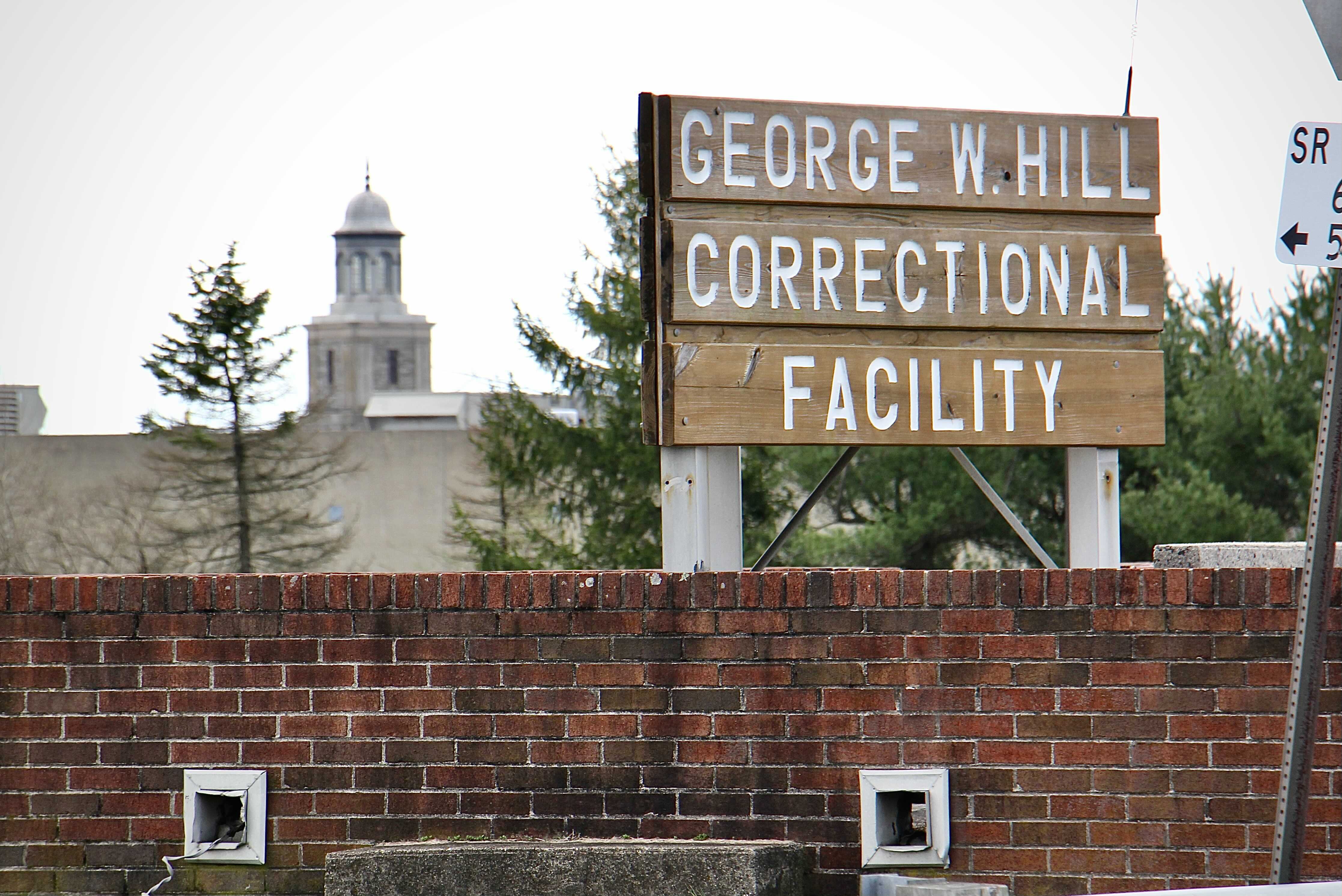
Willie Bonds has tendered his resignation as warden of the George W. Hill Correctional Facility in Delaware County after less than six months running the prison.
“The resignation was submitted due to a personal family matter and an opportunity to pursue other career interests,” said Michael Connolly, communications director of Delaware County, in a written statement.
The Delaware County Jail Oversight Board named Bonds the warden in February. He took over for interim warden David Mascollino, who spent five months on the job.
Mascollino had stepped in following the resignation of warden Laura Williams in August 2025. Bonds will remain in his current role until the county implements a succession plan.
“While the County was looking forward to his continued good service, County leadership respects his personal decision and is immensely grateful for his work on behalf of our residents, the incarcerated population, and the dedicated staff of George W. Hill,” Connolly said.
The county will name an interim warden and work with the prison’s leadership to identify a permanent replacement, Connolly said.
“As this process moves ahead, Delaware County remains committed to continuing its efforts to build George W. Hill into a facility that every resident can be proud of and continuing the major investments and upgrades to the facility already well under way,” he said.

When will Delaware’s 2026 midterm elections take place?
Delaware’s midterm elections are coming up. Here’s what voters need to know before heading to the polls.
Delaware candidates and elected officials may soon be able to use campaign funds to protect themselves on and off the campaign trail.
A House bill introduced June 4 would allow funding for security costs for Delaware officials and candidates. Lawmakers said those expenses would be covered through voluntary contributions, not taxpayer dollars.
Nationally, the bill arrives during a fraught period for public officials. In recent years, several lawmakers in other states have been targets of politically motivated violence, resulting in serious injuries, property damage and, in some cases, deaths.
In Delaware, lawmakers didn’t point to any local examples, but said many legislators are on edge. A 2024 research report from the Brennan Center for Justice found that 43% of interviewed state lawmakers experienced threats, as well as 18% of local officials.
Some public officials in that research said they were less likely to hold public events, work on contentious topics or even run for higher office.
The Delaware bill mirrors similar proposals introduced across the country aimed at improving safety. At the federal level, candidates and officeholders — along with their families and staff — are already allowed to receive such protections.
To advance, the bill will need to clear its final committee and the Senate floor before June 30. Otherwise, lawmakers start all over again next session, after the midterms.
‘A responsibility to act’
Campaign expenditures in Delaware are currently limited to mostly advertising, food and refreshments, as well as attendance at political events and travel expenses.
If passed, House Speaker Melissa Minor-Brown’s bill would cover several security-related expenses, include:
- Electronic security systems located in a candidate’s home or office
- “Personal security,” a category the Delaware Department of Elections said it would further define if the bill passes.
- Cameras, fences or “other comparable security-related equipment”
These funds can also be used to help protect their families in certain circumstances, Minor-Brown told Delaware Online/The News Journal.
They cannot be used to pay for firearms, however.
House Minority Whip Jeff Spiegelman raised a concern about this during the bill’s June 11 hearing in his chamber, calling guns another matter of defense.
Fellow sponsor House Majority Leader Kerri Evelyn Harris said the choice was not to include firearms in the bill, saying this could lead to discomfort for many, and potentially do more harm than good.
Minor-Brown also said candidates covered in this bill must have filed for office and currently be campaigning. Additionally, the New Castle Democrat said money must come from voluntary contributors.
No officeholder or candidate is required to abide by this measure, Harris told lawmakers, as the use of funds will remain “entirely optional.”
The bill comes as lawmakers nationwide have faced rising intimidation and violence in recent years.
This includes former Minnesota House Speaker Melissa Hortman, who, alongside her husband Mark, were shot and killed in what officials described as “a politically motivated assassination” last year, as reported by USA TODAY.
In Pennsylvania, Governor Josh Shapiro’s home was the target of an arson attack last April.
And just a few weeks before, New Mexico Republican Party headquarters in Albuquerque was vandalized, almost a year after it was damaged in an arson attack.
Minor-Brown also pointed toward the 2022 attack on former U.S. House Speaker Nancy Pelosi’s husband, the assassination of conservative politico Charlie Kirk last year, as well as the attempts on the life of President Donald Trump.
“This is not about politics. It’s not about partisanship,” Harris said ahead of the floor vote. “It’s about safety.”
Minor-Brown said lawmakers should not have to choose between their safety and performing their elected responsibilities. As such, lawmakers have “a responsibility to act” now, she said.
Several other states – including New Jersey and Maryland – have proposed similar legislation, according to the National Conference of State Legislatures.
Other states have also enacted laws on the safety of candidate families and staff, cybersecurity and using campaign funds to pay for home security systems. Minor-Brown told Delaware Online/The News Journal she expects to see measures regarding cybersecurity in Delaware.
This bill passed the House on June 11. It is now scheduled to be heard in Senate committee on June 25.
Olivia Montes covers state government and community impact for Delaware Online/The News Journal. If you have a tip or a story idea, reach out to her at omontes@delawareonline.com.
Delaware
Comcast Xfinity cable down: TV streaming outage hits New Hampshire, Texas, Delaware, Wyoming and Maine

Comcast’s Xfinity cable service is down for thousands of people in the United States on Monday afternoon.
More than 12,000 users are reporting the outage with the cable service run by NBC’s parent company, according to Down Detector, a platform that tracks such outages based on users’ reports.
Much of the outages seemed to be concentrated in New Hampshire, Texas, Delaware, Wyoming and Maine, according to the outage map shown on Down Detector.
According to Down Detector, 77% of the customers reported issues with the cable TV services, 12% with the broadband internet and 8% with TV streaming.
Also read: Who is Dasha Kilpatrick? Texas healthcare worker’s row with Muslim women at HEB store viral
Comcast Xfinity Outage Map
The map of Comcast’s Xfinity outage showed that urban centers across the country were affected. It included cities in the east and west cost, north and southern states and well as parts of central US.
The map showed outage reports concentrated in Boston, New York City, Atlanta, Jacksonville, Miami and large parts of Florida.
In the north, Minneapolis and Chicago reported the most outages. While in the South, Houston was affected. Customers from Denver also reported a significant number of outages.
In the east coast, most outages were reported up north. Portland Salem and Seattle reported a large number of outages. Additionally, the areas around San Francisco and Carson City reported outages.
Here’s the map of the Comcast outage per Down Detector, as of 4:28pm ET.
Comcast’s Response
As of now, Comcast or Xfinity has not acknowledged that the issue is widespread. The X account of Xfinity support is replying to queries on social media, asking customers to message them their service ID.
Also read: Alaska coast guard helicopter crash: MH-60 Jayhawk goes down in Sitka, search and rescue crews responding
For instance, one such post on X read: “Hello! Thank you for contacting the Xfinity support team. We sincerely apologize for the inconvenience due to the service interruption. Please DM us with your first and last name and your complete service address, so we can assist you further.”
Thus, those seeking a solution to the problem may send their service details and the disruption that is happening to Xfinity.
Comcast’s Xfinity is one of the largest cable and broadband services in the US. It serves around 11.27 million traditional cable TV customers in the Unites States. Its broadband user base is approximately 31.25 million strong.
This is a developing story.
-

 San Francisco, CA7 minutes ago
San Francisco Supervisor Jackie Fielder to return following mental health leave
-
Dallas, TX10 minutes ago
Impact: How Jeffery Simmons’ extension could affect Quinnen Williams
-
Miami, FL15 minutes ago
Jaylen Brown bidding war? Haslem drove this? All the fallout from Antetokounmpo trade to Miami
-

 Boston, MA22 minutes ago
Your next Uber ride in Boston could be a taxi
-

 Denver, CO25 minutes ago
Nuggets 2026 NBA mock draft tracker 2.0: What national experts predict Denver will do
-

 Seattle, WA30 minutes ago
How to watch Bosnia vs. Qatar in next Seattle World Cup match
-
 San Diego, CA37 minutes ago
San Diego Unified leaders propose policy to limit technology in classrooms
-
 Milwaukee, WI40 minutes ago
Racine’s Greek community reflects on Giannis’ celebration of Greek culture


