


The Dallas Cowboys had an eventful NFL combine. Jerry Jones and Stephen Jones were working the media circuit, fans got to learn more about Christian Parker through a few interviews, and there was drama surrounding the reports of Brandon Aubrey’s contract negotiations.
Dallas, TX
In Dallas, Even the Sidewalks Are for Sale


The city of Dallas once again wants to monetize its sidewalks. Later today, the Dallas City Council will be briefed on a plan to enter into a contract in June with a company that will plant interactive digital kiosks in downtown and other neighborhoods, likely on sidewalks. The vendor would make money from advertising and share the revenue with the city for permission to use Dallas’ right of way.
We’ve been through this before. There are 137 bulbous kiosks presently jutting out into walking paths all over the city, from downtown up to Forest Lane. The City Council unanimously approved them in 2005 and by the next year, then Mayor Laura Miller was complaining about the “giant spaceship[s]” on our public sidewalks. Whoops! Today, 18 years since their installation, some slump and lean. The plastic that covers the ad has turned scratched and cloudy, a decent canvas for quick graffiti. Some of them were placed, as the image above these words shows, right where people walk. The city can’t pull them up until 2026, when the existing contract expires.
I suppose it’s important to note that the kiosks the City Council will learn about today are not exactly like the tubes that we’ve learned to live with. They’re sleeker, about 8 feet tall and 3 feet wide, compared to the 6-foot-tall, 4-foot-deep stubs that don’t do much other than show you an Amazon Prime ad. The new ones will have wifi. They can provide directions and highlight events and other amenities. Some can have EV charging, which might work near parks. The presentation also lists such unbelievably vague and nebulous benefits as, in the city’s words, “limitless innovation” that promises “development of state-of-the-art content and features.”
So they’re like a bunch of really big, static smartphones that we may or may not have to dodge as we’re walking to work. And we’ll have them by the World Cup! And when the World Cup leaves, we’ll still have them.
Since 2006, the city has made $16.7 million from the kiosk program, which sort of sounds like the municipal version of a low-yield savings account. There are many people who don’t think the potential revenue is worth the risk of worsening our already subpar pedestrian infrastructure. Too, the Department of Public Works didn’t ask for public input before putting the matter out to bid. Downtown businesses, already frustrated by the existing obstacle course of kiosks, raised a stink. In February, the City Council ordered public works to pull the bid and hold a couple of listening sessions, which concluded this week.
They did not find much support for the idea.
“This plan has been met with overwhelming opposition from stakeholders throughout the greater Downtown area who say there is no appetite for more urban sidewalk obstructions,” said Jennifer Scripps, the executive director of Downtown Dallas Inc. Her concerns were echoed by Councilmember Paul Ridley, whose district includes downtown, Uptown, and portions of East Dallas. DDI on Tuesday night sent a letter to Council urging them to deny issuing another Request for Proposals. (The RFP is the formal name for the bid.)
Stephanie Hudiburg, the executive director of the Deep Ellum Foundation, pointed to the special purpose sign district ordinance that explicitly bans digital displays and signage in the neighborhood just east of downtown. (The foundation hasn’t submitted an official stance to the city, but it seems like they got ahead of the issue.)
“A large part of the intent behind that particular rule was to preclude digital kiosks, which city staff can attest to,” she wrote in an email. “As a historic district, our stakeholders prioritized an analog vs. digital aesthetic as most fitting to Deep Ellum.”
The city’s own presentation lists a litany of concerns: impeding walkability, violating ADA, vehicular distractions, “negative aesthetic,” and potential for vandalism. The two pros include public safety additions like emergency call buttons and cameras, and the promotional aspect of “showcasing local businesses.”
Intentional or not, the RFP appears tailored for an Ohio-based vendor called IKE Smart City, LLC. (That stands for Interactive Kiosk Experience.) Dallas employees identified 18 other cities that have entered into agreements with the company, each of which makes sure to say that their 8-foot-tall kiosks are “multilingual” and “ADA-compliant.” The city wants to move quickly. It is asking Council for permission to reissue the RFP in May and approve it by June.
During a briefing last May, Hatefi could not say how many are being proposed or where they might be located. That would get worked out in the contract. Too, the city doesn’t seem to know how much revenue this might bring in. We do know the revenue is tied to selling ads, so Hatefi expected they would be placed near “the most advantageous locations that their advertising could generate revenue.” Which likely means in places where people are walking. (And 20 percent of them will be in “equity zones” defined by the city.)
City records show that registered lobbyist Randall Bryant organized at least two meetings in 2022 with Assistant City Manager Robert Perez on behalf of IKE Smart City. There was also a phone call with City Councilmember Tennell Atkins that same year. (Bryant didn’t respond to questions.)
There are scenarios where these can work. Dallas Area Rapid Transit has installed more than 300 digital kiosks near some of its bus and rail stations, which are set aside and deliver status updates to riders. The kiosks being considered by the city of Dallas are clearly intended for tourists. Maybe they work around Fair Park, as Councilmember Adam Bazaldua has suggested, or the Southern Gateway Deck Park once it opens. Klyde Warren, the Farmers Market, the future convention center—sure, maybe, but they shouldn’t be in sidewalks.
You can probably walk outside your office right now and find an example of why.
Author

Matt Goodman
View Profile
Matt Goodman is the online editorial director for D Magazine. He’s written about a surgeon who killed, a man who…


A tribute to a family dog is now helping other animals. Daisy’s Memorial Dog Stick Library encourages dogs to take and leave sticks on their walks near White Rock Lake. Kimberly Haley-Coleman stopped by The Post to talk about the tribute.
Posted
Dallas, TX
Wilonsky: A mom deported, 4 kids left behind and an 80-year-old Dallas Girl Scout troop leader’s good deeds

Early the morning of Feb. 9, Ana, a 45-year-old mother of four, woke up in the U.S. Immigration and Customs Enforcement detention center outside Abilene. Bluebonnet, it’s called, so named for the toxic state flower. She was hustled from bunk to bus for a ride to Del Rio. By noon, she was standing in the middle of the International Bridge that connects Del Rio with Ciudad Acuña across the Mexican border.
Ana was told only: You’re free to go – back to Monterrey, which she left in 2006 and where her parents still lived. She did not know how she was going to get there. Or when she would see her girls again.
Only five weeks earlier, Ana had a job at an ice cream shop at Lombardy Lane and Brockbank Drive in northwest Dallas, where she’d worked for six years. A single mother, she alone cared for her daughters, two of whom are in elementary school – fifth and sixth grades – and struggle with dyslexia. Her 12-year-old, diagnosed with severe depression, had twice tried to harm herself just last year. Her eldest, a 17-year-old senior at Thomas Jefferson High School, is set to begin college in the fall.
Ana crossed the Rio Grande on an inflatable raft near Laredo 20 years ago for a life she couldn’t find in Mexico. She met a man in Lewisville with whom she had four children. He abused her, she said, so she left again, to start over in northwest Dallas.
Immigration officials gave her a preliminary court hearing: Aug. 24, 2027. Ana, who has no criminal record, went to the ICE offices on Stemmons Freeway around New Year’s Eve for her annual check-in.

A plethora of messages were created on handmade signs for attendees to hold during an ICE vigil held outside the Dallas ICE field office, located at 8101 N. Stemmons Freeway in Dallas, on July 27, 2025.
Steve Hamm / Special Contributor
And every time she returned home to her girls. Until Dec. 30, 2025, when she was detained by officers, then shuffled around the state – Dallas to Alvarado to Abilene – before being sent back to Mexico, leaving behind daughters, all born in Dallas, to whom she did not get to say goodbye.
“I was so scared,” said Ana, who, with her eldest, agreed to talk to me if I did not use her full name or her children’s names.
“And I was in shock,” she said. “The whole morning I was just praying thinking about what to do next. I thought I would see my lawyer or talk to someone about what was going on, but the way they took us, no one explained anything to us. I know I did something wrong when I came over without my paperwork, as I should have. But I wasn’t stealing or hurting someone; I was working for my family, providing.”
Ana spoke by phone from Monterrey, where, last week, she buried her father, whose heart failed him days after she was left on that bridge. She began to cry.
“The fact that they just took apart my family, it’s breaking my heart,” Ana said, trying to catch her breath. “There are a lot of people who are doing bad things. We’re just trying to provide for our kids. Why us?”
But she knows why. Everyone does. Because there have been so many stories like this in recent months it’s impossible to keep track.
Ana was transferred to and deported from the Bluebonnet Detention Center in Anson on Feb. 9. 2026.
Eli Hartman / AP

Just last week, María de Jesus Estrada Juarez of California, who came to the U.S. when she was 15 and was a Deferred Action for Childhood Arrivals recipient, was arrested during her regular check-in and sent back to Mexico. In Alaska, a mother and her three children were sent to Tijuana within 36 hours of being detained by ICE. NBC News also recounted the story of an 11-year-old girl, a U.S. citizen, whose brain-tumor treatment was interrupted when her parents were deported to Mexico.
The Texas Civil Rights Project has been trying to reunite the parents with their 11-year-old girl so she can get the care she needs. I asked the Austin-based organization if they kept track of the number of parents without criminal records deported to Mexico while their children are left behind. A spokesperson said they do not maintain a database tracking such cases, but that “it happens very often under this administration.”
Which is more or less what other immigration advocacy and legal nonprofits told me: We don’t track that data. But it’s, you know, a lot. ICE didn’t respond to emails asking for that information, either.
But just because we’re inundated with these stories doesn’t mean we should turn a deaf ear to them, especially when they involve our neighbors. This feels especially personal, as Ana’s eldest will graduate from my alma mater – if she can survive the next few months of waking her sisters each morning, getting them to school, working late hours at her fast-food job, dealing with grown-up responsibilities suddenly thrust upon her and trying, somehow, to fit in homework.
“It wasn’t really a choice for me,” the 17-year-old told me. “If I don’t do it, who will? The hardest part is getting up every morning, because there’s no break for the rest of the day – it’s the same thing every day, the same loop. And if there is, I have to do laundry or get these girls to their Girl Scouts things.”
Lynn Wilbur has been a Girl Scouts troop leader since 1983. For the last decade, she’s been part of an outreach group within the Scouts that helps girls who otherwise couldn’t afford to be part of the organization.
Courtesy Lynn Wilbur

I never would have known of Ana’s story, and that of the children left behind, had I not been forwarded a newsletter from Now>Forward, the nonprofit once known as North Dallas Shared Ministries. In the newsletter was a brief telling of the tale, along with a plea for assistance, as the girls need food, rent, uniforms.
I was told to call Lynn Wilbur, a Girl Scout troop leader since 1983, when her own daughter turned 5, and, for the last decade, leader of an outreach program that provides financial assistance for girls who want to be Girl Scouts but can’t afford dues, uniforms, supplies, field trips. “Anything that has to be paid for,” Wilbur said.
There are some 60 girls in the program, most spread across Dallas ISD elementary schools, including Ana’s three youngest daughters. Where once the program was funded by a foundation, though, the troop is having to depend on private donations – begging and scrounging, Wilbur said.
“Now, we’re just trying to help the girls pick up the pieces, along with their lives,” the 80-year-old said. When I called, she was with Ana’s daughters.
Most of the girls in Wilbur’s troop are from Spanish-speaking homes. This is the first time one of their parents has been deported. But, she fears, it will not be the last. One mother recently asked Wilbur if she would take her daughter if she, too, is deported.
“The amount of fear is unbelievable,” Wilbur said. “My house is one place they let them come because they know they’d have to kill me before I let them in the door. This has got to stop. Unless good people step up and let their voices be heard nothing is going to change. That’s why I am talking to you. We can’t let this keep happening, especially to children.”
Wilbur taught Ana’s eldest how to pay bills, how to buy a car when her mother’s recently broke down, how to deal with insurance, how to be a grown-up at 17. The TJ student was never a Girl Scout. But Wilbur, the living embodiment of a slogan that demands a Girl Scout do a good deed daily, has surely taught her how to be prepared.
“Miss Lynn has always made us feel like we’re important, that we’re loved,” Ana said. Another small sob. “That we’re human.”

A lot of knowledge is shared throughout the week, both on camera and behind closed doors, as the NFL landscape is set to shift as free agency approaches in just a few weeks. Jeremy Fowler and Dan Graziano, NFL Insiders for ESPN, emptied their notebooks on what they learned throughout the week.
Here are a few nuggets and takeaways that matter for the Cowboys.
1. How Dallas attacks the start of free agency
Jerry Jones held court on his bus during combine week and talked to media members about how the team will be active in free agency. The majority of their moves could come on the defensive side of the ball as Dallas gets their new defensive coordinator the pieces he needs to run his defense.
Clarence Hill Jr. of DLLS Cowboys was the first to report the Cowboys’ potential interest in Philadelphia Eagles linebacker Nakobe Dean. Fowler doubles down on that idea.
The Cowboys are crafting a detailed free agency plan to bolster their defense. The new scheme under coordinator Christian Parker needs replenishment. Eagles linebacker Nakobe Dean is someone to watch as a green-dot player in the middle of the defense.
Dean has been with the Eagles for four seasons after being drafted in 2022. When healthy, Dean has shown flashes of the player people viewed as the one he could become coming out of Georgia in college. The biggest concern with handing him a big contract is his health.
Out of 68 possible games, Dean was on the field for just 47 of them. He’s battled injuries throughout his young career, so if he’s expected to be the one leading Dallas’ defense, Dean has to be on the field more than he’s shown to this point.
2. The Cowboys will look to add a pass rusher
The Cowboys’ leader in sacks from last year is Jadeveon Clowney, who is set to hit the open market. Two other edge rushers for Dallas are free agents in Sam Williams and Dante Fowler Jr. Both could return to the Cowboys, but the front office might look to not only upgrade the position but also go after one of the top free agents if the price is right.
Fowler: The Cowboys will monitor the top of the pass-rush free agent options, too. They aren’t guaranteed to spend big, but I believe they will get a pass rusher at some point.
Later in the notebook, Fowler says, “Trey Hendrickson (Bengals) and Odafe Oweh (Chargers) will probably not be franchise-tagged.” That means two more premier edge rushers could be on the market. A few beat reporters have mentioned Hendrickson’s name as a possibility this offseason, but will he command too much money that Dallas is unwilling to spend? Probably.
What about Jalen Phillips? Can the Cowboys pull two former Eagles in free agency away from their rivals because of their connection to Parker? The keyword Fowler adds when it comes to Dallas’ interest in the best available pass rushers is “monitor.” If the numbers get outrageous, then they might go in a different direction. A name that could make a lot of sense for the Cowboys is Kwity Paye of the Indianapolis Colts.
He’s totaled 30.5 sacks over his five seasons in the NFL and could play a similar role in Parker’s defense to what Brandon Graham had in Philadelphia with inside-out versatility.
3. Dallas may want to add a few pieces in the secondary
One of Jerry Jones’ biggest regrets in recent history seems to be not re-signing Jourdan Lewis last offseason. Dallas would have been much better off with Lewis, given his skill set, familiarity with the defense, and leadership off the field. His presence was missed in more ways than one. It sounds like Jerry isn’t willing to make the same mistake twice.
Fowler: They [Dallas] will also comb the free agent safety class (Arizona’s Jalen Thompson makes sense), and they need a nickel corner. Dallas has felt the void since Jourdan Lewis left.
Christian Parker talked about how important the nickel position is for his defense at his introductory press conference. There are a few free agent corners out there who should be an upgrade from what Dallas had last year, but the route that makes the most sense is drafting a cornerback in the first round.
Donovan Wilson and Juanyeh Thomas are free agents, leaving Malik Hooker and Markquese Bell as the two players under contract on the team with starting experience at safety. Bell is someone who could play a more significant role in Parker’s defense given his position versatility. Where does that leave Hooker? Dallas could save almost $7 million if they cut him before June 1, but how does Parker feel about him fitting into his scheme?
How Dallas approaches the safety position at the start of free agency will tell us a lot.
4. Brandon Aubrey could have a contract sooner rather than later
You know the negotiations with Aubrey go sideways when he, his wife, and Todd France (Aubrey’s agent) go to Instagram and call the reports around it all “fake.” The Cowboys have remained optimistic in getting a deal done with Aubrey to make him the NFL’s highest-paid kicker. The holdup is just how much Dallas is willing to go and raise that number.
The Cowboys made an offer to Aubrey last year to be the highest paid at his position. The number has never been $7.5 million per year. Aubrey and his camp reportedly asked for $10 million per year, which would blow past the current mark with Harrison Butker ($6.4 million annually), but that has also been a disputed figure.
If it comes down to it, the front office is prepared to apply a second-round tender on their kicker, bringing his salary for 2026 between $5.5-5.8 million. It seemed as though negotiations had stalled after things got out of hand, but a resolution may be coming soon.
Graziano: Sabre rattling aside, I expect the Cowboys to reach a deal with Brandon Aubrey at some point in the first week or two of March that makes him the highest-paid kicker in the league. If they don’t get a deal done by the restricted free agent tender deadline, Dallas plans to put a second-round tender on Aubrey. That means he’d make $5.767 million this season if the two sides don’t reach a deal and the Cowboys would get a second-round pick if another team made Aubrey a contract offer they didn’t want to match.
Getting a deal done within the next 10 days before the second-round tender would be ideal for both parties. The front office would lock up the league’s best kicker long-term, and Aubrey will be making more than the price that comes with the tag.

Midwest5 minutes ago
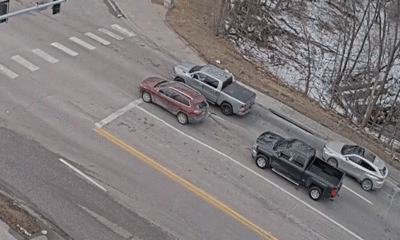
Terrifying moment caught on camera as road collapse suddenly swallows vehicles at busy intersection

Southwest11 minutes ago
Jasmine Crockett campaign reportedly kicked Atlantic writer out of rally for being a ‘top-notch hater’

Southeast17 minutes ago
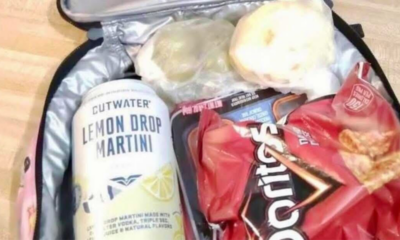
Atlanta-area police blast parents over vodka martini packed in school lunch: ‘That is NOT apple juice’

Northeast23 minutes ago
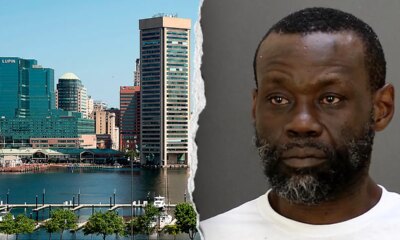
Murder suspect in Baltimore robbery spree was on probation, records show

Detroit, MI2 hours ago
Michigan State Police sends message to drivers after trooper involved in hit and run:

Florida1 year ago
Florida High School Football Rankings: Top 25 teams – Oct. 21

Connecticut2 years ago
Cleary's 21 help Le Moyne down Central Connecticut State 69-64 in OT

Oregon2 years ago
How old is Bo Nix? What to know about Oregon quarterback ahead of 2024 NFL Draft

Virginia2 years ago
99th annual Pony Swim held in Virginia

Indiana1 year ago
Indiana Members Credit Union announced as new anchor tenant at Bottleworks District

News9 hours ago
Map: Earthquake Shakes Central California

Politics10 hours ago
Gas prices could jump as Middle East tensions threaten global oil supply

World11 hours ago
Pakistan calls troops, orders 3-day curfew as 24 killed in pro-Iran rallies

News12 hours ago
US says Kuwait accidentally shot down 3 American jets

Politics22 hours ago
House Republicans push Johnson to go to war with Senate over SAVE Act
-

 World5 days ago
Exclusive: DeepSeek withholds latest AI model from US chipmakers including Nvidia, sources say
-

 Massachusetts5 days ago
Mother and daughter injured in Taunton house explosion
-

 Denver, CO5 days ago
10 acres charred, 5 injured in Thornton grass fire, evacuation orders lifted
-

 Louisiana1 week ago
Wildfire near Gum Swamp Road in Livingston Parish now under control; more than 200 acres burned
-

 Technology1 week ago
YouTube TV billing scam emails are hitting inboxes
-

 Politics1 week ago
OpenAI didn’t contact police despite employees flagging mass shooter’s concerning chatbot interactions: REPORT
-

 Technology1 week ago
Stellantis is in a crisis of its own making
-

 News1 week ago
World reacts as US top court limits Trump’s tariff powers