Dallas, TX
Cemetery for Dallas' Black pioneers finally gets historical marker, landmark designation


In a cemetery tucked away in Far North Dallas, surrounded on all sides by apartment buildings, a group of about 50 gathered in the chilly Saturday morning air.
They had come to see the unveiling of a State of Texas historical marker noting the significance of White Rock Cemetery Garden of Memories, a 173-year-old cemetery that serves as the final resting place for many of Dallas’ Black pioneers, some of whom were formerly enslaved. In addition to the historical marker, the site has recently received a Dallas landmark designation by the City Council, which ensures it will be preserved and protected far into the future.
Both the marker and the landmark designation are a long time coming, according to the local leaders who led the charge and the descendants of those buried in the cemetery. The designation will protect the site from any future real estate development, which has threatened it in the past.
As the sheet covering the marker was pulled away, one person in the crowd was especially emotional. Sheniqua Cummings, a Remembering Black Dallas and Preservation Dallas Board member, said she has been working on securing a historical marker and landmark designation since 2017, when she was assigned to the project by the late Dr. George Keaton Jr., founder of Remembering Black Dallas.
Cummings said she extensively researched the history of the families buried in the cemetery, which was accomplished through frequent trips to the library to read books on Dallas’ Black history, as well as conversing with Keaton, who had collected obituaries of those buried in the cemetery and contacts for their family members. She also drafted the language on the marker.

As she finally saw the fruits of all her labor, tears welled in her eyes as others in attendance embraced her with hugs. She said Keaton, who died in 2022, would’ve been thrilled to finally see the marker.
“I know he is looking down on us, and he is so filled and so happy that we finally got it done,” Cummings said.
Prior to the unveiling, several speakers, including local church leaders and public officials, spoke to the importance of preserving the cemetery, which they said is one of the oldest Black cemeteries in Texas and is possibly the first integrated cemetery in the state.
Dallas City Council member Jaynie Schultz, whose district includes the cemetery, said the space is the final resting place of many people with fascinating stories who had a huge hand in the initial development of North Dallas. She said the cemetery should be widely celebrated, and thanked the dedicated group of people who preserved the cemetery over the years.
“This was a place that needed to be protected and needed to be loved by more than just the few people at the time that were really pouring their hearts into it,” Schultz said. “It needs to be loved and acknowledged by our city, by our state, by everybody here in Dallas who gets the opportunity to come here.”
The landmark designation from the city will ease the worries of many with ties to the cemetery, as the site has previously been threatened by developments in the area. A 10-year court battle was launched after a large oil, cement and real estate conglomerate purchased adjacent land to the cemetery and padlocked the gate. The corporation said it was abandoned, despite family members making frequent visits to tend to their loved ones’ graves.
The cemetery is the final resting place for notable figures such as Anderson Bonner, who was born into slavery and later amassed over 2,000 acres of land. Other prominent names include George Coit and Henry Keller, who led the settling of a freedmen’s town in the Upper White Rock area by formerly enslaved people.
The site’s first burial was in 1852 and has since interred over 400 souls. As it was the only cemetery for Black people at the time, many early Black settlers were buried at the site.
Ancestors’ resting place
The ceremony was attended by many who have family members buried in the cemetery. Cummings herself has an ancestor, John Henry Peace, buried there.
Walter Anderson Bonner and his wife Audrey each have a large number of family members buried in the cemetery. Walter Bonner said he has roughly 30 to 40 family members buried there, including his sister and grandfather, while Audrey Bonner said she is descended from the Keller family, which also has a large number of family members buried there.
The Bonners live in Garland, but said they make the trip out to the cemetery a few times a year to visit the gravesites of their family members. They both expressed excitement over the marker and landmark designation, and said the next thing they hope can be added to the cemetery is a map to aid in finding the site, which is hidden in between several apartment complexes.

Nepha Love, 97, attended the ceremony along with several family members. She said all of her family is buried at the site, making it an important place to her and her family.
“I’m happy we finally got some nice recognition, because we’ve been waiting for this for a long, long time,” Love said.
Terrence Suber, a family member of Love’s, said he is glad the history will now be memorialized through the marker and protected thanks to the landmark designation.
“We’ve got to remember the history,” Suber said. “You can’t bury the history. History will live forever.”
Cummings said her work on securing the marker and landmark designation was supported by Schultz, the Dallas Parks and Recreation Board, the Dallas County and Texas Historical Commissions. Schultz said she grew up in North Dallas and never knew how important Black history was to the neighborhood.
After being elected to City Council, she was introduced to Cummings and learned about the cemetery and other important early contributions to North Dallas by Black people. She realized if she didn’t know about the history, then others wouldn’t either.
“We just knew we had to protect it,” Schultz said.



The Dallas Cowboys were initially in the mix for Las Vegas Raiders superstar pass rusher Maxx Crosby ahead of NFL free agency, and were believed to be one of the finalists in trade talks. However, he was ultimately traded to the Baltimore Ravens for two first-round picks.
Now, the NFL world has been turned on its head with the Ravens deciding to pull out of the trade agreement with Las Vegas.
On Tuesday night, NFL insider Adam Schefter was among the experts discussing what went wrong between the Raiders and Ravens, revealing that Cowboys team physician Dr. Daniel Cooper, one of the premier knee specialists, played a role in the Ravens’ evaluation of Crosby.
Schefter discussed how Dr. Cooper was among the doctors who reviewed scans on Crosby’s knee, which ultimately spooked the Ravens and triggered the end of the deal.
“The Baltimore Ravens essentially failed him on their physical, and my understanding is there were multiple doctors that reviewed his MRI scans,” Schefter said. “There were doctors that examined him, including Dr. Daniel Cooper, the Dallas Cowboys doctor that performed surgery on Patrick Mahomes and Malik Nabers.
“Many teams and players rely on Dr. Cooper’s expertise, and Dr. Cooper was one of the doctors who reviewed the images where the Ravens then felt compelled to back out of this trade.”
It’s hard not to connect the dots that Dr. Cooper’s involvement in the medical review of Crosby led to the team deciding against re-engaging in trade discussions. Though that could change, currently, the Cowboys are expected to move forward with Pro Bowl EDGE Rashan Gary, who the team agreed to acquire from the Green Bay Packers for a 2027 fourth-round pick on the first day of legal tampering.
It will be interesting to continue monitoring the situation and its fallout, which has left the Raiders in a terrible position.
But, with the Raiders now forced to re-examine the money they committed to free agents on Wednesday evening, they may have to pull out of one of their own agreements, which could open the door for the Cowboys to reopen their pursuit of a linebacker like Nakobe Dean or Quay Walker.
The 2026 NFL calendar year officially begins on Wednesday, March 11, at 4:00 p.m. ET, so get your popcorn ready, because it’s going to be a wild ride.
— Sign up for the Cowboys Daily Digest newsletter for more free coverage from Dallas Cowboys on SI —

Dallas Cowboys Nation’s hopes of landing superstar pass rusher Maxx Crosby were dashed last weekend when it was announced that he was being traded to the Baltimore Ravens. However, less than 24 hours before the new year, the trade has fallen apart.
On Tuesday night, the Las Vegas Raiders announced that the Ravens have backed out of the trade.
“The Baltimore Ravens have backed out of our trade agreement for Maxx Crosby,” the statement read. “We will have no further comment at this time.”
The news sends a major ripple for the league, with the Crosby sweepstakes once again open. Before his trade to the Ravens, the Cowboys were considered one of the teams closely monitoring the situation and a team that made a legitimate offer for Crosby.
At this time, there is no word on why the trade between Las Vegas and Baltimore fell through. When the trade was first reported, the Raiders were set to receive a 2026 and 2027 first-round pick from the Ravens.
Now, his future is in limbo. Before he was traded to the Ravens, it was believed that the Cowboys, Chicago Bears, and Los Angeles Rams were the top candidates to land him. In fact, the Cowboys were “considered runner-ups” in the sweepstakes.
Dallas’ Original Trade Offer
According to ESPN’s Jeremy Fowler, the Cowboys initially offered the No. 12 overall pick in the 2026 draft, a 2027 second-round pick, and an unnamed veteran player.
“Dallas kept a hard line throughout. The franchise wasn’t willing to part with two first-round picks, hoping its 12th pick in April’s draft, plus a future second-rounder, would be enough to entice Las Vegas. Dallas was also willing to package a veteran player to sweeten the deal, but Vegas wasn’t interested in that. The Raiders prioritized picks,” Fowler wrote.
Last season, Crosby recorded 73 total tackles, 28 tackles for a loss, 20 quarterback hits, 10 sacks, two forced fumbles, and an interception.
We’ll have to see if Dallas ends up being his new home, now that the team has a second chance to make something special happen, but there will be some serious competition. The 2026 NFL calendar year officially begins on Wednesday, March 11, at 4:00 p.m. ET.
— Sign up for the Cowboys Daily Digest newsletter for more free coverage from Dallas Cowboys on SI —

DALLAS – Severe thunderstorms are forecast to return to North Texas late Tuesday, bringing threats of damaging hail, high winds and localized flooding. While the primary concerns are wind and hail, a few tornadoes cannot be ruled out.
Tuesday Forecast
Dallas weather: Mar. 10 morning forecast
We have another chance of severe storms starting Tuesday afternoon. Meteorologist Ali Turiano has your forecast and everything you need to know ahead of the storms.
Scattered showers and storms are expected to develop as a dryline to the west moves into the region. Storm conditions are expected to intensify as the day progresses.
The greatest concerns remain damaging winds and large hail. The leading edge of the storm front will likely be the most intense, with the potential for straight-line winds and brief spin-up tornadoes.
LIVE Radar: Dallas-Fort Worth

Dallas Storms: Timing and Impact
The highest potential for severe weather in the Metroplex is from 2 p.m. to 6 p.m., though lingering activity could continue until 2 a.m. Wednesday. Residents are advised to seek shelter immediately if a warning is issued for their area.
7-Day Forecast
A final round of storms is expected Wednesday, primarily between noon and 7 p.m., according to the National Weather Service. These storms carry a threat of half-dollar-sized hail and damaging winds.
Behind this system, North Texas will dry out and briefly cool off. Sunny skies return Thursday with a high in the mid-60s. Temperatures will then warm into the upper 70s on Friday before a sunny weekend with highs in the low 80s.
The Source: Information in this article comes from the National Weather Service and FOX 4 forecasters.

Essay: As American democracy is in peril, Brazilian films offer perspective
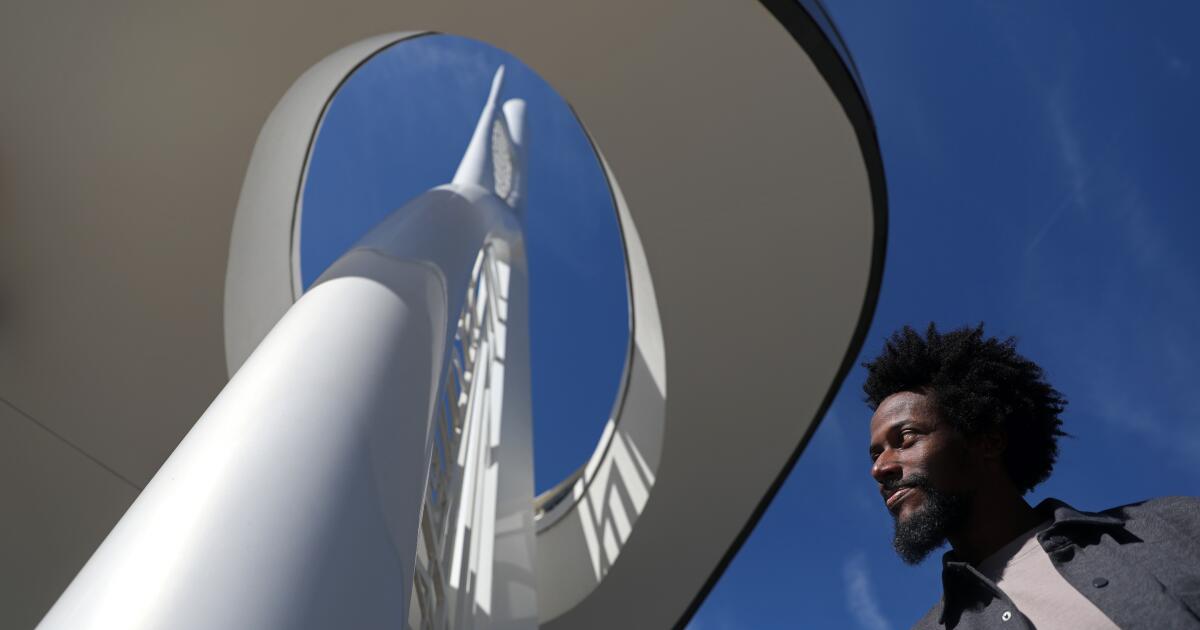
His portrait of MLK in a hoodie went viral. Now he shares a message in his Downtown Disney art

400 million barrels of oil to be released from strategic reserves as Iran targets commercial ships
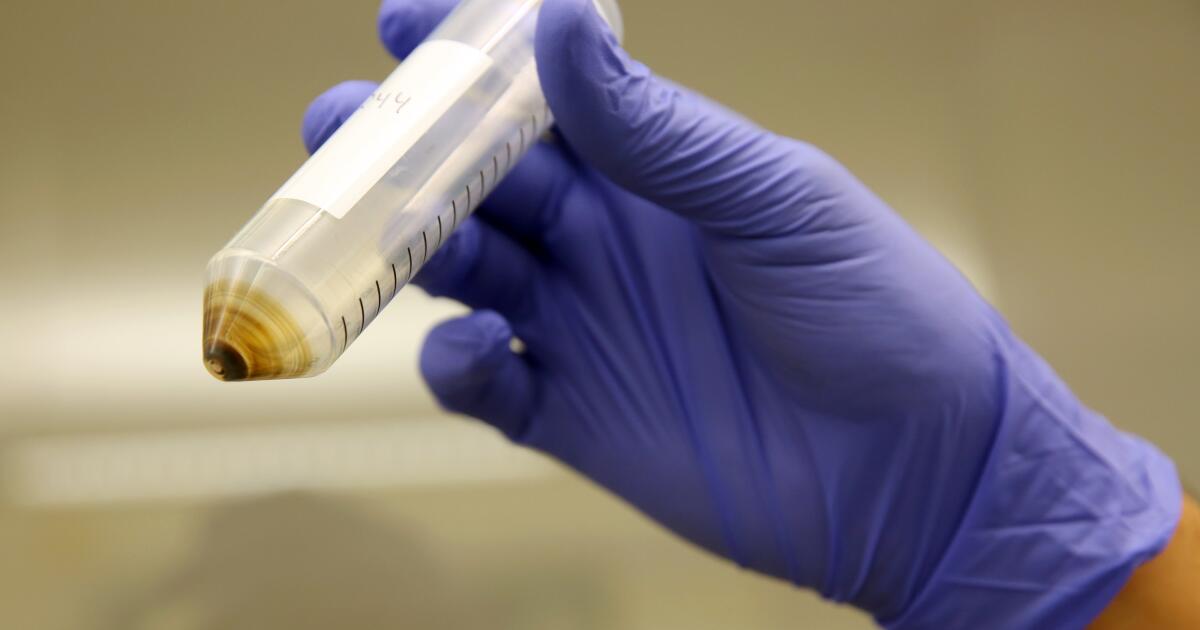
Nearly 40% of California produce contains PFAS pesticides, report finds

Jessica Pegula’s commitment to hard work every day has turned her into a leader

Florida High School Football Rankings: Top 25 teams – Oct. 21

Cleary's 21 help Le Moyne down Central Connecticut State 69-64 in OT

How old is Bo Nix? What to know about Oregon quarterback ahead of 2024 NFL Draft

99th annual Pony Swim held in Virginia

Indiana Members Credit Union announced as new anchor tenant at Bottleworks District

Not ‘a litre of oil’ to pass Strait of Hormuz, expect $200 price tag: Iran

Tornadoes hit Illinois, Indiana and Texas as severe storms sweep US

EXCLUSIVE: ICE says El Paso detention facility will stay open under new contractor after $1.2B deal scrapped

Von der Leyen ‘acting outside of competence,’ Araud tells Euronews

Wheelchair curler Steve Emt’s path from drunk driver to three-time Paralympian
-

 Wisconsin1 week ago
Setting sail on iceboats across a frozen lake in Wisconsin
-

 Massachusetts1 week ago
Massachusetts man awaits word from family in Iran after attacks
-

 Detroit, MI5 days ago
U.S. Postal Service could run out of money within a year
-

 Pennsylvania6 days ago
Pa. man found guilty of raping teen girl who he took to Mexico
-

 Miami, FL7 days ago
City of Miami celebrates reopening of Flagler Street as part of beautification project
-

 Sports7 days ago
Keith Olbermann under fire for calling Lou Holtz a ‘scumbag’ after legendary coach’s death
-

 Virginia7 days ago
Giants will hold 2026 training camp in West Virginia
-

 Culture1 week ago
Try This Quiz on the Real Locations in These Magical and Mysterious Novels