Austin, TX
Who’s running for Austin City Council District 7? Meet Gary Bledsoe


AUSTIN (KXAN) — After no one candidate secured more than 50% of the vote in November for Austin City Council’s open District 7 seat, the top two candidates, Gary Bledsoe and Mike Siegel, will head to a runoff this December. KXAN did sit-down interviews with both candidates.
Here’s what you need to know about the runoff:
- Only District 7 residents are allowed to vote in this race
- Dec. 2: Early voting begins
- Dec 3: Last day to apply for ballot by mail
- Dec. 10: Last day of early voting
- Dec. 14: Election Day
Here is a transcript of most of KXAN’s conversation with Bledsoe.
KXAN City Hall reporter Grace Reader: Tell me a little bit about why you decided to run in the first place.
Well, I’ve decided to run for District 7 for the Austin City Council because there is a need on the Austin City Council for common sense leadership, and I have a great deal of experience in exemplifying to all that I can engage in public leadership that is common sense leadership. I have a demonstrated record at the Texas Legislature working with many others to help pass anti-racial profiling legislation to pass the top 10% law to alleviate issues related to affirmative action. I’ve worked with legislators to pass common sense laws in reference to how we handle problems with parole or probation. So I have a demonstrated record in working with diversion interests to actually make a difference.
I have a demonstrated record on the local level. I have actually engaged with the Austin Police Department. Brought racial sensitivity training to them way back in the 1990s. I’ve worked with them to make sure that they have validated testing so that police officers would not have their lives impacted by arbitrary exams and would have to have validated exams relating to the jobs they were seeking to have to determine whether or not they would actually be promoted. It is my efforts that led to the video cameras in police cars, that led to us having a police monitor’s office, my efforts that helped lead to requiring those things on a statewide level as well.
So I think that I have a demonstrated record of being able to do things, and I think now we’re moving into a time of extremism, and I have a demonstrated record of fighting against extremism — whether some of the fights I’ve had against the Ku Klux Klan that have been successful, whether it’s some of the other fights that I’ve had against hate groups or organizations around the state — I have a track record of showing that I can work in the public interest and with common sense approaches to addressing these issues. And now I think we know that we are seeing a rising tide of extremism, and so I think to have someone who is a watchdog, like the Austin American Statesman says I will be, to be on the council to watch out and protect the public interest and to make sure our community does the right things, I think that would be a real asset. So that’s what I bring to the table, being a watchdog over time, trying to make sure that the public interest was protected, and I want to continue to do that for the citizens in District 7.
Reader: Walk me through your resume.
Well, I’m a civil rights lawyer. I’ve been a civil rights lawyer for many, many years. I have been involved in a number of types of different litigation, whether it’s litigation to improve conditions in police departments for police officers, whether it’s issues that relate to the matter of how to handle matters with citizens, specific citizens. I have been engaged in litigation that involves redistricting that has led to changes and to help eliminate or address or minimize gerrymandering that may have come from the Texas legislature.
I am a leader in the civil rights movement. I am the head of the NAACP in Texas. I’ve been so since 1991. I’m on the board of directors of the ACLU. I’m taking a leave from those positions, basically to run for office. But I have a demonstrated record there, and I have a demonstrated record in terms of litigation. I have a demonstrated record in terms of, I was one of the lawyers that helped fight against the voter identification law in the state of Texas to invalidate that voter identification law. I’m an individual who has brought legal challenges that have led to some of the positive results that I mentioned earlier, whether it’s video cameras in cars here locally, or body cams on police officers, even the police monitor’s office making for fair circumstances for police promotions to protect the interests of individual police officers. So I’ve been involved in many ways, in a number of different activities around the state, and I think I’ve been acknowledged in terms of the types of things I’ve tried to do, but also I’ve been an advocate. I’ve been an advocate at the state legislature. I’ve been an advocate to try to address some of the encroachments on civil rights and civil liberties, the intended encroachments on marginalizing people in different communities. Communities at the state legislature, where I’ve tried to work with people in both parties, and effectively done so, more a long time ago than recently. Even recently, we’ve been able to curb some of the most extreme legislation by being able to work together.
So I have a real track record that’s demonstrated, that’s on the record, that’s there. And let me say one other thing, I’m the one individual in the race that has been racially profiled. I had a police officer point a gun at my head, but also the only individual in the race that’s actually sat across the table from police to work on engaging the community and have more community policing to address the issues that confront our community. You know, I’m one that I don’t agree with people that say, ‘let’s defund the police.’ I think what we need to do is work to improve our police department, make it the best that we can, to make the officers as best, as good as they can be, and work with them on a number of issues. Like one of the issues I’ve worked with officers on, there’s been a real problem with the discipline of officers. There’s been so much feeling of retaliation of officers, a feeling that there’s cronyism and depending on what side you belong on. And so I’ve supported officers in trying to make sure that they could bring some real integrity to the discipline system.
So I have a realistic view on what needs to be done. I think we need to get involved more so in engaging more in positive community relations between different communities. You know, I know when people look at some African Americans, they may say, ‘well, you don’t like police.’ That’s not true. African Americans are really supportive of police. We’re just against police brutality, but we want police, law enforcement, and I think what’s what we find in District 7. In District 7, when I go door-to-door, people are concerned about public safety. They want to make sure that they get responses to their issues that occur in their community. They want to make sure that if they have a call where they need police support, that the police actually respond. There has been a problem with that, but there’s a problem with the understaffing in the police department, and we need to work with that. I know I’ve talked to the commander that is the control over District 7, and that commander is really trying to address the public safety needs as much as that commander can, but he indicated there was like a 37% rate of positions that are not filled, and that’s unsatisfactory. So I want to try to address all those issues in a common sense way, while we work with police to make them better for our community.
Reader: Public safety is obviously one of your top concerns. What are your other priorities?
Obviously, affordability is a huge priority. One of the things that made Austin special, right? We see the slogans of, ‘keep Austin weird,’ what have you. And I know we’ve been talking about, ‘keep Austin special.’ It’s kind of one of the slogans of my campaign. What made it special? I’m one of the folks that came here in the 1970s and we came about, and it was not the most embracing community. We had to fight to make this into an embracing community. And I think people saw what we created here, and everybody wants to come. And so now we see people that are coming in who don’t share our values, or maybe have more entrepreneurial ideas that want to take over and co-opt the city. And so what I want to see is that we address affordability, because what we’re doing is we’re displacing the very people that have made Austin special. You know why we were special is because we had our musicians, our artists, and all those people, they lived here in the community, and that’s one reason why we were weird. Where else could you find a homeless person that’s given the right to actually live in someone’s home in Westlake for a year while they’re out of town? That’s only in Austin could you actually have that. But we’re losing that now, because and I go door-to-door, I talk to parents to say that their kids have good jobs, but they can’t afford to live here.
I go door-to-door, I talk to parents to say that their kids have good jobs, but they can’t afford to live here.
Gary Bledsoe, Austin City Council District 7 candidate
You know, last night, I went to the Wallace ceremony, that is a celebration for some of our Indian American citizens. And it was really revealing when the musician talked about 20 years ago, he chose Austin over New York and California because it was affordable, but now it’s no longer affordable for him and he’s had to leave. And there was another person there at the dinner and she said, well, she had a nurse friend, and that nurse friend had to leave for the same reason. So I think we see people being displaced because it’s just too expensive. You know, I talked to one of the other individuals there who is actually a corporate exec of a small entity, but they have had to go and move to Buda because they couldn’t continue to afford to live in Austin. And we see story after story. And so when minorities are leaving, you see a real change in the demographic population, and so regular workers are leaving, we need to have a program that addresses on the housing front, how we can keep them here.
So the whole idea of affordability, we do need to have a market-based approach as part of it. But it’s not all that is needed. We have to be intentional about it. We have to be intentional so that we cover the people who are not at the higher end because the market-based approach is generally taken care of. And even all the experts acknowledge this, those at the higher end. So those who are at the middle part, who may be at the 40th, the 50th, 60th, the 70th percentile of median family income here, they’re not taken care of by any of these market-driven matters. And so those at the lower end, you know, I’ve been in communities where people who don’t have means, don’t live in the cities that they work in, and that is a real problem, even a problem with the whole issue with the environment, right?
Because they’re having to get there, and many different so affordability is a big issue, but we have to be intentional. We have to understand this. We have not just a housing crisis in this community, but we have a displacement crisis too, and those, those musicians and artists, even long-term residents of Austin, are being displaced from their homes. Because what happens sometimes is when there is new construction in an area showing in different highest and best use in a community, as the city staff has acknowledged, this will displace people because it will increase property values in the area. So we need a common sense approach to how we do this and we bring people in. We need a common sense approach that talks about apartments, that talks about condominiums, and that also talks about single-family housing or multi-family dwellings. All those things are part of the quotient, but we must do it with common sense. Now, transportation is going to be part of that. We need to make sure that we have more, that child care is more affordable, and I think the city of Austin doing some great things there. We need to continue and expand upon those, but we need to be realistic about what’s required, and we need to we need to do an audit to make sure of what’s actually happening in the community. Government seems like we’re losing more affordable housing than we’re actually gaining. And we need to have an intentional approach because you can say something and you can mouth it, but that doesn’t mean anything. We have to have an intentional approach to go after this and to solve the problems.
Reader: Finally, what is your pitch to voters?
Well, my pitch to voters is this, you know, we look at issues of the environment, which are extremely important, we have to always take into consideration we’re running into new areas that we are encountering in our state and in our city and in our nation, and really the world that we have to confront. I think all of us have seen the consequences of the increased heat in our community. All of us have seen really, the really terrible winters that we’ve had. And I think the science is there. Science makes it very clear that these are issues or problems that we must confront, but we need to do this together. For example, we have to have common sense. We have a wonderful climate equity plan that my wife helped craft with the City of Austin, but it hasn’t really been implemented. We need to look at that and make sure that we try to implement that climate equity plan, and if we put a bond package together to help pass that and that we were going to have to do that and phase it in, but we also have to be conscious of our costs and budgeting, and so we need to make sure that we’re not just adding on.

There’s so many thousands of dollars or millions of dollars, really, that are in the budget that don’t need to be there. There are positions that are carried over from year to year…it’s almost as if to give extra money to departments. You know, taxpayers earn their money, and then whether they’re retired and get fixed incomes or they’re working now, that’s their hard-earned money. We need to respect their hard-earned money, and so we need to make sure that we go in, take a look and see what actually do we need to spend money on, and make sure that we do something like, for example, the old Texas performance reviews done by the comptroller. So we make sure that we don’t unnecessarily spend folks’ money.
But we need to have common sense where we engage. We reach out to the public. You know, I want to have public hearings in my community, in District 7, so if I can continue to hear the voices of people, this is without regard to whether or not any other council person would do that, I hope that others do. But I want to continue to hear their voices because I know that sometimes the best ideas are going to come from there. You know, we will have wonderful staff. We have wonderful city staff already, and there are many experts out there, but the public sometimes has the best ideas, and we need to hear them and not just go through the motion of allowing them to come and speak on an issue. And we need to be user friendly and how we work with our community on issues that have such a great import as land use. We need to make sure that we go to every community and make it easy for people to come and speak with us and respect them when they reach out and talk to us and spend all their time coming down and want to speak on such important issues, but we need to make it user friendly by going to those communities. Going to those communities at times when people can be expected to come, and not times and only people that have a certain plight in life might be able to come. So we have to be more sensitive to that, so we get a wider array of opinion and allow all people to be invested with the decisions that we have to get a broader base of support, because I think there’s been a trust issue that’s been developed, and we want to help fix that trust issue so people will see the decisions coming from that council and have confidence in those decisions. That’s one of the things that I want to bring to the council.


AUSTIN, Texas — Texas is expanding its response to severe flooding as state leaders warn another round of heavy rain could bring more dangerous conditions to parts of Central and South Texas.
During a Thursday briefing at the State Operations Center, Gov. Greg Abbott said protecting lives remains the state’s top priority as life-threatening flooding continues.
“Once again, life-threatening catastrophic flooding remains our main risk tonight and overnight through the early morning hours,” Abbott said.
Abbott said 59 counties remain under a flood watch, with Uvalde and Johnson City among the communities facing the greatest risk over the next 24 hours. He also warned that record river levels are expected in several locations, including along the Nueces River near Uvalde.
The state has expanded its emergency response since Wednesday, with about 2,350 emergency responders now deployed along with more than 1,400 vehicles and pieces of equipment, including more than 85 boats, 21 aircraft, and more than 200 high-profile vehicles.
Abbott said those crews have completed more than 230 water rescues.
RELATED| Two deaths reported in Texas Hill Country floods, Abbott confirms
KEYE
Chief Nim Kidd, who leads the Texas Division of Emergency Management, said National Weather Service meteorologists are forecasting more rain over already saturated areas.
“Meteorologists from the National Weather Service tell us an additional 10 to 15 inches of rain is possible over already wet areas,” Kidd said.
Kidd said some communities in the Uvalde area remain cut off because of flooding. The state has half a million meals ready to eat and one million bottles of water prepared for delivery by high-profile vehicles or military aircraft.
The Texas Department of Transportation said 125 roadway sections across the state had been impacted by floodwaters as of Thursday afternoon, with 87 remaining closed. Officials warned that even after floodwaters recede, roads and bridges may still be unsafe because of hidden damage.
Abbott also confirmed two flood-related deaths. One victim was a man who was swept away in an RV near Comfort. The second was a 75-year-old man who was swept away while driving in Uvalde.
During the briefing, CBS Austin asked the governor when the state’s focus would begin shifting from rescue operations to recovery.
“The most important thing we can do right now during the immediacy of all the rain coming down is doing everything we can to protect human life,” Abbott said. “But that said people can begin the process maybe as early as tomorrow to go through damage assessment.”
Abbott urged Texans to continue avoiding flooded roadways as the threat continues.
“Together, all of us Texans can be diligent over the next 24 hours to make sure we avoid rising water or heading into water on roadways,” he said.
Austin, TX
More dangerous Texas floods expected after at least 2 killed and hundreds of people rescued in high water, governor says – WTOP News

AUSTIN, Texas (AP) — More dangerous Texas floods expected after at least 2 killed and hundreds of people rescued in…
AUSTIN, Texas (AP) — More dangerous Texas floods expected after at least 2 killed and hundreds of people rescued in high water, governor says.
Copyright
© 2026 The Associated Press. All rights reserved. This material may not be published, broadcast, written or redistributed.

KERRVILLE, Texas (KXAN) — The City of Kerrville issued a shelter-in-place Thursday morning, with heavy rain causing reported evacuations early Thursday morning. A Flash Flood Warning is currently in place for Kerr County as the Guadalupe River continues to rise.
Around 5:30 a.m., the National Weather Service said a “large and deadly flood wave is moving down” the Guadalupe River.
KXAN First Warning Weather Meteorologist Kristen Currie said approximately 11 inches of rain have fallen northwest of Kerr County since 10 p.m. on Wednesday. The Guadalupe River is expected to reach major flood stage in multiple areas.
Kerr County PIO Lisa Walter said “there have been multiple swift water rescues and evacuations.” Officials emphasized not to drive through flooded streets and to turn around if water covers the roadway.
Evacuations were underway in multiple areas, according to the county, including:
- Goat Creek
- Arcadia Loop
- Lowery/Guadalupe area
- Junction Highway low-water crossings
- Other low-lying neighborhoods
Emergency shelters are open at Impact Church (Goat Creek evacuation point), Calvary Temple Church and City West Church for people in West Kerr County, the county said.
Here are the latest headlines:
Live updates
7:03 a.m.: KXAN’s Kevin Baskar is in Gillespie County providing updates on the latest flood conditions in the area. Watch his update below.
6:37 a.m.: Kerr County officials emphasized not to drive through flooded streets and to turn around if water covers the roadway.
Evacuations were underway in multiple areas, according to the county, including:
- Goat Creek
- Arcadia Loop
- Lowery/Guadalupe area
- Junction Highway low-water crossings
- Other low-lying neighborhoods
Emergency shelters are open at Impact Church (Goat Creek evacuation point), Calvary Temple Church and City West Church for people in West Kerr County, the county said.
6:27 a.m.: Video shows emergency crews hauling boats and rescue equipment through Kerrville.
6:15 a.m. NewsNation correspondent Xavier Walton and his photographer captured a structure being swept up in river water and crashing into a Kerrville bridge. The structure appears to be some sort of shipping container, pushing against the bridge.
Watch the video below:
6:08 a.m.: Kerr County PIO Lisa Walter confirms “there have been multiple swift water rescues and evacuations.”
6:02 a.m.: The Guadalupe River at Center Point is expected to crest at 35 feet, which is the same crest as July 4, 2025.
5:57 a.m.: The National Weather Service said “a large deadly flood wave” is moving down the Guadalupe River.
5:49 a.m.: The Comfort Volunteer Fire Department said it has units in Kerrville and Centerpoint alerting people along the Guadalupe River. They’re helping Kerr County with evacuations along Highway 27 between Comfort and Centerpoint. They said all VFD personnel are OK.
5:30 a.m.: The Kerr County Sheriff’s Office said in a Facebook post that it’s received reports of “street flooding in Ingram, and it’s likely many roads and city streets are flooded as well.”
-

 Los Angeles, Ca1 hour ago
LADWP begins long-term repairs after West Hollywood water main rupture
-

 Detroit, MI2 hours ago
Livestream: Mayor Sheffield, Detroit health chief to address wildfire smoke threat
-
 San Francisco, CA2 hours ago
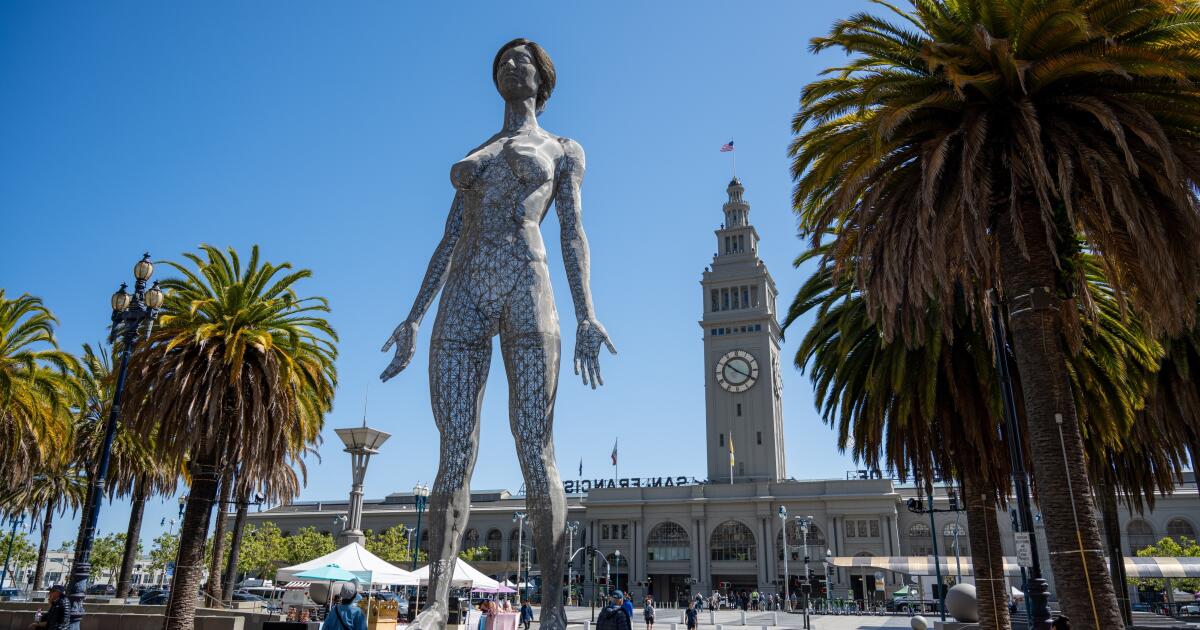
A sculpture of a giant naked woman goes on sale in San Francisco. Bring a crane
-

 Dallas, TX2 hours ago
No ‘straight answer’: Why Pioneer Cemetery is the latest battleground at City Hall
-

 Miami, FL2 hours ago
TSA hosts news conference ahead of World Cup third place match at Miami Stadium
-

 Boston, MA2 hours ago
ICE Boston arrests Barbados national during targeted operations in Attleboro
-

 Denver, CO2 hours ago
Denver Broncos training camp is 2 weeks away
-

 San Diego, CA3 hours ago
Daily Business Report: July 17, 2026, San Diego Metro Magazine

