Austin, TX
Austin-area housing outlook positive; job growth, slower home prices pluses, expert says


Longtime Central Texas housing market analyst Eldon Rude recently gave his 21st annual forecast at an event sponsored by the Home Builders Association of Greater Austin. Rude is principal of 360° Real Estate Analytics, an Austin-based real estate consulting firm.
“This year is going to be better than last year, for many reasons,” Rude said.
Rude said that, among its peer cities, Austin had the biggest decline in its ratio of median family income to median home price last year, as home prices declined amid rising mortgage interest rates.
(According to Fidelity, for most individuals and families, a home’s value, generally speaking, should be no more than three to five times their total annual household income.)
Austin saw a decline from the high end of that range —from a multiplier where the median home price was five times that of the median family income in 2022 — down to a multiplier last year of 3.9 (that is, the median home price last year was $481,200, while the median family income was $122,300).
Some slowdown in home prices could be a plus in helping Austin continue to attract people and businesses.
“In the span of a year, we got more attractive, and I think that’s a good thing,” Rude said.
In another positive, Rude said, his homebuilder clients report that sales have started off well in the first six weeks of the year.
“All industry eyes are on the direction of interest rates,” Rude said.
And while some other metros are losing population and jobs, Rude said, he and other analysts expect Texas and the Austin area to outperform many places around the country.
“There is reason for all of us to feel good about where we are,” Rude said.
He said the Austin region gained 32,800 jobs from December 2022 to December 2023, a 2.5% job growth rate. The local jobless rate was 3% in December.
“So many talented people and companies have decided over time this is a place they want to live and grow their businesses,” Rude said. “We are so lucky we are in this industry in Austin, Texas.”
In advance of his presentation, attended by nearly 700 industry professionals Thursday, Rude shared these takeaways of his 2024 forecast with the Statesman:
- “Looking at the market for previously owned homes, I see available inventory remaining tight this year as many existing home owners remain reluctant to sell their homes if they have an existing mortgage with an interest rate well below what they can get with a new loan.”
- “New homebuilders are starting the year with enough inventory to give prospective buyers options as they look for a new home. Also, many builders are offering interest rate buy-downs to purchasers to help them qualify for a mortgage.”
- “As we move deeper into 2024, I expect the number of available new homes will drop as builders work to reduce their inventory to levels more consistent with pre-COVID norms for the industry.”
- “With fewer new homes in inventory expected later this year, homebuyers will see more competition for available homes, with builders likely offering fewer price concessions than buyers have seen over the last year or so.”
- The biggest challenge I see emerging in the new home market in the coming years is the dwindling supply of lots and land available to build homes. The most significant issues are related to the challenges in securing adequate water supplies to build enough homes to accommodate the region’s future needs. Builders, developers and investors continue to look further out for land.”



They came for the red-light therapy room and the yoga studio overlooking downtown Austin’s Lady Bird Lake. They came for the in-house pilates, the concierge, the cold plunges, the swanky lounges and coworking spaces, and the first floor coffee shop that sells $14 bottles of organic juice.
They came to rub shoulders with TikTok-famous fitness influencers, finance bros, and University of Texas football players living large on the kind of name, image, and likeness (NIL) money that turns nineteen-year-olds into millionaires. But mostly, they came for the bragging rights, the chance to proclaim residence inside Austin’s first influencer building, a glassy, 48-story sky palace that provides significant rental discounts to influencers in exchange for social media promotion. Paseo––which opened in November––is not merely a residential building on Rainey Street, surrounded by bars and drunken bachelorette parties, with a $45,000-a-month penthouse on top. It’s also a branded experience, with its own hashtags and a steady stream of lifestyle videos from influencers who live there—one of whom recently went viral on X for touting his “sober Saturday”—as well as many of their followers who aspire to move in. As the building’s website puts it: “This is where life flows your way.”
But at the luxury building’s eleventh-floor indoor dog park, the only thing flowing in recent months has been an excrement-laced stream of urine, one that has become a sanitation nightmare and a social media fiasco. The foul-smelling river begins beneath a turfed dog area covered in feces and poop bags before making its way into the parking garage and eventually an elevator bank, where it forms a slippery mustard-colored pool that, residents say, poses a danger to humans and dogs alike. To make matters worse, the dog park lacked barriers separating animals from vehicles driving through the garage (barriers are currently being built). The park is also set against a concrete wall with openings more than a hundred feet off the ground. In a building nearly devoid of children but packed full of dogs (Paseo allows two pets per unit), it isn’t hard to imagine an exuberant pup jumping to its death while its owner watches in horror.
The situation worsened when images and first-person accounts of the disaster spread on TikTok, leading many to begin referring to the building as “the Piss-eo.” Almost overnight, the high-rise’s proximity to digital virality, the thing that had bolstered its reputation over many months, threatened to destroy it even faster. “There’s only one thing that can come from a bunch of divas with a camera and collective millions of eyeballs on them, and that is drama,” as one woman, a TikTok user who manages influencers for a living, put it. “And the lowest-hanging fruit for that drama is your building. Welcome to bad PR.”
The “bad PR” already has real-world implications. Since April, the City of Austin has received three complaints about conditions at Paseo and has an open code-compliance case related to the sanitation concerns, according to Stephanie Sanchez, a spokeswoman for Austin Development Services. “In order to issue a notice of violation, inspectors must visually confirm unsanitary conditions, and our team has reached out to the property to arrange access for an inspection and is continuing to follow up,” Sanchez said.
I was curious about the reality behind Paseo’s glossy digital facade and what it revealed about our growing inability to distinguish reality from social media’s “fun house mirror” effect, the algorithmic warping of our sense of what is normative.
Until recently, “collab houses,” group living spaces where aspiring influencers (usually teenagers) amass to create social media content, were relegated to residential mansions in cities like Los Angeles, Las Vegas, and Miami. The idea of turning a residential building full of adults thousands of miles from Los Angeles into some variation of a collab house struck me as another bizarre example of the real world bending, ever more theatrically, to the will of the digital one. Or maybe, I thought, I was just getting old.
Traditionally, real estate developers marketing to high-end customers treat things like square footage, location, and luxury finishes as a building’s primary selling points. But from the start, LV Collective, the Austin-based real estate development firm behind Paseo’s creation, sold the idea that a renter is granted access to an exclusive, preexisting community experience, one measured by “energy per square foot,” according to a “case study” provided by LV Collective. More Silicon Valley–themed blueprint than case study, the document breaks down how the Austin tower became a socially engineered “proof of concept” and “one of the most talked-about buildings in the U.S.” It’s not about “how much space a building has,” the document notes, “but how much life it holds.”
Unlike with other ready-made communities, such as storied fraternities or country clubs with existing legacies, Paseo’s developers realized they’d need to create their select community from scratch, using what might best be described as the science of vibes. The vibe-optimization quest began with the recruitment of several dozen lifestyle, wellness, and fitness creators. Their job was to live inside Paseo and turn their daily lives inside the building––from coffee runs to gym sessions to cold plunges––into content not only designed to look authentic but also accentuated by the building’s rich, textured sensory environments, all of which were designed to be Instagrammable.
The content was meant to look organic, and, not surprisingly, the building’s small army of promoters do not disclose that their posts are, at their core, a form of paid marketing. “This isn’t a traditional influencer campaign,” the case study says. “Creators like Ken Eurich are brought into the community early to showcase it forming in real time, giving Paseo a first-person authenticity that advertising can’t manufacture.” The influencer content was further bolstered by “#PaseoTok,” an endless stream of social media posts that form, in the somewhat totalitarian language of LV Collective’s case study, a kind of “cultural programming.”
The result: Since October, Paseo has received over 123 million views across Instagram and TikTok and $7 million in creator-driven media value, according to LV Collective. The firm credits the influencer-themed strategy with ensuring that just under half of the building was leased in the first ninety days since opening and up to 70 percent within six months.

At the same time renters were rushing to move into the building and influencers were touting its glamour on TikTok, Paseo’s management was already struggling to contain the pet waste on the eleventh floor. In February, the building’s management sent an email to residents promising to remodel the dog park the next month. Delays followed, and more “drainage improvements” were required over the following months, according to subsequent communications obtained by Texas Monthly. “We truly understand how important amenities are and sincerely appreciate your patience as we work to complete them with quality and care,” the building’s management wrote in a March 19 missive.
The dog park’s viral moment arrived in mid-May and can be traced back to a temporary resident named Elizabeth Swenson, who was apartment sitting for a friend when she encountered the eleventh-floor mess. Until then, Swenson said she’d largely enjoyed her stay in the building, both because of the friendly encounters with other residents and the access to the coffee shop on the first floor. Though she doesn’t consider herself an influencer (she doesn’t get paid for her posts), Swenson, a stylish 31-year-old who routinely posts about mental health, wellness, and preparing for law school, has an online presence that suggests she could be one. Her TikTok has more than 31,000 followers, and her candid first-person takes routinely rack up thousands of views.
She decided to post about the Paseo sanitation issue on TikTok because she couldn’t believe what she was encountering each time she set foot on the eleventh floor. Her first video about the “Austin influencer tower,” a close-up freeze-frame of her disturbed face with text describing the “yellow river” in the building, was viewed more than two million times. Her next, which included video evidence to back up her claims, was viewed more than half a million times. Weeks later, Swenson was still in shock. “The second I opened the door onto the eleventh floor and stepped onto the little mat for wiping your feet, it was soaked in pee,” she said, noting that the waste was frequently tracked into elevators by people and dogs alike. “I kept thinking, ‘If they’re dealing with fecal matter and urine in this manner, what else do you do with the rest of the building in terms of hygiene? If there was mold, would they care?’ ”
From a public health standpoint, an unsanitary dog park can have serious repercussions. Dog parks with contaminated soil or turf can become breeding grounds for parasites (like giardia, roundworm, and hookworm) and bacteria (like those that cause leptospirosis, which is transmissible to humans and pets).
In the world of social media, extreme exposure is, of course, a double-edged sword. When the dog park first went viral, TikTok users began tagging Eurich and other well-known Paseo influencers, accusing some of covering up the sordid truth about their residence. David Kanne, the founder and CEO of LV Collective, admitted during a phone interview that the building’s social media narrative has “taken on a life of its own.” Faced with the online backlash and a growing number of frustrated residents, Kanne said LV Collective has decided to assume day-to-day management of the building from Greystar, one of the nation’s largest property development and management companies. But the entire episode, he maintains, is little more than a sewage-themed growing pain. “Every building has challenges,” Kanne said. “Ours has such a large microphone that you hear about it more often. And the cool thing is, we now hear those criticisms and we just go, ‘Okay, how do we fix it? How do we make it better?’ ”
But for Swenson, and for some women who live in the building, the dog park also raised a safety issue—one, they said, that was lost on many online male commenters who dismissively asked why dog owners don’t just take their pets outside to relieve themselves. Swenson, who works in the service industry as she prepares for law school, said she often comes home after 2 a.m. Sometimes Rainey Street is packed with rowdy groups of drunk men; other times it’s a ghost town. Either way, trekking in the dark to find a suitable place for her pooch to pee, behind a building or closer to the dimly lit trails around Lady Bird Lake, felt risky. “This area is known for having a bunch of murders and disappearances,” she said, referring to the alleged Rainey Street Ripper. “God forbid it’s just you and your Chihuahua out there in the middle of the night.”
In the wake of the dog-park debacle, it wasn’t hard to find someone to sneak me into the ivory tower. Plenty of Paseo’s residents were frustrated by the urine issue, among others, and a few of them were willing to talk, as long as I didn’t use their names. The rumor in the building in recent months was that the residence’s management had begun monitoring an internal message board accessible via the building’s app, where residents could voice complaints about issues inside Paseo.
When critical comments began being deleted by management, some residents began to feel like the building’s culture had turned oppressive and they no longer had an outlet to voice complaints. LV Collective told Texas Monthly the issue had been addressed and the building manager in question, a Greystar employee, had been removed. Meanwhile, residents had become alarmed by reports that––due to high concierge turnover and security lapses––an unhoused man had been able to waltz into the building, allegedly penetrating the twelfth-floor “wellness area” with saunas and cold plunges, the closest thing the residential temple has to an innermost sacred chamber.
To avoid suspicion, my Paseo deep throat met me not in a shadowy parking garage but at a grassy roundabout where his dog could relieve itself several blocks from the building. He looked the part: an exceptionally fit man, mildly tattooed but clean-cut, in his mid-thirties who’d moved to Austin to work in tech. He’d been drawn to Paseo because of the notion that with all of the tower’s amenities, which include a Mediterranean restaurant on the twelfth floor and the ability to have his groceries delivered by the concierge, he’d never really need to leave the building. But here he was, he grumbled, forced to walk several blocks away to find a patch of grass. This inconvenience was due to urinegate, he said, which was not only disgusting but also reflective of a series of problems that were at odds with the promotional videos being produced by the building’s influencers.
Almost as soon as he and his partner moved into Paseo, where they pay around $4,500 in rent each month, they met residents whose glass shower doors shattered when they closed them. In their own shower, along with those of other neighbors, water leaked through the glass door and onto the bathroom floor, leaving slippery puddles on the tile floor (it was later fixed). Perhaps more dangerously, the couple said, their balcony door has no mechanism for holding it in place once it’s been opened, which allows the door to be slammed against the building and shattered by a strong gust of wind (something that has happened to other residents). “And there have been multiple occasions of the high-rise windows just randomly cracking,” the tech worker said. “I saw a residence where the window to access the balcony was made up entirely of cracked glass, like it was about to fall off the building.”
Inside, he continued, many residents have been disturbed by the so-called cardboard rooms, designated for residents to discard boxes, filling instead with rotting trash and food waste that remains for weeks at a time. Images shared with Texas Monthly showed trash bags dumped on the ground alongside orange peels, old running shoes, empty toothpaste dispensers, and hair-removal waxing strips. So pungent was the trash odor, he said, that the smell was discernible from inside the couple’s apartment. In another building, bad smells might be overlooked, but Paseo was supposed to be different. “Everyone here expects perfection,” the tech worker said, noting that he and his partner pay several hundred dollars in amenity and other fees each month. “We’re in a super luxury building. It’s been advertised as ‘Hey, we’re going to be a hundred percent perfect,’ so now you got to deliver.”
Despite the amenity fee, the tech worker said, many residents have reported finding hairs in the cold plunges. When I visited the cold-plunge room, I witnessed water flecked with mysterious residue and floating clumps of matted hair. I wasn’t the only one unwilling to take a dip. At one point, a resident told me she blamed one of the building’s hot tubs for turning her hair and swimsuit green, a potential result of excess copper in the chlorinated water. “What if my bathing suit was $1,500?” said the woman, who asked not to be identified for fear of retaliation from the building’s management. “People have expensive stuff in their hair, and women, when they get their hair done, it’s sometimes $600 or even more.”
My tour culminated on the eleventh floor, where the dog-park disorder was still unfolding despite having been highlighted on TikTok weeks earlier. The dog park sat on an elevated platform, and multiple streams of urine, some of them three or four feet wide, seeped from underneath. Gravity carried them downhill, covering large portions of the garage with a hazardous sheen. Despite fans twirling overhead, the pungent odor was as unavoidable as the stickiness beneath my feet. Photos taken over the previous months showed an even more formidable biohazard, with waste streaked across the ground and poop bags spilling out of a trash can. “It’s so disgusting that dog owners aren’t even taking their dogs there,” my guide said. “And by the way, the residents have been telling management this over and over again. You would think that a building pulling in this much money each month would take the problem more seriously.”
Real estate developers are fond of talking about bringing “community” to Rainey Street. It’s discussed like a precious commodity being imported into the neighborhood for the first time. What they often fail to acknowledge is that before Rainey Street became synonymous with wealthy transplants, barhopping partiers, and an alleged serial killer run amok, it was for decades one of Austin’s most tightly knit communities. That was still true in 1995, when Brigid Shea and her husband moved into a cramped, one-bedroom, one-bath home on the street, lined with charming historic homes dating back to the late nineteenth century, and started a family.
It felt even more true after her son got a little older and was unofficially adopted by the Solis family down the street, the same one that had thirteen kids and turned their backyard into a “pachanga for the whole neighborhood,” as Shea put it, every weekend. “It felt like we were living in Cannery Row,” Shea said, referring to the John Steinbeck novel about the gritty charm of a Depression-era Monterey, California, neighborhood lined with sardine canneries. “It was just a really rich, interesting mix of working-class people and musicians and artists and Hispanic families with deep ties to the area.”
The local residents eventually decided to allow the city to rezone Rainey Street, giving many families a chance to cash out as the area urbanized. But they did so after years of discussions and with a unanimous stipulation, Shea said: that any change in zoning include requirements for new high-rises to set aside a percentage of the units for affordable housing. Eventually, she said, that was rescinded. “Eveybody was in agreement about this,” said Shea, whose local activism would eventually propel her to her current role as a Travis County commissioner. “We didn’t want Rainey to become another neighborhood for wealthy people.”

About 200 people packed a sweltering South Austin church Saturday evening to mourn Lorenzo Salgado Araujo, a Houston homebuilder fatally shot by a federal immigration officer. They heard local immigrants describe how detention and deportation have shaped their families.
Some carried white flowers into Wildflower Unitarian Universalist Church on East Oltorf Street. People used bilingual programs as fans while late arrivals stood along the walls.
After an opening prayer in English and Spanish, Sulma Franco, an immigrant from Guatemala, said families across Central Texas were living with the fear of arrest and separation.
“It’s impossible to say that we feel safe here in Texas, because they have the cruelest laws against immigrants,” Franco said through an interpreter.
Kayla Estevez said she fled her home country seeking safety for herself and her children. She said her daughter is buried in the U.S. and wondered whether immigration enforcement could keep her from visiting the grave.
“Will I still be able to take flowers to her?” Estevez asked through an interpreter. “Will I still be able to go to work and come back and hug my kids?”
Lorianne Willett
/
KUT News
Speakers at the vigil connected their experiences to the death of Salgado Araujo, a 52-year-old father of three who had lived in the U.S. for about 35 years. Salgado Araujo, a Mexican national, was driving his brother and two other workers to a construction job Tuesday when an ICE officer shot him during a vehicle stop in Houston’s Magnolia Park neighborhood.
The Department of Homeland Security has said Salgado Araujo attempted to run over an officer, prompting the officer to fire in self-defense. The men in the van dispute that account, according to their attorney. DHS has acknowledged Salgado Araujo was not the person agents were seeking. Federal investigators and Harris County prosecutors are reviewing the shooting.
Leticia Juarez said she and her husband were detained by U.S. Immigration and Customs Enforcement in June 2025 and taken away in separate vehicles. She suffered a severe panic attack on the way to an Austin detention center, she said, but officers didn’t call an ambulance.
“Today, I am alone here,” Juarez said in Spanish. “My husband was deported. My family was separated.”
Organizer Juany Torres said those fears can be harder to see in Texas when state and local law enforcement agencies cooperate with ICE.
“So we might not see these huge masses of ICE agents in our streets, but they’re around,” Torres said.

Lorianne Willett
/
KUT News
A state law that took effect this year requires county sheriffs who operate jails to request agreements allowing their departments to enforce federal immigration law. New Austin police rules say officers who learn that someone in their custody has an ICE administrative warrant should contact ICE “when operationally feasible.”
Body and dash cam videos obtained by The Texas Newsroom have shown Texas Department of Public Safety special agents breaking state police rules by wearing face-concealing masks during an ICE operation. The investigative report demonstrates the quick and nearly invisible way the vast majority of people are detained and deported in Texas.
Torres said the vigil was intentionally held the same day as a Houston vigil hosted by Service Employees International Union Texas, where two of Salgado Araujo’s sons spoke. Although organizers left their logos off the Austin flyer, Torres credited AFSCME Local 1624, the Texas Civil Rights Project, Workers Defense, IBEW, the Texas AFL-CIO, the Austin Central Labor Council, Grassroots Leadership and the Austin Sanctuary Network with helping organize the vigil.
The program ended with the crowd answering “presente” as organizers read the names of people they said had died in ICE custody or during enforcement operations. Estevez put the evening’s message more simply: “We all deserve to get back home.”

Lorianne Willett
/
KUT News


AUSTIN, Texas – One person is dead after an officer-involved shooting in downtown Austin Saturday.
What we know:
One person is dead after an officer-involved shooting in downtown Austin Saturday morning following a foot pursuit, according to the Austin Police Department.
Police said officers first received calls shortly after 8 a.m. reporting that a white man was pointing a handgun at several people along the trail near Lamar Boulevard and West Cesar Chavez Street.
About three hours later, an officer located the suspect near the TownLake YMCA in the 1100 block of West Cesar Chavez Street. Police said the suspect fled on foot, leading officers on a chase.
What they’re saying:
According to APD, officers repeatedly ordered the suspect to drop the handgun, but he refused to comply.
“The officers gave commands for the individual to drop the firearm. The subject refused to stop, refused to drop the firearm,” an APD spokesperson said. “At one point, the officers caught up with the individual. Unfortunately, the officers were faced with a situation in which they had fired rounds, striking the subject.”
“This is the first time I’ve seen something like this happen since I’ve been coming here in over 10 years,” said a man named Salvador, who goes to the Townlake YMCA almost every day. He says he was grateful no one else was injured in the shooting, considering it was the facility’s busiest day of the week.
“It’s difficult to even walk in the place because there’s just so many parents and children at this YMCA on Saturdays,” he told FOX 7. “It’s very scary. Not only do I go to the YMCA here, but I also run on the trail, which is right across the street. I run on a trail there maybe two or three times a week. And if it’s a nice day, there are thousands of people running on the trails on Saturday morning because the weather is really mild, and they can get their walk in or their run in. So, it’s terrifying.”
Assistant Police Chief Lee Rogers says that there will be two investigations into the incident, including an administrative investigation conducted in conjunction with the Austin Police Oversight and a criminal investigation with APU Special Investigations Unit and the Travis County District Attorney’s Office.
Dig deeper:
Police said officers immediately rendered medical aid after the shooting, but the suspect died from his injuries.
No officers or members of the public were injured during the incident.
Authorities have not released the identity of the man who was killed.
Police have not identified the officers involved in the shooting or said how many officers fired their weapons.
The officer-involved shooting remains under investigation.
This is a developing story. Check back for updates.
The Source: Information in this article comes from the Austin Police Department.
-
 Detroit, MI20 minutes ago
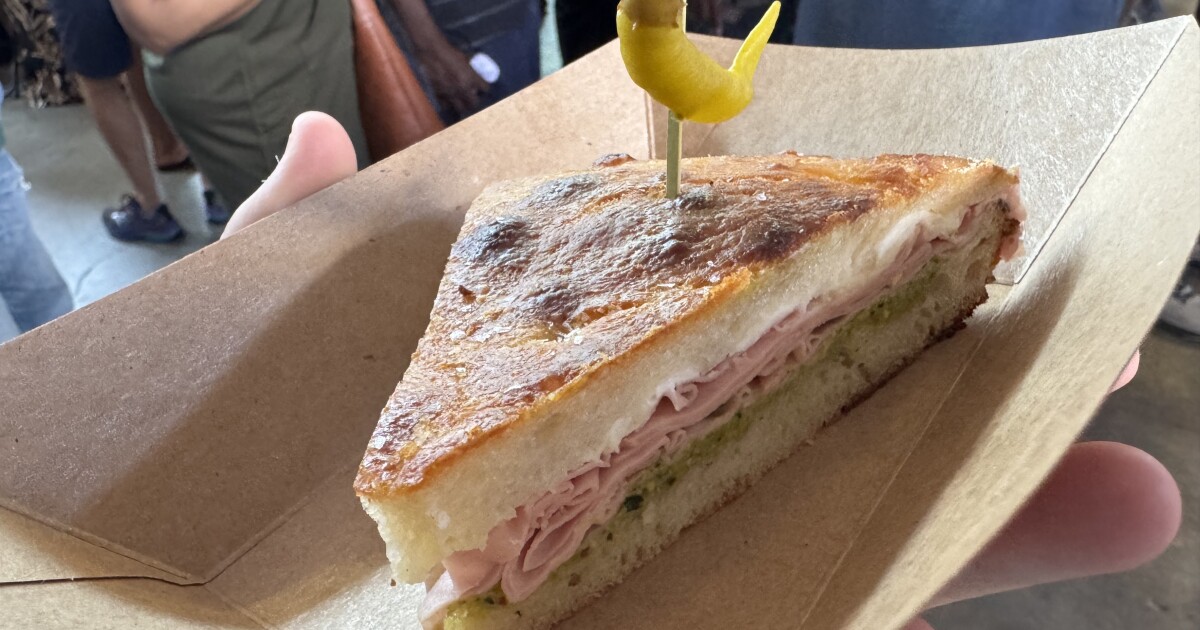
Detroit Sandwich Party returns to Eastern Market on Sept. 6
-

 San Francisco, CA32 minutes ago
A Leak of San Francisco Police Drone Footage Exposes the New Reality of Urban Surveillance
-

 Dallas, TX38 minutes ago
Viral East Dallas coffee shop fears major sales drop amid six-week road closure
-

 Miami, FL44 minutes ago
3 hurt in fire on Lincoln Road that started underground
-

 Boston, MA50 minutes ago
Rideshare driver charged in Logan airport passenger assault to appear in court
-

 Denver, CO56 minutes ago
Denver area events for July 13
-

 Seattle, WA1 hour ago
What could the Seattle Seahawks look like under new owners?
-

 San Diego, CA1 hour ago
Sports Night: Padres End 1st Half on Good Note, Midseason Grades, Manny Heats Up

