Atlanta, GA
Rich Homie Quan Is Gone. After So Much Loss, What's Next For Atlanta?


The Atlanta rap scene, like the rest of the music world, is still mourning the loss of Rich Homie Quan. Last week, the 33-year-old artist was found unresponsive in his girlfriend’s Atlanta home, leaving behind five children and an immense musical legacy. With hits like 2013’s “Type of Way” and 2015’s “Flex (Ooh, Ooh, Ooh),” there was a period where he looked like the next star out of Atlanta. By the late 2010s, label woes had stalled his climb up toward the pop culture stratosphere, and those in the know lament that he didn’t get the chance to fulfill his superstar potential.
In 2013, Quan began collaborating with fellow rising Atlanta star Young Thug. Though Rich Gang was never a formal group signed to a label, Rich Gang: Tha Tour Pt. 1 — the project they released under that name in 2014 — showcased their generational chemistry on syrupy, infectious songs like “Lifestyle” and “Tell Em.” Many agree with writer Jeff Weiss, who theorized, “If Young Thug was the rocket ship bending time and space at the speed of light, Quan operated as ground control, offering a raspy gravity and indelible counterpoint.” Even before his passing, Quan’s bond with Young Thug continued to be discussed up to this day; his last interview featured journalist Alanah Story asking him about unreleased Rich Gang music.
But as incredible as he was in Rich Gang, Quan also excelled on his own. His solo catalog, buoyed by projects like Still Goin In: Reloaded and I Promise I Will Never Stop Going In (both from 2013), demonstrated a knack for melody; feel-good, relatable themes; and ever-malleable vocals. Thanks to him, anyone could feel like the man when they “Walk Thru.” And anyone who’s watched his interviews has noticed his jovial nature and star quality. It all could have added up to a winning combination for solo superstardom.
In an interview last week about Quan’s loss, Wicked — a member of the ’90s Atlanta group Ghetto Mafia — bemoaned that he’s also still reeling from the recent death of Organized Noize producer Rico Wade at age 52. He’s not alone in grieving. Quavo posted a highly circulated Instagram story featuring a picture of himself a few years back with his Migos partners Offset and the late Takeoff, Young Thug, and Rich Homie Quan. The emojis posted over each man’s head hinted at the loss of both Takeoff and Quan, Thug’s current incarceration, and Quavo being on the outs with Offset (though they’ve since talked). His post read, “May God be with US[,] never saw this being apart of our journey.” In a fairer world, these five men, none of them older than their early thirties, would all still be dominating the charts. Instead, pictures like these evoke memories of what could have been.
Atlanta has been rap’s mecca for the better part of three decades, but now the bridge to the next generation feels unsteady, in part because of losses like these. Young Thug and YFN Lucci are both facing uncertain jail stints. And, unfortunately, there’s a long list of artists who have died: Takeoff, Bankroll Fresh, Trouble, Lil Keed, Lil Marlo, Slim Dunkin, Shawty Lo, and now Rich Homie Quan. We’ve also lost Atlanta elders like Rico Wade who still had game and insight to offer. Gucci Mane, luckily, credits his mid-2010s prison stint with waking him up before his career came to an unfortunate ending. But he’s also had trouble getting the next generation of 1017 off the ground because jail or prison terms have befallen so many of his recent signees. Atlanta isn’t losing its artistic mojo — it’s losing its talents.
Atlanta’s solidarity has been one of hip-hop’s most nationally understood facts of life for many years. Even if you didn’t know much about the city’s hip-hop scene, you knew that for the most part, those Atlanta guys stuck together and put each other on. It’s not just that Atlanta had a high concentration of talent, it’s that the artists there were accessible and intent on taking it upon themselves to help the next artist. We remember the video of a hungry Lil Keed rapping for Young Thug before he was famous. We recall the stories of Young Thug paying Lil Baby to get out of the streets, or a young Future being around Outkast in the Dungeon, or Gucci Mane putting on anyone who pulled up to his Brick Factory studio. The city attracted transplants like French Montana and even the Buffalo-based crew Griselda, who made various inroads there during their formative years. In time, the city has become a music factory, like a neo-Motown with lustrous diamonds. It was the place to be for Black musicians, and it still is. But now, with fewer beacons, there are fewer chances for the city to find its next stars.
To consider where the city is going, one must retrace the social and political factors that inspired Atlanta’s trap generation in the first place. In September 1990, the city won its bid to host the 1996 Olympics, and spent the next few years on an “urban renewal” campaign of destroying public housing, displacing thousands of residents and widening the city’s economic disparity. The first generation of trap rappers depicted the gruff realities of Atlanta’s left-behind neighborhoods, and younger artists followed behind.
Years later, Atlanta’s politicians are on a new displacement mission that has had similarly damaging cultural effects. Devin Franklin, an attorney at the Southern Center for Human Rights, told Complex in 2022 that he feels the city brass is vying to gentrify many of the areas immortalized in Atlanta rap songs, noting, “There is absolutely a desire to rid Atlanta of this element that once upon a time is what made Atlanta cool in the first place. It’s like, ‘We used it, we got popular off of it, but now we got another level that we want to get to, so we need to get you all out of here.’” Fulton County’s district attorney, Fani Willis, has been relentless with RICO prosecutions that currently have Young Thug, YFN Lucci, and RX Peso incarcerated (with Hoodrich Pablo Juan doing five years from another RICO prosecution in nearby Upson County).
As in any “law and order” city, a focus on prosecution means the negligence of other institutions that make a city healthy. Structural racism breeds violent communities and the desire for escapism, whether that’s through doing the wrong thing in search of financial freedom or falling prey to addiction. These factors are nothing new for many communities of color, but seeing them decimate a beloved music community is sobering.
There are dire consequences looming over Atlanta’s cultural depletion. The rap industry is changing exponentially. In time, 2024’s “white boy summer” could turn into a “white boy year” or “white boy generation,” with more tone-deaf rappers like Ian doing their best impressions of Atlanta’s kings. We need the progenitors alive to bring the real, or at the least retell the stories to those looking to document this great movement. And the bridge from one generation of Atlanta rappers to another needs to stay stable. But with every city-shattering death like Quan’s, one more pillar is gone too soon.



The Atlanta Hawks are now 3-0 in Las Vegas.
Despite being down some of their most talented players, such as Kingston Flemings,Asa Newell, and Zuby Ejiofor, the Hawks notched another win in Summer League, this time taking down the Boston Celtics. Overall, it was the Hawks 5th straight win in Summer League.
What are the biggest takeaways from today’s game?
1. Kobe Johnson Continues to Impress
Kobe Johnson has been impressive all Summer long and is making his case to be the last two-way contract for the Hawks. Atlanta already has Keshon Gilbert and RayJ Dennis in two of the two-way spots for next season and are looking for a third player who they can continue to develop.
With the Hawks being very shorthanded today against the Celtics, Johnson stepped up and played very well. In 13 first half minutes, Johnson scored 19 points on 7-10 shooting and 3-4 from three-point range, which is the most encouraging part of his performance. He continued that into the second half and was arguably the best player on the floor today for the Hawks.
Johnson finished today’s game with 30 points, seven rebounds, and four assists.
Johnson has high-level defensive skills, but he has shown offensive growth over the course of the past week and he is making a real case to be a part of the roster as a two-way player.
2. Henri Veesaar takes advantage of his opportunity
With so many bigs out today, it was going to be the Henri Veesaar show for Atlanta.
He did not disappoint. Veesaar was able to score 20 points on 7-12 shooting (4-6 from three), as well as pulling in four rebounds, and three assists.
As a scorer, Veesaar was at his best today, stretching the floor and scoring the ball off the pick and roll. He showed why the Hawks moved up to take him in the second round of the draft and if he can continue this development into the season, perhaps he can be closer to playing than initially thought.
3. Hawks win short-handed
Atlanta has one of the most talented rosters in Vegas this summer and despite missing their two first round picks from this year’s draft (Flemings and Ejiofor) and their first round pick from last year’s draft (Newell), Atlanta did not have much of a problem today with Boston.
The Celtics were missing a couple of important players today as well, but the Hawks had no trouble in this game, nearly leading by 30 points in the second half. The three-point shooting was strong, the defense forced turnovers, and they kept the Celtics cool from three.
It was an impressive all-around victory for the Hawks and one of their better victories from start to finish.
Follow

Apple is accusing ChatGPT’s maker of a “coordinated pattern of theft” to steal trade secrets for its new AI hardware. And, Meta hits the pause button on its newest AI tool “Muse Image” after a tremendous amount of backlash.

Officials in Atlanta, a World Cup host city, threw away tents, medication, identification, and other items belonging to homeless people without any warning, according to a report.
The items were collected from a public park not far from where many soccer fans have been gathering to watch the soccer tournament, The Guardian reports.
Some of the items taken by city workers reportedly include blood pressure pills, an insulin kit, and hormones.
In response to the accusations, the city’s senior advisor on homelessness, Chatiqua Ellison, told the paper that the area that the affected area of Freedom Park was “not an encampment” and that the item removals were part of “routine park maintenance.”
She reportedly said that because the site was not an encampment and the action was not considered a “sweep,” the city was not obligated to give a warning before officials moved in to seize the items.

One person who lost belongings, named Kai, told The Guardian that she lost a bag filled with her possessions, including a flash light.
“Our whole lives was thrown away,” she said.
Kai said the site was effectively an encampment as it was used for that purpose, regardless of the city’s official definition.
Kelsea Bond, an Atlanta city council member whose district includes the park, told the newspaper that she was disappointed with the city’s handling of the situation.
“It’s disappointing that the city is more concerned about the strict, and perhaps arbitrary, definition of ‘encampment’ here rather than the impact these kinds of clearings have on the houseless community,” she said, adding that the city should be more focused on “the impact of a policy, not the intention on paper.”
Bond shared an email with the outlet from Major Peter Ries of the Atlanta Police Department in which he stated that the area in question was not an encampment, and the seized “property was considered abandoned, [and] park maintenance disposed of … unclaimed items.”
The Independent has requested comment from the city of Atlanta.
People from around the world have descended on Atlanta this summer to watch the eight planned soccer matches at Mercedez Benz stadium. But homeless advocates have argued that the city’s efforts to present a good face to visitors has been at the expense of some of the community’s most vulnerable members.

In the months leading up to the World Cup, Atlanta Mayor Andre Dickens made clear in a statement that he did not want the city’s homeless population anywhere near places where they might run into visitors.
“We want to make sure those unsheltered individuals don’t come anywhere downtown, and throughout the city of Atlanta, not just during the World Cup, but now,” he said.
Advocates told The Guardian that at least two of Atlanta’s downtown parks — often used by the homeless as gathering places — were fenced off in the weeks prior to the World Cup, forcing them to disperse into other parts of the city.
They said that disruption breaks up homeless individuals’ routines, access to healthcare services, and disrupts their social connections.
Allen Hall, who was homeless for decades and who now is active in street outreach for the American Friends Service Committee, told the paper that the city’s actions have forced homeless individuals to sleep on the streets and sidewalks because they have limited options outside of shelters.
-

 Fitness5 minutes ago
HFA Submits Comments to USTR Regarding Trade Policy – Health & Fitness Association
-

 Movie Reviews17 minutes ago
‘Fruit Gathering’ Review: A Factory Worker Falls for Her Female Colleague in a Delicate Burmese Debut
-
World29 minutes ago
Jordan Walker spoils Philly’s Kyle Schwarber party, rallies to win Home Run Derby
-
 Lifestyle1 hour ago
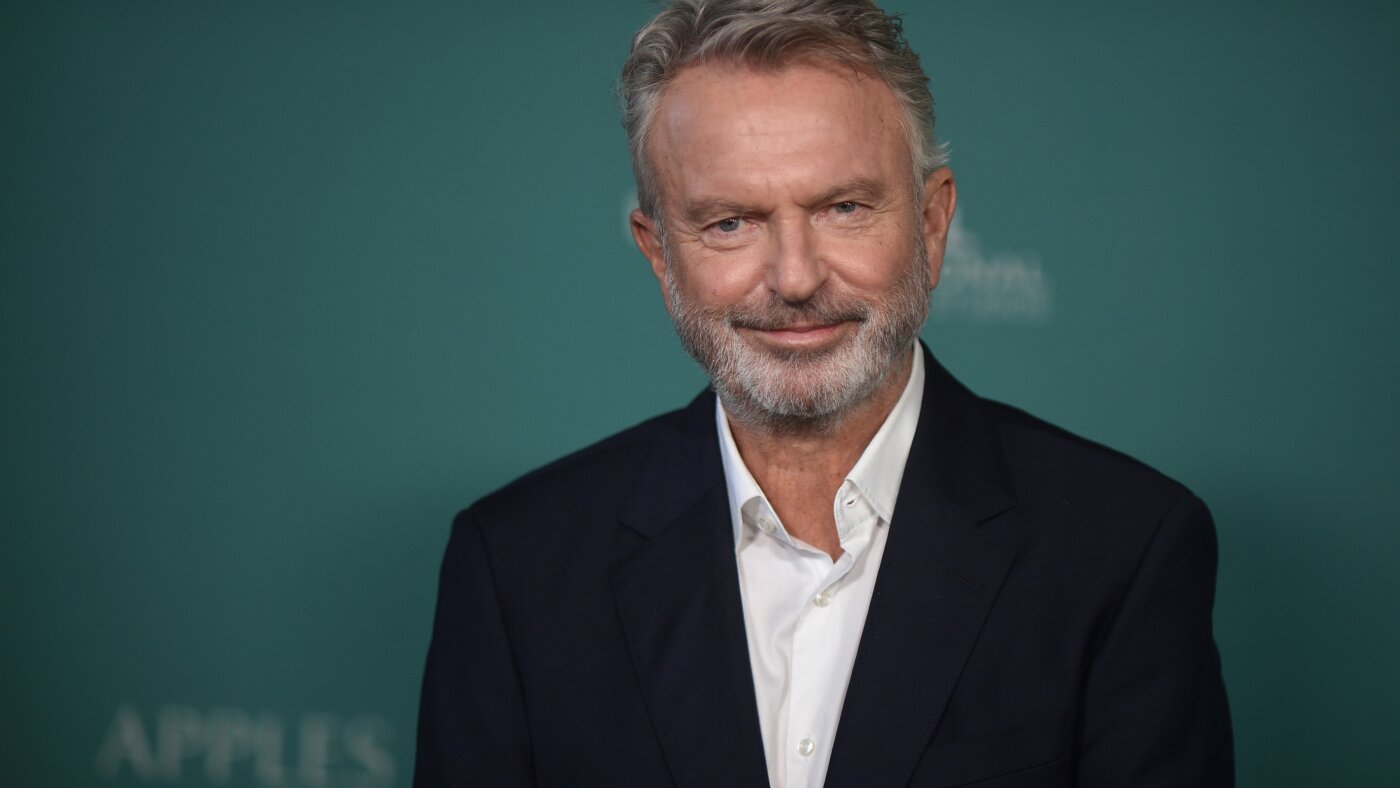
Sam Neill, known for ‘Jurassic Park’ and ‘The Piano,’ dies at 78, his family says
-

 Technology1 hour ago
Microsoft tests Windows Search without all the ads and fluff
-

 World2 hours ago
Iran-backed terror proxy Houthis threaten fresh attacks after Yemen airport strike
-

 Politics2 hours ago
Hegseth announces joint task force with DOJ to prosecute leaks to journalists ‘with the full force of the law’
-

 Health2 hours ago
Microwaved squishy toy explodes onto boy’s face and chest amid viral trend, causing horrific burns


