Alabama
What does history indicate for first-year Alabama football coaches in Tennessee rivalry?


TUSCALOOSA, Ala. — Nearly 35 years later, Martin Houston remembers the “chaos” during the third week in October 1990. The Crimson Tide started that season 0-3 under first-year coach Gene Stallings but reeled off wins over Vanderbilt and Southwestern Louisiana before their trip to Neyland Stadium to face No. 3 Tennessee. Very few people expected Alabama to win. Still, the pressure was at an inflection point.
“People were calling for Stallings’ head,” said Houston, Alabama’s starting fullback from 1989-1992. “If that was in 2024, it would have been just as bad or worse than (the scrutiny) now, but it was bad then even without social media.
“Back then, and I don’t know if they still do it as much now, we had these loudspeakers and listened to Rocky Top all week. It was kind of chaotic, but it forced us to focus.”
What stood out most to Houston about the week leading up to the game was the confidence the team had despite its record. It felt like it wasn’t playing to its potential, so there was no intimidation factor.
Free, daily sports updates direct to your inbox.
Free, daily sports updates direct to your inbox.
Sign Up
What transpired on Oct. 20, 1990, was one of the most iconic games in this series, and it’s one of several notable Alabama coaching debuts in this rivalry.
The score was tied at 6 with 1:35 remaining when Stacy Harrison blocked Tennessee kicker Greg Harris’ 50-yard field goal attempt. The ball bounced to the Tennessee 37-yard line, setting up the game-winning field goal attempt by Alabama kicker Philip Doyle three plays later. Alabama won 9-6 in what’s considered one of the biggest upsets in series history.

Alabama coach Kalen DeBoer will face Tennessee for the first time on Saturday. (Butch Dill / Imagn Images)
“We knew that that was a turning point for the Tide,” Houston said. “Even though we ended up losing two more games that year, it kind of set the foundation for the next recruiting class. The next year where we only lost one game and then (1992) we won it all. So that was definitely a turning point where we knew that we could be good under Coach Stallings.”
As things change, they stay the same in this rivalry. Tuesday was Alabama’s first on-field practice day ahead of Saturday’s matchup between the No. 7 Tide and No. 8 Vols. Both teams are 5-1 overall and 2-1 in the SEC.
“Rocky Top” blared through every corner of the facility starting at 6 a.m.
“Everywhere — the weight room, training room,” defensive lineman Tim Smith said. “They tried to play it in the locker room, but we turned that off.”
The turnover within Alabama’s program since its last trip to Neyland in 2022 is another layer to this game. It’s an introduction for coaches like Kalen DeBoer and Kane Wommack and players like Ryan Williams, Domani Jackson and more. This time last year, Nick Saban offered the perfect perspective to contextualize the rivalry’s importance.
“There are stadiums named after the people that have made this rivalry what it is,” he said.
Those people, Paul “Bear” Bryant (.696) and General Robert Neyland (.684) had near identical winning percentages in this rivalry. Alabama leads the all-time series (59-39-7), and first-year Tide coaches hold a record of 8-8-1. The largest margin of victory: 51-0 by J.W.H. Pollard (1906). The largest loss: 25-0 by Frank Thomas (1931).
There only have been six times in history where there’s been a different winner in three straight seasons, most recently 2021-23.
Like 1990, this year’s edition finds Alabama at somewhat of a crossroads. This year’s team is in a much better position record- and rankings-wise, but pressure has started to build since a loss to Vanderbilt and a scare against South Carolina. A loss would put Alabama’s College Football Playoff hopes in serious jeopardy, but a win, like the one in 1990, could be a launching point.
“When we beat Tennessee, it flipped the script,” Houston said. “I think the same thing (this Saturday). Beat Tennessee and the script will flip once again for DeBoer and the haters, naysayers, crazy callers, etc., will be pacified.”
The story of this rivalry cannot be told without the memorable moments produced by first-time Alabama coaches. Another chapter will be written on Saturday. What is expected? If history is any indication: chaos.
Here are some notable moments through the years:
1901: Alabama 6, Tennessee 6
Fittingly, the first game between these programs ended with a tie and a field storming in Birmingham, Ala. It ended early when fans rushed onto the field after a controversial offsides call, and umpires were unable to clear out the crowd. J.L. Broug scored for Tennessee and A. W. Stewart scored for Alabama.
1958: Tennessee 14, Alabama 7
Bear Bryant’s debut ended sourly behind five fumbles (three recovered by Tennessee) in a narrow defeat. Bryant went on to coach the most games of anyone in this series: 25 with a record of 16-7-2.
1983: Tennessee 41, Alabama 34
Ray Perkins’ debut saw one of the most improbable losses for Alabama as a 27-17 third-quarter lead turned into a 41-34 upset. Of any Alabama coach who has beaten Tennessee at least once, Perkins has the lowest winning percentage (.250).
1987: Alabama 41, Tennessee 22
Like Stallings, Bill Curry’s first Alabama team finished 7-5, but it included an emphatic win over No. 8 Tennessee, which finished the season 10-2-1. The win set off a run of prosperity for Alabama in this series as it won seven consecutive games. Freshman Jeff Dunn threw for 229 yards that day, including a 90-yard touchdown that set a program record.
Curry finished 3-0 vs. Tennessee in his Alabama career. He’s one of four Alabama coaches who never lost to the Volunteers and the only one to do so after World War I.
1990: Alabama 9, Tennessee 6
One of the iconic moments in this rivalry’s history and Alabama’s program history. The irony is that the Alabama players didn’t think they’d lose but weren’t sure about a win either.
“We didn’t feel necessarily like they were going to make that field goal,” Houston said. “But we were not thinking that we were going to make it out of there with a win if that makes sense. We thought in the worst-case scenario, it’s going to end in a tie. But we blocked the kick, lined up for ours, and the rest is history.”
1997: Tennessee 38, Alabama 21
Mike DuBose’s debut was the final game of the series played in Birmingham and the start of a downward trend for Alabama in this series. Future NFL Hall of Famer Peyton Manning led the Volunteers to victory, and DuBose finished his tenure as one of three coaches to never beat Tennessee in multiple tries (0-4).

Mike Shula went 0-4 against Tennessee. (G. N. Lowrance / Getty Images)
2003: Tennessee 51, Alabama 43 (5 OT)
Mike Shula, like DuBose, never beat Tennessee (0-4), but his debut was a classic. No. 22 Tennessee and unranked Alabama played the longest game in the rivalry’s history — nearly five hours and five overtimes. Eventually, Tennessee made just a few more plays to win.
But what happened a few years later turned this rivalry on its head.
2007: Alabama 41, Tennessee 17
Welcome, Coach Saban. Alabama was far from the greatest dynasty in modern history at that point. Still, Saban, John Parker Wilson’s career-high 363 yards and three touchdowns and D.J. Hall’s then-program record 13 catches for 185 yards led Alabama to an upset of No. 20 Tennessee and the most lopsided win in the series since 1986.
Alabama had lost 10 of 12 to Tennessee before that Saturday, but then the Tide reeled off 15 consecutive wins, the longest streak in the history of the series. Tennessee spoiled Saban’s perfect record with an epic 52-49 win at Neyland Stadium in 2022, culminating in the goalposts being taken down.
Alabama hasn’t been back to Knoxville since, setting the stage for another exciting, high-stakes matchup. History indicates that success follows the victor.
(Top photos of Nick Saban, left, and Gene Stallings: Andy Lyons / Getty Images, Jamie Squire / Allsport)



HUNTSVILLE, Ala. (WAFF) – Soccer is rapidly growing in Alabama and there aren’t enough officials to accommodate.
The 2026 FIFA World Cup had an impact on the growth of the sport.
“Instead of the World Cup arriving in America, America has arrived at the World Cup,” AHSAA Soccer Officials Coordinator Cedric Thomas said. “Watch parties across the county has showcased how America has reacted to the beautiful game.”
The 2026 World Cup reminded fans within North Alabama how special the game of soccer is and the game is rapidly growing in the Valley.
“It’s larger than any football program,” Alabama State Youth Referee Administrator Thomas Russell said. “We have more recreational soccer players than all of football combined.”
The rapid growth has created issues across the state. The biggest issue is the lack of soccer officials in Alabama.
There are around 900 certified soccer referees in Alabama, but the state needs about 1,500 for all games at all levels to operate smoothly.
“You cannot have an official game without officials,” Thomas said. “You can see the impact on the kids faces when only one or two referees show up and you need a third to make it an official game.”
The impact goes beyond the whistle. Referees in soccer have the ability to teach young athletes during games.
“We don’t coach them in the game, but we can teach them what they can and can’t do,” Russell said. “You can see a good referee who works with the kids and interacts with the kids. One that doesn’t just call a foul and go away.”
Soccer is highlighted on all levels in Huntsville. From youth soccer to AHSAA Soccer State Championships and the Huntsville City Football Club.
“I would say that the Huntsville Sports Commission and the city has solidified whatever that vision they had for soccer.”
More officials are needed for the sport to grow in North Alabama and across the state.
To find out how to become an official:
Click Here to Subscribe on YouTube: Watch the latest WAFF 48 news, sports & weather videos on our YouTube channel!
Copyright 2026 WAFF. All rights reserved.

Alabama football took a step forward at the tight end position in 2025.
It may have not been the most exciting, but production was consistent, especially from the now departed Josh Cuevas.
What’s next for the Crimson Tide at tight end? Here are three questions that could define Alabama’s tight ends in 2026.
Can Kaleb Edwards match Josh Cuevas Alabama football production?
Cuevas was Ty Simpson and Alabama’s offensive safety net in 2025. Cuevas was a weapon where if a check down was needed, he caught it.
Kaleb Edwards had a preview of what that responsibility would look like in his first Iron Bowl, making the start for the injured Cuevas. In 60 snaps, per Pro Football Focus, he had two catches for 8 yards. Edwards’ production grew in the SEC championship against Georgia when he had three catches for 42 yards in 36 snaps, per PFF, a game Cuevas also missed.
With a new quarterback in either Austin Mack or Keelon Russell, a tight end with the reliability of Cuevas could be helpful when it comes to momentum and moving the ball downfield. Can Edwards be that answer the Crimson Tide needs?
What role will Josh Ford play with Alabama?
Josh Ford was an early addition to the tight end room via the NCAA transfer portal, joining the roster Dec. 16 after two seasons at Oklahoma State.
He fits the body type, standing at 6-foot-6, 267 pounds, a big-bodied mover who is widely expected to play an integral role in pass protection and run blocking.
While he may not be flashy, could Ford emerge as the cog that drives Alabama into success in the run game and in protecting either Mack or Russell?
Who is next in line after Kaleb Edwards in Alabama tight end room?
Edwards seems to be the pass-catching tight end of Alabama’s near future. But he’s not the only one in contention for reps.
Marshall Pritchett, who played a key role in Alabama’s special teams unit in 2025, is expected to take a step forward as a sophomore. Even Mack Sutter, the four-star freshman out of Dunlap, Illinois, has the pass catching skills to make an immediate impact as a receiver, even if the blocking skills need to be developed.
Edwards may be at the front of the line. But tight end production isn’t all on him once the season kicks off.
Colin Gay covers Alabama football for The Tuscaloosa News, part of the USA TODAY Network. Reach him at cgay@gannett.com or follow him @_ColinGay on X, formerly known as Twitter or Instagram @colingaytnews.
Alabama
Governor Ivey Taps Glenda Allred as New Tourism Director, Announces Lee Sentell’s Retirement –

MONTGOMERY – Governor Kay Ivey on Wednesday announced the retirement of Lee Sentell, Alabama’s longest-serving Tourism Director. Governor Bob Riley originally appointed Sentell in 2003.
“Since Lee began serving at the Department of Tourism, we have grown the state’s tourism revenue from $6 billion to nearly $25 billion. Lee should certainly be commended for his passion for our state and for its many attractions,” said Governor Ivey. “From promoting Alabama’s pristine beaches to our award-winning food to Civil Rights history, space, outdoors and everything in between, Lee has always had a special way for sharing the many great facets of our state’s tourism industry. Thanks to his service, we have broken tourism records, supported more jobs for Alabama families and created significant and meaningful revenue for our state.”
Under his leadership, the Department has pioneered yearly campaigns spotlighting such diverse themes as small towns, the arts, barbecue, natural wonders, birding and the Alabama Bicentennial celebration, winning the national industry’s coveted Mercury award six times in 12 years.
“Alabama is a special state, and I have been so proud to show people all over our country and around the world all that we have to offer,” said Sentell. “Leading the state’s tourism efforts for more than two decades and serving under Governor Ivey has been the honor of my life. I look forward to Alabama’s continued growth in the years ahead.”
The Department’s U.S. Civil Rights Trail campaign received the International Travel and Tourism Award for best regional promotion at the World Travel Market in London, becoming the first U.S. state tourism agency to be honored. Most recently, Tourism helped execute Governor Ivey’s America 250 Alabama Celebration on the front steps of the Alabama State Capitol where she unveiled a massive special 250 edition of the U.S. flag.
Governor Ivey also announced she is appointing Glenda Allred to lead Tourism for the remainder of the Ivey Administration. She comes to the post from serving as Deputy State Treasurer in Treasurer Young Boozer’s Office. Glenda began state service in 2011.
“I am excited to have Glenda joining the Ivey Administration to lead our state’s tourism efforts. Before working in the executive branch, she had nearly two decades of private sector experience that included marketing and media relations,” said Governor Ivey. “Glenda will be a fantastic addition to our team as we finish strong these next six months. Alabama has a lot left to tell, and I know we can continue doing that with Glenda’s leadership.”
Allred spent 15 years in the private sector with a bank holding company managing media relations, shareholder relations, all publications to shareholders and advertising for a 72-branch franchise in Alabama.
“I am honored by Governor Ivey’s confidence and grateful for the opportunity to serve,” said Allred. “I look forward to working with the dedicated team at the Department of Tourism to advance our shared mission of improving the lives of the people of our state and all those who visit!”
She is a 1991 Huntingdon College graduate and currently serves on the Board of Trustees. Allred’s appointment is effective Wednesday, July 15, 2026.
An official headshot of Glenda Allred is attached.
###
-

 Arizona2 minutes ago
This Arizona city named among top 23 small US towns to visit
-

 Arkansas8 minutes ago
Fayetteville, Arkansas, draws Razorback fans, cyclists, history buffs
-
 California14 minutes ago
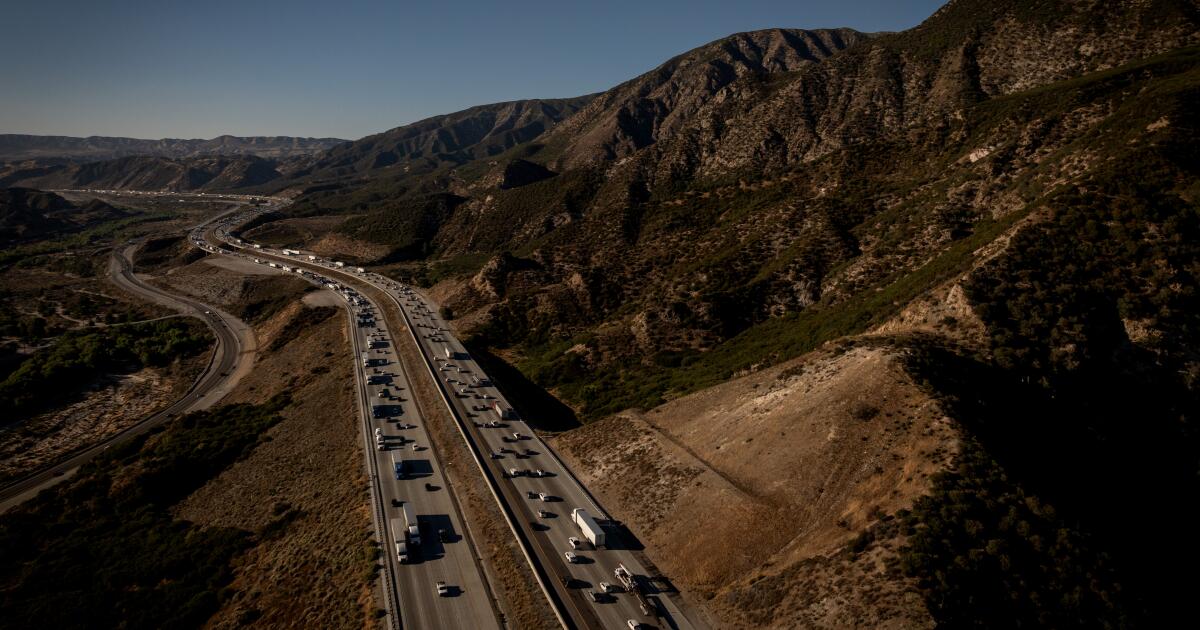
The San Andreas fault has gone ominously silent. Scientists fear when it finally snaps
-

 Colorado20 minutes ago
Three-quarters of Coloradans are worried they can’t afford to live here, poll finds
-

 Connecticut26 minutes ago
Love Food Names the Best Place for Ramen in Connecticut
-

 Delaware32 minutes ago
Family of Kadir Skinner to sue Wilmington over police killing
-

 Florida38 minutes ago
Florida TODAY: Homes get expensive, license to blush, fuzzy invader
-

 Georgia44 minutes ago
Georgia Youth Symphony Orchestra Announces Expanded Artistic Leadership Team for 2026–2027 Season

