Science
Will personal firefighting devices help or hurt in future wildfires?


Patrick Golling yanked the pull cord, and the Honda engine roared to life. Seconds after it began sucking water out of his father’s pool, a powerful stream erupted from an agricultural irrigation nozzle fixed atop a bright red pole a few feet away, connected with a fire hose.
In a minute flat, the system meticulously jerked across the landscape, drenching the ravine in 50 gallons of water. The demonstration on a hot July afternoon left the blackened sticks below the property — once trees before the Palisades fire ripped through — dripping with chlorinated water.
The contraption is the brainchild of Golling and Arizona engineer Tony Robinson. After a TV interview where Golling discussed a cobbled-together version of the tech that he says saved his father’s home from the Palisades fire, Robinson cold-called him, and Realize Safety was born.
Now, the two talk of ambitious visions where entire neighborhoods living amid California’s rugged brush-covered landscapes band together to create a community defense network of automated firefighters.
Realize Safety’s defenders use an agricultural irrigation nozzle to spray 50 gallons of water per minute on surrounding vegetation.
(Allen J. Schaben / Los Angeles Times)
Their system is the latest entrant in a growing group of often-expensive, high-tech sprinkler systems designed to protect homes in high fire hazard areas. But while a blue-ribbon commission after the January fires recommended L.A. adopt exterior sprinkler technology, some fire officials warn there’s limited evidence that these elaborate and flashy systems work.
Instead, they say the systems distract from less-glamorous but proven measures to protect homes, such as brush clearance and multipaned windows, while encouraging residents to risk their lives by staying back during an evacuation to protect their homes.
“Good solutions don’t pop up overnight,” said David Barrett, executive director of the Los Angeles Regional Fire Safe Council. “There is no silver bullet.”
Especially for a vicious blaze such as the Palisades fire. Given the extreme weather conditions — winds over 80 mph, incredibly dry vegetation — there was very little firefighters, let alone home defense systems, could do, Barrett said.
“It doesn’t matter what you’ve got in your pool,” he said. “Nothing is going to stop an urban wildfire from progressing if it’s wind-driven — sorry. That’s the end.”
Asked whether the system saved his father’s home, Golling did not mince words: “Absolutely.”

Patrick Golling of Realize Safety adjusts the nozzle on one of the company’s defenders.
(Allen J. Schaben / Los Angeles Times)
After Golling got word of a fire developing in the Palisades on Jan. 7, he immediately thought of the gas pump and irrigation sprinkler system his father had bought just months before to protect his home in the Palisades Highlands. Golling rushed to his father’s house and spent the next two days deploying the system throughout the neighborhood, putting out spot fires that threatened the development. Golling said firefighters encouraged him to keep up the work as they struggled to contain monster blazes one neighborhood over.
As the smoke settled, most of Golling’s neighborhood remained standing.
But little data exist on the effectiveness of home defense sprinklers.
Wildfire researchers often use large datasets of destroyed and standing homes after devastating fires to compare the success of the various home hardening strategies they used. But scientists have yet to identify and analyze fires where sprinkler systems were widely used.
Some anecdotal evidence has suggested that these systems provide some protection. An analysis of the 2007 Ham Lake fire in Minnesota found that of 47 homes identified with functioning sprinkler systems, all but one survived. Meanwhile, only about 40% of the 48 homes without the systems remained standing after the fire.
Typical home defense sprinkler systems work by drawing water from utility systems, and using it to wet the exterior of a house and create — at least theoretically — another barrier from fire. Realize Safety’s goal is to prevent the fire from even reaching the house by dousing nearby vegetation in water and creating a mist to dampen any embers that could ignite the home. To do it, they’re tapping into an underutilized source of water: pools.
Barrett said that, without a doubt, firefighters could put pool water to better use than these systems. Firefighters, he said, already have all the equipment they need to utilize pool water, and all residents have to do is install a clear sign out front letting firefighters know they have a pool.
But as Golling looked at the view of the Palisades from his father’s backyard in early July, he counted eight destroyed homes with still-full pools.
“We think — that had they had a system in place like the one we’re talking about — they could have saved their homes,” Golling said.
Utility water sources are not designed to handle large-scale urban fires. During the Palisades fire, the chief engineer for the city’s water utility told The Times that the system saw four times the normal water demand for 15 hours straight.
It’s in part why, when an independent 20-member Blue Ribbon Commission on Climate Action and Fire-Safe Recovery recently issued dozens of recommendations for rebuilding and recovery, it called for prioritizing additional water storage capacity in neighborhoods and encouraging the development of standards for and the installation of systems that draw on water stored in pools or cisterns, with external sprinklers to douse homes.
Using a 20,000-gallon pool, Realize Safety’s system can run for over six hours straight. And unlike many traditional water defense sprinklers, it is not dependent on the house having electricity and access to utility water systems.
Reliability is paramount for Robinson, who has spent much of his engineering career working on airplanes and satellites — where failure is synonymous with catastrophe.
The same is true for wildfire defense. In the Ham Lake fire, the researchers also counted nine residences where home defense sprinklers failed. Eight of them burned.

Realize Safety’s system pulls water from residential pools, a widely untapped source of water during urban fires.
(Allen J. Schaben / Los Angeles Times)
In the quest for reliability, Golling and Robinson have made significant improvements on the unwieldy system Golling used in January (where, after some time, the generator cart rattled itself straight into the pool it was drawing water from). With a sturdy generator cart and sprinklers that are firmly anchored into the ground, the two are confident that residents can trust it long after they’ve evacuated.
But Barrett credits success stories such as Golling’s not to specific technology, but instead to the dangerous practice of ignoring an evacuation order to protect a house. He worries systems such as Realize Safety’s — that essentially give residents all the tools they need to try their hand at firefighting instead of evacuating — could encourage more people to stay behind, as Golling did.
“The problem with that is people then stay behind putting their lives and the lives of firefighters at risk, when they’re not trained in firefighting,” he said.
A comprehensive 2019 study from fire researcher Alexandra Syphard found that, in previous Southern California wildfires, a civilian staying behind to protect a house reduced the chance of a home burning by 32% — more than every other factor studied, including defensible space, concrete roofs and even the presence of the fire department at the property. (The study did not evaluate the effectiveness of sprinkler systems, which were not widely used in the fires analyzed.)
However, fire officials across the state — in no unclear terms — strongly discourage this practice. It endangers human life, and when a manageable fire fight suddenly becomes unmanageable for a homeowner, rescue efforts can redirect essential resources that are desperately needed elsewhere.
Some fire safety advocates also worry flashy and unproven tech could distract from well-tested home-hardening methods, such as clearing flammable debris from the yard and roof.
Barrett recalled visiting a house about a year ago to inspect the resident’s home-hardening efforts and provide feedback.
“The person had spent $50,000 on a sprinkler system, but he had overgrown branches hanging onto his roof and the rain gutters were all full of needles,” he said. Barrett’s blunt personal assessment: “This house is going to burn down.”
“Chopping those branches and clearing the needles out would have cost $1,000 or less,” he said.
Golling and Robinson say they’re focused on providing the cheapest, most reliable tech they can. They see their home defenders as another, relatively affordable, tool in the arsenal to increase the odds their customers’ homes survive a fire.
A fully operational, autonomous system starts at $3,450, which Golling said is cheaper than what he spends on defensible-space lawn maintenance in some years.
“We did the brush clearance. We have the water pump. We’re going to do the ember-resistant vents and home hardening,” Golling said. “You’ve got to really do it all.”
Times staff writer Ian James contributed to this report.


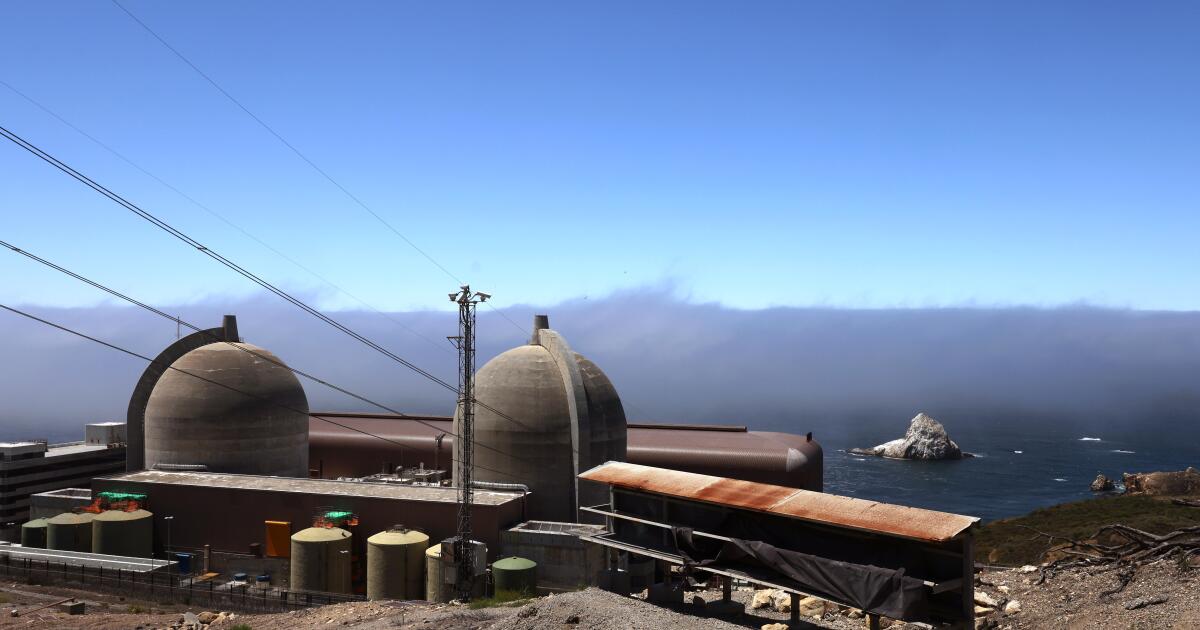
Central Coast Water authorities approved waste discharge permits for Diablo Canyon nuclear plant Thursday, making it nearly certain it will remain running through 2030, and potentially through 2045.
The Pacific Gas & Electric-owned plant was originally supposed to shut down in 2025, but lawmakers extended that deadline by five years in 2022, fearing power shortages if a plant that provides about 9 percent the state’s electricity were to shut off.
In December, Diablo Canyon received a key permit from the California Coastal Commission through an agreement that involved PG&E giving up about 12,000 acres of nearby land for conservation in exchange for the loss of marine life caused by the plant’s operations.
Today’s 6-0 vote by the Central Coast Regional Water Board approved PG&E’s plans to limit discharges of pollutants into the water and continue to run its “once-through cooling system.” The cooling technology flushes ocean water through the plant to absorb heat and discharges it, killing what the Coastal Commission estimated to be two billion fish each year.
The board also granted the plant a certification under the Clean Water Act, the last state regulatory hurdle the facility needed to clear before the federal Nuclear Regulatory Commission (NRC) is allowed to renew its permit through 2045.
The new regional water board permit made several changes since the last one was issued in 1990. One was a first-time limit on the chemical tributyltin-10, a toxic, internationally-banned compound added to paint to prevent organisms from growing on ship hulls.
Additional changes stemmed from a 2025 Supreme Court ruling that said if pollutant permits like this one impose specific water quality requirements, they must also specify how to meet them.
The plant’s biggest water quality impact is the heated water it discharges into the ocean, and that part of the permit remains unchanged. Radioactive waste from the plant is regulated not by the state but by the NRC.
California state law only allows the plant to remain open to 2030, but some lawmakers and regulators have already expressed interest in another extension given growing electricity demand and the plant’s role in providing carbon-free power to the grid.
Some board members raised concerns about granting a certification that would allow the NRC to reauthorize the plant’s permits through 2045.
“There’s every reason to think the California entities responsible for making the decision about continuing operation, namely the California [Independent System Operator] and the Energy Commission, all of them are sort of leaning toward continuing to operate this facility,” said boardmember Dominic Roques. “I’d like us to be consistent with state law at least, and imply that we are consistent with ending operation at five years.”
Other board members noted that regulators could revisit the permits in five years or sooner if state and federal laws changes, and the board ultimately approved the permit.
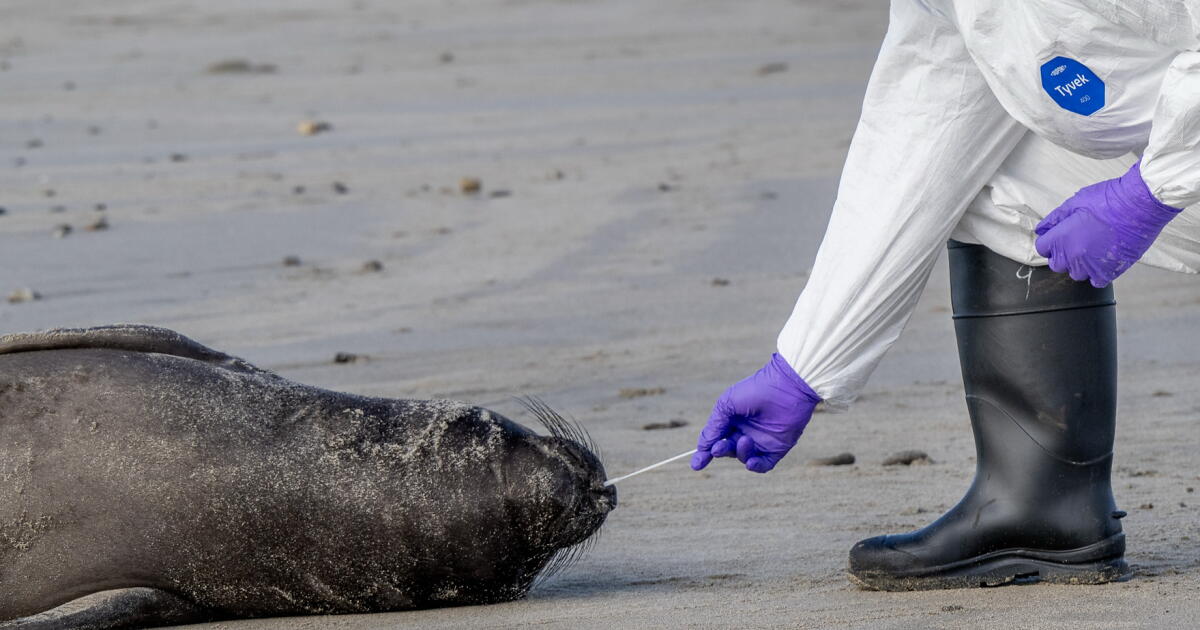
The H5N1 bird flu virus that devastated South American elephant seal populations has been confirmed in seals at California’s Año Nuevo State Park, researchers from UC Davis and UC Santa Cruz announced Wednesday.
The virus has ravaged wild, commercial and domestic animals across the globe and was found last week in seven weaned pups. The confirmation came from the U.S. Department of Agriculture’s National Veterinary Services Laboratory in Ames, Iowa.
“This is exceptionally rapid detection of an outbreak in free-ranging marine mammals,” said Professor Christine Johnson, director of the Institute for Pandemic Insights at UC Davis’ Weill School of Veterinary Medicine. “We have most likely identified the very first cases here because of coordinated teams that have been on high alert with active surveillance for this disease for some time.”
Since last week, when researchers began noticing neurological and respoiratory signs of the disease in some animals, 30 seals have died, said Roxanne Beltran, a professor of ecology and evolutionary biology at UC Santa Cruz. Twenty-nine were weaned pups and the other was an adult male. The team has so far confirmed the virus in only seven of the dead pups.
Infected animals often have tremors convulsions, seizures and muscle weakness, Johnson said.
Beltran said teams from UC Santa Cruz, UC Davis and California State Parks monitor the animals 260 days of the year, “including every day from December 15 to March 1” when the animals typically come ashore to breed, give birth and nurse.
The concerning behavior and deaths were first noticed Feb. 19.
“This is one of the most well-studied elephant seal colonies on the planet,” she said. “We know the seals so well that it’s very obvious to us when something is abnormal. And so my team was out that morning and we observed abnormal behaviors in seals and increased mortality that we had not seen the day before in those exact same locations. So we were very confident that we caught the beginning of this outbreak.”
In late 2022, the virus decimated southern elephant seal populations in South America and several sub-Antarctic Islands. At some colonies in Argentina, 97% of pups died, while on South Georgia Island, researchers reported a 47% decline in breeding females between 2022 and 2024. Researchers believe tens of thousands of animals died.
More than 30,000 sea lions in Peru and Chile died between 2022 and 2024. In Argentina, roughly 1,300 sea lions and fur seals perished.
At the time, researchers were not sure why northern Pacific populations were not infected, but suspected previous or milder strains of the virus conferred some immunity.
The virus is better known in the U.S. for sweeping through the nation’s dairy herds, where it infected dozens of dairy workers, millions of cows and thousands of wild, feral and domestic mammals. It’s also been found in wild birds and killed millions of commercial chickens, geese and ducks.
Two Americans have died from the virus since 2024, and 71 have been infected. The vast majority were dairy or commercial poultry workers. One death was that of a Louisiana man who had underlying conditions and was believed to have been exposed via backyard poultry or wild birds.
Scientists at UC Santa Cruz and UC Davis increased their surveillance of the elephant seals in Año Nuevo in recent years. The catastrophic effect of the disease prompted worry that it would spread to California elephant seals, said Beltran, whose lab leads UC Santa Cruz’s northern elephant seal research program at Año Nuevo.
Johnson, the UC Davis researcher, said the team has been working with stranding networks across the Pacific region for several years — sampling the tissue of birds, elephant seals and other marine mammals. They have not seen the virus in other California marine mammals. Two previous outbreaks of bird flu in U.S. marine mammals occurred in Maine in 2022 and Washington in 2023, affecting gray and harbor seals.
The virus in the animals has not yet been fully sequenced, so it’s unclear how the animals were exposed.
“We think the transmission is actually from dead and dying sea birds” living among the sea lions, Johnson said. “But we’ll certainly be investigating if there’s any mammal-to-mammal transmission.”
Genetic sequencing from southern elephant seal populations in Argentina suggested that version of the virus had acquired mutations that allowed it to pass between mammals.
The H5N1 virus was first detected in geese in China in 1996. Since then it has spread across the globe, reaching North America in 2021. The only continent where it has not been detected is Oceania.
Año Nuevo State Park, just north of Santa Cruz, is home to a colony of some 5,000 elephant seals during the winter breeding season. About 1,350 seals were on the beach when the outbreak began. Other large California colonies are located at Piedras Blancas and Point Reyes National Sea Shore. Most of those animals — roughly 900 — are weaned pups.
It’s “important to keep this in context. So far, avian influenza has affected only a small proportion of the weaned at this time, and there are still thousands of apparently healthy animals in the population,” Beltran said in a press conference.
Public access to the park has been closed and guided elephant seal tours canceled.
Health and wildlife officials urge beachgoers to keep a safe distance from wildlife and keep dogs leashed because the virus is contagious.
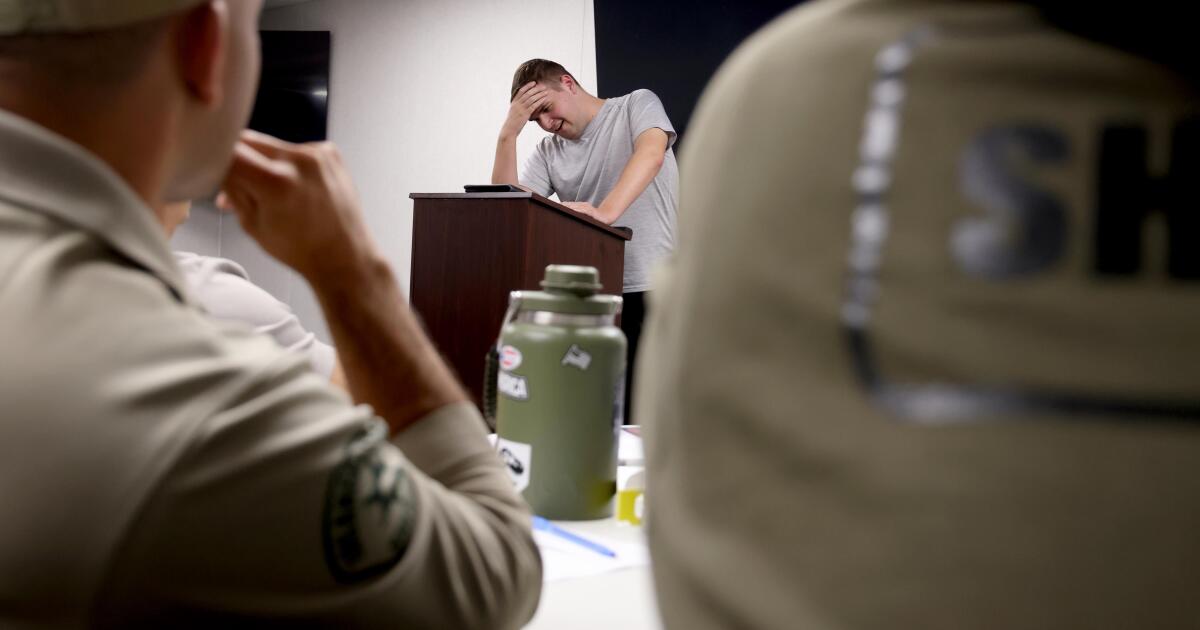
Kate Movius moved among a roomful of Los Angeles County sheriff’s deputies, passing out a pop trivia quiz and paper prism glasses.
She told them to put on the vision-distorting glasses, and to write with their nondominant hand. As they filled out the tests, Movius moved about the City of Industry classroom pounding abruptly on tables. Then came the cowbell. An aide flashed the overhead lights on and off at random. The goal was to help the deputies understand the feeling of sensory overwhelm, which many autistic people experience when incoming stimulation exceeds their capacity to process.
“So what can you do to assist somebody, or de-escalate somebody, or get information from someone who suffers from a sensory disorder?” Movius asked the rattled crowd afterward. “We can minimize sensory input. … That might be the difference between them being able to stay calm and them taking off.”
Movius, founder of the consultancy Autism Interaction Solutions, is one of a growing number of people around the U.S. working to teach law enforcement agencies to recognize autistic behaviors and ensure that encounters between neurodevelopmentally disabled people and law enforcement end safely.
She and City of Industry Mayor Cory Moss later passed out bags filled with tools donated by the city to aid interactions: a pair of noise-damping headphones to decrease auditory input, a whiteboard, a set of communication cards with words and images to point to, fidget toys to calm and distract.
“The thing about autistic behavior when it comes to law enforcement is a lot of it may look suspicious, and a lot of it may feel very disrespectful,” said Movius, who is also the parent of an autistic 25-year-old man. Responding officers, she said, “are not coming in thinking, ‘Could this be a developmentally disabled person?’ I would love for them to have that in the back of their minds.”
A sheriff’s deputy reads a pamphlet on autism during the training program.
(Genaro Molina / Los Angeles Times)
Autism spectrum disorder is a developmental condition that manifests differently in nearly every person who has it. Symptoms cluster around difficulties in communication, social interaction and sensory processing.
An autistic person stopped by police might hold the officer’s gaze intensely or not look at them at all. They may repeat a phrase from a movie, repeat the officer’s question or temporarily lose their ability to speak. They might flee.
All are common involuntary responses for an autistic person in a stressful situation, which a sudden encounter with law enforcement almost invariably is. To someone unfamiliar with the condition, all could be mistaken for intoxication, defiance or guilt.
Autism rates in the U.S. have increased nearly fivefold since the Centers for Disease Control began tracking diagnoses in 2000, a rise experts attribute to broadening diagnostic criteria and better efforts to identify children who have the condition.
The CDC now estimates that 1 in 31 U.S. 8-year-olds is autistic. In California, the rate is closer to 1 in 22 children.
As diverse as the autistic population is, people across the spectrum are more likely to be stopped by law enforcement than neurotypical peers.
About 15% of all people in the U.S. ages 18 to 24 have been stopped by police at some point in their lives, according to federal data. While the government doesn’t track encounters for disabled people specifically, a separate study found that 20% of autistic people ages 21 to 25 have been stopped, often after a report or officer observation of a person behaving unusually.
Some of these encounters have ended in tragedy.
In 2021, Los Angeles County sheriff’s deputies shot and permanently paralyzed a deaf autistic man after family members called 911 for help getting him to a hospital.
Isaias Cervantes, 25, had become distressed about a shopping trip and started pushing his mother, his family’s attorney said at the time. He resisted as two deputies attempted to handcuff him and one of the deputies shot him, according to a county report.
In 2024, Ryan Gainer’s family called 911 for support when the 15-year-old became agitated. Responding San Bernardino County sheriff‘s deputies shot and killed him outside his Apple Valley home.
Last year, police in Pocatello, Idaho, shot Victor Perez, 17, through a chain-link fence after the nonspeaking teenager did not heed their shouted commands. He died from his injuries in April.

Sheriff’s deputies take a trivia quiz using their non-writing hands, while wearing vision-distorting glasses, as Kate Movius, standing left, and Industry Mayor Cory Moss, right, ring cowbells. The idea was to help them understand the sensory overwhelm some autistic people experience.
(Genaro Molina / Los Angeles Times)
As early as 2001, the FBI published a bulletin on police officers’ need to adjust their approach when interacting with autistic people.
“Officers should not interpret an autistic individual’s failure to respond to orders or questions as a lack of cooperation or as a reason for increased force,” the bulletin stated. “They also need to recognize that individuals with autism often confess to crimes that they did not commit or may respond to the last choice in a sequence presented in a question.”
But a review of multiple studies last year by Chapman University researchers found that while up to 60% of officers have been on a call involving an autistic person, only 5% to 40% had received any training on autism.
In response, universities, nonprofits and private consultants across the U.S. have developed curricula for law enforcement on how to recognize autistic behaviors and adapt accordingly.
The primary goal, Movius told deputies at November’s training session, is to slow interactions down to the greatest extent possible. Many autistic people require additional time to process auditory input and verbal responses, particularly in unfamiliar circumstances.
If at all possible, Movius said, wait 20 seconds for a response after asking a question. It may feel unnaturally long, she acknowledged. But every additional question or instruction fired in that time — what’s your name? Did you hear me? Look at me. What’s your name? — just decreases the likelihood that a person struggling to process will be able to respond at all.
Moss’ son, Brayden, then 17, was one of several teenagers and young adults with autism who spoke or wrote statements to be read to the deputies. The diversity of their speech patterns and physical mannerisms showed the breadth of the spectrum. Some were fluently verbal, while others communicated through signs and notes.
“This population is so diverse. It is so complicated. But if there’s anything that we can show [deputies] in here that will make them stop and think, ‘Hey, what if this is autism?’ … it is saving lives,” Moss said.

Mayor Cory Moss, left, and Kate Movius hug at the end of the training program last November. Movius started Autism Interaction Solutions after her son was born with profound autism.
(Genaro Molina / Los Angeles Times)
Some disability advocates cautioned that it takes more than isolated training sessions to ensure encounters end safely.
Judy Mark, co-founder and president of the nonprofit Disability Voices United, says she trained thousands of officers on safe autism interactions but stopped after Cervantes’ shooting. She now urges families concerned about an autistic child’s safety to call an ambulance rather than law enforcement.
“I have significant concern about these training sessions,” Mark said. “People get comfort from it, and the Sheriff’s Department can check the box.”
While not a panacea, supporters argue that a brief course is better than no preparation at all. Some years ago, Movius received a letter from a man whose profoundly autistic son slipped away as the family loaded their car at the beach. He opened the unlocked door of a police vehicle, climbed into the back and began to flail in distress.
Though surprised, the officer seated at the wheel de-escalated the situation and helped the young man find his family, the father wrote to Movius. He had just been to her training.

300,000 Chrome users hit by fake AI extensions

Commentary: How Trump helped foreign markets outperform U.S. stocks during his first year in office

Philip Glass canceled a Kennedy Center show, but this conductor brings his work center stage at L.A. Opera

L.A. Affairs: Sick of swiping, I tried speed dating. The results surprised me

Contributor: The last shreds of our shared American culture are being politicized

Florida High School Football Rankings: Top 25 teams – Oct. 21

Cleary's 21 help Le Moyne down Central Connecticut State 69-64 in OT

How old is Bo Nix? What to know about Oregon quarterback ahead of 2024 NFL Draft

99th annual Pony Swim held in Virginia

Indiana Members Credit Union announced as new anchor tenant at Bottleworks District

Has India’s influence in Afghanistan grown under the Taliban?

Bill Clinton to testify before House committee investigating Epstein links

Read Judge Schiltz’s Order

Vulnerable House Dem lashes out at Trump’s ‘racist’ SOTU challenge: ‘That was uncomfortable’

Italy calls for suspension of EU carbon market
-

 World1 day ago
Exclusive: DeepSeek withholds latest AI model from US chipmakers including Nvidia, sources say
-

 Massachusetts2 days ago
Mother and daughter injured in Taunton house explosion
-

 Montana1 week ago
2026 MHSA Montana Wrestling State Championship Brackets And Results – FloWrestling
-

 Oklahoma1 week ago
Wildfires rage in Oklahoma as thousands urged to evacuate a small city
-

 Louisiana4 days ago
Wildfire near Gum Swamp Road in Livingston Parish now under control; more than 200 acres burned
-

 Technology6 days ago
YouTube TV billing scam emails are hitting inboxes
-

 Denver, CO2 days ago
10 acres charred, 5 injured in Thornton grass fire, evacuation orders lifted
-

 Technology6 days ago
Stellantis is in a crisis of its own making