Science
Martin Karplus, Chemist Who Made Early Computers a Tool, Dies at 94


Martin Karplus, a Nobel Prize-winning theoretical chemist who used computers to model how complex systems change during chemical reactions, a process that has led to advances in the understanding of biological processes, died on Dec. 28 at his home in Cambridge, Mass. He was 94.
His wife, Marci Karplus, said he died while recovering from a fall in which he broke a femur.
Over his long career, Dr. Karplus had crossed paths with some of the most important scientists of the 20th century, including Linus Pauling and J. Robert Oppenheimer.
Scientists can control the chemicals in a reaction, and they can measure and evaluate the results, but what happens in between is a mystery.
As Sven Lidin, chairman of the Nobel selection committee explained when announcing the 2013 winners in chemistry: “It’s like seeing all the actors before Hamlet and all the dead bodies after, and then you wonder what happened in the middle. And actually, there is some interesting action there, and this is what theoretical chemistry provides us with — the whole drama.”
Beginning in the 1960s, when computers were only a fraction as powerful as today’s smartphones, Dr. Karplus and his fellow Nobel laureates — Michael Levitt, originally from South Africa, and Arieh Warshel, who was born in Israel — began to build virtual models of molecules to understand what happens to them during complex reactions like photosynthesis and combustion.
The models used classical Newtonian physics to predict how multitudes of atoms and molecules move during reactions, and they used quantum physics to describe how chemical bonds are broken and formed during those reactions. This type of analysis proved particularly useful in understanding biological reactions involving enzymes, the proteins that govern chemical responses in living organisms.
There was initial resistance to the scientists’ work because it was difficult for others to accept that computer models could be accurate enough or could sufficiently account for the many variables in some reactions. But by the time the Nobel Prize was awarded in 2013, that skepticism was gone.
“Today, the computer is just as important a tool for chemists as the test tube,” the academy wrote in its announcement. “Simulations are so realistic that they predict the outcome of traditional experiments.”
At Harvard University, where Dr. Karplus spent most of his career, he and his research team in 1983 created a program for simulating molecular interaction, calling it Chemistry at Harvard Macromolecular Mechanics (CHARMM). The program is available to researchers worldwide.
In the late 1950s, Dr. Karplus made another important contribution to chemistry: He developed what is known as the Karplus equation. It makes it possible to calculate the magnitude and orientation of protons in organic compounds involved in nuclear magnetic resonance spectroscopy, allowing chemists to study the arrangements of atoms in molecules. It is now a basic part of chemistry education.
Martin Karplus was born on March 15, 1930, in Vienna into a well-off and intellectually accomplished Jewish family. He was the second son of Johann Karplus, a banker, and Isabella (Goldstern) Karplus, a hospital dietitian.
His paternal grandfather, Johann Paul Karplus, was a neurologist who discovered the functions of the hypothalamus, the crucial brain region that controls body temperature, hunger, heart rate and other vital activities. An uncle, Eduard Karplus, was an engineer and inventor. And Martin’s older brother, Robert, became a theoretical physicist at the University of California at Berkeley.
In the face of rising antisemitism in the 1930s and a few days after Nazi Germany annexed Austria in the Anschluss of March 1938, Martin, his brother, and his mother fled to Zurich and then to France, eventually arriving in Le Havre.
Martin’s father was initially imprisoned in Vienna, but he was able to join the family before they set sail for New York. They arrived on Oct. 8, 1938, and soon after moved to Newton, Mass.
At Newton High School, Martin discovered that his older brother had made such a mark there that many teachers doubted Martin’s ability to do as well, he recalled in a Nobel biography. One teacher, who was in charge of the Westinghouse Science competition, the nation’s top talent search in the sciences, told Martin that it would be a waste of his time to enter.
But he found another teacher who was willing to proctor his test for the competition. He went on to qualify as one of the country’s 40 finalists. Martin’s project on alcids, an aquatic bird, was chosen as the co-winner of the competition, after which he met President Harry S. Truman in Washington.
Accepted to Harvard University, he concentrated on chemistry and physics. As he was finishing his undergraduate degree in 1950, both the University of California at Berkeley and the California Institute of Technology, known as Caltech, accepted him for graduate studies.
Unsure where to go, he visited his brother, Robert, who by then was working at the Institute for Advanced Study in Princeton, N.J. Robert showed him around, introducing him to Albert Einstein and J. Robert Oppenheimer, who had led the Manhattan Project that developed the atomic bomb and who had become the institute’s director. Dr. Oppenheimer recommended Caltech, where he had been a professor, calling it “a shining light in a sea of darkness,” according to Dr. Karplus’s biography. Decision made.
At Caltech he focused on biophysics, joining a graduate group led by Max Delbrück, who, along with Salvador E. Luria, had proved that Darwin’s theory of evolution also applied to bacteria. They, along with Alfred D. Hersey, would be awarded the Nobel Prize in Physiology or Medicine in 1969 for their work.
As Dr. Karplus wrote in his Nobel biography, a turning point in his life came two months after he started at Caltech. Dr. Delbrück suggested that Dr. Karplus present a seminar on his intended area of research: how vision works.
He began his presentation, but after 10 minutes Dr. Delbrück interrupted him to say that he did not understand what Dr. Karplus was saying. Dr. Karplus began anew, and Dr. Delbrück interrupted again, saying he still did not understand. Dr. Karplus began again, and Dr. Delbrück interrupted a third time.
At this point, Dr. Richard Feynman, who was awarded the Nobel Prize in Physics in 1965 and who was sitting in the audience, turned around and said to Dr. Delbrück: “I can understand, Max. It is perfectly clear to me.” Dr. Delbrück turned red and stormed out. Later that day, he called Dr. Karplus to his office and told him that he could no longer work with him.
Dr. Karplus switched to chemistry.
In the chemistry department, Dr. Karplus initially worked with Prof. John Kirkwood, but then Dr. Kirkwood left for Yale University. His graduate students were given the chance to switch to working with Linus Pauling. Only Dr. Karplus accepted.
Dr. Pauling was on the short list of the greatest scientists of the 20th century. He was one of only five people to receive two Nobel Prizes: the first in 1954 for chemistry, for determining how atoms are chemically bound in molecules; and the second, the Nobel Peace Prize, in 1962, for promoting nuclear disarmament. His scientific work led to the founding of quantum chemistry and molecular biology.
Dr. Karplus’s time with Dr. Pauling proved fruitful: He finished his doctoral dissertation just before Dr. Pauling departed on a trip in late 1953. Dr. Karplus, who had received a National Science Foundation postdoctoral fellowship, then left to spend two years at Oxford University.
In 1955, he was hired by the University of Illinois, which was doing advanced work on nuclear magnetic resonance (NMR) spectroscopy. It was during his five years in Illinois that he put together his Karplus equation.
In 1960, Dr. Karplus was hired to be a researcher at the IBM Watson Scientific Laboratory and to teach at Columbia University. With access to state-of-the-art computing power, he continued his research on NMR and also began to investigate creating models to explain chemical reactions.
Dr. Karplus changed jobs again in 1966, returning to Harvard. There he started to concentrate on biological reactions, which are the most complex. The work would lead to the creation of CHARMM and to his Nobel Prize.
In the 1990s, Dr. Karplus was appointed a professor at Louis Pasteur University, later renamed the University of Strasbourg, in France. He spent the next 20 years going back and forth between there and Harvard.
Dr. Karplus met Marci Hazard at Harvard, where she has worked for 51 years. They married in 1981. His first wife was Susan Karplus; their marriage ended in divorce.
In addition to his wife, he is survived by two children from the earlier marriage, Reba and Tammy; one child from his second marriage, Mischa; and one grandchild. (Susan Karplus died in 1982. His brother, Robert, died in 1990.)
In 2020, Dr. Karplus published his autobiography, “Spinach on the Ceiling: The Multifaceted Life of a Theoretical Chemist.” The title referred to the landing spot of a launched spoonful of spinach that he had been ordered to eat as a boy.
Over his career, Dr. Karplus supervised close to 250 graduate and doctoral students, most of whom have gone on to successful academic careers. They are collectively known as Karplusians.



Facing higher premiums and the loss of federal subsidies, 374,000 people with health insurance from the state marketplace known as Covered California canceled their coverage in the first three months of the year, according to government statistics.
The cancellations amount to 19% of those who had renewed their policies on the state marketplace during open enrollment, state officials said. Those cancellations are higher than in the past three years when they ranged from 13% to 15% of those who renewed.
Jessica Altman, executive director of Covered California, attributed the jump in cancellations to the expiration of enhanced federal subsidies that caused the cost of a plan to leap for most middle-class Californians.
“We expect coverage losses to increase through the year,” she said.
Overall, Covered California had 1.8 million enrollees in February, down from 1.94 million the year before — a decline of 7%.
Altman said monthly enrollment numbers are delayed because consumers have a three-month grace period to resume their premium payments before the insurance carriers end their coverage for nonpayment.
This year, many middle-class Californians who depend on the state-run insurance marketplace created under the Affordable Care Act faced annual costs that were hundreds of dollars higher than last year because of the end of enhanced federal subsidies that began during the COVID-19 pandemic.
In 2021, Congress voted to temporarily boost the amount of subsidies Americans could receive for an ACA plan.
The law also expanded the program to families who had more money. Before that 2021 vote, only Americans with incomes below 400% of the federal poverty level — currently $62,600 a year for a single person or $128,600 for a family of four — were eligible for ACA subsidies. The 2021 vote eliminated the income cap and limited the cost of premiums for those higher-earning families to no more than 8.5% of their income.
On top of the loss of the enhanced federal subsidies, the average premium charged by insurers this year for a Covered California plan rose by more than 10% because of fast-rising medical costs.
The decline in ACA plan enrollees, however, has been greater in some other states. California has tried to keep people insured by using state tax money to fill in the gap for lower-income families.
This year, the state budgeted $190 million for premium subsidies for people with incomes of up to 165% of the federal poverty level.
In his budget plan, Gov. Gavin Newsom proposed spending $300 million on those state subsidies in 2027. That would expand the subsidies to enrollees with incomes up to 200% of the federal poverty level, or $31,920 for an individual or $66,000 for a family of four.
“We may actually see a number of Covered California enrollees paying less in 2027” because of the additional state subsidies, Altman said.
In May, Newsom also proposed in his budget that an additional $27 million in state money be used to help enrollees pay for the cost of gender-affirming care. That amount is an increase to the $30 million that he earlier proposed be spent this year and next to defray those costs for Covered California enrollees, according to state officials.
Last year, federal health officials enacted a rule that said the federally subsidized ACA plans could no longer cover gender-affirming care because it was no longer considered an “essential health benefit.”
Newsom’s proposed budget still faces debate in Sacramento and approval by the state Legislature.
The state marketplaces, created by the Affordable Care Act, also known as Obamacare, were meant to help those who don’t have access to an employer’s health insurance plan and have incomes too high to qualify for Medi-Cal, the government-paid insurance for the poor and disabled.
Because of the higher cost this year, more people are choosing the lower-priced Bronze plans. Those plans have higher co-pays and deductibles than the more expensive plans.
“We’re very concerned with the large shift to Bronze,” Altman said. “When you have higher cost-sharing, you’re more likely to defer care.”
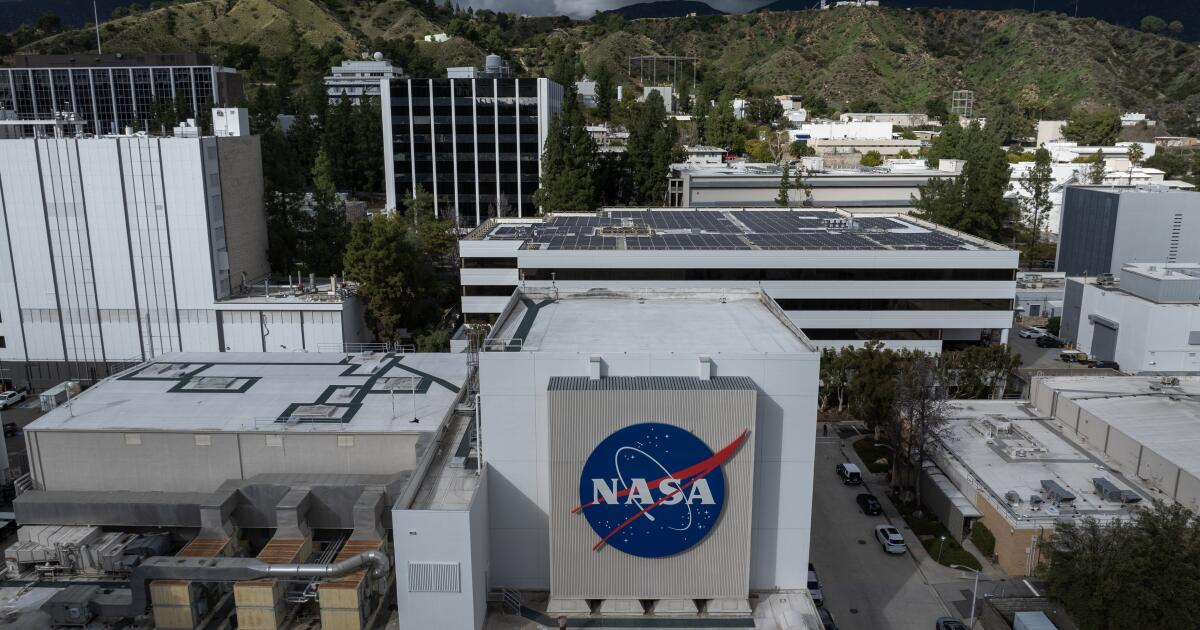
Weeks after Trump administration officials announced that management of NASA’s Jet Propulsion Laboratory would open to competitive bidding for the first time, questions remain as to why Caltech could lose control of the lab its researchers founded in 1936.
On one hand, observers note, high-profile delays and cost overruns on significant recent JPL projects earned sharp criticism from NASA even before the 2024 presidential election.
On the other, the second Trump administration’s record of squeezing scientific funding and attacking institutions in Democrat-led states make it difficult to consider any action separate from the charged political atmosphere, analysts say.
“My first instinct is that this [competition] isn’t necessarily a bad thing. It’s not written in stone that Caltech must run JPL, and it wouldn’t be the worst thing to have some competition for running the place,” said Casey Dreier, chief of space policy at the non-profit Planetary Society.
“That said, that requires this contract evaluation to be fair and unbiased, and this administration has no credibility in such things,” he added. “The responsibility is on NASA to earn the trust and ensure such an evaluation is open and free from political meddling. That’s almost impossible.”
JPL became part of NASA when the space agency was formed in 1958, and Caltech has been awarded the contract to run the institution outright ever since.
Its current 10-year contract with NASA, which is valued at up to $30 billion, runs through Sept. 30, 2028.
NASA Administrator Jared Isaacman announced the competition on May 22 as part of a slate of sweeping organizational changes at the space agency.
“When you step back, it is worth considering how many additional missions we could have undertaken with the resources lost to program cancellations and cost overruns over the years,” Isaacman wrote in a memo to staff. “That is the problem we must fix, so the American taxpayer and space-loving community can receive the highest scientific return on every dollar we spend at NASA.”
Competing the contract for JPL, the lone Federally Funded Research and Development Center (FFRDC) in NASA’s portfolio, was an effort to address cost-efficiency concerns, Isaacman wrote.
“This process will take several years, and I do not anticipate it having any impact on the projects underway or the location of the facilities,” he wrote. “It does, however, provide an opportunity to evaluate management costs, overhead burdens, and ideally find ways to get after the science faster and more affordably.”
In a joint statement, Caltech President Thomas F. Rosenbaum and JPL Director Dave Gallagher said the competition was “no surprise” and that a team was already in place “to ensure we are positioned for success.”
In July, NASA’s Office of Procurement held an informational event for companies and institutions interested in the upcoming FFRDC contract.
The dozens of registered attendees included universities like USC, Texas A&M University and Georgia Tech, aerospace companies such as Boeing and Lockheed Martin and nonprofit corporations like MITRE, which manages several FFRDCs, and Universities Space Research Association, a university consortium founded by the National Academy of Sciences in 1969. (SpaceX, which has been awarded more than $13 billion in NASA contracts in the last decade, was not on the list.)
“Lockheed Martin has more than 50 years of deep space exploration success with JPL, supporting landmark missions to Jupiter, Venus, Saturn, Pluto, including nearly a dozen missions to Mars,” said Bob Behnken, VP of Exploration and Technology Strategy. “We look forward to building on that unmatched partnership in the years ahead. We are closely following NASA’s review and will continue to assess how we can best contribute to the agency’s mission.”
Other attendees contacted by The Times declined to discuss their involvement.
Isaacman indicated that JPL could come under scrutiny even before he took over NASA. The billionaire entrepreneur referenced high costs at the La Cañada Flintridge institution in a memo prepared in advance of his confirmation hearings on his priorities for the space agency.
“Contract structure: Very expensive,” Isaacman wrote of JPL in a table outlining organizational issues at each of NASA’s centers. “Must increase the output and ‘time-to-science’ KPI.”
The institution has recently suffered a number of high-profile management stumbles.
After the JPL-managed Psyche mission to a metal-rich asteroid failed to meet its 2022 launch date, NASA commissioned an independent review that said internal reorganizations and personnel changes created distracted and uninformed managers and burned-out, stretched-thin staffers.
After a 2023 independent review found there was “near zero probability” of the JPL-managed Mars Sample Return mission making its proposed 2028 launch date, and “no credible” way to bring rocks back from the Red Planet within the stated budget, Isaacman’s predecessor Bill Nelson put out a call for proposals to industry and all other NASA centers, forcing JPL to compete for its own project.
After Trump’s election, Nelson announced that the final decision would be in the next administration’s hands.
The White House pushed for massive cuts to NASA’s 2026 budget that Congress overturned, and has lobbied for similarly steep cuts again this year. JPL has instituted painful cost-cutting measures of its own, reducing staffing from roughly 6,500 employees in 2023 to 4,500 last year through layoffs and attrition.
Its struggles come at a point when NASA is enthusiastically embracing private industry. Last month the agency awarded several key contracts for its upcoming lunar missions to Jeff Bezos’s Blue Origin and other private companies.
Trump has also made no secret of his willingness to punish states that haven’t voted for him through job losses. In announcing his decision to move U.S. Space Command from Colorado to Alabama, Trump acknowledged that his loss in Colorado in three presidential elections played a part in the move.
It’s impossible to consider any decision on JPL’s future separate from the administration’s track record of politically-motivated decisions, Dreier said.
“At the heart of this is why? Why now? If this is not just some rank political attack on California, what do they hope to gain from this?” Dreier said. “That deserves explanation, because the administration otherwise has no credibility here.”

The Gulf of Mexico, which the Trump administration calls the Gulf of America, is one of the noisiest bodies of water in the United States. Air gun blasts are the loudest element there, according to research by scientists who monitor underwater acoustics. Shipping traffic is another major contributor.
The noise could affect the ability of Rice’s whales to find food and mates, scientists say. The chronic stress of living in a loud environment could be detrimental to their health.
-

 Technology57 seconds ago
Microsoft Is Pulling the Plug on Publisher This Fall. These 8 Alternatives Prove You Don't Need It
-

 World8 minutes ago
Trump expands Cuba sanctions beyond US companies in major crackdown on foreign enablers
-

 Politics11 minutes ago
Bessent flips script on Dem senator with reminder about his son’s past ties to Epstein
-

 Health23 minutes ago
New ways to prevent flu revealed in ‘accidental’ lab breakthrough, study finds
-

 Sports26 minutes ago
Russell Wilson announces retirement from NFL after 14 seasons
-

 Technology31 minutes ago
Dark web monitoring: does it put your data at risk?
-
 Business38 minutes ago
In a first for the country, voters in Monterey Park ban data centers
-
 Entertainment41 minutes ago
Review: Muscling past a flat script, a big-screen ‘Masters of the Universe’ embraces its own silliness

