Science
Leaked memo reveals California debated cutting wildfire soil testing before disaster chief’s exit

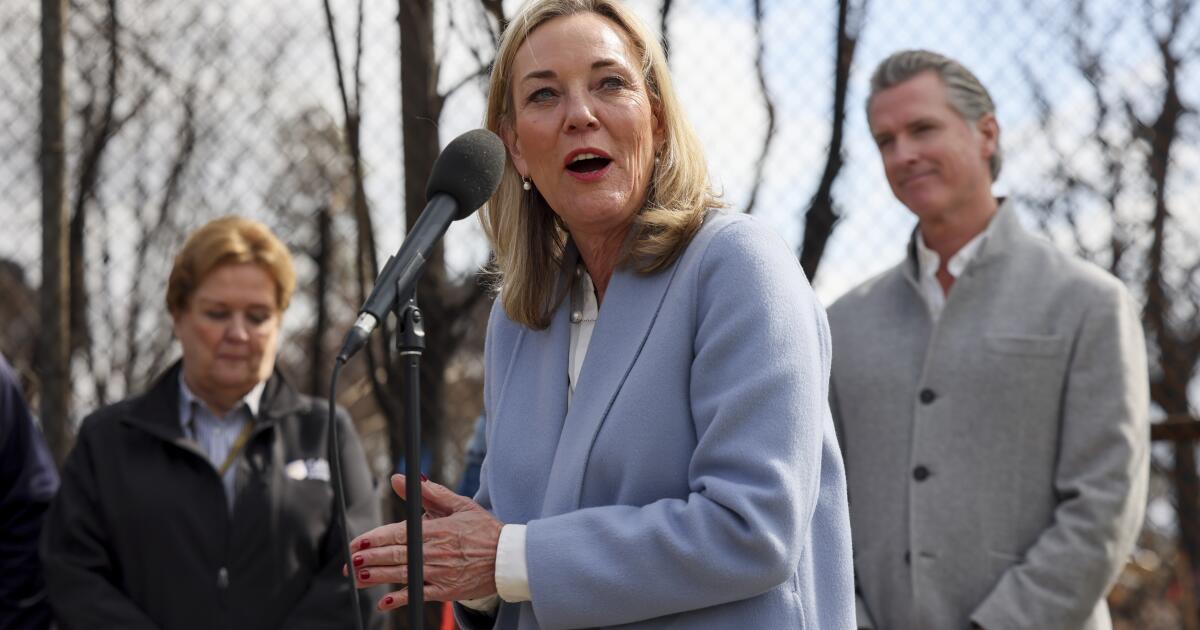
California Gov. Gavin Newsom’s disaster chief quietly retired in late December amid criticism over the state’s indecisive stance on whether soil testing was necessary to protect survivors of the Eaton and Palisades fires.
One year ago, Nancy Ward, then the director of the California Governor’s Office of Emergency Services (Cal OES), petitioned the Federal Emergency Management Agency to spearhead the cleanup of toxic ash and fire debris cloaking more than 12,000 homes across Los Angeles County.
Although Ward’s decision ensured the federal government would assume the bulk of disaster costs, it came with a major trade off. FEMA was unwilling to pay for soil sampling to confirm these homes weren’t still heavily contaminated with toxic substances after the cleanup — testing that California state agencies have typically done following similar fires in the past.
Following intense backlash from fire survivors and California lawmakers, Ward pleaded with FEMA to reconsider its soil-testing stance, writing in a Feb. 19 letter that it is “critical to protect public health” and “ensure that survivors can safely return to their homes.” Her request was denied.
However, in October, Cal OES — under Ward’s leadership — privately considered discontinuing state funding for soil testing in the aftermath of future wildfires, according to a confidential, internal draft memo obtained by the Los Angeles Times.
The Times requested an interview with Ward, and sent questions to her office asking about her initial decision to forgo soil testing and for clarity on the future of state’s fire recovery policy. Ward declined the request; The Times later published an article on Dec. 29 about allegations that federal contractors illegally dumped toxic ash and misused contaminated soil in breach of state policy.
Ward, who served as Cal OES director for three years, retired on Dec. 30; her deputy director, Christina Curry, stepped into the role as the interim chief. Ward also did not respond to several requests for comment for this article.
Ward was the first woman to serve as Cal OES director. She had also previously served as a FEMA regional administrator, overseeing federal disaster response in the Southwest and Pacific Islands from 2006 to 2014.
A Cal OES spokesperson said Ward’s retirement had been planned well in advance.
“Director Nancy Ward has been a steady hand and a compassionate leader through some of California’s largest disasters,” the spokesperson said. “Her decades of service have made our state stronger, safer, and more resilient. The Governor is deeply grateful for her dedication and wishes her the very best in retirement.”
The internal memo obtained by The Times was written by Ward’s assistant director, and titled: “Should the state continue to pay for soil testing as part of Private Property Debris Removal (PPDR) programs? ”
It laid out three possible answers: The state could keep funding soil testing after future wildfires; the state could defer soil testing decisions to the affected counties with the possibility of reimbursing them; or the state could stop paying for soil testing entirely.
A Cal OES spokesperson said the memo was only a draft and did not represent a policy change. “The state’s position on soil testing remains unchanged,” the spokesperson said. “California is committed to advocating for the safe, timely removal of wildfire debris. Protecting the public health and well-being of impacted communities remains the state’s foremost priority.”
The primary reason for soil testing is to prevent harmful exposures to toxic metals, such as brain-damaging lead or cancer-causing arsenic. Since 2007, comprehensive soil testing has been conducted after 64 wildfire cleanups in California, according to the memo. When soil contamination still exceeded state benchmarks after the initial cleanup, the state government redeployed cleanup workers to remove more dirt and then retest the properties.
This approach, the memo said, was critical in identifying harmful substances that “pose exposure hazards via ingestion, inhalation of dust, or through garden/food production.” Soil testing “helps ensure the safety” of children, seniors, pregnant women and people with health issues who are “more vulnerable to soilborne toxins.”
“The State has a long precedent of conducting or paying for soil testing,” the Cal OES assistant director wrote in the memo. “Pivoting from this would be a significant policy change.”
The memo cites a report from CalRecycle, the agency that has historically carried out state-led fire cleanups, that stresses the importance of the current practice to public health.
“Soil contamination after a wildfire is an invisible threat,” wrote a CalRecycle official. “If not properly cleaned and remediated in a methodical way, property owners may encounter additional hurdles during the rebuilding process and suffer additional trauma.”
“Soil sampling,” the official adds, “is the metric by which Recyclable demonstrates that debris removal operations have successfully remediated the post-disaster threat to public health and the environment.”
However, such soil testing and additional cleanup prolongs the cleanup timeline and can make it more expensive. The memo cites cost estimates from CalRecycle which show that soil testing and additional cleanup work usually costs some $4,000 to $6,000 per parcel, representing 3% to 6% of overall debris removal costs.
The state cost projections align with those made by independent environmental experts. Andrews Whelton, a Purdue University professor who researches natural disasters, estimated that soil testing and further remediation for the Eaton and Palisades fire would cost between $40 million to $70 million.
All told, the CalRecycle report states the usual soil-testing process has been a “relatively low-cost step” to safeguard public health.
Further, although soil testing may add some cost, when it’s taken as a proactive measure, it can save money down the road.
Forgoing soil testing and evidence-backed remediation can generate uncertainty about toxic contamination, which in turn could lower the value of homes in Altadena and Pacific Palisades, Whelton said. What’s more, the property owner may be liable for soil contamination if they fail to disclose environmental risks when selling or leasing.
The internal CalOES memo alludes to this give and take: “Funds saved initially by skipping testing may be outweighed by later unseen costs, for example, reinvesting in remediation, addressing community complaints, litigation, or cleanup failure.”
The U.S. Army Corps of Engineers has fielded over 1,100 complaints filed by property owners affected by the Eaton and Palisades fires — over 20% of which were related to the quality of work. According to internal reports obtained by The Times, federal cleanup repeatedly deviated from cleanup protocols, likely spreading contamination in the process.
Since then, FEMA officials have backed down from their hard-line stance against paying for post-fire soil testing in California in an attempt to shore up public confidence in the federal cleanup.
The U.S. Environmental Protection Agency announced this week that FEMA will conduct a limited lead-testing program in the Eaton fire burn scar that is intended to “confirm the effectiveness of cleanup methods,” according to an EPA spokesperson. The initiative has already come under the scrutiny of environmental experts who say it lacks the rigor of California’s soil testing regimen.
It remains unclear if California will continue to implement soil-testing safeguards that made the state a national leader in fire recovery. Though state officials say these will remain unchanged, there is no legal mandate to follow these procedures.
The internal CalOES memo circulated under Ward’s leadership has only added to the cloud of uncertainty.
One thing is clear: It’s a moot point for survivors of the Eaton and Palisades fire.
As state and federal officials debated the value of soil testing, most Altadena and Pacific Palisades residents have been left to investigate the extent of environmental fallout on their own.



Science
Freaked out by the news? Tips for staying calm from ex-refugees, hostages and ‘uncertainty experts’

War in Iran. Sleeper cells. Soaring gas prices. A new virus. ICE arrests. The acceleration of AI. And a rogue food delivery robot. Is your heart racing yet?
Amid one of the highest-stakes, most chaotic news cycles in recent memory, it’s hard to keep calm while scrolling through the day’s doom-saturated headlines.
Fear not. A team of British scientists, two authors and a group of thought leaders once deemed societal outcasts are here to help. Sam Conniff and Katherine Templar-Lewis’ new book, “The Uncertainty Toolkit: Worry Less and Do More by Learning to Cope With the Unknown,” presents evidence-based strategies to help you not only tolerate uncertainty, but thrive in the face of it.
Conniff, a self-described author and “social entrepreneur,” and Templar-Lewis, a neuroscientist, partnered with the University College London’s Centre for the Study of Decision-Making Uncertainty as well as real world “uncertainty experts” — former prisoners, drug addicts, hostages, refugees and others — to execute the most extensive study to date on “Uncertainty Tolerance,” which published in 2022. Their web project, “Uncertainty Experts,” is an interactive “self development experience” that includes workshops and an online Netflix-produced documentary, through which viewers can test their own uncertainty tolerance.
Their “Uncertainty Toolkit” book, out April 7, addresses the three emotional states that uncertainty puts us in — Fear, Fog and Stasis — while blending personal stories from the subjects they interviewed with the latest science on uncertainty, interactive exercises and guided reflections.
“The Uncertainty Toolkit” aims to help you keep calm amid chaos.
(Bluebird / Pan Macmillan)
“We are scientifically in the most uncertain times,” Templar-Lewis says. “There’s something called the World Uncertainty Index, which charts uncertainty [globally]. And it’s spiking. People say life has always been uncertain, and of course it has; but because of the way we’re connected and on digital platforms and our lives are so busy, we’re interacting with more and more moments of uncertainty than ever before.”
We asked the authors to relay three strategies for staying calm in challenging times, as told to them by their uncertainty experts.
This interview has been edited for length and clarity.
Advice from an ex-addict: Be grateful: Morgan Godvin is an ex-addict and human rights activist from Oregon who served four years of a five-year sentence in a federal prison, Conniff says.
“She developed a practice of ‘Radical Gratitude.’ Even in a world that feels so overwhelming, we can all find an object from which to derive a sense of gratitude,” he says. “As an emotion, gratitude provides a counterweight to anxiety that is almost as powerful as breath work or any of the other [anti-anxiety] well-known interventions.”
In prison, Godvin — who suffers from anxiety — created a daily practice to help her cope. “She began being grateful for the blankets, the only thing she had — and they were threadbare blankets,” Conniff says. “And by digging deep and really emphasizing the warm sensation we know of as gratitude, it became a biological hack. When the body starts to feel grateful, the hormones the body releases brings it back into what’s known as homeostasis or a sense of equilibrium; it activates the parasympathetic nervous system. It’s a very humbling and very healthy practice when the world’s just too much.”
Advice from a survivor of suicidal depression: Lean into the unknown. Vivienne Ming is a leading neuroscientist based in the Bay Area who faced a web of personal challenges in her early 20s. Ming, who was assigned male at birth, dropped out of the Massachusetts Institute of Technology, became homeless and was “living out of their car with a gun on their dashboard,” Conniff says. “They faced homelessness and near suicidal depression before finding a path that took them through gender transition to a place of real identity, marriage, family and success as a scientist.”
How? They developed and cultivated an awareness of “negativity bias,” Conniff says. “We all have a predetermined negativity bias. And in times of uncertainty, that negativity bias goes off the charts and we start to limit ourselves and shut ourselves down. By understanding this, we begin to be able to make a choice: Am I shutting myself down to the opportunities of life? Am I not getting back to people? Am I not taking the chances that are presented to me?”
What’s more, uncertainty, Dr. Ming pointed out, is actually good for you. It unlocks parts of your brain.
“Uncertainty drives neuroplasticity, our ability to learn,” Conniff says. “So [it’s about] resisting negativity bias — that this is all dangerous and difficult and we’re told not to trust each other — and instead, Dr. Ming’s response is to lean into the unknown. She says ‘the best way forward is to all walk slowly into the deep end of our own lives.’”
Advice from an ex-refugee: Reflect on your gut. Rez Gardi grew up in a refugee camp in Pakistan, before her family relocated to New Zealand. She’s now a lawyer and human rights activist working in Iraq.
“Rez correctly identified the scientific explanation for what we all call ‘gut instinct,’” Conniff says. “It’s known as ‘embodied cognition.’ The idea is that we have two brains — the gut instinct is an incredibly complex system of data points and it literally is in our gut and it’s connected to our brains via the vagus nerve. What it does is it brings your intuition in line with your intellect.”
So how to tap into it? “Rez talked about reflecting on her gut instinct,” Conniff says. “So when you have a feeling that you are right or wrong, go back to that feeling: What color was it? What shape was it? Where was it in your body? What temperature was it? Rez honed her gut instinct to become incredibly accurate: Should she trust this person? Was she safe? And that gut instinct became a highly tuned instrument. When we are trying to solve problems, when we are trying to communicate, these signals are as accurate as the best of our cognitive problem-solving abilities.”
Conniff and Templar-Lewis spoke to nearly 40 uncertainty experts in all. And with all of them, Conniff adds, “they kind of learned these techniques themselves, but the scientific evidence really backs it up.”

Scientists spent the first weeks of the year on an expedition to Antarctica to study Thwaites Glacier, which is melting at an alarming rate. If it breaks apart entirely, it could push up global sea levels by two feet over the course of several decades, affecting tens of millions worldwide, according to a New York Times analysis.
The maps below show some of the coastal cities at risk and populated, low-lying areas that could be threatened if the glacier were to collapse today.
1.7 million
These are just the minimum effects that Thwaites’s disintegration would be likely to have on the world’s coastlines. As the glacier breaks apart, global warming will raise sea levels even higher by melting the ice from Greenland and causing oceans to expand in volume. And Thwaites acts as a plug, holding back many of the Antarctic glaciers on land around it. If it collapses, they could break apart and spill into the sea as well.
“Eventually it would take out all of the West Antarctic,” said Richard Alley, a professor of geosciences at Penn State.
Seaside cities all over the world are at risk, but the threat is especially acute in Asia, and includes some of the world’s fastest-growing urban areas, as the map below shows:
The costs of guarding against higher storm surges and more frequent flooding would be huge. One proposal from the U.S. Army Corps of Engineers to protect parts of New York City would cost more than $52 billion, a price tag that would be out of reach for much of the world.
“We’ll defend the highest-value places that are defensible, but there will be other places that we don’t,” said Benjamin Strauss, Chief Scientist at Climate Central, a nonprofit science organization that produced the elevation models used in this article.
In city after city, the Times’s analysis found that heavily populated areas tend to be near the coasts, as opposed to higher, safer areas.
Shanghai, one of the major cities under threat, already has more than 600,000 residents living below sea level. If average sea levels rose two feet, an additional 4.7 million people would be affected.
Shanghai’s population at each elevation
Like many of the most vulnerable places, Shanghai is situated on a soft, marshy delta, a landscape naturally prone to sinking, although humans often speed up the process by building structures and draining the groundwater below. The city has also been adding and reinforcing seawalls, and replacing concrete with wetland parks to absorb stormwater.
For places like Shanghai, the cost of defending the city is relatively modest compared with its value, said Jochen Hinkel, director of the Global Climate Forum, an international research organization based in Germany. “There’s so much capital concentrated on a small piece of land,” he said.
But not all places have the resources to protect themselves. Dhaka, the capital of Bangladesh, is expected to swell to over 50 million people by 2050, and will rely extensively on borrowed money to prepare for the worst.
Dhaka’s population at each elevation
Bangladesh, a low-lying delta nation, is experiencing more volatile monsoons and stronger cyclones as the planet warms. Villages have already been erased as the tides rise and rivers in the region change shape. Saltwater tides have ruined farmland, driving rural residents to the already-crowded capital.
The limits to adaptation
In the United States, a two-foot increase in sea levels wouldn’t affect as many people as in parts of Asia, but the price of adaptation would be astronomical. And even in the wealthiest country in the world, flood defenses aren’t bulletproof.
When the network of pumps and levees failed during Hurricane Katrina in 2005, the catastrophe killed 1,400 people and displaced more than a million. Recovery in New Orleans has cost about $140 billion. Dozens of smaller communities along the Gulf Coast may not be so lucky.
120,000 people within 2 feet of high tide
Areas protected
by levees
125,000

Coastal cities elsewhere are bracing for higher sea levels. It would cost $13.6 billion to shield part of the San Francisco waterfront. Farther inland in California, it would take $2 billion to improve protections in Stockton. Across the country, a giant barrier at New York City’s harbor could cost $119 billion.
Yet people and buildings continue to accumulate in harm’s way. Miami’s population and real estate values have exploded in recent years, despite the fact that the city is notoriously difficult to protect.
Clearer answers about if, and when, Thwaites could collapse may make all the difference in how well coastal areas are able to adapt. “The value of the information is grotesquely higher than what we’ve invested in it,” Dr. Alley said.
Under President Trump, the United States has abandoned research that could better forecast the effects of Antarctica’s melting ice. It has also promoted the use and burning of fossil fuels, adding to the greenhouse gas emissions that are dangerously heating the planet. That could speed up the glacier’s collapse.
The fallout from decisions made today may not be felt immediately, Dr. Strauss said, but “this is what we’re signing up the future for.”
Methodology
The Times’s analysis includes cities with 300,000 residents or more and within 100 miles of the coast.
It used elevation data from Climate Central’s CoastalDEM 3.0 to calculate the average high tides at each location. This model reflects local water levels more accurately than global averages. It used data from the European Commission’s Global Human Settlement Layer (GHS-UCDB) for city boundaries and Worldpop’s 2026 data for population estimates.
The sea level rise scenarios in this article focus only on the effects from Antarctica. The continent is expected to lose its gravitational pull on ocean water as it loses ice. As that happens, parts of the Northern Hemisphere, including the United States and much of Asia, will experience higher-than-average effects in sea level rise than places closer to Antarctica.
The maps and total population numbers are adjusted to reflect this dynamic, using data from Jerry Mitrovica, professor of geophysics at Harvard. They do not account for similar dynamics from Greenland’s ice loss, or for any other influences that may cause an uneven distribution of sea level rise.

I show up for my appointment. A nurse asks me to get undressed from the waist up and put on a gown with the opening in front. For the life of me, I can’t figure out the correct way to tie the gown’s tassels. When I mention this feat of incompetence to the technologist inside the examining room, she tells me I could’ve just taken off my shirt. The nurse, she says, is “not used to male patients for mammograms.”
Thus began my first of what will be many regular mammogram screenings, screenings that, as a man, I never expected I’d need. I guess that nurse didn’t expect it either.
Let’s be clear, the breast cancer statistics for women are downright frightening: One in eight women will be diagnosed with breast cancer in their lifetime. For men, it’s only 1 in 726. Looking at those numbers, it’s obvious and even reasonable to understand why breast cancer is treated as a greater health threat for women. But much of the culture surrounding the disease seems ensconced in a gendered mold, including those pink awareness ribbons, pink merchandise, wigs, sisterhood and the general idea that men don’t have breasts in the first place, so why on earth would they have to worry about getting breast cancer?
In fact, some of us do have to worry. Breast cancer in men isn’t so rare that it hasn’t affected a few male celebrities, like KISS drummer Peter Criss, actor Richard Roundtree (star of “Shaft”), and famous by association, Beyoncé’s father, Mathew Knowles. Despite these high-profile diagnoses, the perception of breast cancer as a threat to men’s health has struggled to go mainstream.
Cheri Ambrose founded the Male Breast Cancer Global Alliance more than a decade ago after learning her friend’s husband received a breast cancer diagnosis. She looked on the internet for some information about it. “And to my surprise, there was nothing out there for men,” she tells me. “It was crickets.”
Dr. Aditya Bardia is a UCLA breast cancer oncologist who’s been in the field for 15 years and, in that time, has treated over 20 men. He says that men should watch out for lumps, pain, discomfort or nipple inversion. “If you have any of that, get it checked out with an ultrasound,” says Bardia. “Otherwise, if a man is only at average risk, then a mammogram is not necessary. But if he has BRCA and a family history, then a mammogram is recommended.”
The genetic risk factor
Those major risk indicators are what ushered me into my own cancer prevention safari. My mother was diagnosed with breast cancer in 2000, and my grandmother was diagnosed around a decade earlier. Add to this the fact that I have an Ashkenazi background, and I’m about as at-risk for breast cancer as any man can be.
To get a more accurate genetic indicator of cancer risk, my mother encouraged me to get my DNA tested for the BRCA1 gene mutation. Sure enough, I tested positive for BRCA1, and now my doctors and I are on high alert not just for breast cancer but also linked cancers like prostate and pancreatic cancer. (While it’s not public record if Richard Roundtree was BRCA1 positive, he survived his bout with breast cancer only to pass away decades later from pancreatic cancer, suggesting that he possibly carried the gene mutation.)
The mammogram experience
After testing positive for BRCA1, the geneticist I spoke with emphasized that my biggest new health concern would be prostate cancer, so I was a little bit surprised when my general practitioner gave me a referral for my first mammogram. I had no idea what to expect.
This is where I have to say that the scope of what I don’t know about women’s health is probably wider than I’d care to admit. My first exposure to the realities of what a mammogram procedure actually entails came from watching the pilot episode of “Girls5eva.” We first meet Sara Bareilles’ character while she’s in the middle of getting one, latched in somewhat medieval fashion to a mechanical vice that towers high over her head. I knew uncomfortable breast squeezing was involved; I just didn’t realize a machine did all the work. “Girls5eva,” if you’re unfamiliar, is not an old show, which means I’ve been unaware for most of my life how a mammogram actually works.
Still, as I headed to my appointment, I wondered, because I’m a man, how my own mammogram would differ from the one I saw Sara Bareilles getting on TV. It turns out, it wasn’t very different at all.
After getting rid of that gown, the technician positioned me chest-forward against her own mechanical vice. I was instructed to hold my breath while the machine gave me two tight squeezes on the left and two tight squeezes on the right, each squeeze lasting a few seconds. Yes, this was uncomfortable, but comparatively breezy as far as medical procedures go — simple, brief and noninvasive. My greatest irrational fear was that the machine might squeeze far tighter than necessary and I’d just be stuck there in immense pain until someone unplugged the cord. Of course, that did not happen. Actually, nothing else happened. I was in and out of the building in under 15 minutes.
The results? “No significant masses, calcifications or other findings are seen in either breast.” Good to know.
Navigating, and breaking down, the gender stigma
The mammogram itself was a piece of cake, yet I have to acknowledge that there were times on this journey of cancer risk self-discovery when I felt like a tourist prying into someone else’s health narrative. It wasn’t just the incident with the gown, or the geneticist assuring me that prostate cancer would be my major BRCA-related concern. While filling out a required questionnaire before scheduling my mammogram, I had to answer questions like, “Have you had an entire breast removed?” and “Does your bra size exceed 42DD?” I answered no, but if there had been an “N/A” option, I would’ve gone with that instead.
Bardia acknowledged the disconnect. “Because it’s relatively rare for men, guidelines and management for men are informed by the guidelines and management for women,” he tells me.
In a different context, some people could misinterpret these gendered hiccups as microaggressions. I don’t personally feel that way, but I’m trying to be fair, taking into account both the overwhelming impact breast cancer inflicts on women’s bodies in much greater numbers and the stigmatic pain points that men might be experiencing in their own breast cancer journeys.
Let’s face it: The stigma for men is real and it has consequences. “Even though it’s much more rare, the mortality rate for men is 19% higher for breast cancer than for women,” says Ambrose. “That’s because of lack of awareness and, I think, the stigma.”
A big part of that stigma, Ambrose believes, is the unfortunate proliferation of associating breast cancer with the color pink. “Pink is not a cure,” she says. “Sadly, it’s become a moneymaker for everyone during October, and not just the breast cancer organizations. People are making pink bagels, pink pens and even little pink ducks. People are making money off of it. And honestly, it’s not pink, it’s not fluffy, it’s not a happy disease. It’s breast cancer. And anyone going through it, male or female, or any gender, the pink ribbon is definitely stigmatizing.”
Even Mathew Knowles has publicly fiddled with the true name of his diagnosis, opting instead for the not-quite-accurate “chest cancer” and also “male breast cancer,” which falsely implies a masculine version of the disease.
But I can’t help but wonder if some of the stigma comes from other places as well. In parts of America, the idea of a man doing anything that can be perceived as feminine is politically charged. I also don’t need to point out that we live in a time of aggressive transphobia, which factors heavily in today’s divisive politics. For some political leaders, there’s nothing scarier than the possibility of sharing a public restroom with a woman who was born a man. Even drag queens can’t read books to children at the library without getting political blowback. Under this societal construct, how are men supposed to take seriously a disease that bears the name of a body part so associated with the opposite gender?
Then again, Peter Criss spent his entire career wearing makeup to look like a glam kitty cat, but if that didn’t stop him and his KISS bandmates from earning Kennedy Center Honors last year from our current president, then I don’t think it should stop anyone from heeding Criss’ advice to take charge of our own health.
I’m grateful to not feel bothered by this perceived stigma. I can understand it, but I can also roll with the feminized aspects. I guess if I’ve learned anything from this experience, it’s that everyone has breasts — just different kinds and all of them prone to disease. After all, what part of my body went into those mechanical vices during my mammogram?
In the days after my appointment, I saw a few friends I hadn’t seen in a while. When they asked what was new, I told them I’d just had my first mammogram. Some of them, men and women, thought I was kidding, but I assured them it was no joke.
I share this anecdote with Ambrose and she dives right in, “You helped spread awareness and break down the stigma,” she says, with some gratitude I wasn’t expecting. “That’s what each person who tells their story does.”

Former Wyoming volleyball star reveals how the SJSU trans scandal permanently ruined friendships on her team

Phishing scam exploits Apple Mail ‘trusted sender’ label
Lone survivor of fiery Cybertruck crash was trapped by electronic doors, lawsuit says

Stars of the desert rock scene shine at Mojave Experience

Anyone can write better. Anne Lamott shows us how again, this time with her ‘current husband’

Florida High School Football Rankings: Top 25 teams – Oct. 21

How old is Bo Nix? What to know about Oregon quarterback ahead of 2024 NFL Draft

Cleary's 21 help Le Moyne down Central Connecticut State 69-64 in OT

99th annual Pony Swim held in Virginia

Indiana Members Credit Union announced as new anchor tenant at Bottleworks District

Iran attacks cut 17% of Qatar’s LNG capacity for up to 5 years: QatarEnergy

Cursive is back. But should students be learning the skill?

State Department to ask for bonds of up to $15,000 for visa applications from a dozen more countries

Russian tanker drifting in the Mediterranean Sea may explode

Senate votes down effort to restrict Trump’s Iran war powers
-

 Oklahoma5 days ago
Family rallies around Oklahoma father after head-on crash
-

 Michigan1 week ago
Operation BBQ Relief helping with Southwest Michigan tornado recovery
-

 Nebraska6 days ago
Wildfire forces immediate evacuation order for Farnam residents
-

 Southeast1 week ago
‘90 Day Fiancé’ alum’s boyfriend on trial for attempted murder over wild ‘Boca Bash’ accusations
-

 Detroit, MI15 hours ago
Drummer Brian Pastoria, longtime Detroit music advocate, dies at 68
-

 Georgia3 days ago
How ICE plans for a detention warehouse pushed a Georgia town to fight back | CNN Politics
-

 Connecticut1 week ago
Exclusive | Ex-CBS anchor Josh Elliott back on Connecticut dating scene after ugly Liz Cho split
-

 Massachusetts1 week ago
Massachusetts community colleges to launch apprenticeship degree programs – The Boston Globe