Science
How Inventors Find Inspiration in Evolution


Soft batteries and water-walking robots are among the many creations made possible by studying animals and plants.
For centuries, engineers have turned to nature for inspiration. Leonardo da Vinci dreamed of gliding machines that would mimic birds. Today, the close study of animals and plants is leading to inventions such as soft batteries and water-walking robots.
Cassandra Donatelli, a biologist at the University of Washington, Tacoma and an author of a recent review of the burgeoning field of “bioinspiration,” credits the trend to sophisticated new tools as well as a new spirit of collaboration.
“It’s huge,” she said. “We have a biomechanics lab here where we have six or seven engineers and 10 biologists. We’re all physically in the same building, together doing work.”
Despite its promise, the future of bioinspiration is cloudy. The Trump administration has proposed cutting the research budget of the National Science Foundation by 55 percent, directing remaining funds to a few fields such as artificial intelligence and quantum computing. Bioinspiration, which has thrived on this funding, may lose out.
“That work will suffer with N.S.F.’s new priorities,” said Duncan Irschick, a biologist at the University of Massachusetts. “I sincerely worry about handing the mantle of bioinspired research to China.”
Here are some inventions, both new and historical, that have drawn inspiration from nature’s creativity.
In 1941, the Swiss inventor George de Mestral went on a hunting trip. Along the way, burdock burrs stuck to his pants and to the fur of his dog. Curious about their power to cling, de Mestral put the burrs under a microscope. He saw thousands of tiny hooks. The sight led him to imagine a new kind of fastener, one that wouldn’t rely on knots or glue.
A few years later, de Mestral discovered a substance that could make that idea real: nylon. The synthetic fiber could be permanently bent into a hook. De Mestral found that nylon hooks readily attached to fabric and could be peeled away. In 1955, he filed a patent for his invention, which he called Velcro, a combination of the French words “velour” (“velvet”) and “crochet” (“hooks”).
When engineers in Japan created a fleet of high-speed trains in the 1980s and 1990s, they also created some unexpected problems. A train traveling through a tunnel faster than 220 miles an hour compressed the air ahead of it. When the pressure wave reached the tunnel exit, it created a sonic boom.
An engineer named Eiji Nakatsu cast about for a way to make the trains quiet. “The question then occurred to me — is there some living thing that manages sudden changes in air resistance as a part of daily life?” Mr. Nakatsu recalled in a 2005 interview.
Mr. Nakatsu was not just an engineer, but also an avid birder. As he pondered the question, the kingfisher came to mind. When the bird dives at high speed to catch fish, its beak slips into the water without a splash.
So Mr. Nakatsu and his colleagues built train engines with rounded, tapered front ends. Their kingfisher-beak shape reduced the air pressure in tunnels by 30 percent, making the trains quieter and more efficient, even as they traveled more rapidly through tunnels.
In the 1990s, Frank Fish took a close look at the massive knobs that stud the leading edge of humpback whale fins. Dr. Fish, a biologist at West Chester University in Pennsylvania, and his colleagues discovered that these tubercles significantly improve the whales’ performance by keeping water flowing smoothly over their fins, generating extra lift.
Dr. Fish and his colleagues patented their discovery, which has since been adopted by engineers to improve a long list of devices. Tubercles extend the life span of wind turbine blades, for example, and make industrial ceiling fans more efficient. They can even be found on surfboard fins and truck mirrors.
A gecko’s foot is covered by a half-million tiny hairs, each of which splits into hundreds of branches. When a gecko slaps its foot on a wall, many of the branches push tightly against the surface. Each branch creates a weak molecular attraction to the wall, and together they generate a powerful force, yet the gecko can easily pull its foot away in a millisecond.
Dr. Irschick and his colleagues created a fabric that mimics these forces, which they called Geckskin. A piece the size of an index card can hold 700 pounds to a glass surface and be moved without leaving a trace behind.
Pitcher plants are carnivorous, feeding on insects that crawl onto the rim of their pitcher-shaped leaves. The rim is exquisitely slippery, causing prey to lose their footing and fall into a pool of digestive enzymes.
Researchers discovered that when rain and dew collect on the plant, microscopic bumps and ridges pull the water into a film that sticks to the legs of insects. The bugs struggle for traction and end up swimming — and falling.
In 2011, Joanna Aizenberg, an engineer at Harvard, and her colleagues created materials with pitcher-plant patterns on their surface, and these turned out to be slippery as well. A company co-founded by Dr. Aizenberg sells coatings that keep sticky fluids from clogging pipes and paints that repel barnacles from ship hulls.
The mantis shrimp has a pair of odd limbs called dactyl clubs that look a bit like boxing gloves. It uses the clubs to deliver staggering punches with a force equal to that of a .22 caliber bullet — enough to crack open shells. Scientists have long wondered why those impacts don’t crack the dactyl club itself.
Through evolution, the mantis shrimp gained an exoskeleton of astonishing complexity. Its dactyl clubs are composed of layers of fibers; some form herringbone patterns, while others are made of corkscrew-like bundles. These layers deflect the energy from a punch, preventing it from spreading and causing damage.
In May, researchers at the National Institute of Standards and Technology reported the creation of an artificial version of these shock-absorbing layers. When microscopic beads of silica were fired at the material at 1,000 miles an hour, it dented but did not crack. The researchers foresee using the material to make lightweight shields for spacecraft, to protect them from tiny meteoroids.
Ripple bugs are about the size of a grain of rice. They float on the surface of streams by spreading out their legs across the water — but they can also move with astonishing speed, roughly 120 body lengths each second. At a human scale, that would translate to 400 miles an hour.
The secret lies at the end of the middle pair of legs. When a ripple bug dips them into the water, surface tension causes stiff fronds at the ends to fan out in just 10 milliseconds, and the fans become oars. At the end of each stroke, when the insect lifts these oars from the water, the fans snap shut.
In August, Victor Ortega-Jiménez, a biologist at the University of California, Berkeley, and his team announced that, following these principles, it had built tiny robots that walk on water, make rapid turns and brake sharply. And because the water forces the fans open and closed, the Rhagabots — after Rhagovelia, the Latin name for ripple bugs — require little energy from their onboard batteries.
The paralyzing blasts of electricity that an electric eel delivers arise from a sleeve of tissue that wraps around the animal’s body. The tissue contains thousands of layers of cells, which are sandwiched in turn between layers of fluid. The cells pump charged atoms into the fluid, creating a biological battery.
Michael Mayer, a biophysicist at the University of Fribourg in Switzerland, and his colleagues are working to mimic the electric organs in electric eels and other fish. A biologically inspired battery could offer big advantages over conventional ones. They could be safer sources of power for medical implants, for instance, because they would run on organic compounds rather than toxic chemicals.
The team has built contact-lens-shaped prototypes from soft, bendable gels. Dr. Mayer hopes one day to implant the batteries with the same proteins that electric eels use to move charged atoms around.
“Building all this so that it really does the same thing as in the fish is right now beyond our reach,” Dr. Mayer said. “I think this is far in the future, but the project has already gone much further I thought it would.”




New research shows the chemicals we use to kill pests, heal our bodies and package our foods are spread throughout the ocean, intermingling with the microorganisms that feed marine life. They’ve reached even the most distant and remote places on the planet.
In a new study, Daniel Petras, a biochemist at UC Riverside — together with 29 researchers from around the world — looked at 2,315 seawater samples collected from estuaries, coastal regions, coral reefs and the open ocean. The samples came from the North Pacific, the Baltic Sea and the coast of South Africa, among other places. For each sample, the researchers used a relatively new technique that allowed them to see every chemical present — not just ones they were looking for or suspected.
What they found was disconcerting: Human-made chemicals were everywhere, even in water hundreds of miles from land.
The study was published Monday in Nature Geoscience.
“This presents a pretty sobering view of just how widespread these chemical pollutants have become in the ocean,” said Douglas McCauley, an associate professor in the Department of Ecology, Evolution, and Marine Biology at UC Santa Barbara. McCauley was not involved in the research.
At the mouths of rivers and along the coasts, the research team found large concentrations of pharmaceuticals such as beta blockers, antidepressants and antibiotics. They also discovered cocaine and methamphetamine, as well as insecticides and pesticides, such as DEET and Atrazine. In some cases, including samples taken near Puerto Rico, signatures for these pollutants constituted nearly 20% of the dissolved organic matter.
As the distance from coasts increased, the number and concentration of industrial chemicals decreased, but did not disappear. The researchers found that even hundreds of miles from North America’s Pacific coastline, or floating through the California current, significant levels of other industrial chemicals — namely ones from petroleum-based plastics — were present in the organic material at levels between 0.5% and 4%.
“This finding provides further evidence that plastic-derived carbon, including micro- and nano-plastics, contributes a substantial portion to the marine carbon pool,” wrote the authors, who took care to account for any plastic materials inadvertently introduced in the laboratory or during collection.
“As an ecologist, what is a bit scary here is trying to wrap my head around what this means for ocean health,” McCauley said. “I think there is going to be a lot we need to learn now about how these chemicals, in the concentrations they are being detected … are affecting ocean species — from plankton to whales.”
He said the open ocean samples upped “the ante on concern about the penetration of pollutants associated with plastics and plastic pollution. We discovered how widespread big pieces of plastic were in the ocean, then micro plastics, then nano plastics. These results highlight the even more invisible risk of chemicals leaking out of plastics and turning some parts of the ocean into a petrochemical soup.”
Petras said the work they did was novel in that it used a method of chemical detection in which the sample is screened not for specific chemicals, but everything in it — a relatively new technology that allows researchers to go beyond targeting the chemicals they suspect might be there.
What’s new, he said, is the technology not only “sees” all the different chemical structures, but identifies them, “so we can give those chemical compounds names, and hypothesize about their origin. I think that this is the first large-scale meta analysis, where we could propose where the different chemicals are coming from. Before that, this kind of analysis was not really possible.”
Researchers looked at 21 publicly available data sets comprising 2,315 samples acquired by three laboratories. Each lab used the same instruments and technologies, allowing Preta’s team to sift through a standardized set of open-source mass spectrometry data to do its own analysis.
Petras said the analysis provides the scientific community with a variety of new questions to ask and test. For instance, how will these industrial pollutants affect or integrate into global carbon cycling?
The carbon cycle is a continuous, biogeochemical exchange of carbon among the atmosphere, oceans, land and geological reservoirs, such as rocks and fossil fuels. The cycle regulates the planet’s temperature and supports life.
“The vast majority of ocean water samples typically consist of metabolites that are made by microbial communities, like the ones that fix carbon through photosynthesis. They release molecules such as sugars and peptides and lipids … they’re elementally important for carbon cycling,” Petras said. Now, because of this research, as well as other studies on microplastics, “we assume that there might also be a substantial contribution of human made molecules in this cycling. But to what degree this might influence microbial communities and global carbon cycling, is largely unknown.”
In the best-case scenario, he said, the microbes simply incorporate, ingest or “breathe” these chemicals in, recycle them, “and then respire them as carbon dioxide.” But it’s possible these chemicals could be altering this system.
“If herbicides or other molecules are there in large amounts, or if they act in synergy with them, they may have certain effects on the microbial communities … and those questions we need to address and experimentally test in the laboratory,” he said.

In the three years since Los Angeles County declared an end to COVID-19 as a public health emergency, mask sales have dwindled, unopened tests have expired in their boxes and people have returned to in-person school, work and socializing.
But for thousands of L.A. County residents living with the complex, chronic condition known as long COVID, the emergency has never ended. And as the virus continues to circulate, more people are being forced to reckon with a life-altering yet often invisible disability whose relative newness offers few answers for the future and few avenues for support.
“You’re not just becoming disabled,” said Elle Seibert, 31, who has dealt with debilitating fatigue and cardiac symptoms since 2020. “You’re realizing how easily society at large and people in your life will abandon you when you cannot offer them things.”
Elle Seibert, 31, has been living with long COVID.
(Christina House / Los Angeles Times)
Long COVID is an infection-associated chronic condition, a class of illness triggered or worsened by viral, bacterial or parasitic infections. Symptoms typically affect multiple organs or body systems, and cluster around fatigue, cardiovascular problems, cognitive issues and pain.
“What causes long COVID is an abnormal immune system response [plus] dysregulation of the nervous system,” said Dr. Caitlin McAuley, director of the Keck Medicine of USC’s COVID Recovery Clinic, one of two dedicated clinics in the county (the other is at UCLA).
Researchers have also found that long COVID patients are more than twice as likely as people without the condition to have particles of the SARS-CoV-2 virus lingering in their blood — remnants of original infection that could be causing ongoing inflammation.
Though the condition strikes across age, gender, race, vaccination status and patients’ previous levels of health or activity, a few demographic patterns have emerged. Women, people of Hispanic origin, people with severe initial infections and people who have not been vaccinated against the virus appear more likely than other groups to develop long COVID.
Severity of the initial disease can’t perfectly predict the aftermath: debilitating symptoms have set in for people with mild initial infections. Patients arrive at a diagnosis once symptoms have persisted for at least three months and all other explanations have been ruled out.
Lawrence Totress, 51, was busy working full time and volunteering as his church’s office manager when he tested positive for COVID in July 2022.
For two weeks, he had the same fever, shortness of breath, dizziness and fatigue that his friends experienced. But while his fever eventually lifted, frighteningly intense cognitive symptoms descended.

Lawrence Totress, 51, at his apartment in Los Angeles. “It’s not like we’re twiddling our thumbs and trying to get some money. This is a very serious condition,” he said.
(Ariana Drehsler / For The Times)
“I could not find words,” he said recently from his home in South Los Angeles. “I would have phone calls with my supervisor, with my insurance, and I would just cry because I couldn’t even finish the conversation.” At one point, he could not recall the name of the person he’d reported to for the last two years. He scrolled through his phone contacts until he saw “Supervisor” typed below a name.
A trip to the bathroom or the front door left him without energy to return. He cycled through migraines and bouts of postural orthostatic tachycardia syndrome, or POTS, a common long COVID symptom that sent his heart rate skyrocketing when he stood up.
Through occupational therapy at Keck’s long COVID clinic, he learned skills that have allowed some semblance of independence: hydration, rest, careful management of his time and energy.
Where he once bounced from task to task, he now clears a whole day for a grocery store outing. On a bad day, he may not make it past the produce before he’s hit with fatigue so intense he can’t recall why he’s there.
He can no longer work; bills are still piling up. Like every patient interviewed for this story, his application for long-term disability was denied, despite a thick stack of medical records.
“It’s not like we’re twiddling our thumbs and trying to get some money. This is a very serious condition,” he said. “Take it as it being serious, and allow us to have the resources.”
There is no reliable data for county long COVID cases, nor for the number of people disabled by the condition.
The official county count for total confirmed COVID infections ended in mid-2023 at 3.5 million. Given the World Health Organization’s estimate that 6% of infections result in long COVID, just the first two years of the pandemic may have yielded up to 175,000 long COVID cases, a number that has only grown as the virus has continued to circulate.
In 2023, 15.6% of respondents to a countywide health survey said they had experienced COVID symptoms for at least three months after testing positive. A follow-up county survey currently underway asks more precisely whether respondents have had long COVID symptoms within the last 12 months, said Barbara Ferrer, director of the L.A. County Department of Public Health. Those results will be available later this year.
Ferrer compared the current state of public understanding to the early days of the HIV/AIDS epidemic. In both cases, she said, a new virus created a large population of people living with a complex, chronic condition with far-reaching implications for their health, housing and economic security.
“COVID-19 really has had a profound impact in terms of long-lasting symptoms that affect all kinds of different parts of the body, at a much higher rate than we usually see from other viruses,” Ferrer said.
This month, the public health department formed a physician and patient advocate working group that for 12 months will study policies and services that could help long COVID patients, Ferrer said, such as a clearer pathway to disability payments and better education for healthcare providers.
“We still hear stories about people who are saying, you know, my physician dismissed it or misdiagnosed it, or told me to just go home and wait,” Ferrer said.
Patient advocates have lobbied the county Board of Supervisors to establish a similar task force, thus far unsuccessfully.

Beth Nishida, 64, at Creekside Park in Walnut. She retired from special education administration due to the ongoing effects of a 2022 infection.
(Ariana Drehsler / For The Times)
“The goal really, in my opinion, should be how do we fix it, not just how do we count it,” said Beth Nishida, 64, of Walnut, who retired from special education administration due to the ongoing effects of a 2022 infection. “I know [long COVID] is new, but it’s not as new as it was. At some point, we have to start learning things and implementing them.”
The outlook at the federal level is grim. Last year, the Trump administration closed the Office for Long COVID Research and Practice and canceled grants for long COVID research.
“The COVID-19 pandemic is over, and HHS will no longer waste billions of taxpayer dollars responding to a nonexistent pandemic that Americans moved on from years ago,” a Department of Health and Human Services spokesperson told the magazine Science.
Yet new COVID infections are producing new long COVID patients. People who were healthy and active just a few months ago are still arriving at USC’s clinic with cardiovascular and cognitive problems that have upended their lives.
“There has been a societal move to go past COVID as if it’s not around anymore — but it definitely is,” McAuley said. “If it’s not on people’s radar, it’s never going to be addressed. And people will bounce in and out of the ER, and they will potentially have a degree of disability [to] the point where they just lose their job, and no one really is addressing it.”
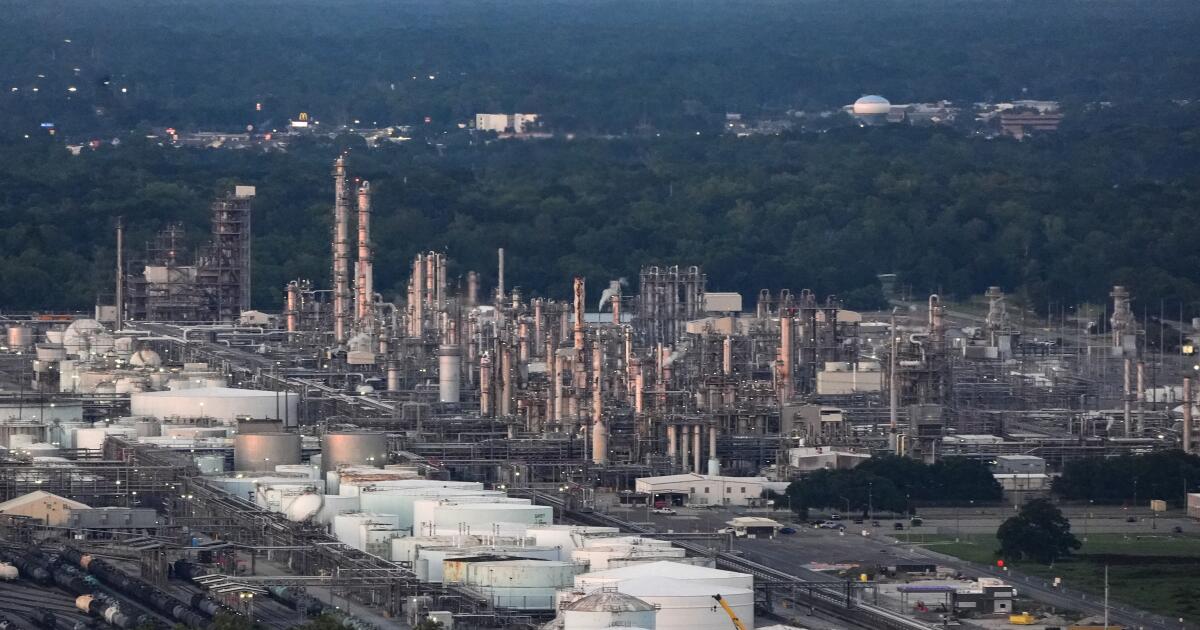
The Trump administration on Friday moved to roll back Biden-era limits on emissions of ethylene oxide, a cancer-causing chemical often used in the sterilization of medical devices.
The Environmental Protection Agency said repealing the rules, which fall under the National Emission Standards for Hazardous Air Pollutants, would “safeguard the supply of essential medical equipment” — saving approximately $630 million for companies over 20 years. California is home to about a dozen such facilities.
The government said the pollution is an inevitable part of protecting people from “lethal or significantly debilitating infections that would result without properly sterilized medical equipment,” arguing that the technology does not readily exist to meet the more stringent rules.
“The Trump EPA is committed to ensuring life-saving medical devices remain available for the critical care of America’s children, elderly, and all patients without unnecessary exposure to communities,” EPA Administrator Lee Zeldin said in a statement.
Supporters of the Biden rule reject that argument and say companies could have complied using existing technology and that the public was not at risk of losing sterilized equipment.
An estimated 50% of sterile medical devices in the U.S. are treated with ethylene oxide, or EtO, particularly those that can’t be cleaned using steam or radiation. The colorless gas is also used to make chemicals found in products such as antifreeze, detergents, plastics and adhesives.
EtO poses health risks. Short-term exposure by inhalation can cause headaches, dizziness, nausea, fatigue respiratory irritation and other adverse health effects, according to the federal Agency for Toxic Substances and Disease Registry.
Longer-term exposure increases the risk of cancers of the white blood cells, such as non-Hodgkin’s lymphoma, as well as breast cancer. A now-deleted page from the EPA’s website stated, “EtO is a human carcinogen. It causes cancer in humans.”
Friday’s proposal specifically targets updated rules for EtO emissions that were passed by the Biden administration in 2024 following pressure from environmental justice groups, particularly those in Louisiana’s heavily industrialized “Cancer Alley.” The change sought to reduce the amount of EtO released from commercial sterilizers by 90% and lessen the hazards for nearby communities.
The tighter rules were in part based on EPA’s own scientific study that found it to be 60 times more carcinogenic than previously thought, which the agency now says should be reassessed.
If finalized, the plan would give facilities a choice between installing continuous real-time monitoring systems for EtO emissions or complying with modified pollution control requirements at facilities that emit more than 10 tons a year, the EPA said.
The proposal follows other moves by the Trump administration to rescind regulations it says are burdensome and costly for industries, such as those governing emissions from coal power plants. Last month, the EPA repealed the endangerment finding, which affirmed the dangers of greenhouse gas emissions and underpinned the agency’s ability to regulate those emissions from vehicles.
The action around ethylene oxide would affect about 90 commercial sterilization facilities owned and operated by approximately 50 companies. Three California companies applied for and received presidential exemptions for their EtO emissions in July.
The Sterigenics facility, center, in Vernon is pictured in 2022.
(Myung J. Chun / Los Angeles Times)
They are located in Ontario and Vernon and operated by the company Sterigenics, which provides industrial sterilization technology for medical devices and other commercial products.
In January, a coalition of environmental and community groups challenged the EtO exemptions in federal court. The lawsuit from the Southern Environmental Law Center and the Natural Resources Defense Council argues that technology exists for facilities to comply with the tighter Biden-era standards without raising costs, and many facilities are already using it.
“EPA’s 2024 rule was an important and overdue step to reduce toxic ethylene oxide pollution and protect communities,” said Irena Como, senior attorney at the Southern Environmental Law Center, in a statement Friday. “Repealing this rule that is proven to significantly lower pollution exposure and cancer risks will subject even more people who work, live, and send their children to schools located near these facilities to harm that is entirely preventable.”
Sterilization and chemical industry groups support the plan.
“The EPA rule concerning ethylene oxide use in commercial sterilizers threatens to severely restrict access to vital medical products nationwide,” the American Chemistry Council said in a statement. “We commend the EPA for their commitment to reevaluating these policies.”
The EPA will hold a 45-day comment period about the proposal after it is published in the federal register. A final decision is expected sometime this year.

Have rain, will travel; No. 1 Mililani softball heads to Nevada for games | Honolulu Star-Advertiser

Hudson, NH man held without bail after seeking, sharing child sex abuse material on X

14 big winners playing Mega Millions, Powerball, NJ Lottery last week

Man accused of shooting at police in To’Hajiilee facing federal charges

NCDOT runs full crews overnight amid snow, plowing and treating high elevations

Florida High School Football Rankings: Top 25 teams – Oct. 21

How old is Bo Nix? What to know about Oregon quarterback ahead of 2024 NFL Draft

Cleary's 21 help Le Moyne down Central Connecticut State 69-64 in OT

99th annual Pony Swim held in Virginia

Indiana Members Credit Union announced as new anchor tenant at Bottleworks District

Minnesota bill would ban warrants allowing police to collect data from devices near a crime scene

Kallas says ‘no appetite’ to shift mandate of EU Hormuz naval mission

Trump predicts US will have ‘honour of taking Cuba’ amid power blackout

MTG on Trump’s Iran war: ‘Why would an American president do that?’

Video: Michael B. Jordan Celebrates Oscar Win at In-N-Out
-

 Oklahoma1 week ago
OSSAA unveils Class 6A-2A basketball state tournament brackets, schedule
-

 Oklahoma3 days ago
Family rallies around Oklahoma father after head-on crash
-

 Michigan1 week ago
Operation BBQ Relief helping with Southwest Michigan tornado recovery
-

 Southeast1 week ago
‘90 Day Fiancé’ alum’s boyfriend on trial for attempted murder over wild ‘Boca Bash’ accusations
-

 Nebraska4 days ago
Wildfire forces immediate evacuation order for Farnam residents
-

 Health1 week ago
Ancient herb known as ‘nature’s Valium’ touted for improving sleep and anxiety
-
 Business1 week ago
Commentary: In two new court cases, judges find that AI does not have human intelligence
-

 Technology1 week ago
Time’s running out to get a free gift card when you preorder a new MacBook