Science
Cynicism is everywhere and it’s making us sick. Is this the antidote?

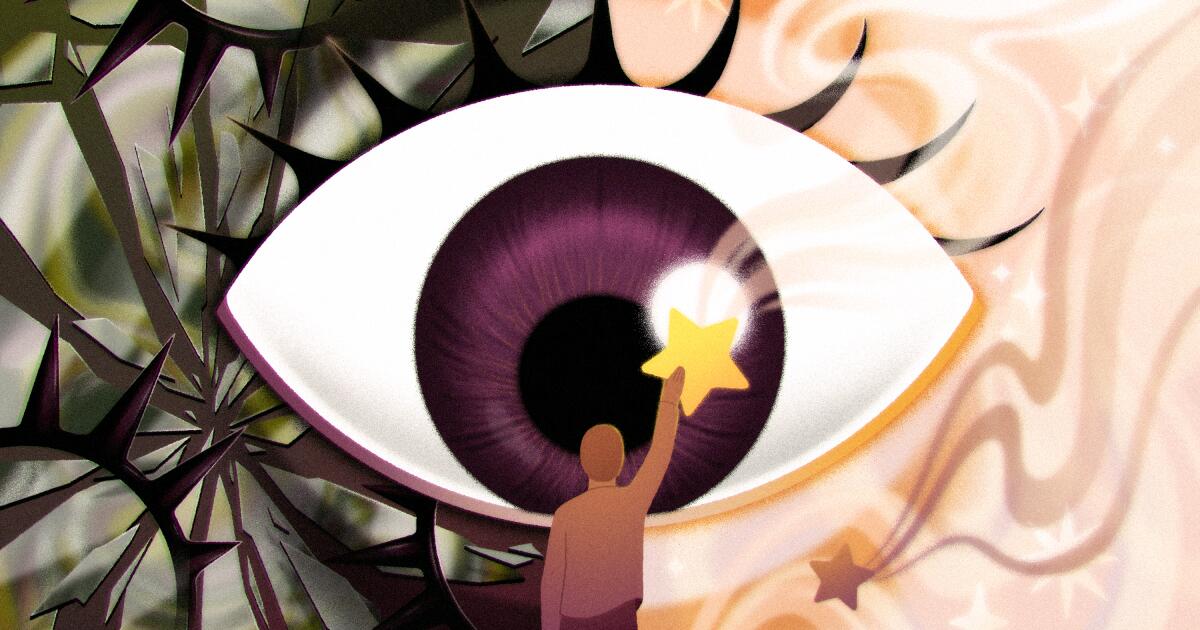
If you feel certain your preferred candidate will lose the presidential election, that AI is coming for your job or that climate change is going to destroy humanity, then you have fallen prey to a cynical mindset, and you’re far from alone.
Over the past 50 years, cynicism has spread like a virus across American society, infecting us with the belief that other people can’t be trusted, the world is only getting worse and there’s nothing we can do about it. This potent mix of fatalism and hopelessness has led to a loss of faith in our neighbors, our institutions and our dreams for the future.

Shelf Help is a wellness column where we interview researchers, thinkers and writers about their latest books — all with the aim of learning how to live a more complete life.
In 1972, 46% of Americans agreed that most people can be trusted according to the General Social Survey. By 2018, that percentage had fallen to 31.9%. This rise in collective cynicism is not just destroying our hope, it’s also affecting our health. Studies suggest that cynics suffer more depression, drink more heavily, earn less money and die younger than non-cynics.
But there may be an antidote to the cynical epidemic. In his new book “Hope for Cynics: The surprising science of human goodness,” (Grand Central) Stanford professor Jamil Zaki suggests that cynicism can be combated with a willingness to question our most cynical assumptions and corroborate them with facts.
If we would only look at the data, he writes, most of us would discover that people are more worthy of our trust than we imagine, that we have more in common with our political rivals than we think and that many of the problems we believe to be intractable may have solutions after all. He advocates for what he calls hopeful skepticism: Acknowledging that the future is mysterious, and we can’t know what will happen.
Being hopeful is not a matter of looking away, it’s a matter of looking more closely and more clearly.
— Jamil Zaki, author of “Hope for Cynics”
“There’s this idea that being hopeful is like putting on a pair of rose-colored glasses,” Zaki, who has spent 20 years studying kindness, connection and empathy said in an interview. “It turns out that most of us are wearing mud-colored glasses already. Being hopeful is not a matter of looking away, it’s a matter of looking more closely and more clearly.”
Here Zaki talks about the media’s role in creating a more cynical society, why so many of us mistake cynicism for wisdom and why trusting others isn’t only for the privileged among us.
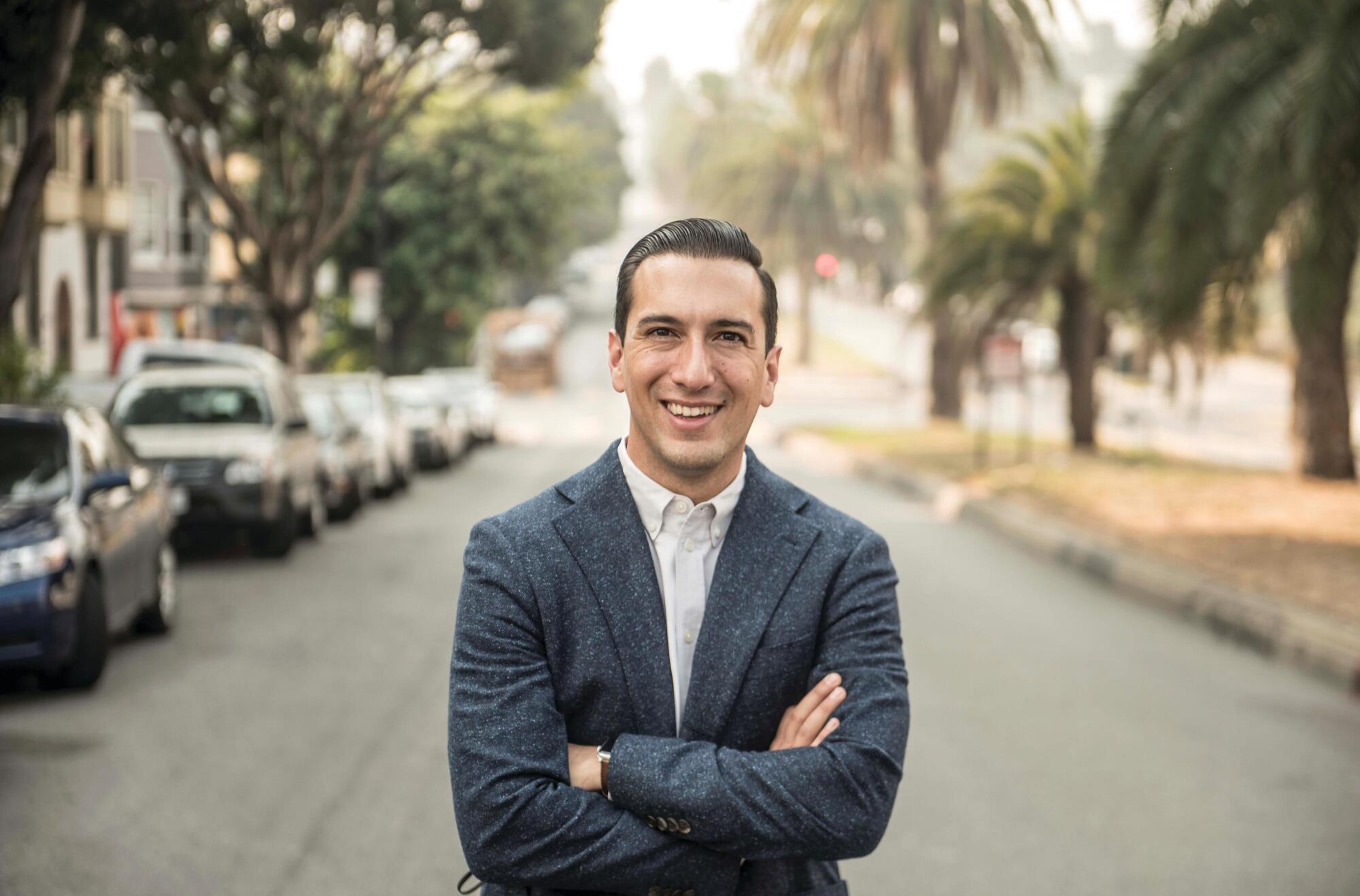
Author Jamil Zaki. Photo by Vern Evans
(Photo by Vern Evans)
How do you define cynicism?
I’m using a purposefully modern psychological definition: the theory that most people at our core are selfish, greedy and dishonest. That’s not to say that a cynic would be shocked if somebody donated to charity or helped a stranger, but they might suspect or impugn the person’s motives. They might say, “Yeah they donate to charity for a tax break, or to look good in front of other people.” So it’s a theory not about human action, but about human motivation.
How does cynicism relate to trust?
Cynicism relates very strongly and very negatively to trust. Trust is our willingness to be vulnerable to somebody else on the expectation that that person will honor your vulnerability. It’s loaning money to somebody because you think they’ll pay you back. It’s confiding in a friend because you think they’ll support you. It’s leaving your kids with a babysitter because you think they’ll care for the children. In all of these cases trust requires a bet on another person. It’s a social risk and cynics think that bet is for suckers. They don’t trust in a variety of contexts, whether it’s strangers, politicians or even family and friends, the way less cynical people do.
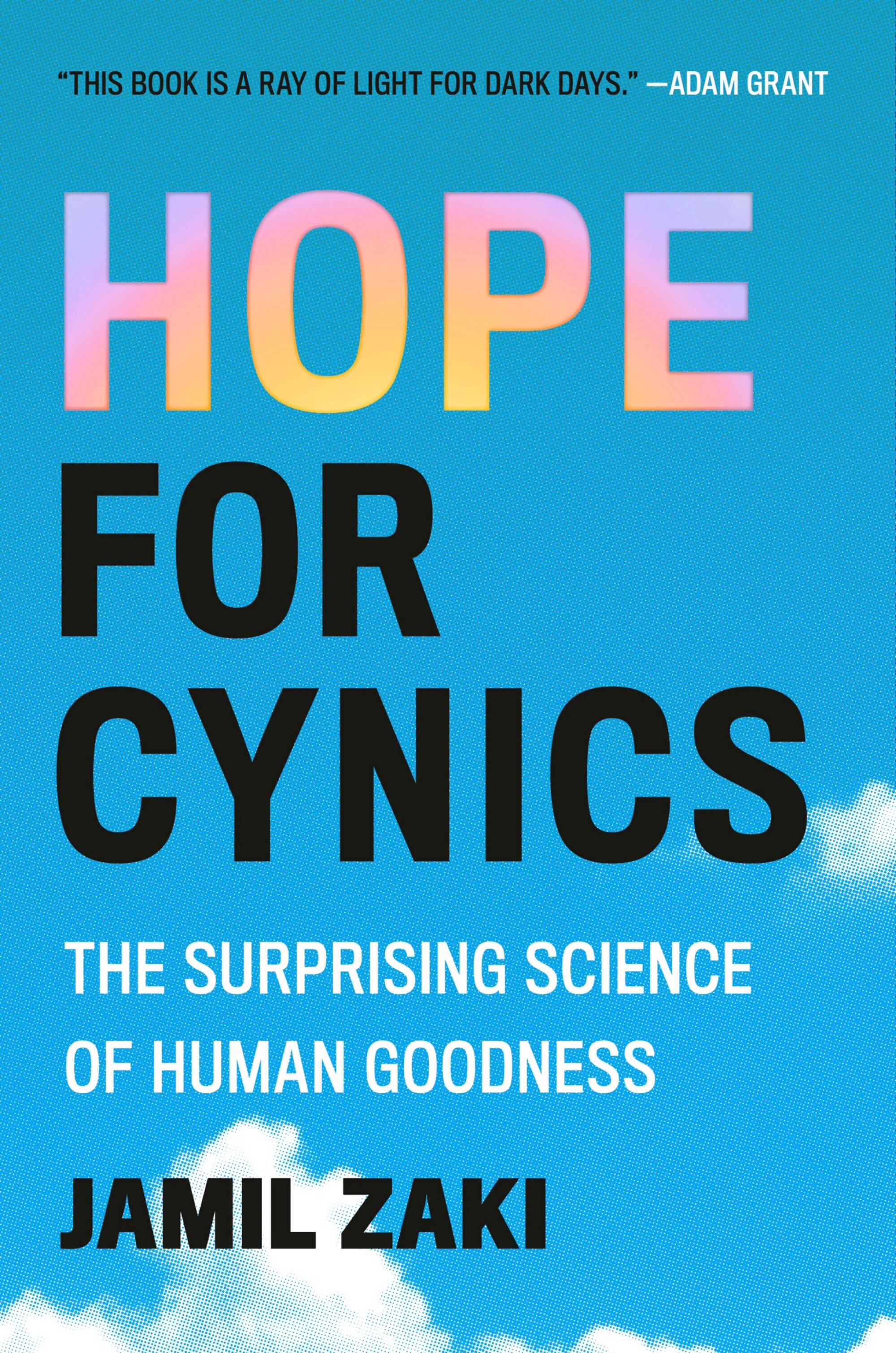
“Hope for Cynics” by Jamil Zaki. (Grand Central)
(Grand Central)
You write that people often mistake cynicism for wisdom. Why is that?
Cynicism has the veneer of wisdom and people view it as a form of intelligence and a sign of experience. It turns out that if you look at the data cynicism is shockingly naive and much more similar to gullible trust than people realize. But cynics act like they know things and it turns out that acting like you know things is a great way to get people to believe you know things. So cynicism is somewhat rewarding to people in that it looks like wisdom. You are treated as a wise person if you are just very grim about everything.
Why did cynicism skyrocket in the past 50 years?
Two things come to mind. The first is inequality. Nations, states and counties that are more economically unequal are poisonous for trust, and the U.S. has become much more unequal in the 50 years when we lost faith in each other. Interestingly, unequal times are not only characterized by low trust among people with less means, but even wealthier people in unequal places are less trusting than well-heeled people in more equal places. Inequality puts us all in a zero-sum mindset where there is not enough to go around and whatever you get, I lose. When you’re in that frame of mind, it’s very easy to have mistrust as your default.
The second source we see is the media. People have something in our minds called negativity bias. We focus more on threatening information than on pleasant information. This ancient bias has been combined with a hyper-modern media ecosystem that feeds us whatever it takes to keep us clicking, scrolling and watching, which is not the same as information that would make us happy or hopeful, or even information that is accurate. You might think if you watch a lot of news you are more informed but it turns out that in many cases you are less informed. For example, people who watch lots of news believe that violent crime is on the rise, even when it’s on the decline.
Your book suggests that skepticism — not optimism — is the best antidote for cynicism. Why?
Cynicism and skepticism are often confused with one another but they are actually quite different. You can think of a cynic as a lawyer in the prosecution against humanity. They pick up on any and all evidence about human evil and conniving and explain away or ignore evidence of positive human qualities. Optimists, or naive trusters, think like lawyers as well but they are hyper-focused on any sign of human goodness and ignore any sign of harmful behavior. Skeptics think more like scientists. They don’t have blanket judgments about people that they default to. Instead, they try to evaluate the evidence whenever they find themselves with a new person or in a new situation. Because of that skepticism, often confused for cynicism, can be a great antidote for it.
In the summer of 2022 you invited Americans to join 20-minute Zoom calls with political rivals to discuss gun control, climate change and abortion. What did people learn about each other from those conversations?
If you look at the evidence there is incredible amounts of common ground even between Democrats and Republicans that most Americans don’t know about. So, what did people learn in these 20 minute conversations? One: that a randomly selected member of the other side is much more reasonable, much more open-minded and much less hostile than they imagined an outsider or rival to be. [Two], when they talked about issues they learned that they did have some common ground, and this immensely deescalated their outrage and hatred toward the other other side. Because now they were thinking of the real other side instead of the image we have in our mind.
I’ve often wondered if the ability to trust others is a sign of privilege. Depending on our race, class, gender and educational background some of us are more likely to be treated with respect and empathy than others. Where do you land on that?
It’s very easy to draw the conclusion that hope is a form of privilege and maybe even toxic — that it causes us to ignore our problems, or rather, ignore problems that we don’t have but other people do have. You might be surprised then, to find out that some of the least trusting and most cynical people are the ones with privilege and money and power. And actually, people who struggle in terms of their socioeconomic status tend to be more interdependent and reliant on trust. I realize I’m a bit of a broken record here, but one of the amazing things about doing the many thousands of hours of research for this book is that over and over again I found out that our assumptions aren’t just wrong, they are the exact opposite of right.
TAKEAWAYS
from “Hope for Cynics”
Do you think American society is capable of reversing our descent into cynicism?
I do think we’re capable of it, and one reason I think that is we’ve done it before. The 1890s and 1900s were a terrible time for social life in the United States. There was extreme mistrust, extreme polarization, backsliding on issues like race, the rise of Jim Crow laws. It was a horrible time culturally in all these different ways and that pain spurred what is called the progressive movement in the first couple of decades of the 20th century. There was all this labor organizing and social groups and movements that agitated from everything from public kindergarten to women’s suffrage to the FDA and the Parks Service. There was this sense of responsibility to one another. This growing value of connection. Could that happen again? Yeah, it could. Will it happen again? I have no idea.
What can we do as individuals to shift this trend?
There’s a few things. The first is to be more skeptical — to fact check our cynical feelings. I do this all the time. When I see myself suspecting people I try my best to to say, “You’re a scientist what evidence do you have for that claim?” And oftentimes the answer is, “I have no evidence to support this bleak assumption.” Once we have that mindset of being more curious about our own thoughts we can interrupt the cycle of cynicism.
A second thing we can do is take more social risks. Because of negativity bias, we miscalculate the upsides and downsides of social life. We overestimate how likely it is that if we trust someone they will betray us and we underestimate the likelihood that things will go well. So I try to recalibrate and say, “Based on the actual data of what people are like, I should probably trust them more.” Earnest Hemingway said that the best way to find out if you can trust somebody is to trust them. I think he’s right, but it’s also true that when you trust people you bring out their best. So you don’t just learn about them, you change them. I try to give people many more opportunities than I used to to show me who they are, and often times they show me something really great.
Shelf Help is a wellness column where we interview researchers, thinkers and writers about their latest books — all with the aim of learning how to live a more complete life. Want to pitch us? Email alyssa.bereznak@latimes.com.


new video loaded: NASA Announces Artemis III Crew
transcript
transcript
NASA Announces Artemis III Crew
NASA announced the crew of Artemis III mission, which will fly to low-Earth orbit to test rendezvous and docking maneuvers with one or two lunar landers.
-
“I am excited to welcome you as the next crew in the Artemis journey to successfully return to the moon — this time to stay.” “I’m honored by the role that I’ve been given. I’m also very humbled by the task in front of us. But first and foremost, I’m grateful.” “So with that, the Artemis II crew, comrade, hands you the baton. You got the controls.” “As you know, we had a significant anomaly at our Launch Complex 36A on May 28. We’ve redoubled our efforts and are moving forward.”
By Alisa Shodiyev Kaff
June 9, 2026
Science
Santa Monica Mountains’ last steelhead trout survived the Palisades fire — and even had babies

Scientists feared the Santa Monica Mountains’ last remaining steelhead trout were dead, smothered by debris flows unleashed by the Palisades fire.
But the endangered fish surprised them: A team of biologists recently spotted 30 of the rare trout — and 21 babies — in Topanga Creek.
“There was a lot of happy dancing in the creek,” said Rosi Dagit, principal conservation biologist for the Resource Conservation District of the Santa Monica Mountains, which works with public and private landowners to conserve natural resources.
That’s because the steelhead here are endangered, at both the state and federal levels. Once, they swam in most streams of the Santa Monicas, but their numbers plummeted amid overfishing and coastal development. Increasingly frequent wildfire has further stressed their habitat. Topanga Creek, a biodiversity hot spot, is home to their last known population in the mountains that stretch from the Hollywood Hills to Point Mugu in Ventura County.
The trout that were spotted, including this one, are part of a distinct Southern California population that’s listed as endangered at the state and federal levels.
(RCDSMM Stream Team)
The California Department of Fish and Wildlife spearheaded a complex mission to rescue trout threatened by the Palisades fire that sparked in January 2025.
Time was of the essence. The fire hadn’t yet been fully contained. But rain was on the way, which would sweep massive amounts of sediment from the denuded hillsides into the water. Fish are often killed this way.
Crews stunned the fish with electricity, scooped them up in buckets, trucked them to a hatchery and ultimately moved them to Arroyo Hondo Creek in Santa Barbara County.
Within days, Topanga Creek was choked with mud. Some assumed the fish left behind were goners.
But in March, the conservation district’s team found four. The following month, when water conditions were clearer, they saw more.
“These fish continue to amaze me,” said Kyle Evans, environmental program manager for the state Department of Fish and Wildlife, who had seen the damage to the creek. “I had seen populations get wiped out in similar situations. So when I heard, I was thrilled.”
Evans surmises the fish that survived were in an area of the creek where less charred material and sediment were swept in.
“These fish likely hunkered down, were hiding under some rocks or places to try to get away from the main concentration of flow,” he said. “And luckily they weren’t buried.”
The ones that were spotted were fairly small, around 6 to 14 inches. Rainbow trout and steelhead trout are the same species, but with different lifestyles. If the fish remain in freshwater, they’ll be considered rainbows. However, they can migrate to the ocean and become steelhead, where they typically grow larger before returning to their natal waters to spawn.
Topanga Creek hasn’t fully recovered from the damage it sustained, but scientists say it’s looking better. Surveys last year were “so depressing,” Dagit said, with very few animals, and stretches that were essentially transformed into flat roads from all the sediment buildup. Some of the riparian canopy burned right down to the creek.
Then came 32 inches of rain over the last nine months, scouring out and moving sediment, creating deeper pools. Dagit said they recently found newt egg masses for the first time in years, as well as a few adult newts and many frogs. Plants that provide cover are starting to recover.
She provided photos comparing certain pools last year and this year, some dramatically transformed. In September 2025, the Shrine Pool could have been an overgrown hiking trail. This April, it was filled with shallow water.

The Shrine Pool in September 2025, left, and the same location in April 2026, right, with RCDSMM’s Isaac Yelchin donning a wetsuit.
(RCDSMM Stream Team)
Topanga Creek is home to another endangered fish, the small but hardy northern tidewater goby, often described as cute. Not long before the trout operation, Dagit led a rescue of hundreds of these fish too. Many were repatriated to the lagoon at the mouth of the creek in a moving ceremony last June.
There’s still the matter of what to do with the trout that were moved to Santa Barbara County last year. Evans would like to bring them home to the Santa Monicas at some point, but isn’t sure if it will happen. On one hand, they could bolster the small, genetically isolated surviving population. On the other, they might inadvertently bring in a disease or bacteria. There is some time to decide. Evans estimates the creek still needs to recover for two to three more years.
For now, the fish are functioning fine in their adopted creek. Experts worried the trauma wrought by the move would disrupt their spawning process, but they had babies that spring. This year, they spawned again.

The Pacifica Municipal Pier was shut down and taped off Thursday after city workers noticed cracks running through the landmark structure and concrete chunks falling into the ocean.
It’s just one of many coastal California structures that have recently crumbled under pressure from a rising and relentless ocean.
Officials from the small, beach city south of San Francisco said the pier was closed due to “cracking, separation, and displacement of the concrete walkway and structural elements.”
It will stay closed while structural engineers asses its safety.
Photos taken by city employees show a wide crack that runs from top to bottom and across the structure as well. Other photos show a large horizontal crack under the foundation of a small restaurant on the pier, the Chit Chat Cafe.
The cafe was also shut down.
This is not the first time the 53-year-old pier has shown signs of stress. In 2021, part of it was shut down after handrails along the edge collapsed. And in 2023, after a series of storms pummeled the Central California coast, damaging parts of the pier, the structure was partially closed for more than year.
Those same storms caused extensive damage in Aptos and Capitola, 70 miles south, where piers and waterfront infrastructure were swept away or damaged.
In 2024, a 150- to 180- foot section of the Santa Cruz wharf was ripped off by powerful waves.
At least 10 of the state’s dozens of coastal public piers were closed for part or all of 2024 due to structural damage sustained in winter storms since 2022. At least five others have longer-term upgrades planned to address structural issues.
“These things are costly to maintain,” said Zach Plopper, senior environmental director at Surfrider. “They are a part of our California coastal culture in many ways, but we’re going to need to reckon with, one, the state that they’re in, and two, the continuous and worsening threats they’re going to experience,”
He said most of the piers were constructed in the early 1900s, and they weren’t built to withstand decades of rough seas, storms and rising sea level.
“With this incoming El Niño, which is forecasted to be significant, and this marine heat wave we’re in the midst of, we’re kind of in uncharted waters as far as what this winter could bring in terms of storms and swells to the California coast, and we’re likely going to see a lot more damage,” he said. “Not just piers, but roads and other coastal infrastructure up and down the state.”
There was no storm in Pacifica earlier this week, so no single event could be blamed for the destruction.
However, a 2025 report from an outside engineering firm, GHD, found that several sections of the pier were in “poor” or “serious” condition, and they recommended closure before anticipated storms or events that could “subject the piles to high winds, swells and large waves.”
The firm found several areas of the pier where concrete was missing and rebar was exposed and corroding.
“The pier has continued to experience high winds and large waves in a harsh marine environment,” the engineers wrote in the report, noting that continuous exposure to seawater or marine spray was “detrimental” to the structure.
A 2023 city report estimated it would cost $19 million to repair.
That same year, a state law was enacted to require local governments along the California coast to plan for sea level rise in the coming decades.
Sea level has risen some 8 inches, on average, along the coast in the past 150 years, Plopper said, and researchers anticipate another foot in the next 25 years.
“We’re going to see profound shifts on our coastline, none that we have ever experienced before, and building static structures on the coast just doesn’t work all that well,” he said. “We’re going to have to make some really hard decisions.”
-

 California45 seconds ago
Operation Hands Down disrupts Central California gangs – Inside CDCR
-

 Colorado8 minutes ago
$25.7M Colorado private ski mountain property heads to auction
-

 Connecticut11 minutes ago
Connecticut driver spots snake in car while driving, police say
-

 Delaware16 minutes ago
Delaware Bay’s new oil spill response boat officially christened
-

 Florida23 minutes ago
Sheriff’s Office investigating fatal shooting of child in Florida City
-

 Georgia26 minutes ago
Northwest Georgia Congressman pushes for impeachment of federal judge for misconduct
-

 Hawaii31 minutes ago
A wet start to the dry season in East Hawaii – West Hawaii Today
-

 Illinois40 minutes ago
Illinois gas tax set to increase every year—without a vote

