Politics
What to Watch in Today’s Big Elections in Wisconsin and Florida


Two states nearly a thousand miles apart will on Tuesday provide the best evidence yet of whether President Trump and his Republican allies maintain robust support or whether they face a growing backlash led by a re-energized Democratic Party.
In Wisconsin, a nearly $100 million race for control of the State Supreme Court has morphed from an important clash over the state’s direction into a referendum on Elon Musk’s supersized role in national politics.
In Florida, one of two special elections for deep-red House seats suddenly seems too close for comfort for Republicans. Democrats, while still expecting to lose, are watching the margins closely for signs that their party is ascendant.
Here are five big questions heading into Tuesday’s elections.
Will Elon Musk’s millions pay off?
Mr. Musk’s support for Brad Schimel, the conservative candidate in Wisconsin, has been a full-service political operation.
The billionaire and groups tied to him have spent more than $25 million, financing a potent ground game. An army of $25-an-hour canvassers has knocked on Trump voters’ doors, and pallets of glossy mailers have assured Republicans that Judge Schimel is a Trump ally. A conservative nonprofit with ties to Mr. Musk has helped blanket the airwaves with ads bashing the liberal candidate, Susan Crawford, as weak on crime. And Mr. Musk’s giving includes $3 million to the Republican Party of Wisconsin, which has funneled the money to help Judge Schimel.
That was all before Mr. Musk spoke for nearly two hours at a rally for Judge Schimel on Sunday night in Green Bay.
If Mr. Musk’s extraordinary effort is successful, Wisconsin Republicans will be hopeful of friendly rulings by a conservative-controlled court on cases about abortion rights, voting access and the power of the state’s Republican-run Legislature.
It is possible, however, that Mr. Musk’s largess comes at a political cost to Judge Schimel. Polling shows that Mr. Musk is just as unpopular among Wisconsin Democrats as Mr. Trump is, but without as much residual loyalty from Republicans. Democrats have framed Judge Crawford’s campaign around the idea that she is battling the world’s wealthiest person.
“We are in uncharted territory where we now have the richest man in the world who is trying to buy our election and the question is: Can he do it?” said Sarah Godlewski, the Democratic secretary of state of Wisconsin.
At her closing campaign rally Monday night in Madison, Judge Crawford skewered Mr. Musk for appearing at his rally wearing the foam yellow headwear preferred by the state’s sports fans.
“Let me talk about my opponent, Elon Musk,” she said. “I saw a picture of him yesterday with a cheesehead on. First time he’s been in Wisconsin, he has not earned the right to wear a cheesehead.”
Is the Democratic energy finally here?
Democratic hopes have slowly, cautiously started to rise.
The party crowed about flipping Republican-held state legislative seats in recent special elections in Iowa and Pennsylvania. And on Saturday, voters in Louisiana rejected four proposed constitutional amendments backed by Gov. Jeff Landry, a Republican, that would have overhauled parts of the state’s tax codes and toughened penalties for juvenile offenders.
But none of those was nearly as expensive or prominent as Tuesday’s contests, and so the question of whether they were one-off upsets or a harbinger of a broader Democratic resurgence will be determined by what happens in Wisconsin and, to a lesser extent, Florida.
A victory by Judge Crawford, a mild-mannered jurist, could put wind in the sails of a new Trump resistance, similar to Jon Ossoff in April 2017. While Mr. Ossoff, now a Georgia senator, lost what was then the most expensive House race ever, he became a fund-raising juggernaut and demonstrated to scores of other candidates a path to viability against Republicans in the first Trump era.
Wisconsin Democrats have placed Mr. Musk at the center of their messaging operations in the race: To make sure voters got the point, they branded a statewide tour “The People v. Elon Musk.” Fearful of being drowned out by Mr. Musk’s millions, Democrats have helped Judge Crawford shatter fund-raising records.
“We are figuring out the path forward,” said State Representative Greta Neubauer, a Racine Democrat who is her chamber’s minority leader.
Are Democrats really competitive in Florida?
House Republicans had expected their razor-thin majority to grow easily by two seats on Tuesday in elections to replace congressmen Mr. Trump picked last year to join his cabinet.
One, Michael Waltz, became the national security adviser, while the second, Matt Gaetz, resigned his seat and later withdrew from consideration as attorney general amid an ethics investigation and Republican opposition.
Mr. Trump endorsed Jimmy Patronis, the state’s chief financial officer, to replace Mr. Gaetz in the Panhandle and State Senator Randy Fine to replace Mr. Waltz in a northeastern district that includes the NASCAR hub of Daytona Beach.
But Mr. Fine’s Democratic opponent, Josh Weil, has handily out-raised him, prompting public warnings about Mr. Fine’s chances of a comfortable victory in a district Mr. Trump won by 30 percentage points. While Republicans are still expected to prevail, both parties are watching the margin of victory closely.
Despite the Republican worries, Democrats have not made significant outside investments to help Mr. Weil’s campaign. But on Friday, Mr. Weil did score a notable national endorsement from Senator Bernie Sanders, the Vermont independent, and he campaigned on Sunday with Ken Martin, the chairman of the Democratic National Committee.
How much turnout does $100 million buy?
The last race for the Wisconsin Supreme Court, two years ago, cost about $56 million to became the most expensive judicial election in American history.
That election drew 1.8 million voters, or about 56 percent of the state’s turnout in the presidential election in 2020 — a high percentage for a state court race.
Now, with spending approaching $100 million, a key factor in the outcome is how much higher turnout will go.
America Votes, a Democratic voter mobilization group that is active in the state, estimates that just over two million Wisconsinites will vote, an increase that could account for either juiced Democratic interest or a successful Republican turnout operation by Mr. Musk. If that many Wisconsinites do vote, the turnout will be about 60 percent of the state’s turnout last November.
And as much as voters say they hate onslaughts of negative advertising and attack mailers, the evidence shows that they drive up interest, excitement and turnout.
“Everywhere I’ve been in the state, we’re getting crowds like we did last November,” said Brian Schimming, the chairman of the Republican Party of Wisconsin. “People are clicked in.”
Is Musk the future of our elections?
Mr. Musk has nearly unlimited wealth, the president’s ear and far-ranging power in Washington.
If he can single-handedly alter a state judicial race, how else might he inject himself into the country’s elections?
Victory in Wisconsin could embolden Mr. Musk to grow even more aggressive in throwing his billions behind Republican candidates for office this year and in the 2026 midterm elections. That could leave conservative candidates even more in thrall to Mr. Trump, if their primary financial benefactor continues to work out of the White House.
This is all happening while Mr. Musk stands to benefit financially from the candidates he has thrown his money and influence behind. Tesla, the electric vehicle company Mr. Musk controls, has a case against Wisconsin pending in the state’s courts, and Mr. Trump has gone out of his way to promote the billionaire’s products from the White House.
Defeat for conservatives, of course, would hardly mean that Mr. Musk would stop spending on elections. But it would prove to Democrats that he is beatable with enough money and base energy.
Still, while Democrats may see Mr. Musk as a figure who fires up their base and supercharges liberal fund-raising, that is a lot easier for them to do when Wisconsin is the marquee race in the country and a focus of national attention.
If Mr. Musk were bankrolling dozens of Trump-allied candidates for governor, Senate and Congress across the country next year, it could be a far more difficult proposition to match his financial might with the same degree of grass-roots enthusiasm when national attention is more diffuse.



Politics
DHS attorney said agents in Los Angeles should have ‘started hitting’ protesters, emails show
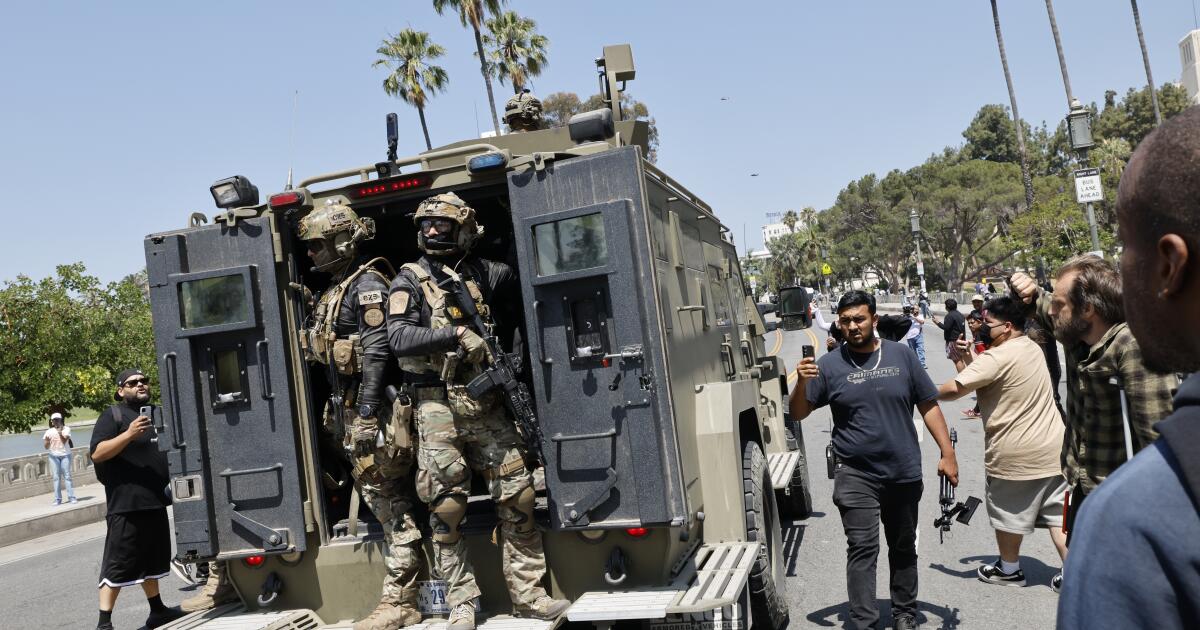
WASHINGTON — A lead attorney for the Department of Homeland Security suggested that federal agents should have “just started hitting the rioters and arresting everyone that couldn’t get away” during an anti-ICE protest in Los Angeles last June, internal emails show.
The note was in an email chain obtained by the nonprofit watchdog group American Oversight through the Freedom of Information Act and shared exclusively with The Times.
In it, attorneys for Homeland Security appear to be discussing the June 9 lawsuit filed by California Gov. Gavin Newsom over President Trump’s deployment of thousands of California National Guard troops to Los Angeles.
Under the subject line “California DOD Lawsuit,” officials coordinated legal filings defending the Trump administration and included a draft declaration by the Los Angeles field office director of Immigration and Customs Enforcement supporting the deployment of military forces.
The final email in the thread was from Joseph Mazzara, then-acting DHS general counsel, and he appears to be referring to an incident in which protesters tried to breach a protective line at a federal building.
On June 11, he wrote: “Every time I read about the battering ram incident I’m just floored at how wild that is.”
Referring to law enforcement as “they,” he continued: “They should have, when they brought the line in, just started hitting the rioters and arresting everyone that couldn’t get away from them. No one likes being hit by a stick, and people tend to run when that starts happening in earnest.”
The Department of Homeland Security didn’t respond to requests for comment.
Mazzara was later appointed deputy commissioner of U.S. Customs and Border Protection.
Politico reported that Mazzara is among 10 staffers who followed former Homeland Security Secretary Kristi Noem to the State Department after she was fired this month from DHS and given a new role as special envoy for the Shield of the Americas.
The battering ram incident Mazzara referred to is detailed in court documents for the lawsuit.
A June 19 order from a panel judges from the 9th Circuit Court of Appeals states that Trump administration attorneys presented evidence of protesters interfering with federal officers. The protesters threw objects at ICE vehicles, “pinned down” several Federal Protective Service officers and threw “concrete chunks, bottles of liquid, and other objects,” the order said.
Protesters also “used ‘large rolling commercial dumpsters as a battering ram’ in an attempt to breach the parking garage of a federal building,” the order states.
Mazzara’s comment in the email thread with other Homeland Security attorneys was given to American Oversight with a watermark showing the agency had intended to withhold it. American Oversight also received a version of the documents with that statement redacted.
Chioma Chukwu, executive director of American Oversight, said it’s no wonder the administration wanted to keep Mazzara’s comments hidden.
“They reveal a level of hostility toward protesters that is deeply at odds with the government’s obligation to protect civil liberties — and there’s no FOIA exemption that justifies hiding them,” she said.
Kerry Doyle, the former top ICE attorney during the Biden administration, said Mazzara’s comments show a shocking carelessness about the potential for harm against both the general public and the officers he was employed to protect.
The email, she said, “seems to encourage, or, at the very least, support constitutional violations by the operators that are supposed to be getting legal counsel from him to avoid violating the law.” Plus, commenting on operational strategy is outside the scope of his responsibilities, she said.
“He’s doing a disservice to the people that are on the front line, that rely on him and his colleagues to give them the parameters of what they can and can’t do,” Doyle added. “If you give them bad legal advice, you are setting them up for liability.”
Noem’s removal came amid backlash against an escalation of violence during Trump’s crackdown on immigration, including the shooting deaths of U.S. citizen protesters by immigration agents.
Doyle said part of the secretary’s job is to set the tone for the agency so the rank and file know what is expected of them. Mazzara’s comments, she said, show how that tone has permeated all facets of the agency.
After the U.S. Supreme Court cast doubt on the Trump administration’s legal theory for using troops in domestic law enforcement operations, the president in December began removing the National Guard from Los Angeles and other Democratic-led cities.
The protests last summer caused significant property damage in a small section of downtown Los Angeles. But grand juries refused to indict many demonstrators accused by federal prosecutors of attacking agents, and a Times review of alleged assaults found that most incidents resulted in no injuries.
Politics
WATCH: Senate hearing goes silent after Angel Father confronts top Dem over daughter’s death

NEWYou can now listen to Fox News articles!
A Senate hearing got tense and quiet after Illinois father Joe Abraham confronted retiring Sen. Dick Durbin, D-Ill., for not acknowledging his daughter, Katie, who was killed by an illegal immigrant drunk driver.
After Sen. Ted Cruz, R-Texas, expressed his condolences to Abraham, the grieving father thanked him and then proceeded to drill into Durbin.
“I appreciate it. I also appreciate Ranking Member Welch and Mr. Padilla for recognizing that. What I don’t understand is why my senator of Illinois, Mr. Durbin, [I] haven’t heard two words from him toward me,” he said, pointing in Durbin’s direction.
“It’s kind of amazing,” Abraham added.
ILLEGAL IMMIGRANT ACCUSED OF KILLING CHICAGO COLLEGE STUDENT TO FACE COURT AFTER TUBERCULOSIS DELAY
Sen. Dick Durbin, D-Il., (left) was confronted by Angel father Joe Abraham (right) over the killing of his daughter, Katie, by an illegal immigrant. (Demetrius Freeman/The Washington Post via Getty Images; U.S. Senate Committee on the Judiciary official website livestream)
In the suddenly quiet hearing chamber, Cruz said, “I think it is a fair question to ask.” Abraham answered, “Kind of happy he’s calling it quits.”
After the tense exchange, Abraham again called out Durbin, writing, “You had the chance to show basic humanity, to acknowledge Katie’s life and death, as other senators in your own party did. Instead, silence. Not a call, not a statement, not even basic human acknowledgment.”
Abraham stated that “silence in the face of tragedy isn’t neutrality. It’s indifference.”
“You’re retiring, but for many of us, that comes 30 years too late. And whoever you choose to endorse should be rejected just as quickly, because Illinois cannot afford more of the same,” he added, writing, “Illinois families deserve better than leaders who look away when the consequences don’t fit their narrative.”
He also criticized Durbin for supporting sanctuary policies, saying, “My daughter died in a system shaped by policies you continue to defend.”
“You chose sanctuary policies that give special privileges to those here illegally, while law-abiding Illinois citizens like my family are left unprotected,” wrote Abraham. “That’s not compassion. That’s a failure of leadership.”
COLLEGE STUDENT’S ALLEGED MURDER BY ILLEGAL WENT EXACTLY AS DEMS ‘INTENDED,’ HOUSE SPEAKER SAYS
Katie Abraham was killed by an illegal immigrant drunk driver. (Joe Abraham )
Abraham’s 20-year-old daughter, Katie Abraham, was killed by an illegal immigrant in a drunk-driving incident while standing at a stoplight in the college town of Urbana, Illinois. The federal government’s immigration crackdown in the Chicago area was launched in Katie’s honor. Dubbed “Operation Midway Blitz,” the effort resulted in more than 4,500 illegal immigrant arrests, according to DHS.
In an interview with Fox News Digital, Abraham, a lifelong Illinois resident, described his family as navigating a “dark wilderness” in the wake of Katie’s death.
“We have been in a dark wilderness, wandering, trying to find our new purpose … without Katie, who we thought would be with us the rest of our lives,” he said.
ANGEL PARENTS SLAM ILLINOIS SANCTUARY LAWS AFTER ‘PREVENTABLE’ TRAGEDY IN STUDENT’S DEATH
Joe Abraham holds a photograph of himself with his 20-year-old daughter, Katie Abraham, at his family’s home in Glenview, Illinois, on Sept. 10, 2025. (Stacey Wescott/Chicago Tribune/Tribune News Service via Getty Images)
“She was a beautiful soul,” he added, lamenting, “We thought we’d have our children the rest of our lives.”
CLICK HERE TO DOWNLOAD THE FOX NEWS APP
Addressing other Illinoisans, Abraham warned, “If anything, God forbid, happens to you, your state under this regime will turn its back on you, 100%.”
“That’s what they’ve done with us and Katie,” he said.

During his first Cabinet meeting since launching the U.S. war on Iran, President Trump spent 10 minutes talking about the price of ceremonial White House pens — which he claimed to have brought down, from $1,000 to $5, by switching to his favored Sharpie brand.
Trump was trying to make the point during the Thursday meeting that he’s a great money saver. He seemed chipper, joking with the other leaders of his administration at the table.
Late Thursday, when asked on “The Five” on Fox News about whether Iranian people have access to basic necessities such as drinking water and food, Trump complimented the looks of Dana Perino, the Fox host who’d asked the question, compared to when he’d met her years before.
“Now I’m not allowed to say this, it’s the end of my political career, but you may be even better looking, OK?” Trump said. “You’re not allowed to say a woman’s beautiful anymore.”
He then talked about Iranian authorities killing protesters, but said he’d been pleased with them more recently because they had given him a “present” by allowing oil ships through the Strait of Hormuz.
Through both discussions, Trump maintained a flippant, casual tone — the same he has maintained since the war began a month ago, and a vast departure from that of past wartime presidents.
For weeks, Trump has batted away criticisms of the war campaign and questions about why it was justified and how long it will last. He has derided reporters for asking questions about tactics and whether he’ll deploy boots on the ground as inappropriate and foolish, and repeatedly met concerns about the human toll of the war by shrugging them off or changing the subject.
Meanwhile, his war has cost the U.S. billions of dollars and depleted its global reserves of critical weapons systems such as Tomahawk missiles, which cost millions of dollars each and are needed to maintain U.S. security around the world, according to the Washington Post.
Entering its fifth week, the war has badly disrupted markets, with U.S. stocks falling Friday as Wall Street approached the end of its fifth straight losing week — the longest such streak in nearly four years — and oil prices rising again.
Markets have fluctuated based on Trump’s changing messages on an end to the war, planned and then postponed strikes on Iran’s power plants, strikes on oil and gas infrastructure across the Middle East and Iran’s stranglehold on the Strait of Hormuz, through which a quarter of global oil usually passes.
Trump has talked in recent days about an impending deal to end the war, but so far it has not materialized, with Iran downplaying the seriousness of the negotiations. Iran instead appeared to be formalizing its hold on the strait, including by creating what amounts to a toll on ships seeking passage through the channel from its Islamic Revolutionary Guard Corps.
The number of U.S. deaths in the conflict has held steady for days — at 13 — but the war continues to exact a daily, devastating toll in the Middle East. In Iran, thousands of targets continued being hit, with the death toll ticking toward 2,000.
Speaking by video during a Human Rights Council meeting in Geneva on Friday, Iranian Foreign Minister Abbas Araghchi accused the United States and Israel of harboring a “clear intent to commit genocide” in Iran, claiming that more than 600 schools had been damaged or demolished and more than 1,000 students and teachers “martyred or wounded.”
The discussion related in part to a Feb. 28 strike on an elementary school in Minab that killed more than 165 people, most of them children, which evidence reportedly suggests was the work of the U.S. and which the U.S. says is under investigation.
Casualties also continued in Gulf nations allied with the U.S., where Iran continues to strike U.S. military installations and other infrastructure, and in Lebanon, which Israel has invaded and bombed relentlessly in its own war with the Iranian-aligned Hezbollah force.
And yet, Trump has bounced between speaking engagements and more formal meetings with an apparent lightness — seeming unbothered by the weight of the conflict and acting as if U.S. victory were already at hand.
“We’ve already won the war. Militarily we’ve totally won the war,” he told “The Five” on Thursday.
After Trump’s exchange with Perino, fellow host Greg Gutfeld began to change the topic, saying, “I’m debating whether to be serious or not serious.”
“Do you think Biden would do this interview? Can you imagine? You think Biden — Sleepy Joe — he would do it?” Trump said.
He called the war a “little bit of a detour” from what he said were his otherwise winning economic policies, and asserted again — without providing evidence — that Iran was on the cusp of having a nuclear weapon and would have used it to cause devastation across the Middle East and to the U.S. if the U.S. hadn’t struck first, including when it bombed Iran’s nuclear sites last summer.
“You can’t let a madman or you can’t let a mad ideology have a nuclear weapon,” Trump said.
He repeated his long-pushed lie that he won the 2020 election, and suggested his support among his MAGA base remains at 100%.
An AP-NORC poll this week found that most Americans believe that the U.S. military campaign in Iran has gone too far — including about a quarter of Republicans — and that many are worried about gas prices.
During his Cabinet meeting Thursday, Trump seemed supremely confident, but also aware that the conflict was far from settled.
He said that the U.S. was “extremely — really a lot — ahead of schedule” in its war effort, and that “the Iranian regime is now admitting to itself that they have been decisively defeated.” But he also said that “even now, we don’t know if there are any mines” in the Strait of Hormuz, despite the U.S. having wiped out Iran’s “mine droppers,” and acknowledged that “if you think there may be a mine, that’s a bad thought and it stops things up.”
He said the U.S. has “decimated” about 99% of Iranian capabilities, but “the problem with the strait” is that the remaining 1% threat “is unacceptable, because 1% is a missile going into the hull of a ship that cost $1 billion.”
“If we do a 99% decimation, that’s no good,” he said.
During “The Five” interview, Trump was also asked if the CIA had told him that Supreme Leader Ayatollah Mojtaba Khamenei — who took on the Iranian leadership role after his father, Supreme Leader Ayatollah Ali Khamenei, was killed in initial strikes — is gay, which would be a crime under Iranian law.
“Well they did say that, but I don’t know if it was only them. I think a lot of people are saying that. Which puts him off to a bad start in that particular country, you know?” Trump said, in a stunning acknowledgment of a previously rumored intelligence briefing.
DHS attorney said agents in Los Angeles should have ‘started hitting’ protesters, emails show
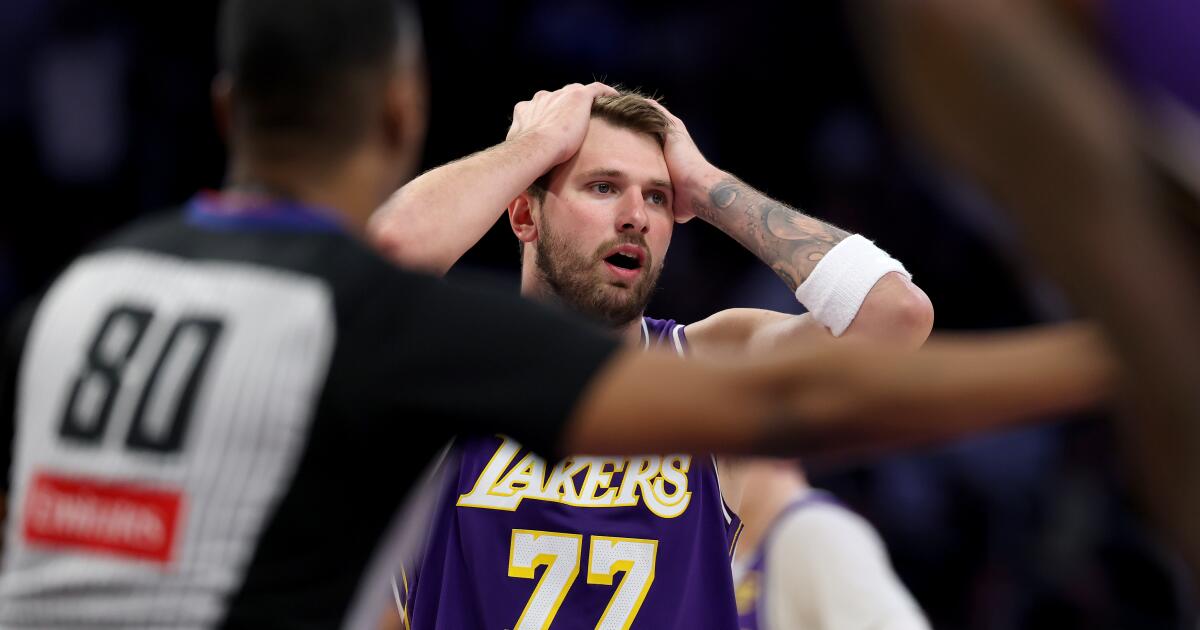
Lakers beat Nets, but Luka Doncic is facing suspension again after 16th technical

EU Parliament unblocks key political hurdle in digital euro talks

Man arrested in plot to firebomb Palestinian activist’s home after undercover op

Video: We Analyzed the Deadly Crash at LaGuardia

Florida High School Football Rankings: Top 25 teams – Oct. 21

How old is Bo Nix? What to know about Oregon quarterback ahead of 2024 NFL Draft

Cleary's 21 help Le Moyne down Central Connecticut State 69-64 in OT

99th annual Pony Swim held in Virginia

Indiana Members Credit Union announced as new anchor tenant at Bottleworks District
EU Parliament unblocks key political hurdle in digital euro talks
Man arrested in plot to firebomb Palestinian activist’s home after undercover op

WATCH: Senate hearing goes silent after Angel Father confronts top Dem over daughter’s death

US diplomat Marco Rubio denounces settler violence, tolls in Hormuz strait

Iran-linked hackers have breached FBI Director Kash Patel’s personal emails | CNN Politics
-

 Detroit, MI1 week ago
Drummer Brian Pastoria, longtime Detroit music advocate, dies at 68
-

 Movie Reviews1 week ago
‘Youth’ Twitter review: Ken Karunaas impresses audiences; Suraj Venjaramoodu adds charm; music wins praise | – The Times of India
-

 Sports7 days ago
IOC addresses execution of 19-year-old Iranian wrestler Saleh Mohammadi
-

 New Mexico5 days ago
Clovis shooting leaves one dead, four injured
-
 Business1 week ago
Disney’s new CEO says his focus is on storytelling and creativity
-

 Technology6 days ago
YouTube job scam text: How to spot it fast
-

 Tennessee4 days ago
Tennessee Police Investigating Alleged Assault Involving ‘Reacher’ Star Alan Ritchson
-

 Texas1 week ago
How to buy Houston vs. Texas A&M 2026 March Madness tickets