Politics
Steve Hilton launches ad mocking Xavier Becerra’s ’36 years’ as a career politician in California gov race


Steve Hilton vows to repair California’s election system as primary results remain undecided
California primary election results for governor and Los Angeles mayor are still delayed days after the vote, as officials continue counting mail-in ballots. Meanwhile, Maine Democratic Senate candidate Graham Platner faces a new wave of troubling allegations from ex-girlfriends, which he labels politically motivated. Congressman Ro Khanna defends Platner, despite warnings from other Democrats.
NEWYou can now listen to Fox News articles!
California Republican gubernatorial candidate Steve Hilton launched a new campaign ad Saturday targeting former Biden administration official Xavier Becerra, signaling the general election fight may already be underway even as primary ballots continue to be counted.
The 55-second ad mocks Becerra’s lengthy political career and record in government, portraying the Democrat as a continuation of California’s political status quo.
The ad features silent clips of Becerra appearing on an old-fashioned TV screen while captions flash across the screen, including: “I’ve been a career politician for 36 years. Vote for me.”
Other captions reference issues likely to become central themes in the governor’s race, including homelessness, California’s high-speed rail project and Becerra’s tenure as secretary of Health and Human Services in former President Joe Biden’s administration.
HILTON, BECERRA, IN THE LEAD WITH VOTES STILL BEING COUNTED IN BATTLE FOR CALIFORNIA GOVERNOR
The ad also attempts to tie Becerra to Gov. Gavin Newsom, ending with the message: “I’ll change nothing about how California is governed,” followed by the tagline, “Don’t watch another rerun.”
Fox News Digital reached out to the Becerra and the Hilton campaigns for comment.
The ad comes less than 24 hours after The Associated Press projected Becerra would advance to California’s November gubernatorial election to succeed the term-limited Newsom.
CALIFORNIA ELECTION LIMBO FUELED BY 4 PRESSURE POINTS DRAGGING OUT VOTE COUNT, EXPERT SAYS
Republican governor candidate Steve Hilton speaks during a news conference in Huntington Beach, Calif. (Kayla Bartkowski / Los Angeles Times via Getty Images, File)
As vote counting continued Saturday, Becerra led the field with 26.8% of the vote, according to AP totals. Hilton received 26.4%, while Democrat Tom Steyer had 21.1%.
Roughly 68% of ballots had been counted as of Saturday afternoon.
In a statement after the AP race call, Becerra celebrated the result and framed his campaign as a fight for California voters.
XAVIER BECERRA PRESSED ON ‘RUMORS’ HE KNEW ABOUT ERIC SWALWELL’S ALLEGED MISCONDUCT DURING CA GOVERNOR DEBATE
California gubernatorial hopefuls Xavier Becerra, left, and Steve Hilton participate in a candidate debate in San Francisco. (Laure Andrillon/AP Photo, File)
“The people of the great state of California, in the greatest nation on earth, have spoken — loudly and proudly,” Becerra said. “We will not be bought. We will not be bullied. And we are never backing down. November, here we come.”
Becerra’s campaign also said the result makes him the first Latino candidate to advance from a California gubernatorial primary to a general election, calling it a historic milestone for the state.
If elected in November, Becerra would become California’s first Latino governor since Romualdo Pacheco, who briefly served as governor in 1875.
CLICK HERE TO DOWNLOAD THE FOX NEWS APP
Becerra, a former California attorney general, served as Health and Human Services secretary during the Biden administration before launching his gubernatorial campaign.
Hilton, a former Fox News host and political commentator, has campaigned as a political outsider and agent of change, arguing California is headed in the wrong direction under Democratic leadership.
Results from Tuesday’s primary have not yet been certified.



A federal judge sided with California and other Democratic states on Friday in a preliminary injunction that blocked the Trump administration’s attempt to condition food benefits on compliance with the president’s policies on gender and immigration.
Twenty states and the District of Columbia filed a lawsuit in March against the Trump administration in U.S. District Court in Massachusetts, arguing that the “unlawful” and “unconstitutional” funding requirements are vague and designed to force policies on states.
Billions in federal funding are ultimately at stake, including money for school lunch programs that provide meals to 30 million children nationwide and food stamps that support about 40 million Americans living in low-income households.
“As the Trump Administration tries to use essential programs and billions in funding as leverage to advance their hateful, discriminatory agenda, California continues to fight to uphold the law and ensure that our communities can continue to access the funding they need to thrive,” said California Atty. Gen. Rob Bonta in a statement.
The policy shift from the United States Department of Agriculture marks another effort by the president to force left-leaning states to submit to his positions on hot-button political and cultural issues to receive government funding. California’s current budget relies on $174.5 billion in federal dollars, or roughly one-third of the overall state budget funds.
Last year, the Trump administration canceled a sexual education grant to California after the state declined to remove gender identity from sexual education curriculum. The administration is also restricting federal funds in an attempt to force states to ban transgender athletes from competing in women’s sports.
The funding conditions from the USDA relate to gender ideology, women and girls’ sports and immigration, according to the lawsuit.
States argue that the conditions do not explain what activities are prohibited for entities that receive grants. The USDA did not cite any law allowing the organization to impose anti-discrimination policies that go beyond federal law, the suit states.
The states that joined the lawsuit contend that they are left with the “unlawful” choice of adhering to the conditions or risk losing up to $74 billion in collective federal assistance from the USDA.
U.S. District Judge Myong Joun approved a preliminary injunction Friday and is expected to issue a memorandum later explaining the decision, according to the Associated Press.

NEWYou can now listen to Fox News articles!
A senior House Democrat is joining the growing chorus of critics questioning Senate candidate Graham Platner’s claim that he was unaware of his tattoo’s Nazi origins.
“There’s no way he didn’t know what the tattoo was,” Rep. Brad Schneider, D-Ill., said Friday in remarks reported by Punchbowl News. “Own it and move on.”
“He’s not willing to do that,” Schneider, the chairman of House Democrats’ largest caucus, lamented.
Schneider’s comments make him one of the most high-profile Democrats to criticize the Maine Senate hopeful, who has also faced mounting scrutiny over sending sexually-explicit messages to other women while newly married, a decades-long history of offensive social media posts and alleged abuse in previous romantic relationships.
Rep. Brad Schneider, D-Ill., joined the growing chorus of critics questioning Senate candidate Graham Platner’s claim that he was unaware of his tattoo’s Nazi origins. (Sarah Silbiger/Reuters)
DEMOCRAT CONGRESSMAN SLAMS GRAHAM PLATNER’S NAZI-LINKED TATTOO AS ‘DISQUALIFYING’
Platner, a far-left populist, is vying to unseat Sen. Susan Collins, R-Maine, in one of the most hotly contested races of November’s midterm elections. He is Maine Democrats’ presumptive nominee, though some party insiders have expressed doubts about the viability of his candidacy amid a string of scandals.
Schneider’s public criticism came after The New York Times reported Thursday that several of Platner’s ex-girlfriends said the Senate hopeful knew about his tattoo’s Nazi-linked design.
One of the women, Lyndsey Fifield, told The Times that Platner taught her the words behind the black skull-and-crossbones tattoo, referring to it as “my Totenkopf.”
“He would joke about it being a Nazi tattoo,” Fifield said, adding that Platner said he chose the tattoo because of his belief that his unit shared similarities to the Nazi SS paramilitary forces.
Platner vigorously denied Fifield’s account during an interview with MS NOW’s Chris Hayes on Thursday. But he struggled to answer when pressed about how Fifield sent a text to friends saying he had a Nazi-linked tattoo in August 2025, when he first publicly disclosed it two months later during an October podcast episode of “Pod Save America.”
“How does she know it’s a Nazi tattoo in August of last year, and you don’t know it’s a Nazi tattoo in August of last year?” Hayes asked Platner.
“I can’t say why,” Platner said, adding that he was not a recipient of Fifield’s message. “I certainly didn’t know, and the text messages she’s sending to friends may have recognized it. They didn’t tell me that.”
Fifield also alleged that Platner assaulted her at one point during their relationship — an allegation that Platner said was false.
U.S. Senate candidate from Maine Graham Platner speaks during a campaign event on May 17, 2026, in Portland, Maine. (Joe Raedle/Getty Images)
GRAHAM PLATNER ACCUSER HITS NYT FOR ALLEGEDLY SOFTENING ALLEGATIONS, SAYS COVERAGE WAS ‘GIFT’ TO DEMOCRAT
Platner has since had the tattoo covered up after it became a campaign issue in late 2025. He wore it for nearly two decades after he said he got it during a night of drinking with his fellow Marines while stationed in Croatia in 2007.
Amid Democrats’ divisions over Platner’s candidacy, Schneider indicated that he would struggle to support him at the ballot box if he were a Maine voter.
“I’ll leave it to the people of Maine to elect who they want,” he said, in remarks reported by Punchbowl News. “I’m grateful I don’t have to make that choice. I wouldn’t want to have to make that choice.”
Rep. Jake Auchincloss, D-Mass., and Sen. John Fetterman, D-Pa., have also sharply criticized Platner’s statements related to his since-covered-up tattoo.
“All I’m saying is when I was growing up, if someone had a clear Nazi tattoo on them, you probably could conclude that they’re a Nazi sympathizer,” Fetterman told CNN earlier this week. “Are you going to continue to defend that or dismiss that?”
Graham Platner, a Democratic candidate for U.S. Senate in Maine, points to a covered-up tattoo that was previously recognized as a Nazi symbol during an interview in Portland, Maine, on Oct. 22, 2025. (WGME via AP)
CLICK HERE TO DOWNLOAD THE FOX NEWS APP
Schneider’s New Democrat Coalition is the largest caucus among House Democrats, with more than 100 members.
Fox News Digital reached out to the Platner campaign before publication.
Politics
Commentary: For mayoral candidates and all of L.A., here’s the homelessness conversation we must have

Ron, a West L.A. resident, thinks he knows why former reality TV star and political newcomer Spencer Pratt won so much support in his run for mayor.
People are frustrated, frightened and angry about homelessness “and the crime associated with it,” Ron said in an email. He added that he voted for Mayor Karen Bass, but “almost everything Pratt said about the homeless resonated with me. … The homeless run wild here, without consequence.”
“Many of us support him not because we think he’s perfect,” said Kathy, “but because we are deeply dissatisfied with the direction of Los Angeles and feel that traditional politicians have not delivered the results we were promised.”
Bob, “a left-leaning Palisades resident,” said the issue is not Pratt’s lack of credentials, but the failures of incumbents. “There was a columnist … who documented in depth the situation at MacArthur Park,” Bob wrote in reference to me. “What was his name and what happened to him? Did he change his tune?”
These are all fair points, and if Pratt holds onto one of the top two spots and makes it to the Nov. 3 general election, or he’s overtaken by late-charging Councilmember Nithya Raman, we’re going to hear a lot more about homelessness in coming months.
So whether we’re looking at a Bass-Raman contest or a Bass-Pratt showdown, here are some random musings, and I’ll begin by responding to Bob’s question about whether I have changed my tune.
Not in the least.
The situation in MacArthur Park — targeted Thursday in a crackdown that involved multiple arrests — has long been a disgrace, and the same is true of many other places I’ve written about for the past quarter of a century. Last month, I visited a Hollywood neighborhood where one frustrated resident hired her housekeeper to document chronic problems related to homelessness, illegal dumping and criminal activity.
Residents have good reason to ask why they haven’t gotten better results after responding to politicians’ pleas for more money over the years.
It’s no surprise that Bass had high unfavorability ratings and why, despite leading in the primary vote count, she’ll fall far short of the 50% needed to avoid a second election phase. I still can’t believe that when I first asked her about the sad state of MacArthur Park, she told me she was fully aware, because she often drove through the area on her way to work.
Then why hadn’t she led the charge to address the problems and return the park to the community?
It shouldn’t take months, let alone years, to take back control of public spaces, and Pratt’s criticism is warranted, no doubt. And my main issue is not the hypocrisy of him saying God wants him to be mayor while calling his opponents demonic entities and villainizing homeless people he intends to shoo away to Seattle. It’s that his “fixes” demonstrate a lack of understanding.
Let me make a confession. From one angle or another, I’ve been writing about the intersection of homelessness, mental illness and addiction for a couple of decades, and I still have a lot to learn.
And on a personal note, I lost my son to a drug overdose. He had a job and wasn’t homeless, but like a lot of people who struggle with depression and other demons, he was resistant to help, and even to the idea that he needed help.
There are a lot more substance users like him, living out of public view, than there are on the street. We notice only those who don’t have the means to pay the rent or the mortgage as housing prices rise. So when Pratt says we don’t have a homelessness problem, but a drug problem, he’s missing a critical component in understanding why L.A. has tens of thousands of unsheltered people.
Pratt said on his website that his “treatment first” approach would direct resources into mental health and drug treatment care, which sounds good except that those responsibilities are primarily under county jurisdiction, not city control.
He and others have attacked harm reduction practices, such as distribution of needles and other paraphernalia. And I have to admit that it seems counterintuitive to enable further drug use. But the idea is to prevent death, engage clients and start a relationship that might lead to transformative care.
The county reports that in 2024, fentanyl-related deaths decreased by 37% and meth-related deaths by 20%. Harm reduction can be “absolutely invaluable,” addiction specialist Rick Rawson told me when I was working in MacArthur Park, but we need much more than that.
“When you have someone who becomes so incapacitated that they can’t stand up,” Rawson said, “to say that you’re just going to provide them with harm reduction and hope they don’t die, I think that falls short of the responsibility we have to each other and to the sickest people.”
I’ll add here that I firmly believe we should intervene more aggressively with people who are gravely ill, or are a threat to themselves or others. I recently profiled two San Diegans who are advocating for use of an existing law to allow for deeper evaluations and longer-term treatment plans for people with chronic drug and mental health issues.
It’s worth noting that drug and alcohol rehab is seldom a quick or surefire remedy. As for mental illness, it took me one year, along with the help of trained professionals, to convince my friend Nathaniel to seek help after he’d spent decades on the street following a diagnosis of schizophrenia.
What I’ve found over the years is that many of those living in tents and cars and alleys and parks are damaged in numerous ways.
I’m less inclined to judge people from a distance after having met a man on Skid Row who said he fell apart after his young daughter drowned. I’ve met women who are victims of domestic abuse or sexual assault. People in the grip of killer drugs like meth or fentanyl don’t think as clearly as we’d like them to, and they repeatedly sabotage their own self-interest.
To see people take over public spaces, openly sell or use drugs, lash out and scare those around them is disturbing and sometimes scary. But to say they choose to live on the street, as Pratt has, is to miss the point, to excuse our own complicity, to overlook historic policy failures, and to choose contempt over compassion.
Homelessness can cause mental illness, and mental illness can cause addiction, and vice versa. One condition alone can be difficult to address, but intertwined maladies further complicate matters.
I recently checked in with a guy I wrote about who had been addicted and homeless in Koreatown, and he said his recovery took more than half a year. He was in residential treatment for a few months, then in intensive outpatient treatment. There are no shortcuts, he said.
I’m not here to defend Bass, or Raman and the rest of the City Council, which shares responsibility for the current state of the city. Limited progress has been made in the last 3½ years, with a marginally lower number of homeless people.
But there’s a long way to go in moving people indoors and restoring a sense of order and public safety. The many needs include smarter enforcement of existing laws, faster development of low-cost interim and permanent housing, better coordination of outreach and follow-up services and more people willing to do all of this work.
Let’s hope that in the coming months we’ll get an honest conversation about what’s working, what isn’t, and how to do better.
steve.lopez@latimes.com
-

 Pennsylvania3 minutes ago
Downed trees amid strong storms close roadways in central Pennsylvania, PennDOT says
-

 Rhode Island10 minutes ago
Police investigating suspicious death in Cumberland
-

 South-Carolina13 minutes ago
Fatal collision in Florence Co.
-
 South Dakota18 minutes ago
2026 SDHSAA State Softball Saturday Scores
-
 Tennessee25 minutes ago
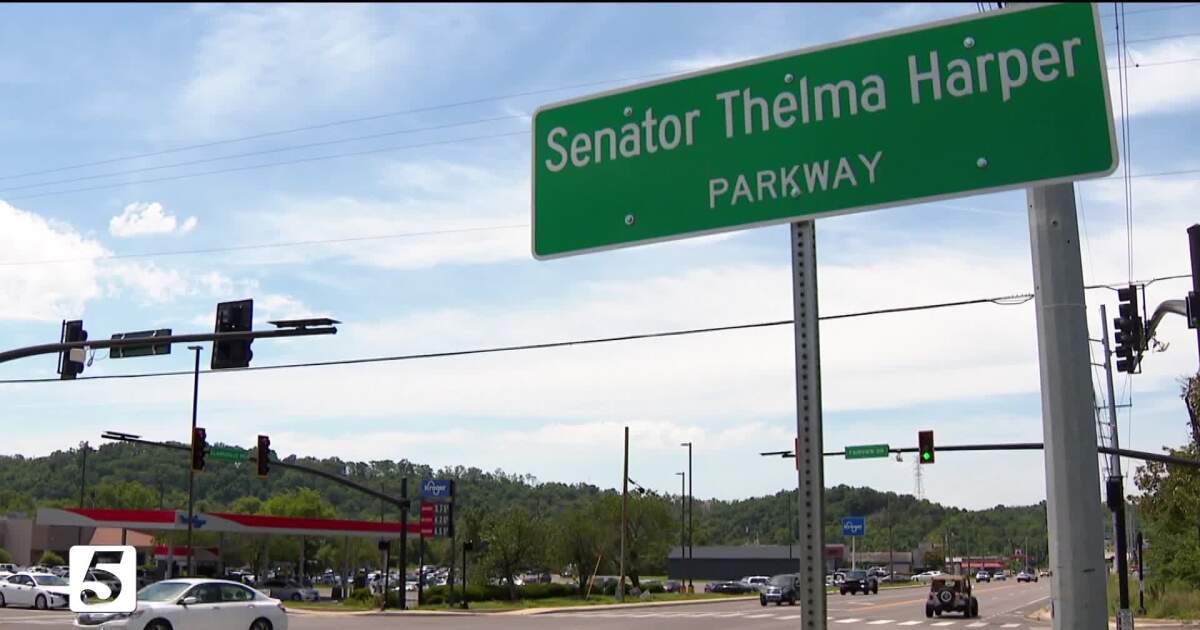
Portion of Clarksville Pike dedicated in honor of trailblazing Sen. Thelma Harper in North Nashville
-

 Texas28 minutes ago
Texas cruise passengers complete hantavirus monitoring with no infections, state says
-

 Utah33 minutes ago
Appreciating the beauty and terror of Coyote Gulch
-
 Vermont40 minutes ago
Vermont to build Green Mountain Youth Center – Valley News

