Politics
Smart business? Currying favor? Why big tech leaders are friending and funding Trump


Four years ago, several of California’s most influential tech titans determined that then-President Trump was such a threat to democracy they barred him from posting on their social media platforms.
“We believe the risks of allowing the President to continue to use our service during this period are simply too great,” Facebook Chief Executive Mark Zuckerberg wrote on his platform on Jan. 7, 2021 — one day after Trump supporters stormed the U.S. Capitol in a violent attempt to keep him in power.
Today, some of the same tech leaders, including Zuckerberg, are taking a strikingly different tone as Trump prepares to retake the White House. They are meeting with him personally, touting the business opportunities they see under his next administration, announcing policies that appear designed to appease him and bankrolling the pageantry of his return with huge donations to his inaugural fund.
On Tuesday, four years to the day since his post announcing Trump’s Facebook suspension, Zuckerberg posted a video arguing that the “complex systems” his company has built to moderate dangerous, illicit and misleading content have led to “too much censorship” — a favorite argument of Trump’s — and will be dramatically scaled back.
Calling the recent elections “a cultural tipping point,” Zuckerberg said Meta — which owns Facebook, Instagram and WhatsApp — will “get rid of fact checkers” and instead rely on users to challenge misleading posts. The company will greatly reduce its content restrictions on some of Trump’s favorite political subjects, such as immigration and gender, he added, and ratchet up the amount of political content its algorithms steer to users.
It also will move remaining safety and content moderation teams out of California and into Texas, which Zuckerberg suggested would provide a less “biased” environment, and work directly with Trump “to push back on governments around the world that are going after American companies and pushing to censor more.”
Industry experts say the changes are part of a broader shift in public political posturing by big tech’s heavy hitters — one that began long before Trump’s November win but has escalated greatly since, and is greater than the perfunctory bowing of pragmatic business leaders with the changeover in government every four years.
Some have defended the shift. In an interview with the Associated Press last month, Salesforce CEO Marc Benioff credited it to the incoming Trump administration showing more interest than the Biden administration in industry concerns and expertise.
“I think a lot of people realize there is a lot of incredible people like Elon Musk in the tech industry and in the business community,” Benioff said. “If you tap the power and expertise of the best in America to make the best of America, that’s a great vision.”
Others say the shift reflects a financial calculation, in line with the libertarian streak that has long run deep in tech circles, that Trump’s penchant for deregulation and disdain for content moderation — which he has claimed is biased against conservatives — will be good for the bottom line, the experts said.
The tech executives see an opportunity to wipe their hands of the expensive responsibility to clean up their platforms, the experts said, and a useful excuse to do so under the guise of free speech — an ideal Trump has often cited in order to ridicule platform moderation.
“It is a recognizing that Trump’s power is enormous, as we’ve seen through the election, that he’s definitely here to stay for these four years, [and] that the MAGA movement is the biggest social movement in the United States,” said Ramesh Srinivasan, director of the UC Center for Global Digital Cultures. “When it comes to Meta and these big companies, their interest is in maintaining if not increasing their valuation and/or profitability, and they’re gonna go with whatever the easiest ways are to achieve just that.”
That posture is unsurprising and financially savvy, he and other experts said, but also alarming — particularly in light of Trump’s promises to wield the Justice Department as a political weapon against his enemies and the tech leaders’ willingness to counteract that threat with cash and other consolations to the White House, they said.
Sarah T. Roberts, co-founder and faculty director of the UCLA Center for Critical Internet Inquiry, said the tech donations to Trump’s inaugural fund were “quite a vulgar demonstration” that in order “to succeed in the marketplace in the next four years, it will require currying favor with the president.”
A major problem is that decisions by Meta, X and others to capitulate to Trump by tossing away years of accumulated know-how and expertise in the area of content moderation are not in the best interests of platform users around the world who are harmed when such safeguards aren’t in place, said Roberts, author of “Behind the Screen: Content Moderation in the Shadows of Social Media.”
The tech leaders know that, too, but don’t seem to care, she said.
“They know from their own internal research that there is harm without measures and efforts to intervene, and they are making very calculated decisions to ignore their own evidence, dismantle those teams, [and] sell out their own work and workers,” Roberts said.
Also at work, said Rob Lalka, a business professor at Tulane University, is a long-running strategy among big tech leaders to reshape American capitalism in their favor by gaining influence in Washington.
“They are getting involved in politics in ways that go beyond the money,” he said. “They’re interested in power.”
Money and power
Zuckerberg, Elon Musk of X, Tim Cook of Apple, Jeff Bezos of Amazon, Sundar Pichai of Google and other leaders in the cryptocurrency and AI industries who have backed Trump control platforms and services that play an outsize role in shaping civil discourse and political debate, experts said.
An important check on their sweeping powers is government regulation, which has increased in recent years as countries grapple with the threats such platforms pose to consumers and democracy, including through the spread of misinformation and hate speech.
Individual nations and the European Union have increasingly issued mandates for content moderation and the safeguarding of children, issued take-down orders for content deemed illegal or dangerous, and filed antitrust and other litigation to break up or fine the companies for anticompetitive business practices.
Amazon, Apple, Google, Meta and X — formerly Twitter — have all faced antitrust litigation or review in recent years, some of which originated under the first Trump administration. None responded to requests for comment, though they have denied wrongdoing in court.
They or their chief executives also have all pledged donations to Trump’s inaugural fund, which pays for galas, parades and dinners.
Meta and Apple’s Cook have said they will contribute $1 million to Trump’s fund. Google has said it’s giving $1 million and that the inauguration will be streamed on YouTube. Amazon, led by multibillionaire Jeff Bezos, has committed to giving $1 million in cash plus a $1-million in-kind contribution by streaming the inauguration on Amazon Video.
Musk, the world’s richest man, spent more than a quarter of a billion dollars — the most of any single donor in the 2024 election cycle — to help reelect Trump and Republicans in the House and Senate, including through two separate political action committees, campaign finance filings show.
Musk has been in Trump’s inner circle ever since, and Trump has appointed him to lead a new “Department of Government Efficiency.”
Bill Baer, former head of the Justice Department’s Antitrust Division in the Obama administration, said the tech leaders are “currying favor” — which he added was “not a crazy thing for them to be doing” given Trump’s focus on loyalty.
“They want to make sure that, if there is an enemies list being compiled, they’re not on it,” Baer said.
It’s also unclear how the Trump administration is going to handle tech platforms or the investigations into their operations, Baer said. Both Trump and Vice President-elect JD Vance have “expressed some concern about tech platforms,” and there “seems to be a mixed view among Republicans in Congress,” he said.
Baer’s concern, however, is that the Trump White House will make good on its promises to “control law enforcement in a way that would allow it to protect its friends and to pursue its enemies, and that includes people who are currently being sued on antitrust grounds as monopolists, as well as people being investigated for those behaviors.”
If Trump does so, the tech leaders’ willingness to pay into his inaugural fund and appease him in other ways will raise legal questions, Baer said — especially if the antitrust cases against them suddenly go away, or they get off easy.
It’s “something that the public ought to be concerned about” Baer said. “Our whole economy is built on the notion that competition results in innovation, in price competition, in quality improvement.”
‘Everyone wants to be my friend’
At a December news conference, Trump remarked on the “much less hostile” reception he has received from tech leaders.
“The first term, everybody was fighting me. In this term, everybody wants to be my friend,” Trump said.
When asked about Meta’s announcement Tuesday — which followed another naming Dana White, chief executive of Ultimate Fighting Championship and a staunch Trump loyalist, to Meta’s board — Trump simply said Zuckerberg has “come a long way.”
The remark was a nod to the argument by Trump and other Republicans that big tech is steeped in liberal bias and that its algorithms and content moderation are designed to help Democrats and hurt Republicans.
Experts say there is plenty of evidence to show that bias is a myth — not least of all the latest actions of tech’s most powerful leaders.
But regardless of those leaders’ personal politics, they have all “drawn the same conclusion” that they must stroke Trump’s ego, Roberts said.
“If that’s the price of doing business, I guess they are prepared to do it — while selling out a lot of other people and putting them in danger.”
Lalka, of Tulane and author of “The Venture Alchemists: How Big Tech Turned Profits Into Power,” said the fact that Trump is surrounded by tech leaders reflects how vastly Silicon Valley has shifted its posture on politics since 2016 — when venture capitalist Peter Thiel raised industry eyebrows by donating $1.25 million to Trump’s first campaign.
Lalka said Americans underestimate, and should be better informed on, the degree to which Silicon Valley types have since infiltrated government — Vance, among others, also has deep ties to Thiel — and how much they stand to permanently alter American governance to better serve their own free market interests.
Musk’s “Department of Government Efficiency” and the aligned plans under Project 2025 to fire career civil servants in favor of Trump loyalists are perfect examples, he said.
“What they’re arguing for here is much more Silicon Valley of an idea — which is that anything that is legacy, that is traditional, needs to be rejected in favor of the new, the novel, the innovative, the technological,” Lalka said. “Do we have that appetite for risk taking based on these people who are coming in? As a general public, I’m not sure about that.”

Politics
Rubio sanctions Cuban groups with ties to US nonprofit network funded by communist donor Neville Roy Singham

NEWYou can now listen to Fox News articles!
Secretary of State Marco Rubio put U.S. organizations on notice: they can no longer do business with a key Cuban organization that has spent over six decades – since the launch of Fidel Castro’s communist revolution in 1959 – cultivating relationships with U.S. activists and groups, many of them now funded by communist American tycoon Neville Roy Singham.
The sanctions target the Cuban Institute of Friendship with the Peoples, known by its Spanish acronym ICAP, an organization founded by Castro in 1960 to spread Marxist ideology and support for Cuba. Long ago, U.S. officials and intelligence assessments concluded ICAP is a key component of Cuba’s intelligence apparatus.
“For decades, Cuba has been the world capital for radical left-wing terrorism,” Rubio said. “The regime in Havana has recruited, trained and backed violent Marxist and third-worldist movements across our hemisphere and beyond.”
REVOLUTIONARY TOURISM: INSIDE THE $600M MARRIAGE OF DARK MONEY AND FAR-LEFT AGITPROP
Marco Rubio moves to put sanctions on a group that Fidel Castro established in 1960 to spread Cuba’s communist influence in the world. (Sven Creutzmann/Mambo Photography/Getty Images; Nathan Posner/Anadolu via Getty Images)
Earlier this year, ICAP worked with U.S. nonprofits, including the People’s Forum, Progressive International and CodePink, to organize a March “convoy” that included controversial Marxist streamer Hasan Piker landing in Cuba to support Cuba’s communist party.
The trip has since attracted federal scrutiny, with CodePink co-founder Medea Benjamin confirming she received questions from federal officials about the trip, investigating whether she violated sanctions.
Late last month, Fox News Digital published a three-part series, reporting that federal investigators are examining Cuba’s alleged malign foreign influence operation in the U.S., investigating a network of 145 groups with collective revenues of about $1 billion, promoting Cuba’s agenda and communist ideology.
“Today, we are targeting the network that enables and funds Cuba’s subversive and radical operations,” Rubio said.
The groups working closely with ICAP include the People’s Forum, CodePink, BreakThrough News and Tricontinental, funded by Singham, a Marxist tech tycoon living in Shanghai. As reported, Singham has pumped $285 million into nonprofits since 2017 that have built very close relationships with ICAP and the communist government of Cuba.
Singham is married to CodePink co-founder Jodie Evans.
INSIDE CUBA’S FOREIGN INFLUENCE CAMPAIGN: FROM THE VENCEREMOS BRIGADE OF THE 1960S TO SATURDAY IN A UNION HALL
ICAP is today led by Fernando González Llort, one of five former Cuban intelligence officers, known as the “Cuban Five,” convicted in the U.S. years ago on espionage-related charges and released after spending time in jail.
Critics say ICAP acts as a gateway for revolutionaries from around the world to get embedded in the propaganda, organizing tactics and strategic goals of the Communist Party of Cuba. ICAP has denied wrongdoing and says it’s a civil society organization.
ICAP was one of five entities that Rubio designated as off-limits under sanctions authorities established by President Donald Trump’s Cuba executive order. The sanctions also target Cuba’s Ministry of the Revolutionary Armed Forces (MINFAR), the Committees for the Defense of the Revolution (CDR), Minera La Victoria S.A. and the state-run tourism company Amistur Cuba S.A., which has arranged trips to Cuba with U.S. nonprofits in the Singham network.
Experts said the move signals that the Trump administration is focused not only on the Cuban government but also on U.S. institutions that U.S. officials believe help project Cuban influence internationally.
A declassified CIA report from the Cold War era, “Cuba: Castro’s Propaganda Apparatus and Foreign Policy,” described Cuba’s international propaganda and influence activities as a central component of Castro’s foreign policy strategy. The report named ICAP among organizations that act as important instruments for cultivating sympathetic political movements abroad and extending Cuban influence beyond the island.
DOJ, TREASURY INVESTIGATE NONPROFITS AND LEADERS ALLEGEDLY COORDINATING WITH CUBA IN INFLUENCE CAMPAIGN
One of the most notable examples was the Venceremos Brigade, a Cuba solidarity program established in 1969 that brought generations of American activists to the island through exchanges organized with Cuban authorities and institutions including ICAP.
The program became one of the most visible pipelines connecting American activists to the Cuban revolutionary government.
Today, the Venceremos Brigade operates as a fiscally-sponsored project of the People’s Forum.
Lawmakers and federal authorities are examining whether organizations funded by Singham have acted on behalf of foreign interests without properly registering and have helped amplify messaging favorable to the Chinese Communist Party and the Communist Party of Cuba.
Cuba’s President Miguel Diaz-Canel (C) listens to Progressive International’s general coordinator, David Adler, during an event at the Cuban Institute for Friendship with the Peoples (ICAP) in Havana, on March 21, 2026. (Ernesto Mastrascusa/AFP via Getty Images)
HOW A RHODES SCHOLAR WITH TIES TO CUBA’S PRESIDENT ORGANIZED THE CONVOY THAT BROUGHT HASAN PIKER TO HAVANA
During the recent convoy in March, Progressive International co-founder David Adler appeared alongside Cuban President Miguel Díaz-Canel and ICAP President González at an official event hosted by ICAP.
Years ago, Los Angeles Mayor Karen Bass participated in Venceremos Brigade trips, a connection that her mayoral candidate Spencer Pratt resurfaced during her campaign. Bass has denied any wrongdoing.
Supporters of such exchanges describe them as educational and humanitarian programs intended to foster international understanding. Critics argue they function as political influence operations designed to build support for the Cuban regime and its ideological objectives.
The Cuban government condemned Rubio’s sanctions shortly after the announcement.
President Miguel Díaz-Canel accused the United States of escalating economic pressure against Cuba and attempting to intensify tensions between the two countries.
Hasan Piker, a Democratic Socialists of America member, and CodePink co-founder Jodie Evans meet in Havana, Cuba, as part of a “United Front” supporting the communist regime. (CodePink via Storyful)
“The Treasury Department has added new names of Cuban leaders, organizations and companies to an illegitimate sanctions list,” Díaz-Canel wrote on social media. “They are aimed at reinforcing the blockade measures and the scenario of conflict between Cuba and the United States.”
Rubio’s warning extended beyond the sanctioned entities.
The action signals that the administration is increasingly focused on the networks, partnerships and influence channels that U.S. officials believe have helped advance Cuban interests abroad long after the Cold War officially ended.
“Anyone providing services to these sanctioned actors is at risk of sanctions themselves,” he said. “Foreign banks and other companies that provide services to these entities should freeze those activities.”
CLICK HERE TO DOWNLOAD THE FOX NEWS APP
Fox News Digital’s Reagan Schroeder contributed to this report.
Politics
Commentary: No, Mr. Hilton, our elections are not ‘a joke.’ It’s time for you to stand up to Trump

Well, that didn’t take long.
A day after California’s primary election, President Trump took to social media with baseless claims of election fraud — predictable, but also dangerous.
“Look what’s happening in California, the Dumocrats, right before our very eyes, are stealing the Vote,” Trump wrote in one post.
“There’s BIG cheating by the Dumocrats in California,” he wrote in another, apparently enamored of his latest juvenile slur.
Never mind that his candidate, Steve Hilton, is in the lead — for now anyway.
California has once again become the main dish on Trump’s buffet of bull-hockey as he continues to undermine democracy and consolidate authoritarian power, using this disingenuous and patently untrue narrative that American elections are rigged by shadowy Democratic forces working in collusion with illegal immigrants.
That last part is called the Great Replacement Theory, the idea that “elites” are replacing white people — and white voters — with Black and brown immigrants in a bid to destroy white culture. It’s at the heart of Trump’s voter fraud allegations.
The twist this time is that Hilton, the man who wants to represent all Californians, seems to be jumping on the election fraud conspiracy train with the president. I get it, there’s the MAGA base to feed, and it’s a base that feasts on outrage and fakery. Serving up resentment glazed with lies and propaganda has been the MAGA playbook for years under Trump, a strategy that no one can deny has been heartbreakingly effective.
But Hilton is a smart man and must certainly know that voter fraud is rare, to the point of being inconsequential to election outcomes. Hilton by his own admission understands voting patterns, and that in this cycle, Republicans have voted early and often by mail, despite Trump’s claims that all vote-by-mail should be suspect. So Hilton understands that early votes have skewed his way, and that later vote tallies will likely favor Democrats.
And Hilton is definitely intelligent enough to expect that in a state where Democrats outnumber Republicans nearly three to one, he will not keep the top spot in this primary, and a slim chance remains that he will not make it into the top two. That’s just simple math.
So if Hilton truly seeks to represent this state as its top elected executive, now is the time to renounce election fraud myths and stand up to Trump’s lies. If Hilton can’t say that he believes our recent election was free and fair, then he has no business being our governor.
Unfortunately, that doesn’t seem to be the path he’s taking, even as it seems increasingly likely that he will advance to the general election.
This week, speaking with far-right podcaster and former Turning Point USA creative director Benny Johnson (who was allegedly duped into working for a Russian influence operation), Hilton said that while “so far we’re not seeing any signs” of cheating, “we’re going to be all over it. We’re not going to let them do that.”
Hilton was responding to a question from Johnson on whether Hilton will sue over “cheating.”
On a post-election appearance with Laura Ingraham, the conservative Fox News host who has repeatedly promoted the Great Replacement Theory, Hilton delved into more conspiracy.
“Just to really underline the point that you made about the corruption,” he told Ingraham an anecdote about supposed fraud in a previous election cycle when a “whistleblower” at the post office told him that they were instructed that a handwritten postmark was acceptable when sorting ballots to deliver to the county registrar.
“It’s just unbelievable, and of course, that’s why so many people don’t believe the results, but it just undermines confidence,” he told Ingraham, certainly knowing that the post office forwarding a ballot on to a county registrar in no way means it will be certified or counted. Would we really want the USPS deciding which ballots to deliver? Disingenuous on Hilton’s part at best.
“The whole thing is a joke,” Hilton went on to say of California elections, which of course, is absurd.
Thursday, when I asked Hilton’s team to speak with him about his views on voter fraud, they sent back a response that focused on the slowness of the California vote count; voter rolls Hilton has described as “wildly inaccurate,” which is a wildly inaccurate claim; and two instances of actual fraud with voter registration — not examples of votes that were counted.
To be sure, all those items are important. Any malfeasance should be punished, and the system should always strive to improve.
But how hard is it to simply be against fraud, while accurately acknowledging that it is rare and our current system provides accurate results?
I am against voter registration fraud. I am against vote fraud. I am absolutely pro-democracy, including policies such as mail-in voting that increase participation.
I do not believe that there is widespread fraud in the California primary, or in American elections in general, because the evidence does not support that conspiracy. I do not believe that Democrats are running a decades-long, nationwide conspiracy to replace white voters with votes from Black and brown undocumented immigrants, because that is both false and racist.
Pretty basic stuff, and statements in line with the values and common sense of the majority of Californians Hilton says he will represent.
If Hilton can’t come out and clearly say that Trump is wrong — about fraud and about the Great Replacement Theory — can he really be trusted to represent the values of the Golden State?

new video loaded: Jan. 6 Rioter Hired by Pentagon
transcript
transcript
Jan. 6 Rioter Hired by Pentagon
Elias Irizarry, who pleaded guilty to climbing through a broken window at the Capitol on Jan. 6, 2021, now works for an office responsible for uncovering and defending against terrorism plots at the Pentagon.
-
“Full pardon or commutation?” “Full pardon.”
By Alisa Shodiyev Kaff
June 4, 2026
-

 Atlanta, GA2 minutes ago
With World Cup, Atlanta Seeks to Show How It Has Moved on From 1990s Notoriety
-
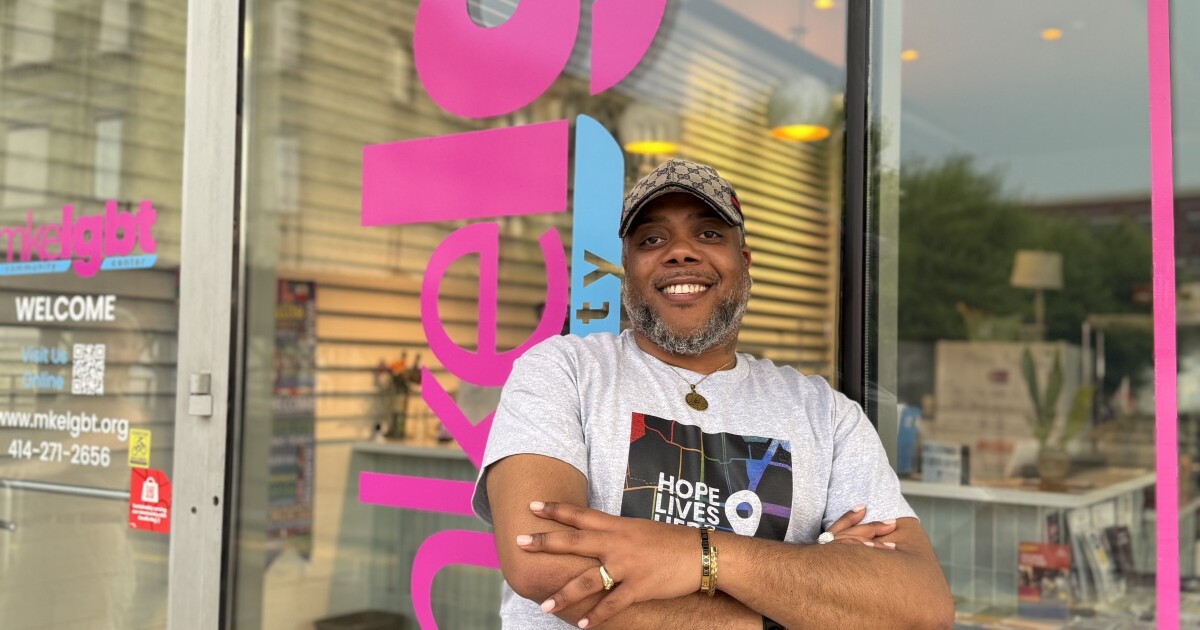 Milwaukee, WI5 minutes ago
Milwaukee LGBT Community Center executive director calls move a homecoming as PrideFest kicks off
-
 Minneapolis, MN13 minutes ago
Minneapolis honors Prince with concerts, block parties and new museum
-

 Indianapolis, IN20 minutes ago
100+ free concerts in and around Indianapolis this summer
-

 Pittsburg, PA23 minutes ago
Carmen Mlodzinski Shows Pirates How Much They Need Him
-

 Augusta, GA28 minutes ago
Driver, passenger killed in crash on Gordon Highway
-

 Washington, D.C35 minutes ago
DC weather: Code Orange Air Quality Alert Friday, sunny and hot with highs in the 90s
-

 Cleveland, OH38 minutes ago
FBI launches Most Wanted Fraudsters list, establishes partnership in Ohio to fight fraud

