Politics
Judge tosses Trump-linked lawsuit targeting Chief Justice Roberts, dealing setback to Trump allies


NEWYou can now listen to Fox News articles!
A federal judge on Thursday dismissed a lawsuit filed by a pro-Trump legal group seeking access to a trove of federal judiciary documents, including from a body overseen by Supreme Court Chief Justice John Roberts – putting an end to a protracted legal fight brought by Trump allies seeking to access key judicial documents.
U.S. District Judge Trevor McFadden, a Trump appointee assigned to the case earlier this year, dismissed the long-shot lawsuit brought by the America First Legal Foundation, the pro-Trump group founded by White House policy adviser Stephen Miller after Trump’s first term; Miller, now back in the White House, is no longer affiliated with AFL.
McFadden ultimately dismissed the case for lack of jurisdiction, saying Thursday that two groups responsible for certain regulatory and administrative functions for the federal judiciary are an extension of the judicial branch, and therefore protected by the same exemptions to federal laws granted to the judiciary.
“Nothing about either entity’s structure suggests the president must supervise their employees or otherwise keep them ‘accountable,’ as is the case for executive officers,” McFadden said.
TRUMP’S EXECUTIVE ORDER ON VOTING BLOCKED BY FEDERAL JUDGES AMID FLURRY OF LEGAL SETBACKS
Supreme Court Justices Samuel Alito, Clarence Thomas, Brett M. Kavanaugh, Amy Coney Barrett, Supreme Court Chief Justice John Roberts and Justices Elena Kagan and Sonia Sotomayor are seen at the 60th inaugural ceremony on Jan. 20, 2025 in Washington, D.C. (Ricky Carioti /The Washington Post via Getty Images)



Politics
Dem senator warns deportation could let Virginia woman’s illegal immigrant killer ‘escape accountability’

NEWYou can now listen to Fox News articles!
Sen. Tim Kaine, D-Va., is calling on prosecutors to try, convict and punish the undocumented killer of Stephanie Minter, arguing that he must face American justice before he’s ordered to leave the country.
Kaine said he fears deportation could be a form of leniency.
“I’m not sure that if he’s deported, [that] he will really face the punishment that he should face. If you do a deportation now, what’s the guarantee he would really face severe consequences for what he’s done?” Kaine said.
“I think he should be prosecuted to the full extent of the law and then possibly deported after that, but I wouldn’t want him to escape accountability for the crime.”
TRUMP ADMIN ASKS SPANBERGER, VIRGINIA OFFICIALS NOT RELEASE ILLEGAL CHARGED WITH GROPING HIGH SCHOOL GIRLS
Sen. Tim Kaine, D-Va., speaks to reporters as he walks into the Senate Chamber on Dec. 11, 2025 in Washington, D.C. (Andrew Harnik/Getty Images)
Authorities are charging Abdul Jalloh, a 32-year-old Sierra Leone native, with the murder of Stephanie Minter after authorities found her dead at a bus stop in Fairfax, Virginia last month.
Jalloh had already been arrested more than 30 times before his fatal confrontation with Minter, according to the Department of Homeland Security. Among others, his previous charges included rape, malicious wounding, assault, drug possession, identity theft, trespassing and more.
Local authorities dropped previous charges against Jalloh, allowing him to walk free.
IGNORED ICE DETAINERS ‘PUT LIVES AT RISK,’ DHS SAYS, TARGETING NEWSOM, PRITZKER, HEALEY
Kaine believes this time should be different.
“I think he should be prosecuted to the full extent of the law and then possibly deported after that,” Kaine said.
Abdul Jalloh, 32, is accused of killing Stephanie Minter, 41, at a Virginia bus stop. (Fox 5 DC)
Jalloh has been charged with second-degree murder.
Even as questions remain about why Virginia authorities let Jalloh go, Kaine, who served as governor of Virginia from 2006 to 2010, posited that ICE may have failed to follow through on requests to detain Jalloh ahead of Minter’s murder.
“My experience when I was governor — and this is now 15 or 20 years ago — is that we would normally let ICE know before we let anybody out of prison in Virginia, and then they wouldn’t show up,” Kaine said.
VIRGINIA PROSECUTOR’S RECORD ON VIOLENT OFFENDERS SCRUTINIZED AFTER ILLEGAL IMMIGRANT CHARGED IN MOM’S MURDER
Senator Tim Kaine, D-Va., speaks during a Senate Foreign Relations Committee confirmation hearing in Washington, D.C. on March 13, 2025. (Al Drago/Bloomberg via Getty Images)
CLICK HERE TO DOWNLOAD THE FOX NEWS APP
“We would give them two-weeks notice [and say] ‘Hey, here’s somebody who’s here, come pick them up,’ and they wouldn’t show up. That was more my experience.”
Fox Digital reached out to the Department of Homeland Security for comment.
Politics
Swalwell accuses Trump of trying to influence California governor’s race with old FBI files

Rep. Eric Swalwell, a leading Democratic candidate for governor of California, has accused President Trump of trying to sway the election following reports that FBI Director Kash Patel may release documents from a decade-old investigation into the congressman’s ties to a suspected Chinese spy.
Patel directed agents in the bureau’s San Francisco office to redact the case files for public release, according to a report by the Washington Post, a highly unusual move by the FBI to release case files tied to a probe that did not result in criminal charges.
The investigation centered on Swalwell’s ties to a suspected intelligence operative, Christine Fang, or Fang Fang, who worked as a volunteer raising money for his congressional campaign. Swalwell cut off ties to Fang in 2015, after intelligence officials briefed him and other members of Congress about Chinese efforts to infiltrate the legislative body.
Swalwell, among the frontrunners in the sprawling field of candidates for California governor, was not accused of impropriety.
The White House referred questions to the FBI and the Justice Department, which did not immediately respond to a request for comment.
“We are at war. Gas prices are soaring. And threats against the homeland are on the rise. But instead of concentrating on the issues most important to this country, Donald Trump and Kash Patel have decided to continue their revenge tour and to interfere in the California Governor’s election,” Swalwell told The Times on Sunday. “They believe they will get a servant in Sacramento.”
Swalwell said he has not been contacted by the FBI, but “considering how they have selectively released or not released files recently, I don’t trust them one bit. This case is closed.”
Swalwell accused Trump of “desperately trying” to stop him, because he’s now the favored candidate for California governor. Swalwell and former Orange County Rep. Katie Porter were tied for top Democrat candidate, according to a poll released earlier this month by UC Berkeley’s Institute of Governmental Studies and co-sponsored by The Times.
“What Trump wants the most is to have a Western White House. An enabler on the opposite coast,” he said. “A lot of people have bent the knee to this administration. But I will not. And neither will the people of California.”
It’s not the first time Swalwell has accused the administration of targeting Trump’s political opponents.
Last year, Swalwell sued Federal Housing Finance Agency Director Bill Pulte, accusing him of criminally misusing government databases to target Trump’s political opponents. Pulte had accused Swalwell of mortgage fraud and referred him to the Justice Department for a potential federal criminal probe. Swalwell dropped that suit this month.
Swalwell, a former prosecutor who ran for president in 2020, announced his bid for California governor in November. Swalwell said his decision was driven by the serious problems facing California and the threats posed to the state and nation with Trump in the White House.
On Sunday, Swalwell secured the endorsement of the California Teachers Assn., a powerful force in state democratic politics.
U.S. Sen. Adam Schiff (D-Calif.), who has endorsed Swalwell for governor, shared the Washington Post story on X Saturday, saying, “This abuse of the FBI is as dangerous as it is unlawful.” Schiff served with Swalwell on the House Intelligence Committee, where they riled Republicans by investigating President Trump during his first term.
Schiff served as the lead manager of Trump’s first impeachment and Swalwell as a manager of Trump’s second impeachment.
“Time and again, the President and his appointees have weaponized the Department of Justice against those who dare stand up to Trump,” Schiff wrote. He added that there was no doubt that Trump and Patel “will stop at nothing to try to tell Californians who their next governor should be.”
The Post story unleashed a flood of critiques from California politicians, including Rep. Jimmy Gomez (D-Los Angeles), who sits on the House Intelligence Committee. On X, Gomez accused Patel of “wasting resources” on a “closed, decade-old case where Swalwell cooperated with the FBI and was found innocent of any wrongdoing.”
“Reopening it now, right as he leads in the polls and ballots are about to drop, is a political hit-job!” Gomez said. “Trump and Kash Patel are weaponizing the FBI against people they deem political enemies.”
Rep. Jamie Raskin of Maryland, the top Democrat on the House Judiciary Committee, released a statement accusing Patel of working at “the behest of the White House” and “wasting the resources of the FBI and perhaps violating the Hatch Act by ordering agents to spend hours preparing a political smear file for a [personal] vendetta.”
Fang came into contact with Swalwell’s campaign as he was first running for Congress in 2012. She also participated in fundraising for his 2014 campaign and helped place an intern in his office. Federal investigators alerted Swalwell to their concerns — and briefed Congress — about Fang in 2015, at which point the California Democrat says he cut off contact with her.
In 2023, House Speaker Kevin McCarthy blocked Swalwell from continuing to serve on the House Permanent Select Committee on Intelligence due to the past connection with an alleged spy. That same year, the House Ethics Committee closed a two-year investigation into the allegations of Swalwell’s ties to Fang.
In closing the probe, the ethics committee wrote in a letter to Swalwell that it had “previously reviewed allegations of improper influence by foreign agents and in doing so, cautioned that Members should be conscious of the possibility that foreign governments may attempt to secure improper influence through gifts and other interactions.”
Swalwell released a statement after the investigation was closed, stating that he’d assisted the FBI in its counterintelligence investigation of Fang.
“Despite the FBI repeatedly saying I was nothing but helpful and never accused of wrongdoing, this complaint was filed by a House Republican,” he said. “It’s time to move on.”
“If the intent in bringing this complaint and leveling false smears was to silence me, that is not going to happen,” he added.
In an interview with The Times in November, the day before he announced he was running for governor, Swalwell said the FBI and the House Ethics Committee had previously cleared him.
“The FBI said, ‘By the way, like he did nothing wrong, he was always cooperative.’ And also the House Ethics Committee that McCarthy led said, ‘He did nothing wrong.’ So, you know, I can’t say anything better than, like, what Kevin McCarthy’s ethics committee said. But I get why they see me as a villain. And go after me, and that’s fine.”
On Saturday, Swalwell’s campaign team sent out an email referencing the “explosive new reporting,” and asking for donations to help “fight back.”
Times staff writer Kevin Rector contributed to this report.
Politics
Scathing report claims nation’s oldest labor union ‘betrayed’ MAGA members through ‘shocking’ spending

NEWYou can now listen to Fox News articles!
FIRST ON FOX: One of the nation’s most prominent railroad unions is facing new scrutiny after a watchdog report alleged its leadership is quietly working against the political views of its members who support President Donald Trump’s agenda.
The report, released by the American Accountability Foundation (AAF), claims the Brotherhood of Locomotive Engineers and Trainmen (BLET), one of the nation’s oldest labor unions, is run by leaders who are endorsing and promoting Democratic policies and candidates despite a membership base that data suggests largely supports the president.
The report, which alleges the union “betrayed” its MAGA members, points to the union’s endorsement of the Harris-Walz ticket in the 2024 election cycle, as well as its ties to prominent Democrats, including Sen. Bernie Sanders, I-Vt., and former Ohio Sen. Sherrod Brown, who is running for Senate again.
While BLET has touted Republicans in recent years, including earlier this year when it applauded Vice President JD Vance and the bipartisan reintroduction of the Railway Safety Act (RSA), the report highlights repeated criticism of Trump-era policies, including transportation regulations, immigration enforcement and the conservative-backed Project 2025 agenda, alongside praise for the policies of the Biden administration.
WORKERS SAY ‘I LIKE UNIONS, I JUST DON’T LIKE MY UNION’ — HERE’S WHAT THEY’RE DISCOVERING
President Donald Trump attends a ceremony to rename a four-mile stretch of Southern Boulevard in Palm Beach County, Florida, to “President Donald J. Trump Boulevard” on Jan. 16, 2026. (Julia Demaree Nikhinson/AP Photo)
A review of the union’s social media account by AAF shows numerous examples of the union opposing various moves by the first Trump administration during his presidential campaign against incumbent Joe Biden, which the report describes as evidence of “woke leadership.”
“In the lead-up to the 2024 election, BLET issued 14 tweets that criticized the actions of the first Trump administration while praising the Biden administration’s railroad policies,” the report says. “The messaging was clearly intended to skew union members toward the Democratic presidential ticket. In these tweets, they attacked nearly every major Trump-era rail policy decision while framing the Biden administration’s actions positively.”
The union’s public support of Democrats had a financial angle as well, as the report states that the organization spent more than $26 million on political activity in recent years, with the vast majority supporting Democratic candidates and causes to a degree that AAF referred to as “shocking.”
According to the report, 99% of the union’s party committee donations went to Democrats.
“For example, in the 2016 cycle, BLET donated $15,000 to the DNC when they were the nexus for GOTV for the Hillary Clinton campaign but never donated a dollar to the RNC,” the report says. “In 2024, long after it had become clear that industrial union membership was strongly behind President Trump, the BLET leadership still hadn’t gotten the message, making 24 different donations to Democrat party committees for a total of $53,400 and a mere two donations to Republican committees for a spare $2000.”
LEAKED TEACHERS’ UNION K-12 TRAINING PRESENTATION RAILS AGAINST TRUMP ADMINISTRATION, RED STATES
According to the report, the divide reflects a broader shift in American politics, with blue-collar workers increasingly backing Trump while union leadership remains entrenched in traditional left-leaning positions.
The report goes beyond the union’s spending on politics and delves into what it calls “waste and abuse” in the form of millions of dollars of member dues being shelled out for travel, hotels and “swag.”
“While it’s bad enough that BLET spent over $5,000,000 on hotels and conferences, even more concerning is the fact that the union spent over $2,000,000 on casinos and resorts alone,” the report says. “The union appears more concerned with staying at entertaining destination resorts than they do being thrifty with their members’ dues.”
Recent polling shows that labor unions like BLET consist of a large number of workers who support Trump, including Teamsters polling that shows a 60/40 breakdown in favor of Trump and exit polling from the 2024 election that shows working-class voters without a college degree went 56% for Trump and 42% for Harris.
The report also points to leadership compensation as part of the disconnect, noting multiple top officials earning over $200,000 annually, with the union president and vice president each making more than $300,000.
CLICK HERE TO DOWNLOAD THE FOX NEWS APP
Members of the Brotherhood of Locomotive Engineers and Trainmen take part in a strike outside New Jersey Transit’s headquarters on May 16, 2025, in Newark. (Kena Betancur/Getty Images)
“The men pulling America’s freight voted for President Trump because they believe in secure borders and putting American workers first,” AAF President Tom Jones said in a statement to Fox News Digital.
“But their union bosses are busy living large on member dues and carrying water for the Left. They’ve turned a blue-collar brotherhood into a woke political machine that’s doing everything it can against the Trump-Vance agenda, and likewise, against everyday railroad workers. Every BLET member should be asking where their hard-earned dollars are really going.”
In a statement to Fox News Digital, a BLET spokesperson said: “We do not comment on false press releases by dark money groups who have no accountability to the truth.”

Video: Iran to Allow More Oil Ships Through Strait of Hormuz, Trump Says

What to Know about NASA’s Artemis II Moon Mission

The iconic South African theater that took on apartheid

All the latest in AI ‘music’

US allows Russian oil tanker to reach Cuba amid blockade as Trump says island ‘has to survive’

Florida High School Football Rankings: Top 25 teams – Oct. 21

How old is Bo Nix? What to know about Oregon quarterback ahead of 2024 NFL Draft

Cleary's 21 help Le Moyne down Central Connecticut State 69-64 in OT

99th annual Pony Swim held in Virginia

Indiana Members Credit Union announced as new anchor tenant at Bottleworks District
Video: Iran to Allow More Oil Ships Through Strait of Hormuz, Trump Says

Dem senator warns deportation could let Virginia woman’s illegal immigrant killer ‘escape accountability’

Newsletter: G7 ministers to hold talks on war’s economic fallout
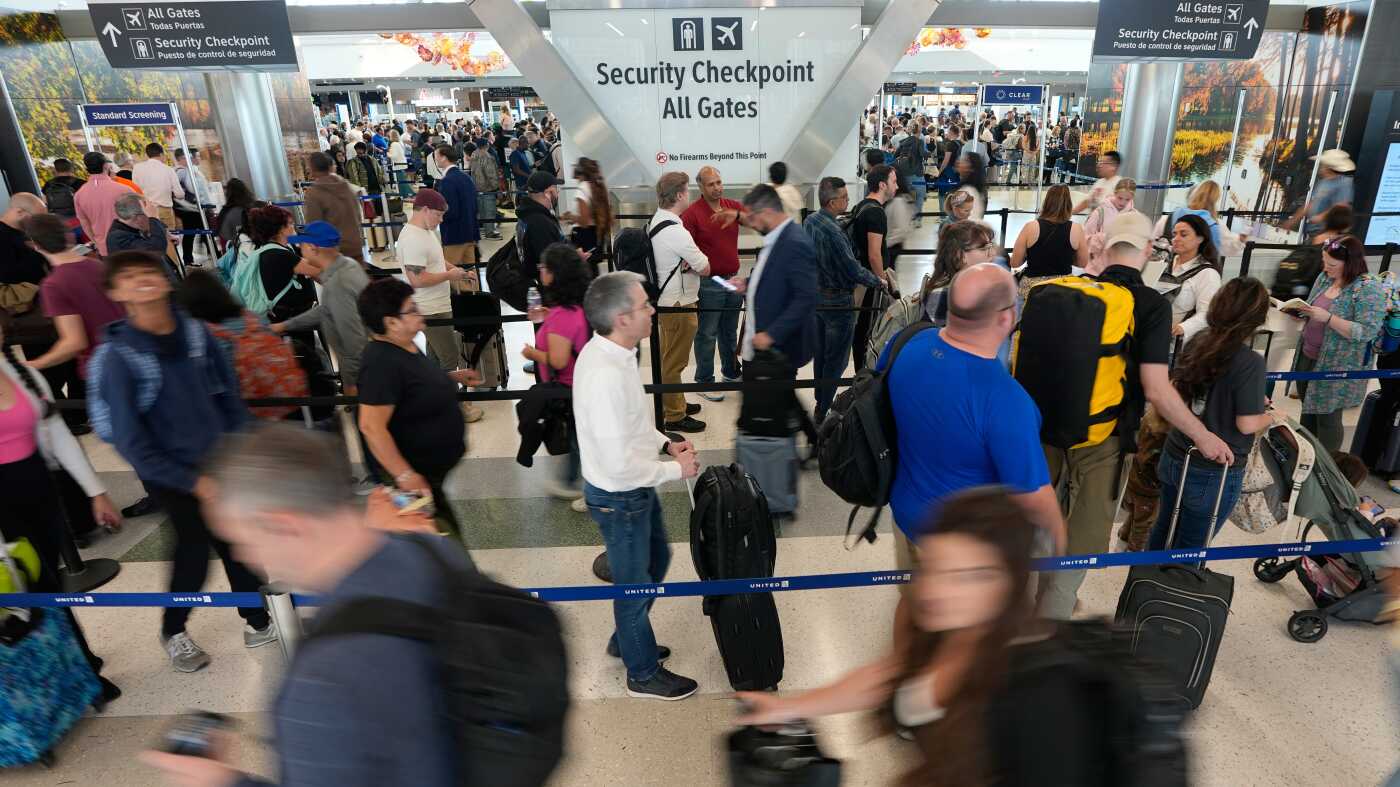
ICE officers could remain at airports after TSA workers are paid

Scathing report claims nation’s oldest labor union ‘betrayed’ MAGA members through ‘shocking’ spending
-

 Sports1 week ago
IOC addresses execution of 19-year-old Iranian wrestler Saleh Mohammadi
-

 New Mexico1 week ago
Clovis shooting leaves one dead, four injured
-

 Miami, FL4 days ago
Jannik Sinner’s Girlfriend Laila Hasanovic Stuns in Ab-Revealing Post Amid Miami Open
-

 Tennessee6 days ago
Tennessee Police Investigating Alleged Assault Involving ‘Reacher’ Star Alan Ritchson
-

 Minneapolis, MN4 days ago
Boy who shielded classmate during school shooting receives Medal of Honor
-

 Politics1 week ago
Schumer gambit fails as DHS shutdown hits 36 days and airport lines grow
-

 Science1 week ago
Record Heat Meets a Major Snow Drought Across the West
-

 Technology1 week ago
YouTube job scam text: How to spot it fast