Politics
DHS responds after reports CISA chief allegedly failed polygraph for classified intel access


NEWYou can now listen to Fox News articles!
The Department of Homeland Security (DHS) is disputing reports that acting Cybersecurity and Infrastructure Security Agency (CISA) Director Madhu Gottumukkala failed a polygraph after seeking access to highly sensitive intelligence, as an internal investigation and the suspension of multiple career cybersecurity officials deepen turmoil inside the agency, according to a report.
Politico reported that Gottumukkala pushed for access to a tightly restricted intelligence program that required a counter-intelligence polygraph and that at least six career staffers were later placed on paid administrative leave for allegedly misleading leadership about the requirement, an assertion DHS strongly denies.
The outlet said its reporting was based on interviews with four former and eight current cybersecurity officials, including multiple Trump administration appointees who worked with Gottumukkala or had knowledge of the polygraph examination and the events that followed. All 12 were granted anonymity over concerns about retaliation, according to Politico.
DHS pushed back on the reporting, saying the polygraph at issue was not authorized and that disciplinary action against career staff complied with department policy.
KRISTI NOEM SAYS BIDEN USED DHS ‘TO INVADE THE COUNTRY WITH TERRORISTS’
DHS disputes reports that acting CISA Director Madhu Gottumukkala failed a polygraph as staff are suspended amid an internal investigation and intel access dispute. (CISA Facebook)
“Acting Director Madhu Gottumukkala did not fail a sanctioned polygraph test. An unsanctioned polygraph test was coordinated by staff, misleading incoming CISA leadership,” DHS Assistant Secretary Tricia McLaughlin said in a statement provided to Fox News Digital. “The employees in question were placed on administrative leave, pending conclusion of an investigation.”
“We expect and require the highest standards of performance from our employees and hold them directly accountable to uphold all policies and procedures,” she continued. “Acting Director Gottumukkala has the complete and full support of the Secretary and is laser focused on returning the agency to its statutory mission.”
Politico also reported that Gottumukkala failed a polygraph during the final week of July, citing five current officials and one former official.
WHITE HOUSE CALLS REPORT ABOUT TRUMP CONSIDERING FIRING NOEM ‘TOTAL FAKE NEWS’
DHS disputes reports that acting CISA Director Madhu Gottumukkala failed a polygraph as staff are suspended amid an internal investigation and intel access dispute. (CISA Facebook)
The test was administered to determine whether he would be eligible to review one of the most sensitive intelligence programs shared with CISA by another U.S. spy agency, according to the outlet.
That intelligence was part of a controlled access program with strict distribution limits, and the originating agency required any CISA personnel granted need-to-know access to first pass a counter-intelligence polygraph, according to four current officials and one former official cited by Politico.
As a civilian agency, most CISA employees do not require access to such highly classified material or a polygraph to be hired, though polygraphs are commonly used across the Pentagon and U.S. intelligence community to protect the government’s most sensitive information.
ICE LEADERSHIP SHAKEUP EXPOSES GROWING DHS FRICTION OVER DEPORTATION TACTICS, PRIORITIES
A person administers a polygraph test. (Getty Images)
Politico reported that senior staff raised questions on at least two occasions about whether Gottumukkala needed access to the intelligence, but said he continued pressing for it even if it meant taking a polygraph, citing four current officials.
The outlet also reported that an initial access request in early June, signed by mid-level CISA staff, was denied by a senior agency official who determined there was no urgent need-to-know and noted that the agency’s previous deputy director had not viewed the program.
That senior official was later placed on administrative leave for unrelated reasons in late June, and a second access request signed by Gottumukkala was approved in early July after the official was no longer in the role, according to current officials cited by Politico.
KRISTI NOEM FACES FIRST MAJOR HOMELAND SECURITY GRILLING AS LAWMAKERS PRESS HER ON TERROR THREATS
DHS disputes reports that acting CISA Director Madhu Gottumukkala failed a polygraph as staff are suspended amid an internal investigation and intel access dispute. (Celal Gunes/Anadolu Agency via Getty Images)
Despite being advised that access to the most sensitive material was not essential to his job and that lower-classification alternatives were available, Gottumukkala continued to pursue access, officials told the outlet.
Officials interviewed by Politico said they could not definitively explain why Gottumukkala did not pass the July polygraph and cautioned that failures can occur for innocuous reasons such as anxiety or technical errors, noting that polygraph results are generally not admissible in U.S. courts.
On Aug. 1, shortly after the polygraph, at least six career staff involved in scheduling and approving the test were notified in letters from then–acting DHS Chief Security Officer Michael Boyajian that their access to classified national security information was being temporarily suspended for potentially misleading Gottumukkala, according to officials and a letter reviewed by Politico.
NOEM HITS BACK AT FEMA CRITICS, REVEALS VISION FOR DISASTER RELIEF AGENCY
“This action is being taken due to information received by this office that you may have participated in providing false information to the acting head of the Cybersecurity and Infrastructure Security Agency (CISA) regarding the existence of a requirement for a polygraph examination prior to accessing certain programs,” the letter said. “The above allegation shows deliberate or negligent failure to follow policies that protect government information, which raises concerns regarding an individual’s trustworthiness, judgment, reliability or willingness and ability to safeguard classified information.”
In a separate letter dated Aug. 4, the suspended employees were informed by Acting CISA Chief Human Capital Officer Kevin Diana that they had been placed on paid administrative leave pending an investigation, according to current and former officials and a copy reviewed by Politico.
CLICK HERE TO DOWNLOAD THE FOX NEWS APP
Gottumukkala was appointed CISA deputy director in May and previously served as commissioner and chief information officer for South Dakota’s Bureau of Information and Technology, which oversees statewide technology and cybersecurity initiatives.
CISA said in a May press release that Gottumukkala has more than two decades of experience in information technology and cybersecurity across the public and private sectors.



NEWYou can now listen to Fox News articles!
Rep. Lauren Boebert, R-Colo., cursed out a Fox News Digital reporter after he began asking about allegations of a sexual relationship between her and Rep. Thomas Massie, R-Ky., that were recently raised by a woman identifying herself as Massie’s ex-girlfriend.
“F – – – you, first of all!’ Boebert said to a Fox News Digital reporter when bringing up claims from Massie’s alleged ex-girlfriend.
“If you’re gonna bring me into this, like, the sexist stuff is like out of control,” she continued. “So there’s your clickbait that you were looking for.”
FIVE TIMES NANCY PELOSI LOST HER COOL WITH THE MEDIA
Rep. Lauren Boebert, R-Colo., reacts to a Fox News Digital reporter’s question about allegations involving Rep. Thomas Massie, R-Ky., before ending the interview and walking away. (Nicholas Ballasy/Fox News Digital)
Boebert then declined to discuss the allegations further.
The exchange came after Boebert had been discussing President Donald Trump’s efforts to unseat Republican incumbents and Massie’s political future.
The former congressional staffer Cynthia West, who previously worked for Rep. Victoria Spartz, R-Ind., accused Massie of bragging to her about an alleged sexual encounter with Boebert within weeks of his wife’s death.
West also accused Massie of offering her $5,000 to drop a wrongful termination lawsuit she was pursuing against Spartz, an ally of Massie. The allegations surfaced just a week before Massie lost his House seat in the May 19 Republican primary.
“I don’t want to talk about anybody’s exes and their crazy s– – – that they do,” Boebert said to the reporter.
Before the exchange turned contentious, Boebert was answering questions about whether Trump’s strategy of backing primary challengers against Republican incumbents is backfiring on the GOP agenda.
MTG SAYS GOP’S FUTURE ‘DESTROYED’ AFTER TRUMP-BACKED PRIMARY CHALLENGER DEFEATS THOMAS MASSIE IN PRIMARY
Rep. Lauren Boebert defended her support for Rep. Thomas Massie after criticism from President Donald Trump. (Tom Williams/CQ-Roll Call, Inc via Getty Images; Salwan Georges/Bloomberg via Getty Images)
“I think most of the folks that have lost their primaries, they were backfiring on the GOP agenda — Cassidy, Cornyn,” Boebert replied.
“I mean, obviously Thomas Massie is the only one that I’m a little sad about,” she said.
Boebert was also asked about Massie’s recent announcement that he is filing for re-election in 2028. Many are speculating that Massie could make a 2028 presidential run as he said he is unsure which position he will be seeking re-election for.
“I haven’t made a final decision about which office to seek, if I run,” he wrote in a post on X announcing his re-election filing with the Federal Election Commission.
TRUMP CALLS OUT REP THOMAS MASSIE: ‘KENTUCKY, GET THIS LOSER OUT OF POLITICS’ TUESDAY
Rep. Thomas Massie speaks with supporters after his concession speech in Hebron, Ky., on May 19, 2026. (Jon Cherry/Getty Images)
Boebert shared that she was unsure of Massie’s next move, before she reprimanded the reporter for shifting the conversation to allegations raised by West.
“He filed for something,” she said. “He didn’t specify what and I don’t know if he’s going to move forward with that or not. I don’t know.” “Hopefully he leaves here and makes some money,” Boebert added.
CLICK HERE TO DOWNLOAD THE FOX NEWS APP
Moments later, the reporter began asking about the allegations from Massie’s alleged ex-girlfriend, prompting Boebert’s expletive-laced response.
Boebert declined to discuss the allegations further and walked away from the interview.
Politics
Becerra advances to November, moves closer to becoming California’s first elected Latino governor
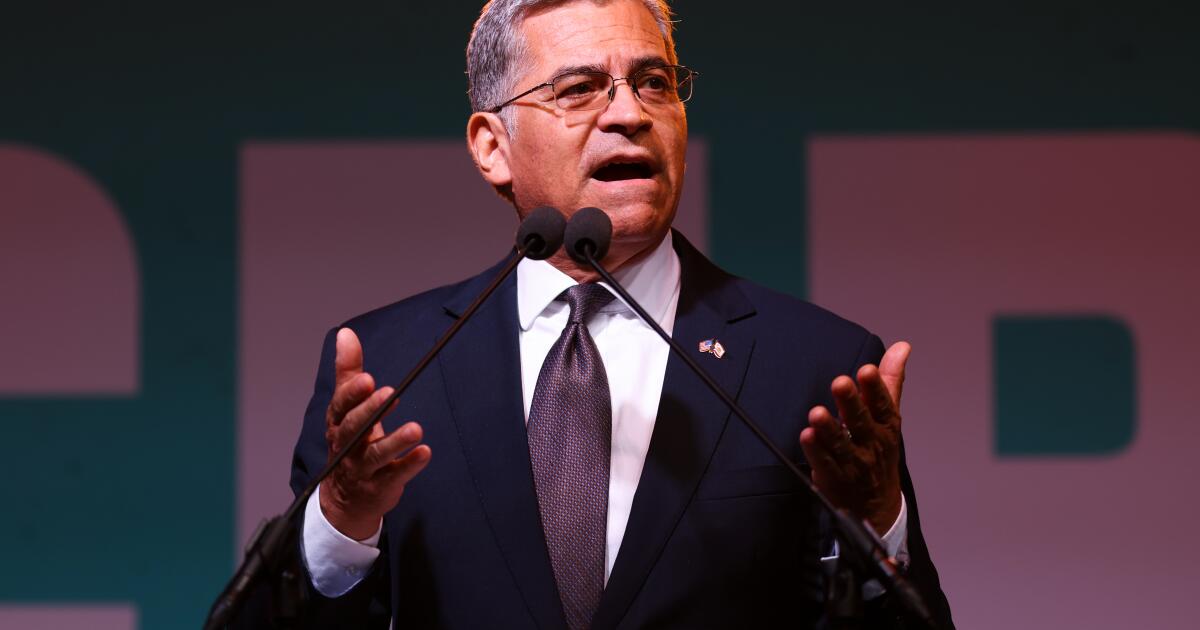
Veteran Democratic politician Xavier Becerra won one of the top two spots in California’s primary for governor, according to the Associated Press, a finish that puts him in a prime position to win the November general election and make history as California’s first elected Latino governor.
“The people of the great state of California, in the greatest nation on earth, have spoken — loudly and proudly,” Xavier Becerra said in a statement Friday. “We will not be bought. We will not be bullied. And we are never backing down. November, here we come.”
Former Fox News host Steve Hilton, a Republican, remains in a close second and appears on the cusp of securing the right to face off with Becerra in the November general election.
“Steve is already focused on November, traveling the state, meeting with voters, and continuing to build a coalition of Californians who want change after 16 years of one-party rule,” said Hector Barajas, a Hilton spokesman.
Democrat Tom Steyer, a hedge fund founder turned climate change activist, appears likely to finish in third place — a disappointing end to a campaign that saturated California’s television screens, social media scrolls and mailboxes thanks to the billionaire spending $216 million of his own wealth.
Becerra’s victory was declared by the Associated Press on Friday evening, three days after the June 2 election — an indication of the competitive race to replace termed-out Gov. Gavin Newsom and California’s lengthy process of counting ballots. After polls closed on Tuesday, Hilton was in the lead. He and Becerra were within a percentage point of each other by Friday, though that could change as the vote tally continues.
While his fate is not sealed, Steyer faces long odds to finish in the top two.
“Nothing changes for us. We’re waiting to see if there are enough votes left to be counted to put Tom into the runoff,” said Steyer spokesman Anthony York. “We knew since Tuesday that this was a matter of overtaking Hilton. Today’s call does nothing to change that.”
Under California’s primary system, only the two candidates who receive the most votes in the primary advance to the November general election, regardless of their party affiliation.
Becerra would enter the general election campaign with a significant edge over Hilton since Democratic voters in California outnumber Republicans by an almost 2-to-1 margin, a telltale reason why no GOP candidate has won a statewide race since 2006.
President Trump’s endorsement of Hilton helped consolidate support from Republican voters, which was pivotal to his success in the primary, but would likely hurt him in a face-off against Becerra. Nearly two-thirds of voters in the state want a governor who will fight Trump’s policies, according to the survey by UC Berkeley’s Institute of Governmental Studies that was co-sponsored by the Los Angeles Times.
Becerra could make history by becoming the first Latino to be elected governor — and the first to lead the state in more than 150 years. The last time a Latino held the office was in 1875, when then-Lt. Gov. Romualdo Pacheco was elevated to fill a vacancy and served for 10 months.
“California has made history. Xavier Becerra’s advancement to the general election is a defining moment both for the state, and for the millions of Latino families who have been instrumental in shaping the state’s future,” said Voto Latino Executive Director Beatriz Lopez. “As home to the nation’s largest Latino population, California will once again demonstrate the decisive power of Latino voters.”
Though Latinos make up about 40% of the state’s population and are California’s largest ethnic group, they historically have lower turnout in elections and are underrepresented in government. While Becerra often cites his upbringing as a child of working-class Mexican immigrants, he must demonstrate that he can deliver for these communities, said Christian Arana, vice president of civic power and policy at the California-based Latino Community Foundation.
“There’s a lot of excitement about the representation side,” Arana said. “You can have Latino representation, but whether or not that will actually lead to tangible outcomes for Latino communities, that’s what people want to know.”
Once in the single-digits in public polls with a handful of other Democratic candidates, Becerra rose quickly and unexpectedly following the political demise of former Rep. Eric Swalwell (D-Dublin).
Becerra’s ascent began days after Swalwell dropped out of the race in April in the midst of allegations of sexual assault and misconduct that he denies. Becerra quickly consolidated support from Democratic leaders and allies, including Assembly Speaker Robert Rivas and influential groups such as Planned Parenthood Affiliates of California and the California Medical Assn.
But both supporters and critics of Becerra struggle to explain exactly how or why he became the main beneficiary of Swalwell’s downfall.
Becerra’s campaign credits the timing of a major television and digital advertising push. The political ads began running just before the allegations against Swalwell came out and depicted Becerra as a calm, experienced leader with a record pushing back against Trump and support from Young Democrat groups.
Steyer’s campaign hired an intelligence firm to look into the online surge favoring Becerra and found thousands of bot accounts had amplified Becerra on various social media platforms. Becerra’s campaign denied any involvement and dismissed the influence of the fake accounts.
Political experts describe it as the stars aligning for Becerra. In the aftermath of the Swalwell scandal, voters were apparently drawn to Becerra’s long resume and stoic, thoughtful demeanor.
“He just never overreacted. Even when attacked [during debates], he was calm,” said Fernando Guerra, professor of Chicano Studies at Loyola Marymount University. That “gave the sense of being a moderate, while he’s really a liberal, so he was able to appeal not only to Latinos, but to liberals and to moderates.”
After Swalwell’s campaign crumbled, members of the political brain trust — many with ties to Newsom — that had been advising the former congressman began working for Becerra, including veteran consultants Lindsey Cobia and Courtni Pugh and digital strategist Alf LaMont.
“There was nothing going for him for a long, long time,” said Jason McDaniel, associate professor of political science at San Francisco State University. “I do think it was just people looking for someone who had a lot of experience who could win.”
Becerra’s first election victory was to win a seat in the state Assembly in 1990. He served one term before successfully running for a Los Angeles congressional seat, which he held for 24 years.
Then-Gov. Jerry Brown appointed Becerra as state attorney general in 2017, a post he used to challenge Trump administration policies in the courts more than a 100 times — with great success. Becerra, who helped craft the Affordable Care Act in Congress, defended it as attorney general, and President Biden nominated him to serve as his secretary of the U.S. Department of Health and Human Services.
The 68-year-old faced criticism about his record leading the massive federal agency, particularly over a New York Times investigation that found thousands of unaccompanied migrant children ended up working in dangerous jobs after they were released to sponsors.
Some former Biden administration officials, many of them anonymous, have also criticized Becerra’s leadership of the agency.
Still, Becerra’s supporters said the candidate’s experience, particularly when it comes to fighting the Trump administration, qualifies him for California’s top job.
“He’s had some very important positions in government,” labor leader Dolores Huerta said at Becerra’s election night party in downtown Los Angeles on Tuesday. “He is qualified. He doesn’t have to go into a learning mode.”
“He’s a legal scholar,” added David Dixon, a political science professor at Cal State Dominguez Hills and brother of a longtime Becerra aide. “When our Constitution is threatened, we need people like him to be in positions of power to reclaim things we are losing now.”
Times staff writers Dakota Smith and Andrew Khouri contributed to this report.
Politics
Steve Hilton launches ad mocking Xavier Becerra’s ’36 years’ as a career politician in California gov race

Steve Hilton vows to repair California’s election system as primary results remain undecided
California primary election results for governor and Los Angeles mayor are still delayed days after the vote, as officials continue counting mail-in ballots. Meanwhile, Maine Democratic Senate candidate Graham Platner faces a new wave of troubling allegations from ex-girlfriends, which he labels politically motivated. Congressman Ro Khanna defends Platner, despite warnings from other Democrats.
NEWYou can now listen to Fox News articles!
California Republican gubernatorial candidate Steve Hilton launched a new campaign ad Saturday targeting former Biden administration official Xavier Becerra, signaling the general election fight may already be underway even as primary ballots continue to be counted.
The 55-second ad mocks Becerra’s lengthy political career and record in government, portraying the Democrat as a continuation of California’s political status quo.
The ad features silent clips of Becerra appearing on an old-fashioned TV screen while captions flash across the screen, including: “I’ve been a career politician for 36 years. Vote for me.”
Other captions reference issues likely to become central themes in the governor’s race, including homelessness, California’s high-speed rail project and Becerra’s tenure as secretary of Health and Human Services in former President Joe Biden’s administration.
HILTON, BECERRA, IN THE LEAD WITH VOTES STILL BEING COUNTED IN BATTLE FOR CALIFORNIA GOVERNOR
The ad also attempts to tie Becerra to Gov. Gavin Newsom, ending with the message: “I’ll change nothing about how California is governed,” followed by the tagline, “Don’t watch another rerun.”
Fox News Digital reached out to the Becerra and the Hilton campaigns for comment.
The ad comes less than 24 hours after The Associated Press projected Becerra would advance to California’s November gubernatorial election to succeed the term-limited Newsom.
CALIFORNIA ELECTION LIMBO FUELED BY 4 PRESSURE POINTS DRAGGING OUT VOTE COUNT, EXPERT SAYS
Republican governor candidate Steve Hilton speaks during a news conference in Huntington Beach, Calif. (Kayla Bartkowski / Los Angeles Times via Getty Images, File)
As vote counting continued Saturday, Becerra led the field with 26.8% of the vote, according to AP totals. Hilton received 26.4%, while Democrat Tom Steyer had 21.1%.
Roughly 68% of ballots had been counted as of Saturday afternoon.
In a statement after the AP race call, Becerra celebrated the result and framed his campaign as a fight for California voters.
XAVIER BECERRA PRESSED ON ‘RUMORS’ HE KNEW ABOUT ERIC SWALWELL’S ALLEGED MISCONDUCT DURING CA GOVERNOR DEBATE
California gubernatorial hopefuls Xavier Becerra, left, and Steve Hilton participate in a candidate debate in San Francisco. (Laure Andrillon/AP Photo, File)
“The people of the great state of California, in the greatest nation on earth, have spoken — loudly and proudly,” Becerra said. “We will not be bought. We will not be bullied. And we are never backing down. November, here we come.”
Becerra’s campaign also said the result makes him the first Latino candidate to advance from a California gubernatorial primary to a general election, calling it a historic milestone for the state.
If elected in November, Becerra would become California’s first Latino governor since Romualdo Pacheco, who briefly served as governor in 1875.
CLICK HERE TO DOWNLOAD THE FOX NEWS APP
Becerra, a former California attorney general, served as Health and Human Services secretary during the Biden administration before launching his gubernatorial campaign.
Hilton, a former Fox News host and political commentator, has campaigned as a political outsider and agent of change, arguing California is headed in the wrong direction under Democratic leadership.
Results from Tuesday’s primary have not yet been certified.
-

 Iowa6 minutes ago
Class of 2027 QB Accepting Iowa State Football Challenge
-

 Kansas9 minutes ago
One dead, one critical after late-night shooting along Kansas City’s Westport Road
-

 Kentucky14 minutes ago
Decisions on deck Kentucky setting the bar for two top targets
-

 Louisiana21 minutes ago
Louisiana could use more of Sweden’s centuries-old and beloved fika tradition
-

 Maine24 minutes ago
Showers passing across Maine today; warmer and drier to start the workweek
-

 Maryland29 minutes ago
Heating Up Again Sunday; Cooler & Drier To Kick Off The Work Week In Maryland
-

 Michigan36 minutes ago
NASCAR at Michigan: Start time, TV, streaming, lineup for FireKeepers Casino 400
-

 Massachusetts39 minutes ago
Scattered showers, a few thunderstorms develop as day goes on

