Politics
Column: Davos, where the rich and powerful go to show off their ignorance

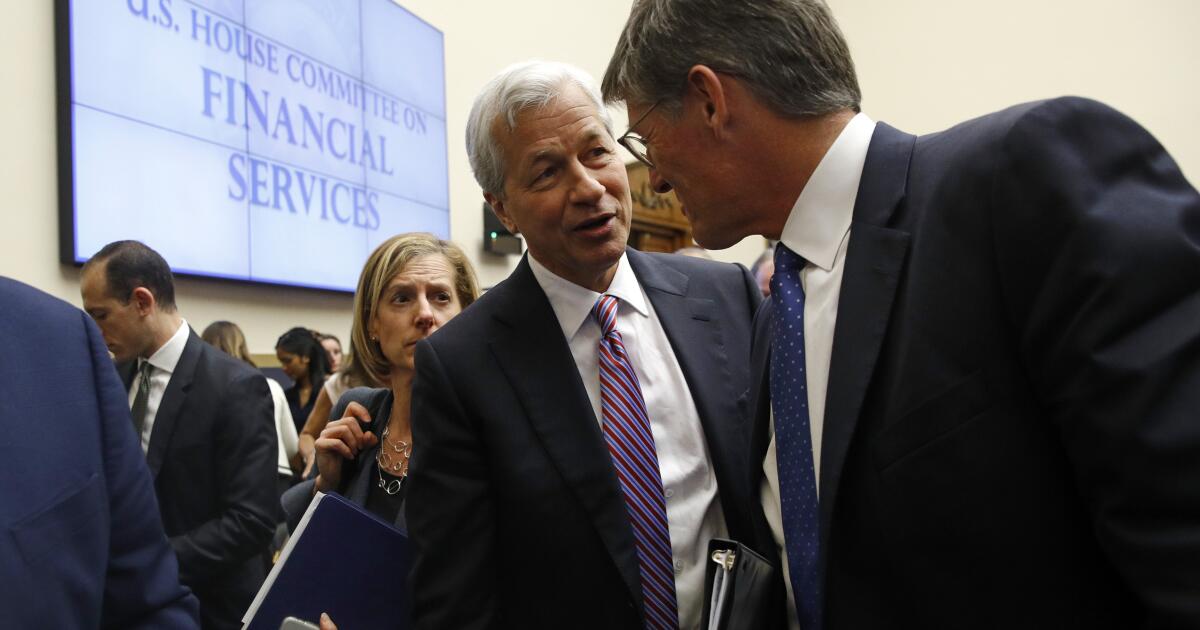
Those of us who diligently follow financial forecasts know that the go-to place for mapping out the course of the economy over the coming 12 months is Davos, Switzerland, the host city of the annual World Economic Forum every January.
Rule of thumb: Listen closely to what the gathered business and political leaders predict, then take the other side. Or as the American economist Kenneth Rogoff said in 2020:
“No matter how improbable, the event most likely to happen is the opposite of whatever the Davos consensus is.”
“I think this negative talk about MAGA is going to hurt Biden’s electoral campaign.”
— Jamie Dimon, JPMorgan Chase CEO
It’s hard to find a single explanation for the long history of Davos attendees missing the signs of impending world recessions or confidently forecasting recessions that never arrive (among other errors).
But an interview of Jamie Dimon, the chair and chief executive of JPMorgan Chase & Co., aired Wednesday morning on CNBC offers a clue: The potentates and plutocrats come to Davos without the slightest clue of what they’re talking about.
As he basked in the limelight of a CNBC kiosk with snow-flecked Davos evergreens behind him and earnest, parka-garbed CNBC anchors in front of him, Dimon unburdened himself of some remarkably delusional judgments of current affairs and recent politics.
Dimon’s general take on politics was that Donald Trump wasn’t that bad as a president, and therefore Democrats should be more careful about attacking him and his supporters. “I think this negative talk about MAGA is going to hurt Biden’s electoral campaign,” he said.
Dimon attempted to get into the minds of MAGA supporters. “I don’t think they’re voting for Trump ’cause it’s family values,” he said.
“Be honest,” he said. Trump is “kinda right about NATO. Kinda right about immigration. He grew the economy quite well. Tax reform worked. … I don’t like how he said things about Mexico, but he wasn’t wrong about some of these critical issues, and that’s why they’re voting for him.”
We’ll have to unpack some of this ourselves, because Dimon’s CNBC interlocutors sat by silently as he spouted off. If they bestirred themselves to ask “how is he right?” those questions and his answers didn’t make it into the broadcast. So let’s begin.
Is Trump “kinda right about NATO”? While he was president, he told European Commission members (at Davos!), that “if Europe is under attack we will never come to help you and to support you,” according to Thierry Breton, a French commissioner. He said Trump added: “By the way, NATO is dead, and we will leave, we will quit NATO.”
Trump’s repeated promise to withdraw from NATO prompted Congress to insert a provision in the annual Defense Appropriations Act barring any president from quitting NATO without the approval of two-thirds of the Senate. The act, including that provision, was signed into law by President Biden in December.
If Dimon was referring to Trump’s withdrawal promise or his denigration of the mutual defense provision of the NATO treaty, which commits all NATO members to defending against an attack on any of them, then Dimon’s assertion contradicts his own opinion of the necessity of supporting Ukraine against Russia in the CNBC interview.
That battle “is about freedom and democracy for the free world,” Dimon said, urging American political leaders to explain to voters why supporting Ukraine is necessary. Ukraine “may be about whether the world is free and safe for democracy for a hundred years.” Ukraine isn’t a member of NATO, but supporting a European country under attack is obviously incompatible with quitting NATO.
Immigration? Trump’s most recent notable comment on this topic is that immigrants are “poisoning the blood of our country,” uttered at a Dec. 17 rally in New Hampshire. Was he “kinda right” about that?
The Trump administration’s immigration policy encompassed the outstandingly inhumane practice of family separation, under which thousands of children were forcibly removed from their families on this side of the southern border; as many as 1,000 children are still missing. Was that “kinda right”?
In October, the Biden administration settled a lawsuit over the policy by allowing families to remain in the U.S. while they search for their children and committed to ceasing family separations for eight years.
Dimon stated during the interview that securing the border is imperative. He wasn’t asked about, and didn’t mention, who’s responsible for blocking a sensible immigration policy. It’s Trump’s party: The House GOP caucus is refusing to accept a deal on immigration unless it includes draconian provisions that would ban almost all asylum and mandate the construction of a border wall — something that Trump was unable to accomplish himself during his four years in office.
Did tax reform work? No doubt the 2017 tax reform worked for taxpayers in Dimon’s class and corporations like his. But there’s is no discernible evidence that it achieved what its GOP sponsors claimed were its goals, growing the economy and raising so much government revenue that it would “pay for itself.”
As a share of gross domestic product, federal tax receipts plummeted after the 2017 tax cuts to 16% in 2020 from 17.4% in 2016. Nor did the tax cuts have any noticeable effect on wages, despite promises from Trump officials that average wages would be pumped up by $3,000 to $7,000 per worker.
The study that predicted such an outcome, observed Republican economist Bruce R. Bartlett in Senate testimony last May, was “more of a public relations document than a serious analysis; once its purpose was served and the legislation enacted, it was forgotten.”
The tax cuts did have a noticeable effect in the world Dimon occupies, however. The average tax rate paid by his corporation, JPMorgan Chase & Co., fell to 24.5% of net income in the five years since the cuts from 38.6% in the five years before their enactment.
It may be true or at least arguable, as Dimon said, that Trump “grew the economy quite well.” But there’s no question that in many respects his record pales in comparison to his successor’s.
In the first three years of his term — leaving aside the pandemic year of 2020, when employment cratered — Trump achieved average annual job growth of about 289,000. In the latest two years of Biden’s term — leaving aside the post-pandemic year of 2021, when jobs recovered strongly from the prior year’s losses — jobs grew by an average 481,000 a year.
One can only speculate about the source of Dimon’s view about MAGA politics. He’s a highly intelligent and accomplished executive; no one without his ability and perspicacity could have remained CEO of the nation’s largest bank company for 18 years and its chairman for 17. Much of what he has had to say over that period has been well worth hearing, especially when it concerns business, economics and finance.
Yet in issuing political proclamations, he sounds like someone out of his lane. It’s hardly unusual for someone so accomplished in one field and so rich to feel the impulse to stray into topics well beyond his field of expertise, especially when his opinions are sought by sycophantic interviewers in public. Who could resist?
That’s also why the cocksure predictions issuing from Davos year after year are so risibly unreliable, the vision of the future so clouded.
In 2022, for instance, the then-president of FTX.US, the cryptocurrency firm’s American unit, told attendees that the firm was in a “very good spot” and had so much capital it would soon be looking for acquisitions. The following year, its founder, Sam Bankman-Fried, was charged with fraud and the firm collapsed. That same year, Davos was certain that a recession in Europe was inevitable; it still hasn’t happened.
In 2008, no one at Davos noticed that the subprime crisis was erupting and therefore that it would produce a major recession. In 2016, no one at Davos expected Trump to win the election or the U.K. to stage Brexit, its departure from the European Union. The following year, the Davos organizers were so mortified that they actually scheduled a session on why the assembled pundits got so much so wrong.
The fact is that bringing together a host of successful but self-important luminaries to forecast the future is a mug’s game. They’re wrapped up in their own worlds and insulated from what’s happening on the ground.
Nor are they accustomed to being challenged in public. One such uncommon moment occurred during a panel at the 2019 meeting, discussing a proposal by Rep. Alexandria Ocasio-Cortez (D-N.Y.) for a 70% tax rate on income over $10 million.
Panelist Michael Dell, the computer entrepreneur, scoffed. “Name a country where that’s worked, ever,” he said.
Dell’s fellow panelist, economist Erik Brynjolfsson (then of MIT, now of Stanford), jumped right in. “The United States,” he said. “From about the 1930s through about the 1960s. … And those were actually pretty good years for growth. … There’s actually a lot of economics that suggests that it’s not necessarily going to hurt growth.”
Dell had nothing to say. The panel moderator, Heather Long of the Washington Post, did, however. The top tax rate exceeded 70% only “briefly, in the 1980s,” she said.
Not so. The top tax rate in the U.S., as Brynjolfsson said, exceeded 70% from 1936 until 1982, peaking at 94% in 1944-1945. And those decades encompassed some of America’s most prosperous periods.
But getting something so fundamental so wrong? Over the World Economic Forum’s 53-year history, that’s become a tradition.

Politics
Warren tells Trump to ‘sign the damn bill’ as bipartisan housing package remains stalled in Washington

NEWYou can now listen to Fox News articles!
Sen. Elizabeth Warren, D-Mass., lashed out at President Donald Trump during a recent local television interview, labeling him a “man-child” throwing a “tantrum” over his refusal to sign a sweeping bipartisan housing package.
Appearing on WCVB’s “On the Record,” the left-wing senator did not hold back her frustration over the stalled legislation, delivering a blunt message to the president: “Sign the damn bill.”
“If he cared about the American people, he’d have already signed the damn thing,” Warren said during the interview, arguing that Trump “does not care about the economic survival of America’s working families.”
FILE – The Senate previously advanced the massive housing package geared toward lowering the costs of homes and supercharging the housing supply. Sen. Elizabeth Warren, D-Mass., pitched it as legislation to prevent America from becoming a “nation of renters.” (Jemal Countess/Getty Images for Protect Borrowers ; Anna Moneymaker/Getty Images)
TRUMP-BACKED HOUSING BILL CLEARS HOUSE AFTER GOP DEFIES SENATE PRESSURE CAMPAIGN
The 21st Century ROAD to Housing Act is an expansive bipartisan package that she said contains nearly 50 provisions designed to address the nationwide housing emergency.
Warren noted that decades of under-building have driven prices up, leaving the U.S. in need of millions of new units.
The primary focus of the bill is to lower the costs of construction and make it easier to build new homes.
FILE – President Donald Trump previously said lawmakers must first approve the SAVE America Act before he moves forward with the housing package. (Yuri Gripas/Abaca/Bloomberg)
BIPARTISAN HOUSING PUSH ADVANCES, BUT TRUMP-BACKED INVESTOR BAN FACES RESISTANCE
The bill, which was co-sponsored by Sen. Tim Scott, R-S.C., also includes a secondary focus aimed at blocking corporate consolidation of the housing market.
Warren explained that the legislation is designed to keep private equity firms from buying up local neighborhoods and turning America “into a nation of renters.”
According to Warren, the legislation had widespread support from both sides of the aisle before it was stalled.
TRUMP VOWS BLOCK ON SIGNING NEW LAWS UNTIL SAVE AMERICA ACT PASSES SENATE
She claimed the bill was “handed to the president on a silver platter” and that lawmakers from both parties were eagerly taking credit for the legislation.
“Republicans were all going online, saying, ‘well, I helped write that bill. This bill is terrific,’” Warren said. “So everybody’s out there saying, ‘my bill, I helped make this happen,’ right up until the man-child has a tantrum and announces he will not be signing it.”
FILE – Sen. Elizabeth Warren called President Donald Trump a “man-child” during the interview, describing his refusal to sign the bill as a “tantrum.” (Chip Somodevilla/Getty Images)
CLICK HERE TO DOWNLOAD THE FOX NEWS APP
Critics of the legislation claim it does not allocate fresh federal funding, directly address rising costs of homeownership, or go far enough to address permitting issues.
The president previously canceled a scheduled signing event, insisting lawmakers must first approve the unrelated SAVE America Act, a voting-focused measure, before he moves forward.
The White House did not immediately respond to Fox News Digital’s request for comment.
Fox News Digital’s Alex Miller contributed to this report.
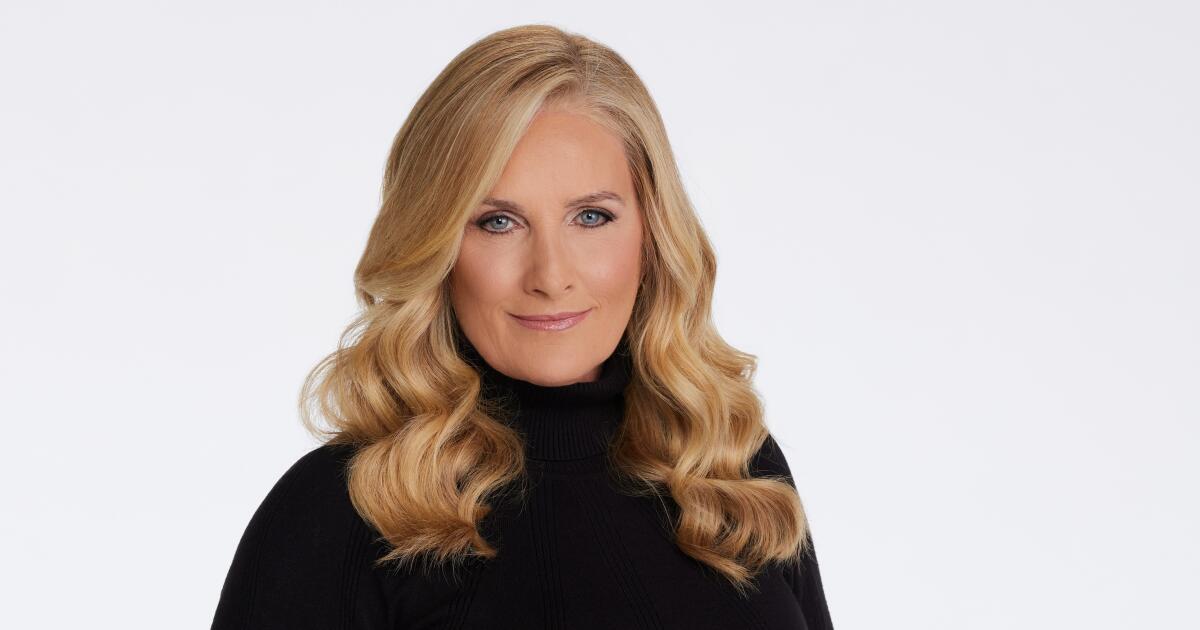
Veteran MS NOW anchor Alex Witt is leaving the news network, which is moving away from live evening programming on weekends.
The new weekend programming strategy announced Friday is a cost-saving measure that will give parent company Versant more resources for a new direct-to-consumer streaming offering that makes MS NOW available to consumers without a pay-TV subscription. The company is also looking to expand its live event business.
According to a memo from MS NOW President Rebecca Kutler, “The Weekend: Primetime,” a live discussion program launched last year, will have its final airing Saturday.
One of the program’s co-hosts, Antonia Hylton, will take over Witt’s midday shifts later this year. Hylton’s co-hosts Ayman Mohyeldin, Catherine Rampell and Elise Jordan will remain with MS NOW and continue to appear on other programs.
Kutler said job losses from the moves are minimal and encouraged staffers who lose their current roles to apply for 40 current job openings at the company with more on the way. MS NOW has been staffing up its news operation since separating from NBC News last year.
MS NOW changed its name from MSNBC in November. The network, along with other Comcast-owned cable channels, were spun off into Versant in January.
Weekends have long been a ratings weak spot for MS NOW, which while a distant second to Fox News, has seen audience growth in 2026 and remains ahead of CNN. The network has started to rely on podcasts such as “Pod Save America,” from Crooked Media, to fill some hours. The episodes have performed strongly enough for MS NOW to try similar deals with outside podcast producers.
“Throughout the summer, we will expand our taped strategy and announce new content partnerships,” Kutler said in her memo.
With the changes, MS NOW will still have 20 hours of live programming each weekend and will be staffed to handle breaking news.
Witt joined the network formerly known as MSNBC in 1999, long before it began its strong tilt toward progressive political commentary. Over the years, Witt’s weekend newscast became one of the few programs on the network that delivered straight news without opinion.
Kutler called Witt “a beloved longtime member of our MS NOW family” and “a continued, trusted, and steady presence for our audiences.”
While Witt works through the summer, Hylton will anchor the 11 a.m. weekday time period, which will eventually be handled by former NBC News White House correspondent Peter Alexander.
Politics
McCarthy says Trump will use ‘everything he can’ to force Senate action on SAVE America Act

NEWYou can now listen to Fox News articles!
As infighting over the SAVE America Act throws congressional Republicans into disarray, President Donald Trump’s bid to get the stalled election bill across the finish line gained one notable ally.
Former House Speaker Kevin McCarthy, R-Calif., told Fox News Digital that he supports the election integrity measure and indicated that Trump should continue to use every available tool to pressure the Senate to pass it.
“He’s going to try everything he can to make sure he passes that through,” McCarthy said in a brief interview outside the U.S. Capitol.
The ex-speaker’s comments came after Trump abruptly called off a signing ceremony Wednesday for a bipartisan housing bill to pressure the Republican-controlled Senate to act on the SAVE America Act.
President Donald Trump boards Air Force One as he departs Reading Regional Airport in Reading, Pa., on June 23, 2026. (Evelyn Hockstein/Reuters)
IRATE REPUBLICANS ACCUSE TRUMP OF HANDING DEMOCRATS A WIN AFTER BLOWING UP HOUSING PACKAGE
The move surprised Republican lawmakers, some of whom were praising the bill’s passage at a press conference when Trump’s Truth Social post broke.
But Trump has repeatedly cast the election measure — requiring proof of citizenship to vote in federal elections and voter identification requirements — as his top legislative priority.
The legislation’s momentum, however, has slowed in the upper chamber, where Republican leadership insists the votes aren’t there amid widespread Democratic opposition. Senate Republicans have also been unwilling to eliminate the legislative filibuster, which requires a 60-vote threshold to pass the legislation.
Former Speaker of the House Kevin McCarthy speaks during a ceremony honoring President Ronald Reagan on the 115th anniversary of his birthday at the Ronald Reagan Presidential Library in Simi Valley, Calif., on Feb. 6, 2026. (Hans Gutknecht/MediaNews Group)
TRUMP CALLS MAIL IN VOTING CORRUPT AS SENATE BEGINS DEBATE ON SAVE ACT REQUIRING VOTER ID
Amid the SAVE standoff, a group of conservative lawmakers effectively shut down the House floor in an effort to force Senate action on the election bill.
But the Senate recessed Wednesday for two weeks over the July 4 holiday, leaving the measure in limbo until lawmakers return.
The conservative-led blockade sparked fierce backlash, with several members inside the GOP conference telling Fox News Digital the move risked torpedoing their own legislative agenda.
Meanwhile, the House has also yet to pass a version of the legislation incorporating several of the president’s priorities, including a mail-in voting crackdown and provisions banning men from competing in women’s sports and child sex change procedures.
Trump has not indicated whether he will sign the 21st Century ROAD to Housing Act, despite the likely existence of a veto-proof majority.
House Speaker Mike Johnson, R-La., told reporters Thursday that the housing bill had been transmitted to the White House for Trump’s signature following a meeting with the president.
Speaker of the House Mike Johnson, R-La., talks with reporters in the U.S. Capitol on June 10, 2026. (Tom Williams/CQ-Roll Call, Inc via Getty Images)
CLICK HERE TO DOWNLOAD THE FOX NEWS APP
Trump now has 10 days to sign the package or veto it. If he does nothing, the legislation automatically becomes law at the end of the 10-day period.
-

 Detroit, MI7 minutes ago
No. 23 overall pick in the 2026 NHL draft | Detroit Red Wings
-

 San Francisco, CA17 minutes ago
San Francisco Pride kicks off with rainbow lasers, ValQueeries celebrate at Valkyries Pride Night
-

 Dallas, TX22 minutes ago
How to buy Egypt vs. Australia World Cup soccer tickets
-

 Miami, FL29 minutes ago
Helping Venezuela: Miami search-and-rescue team prepares to deploy
-

 Boston, MA32 minutes ago
How to buy Paraguay vs. Germany 2026 World Cup tickets in Boston
-

 Denver, CO37 minutes ago
Denver Broncos Roster Breakdown: Center—The Depth Question
-

 Seattle, WA44 minutes ago
Iran-Egypt: Seattle World Cup Pride match updates
-

 San Diego, CA47 minutes ago
PFL San Diego ‘McKee vs. Isbulaev’ play-by-play, results & round scoring

