Politics
After week of war and political upheaval, Trump remains defiant as ever

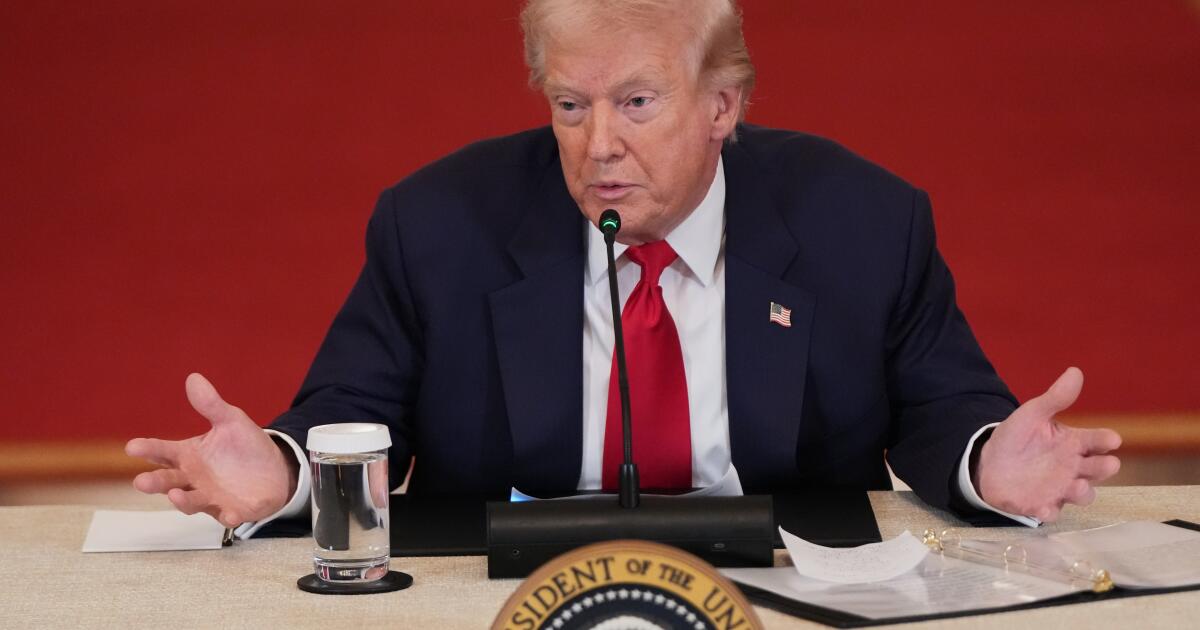
In recent days, tensions over the U.S. war in Iran have steadily mounted.
Polls have shown the campaign is widely unpopular. An entire flank of Trump’s MAGA base has criticized it as a clear departure from the “America First” mantra Trump has long espoused. Leaders within the Trump administration have pushed against claims it was about regime change, framing it instead as a necessary response to imminent threats.
Trump, meanwhile, has struck a decidedly defiant tone — offering few of the reassurances or rationalizations that past presidents have offered in the initial stages of war, and sounding more unbothered than embattled.
He has lamented American casualties but also seemed to shrug them off — along with additional deaths he expects to come and potential attacks on the U.S. homeland — as the simple cost of war, saying, “Some people will die.”
He has ignored concerns the war will turn into another unending Middle East quagmire, while openly flirting with taking over Cuba too.
Undermining his administration’s own messaging that the war is not about regime change, Trump wrote in a social media post Friday that there would be “no deal” with Iran without “UNCONDITIONAL SURRENDER” and new Iranian leadership “ACCEPTABLE” to him.
Sticking a thumb in the eye of his “America First” defectors, he said the U.S. and its allies are going to “work tirelessly” to make Iran “economically bigger, better, and stronger than ever before,” adding, “MAKE IRAN GREAT AGAIN (MIGA!)”
In the last week, Trump has instigated or been forced to navigate a stunning cascade of political threats. In addition to attacking Iran, he fired his Homeland Security secretary in charge of his signature immigration campaign, faced newly detailed allegations — which he denied — that he sexually assaulted a child alongside Jeffrey Epstein, saw his attorney general subpoenaed by fellow Republicans in Congress, and watched American jobs numbers drop as gas prices spiked.
And yet, Trump has also managed to avoid complex questions about those issues — the most pressing before his administration — and despite Democrats and some of his own supporters lashing out over them.
“I’ve seen a lot of Presidents fall short of their promises but I’ve never seen any President just doing the opposite of everything promised on purpose. Prices, Epstein, wars. Just absolutely racing to betray his voters,” Sen. Brian Schatz (D-Hawaii) wrote on X.
“This is Israel’s war, this is not the United States’ war. This war is not being waged on behalf of American national security objectives, to make the United States safer or richer,” said Tucker Carlson, one of Trump’s longtime allies.
Carlson said Trump committed U.S. forces to fighting in Iran for no other reason than because Israeli Prime Minister Benjamin Netanyahu “demanded it,” even though it “certainly wasn’t a good idea for the United States” and the Trump administration had “no real plan” for replacing the Iranian leadership it has now toppled.
The White House defended Trump’s actions across the board in statements to The Times on Friday.
On Iran, it said Trump “is courageously protecting the United States from the deadly threat posed by the rogue Iranian regime — and that is as America First as it gets.” On departing Homeland Security Secretary Kristi Noem and Atty. Gen. Pam Bondi, it said Trump “has assembled the most talented and competent cabinet in history,” and “continues to have faith in his Administration.”
On the economy, they said the Trump administration “is doing its part to unleash robust, private sector-led economic growth with tax cuts and deregulation,” and that Trump “has already initiated robust action” to control oil prices even amid the Iran war. And on the Epstein files, they said the latest claims unveiled “are completely baseless accusations, backed by zero credible evidence.”
Trump has also spoken out in defense of his handling of the various crises facing his administration — but not nearly with the sort of detail and solemnity that wartime presidents usually speak, experts said.
At his only public event on Friday — a nearly two-hour round-table with national leaders and sporting officials about college athletics — he ridiculed members of the media who asked about Iran and Noem.
“What a stupid question that is to be asking at this time,” he said, when asked about reports that Russia was helping Iran target and attack Americans there. “We’re talking about something else.”
When pressed as to why he was spending so much time talking about college sports when so much else is going on in the country and the world, Trump briefly talked about Iran — saying “people are very impressed by our military” and that the U.S. is now “more respected than we’ve ever been” — before concluding the event.
Jennifer Mercieca, a political historian and communications professor at Texas A&M and author of “Demagogue for President: The Rhetorical Genius of Donald Trump,” said she was surprised Trump didn’t make a stronger case for going to war in Iran during his recent State of the Union speech, and that he hasn’t been more aggressive about making the case for war since, including by using traditional language about bolstering American values around the world.
“In comparison to other presidents in a similar situation trying to lead a nation into war, that is surprising to me — and unusual,” she said.
Also unusual is the low public support for the war, Mercieca said, given that, since World War II, there has generally been high public approval for U.S. war efforts at their start.
Mercieca said she wonders if there is a correlation between Trump’s not providing a more vigorous rationale for the war and the low public approval for it — or perhaps between the low approval and the brash descriptions of the war as a merciless campaign of destruction and vengeance from others in the administration, such as Secretary of Defense Pete Hegseth.
She said Hegseth and others have shown a “lack of decorum, a lack of honor or dignity [in] their way of behaving, especially when we’re talking about warfare and human lives.”
Jack Rakove, a Stanford University professor emeritus of history and political science, said Trump’s posture is fitting with his character since he first entered politics and before, as he “can never take responsibility for anything that appears to be a mistake” and is “obsessed with the idea of appearing tough and tough-minded.”
Rakove said he does not believe, as some critics have suggested, that Trump launched the war in Iran specifically to distract from the Epstein files, which as of Thursday included newly released FBI descriptions of several interviews in which a woman accused Trump and Epstein of sexual assault in the 1980s when she was a child. Her accusations have not been verified.
But Rakove said he does wonder to what degree Trump is consciously pushing chaos in order to ensure that no one detrimental issue for him politically captures the public’s attention for too long.
Mercieca said Trump has always been “uniquely good at controlling the public conversation,” but that power has been tested recently by the Epstein files — which have held the public’s attention despite his repeatedly saying that “we should move on from that, that we should stop talking about it, that he’s been exonerated.”
She said Trump’s instinct in the current moment to push ahead aggressively despite waning support for his economic policies, his immigration policies and his war in Iran could be related to his desire to return people’s attention to his agenda, but is also in line with his long-held desire to go down in history — including by making big moves.
“I think he’s very much trying to leave his mark on the White House, I think he’s trying to leave his mark on the nation, I think he’s trying to leave his mark on the world, and I think war is a way that leaders have traditionally done that throughout history,” she said.



NEWYou can now listen to Fox News articles!
FIRST ON FOX: House Republicans are pressing the Trump administration for answers over whether China is exploiting U.S. birthright citizenship and visa programs in a U.S. territory to secure long-term influence inside the United States.
In a letter sent Monday to outgoing Homeland Security Secretary Kristi Noem, Secretary of State Marco Rubio and Interior Secretary Doug Burgum, Reps. Chip Roy, R-Texas, and Tom Tiffany, R-Wis., and 32 other GOP members raise concerns that so-called “birth tourism” and visa-waiver policies in the Commonwealth of the Northern Mariana Islands could be leveraged by Chinese nationals in ways that present national security risks.
Noem will leave her position at the Department of Homeland Security at the end of the month.
“American citizenship is a sacred trust—not a loophole to be exploited. When foreign adversaries like the Chinese Communist Party can leverage birth tourism and visa-less programs to gain influence within our borders, we must restore integrity to our immigration system and defend the sovereignty of our Republic,” Roy said.
Tiffany argued that “Communist China has exploited ‘birth tourism’ by sending women to the Northern Mariana Islands solely to give birth and secure U.S. citizenship for their children,” adding that “It is time to close this loophole, end the abuse, and protect our national security.”
TRUMP SAYS SUPREME COURT RULING AGAINST BIRTHRIGHT CITIZENSHIP ORDER WOULD BENEFIT CHINA
House Republicans are pressing the Trump administration for answers over whether China is exploiting U.S. birthright citizenship and visa programs in a U.S. territory to secure long-term influence inside the United States. (GemStocks/Getty Images )
The Northern Mariana Islands is a U.S. territory in the Pacific, and like births in any U.S. state, children born there are granted American citizenship under the 14th Amendment, even though the territory operates under certain distinct immigration rules.
The lawmakers cite reports estimating that between 750,000 and 1.5 million Chinese nationals have obtained U.S. citizenship through birthright policies and birth tourism, though federal agencies have not publicly confirmed those figures. In their letter, Roy and Tiffany ask the Departments of Homeland Security, State and Interior to provide data on how many children have been born since 2009 to at least one Chinese national parent, how many have reached voting age, and how many are registered to vote in the United States.
They also ask whether any such individuals have documented ties to the Chinese Communist Party and request entry figures for Chinese nationals under Northern Mariana-specific immigration programs.
Under the 14th Amendment, individuals born on U.S. soil are generally granted citizenship at birth. The debate has centered on whether foreign nationals travel to the United States specifically to give birth so their children will obtain citizenship — a practice commonly referred to as birth tourism.
Federal prosecutors in recent years have brought criminal cases against operators of birth tourism businesses, particularly in California, where organizers were convicted of visa fraud and conspiracy for helping foreign nationals misrepresent their travel intentions in order to give birth in the United States.
The Northern Mariana Islands have long operated under distinct immigration frameworks. In 2009, the Obama administration implemented a categorical parole program allowing certain Chinese nationals to enter without obtaining a traditional U.S. tourist visa. The Biden administration in 2024 finalized a rule creating the Economic Vitality & Security Travel Authorization Program (EVS-TAP) for the Northern Mariana Islands, which allows certain Chinese nationals to enter the territory visa-free for short stays.
In a letter sent to Homeland Security Secretary Kristi Noem, Secretary of State Marco Rubio and Interior Secretary Doug Burgum, Reps. Chip Roy, R-Texas, and Tom Tiffany, R-Wis., and 32 other GOP members raise concerns that so-called “birth tourism” and visa-waiver policies in the Commonwealth of the Northern Mariana Islands (CNMI) could be leveraged by Chinese nationals in ways that present national security risks. (Kevin Dietsch/Getty Images)
Tiffany argued that “Communist China has exploited ‘birth tourism’ by sending women to the Northern Mariana Islands solely to give birth and secure U.S. citizenship for their children,” adding that “It is time to close this loophole, end the abuse, and protect our national security.” (AP Photo/Scott Bauer)
The lawmakers argue those policies created incentives for birth tourism in Saipan, the capital of the islands, pointing to reports that births to foreign visitors increased sharply after the 2009 changes.
NOEM BACKS SAVE AMERICA ACT, SLAMS ‘RADICAL LEFT’ OPPOSITION TO VOTER IDS AND PROOF OF CITIZENSHIP
They warn that once U.S.-born children turn 21, they can petition for lawful permanent resident status for their parents, potentially opening additional immigration pathways.
While the letter raises concerns that such individuals could eventually participate in U.S. elections, it does not cite evidence that large numbers are currently registered to vote or that the Chinese government has directed birth tourism as a coordinated strategy.
The Departments of Homeland Security and Interior did not immediately respond to Fox News Digital’s requests for comment. The State Department referred back to the Department of Homeland Security.
CLICK HERE TO DOWNLOAD THE FOX NEWS APP
The letter comes amid heightened tensions between Washington and Beijing, with U.S. officials repeatedly warning about Chinese influence operations, intellectual property theft and espionage efforts targeting American institutions.
Roy and Tiffany urged the administration to end any parole or visa-waiver programs extended to Chinese nationals in the Northern Mariana Islands and to provide a full accounting of the scope of birth tourism involving PRC nationals.
The Chinese embassy could not immediately be reached for comment.
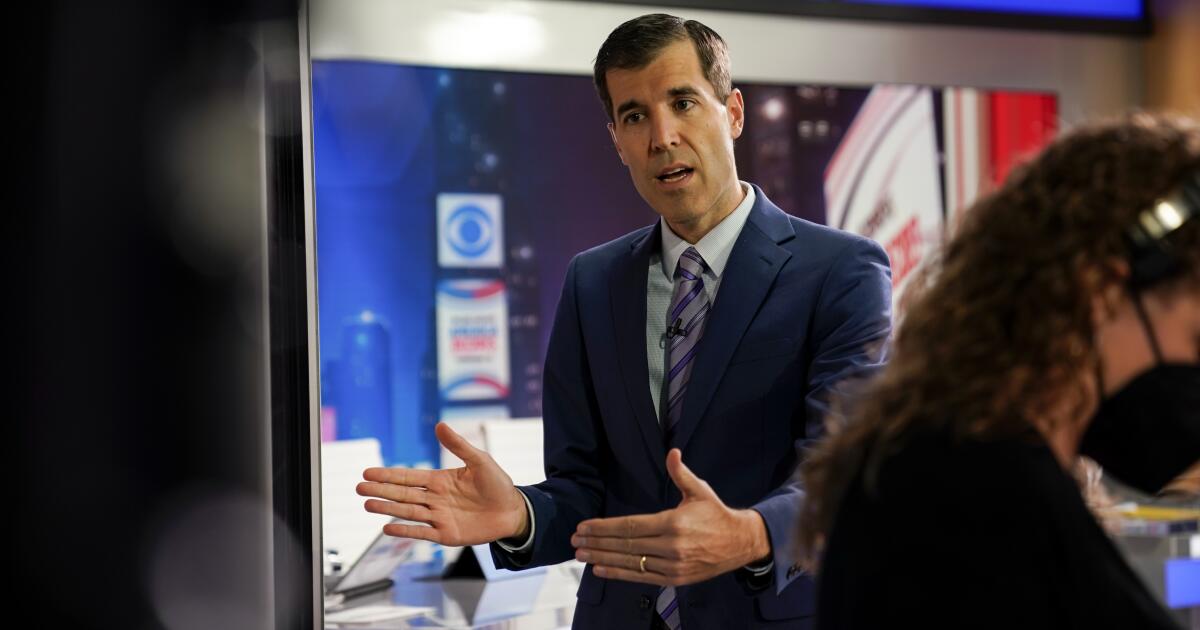
Scott MacFarlane, a high-profile hire for CBS News five years ago, announced Monday he is leaving the network.
MacFarlane told colleagues in an email that the departure is his decision.
“I will always value the opportunity I had to work alongside the talented and committed professionals here,” MacFarlane said. “I’m proud to have had the words ‘CBS correspondent’ next to my name and always will be.”
MacFarlane added that he looks forward to “some independence and finding new spaces to share my work in line with my personal goals.”
MacFarlane is the first significant name to depart CBS News since parent company Paramount won its bid to acquire Warner Bros. Discovery on Feb. 27. CBS News is likely to be combined with Warner Bros. Discovery’s CNN if the deal gets regulatory approval.
Journalists at CBS News have also been concerned over the moves by Bari Weiss, the contrarian opinion writer and founder of the digital news site the Free Press who was brought in as editor in chief of the division. Weiss was recruited by Paramount Chief Executive David Ellison with a mandate to move CBS News to the political center.
Weiss is expected to make significant changes to “60 Minutes” and other CBS News programs in the coming months.
Executives at other TV news organizations say privately that they are seeing a heavy influx of resumes from CBS News journalists due to the upheaval at the company.
MacFarlane covered Congress and the Justice Department. CBS viewers saw him featured during extended network coverage of the State of the Union addresses and election nights.
MacFarlane was in Butler, Pa., during the assassination attempt of President Trump in July 2024. He reported the first accounts of the shooting scene and emergency responses moments after the shots were fired.
Before arriving at CBS News, MacFarlane served for eight years as an investigative reporter for WRC-TV, the NBC station in Washington, D.C.

NEWYou can now listen to Fox News articles!
Fresh satellite images give a rare aerial view of the damage across Iran after U.S.-Israeli strikes and what Tehran’s retaliation left behind across the region.
Planet Labs satellite imagery captured burning ships and damaged facilities at the Konarak base in southern Iran, as well as significant destruction at Iran’s naval headquarters in Bandar Abbas on the Persian Gulf, reflecting the scale of the strikes on military infrastructure.
Satellite imagery from Planet Labs shows damage at Konarak naval base in southern Iran, left, and Iran’s Bandar Abbas naval headquarters in the Persian Gulf, right. (Planet Labs PBC)
Imagery from Vantor shows damage to facilities and vessels located in Iran’s Bushehr port in the Persian Gulf.
In addition to naval assets, satellite photos show a bunker at Bushehr air base hit by a strike, leaving a large crater and destroying several nearby small buildings.
More strikes targeted the Choqa Balk drone facility in western Iran.
Radar systems at the Zahedan air base in eastern Iran — near the country’s borders with Pakistan and Afghanistan — were also struck.
The two facilities are about 800 to 900 miles apart, underscoring the broad reach of the coordinated strikes.
Satellite imagery also reveals damage to aircraft on the tarmac at Shiraz air base, including scorch marks and debris around several parking areas.
Side-by-side photos showing damage to aircraft at Shiraz air base in Shiraz, Iran on March 6, 2026. (Vantor/Maxar/Getty Images)
Satellite imagery from Planet Labs shows thick smoke plumes rising above Tehran, signaling explosions and fires inside the Iranian capital.
The smoke underscores how the conflict has moved beyond isolated military sites and into the heart of Iran’s political center.
THE UNLIKELY TOOL TRUMP IS EYEING TO TACKLE RISING OIL PRICES AMID THE IRAN CONFLICT
A satellite image from Planet Labs shows a plume of smoke above Tehran, Iran, on March 1, 2026. (Planet Labs PBC)
Iran has since responded with missile and drone strikes of its own, expanding the conflict across the region.
Satellite images reveal damage to the port city of Sharjah in the United Arab Emirates. Sharjah is the third most populous after Dubai and Abu Dhabi.
CLICK HERE TO DOWNLOAD THE FOX NEWS APP
The Jebel Ali Port, the region’s largest maritime hub, was also targeted, underscoring how the retaliation extended beyond military sites to key infrastructure.
The new satellite imagery comes on the heels of U.S.-Israeli strikes that killed Iran’s supreme leader, Ayatollah Ali Khamenei, and several top members of the regime, triggering a succession crisis.
President Donald Trump warned on Sunday that Iran’s new leader is “not going to last long” without U.S. approval as Operation Epic Fury marches into a third week.
Related Article


Google’s latest Pixel Watches have fallen to their lowest prices ever

Hegseth warns ‘more casualties’ expected in Operation Epic Fury against Iran

China-linked birth tourism under scrutiny as GOP lawmakers press Trump admin for answers

Study challenges negative cannabis stereotypes, claiming link to brain benefits

You could be sharing your Social Security number when you don’t need to

Florida High School Football Rankings: Top 25 teams – Oct. 21

Cleary's 21 help Le Moyne down Central Connecticut State 69-64 in OT

How old is Bo Nix? What to know about Oregon quarterback ahead of 2024 NFL Draft

99th annual Pony Swim held in Virginia

Indiana Members Credit Union announced as new anchor tenant at Bottleworks District
China-linked birth tourism under scrutiny as GOP lawmakers press Trump admin for answers

What defence support could Ukraine offer Middle East states amid Iran war?

Warrants served in New Jersey, Pennsylvania as feds look into possible NYC terrorism

Video: Airports Struggle to Staff T.S.A. During Partial Government Shutdown

Before-and-after satellite imagery offers a rare look at damage inside Iran
-

 Wisconsin1 week ago
Setting sail on iceboats across a frozen lake in Wisconsin
-

 Massachusetts6 days ago
Massachusetts man awaits word from family in Iran after attacks
-

 Maryland1 week ago
AM showers Sunday in Maryland
-

 Florida1 week ago
Florida man rescued after being stuck in shoulder-deep mud for days
-

 Pennsylvania4 days ago
Pa. man found guilty of raping teen girl who he took to Mexico
-

 News1 week ago
2 Survivors Describe the Terror and Tragedy of the Tahoe Avalanche
-

 Sports5 days ago
Keith Olbermann under fire for calling Lou Holtz a ‘scumbag’ after legendary coach’s death
-

 Virginia5 days ago
Giants will hold 2026 training camp in West Virginia