Politics
5 things to know about Hunter Biden trial


Hunter Biden’s federal gun crime trial kicked off with jury selection on Monday in Delaware, launching proceedings that are sure to hold the nation’s attention in the days and weeks to come.
Here are some key facts to know about the trial moving forward.
1. Hunter Biden faces up to 25 years in prison
Hunter is charged with one count of making false statements in a firearm purchase, another count of making a false statement related to information required to be kept by a licensed firearm dealer, and one count of possession of a firearm by a person who is an unlawful user of or addicted to a controlled substance.
If he is found guilty on all charges, he could face a maximum sentence of 25 years in prison. Each count also carries a maximum fine of $250,000 and three years of supervised release.
JUDGE BARS PROSECUTORS FROM USING SOME SALACIOUS EVIDENCE IN HUNTER BIDEN’S GUN TRIAL
Hunter Biden’s federal gun crime trial kicked off on Monday in Delaware, launching proceedings that are sure to hold the nation’s attention in the days and weeks to come. (AP Photo/Matt Slocum)
According to an indictment, Hunter Biden bought a Colt Cobra revolver on Oct. 12, 2018, and “knowingly made a false and fictitious written statement, intended and likely to deceive that dealer with respect to a fact material to the lawfulness of the sale of the firearm … certifying he was not an unlawful user of, and addicted to, any stimulant, narcotic drug, and any other controlled substance, when in fact, as he knew, that statement was false and fictitious.”
2. Hunter’s defense hinges on his drug addiction
Hunter’s charges allege that he was addicted to drugs at the time he purchased the firearm, meaning prosecutors do not need to prove that he was in fact on drugs at the moment of the purchase.
Fox News legal analyst Gregg Jarrett summarized Hunter’s “crazy” defense plan in a Monday morning appearance on “Fox & Friends.”
“The best witness against Hunter Biden is Hunter Biden,” Jarrett said. “I mean, [he] wrote a book explaining in detail how he was a drug addict at the exact time that he bought a gun and then allegedly lied about it, so he incriminated himself, and it was incredibly foolish to cash in by peddling a book about your addiction when you know you’re under criminal investigation for an addiction related crime.”
HUNTER BIDEN PLEADS NOT GUILTY TO TAX CHARGES BROUGHT BY SPECIAL COUNSEL DAVID WEISS
President Biden has yet to speak about his son’s trial now that it has begun. (Hannah Beier/Bloomberg via Getty Images/File)
Jarrett said Hunter’s main defense hinges on denial of addiction and rehab, with a backup defense of being too strung out to intend wrongdoing. His defense may also attempt to challenge the Second Amendment, despite his father’s advocacy for stricter gun laws.
HUNTER BIDEN IS IN COURT IN DELAWARE. HERE’S WHAT HE DOESN’T WANT THE JURY TO HEAR
“His dad is on record railing against the Second Amendment,” Jarrett said. “And arguing strict gun laws should always be enforced, except for, you know, maybe against my own son. So, it’s a crazy defense.”
3. Hunter’s family members are attending the proceedings
First lady Jill Biden, Hunter’s stepmother, attended the first day of his trial alongside Hunter’s sister, Ashley Biden, on Monday.
Hunter arrived at court while holding hands with wife Melissa Cohen Biden.
Hunter’s father, President Biden, has not announced any plans to attend the proceedings.
4. The judge has barred prosecutors from using salacious evidence
The judge in Hunter’s trial has ruled that the prosecution cannot use some salacious evidence in the proceedings, including references to his U.S. Navy discharge and the child support case for his out-of-wedlock daughter in Arkansas.
Judge Maryellen Noreika said the government may use part of Hunter Biden’s book in which he discusses his addiction to drugs.
Hunter Biden and his wife, Melissa Cohen Biden, arrive at federal court in Wilmington, Delaware, on June 3, 2024. (AP Photo/Matt Slocum)
The prosecution does not plan to bring out Hunter Biden’s entire infamous laptop, which leaked in 2020 just before the presidential election, but may introduce certain pieces of information. Noreika ruled that Hunter Biden’s team will be able to question aspects of the laptop in front of the jury.
In what is called a “motion in limine,” Hunter Biden asked the court “to exclude reference to the child support proceedings in Arkansas and reference to his discharge from the Navy.” This is in reference to the child he fathered out-of-wedlock with ex-stripper Lunden Roberts.
5. This is not Hunter’s only criminal trial
Hunter’s gun crime charges are not the only criminal charges against him. The first son is also facing federal tax charges in California.
Hunter will have to attend federal court in Los Angeles this month for tax evasion charges. That case stems from a years-long investigation conducted by Special Counsel David Weiss.
Weiss charged Hunter Biden in December, alleging a “four-year scheme” in which the president’s son did not pay his federal income taxes from January 2017 to October 2020 while also filing false tax reports.
Hunter has pleaded not guilty to all charges in that case, with a trial scheduled to begin on June 20.



new video loaded: Marco Rubio Asserts Control Over Venezuela’s Budget
transcript
transcript
Marco Rubio Asserts Control Over Venezuela’s Budget
During a hearing on Venezuela on Wednesday, Secretary of State Marco Rubio shared the Trump administration’s plan to control Venezuela’s spending. Lawmakers shared concerns with Mr. Rubio that Congress was not consulted on the military operation before it happened.
-
“A short-term mechanism. This is not going to be the permanent mechanism, but this is a short-term mechanism in which the needs of the Venezuelan people can be met through a process that we’ve created, where they will submit every month a budget of ‘this is what we need’ funded. We will provide for them at the front end what that money cannot be used for. The president never rules out his options as commander in chief to protect the national interest of the United States. I can tell you right now with full certainty, we are not postured to, nor do we intend or expect to have to take any military action in Venezuela at any time. The only military presence you will see in Venezuela is our Marine guards at an embassy. One thing is for me to pick up the phone and talk to Delcy Rodríguez three times a week. Another thing is to have someone on the ground on a daily basis that’s following these events, is talking to civil society, but also engaging with interim authorities.” “I am worried that the very foundations of trust are being shaken. Our democracy depends on consultation with Congress that is truthful and timely, and the confidence of our allies depends on them knowing where we’re going next.” “And I’m often struggling to get briefings, clear information or meaningful cooperation from the administration and the State Department.”
By Jorge Mitssunaga
January 28, 2026
Politics
Trump return to Iowa likely ahead of high-stakes midterms, GOP gubernatorial candidate says

NEWYou can now listen to Fox News articles!
President Donald Trump’s campaign blitz to help Republicans in the 2026 midterm elections will bring him back to Iowa just a few months before the November races take place, a Republican gubernatorial hopeful there said.
Rep. Randy Feenstra, R-Iowa, was one of several House Republicans traveling with the president during his latest stop in the Hawkeye State on Tuesday, which Trump capped off with a rally-style speech in Clive in the late afternoon. The conservative Republican is also the frontrunner in the Republican gubernatorial primary there, and is expected to face off against Democrat state official Rob Sand in November.
“He’s coming back. So we have the 250th anniversary — that’s going to be at the state fair. He’s come down for that. We’re going to have a big bash, it’s going to be exciting. That’s gonna be a big deal,” Feenstra told Fox News Digital on Wednesday. “Hopefully he comes back a few more times.”
The Iowa State Fair will take place in Des Moines from Aug. 13 to 23, according to the event’s website.
SEN TIM SCOTT: REPUBLICANS JUST GETTING STARTED, BUT NEED TIME TO STOP RADICAL LEFTISTS
Left: Then-candidate and former President Donald Trump at a campaign rally, Jan. 5, 2024, in Mason City, Iowa. Right: Iowa Republican Rep. Randy Feenstra, gubernatorial candidate, speaks during Iowa’s Roast and Ride, Oct. 11, 2025, at the Iowa State Fairgrounds. (Anna Moneymaker/Getty Images; Cody Scanlan/The Register/USA Today Network via Imagn Images)
That’s roughly three months ahead of what’s expected to be a tough midterm season for Republicans across the country. History dictates that the president’s party normally suffers political setbacks during the election cycle two years after power changes hands.
Meanwhile, Democrats across the country have fallen back into positioning Trump as a divisive political boogeyman. But Feenstra argued the opposite, and said Trump’s effort to stay active during the election cycle will “absolutely” benefit Republicans.
TRUMP SAYS DEMOCRATS ARE ‘MEANER’ THAN REPUBLICANS, WARNS OF IMPEACHMENT IF GOP LOSES MIDTERMS
President Donald Trump speaks to guests as he visits the Machine Shed restaurant, Jan. 27, 2026, in Urbandale, Iowa. (Win McNamee/Getty Images)
“He carried Iowa by 13 points, and him engaging and stimulating the base — I mean, he turns out voters like nobody else. He had 77 million Americans that voted for him in the last election talking about making America great again. Now he’s talking about lowering prices, making things more affordable,” Feenstra said.
“He’s lowered the price on gas, he lowered the price on eggs, he’s lowered the price on a lot of pharmaceuticals. He’s lowered the price on healthcare. I mean, people are going to get the biggest refund they’ve ever had through…the Working Families Tax Cuts Act. These are all things that are really relatable to people, I think that will help turn people out.”
Other House Republicans who traveled with Trump on Tuesday are Reps. Zach Nunn, R-Iowa, and Ashley Hinson, R-Iowa, the latter of whom is running for U.S. Senate.
President Donald Trump arrives to speak about the economy at a rally, Jan. 27, 2026, in Clive, Iowa. (Charlie Neibergall/AP Photo)
CLICK HERE TO DOWNLOAD THE FOX NEWS APP
Before the speech, they and Trump traveled to the Machine Shed, a restaurant near the rally venue where they met with everyday Iowa voters.
“They wanted their hats signed, they want their napkins signed, they wanted to talk to him about, you know, how things were, and what he has done over the last year has truly benefited them,” Feenstra said. “We had one gentleman pray with him, which I found very interesting. He just said, ‘Hey, Mr. President, will you pray with me?’ And they prayed together. So it was just the Iowa way of life.”

The Pasadena Jewish Temple and Center filed a lawsuit against Southern California Edison Tuesday, claiming the electric company was to blame for igniting last year’s Eaton fire, which destroyed the congregation’s historic sanctuary, preschool and other buildings.
“Our congregation has been without a physical home for more than a year, at a time when our members had the deepest need for refuge and healing,” Senior Rabbi Joshua Ratner said in a statement. “While we’ve continued to gather and support one another, the loss is deeply felt.”
David Eisenhauer, an Edison spokesman, said the company would respond to the complaint through the court process.
“Our hearts remain with the people affected by the Eaton fire,” Eisenhauer said. “We remain committed to wildfire mitigation through grid hardening, situational awareness and enhanced operational practices.”
The temple had served hundreds of Jewish families since 1941. Congregation members were able to save little more than its sacred Torah scrolls.
The lawsuit, filed in Los Angeles County Superior Court, claims Edison failed to follow its own safety protocols despite advance warnings of extremely dangerous red flag conditions in an area known to be at high threat of wildfires.
The complaint points to the utility’s failure to de-energize its transmission lines that night, as well as its decision to leave up a decommissioned line that hadn’t carried electricity for decades.
It also cites a Times investigation that found that Edison fell behind in doing maintenance that it told state regulators was needed and began billing customers for.
“SCE’s maintenance backlog and unutilized maintenance funds show that it was highly likely that the subject electrical infrastructure that ignited the Eaton Fire was improperly inspected, maintained, repaired, and otherwise operated, which foreseeably led to the Eaton Fire’s ignition,” the complaint states.
The lawsuit seeks financial compensation for destruction of the campus, as well as injunctive relief aimed at preventing Edison from causing more wildfires in the future.
The government investigation into the cause of the fire has not yet been released.
Pedro Pizarro, chief executive of Edison International, the utility’s parent company, has said that a leading theory is that a century-old, dormant transmission line in Eaton Canyon briefly became energized that night, causing sparks that ignited the fire.
Edison is already facing hundreds of lawsuits from fire victims, as well as one by the U.S. Department of Justice. The utility is offering compensation to victims who agree to give up their right to sue the company for the blaze.
Under California law, most of those payments, as well as the lawsuit settlements, are expected to be covered by a state wildfire fund that lawmakers created to shield the three biggest for-profit utilities from bankruptcy if their equipment ignites a catastrophic fire. Some wildfire victims say the law has gone too far and doesn’t keep the utilities accountable for their mistakes.
The temple’s lawsuit details how investigators have found Edison’s equipment to have caused multiple wildfires in the last 10 years, including the the Round Fire in 2015, the Rey Fire in 2016, the Thomas, Creek, and Rye fires in 2017,and the Woolsey Fire in 2018.
Investigators also found that Edison’s power lines sparked the Fairview fire in 2022, which killed two people.

Video: These Machines Melt Snow Off of NYC Streets in Seconds

Man faces multiple charges after Roseville officer shot

SF changes method to count unhoused; advocate believes it’s political, will lead to undercount

Shorthanded Mavericks fall to Timberwolves despite second-half push

Reneau, Donaldson lead Miami over Stanford 79-70

Florida High School Football Rankings: Top 25 teams – Oct. 21

Cleary's 21 help Le Moyne down Central Connecticut State 69-64 in OT

How old is Bo Nix? What to know about Oregon quarterback ahead of 2024 NFL Draft

99th annual Pony Swim held in Virginia

Indiana Members Credit Union announced as new anchor tenant at Bottleworks District

Video: Their Mother Was Detained. Now a Minneapolis Family Lives in Fear.

Trump return to Iowa likely ahead of high-stakes midterms, GOP gubernatorial candidate says

Free trade or fair play? MEPs go head-to-head on Mercosur in The Ring
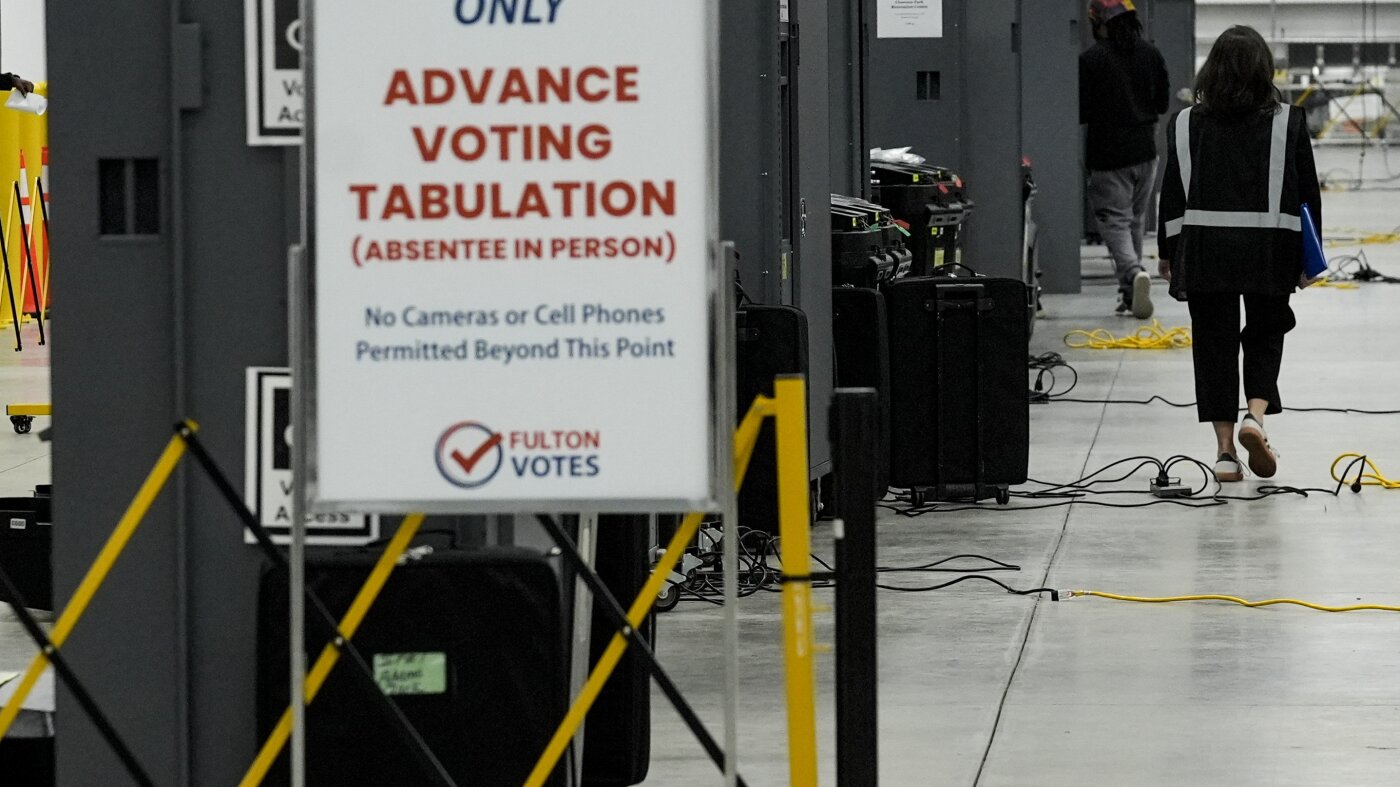
The FBI conducts a search at the Fulton County election office in Georgia

Graham pushes back on Tillis’ criticism of Noem, Miller for labeling man killed by Border Patrol a ‘terrorist’
-

 Illinois7 days ago
Illinois school closings tomorrow: How to check if your school is closed due to extreme cold
-

 Pittsburg, PA1 week ago
Sean McDermott Should Be Steelers Next Head Coach
-

 Pennsylvania3 days ago
Rare ‘avalanche’ blocks Pennsylvania road during major snowstorm
-

 Lifestyle1 week ago
Nick Fuentes & Andrew Tate Party to Kanye’s Banned ‘Heil Hitler’
-

 Sports1 week ago
Miami star throws punch at Indiana player after national championship loss
-
 Science1 week ago
Contributor: New food pyramid is a recipe for health disasters
-

 Technology6 days ago
Ring claims it’s not giving ICE access to its cameras
-
 Politics3 days ago
Trump’s playbook falters in crisis response to Minneapolis shooting