Connect with us

Northeast

Young progressive beats out establishment candidate in Jersey City mayoral race, echoing Mamdani

Published

on

Young progressive beats out establishment candidate in Jersey City mayoral race, echoing Mamdani

NEWYou can now listen to Fox News articles!

One month after former New York Gov. Andrew Cuomo was defeated in New York City’s mayoral election by democratic socialist Zohran Mamdani, another disgraced former governor seeking political redemption by running for mayor was also defeated by a younger, progressive contender.

Former New Jersey Gov. Jim McGreevey, who was running for mayor of Jersey City, the state’s second-largest city, came up short on Tuesday in a runoff election.

The 68-year-old McGreevey was defeated by 41-year-old Councilman James Solomon, according to the Associated Press.

The two candidates, both Democrats, were the top two vote-getters among seven contenders in last month’s nonpartisan general election in the left-leaning city. But since no candidate won a majority of the vote, McGreevey and Solomon faced off in the runoff election.

Advertisement

HEAD HERE FOR THE LATEST FOX NEWS DEVELOPMENTS ON THE 2025 ELECTIONS

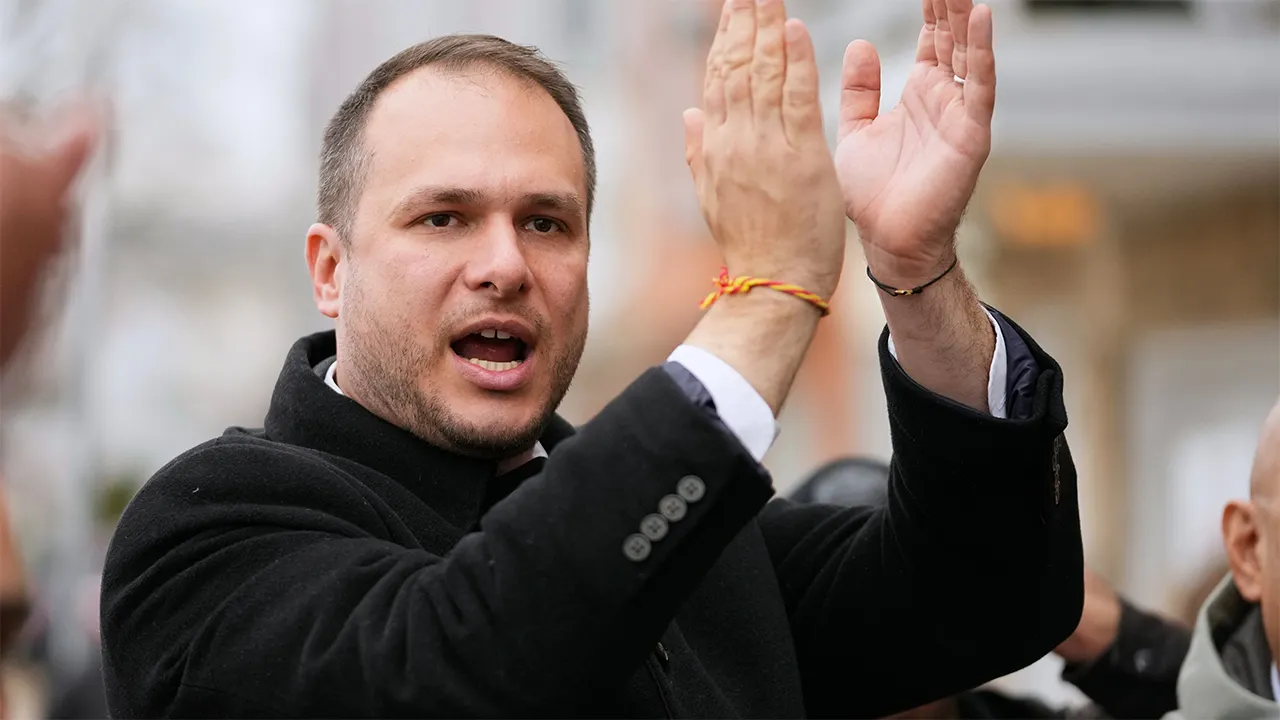
Jersey City mayoral candidate James Solomon, seen speaking to people at a food drive Tuesday, Nov. 25, 2025, in Jersey City, N.J., won the city’s runoff election. (Frank Franklin II/AP Photo)

Solomon will succeed Jersey City Mayor Steven Fulop, whose 2025 bid for Garden State governor ended with defeat in June’s Democratic gubernatorial primary.

The mayor-elect was first elected to the council in 2017 after stints as an adjunct professor in Jersey City. He previously worked in the offices of longtime Boston Mayor Thomas Menino and then-Newark Mayor Cory Booker, now a U.S. senator.

MCGREEVEY, SOLOMAN, ADVANCE TO RUNOFF ELECTION

Advertisement

A one-time state lawmaker, McGreevey was elected governor in 2001. But he resigned in 2004 and came out as gay after saying he took part in an extramarital affair with a male staffer who he had named as New Jersey’s homeland security adviser. The adviser denied he had an affair with the governor and claimed he had been sexually harassed.

Former New Jersey Gov. Jim McGreevey made his return to Garden State politics this year in his run to serve as the next mayor of Jersey City.  (Jim Spellman/WireImage)

McGreevey, pointing to his work as executive director of a nonprofit that provides services to those adjusting to society after serving in prison, addiction treatment or combat duty, now describes himself as a “champion of second chances.”

McGreevey’s unsuccessful attempt at a political second chance follows Cuomo’s failed bid.

Independent mayoral candidate and former New York Governor Andrew Cuomo speaks to the press after voting at a polling location at the High School of Art and Design in the Manhattan borough of New York City on Nov. 4, 2025.  (Timothy A. Clary/AFP via Getty Images)

Advertisement

Cuomo, who resigned as governor in 2021 amid multiple scandals, ran this year for New York City mayor. But he lost June’s Democratic primary to Mamdani.

The former governor, running as an independent in last month’s general election, lost to Mamdani a second time.

Read the full article from Here

Maine

A top issue in Maine and Oklahoma governors’ races? Tribal sovereignty. – ICT

Published

on

A top issue in Maine and Oklahoma governors’ races? Tribal sovereignty. – ICT


This story is part one of a two-part story on gubernatorial races to watch in the 2026 midterm elections as part of the #NativeVote26.

Pauly Denetclaw
ICT

Two of the 39 states with gubernatorial races have tribal sovereignty at the top of their policy agendas: Oklahoma and Maine. The two states where tribal nations have had friction with their state governments. Now Native voters in both states will be electing a new governor, and the results will impact the relationship between tribal governments and the state for the next four years. 

Wabanaki Nations in Maine had a challenging time getting state legislation signed into law by Gov. Janet Mills, Democrat, that would strengthen tribal sovereignty. The 38 tribes in Oklahoma had a tumultuous relationship with Republican Gov. Kevin Stitt. 

Advertisement

Eighteen of the 39 governor races in 2026 will have incumbent candidates, according to the National Governors Association. Stitt is the 2025-2026 chair of the association. 

What’s happening in Oklahoma? 

Over the past seven years, tribal nations and the state of Oklahoma had a contentious relationship — especially after the McGirt decision. Current governor, Stitt, who is a Cherokee Nation citizen, has been outspoken against the McGirt decision, tribal compacts for tobacco and car tags, and tribal gaming compacts. 

Tribal-state compacts are legal agreements between federally recognized tribes and state governments. It is most commonly used for class III gaming — slot machines and table games. 

“There was a time and a day when we used to compact with the tribes. That is not a unique thing across the nation. It wasn’t a unique thing in Oklahoma,” Chip Keating said during an April 6 candidates forum. “We absolutely have to hit the full reset button with the tribes — work together, treat them with the respect that they should have been treated with, and we’ve got to get back to compacting.”

Advertisement

Tribal leaders are looking forward to new state leadership, said Michael Stopp, president and chief executive officer of SevenStar Holdings. 

“It’s good for the tribes and the tribal leaders are happy about it,” said Stopp, a citizen of the Cherokee Nation. “It has very much been a sticking point with tribal leaders that Governor Stitt has a very different perspective on sovereignty and what role the tribes play in this state. Obviously, we’ve had some big changes with the reservation status here because of the McGirt decision in 2020, but Governor Stitt, who is a member of the Cherokee Nation, has been more of an antagonist when it comes to that, than trying to help with the transition. I can definitely say the tribal leaders are looking for leadership change.”

Cherokee Nation Principal Chief Chuck Hoskin called Stitt the most anti-Indian governor in the state’s history. Oklahoma Attorney General Gentner Drummond described Stitt as having a “penchant of racism against tribes,” during an April candidates forum. He added that it was unacceptable.

Oklahoma Gov. Kevin Stitt is pictured during an interview in his office Wednesday, Aug. 3, 2022, in Oklahoma City. The Oklahoma Board of Pardon and Parole has recommended clemency for death row inmate James Coddington. Stitt said that he hasn’t been formally briefed on Coddington’s case, but that with any clemency recommendation, he meets with prosecutors, defense attorneys and the victim’s family before making a decision. (AP Photo, Sue Ogrocki) Credit: Oklahoma Gov. Kevin Stitt is pictured during an interview in his office Wednesday, Aug. 3, 2022, in Oklahoma City. The Oklahoma Board of Pardon and Parole has recommended clemency for death row inmate James Coddington. Stitt said that he hasn’t been formally briefed on Coddington’s case, but that with any clemency recommendation, he meets with prosecutors, defense attorneys and the victim’s family before making a decision. (AP Photo, Sue Ogrocki)

Tribal nations and state governments have to work together often. As seen in Oklahoma, Stitt vetoed several tribal compacts, despite overwhelming support by the state’s legislature, and this slowed the process for establishing the tobacco, car tag and gaming compacts between Oklahoma and tribal nations. 

“Governor Stitt came in thinking that he could renegotiate this contract, and quite frankly, it just doesn’t work that way. Instead of listening and coming to the negotiating table, (Stitt) tried to come in with a really strong stance and ended up losing, honestly,” Stopp said. “I think that was unfortunate for him and for the tribes. Again, missing out on the chance of negotiating and I think the tribal leaders are definitely looking forward to having someone on the other side of the table to negotiate with.”

Advertisement

Oklahoma governor candidates

There are nine Republican candidates on the ballot for Oklahoma’s primary election set for June 16:

  • Gentner Drummond: 20th Attorney General for Oklahoma
  • Chip Keating: Former highway trooper and former Oklahoma Secretary of Public Safety
  • Mike Mazzei: Former Oklahoma state Senator and former Secretary of Budget
  • Charles McCall: Longest-serving Speaker of the House in Oklahoma history
  • Jake Merrick: Local radio host and former Oklahoma state Senator
  • Kenneth Sturgell: Local, small business owner 
  • Leisa Mitchell Haynes: Former marketing director and former city manager
  • Calup Anthony Taylor
  • Jennifer Domenico-Tillett

Three Democratic gubernatorial candidates are also running for the primary election:

  • Cyndi Munson: Oklahoma House Minority leader
  • Connie Johnson: Former Oklahoma state Senator
  • Arya

Candidates will have to get more than 50 percent of the votes to avoid a runoff. If there is no outright winner, the top two candidates for each political party will head to a primary runoff election on August 25. 

An additional three Independent candidates will automatically head to the general election this November. 

Two important issues this election in Oklahoma are tribal sovereignty and a commitment to working with tribes. 

During an April 6 Republican candidates forum, Gentner Drummond, Charles McCall, Chip Keating and Mike Mazzei, were asked to raise their hand if they shared Stitt’s perspective on the McGirt decision. Stitt was quoted as saying that the McGirt decision has torn Oklahoma apart and has created two justice systems based on race. None of the four candidates raised their hand. 

Advertisement

“For three and a half years I’ve been working with every tribal leader in the state of Oklahoma, and I recognize them as unique among themselves, just like France is different from Germany,” Oklahoma Attorney General Gentner Drummond said during a candidates forum. “We have to honor and respect the culture of diversity that they bring to the table and the needs that they have. We have been working with tribal law enforcement each of the last three years to take the fight to organize crime in our rural communities. They are a great partner.”

All four candidates promised their administration would work with tribal nations and negotiate tribal compacts.    

Mazzei said at two different candidate forums that he would be a strong negotiator with tribal nations. 

In a recent interview with KOCO 5 News, local small business owner Kenneth Sturgell said tribal nations are their neighbors and should be treated as such. He also said that the state and tribal nations have to work together. 

Jake Merrick, local radio host and former Oklahoma state Senator, was pleased that the state Supreme Court affirmed tribal nations’ right to hunt on their own lands, during a March 30 candidates forum. 

Advertisement

Democratic candidate Cyndi Munson, Oklahoma House Minority leader, said in a recent press release that her caucus supports tribes.

“The Oklahoma House Democratic Caucus supports tribal sovereignty and acknowledges that our tribes fill important gaps in our education and healthcare systems, as well as other areas throughout our state,” Munson said. “I am extremely grateful for the work our tribes have done and continue to do despite vicious attacks on them by the Governor.”

A respectful working relationship between tribal nations and the state has shifted significantly since the last gubernatorial race in 2022.  

“I think every one of them [Oklahoma governor candidates] has said something about it,” Stopp said. “[It’s] different than four years ago. It was an issue in the governor’s race, but it wasn’t a good issue. Here everyone’s saying yes, we want to change the tone and start the conversation differently. So I think as far as Indian voters go, that conversation is going to change regardless of who wins.”

Dawnland

Advertisement

In Maine, Gov. Mills repeatedly refused to sign a law that would strengthen tribal jurisdiction and recognize Wabanaki Nations right to access federal Indian laws. She vetoed the bill twice despite overwhelming support from state legislators. 

“We’ve had multiple opportunities to send [legislation] to the governor’s desk and not just party line votes,” said Maulian Bryant, executive director of the Wabanaki Alliance and former Penobscot ambassador. “We generally have Democratic support, but we have gotten Republicans voting on these issues too. So, the governor has seen some great bipartisan work reach her desk and has still decided to veto some of these efforts.”

FILE – Democratic Gov. Janet Mills delivers her State of the State address, Jan. 30, 2024, at the State House in Augusta, Maine. (AP Photo/Robert F. Bukaty, File)

In order for tribes to access federal Indian laws, the state has to approve it. The Wabanaki Alliance, created to educate the people of Maine about tribal sovereignty, has been working diligently to amend the Maine Indian Claims Settlement Act of 1980.

Through the settlement, tribal nations ceded land in exchange for $81.5 million. However, it also drastically limited tribal sovereignty, and brought tribes under the jurisdiction of the state. Tribal nations that predate the state, are subjected to state jurisdiction and treated more like municipalities. The act was meant to be a living document but the state resisted changes for decades. 

The Wabanaki Alliance has been able to increase tribal sovereignty and self-governance one legislation or amendment at a time. Throughout her two-terms, Mills has resisted a complete overhaul of the 1980 act and this created tension between the governor and tribal nations. 

Advertisement

“If we had a governor that came in and fully embraced the inherent rights and inherent sovereignty of our people, and fully recognized that, it would strengthen our communities and it would also uplift the entire state of Maine,” said Bryant, who is Penobscot. “Our tribal communities are near rural places that could really use economic opportunities and could really use tribal businesses that are able to grow without all of these bureaucratic restrictions. We really are coming from a place of friendliness and we want to be good neighbors and we want to uplift the communities around us.”

The Wabanaki Alliance held a gubernatorial candidates forum in March where nine governor candidates participated: 

  • Shenna Bellows, Democrat
  • Rick Bennett, Independent
  • John Glowa, Independent
  • Troy Jackson, Democrat
  • Derek Levasseur, Independent
  • Hannah Pingree, Democrat
  • Nirav Shah, Democrat
  • Angus King III, Democrat

None of the eight Republican candidates participated. 

Most of the gubernatorial candidates generally supported increasing tribal sovereignty, recognizing inherent rights and working with tribal nations. Angus King III said he wasn’t educated on the topic enough to make any commitments and would have to look into it. This sentiment was shared by John Glowa and Derek Levasseur. 

Hannah Pingree, Rick Bennett, Shenna Bellows and Troy Jackson firmly supported tribal sovereignty for Wabanaki Nations. 

“If a governor comes in, and isn’t afraid of recognizing tribal sovereignty and sees it as an opportunity, I think we could see some real progress for everyone,” Bryant said. 

Advertisement


Source link

Continue Reading

Massachusetts

Battenfeld: Have Massachusetts voters finally had enough of soft on crime?

Published

on

Battenfeld: Have Massachusetts voters finally had enough of soft on crime?


Could Massachusetts be in danger of becoming the nation’s first lawless society – where criminals roam the streets without fear of being imprisoned?

Shootings. Street takeovers. Open drug use. Urban terrorism. Road rage. Rampant shoplifting. It’s become acceptable behavior.

It’s a state where you can essentially get away with attempted murder.

The state’s all liberal political hierarchy has allowed it for years, and now it’s coming to fruition. Will Massachusetts be the first state in the country where laws don’t matter?

Advertisement

Scores of hardened, dangerous criminals are being paroled every year thanks to the Massachusetts Parole Board appointed by liberal Democrat Maura Healey.

Liberal judges are giving lenient sentences to violent offenders like the accused Memorial Drive shooter against the wishes of prosecutors.

When will voters say enough is enough?

The terrifying mass shooting on Memorial Drive only cemented the feeling of citizens that they could be targeted next. That could have been them running for their lives, cowering under their cars while a gunman with an assault rifle sprayed dozens of shots.

The alleged gunman shot at police multiple times back in 2020, and was charged with assault with intent to murder. The judge rejected the Suffolk District Attorney’s recommendation of 12 years and cut it in half, enraging prosecutors.

Advertisement

There’s no doubt the alleged shooter should not have been on the street this week. Two innocent people nearly lost their lives.

Maybe now the line has been crossed where people looking at the shooting think: That could have been me on Memorial Drive, running for my life.

The fear of crime is a powerful political factor that could now play a role in this year’s gubernatorial race.

Incumbent Healey has to answer for her pathetic Parole Board and any judges she’s appointed that also have the same liberal bent that’s been part of the problem.

Voters fed up with high profile crimes and shootings – along with the high cost of living – may be part of the reason that Healey’s job approval numbers are tanking and could give life to Republicans’ hopes of stealing back the Corner Office.

Advertisement

Healey’s numbers are particularly bad among men and independent voters, according to a new MassINC poll of 800 registered Bay State voters. The only politician faring worse than Healey is President Trump.

Meanwhile, Boston Mayor Michelle Wu keeps repeating her claim that Boston is the safest major city in the country, but it doesn’t appear that way.

Wu was just reelected overwhelmingly, but Healey might be in some trouble.

Maybe it’s now time that voters might start demanding accountability from their political leaders.

But no, let’s keep focusing on Trump and the Epstein files. That’s the real problem.

Advertisement


Source link

Continue Reading

New Hampshire

Emily (Em) Madeline Peters

Published

on

Emily (Em) Madeline Peters


Emily (Em) Madeline Peters, 28, passed away on April 29, 2026 in Boston. Em was born on February 27, 1998 in Rochester, NY. Our family moved to Amherst, NH in 1999.

Em attended school in Amherst and graduated from Souhegan High School in 2016. Em enjoyed photography and art where they demonstrated a talent for painting. Em also enjoyed playing the guitar and ukulele. Em was part of the Amherst Congregational Church Youth Group where they participated in mission trips to serve the communities in Tennessee and New York City.

After high school, Em lived and worked in New Hampshire, Cape Cod and the Jamaica Plain neighborhood of Boston. Em was a devoted friend who dedicated themselves to causes that supported the LGBTQ+ community. Em also was always prepared to help those living with addiction. They carried Narcan with them and used it several times to help someone who had overdosed. They were passionate about equality and fairness in the workplace which led them to take action. Em helped lead workers to organize and form a union at a grocery store where they worked. Em also worked for a non-profit organization providing food, clothing and child care to those that needed help.

Advertisement

Em is survived by their parents, Eileen Marie (Hodges) Peters and David Lester Peters of Amherst, NH; brother Andrew Partrick Peters of Merrimack, NH; sister Katherine MacKenzie Peters of Essex, MA.; and grandfather Gerald L. Hodges, Jr. of Rochester, NY. Em is also survived by many aunts, uncles and cousins. Em is predeceased by her maternal grandmother Mary “Dolly” (Curley) Hodges and paternal grandparents Eugene Monroe Peters and Gloria Shirley (Thorne) Peters.

Some of our fondest and happiest memories were spent together on family vacations. Whether we were camping, visiting Old Orchard Beach, or exploring national parks, we were happy. Em’s time on this earth was far too short. We loved them dearly and they will always remain in our hearts. We will miss their good-natured teasing and many inside jokes. We will miss their creativity, compassion for others, and their beautiful smile.

Family and friends are warmly welcomed to attend calling hours at Michaud Funeral Home, 32 Maple Street in Wilton, NH on Sunday, May 24, 2026, from 2 – 4 pm. A service will be held following calling hours at the funeral home. The arrangements are in the care of the Michaud Funeral Home, 32 Maple St., Wilton, NH. To view an online obituary or leave a condolence, please visit our web site at www.michaudfuneralhome.com


Source link

Advertisement
Continue Reading
Advertisement

Trending