
Connect with us

Vermont

The Vermont Language Justice Project shares vital health info. It's running out of funds

Published

on

The Vermont Language Justice Project shares vital health info. It's running out of funds


During the first dark days of the COVID-19 pandemic, in March 2020, information about staying safe rolled out on a daily and sometimes hourly basis in Vermont. Hard enough to keep up with for English speakers, it was less accessible to Vermonters who spoke different languages.

Burlington-based social worker and videographer Alison Segar says she began worrying for family, friends and clients with limited English and limited reading and writing skills.

“I was really concerned about how they were going to gather information about what seemed to be this completely terrifying virus that was sweeping the world,” she says. “So I really had the idea, like, how can we make, you know, audiovisual kind of messages.”

Advertisement
Alison Segar began the Vermont Language Justice Project during the COVID-19 pandemic.

Segar says she started working from her kitchen, talking over Zoom with community partners to work on messaging and produce COVID-19 safety videos in 10 different languages. Thus the Vermont Language Justice Project (VLJP), initially called the Vermont Multicultural Coronavirus Task Force, was born, with Segar as its director.

“The translators were sending them out to their communities, the school districts were sending just the audio files out through robocall systems,” Segar says.

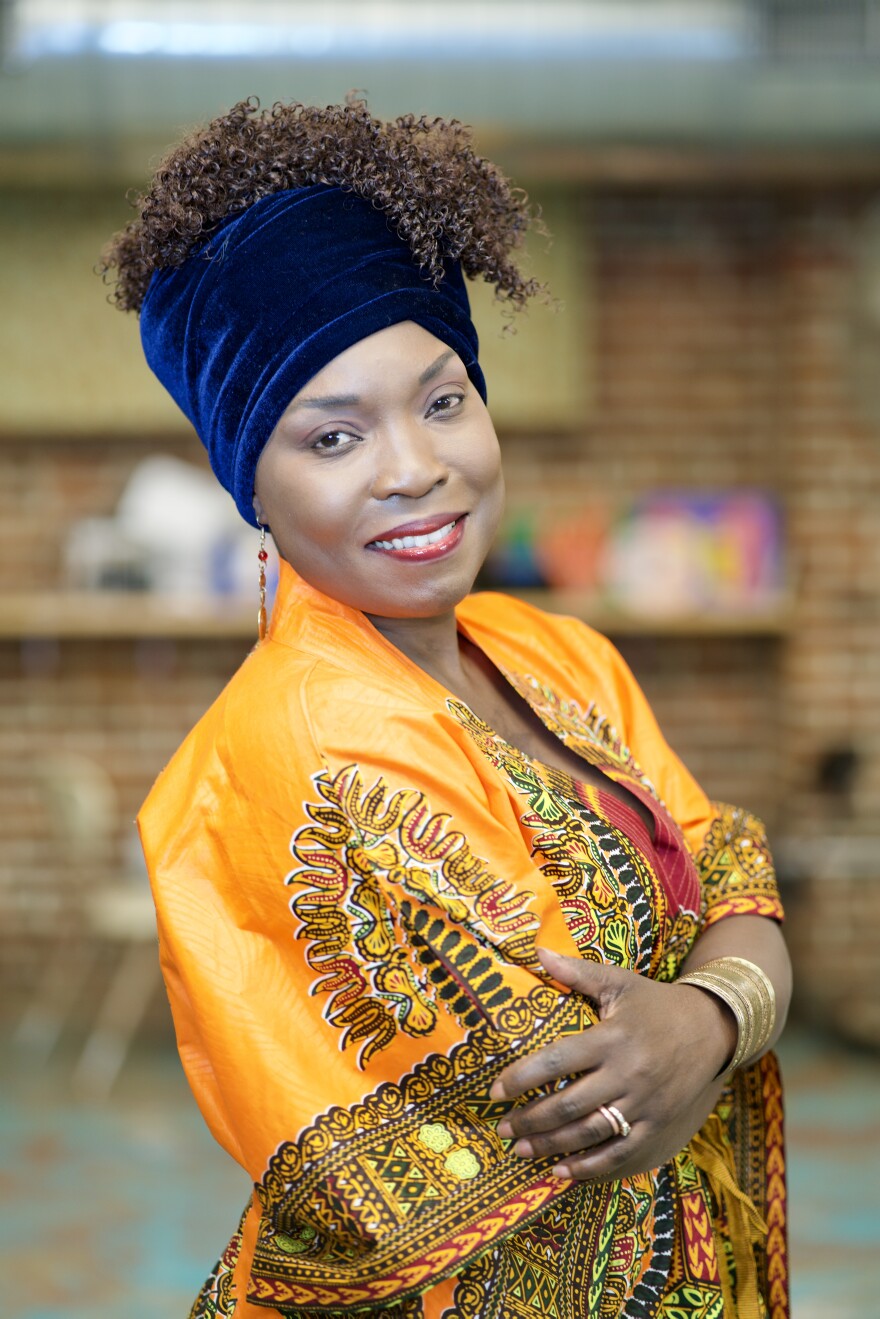
Local Kenyan American singer-songwriter KeruBo was among those involved in the earliest stages of VLJP. KeruBo is also a caseworker for the Association of Africans Living in Vermont, helping people who arrive as refugees get settled and thrive here.

Part of her work, she says, is disseminating information to the community — like through the 2021 music video, “Chanjo.”

Advertisement

“There were antivaxxers out there who don’t care for, you know, taking the vaccine,” KeruBo says. ”And so I thought, ‘Hey, why don’t I make a video, a song music video that would help, you know, help my community.”

In the video, KeruBo is surrounded by dancers as she sings in Swahili, encouraging viewers to get the COVID-19 vaccine to save lives. At one point in the video, KeruBo gets her own COVID-19 shot.

“They saw me actually taking the vaccine, and I didn’t suddenly have like five heads or things that people were being told out there,” she says. “They started to feel a little bit comfortable to participate in taking the vaccine.”

A photo of a Black woman with her hair in a velvet hair wrap, posing for a photo with her arms crossed and wearing a smile. She's wearing a bright yellow patterned scarf around her shoulders.

KeruBo, who is the Swahili translator for the Vermont Language Justice Project and is also a caseworker for the Association of Africans Living in Vermont.

That kind of responsive, on-the-ground outreach to refugee and immigrant communities is what Vermont Language Justice Project Director Alison Segar says VLJP did as the pandemic stretched out. And initially, VLJP did this work for free.

Advertisement

Then, Segar says, the Vermont Department of Health realized what they were doing.

“And [when they] knew that we were really kind of doing their job for them, they absolutely stepped in and gave some money,” she says. “So that we could pay our translators for the work that they were doing.”

In 2021, Segar says the VLJP received nearly $330,000 from the Department of Health through a CDC COVID-19 Health Equity grant. Thanks to that money and some additional grants, she says they now have three full-time staffers, and their videos are available in 18 different languages and sometimes American Sign Language.

“We’ve made over 140 videos in any one language,” Segar says.

Advertisement

All these videos have a combined 227,000-plus views. And they’re no longer just about COVID-19. In addition to covering of-the-moment topics like the solar eclipse or flood safety, they also tackle ongoing, everyday topics — like how to pick up medication from the pharmacy, information about ticks, and tips for how parents can talk with and listen to their kids.

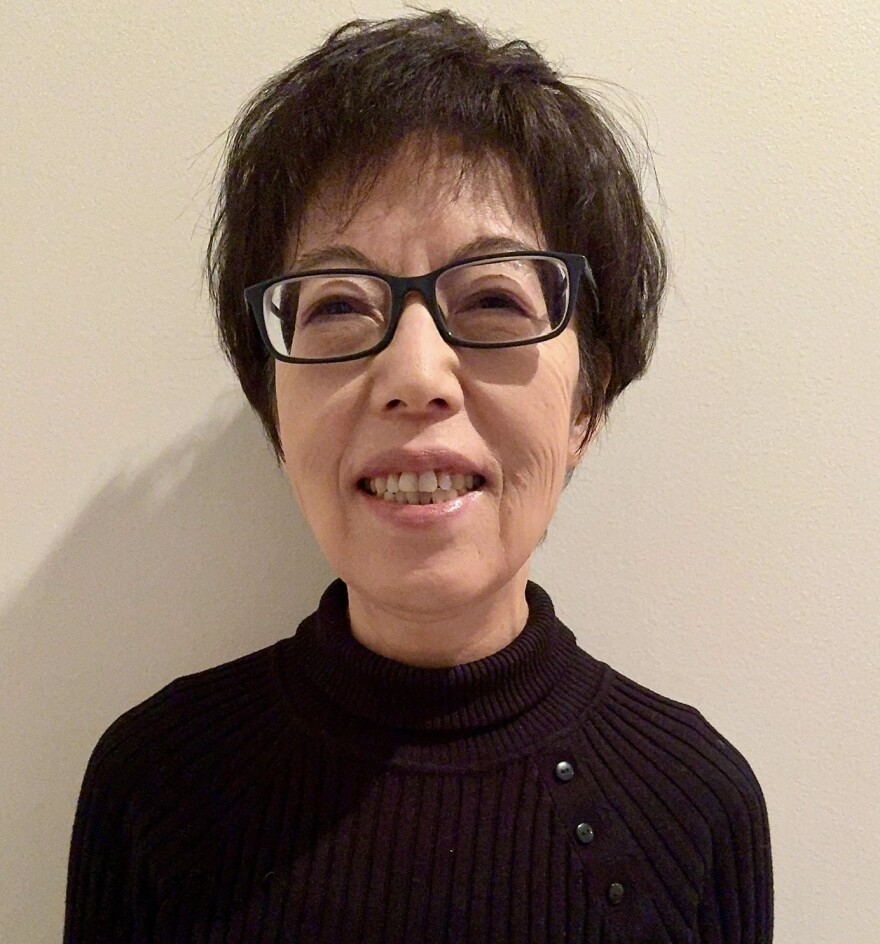
“Each time I send out the video, share with them, and they all get back to me, say, ‘It’s really good,’” says Lili Feng, who serves Chinese communities through VLJP. She says there’s a particular need to address language and cultural barriers among the families who operate Chinese restaurants in Vermont.

“A lot of them tell me, ‘Lili, you know, I have eyes, I cannot read. I have a mouth, I cannot talk. I have ears, I don’t understand,’” Feng says.

A photo of an Asian woman smiling against a white wall. She has short black hair and glasses. She's wearing a black sweater.

Lili Feng serves Chinese communities through the Vermont Language Justice Project.

VLJP translators like Feng are acting as trusted messengers and cultural liaisons to communities that the Vermont Department of Health has struggled to reach on its own. That’s according to Sara Chesbrough, who is the health equity team lead for the Division of Family and Child Health at the health department.

Advertisement

“Everyone needs to stay safe and healthy,” Chesbrough says. “In emergency situations or public health crises, not having that information available to them is inequitable, but also puts lives at risk. So this was really, to me, life and death.”

The challenge, though, is that the major chunk of money the VLJP relies on, that CDC COVID-19 grant, is running out. Segar expects it to dry up by December. And she says the VLJP is looking everywhere for more funding.

Chesbrough, who is the health department’s point of contact for VLJP grant funds, says she hopes programs in the department and across state government, nonprofits and community organizations can chip in.

“I’m not quite sure, you know, how that would look from place to place, but it would be really amazing for them to be able to sustain funding to continue their work,” she says.

The Vermont Language Justice Project’s funding is an open question. But according to testimonials from people working in Vermont’s health, refugee resettlement and equity organizations, the project’s services are vital — and there would be a void without them.

Advertisement

“This was a resource that didn’t exist prior to the Vermont Language Justice Project,” says Cheryle Wilcox, the director of mental health collaborations at the Department of Mental Health. “At this point, you know, having things in different languages and interpreting them, like it’s not an extra thing. It’s something we should be doing.”

Underneath KeruBo’s “Chanjo” YouTube video about the COVID-19 vaccine, there are dozens of comments expressing gratitude. The messages are from Swahili speakers, English speakers and from people in other states who say they work with refugee communities.

“I just think that when people hear their mother tongue first, it’s so grounding. It makes them feel like … ‘I’m part of this culture, of this community, too. That I matter, that someone is paying attention to what I’m going through,’” KeruBo says.

She adds that providing information this way works — and that it should be supported.

Have questions, comments or tips? Send us a message.

Advertisement


Source link

Vermont

Visitors spent over $1B in Chittenden County in record VT tourism year

Published

on

Visitors spent over B in Chittenden County in record VT tourism year


Vermont’s tourism industry set new records in 2024, with 16 million visitors spending $4.2 billion, according to a community announcement.

The increase in both visitation and spending marks a modest rise from 2023, according to a study by Tourism Economics.

Visitor spending accounted for 9% of Vermont’s gross domestic product, significantly higher than the 2023 national state average of 3%. The tourism sector directly supports 31,780 jobs, or 10% of the state’s workforce, compared to the national average of 4.6%.

Advertisement

Direct spending by visitors in 2024 included $1.5 billion for lodging, $876 million for food and beverages, $680 million in retail, $678 million for transportation and $462 million for recreation and entertainment. The spending generated $293.5 million in state and local taxes, equivalent to $1,089 per Vermont household.

“As we think about economic impact, it is important to recognize that visitors to Vermont are essentially temporary taxpayers, bringing in outside money that helps to make Vermont more affordable for all of us,” said Department of Tourism and Marketing Commissioner Heather Pelham. “Every guest who buys a meal, stays the night, or heads to the mountain is supporting our businesses, sustaining jobs for Vermonters and funding the essential services that keep our communities strong.”

When considering the broader economic impact, including supply chain purchases and employee spending, the ripple effects of visitor spending amounted to $7 billion in economic activity in 2024.

The report also provided county-specific data, showing increased spending in every county. Chittenden County accounted for the highest share of visitor spending at 24.5%, at well over $1 billion. Lamoille, Rutland and Windsor counties each represented more than 10% of statewide visitor spending.

Advertisement

In Caledonia County, direct spending from visitors reached $109 million, a 7.7% increase from 2023.

“During the 2024 total solar eclipse, the positive impact of tourism on a rural community like St. Johnsbury was clear,” said Gillian Sewake, director of Discover St. Johnsbury. “An estimated 23,000 people came to our town alone. It was wonderful to feel that vibrancy in our downtown, with visitors filling sidewalks, enjoying the attractions that we know and love, and helping businesses break revenue records.”

In Bennington County, tourism generated almost $300 million in direct spending in 2024.

“Tourism is one of our region’s most powerful economic drivers, supporting nearly 13% of our workforce,” said John Burnham, executive director of the Manchester Business Association. “But its value reaches far beyond jobs. Visitor spending strengthens our economy, sustains small businesses, and helps fund the local services and amenities we all rely on, from restaurants and trails to cultural attractions and community events. Tourism also inspires us to preserve our historic character and adds a vibrancy that enriches everyday life. Simply put, the visitor economy helps keep our region the welcoming, thriving place we’re proud to call home.”

The 2024 economic impact report comes at a time when resident support of tourism is strong. In the University of Vermont Center for Rural Studies 2025 Vermonter Poll, 85% of residents agreed with the statement “Tourism is important to my local economy,” and 78% agreed with the statement “Increased tourism would have a beneficial impact on my local community.”

Advertisement

To read “Economic Impact of Visitors in Vermont 2024,” learn more about the report’s methodology, and the additional indirect and induced effects of visitor spending, visit the Vermont Department of Tourism and Marketing Tourism Research webpage, accd.vermont.gov/tourism/research.

This story was created by reporter Beth McDermott, bmcdermott1@usatodayco.com, with the assistance of Artificial Intelligence (AI). Journalists were involved in every step of the information gathering, review, editing and publishing process. Learn more at cm.usatoday.com/ethical-conduct.


Source link

Continue Reading

Vermont

Obstacles for Vermont refugees is focus at roundtable

Published

on

Obstacles for Vermont refugees is focus at roundtable


BENNINGTON — Sitting in a circle at the Bennington County Multicultural Community Center, Jack Rossiter-Munley shared the story of two families with whom he had worked.

The families had immigrated from South Sudan to Bennington, which was designated as a refugee site in October 2022. Since then, about 205 refugees have immigrated to the town. But the lives that they had hoped for in the United States haven’t necessarily come to fruition.

“These are folks who needed more orientation to work in the United States, but also the line is moving, and so you’re no longer on the line,” said Rossiter-Munley, the director of the Bennington County Multicultural Community Center. “Because their actual work here was unstable, they decided, ‘we’re just going to try to find work somewhere else.’”

Advertisement

Some of the family members moved to the Midwest, where they hoped to find a larger South Sudanese community and more support from their relatives. Those still in Bennington are looking to follow, he said.

Rossiter-Munley and about a dozen other people were gathered on Dec. 5 at BCMCC for a roundtable on Employment Support for New Americans, part of Gov. Phil Scott’s “Capital for a Day” initiative. That day, Scott and several of his cabinet members stationed themselves around Bennington County, holding meetings and hosting conversations with local leaders as they heard how to better support Bennington County.

The roundtable came at an especially pressing time for local immigrants. On Dec. 2, the U.S. Citizenship and Immigration services under President Trump announced that it would pause its review of applications for green cards, asylum and citizenship following the shooting of two National Guard officers deployed in Washington, D.C. The pause applies to 19 countries — including Afghanistan and the Republic of Congo — from where many new Americans in Bennington emigrate.

People also come to Bennington from Venezuela, South Sudan and Iraq as part of the resettlement programs, Rossiter-Munley said. At the following Monday’s Select Board meeting, he read a statement on behalf of Afghan women in Bennington, condemning the violence in Washington, D.C. and asking for the community’s understanding. And at the roundtable, he was clear about the legal implications for those already living in Bennington: “nothing has changed.”

Kendal Smith, commissioner of the Department of Labor, was in attendance at the Dec. 5 meeting and represented Vermont. She sought to understand how the state could better support immigrants and refugees in Bennington County.

Advertisement

The biggest challenges Smith identified were language access support, transportation and licensing attainment, she said.

Translation is an area that gets highlighted the most in Bennington because the town is “uniquely deficient” in providing such community support, Rossiter-Munley said. Bennington county was almost 95 percent white, according to the latest census data.

Smith said that the Department of Labor is exploring funding the purchase of more translation devices to help overcome language barriers at work. The state currently contracts with Propio, an AI-based interpretation service. BCMCC uses Boostlingo to translate their speech into languages like Swahili and Dinka.

Another difficulty in Bennington is access to transportation to work. Wendy Morris, the Department of Labor’s regional manager, said that even commutes between Bennington and Manchester can pose serious challenges for new Americans.

“We help them get a job — let’s say we could do that, and we get them to Manchester,” she said. “We do the interview with them. How do we get them there every single day?”

Advertisement

The Department of Labor will explore “creative ways” to fund and provide driver’s licenses to immigrants and refugees, said Rowan Hawthorne, the policy and legislative affairs director at the Commissioner’s office. The Department will also work with the Office of Professional Regulation to “overcome licensing transfer barriers.”

Nearly every member of the roundtable stressed that immigrants and refugees in Bennington faced difficulties finding jobs that suited their training — for example, as pharmacists or engineers — and often were met with employers who were skeptical about hiring them.

All of it means that volunteers and leaders working with refugees are stretched thin.

“I can’t say enough how everybody in this room is doing more than their job,” said Sean-Marie Oller, director of the Tutorial Center, a Bennington nonprofit that provides adult education and literacy classes.

Still, Rossiter-Munley tries to be optimistic. He cited a study that showed refugee resettlement provided a net benefit of $123.8 billion to local, state and federal economies. And he’s encouraged by the state Department of Labor’s openness to growth.

Advertisement

“When we are sitting down to meet with employers, or offering support or working alongside the Department of Labor, the more of that knowledge can become just part of the day-to-day work of a how a local department … functions,” he said.

“This is part of how we work, and it’s not a special one-time project.”


Source link

Advertisement
Continue Reading

Vermont

‘Wreaths Across America’ observed at Vermont Veterans’ Home

Published

on

‘Wreaths Across America’ observed at Vermont Veterans’ Home


BENNINGTON — Holiday commemorations extended to the Vermont Veterans’ Home cemetery on Saturday, where community members gathered to honor the service men and women interred there through Wreaths Across America. Among those participating were members of Bennington’s own Civil Air Patrol.

The wreath-laying included an official ceremony, as well as laying wreaths at veteran graves and saying the veterans’ names out loud.

“So many Vermonters have sacrificed to serve in our Armed Forces. Sponsoring a wreath is a sign of gratitude to our veterans – both those who are living and to those who have departed,” said Susan Sweetser, the founder of the Vermont Veteran Moms group for Wreath Across America. “The first year after my daughter, Sgt. Virginia L. Sweetser, passed away and was buried at the Vermont Veterans Cemetery in Randolph, I participated in the Wreaths Across America event in Randolph. I was so discouraged to see that only 250 wreaths had been sponsored for the over 4,000 graves at VVMC. I vowed that I would work to change that. We have come a long way and I am praying that this will be the year that we see all the participating veteran graves covered.”

Advertisement

Wreaths Across America provides wreaths for Veteran graves all over the U.S., including the graves at Arlington National Cemetery.


Source link

Continue Reading

Trending
