Vermont
In Vermont, small town meetings grapple with debate on big issues


Tuesday is town meeting day in Vermont. Municipalities in New England and elsewhere are increasingly grappling with major national and international issues at the local level.
JOSEPH PREZIOSO/Getty Images
hide caption
toggle caption
JOSEPH PREZIOSO/Getty Images
If you haven’t lived in certain New England towns, it can be hard to fathom their centuries-old direct democracy-style Town Meetings, where everyday residents vote on mundane town business such as funding for schools, snow plows and road repairs.
These days, voters are also being asked to weigh in on national and international issues, for example, demanding the de-funding of ICE, and condemning “the unprovoked attack and start of an illegal and immoral war against Iran.” It’s all fueling a separate – and fierce– debate on what towns ought to be debating.
“When you have people sleepwalking into an authoritarian regime, it’s up to us to sound the alarm,” insists Dan Dewalt, an activist in Newfane, Vermont, one of several communities where residents scrambled to draft a resolution against the Iran war in time for their annual Town Meeting on Tuesday.
Local resolutions are a uniquely effective tactic, activists and experts say, and they’re being used increasingly around New England and beyond, especially as national politics have become so polarized.
“People feel isolated, helpless and hopeless. And when you hear about other people who are just like you taking a stand and representing something that you believe, that gives you not only hope, but it gives you power,” said Dewalt.
Several other Vermont towns will be considering resolutions Tuesday calling for the removal of the president and vice president “for crimes against the U.S. Constitution,” while many others will vote on a pledge to ” to end all support of Israel’s apartheid policies, settler colonialism, and military occupation and aggression.”
A similar divestment resolution passed 46 -15 in Newfane last year, following hours of heated argument over the plight of Palestinians, the security of Israelis, the “inflammatory” language of the resolution – and whether such problems half-a-world away even belong on the agenda of the tiny town of just about 1,650.
“It’s a Town Meeting for town issues,” Newfane resident Walter Hagadorn declared at a recent Select Board meeting, where residents pressed board members to block any future resolutions not directly related to town business.
“You shouldn’t be subject to hours and hours of people virtue signaling” and trying to “hijack Town Meeting,” Hagadorn said.
Others agreed, suggesting activists host a debate on their issues at another time and place, or stage a rally or protest instead.
But Select Board member Katy Johnson-Aplin pushed back, saying that would not have the same impact.
“It doesn’t work the same way,” Johnson-Aplin said. It’s only when the issue is formally taken up at a Town Meeting that “it goes in the newspaper and it’s recorded that the town of Newfane has agreed to have this conversation.”
University of Pennsylvania political science professor Daniel Hopkins has been watching the growing movement of local communities taking a stand on issues far beyond town lines.
“This is a trend we’re seeing increasingly across the 50 states and in a variety of ways but I think it has taken on a new and potentially more concerning edge,” Hopkins said. “I worry that we are in an attention-grabbing, sensation-rewarding media environment in which the kinds of issues that engage us at a national level may further polarize states and localities and make it harder for them to build meaningful coalitions on other issues.”
Indeed, in Newfane, the resolution regarding Israel became so divisive that some residents decided not to even come to last year’s Town Meeting, according to Select Board vice-chair Marion Dowling.
In Burlington, where a similar resolution was proposed, City Council President Ben Traverse says things got so heated, he and his family were getting harassing phone calls and even death threats. Burlington city councilors voted in January to block the question from going to a popular vote.Vermont has a history of “big issue” resolutions, from the push for a Nuclear Arms Freeze in the 1980’s, to calls to ban genetically modified foods in 2003. Dewalt, the Newfane activist, was behind several of them, including calls to impeach then-president George W. Bush in 2006, which got him invited to talk about it on network TV shows, and quoted in The New York Times.
“I can guarantee you if I stood up on my soap box and made a declaration of the exact same wording, I wouldn’t have had anybody asking me questions about it, he said. “We’re not pie-in-the-sky here about the power of our Newfane Town Meetings, but our actions have consistently had an impact.”
But opponents say activists overstate the impact of their resolutions, and their victory. They say it’s disingenuous, for example, to claim the town of Newfane supported the resolution against Israel, when the winning majority of 46 people was less than 3% of town residents.
“I feel like they’re using the town as a vehicle for their personal messages and that bothers me,” says Newfane resident Cris White. “It’s so junior high.”
Traverse, the Burlington City Council president, also takes issue with what he calls the “inflammatory” language of that resolution.
“The question, as presented, approaches this issue in a one-sided and leading way,” Traverse says.
In Vermont, any registered voter can get a resolution on the Town Meeting agenda by collecting signatures from 5% of their town’s voters. While elected city or town officials have the authority to allow or block the resolution, there is no process in place to vet or edit language.
Traverse says it would behoove city leaders and voters to require an official review to ensure that language is fair and neutral, just as many states do with ballot questions. Traverse says he’s not opposed to contentious, big issue resolutions being put to local voters, but the language must be clear and even-handed.



An international ambassador for tennis from South Burlington and a three-sport captain at Burlington High School and the University of Vermont more than 100 years ago are the final members for the 2026 Vermont Sports Hall of Fame banquet, the organization announced in a news release on Thursday, March 26.
Jake Agna, the former legendary tennis coach at South Burlington High School, is the 2026 David Hakins inductee, which honors an individual or a group or organization for exceptional promotion of sports, athletics and recreation in the state. Fenwick Watkins, a pioneer and exceptional athlete and coach who helped break color barriers in sports in the early 1900s, has been named the hall’s historic inductee.
Agna and Watkins join 10 other members previously announced this year who will officially be enshrined during a celebration banquet at the Delta Marriott Burlington Hotel on 1117 Williston Road in South Burlington on Saturday, April 25.
The dinner begins with a reception at 5:30 p.m. followed by the induction ceremony. To purchase tickets to the 2026 event, visit the VSHOF website at vermontsportshall.com. The cost is $95 per plate with part of the proceeds going to Prevent Child Abuse Vermont, the longtime designated charity for VSHOF.
Over 38 years coaching girls tennis at South Burlington, Agana compiled a 489-95 record with eight perfect seasons, 16 Division I titles and 13 runner-up trophies before stepping down prior to the 2023 season.
Agna is also founded Kids on the Ball in 2000, which is designed to teach children life lessons such as relationships and respect by learning the game of tennis. He has led 31 trips to Cuba to help expand the sport. His tennis programs reach out to over 200 kids each day in school and after school programs.
Agna’s work to help resurface 10 courts and renovation of the National Tennis Center in Cuba in 2017 was recognized by the Tennis Channel.
Watkins was a three-sport star in football, basketball, baseball at Burlington before graduating in 1905. At UVM, he is believed to be the first Black captain of a non-historical Black college or university sport and was captain for all three sports at both BHS and UVM, according to VSHOF.
After UVM, Watkins went on to become a high school and college head coach in North Dakota at Concordia College (football) and what is now known as North Dakota State (baseball and football). He died in 1943.
The previous winners for the Hakins award are: Barry Stone (2024); Thomas Dunkley (2023); Ted Ryan (2022); Cochran’s Ski Area, Mickey & Ginny Cochran (2020); Mal Boright (2019); Helmut Lenes (2017); Ernie Farrar (2015); Tom Curley (2014) and Ray Pecor (2013).
The previous historic winners include: Leo Papineau, St. Michael’s College, athlete, coach and official (2025); Clarence Demar, South Hero, distance running, (2017); Fred Harris, Brattleboro, outdoors/ski jumping, (2015); James Taylor, Windsor, outdoors, (2014); and Charles Adams, Newport, National Hockey League, (2013).
Contact Alex Abrami at aabrami@freepressmedia.com. Follow him on X, formerly known as Twitter: @aabrami5.

Eason DeMarsico-Thorne, a student at Brattleboro Union High School, won the 2026 Poetry Out Loud State Finals, held the Flynn on March 5, according to a community announcement.
DeMarsico-Thorne will represent Vermont at the national competition at the end of April in the nation’s capital. Gretchen Wertlieb of South Burlington High School was the runner-up, and Aiva Reed of Windsor High School placed third.
The state finals featured 10 students who recited poems over three rounds. The top three, with the highest cumulative scores after the first two rounds, advanced to the final round.
DeMarsico-Thorne recited “Fruit of the Flower” by Countee Cullen, “I Shall Return” by Claude Mckay and “A Southern Road” by Helene Johnson.
Wertlieb recited “To a Young Dancing Girl” by Elsa Gidlow, “Thoughts in Jail” by Katharine Rolston Fisher and “I shall forget you presently, my dear” (Sonnet IV), by Edna St. Vincent Millay.
Reed recited “Why We Oppose Women Travelling in Railway Trains” by Alice Duer Miller, “Militants to Certain Other Women” by Katharine Rolston Fisher and “If I Had Known” by Alice Moore Dunbar-Nelson.
The other finalists were Phoebe Gresham from Mount Mansfield Union High School, Ranee Hall from Thetford Academy, Marcus Burns from St. Johnsbury Academy, Taylor Daleb from Peoples Academy, Moya Thayer from Burlington High School, Theo Novak from Champlain Valley Union High School and Patrick Tester from Lyndon Institute.
Eighteen schools across Vermont registered to bring the national Poetry Out Loud program to their classrooms for the 2025-26 school year, reaching 2,000 students with about 60 teachers participating, according to the announcement. Fifteen students were selected by their teachers as school champions and participated in the statewide semifinals, held on Feb. 12 at the Barre Opera House.
DeMarsico-Thorne received $200 and advances to the national finals, where $50,000 in awards and school stipends are distributed. The state champion’s school receives $500 for the purchase of poetry materials. Wertlieb received $100, with $200 for her school.
Poetry Out Loud is supported by the National Endowment for the Arts and the Vermont Arts Council. Since the program began in 2005, more than 4 million students across the country have participated. The Poetry Foundation provides and administers the monetary prizes.
For more information about Vermont Poetry Out Loud, visit flynnvt.org/Education/poetry-out-loud.
This story was created with the assistance of Artificial Intelligence (AI). Journalists were involved in every step of the information gathering, review, editing and publishing process. Learn more at cm.usatoday.com/ethical-conduct.

BARTON, Vt. (WCAX) – Vermont police are asking the public for help identifying a man suspected in a road rage assault.
It happened on Main Street in Barton on Feb. 14, just before noon.
Troopers say a man got out of his green Subaru Forester and hit another driver in the face, then got back in his vehicle and left.
They released photos of the man on Wednesday.
If you know who he is, state police want to hear from you. Call the barracks in Derby at 802-334-8881 or leave an anonymous tip online.
Copyright 2026 WCAX. All rights reserved.

Massachusetts AG Campbell accused of breaking professional conduct amid audit lawsuit

Politics Friday: Mike Lindell ‘all in’ for Minnesota’s governor’s race with Trump backing or not

Diamond Dawgs Set For Top 20 Showdown In Oxford – Mississippi State
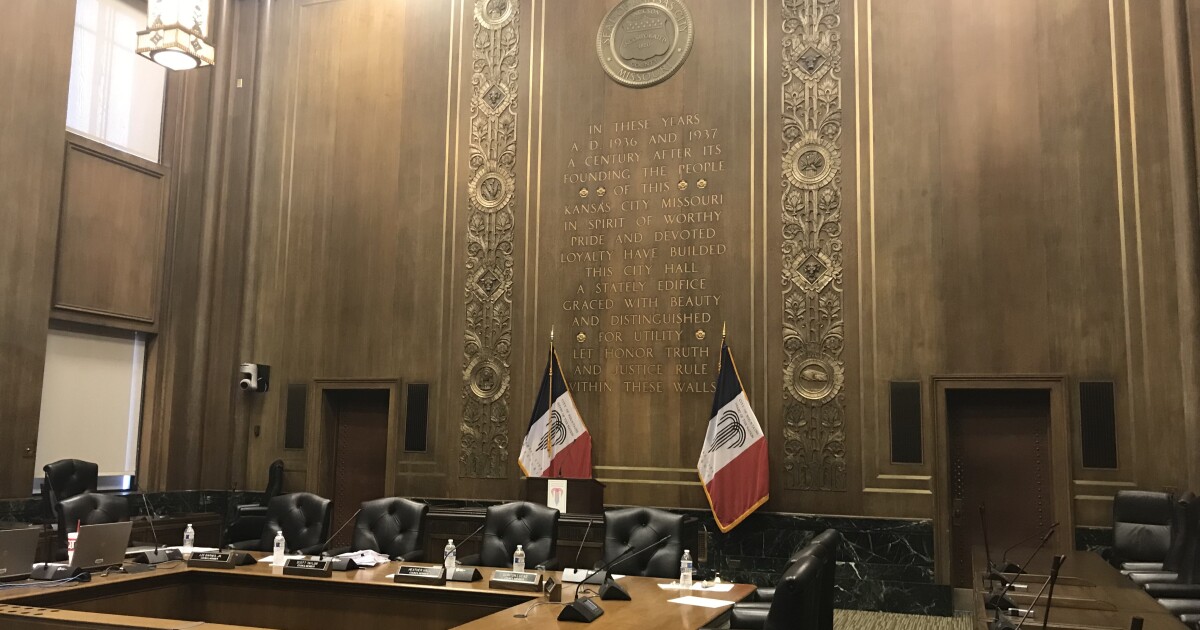
Kansas City, Missouri, City Council voted Thursday to approve the city’s $2.6 billion budget for 2026-27

‘Hannah Montana’ Vinyl Returns to Charts Following 20th Anniversary Special

Florida High School Football Rankings: Top 25 teams – Oct. 21

How old is Bo Nix? What to know about Oregon quarterback ahead of 2024 NFL Draft

Cleary's 21 help Le Moyne down Central Connecticut State 69-64 in OT

99th annual Pony Swim held in Virginia

Indiana Members Credit Union announced as new anchor tenant at Bottleworks District

Video: Savannah Guthrie Says She Believes Her Mother Was Taken for Ransom

Stefanik grills University of Michigan leader on lack of audit after string of Chinese national arrests

Photos: More than one million displaced by Israel’s evacuations in Lebanon

DHS shutdown live updates as Senate holds test vote on funding bill

Video: Jury Rules Against Meta and YouTube for Addictive Features
-

 Detroit, MI1 week ago
Drummer Brian Pastoria, longtime Detroit music advocate, dies at 68
-

 Science1 week ago
How a Melting Glacier in Antarctica Could Affect Tens of Millions Around the Globe
-

 Movie Reviews1 week ago
‘Youth’ Twitter review: Ken Karunaas impresses audiences; Suraj Venjaramoodu adds charm; music wins praise | – The Times of India
-

 Sports5 days ago
IOC addresses execution of 19-year-old Iranian wrestler Saleh Mohammadi
-
 Science1 week ago
I had to man up and get a mammogram
-

 New Mexico4 days ago
Clovis shooting leaves one dead, four injured
-

 Texas7 days ago
How to buy Houston vs. Texas A&M 2026 March Madness tickets
-

 Tennessee3 days ago
Tennessee Police Investigating Alleged Assault Involving ‘Reacher’ Star Alan Ritchson