Vermont
How Union Reformers Took Over the Vermont AFL-CIO


Changing the leadership, structure, or functioning of any US labor organization is no easy task. Activists and experts have long argued about whether dysfunctional unions are best reformed from the top down, from the bottom up, or some mix of the two approaches.
For the past sixty-five years, the main locus of union democracy and reform struggles in the United States has been local unions, which hold leadership elections every three years and are closest to the membership. Thousands of rank-and-file workers have campaigned for more militant unionism by running for and winning local office. Some have had the backing of national networks of like-minded dissidents, including Teamsters for a Democratic Union (TDU) and Unite All Workers for Democracy (UAWD), a TDU-inspired reform caucus within the United Auto Workers (UAW). And in recent years, TDU and UAWD supporters even ousted national headquarters officials from their respective unions, resulting in a major contract win for UPS Teamsters and a historic autoworker strike of the Big Three last year.
Very few modern-day reformers have mounted similar challenges to the status quo in city or state labor federations chartered by the national American Federation of Labor and Congress of Industrial Organizations (AFL-CIO). Representing workers from different AFL-CIO affiliates, these central labor councils (CLCs) may be just as bureaucratic or dysfunctional as the individual unions that belong to them. But structurally, most are too far removed from workplace struggles to generate many electoral challenges to incumbent AFL-CIO officials, at the local, regional, or state level.
As a result, there have been few contested elections, like in the Teamsters and UAW, with opposing slates offering alternative programs for their unions. In AFL-CIO leadership votes, officers and executive board members are chosen by convention or council delegates, the same method used by most national unions. The rank and file has little or no say about who runs AFL-CIO bodies. One notable exception has been the Vermont State Labor Council, which represents twenty thousand public and private sector workers and that in 2019 was taken over by reforming leadership.
In the Green Mountain State, due to its small scale, most state AFL-CIO convention delegates are working members or retirees, not full-time officials. Since 2019, they have cast ballots in several hotly contested elections, which resulted in a mandate for change. Most recently, last September, they elected an all-women leadership team to three top officer positions and made thirty-one-year-old Katie Maurice the youngest state AFL-CIO president in the country — and the only one who belongs to the Democratic Socialists of America (DSA). Maurice took over last fall from David Van Deusen, a fellow member of the American Federation of State, County, and Municipal Employees (AFSCME).
In his new book, Insurgent Labor: The Vermont AFL-CIO 2017–2023, Van Deusen describes how a group of local union officers and staff members created a reform faction called “Vermont AFL-CIO United!” five years ago (disclosure: I wrote the introduction for the book). These rank-and-file activists were frustrated by their labor council’s lack of militancy and creativity, plus its inability to aid new organizing, contract campaigns, or strikes.
Fourteen United! candidates got elected in 2019 — taking all the top officer jobs, forming a majority on the executive board and then winning a national AFL-CIO-ordered rerun of the original election. The reformers’ goal was to revitalize a moribund organization through membership education, mobilization, and direct action. They favored greater internal democracy and transparency, independent political action, and more labor support for social and environmental justice.
But inside and outside Vermont, that progressive agenda has proved to be surprisingly controversial. Rather than welcoming and applauding the election results, the national AFL-CIO — then headed by the late Richard Trumka — threatened to remove the reformers from office and put their council under the control of appointed staff members from Washington, DC. As Van Deusen recounts in his book, this trusteeship was averted, and union activists in Vermont have continued to make their state labor council a model for the rest of the nation.
Last fall, a second United! slate won a majority of the seats on the labor council executive board. Van Deusen’s successor, Maurice, hailed the results as an “affirmation of our desire to continue to focus on rank-and-file organizing within the state of Vermont over political lobbying.” New organizing, plus a major affiliation with the long-independent Vermont State Employees’ Association (VSEA), has nearly doubled the state federation’s dues-paying membership since 2019 (although the VSEA did not support the United! candidates last fall and instead backed the building trades slate that lost). Van Deusen reports in Insurgent Labor that state labor council meetings were opened up to all union members, not just elected delegates, and they began to attract their largest turnouts ever. The reformers also worked with building trades unions to pass so-called “responsible contractor ordinances” that require prevailing wages on major public construction projects in multiple Vermont cities and towns.
Vermont became the first state labor federation in the region involved in the “Renew New England Alliance.” This six-state “Green New Deal” coalition is campaigning for the creation of thousands of good union jobs — for workers building affordable housing, installing rooftop solar panels, cleaning up pollution, and slashing the carbon emissions responsible for climate change.
The new leadership’s savvy use of social media, radio shows, and local TV appearances allowed organized labor to reach a bigger nonlabor audience and build stronger relationships with community allies. Within the broader Vermont labor movement, Van Deusen aided rank-and-filers in non-AFL-CIO unions during their fight against a public employee pension cut favored by Republican governor Phil Scott and leaders of the Democrat-controlled state legislature. Labor council organizers used Vermont’s annual May Day rally in Montpelier to build support for the state’s immigrant workers (mainly Latino immigrants employed on dairy farms).
The state AFL-CIO has also been endorsing more third-party candidates for state and local office, hopefully giving Vermont Democrats a much-needed dope slap. “Since 2019, we have strengthened our ties with the Vermont Progressive Party [VPP], which has not only focused on workers’ rights but also championed broader social justice causes, in a political landscape often dominated by powerful corporate interests,” Maurice said. She continued:
The VPP’s role as a party for the working class is not just about rhetoric; it’s about tangible actions. It’s about supporting legislation like the VT PRO Act that would protect the right to organize, about standing up against union-busting tactics, and ensuring that union members have a seat at the policy-making table in Montpelier.
Before his death in August 2021, Trumka had the opportunity to support an exemplary CLC initiative that called attention to the threat of fascism in the United States. In anticipation of then president Donald Trump’s likely rejection of the 2020 election results, Vermont labor council delegates issued a call for “a general strike of all working people in our state” if there was a right-wing coup aimed at keeping Trump in office. AFL-CIO headquarters tried to block any discussion of such a contingency plan in response to a possible constitutional crisis (of the sort that might have occurred on January 6, 2021). After Vermont labor leaders debated the subject anyway, Trumka ordered an official probe of their alleged noncompliance with national AFL-CIO rules applying to local affiliates. In response, then state fed president Van Deusen urged AFL-CIO headquarters to investigate
how the example we are setting in the Green Mountain State could serve as a model for what a more engaged, more member-driven, more democratic, more anti-racist, more pro-immigrant and more organizing centered labor movement . . . could actually look like in other parts of the country.
This tug-of-war had a happy ending, temporarily. Vermont labor reformers got a “final warning” from Trumka shortly before his death, but none were removed and replaced by appointees from Washington, DC. Under Trumka’s successor, Liz Shuler, the national organization restarted its organizing subsidy to the Vermont State Labor Council, and relations with the national AFL-CIO took a welcome turn for the better — until last month.
In a January 22 letter, President Shuler informed the council’s new officers and executive board that she was investigating last fall’s “election process” based on a “protest appeal” filed by an affiliated union. She also directed them to “refrain from any discussion of the investigation . . . with the general public or entities and individuals not affiliated with the Labor Council.”
This attempted gag order is directed at United! supporters who have, in past internal disputes, tried to enlist allies on the AFL-CIO national executive board or keep labor media outlets informed about interference from Washington. Their impressive record of internal democracy and worker engagement should be a source of inspiration for trade unionists elsewhere, not an invitation to further harassment and meddling from headquarters.
Yet this new controversy underlines one of Van Deusen’s main messages in Insurgent Labor: the prospects for making real change rest in the hands of grassroots union activists. To meet the challenges facing Vermont workers, Van Deusen and his reform caucus built on the best of organized labor at the local and state level. They didn’t wait for instructions from the national AFL-CIO, which has consistently been a foe of bottom-up change in Vermont.



![~!@[WATCHLIVE!TV]>> NOW New Mexico United vs Colorado Springs Switchbacks FC Match 𝐋𝐈𝐕𝐄 Free Streams ON Tv Channel](https://i2.wp.com/unicornriot.ninja/wp-content/uploads/2018/09/LiveChannel334x212v2.png?w=400&resize=400,240&ssl=1 "~!@[WATCHLIVE!TV]>> NOW New Mexico United vs Colorado Springs Switchbacks FC Match 𝐋𝐈𝐕𝐄 Free Streams ON Tv Channel")
![~!@[WATCHLIVE!TV]>> NOW New Mexico United vs Colorado Springs Switchbacks FC Match 𝐋𝐈𝐕𝐄 Free Streams ON Tv Channel](https://i2.wp.com/unicornriot.ninja/wp-content/uploads/2018/09/LiveChannel334x212v2.png?w=80&resize=80,80&ssl=1 "~!@[WATCHLIVE!TV]>> NOW New Mexico United vs Colorado Springs Switchbacks FC Match 𝐋𝐈𝐕𝐄 Free Streams ON Tv Channel")

WARREN, Vt. (WCAX) – Vermont State Police are investigating the death of a skier at Sugarbush Resort.
Police were notified at about 3:26 p.m. Saturday that a skier had died following a fall on Stein’s Run at Sugarbush Lincoln Peak.
The male victim fell and slid into a wooded area off the trail, according to police.
Ski patrol members found the man unresponsive and brought him to the base of the mountain, where they were met by the Mad River Valley Ambulance. The victim was pronounced dead due to his injuries.
Police say the death does not appear suspicious. An autopsy will be performed at the Office of the Chief Medical Examiner in Burlington to determine the cause and manner of death.
The victim’s name is being withheld pending notification of next of kin.
Copyright 2026 WCAX. All rights reserved.

Thousands of Vermonters took to the streets Saturday, condemning the actions and policies of President Donald Trump in peaceful protests at dozens of locations.
They lined up on Main Street in Newport and on Creamery Row in Hardwick, on the village green in Fair Haven and in towns from Burlington to Brattleboro. In all, around 50 “No Kings” demonstrations were held.
Nina Keck
/
Vermont Public
Saturday to show his anger at the Trump Administration. “We have a war that we’re not supposed to be in, we have a president who does nothing but lie… I am just fed up,” said Revell.
Castleton resident Robert Revell stood along Route 7 in Rutland with hundreds of others.
“I’m just so angry,” said Revell, who held a three dimensional sign that incorporated a blow-up planet Earth with words below that read “Mother DEMANDS NO kings, no pedos and no liars.”
“We have a war that we’re not supposed to be in, we have a president who does nothing but lie,” he said. “I am just fed up. I’m 73 in a couple weeks and I lived through the Nixon thing and I’m just here to protest and share my heart.”
Around him, throngs of people, many in costume, lined several blocks along Route 7 waving flags and handmade signs. Some rang cow bells or thumped tambourines. Many passing motorists responded with staccato horn blasts.
Nationwide, more than 3,000 protests were planned for Saturday in large cities and small towns. They have been organized by national and local groups, including well-known progressive coalitions such as Indivisible, 50501 and MoveOn.

Nina Keck
/
Vermont Public
“For me, it boils down to the cruelty I’m seeing in the world right now,” said Hannah Abrams, of Mendon. “I think that our president instills a lot of cruelty among the people he doesn’t like. And actually for the people who do vote for him too, because they’re not any better off with him in office.”
“There are a lot of people who say this is not America,” Abrams added. “And I would like to say, it’s exactly America, it’s just targeting different people now … Sadly, this is not new.”

Nina Keck
/
Vermont Public
Mary Jane Demko, 89, of Rutland, showed up to her local protest in a wheelchair driven by her daughter, Stephanie Brush. Demko carried a sign on her lap that read “IMPEACH THE SOB!”
“I couldn’t stay in and not be part of this,” Demko said. “He’s too evil.”
Karen Lorentz of Shrewsbury said she too couldn’t stay away. At 80, she said Saturday’s event in Rutland was her first protest. She held a handmade sign she said a friend had helped her make.
“I’m really old and when the Vietnam War was on I was a new teacher and I didn’t have time,” she said. “But I felt strongly that I needed to be here today.”
Powerball, Mega Millions jackpots: What to know in case you win
Here’s what to know in case you win the Powerball or Mega Millions jackpot.
Just the FAQs, USA TODAY
The Vermont Lottery offers several draw games for those willing to make a bet to win big.
Those who want to play can enter the MegaBucks and Lucky for Life games as well as the national Powerball and Mega Millions games. Vermont also partners with New Hampshire and Maine for the Tri-State Lottery, which includes the Mega Bucks, Gimme 5 as well as the Pick 3 and Pick 4.
Drawings are held at regular days and times, check the end of this story to see the schedule.
Here’s a look at March 27, 2026, results for each game:
Winning Vermont Mega Millions numbers from March 27 drawing
13-27-28-41-62, Mega Ball: 16
Check Vermont Mega Millions payouts and previous drawings here.
Winning Gimme 5 numbers from March 27 drawing
05-10-18-38-39
Check Gimme 5 payouts and previous drawings here.
Winning Pick 3 numbers from March 27 drawing
Day: 0-0-8
Evening: 7-6-3
Check Pick 3 payouts and previous drawings here.
Winning Pick 4 numbers from March 27 drawing
Day: 3-5-4-1
Evening: 9-5-7-6
Check Pick 4 payouts and previous drawings here.
Winning Millionaire for Life numbers from March 27 drawing
06-09-28-33-46, Bonus: 04
Check Millionaire for Life payouts and previous drawings here.
Feeling lucky? Explore the latest lottery news & results
Are you a winner? Here’s how to claim your lottery prize
For Vermont Lottery prizes up to $499, winners can claim their prize at any authorized Vermont Lottery retailer or at the Vermont Lottery Headquarters by presenting the signed winning ticket for validation. Prizes between $500 and $5,000 can be claimed at any M&T Bank location in Vermont during the Vermont Lottery Office’s business hours, which are 8a.m.-4p.m. Monday through Friday, except state holidays.
For prizes over $5,000, claims must be made in person at the Vermont Lottery headquarters. In addition to signing your ticket, you will need to bring a government-issued photo ID, and a completed claim form.
All prize claims must be submitted within one year of the drawing date. For more information on prize claims or to download a Vermont Lottery Claim Form, visit the Vermont Lottery’s FAQ page or contact their customer service line at (802) 479-5686.
Vermont Lottery Headquarters
1311 US Route 302, Suite 100
Barre, VT
05641
When are the Vermont Lottery drawings held?
- Powerball: 10:59 p.m. Monday, Wednesday, and Saturday.
- Mega Millions: 11 p.m. Tuesday and Friday.
- Gimme 5: 6:55 p.m. Monday through Friday.
- Lucky for Life: 10:38 p.m. daily.
- Pick 3 Day: 1:10 p.m. daily.
- Pick 4 Day: 1:10 p.m. daily.
- Pick 3 Evening: 6:55 p.m. daily.
- Pick 4 Evening: 6:55 p.m. daily.
- Megabucks: 7:59 p.m. Monday, Wednesday and Saturday.
- Millionaire for Life: 11:15 p.m. daily
What is Vermont Lottery Second Chance?
Vermont’s 2nd Chance lottery lets players enter eligible non-winning instant scratch tickets into a drawing to win cash and/or other prizes. Players must register through the state’s official Lottery website or app. The drawings are held quarterly or are part of an additional promotion, and are done at Pollard Banknote Limited in Winnipeg, MB, Canada.
This results page was generated automatically using information from TinBu and a template written and reviewed by a Vermont editor. You can send feedback using this form.

Al Manuel Invite: Montana State’s Tilde Bjerager shatters mark; Montana breaks 5 records

No. 24 Nebraska wins slugfest over Indiana

Thousands without power in Henderson neighborhood after mylar balloon causes outage

Pakistan hosts diplomatic discussions on ending war

Who is running for U.S. House, Senate in New Jersey? Here’s the list

Florida High School Football Rankings: Top 25 teams – Oct. 21

How old is Bo Nix? What to know about Oregon quarterback ahead of 2024 NFL Draft

Cleary's 21 help Le Moyne down Central Connecticut State 69-64 in OT

99th annual Pony Swim held in Virginia

Indiana Members Credit Union announced as new anchor tenant at Bottleworks District

JD Vance says he was ‘obsessed’ with UFOs, believes aliens are actually ‘demons’
The EU's recipe for trade deals : easy on beef, tough on wine
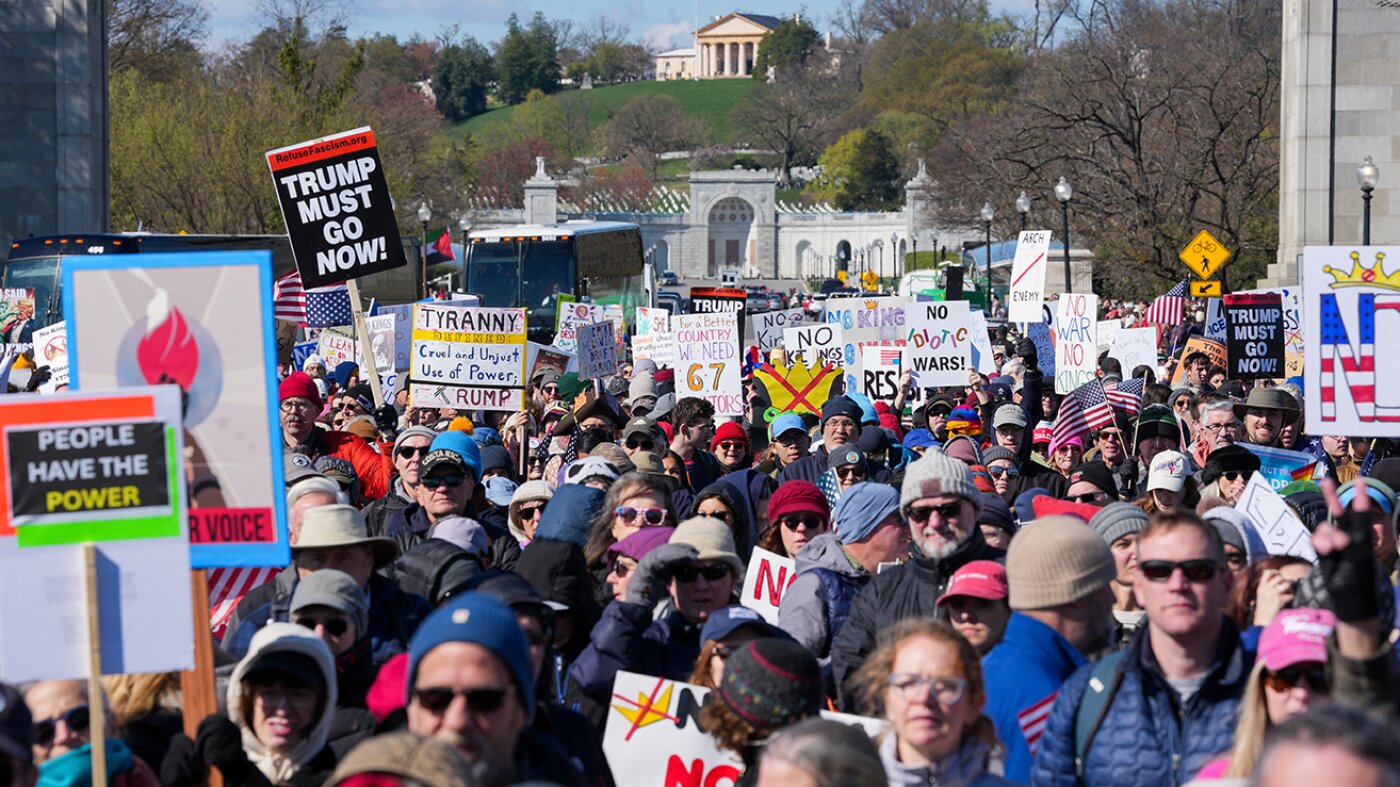
Photos: ‘No Kings’ protests across the country

Jeffries declines to break with indicted Democrat after ethics panel’s guilty verdict

Hundreds of thousands march through London in stand against the far right
-

 Sports1 week ago
IOC addresses execution of 19-year-old Iranian wrestler Saleh Mohammadi
-

 New Mexico7 days ago
Clovis shooting leaves one dead, four injured
-

 Tennessee6 days ago
Tennessee Police Investigating Alleged Assault Involving ‘Reacher’ Star Alan Ritchson
-

 Technology7 days ago
YouTube job scam text: How to spot it fast
-

 Minneapolis, MN3 days ago
Boy who shielded classmate during school shooting receives Medal of Honor
-

 Science1 week ago
Record Heat Meets a Major Snow Drought Across the West
-

 Politics1 week ago
Schumer gambit fails as DHS shutdown hits 36 days and airport lines grow
-

 Texas1 week ago
How to buy Houston vs. Texas A&M 2026 March Madness tickets