Vermont
Grace Cottage Hospital pushes back on restructuring report


About 100 people showed up to a community meeting in Townshend on Thursday to show support for Grace Cottage Hospital, the smallest hospital in the state.
Grace Cottage was one of the four hospitals specifically cited in a recent statewide report that calls for a major restructuring of Vermont’s hospital system.
The report says Grace Cottage should consider shifting all of its inpatient beds to mental health, geriatric psychiatry or memory care, and close down its emergency department, utilizing the beds at Brattleboro Memorial Hospital, which is about 20 miles away.
But at the meeting Thursday, Grace Cottage CEO Olivia Sweetnam said the hospital was not interested in voluntarily accepting the report’s suggestions.
“These are recommendations, not mandates,” Sweetnam said. “Green Mountain Care Board, [Agency of Human Services], does not have the ability to say, ‘You are now a psychiatric facility.’”
More from Vermont Public: How can Vermont’s next Legislature, governor mend a broken health care system?
The report was commissioned by the Legislature to address years of financial losses among the state’s hospitals, and to “reduce inefficiencies, lower costs, improve population health outcomes, reduce health inequities and increase access to essential services.”
These are recommendations, not mandates. Green Mountain Care Board, AHS, does not have the ability to say, “You are now a psychiatric facility.”
Olivia Sweetnam, CEO, Grace Cottage Hospital
Grace Cottage Hospital was one of four hospitals — along with Gifford Medical Center in Randolph, North Country Hospital in Newport and Springfield Hospital — the report named as being at risk due to their minimal growth potential and poor financial position.
The author of the report admitted recently that some of the data was inaccurate, and so far all of the hospitals have been pushing back on the report’s conclusions.
More from Vermont Public: About 200 Vermonters showed up at a meeting to say they want Newport’s hospital to stay
“I think it appeared clear to everyone that these were kind of copy-and-paste recommendations,” Sweetnam said. “The major restructuring group kind of got the same recommendations across the board.”
Howard Weiss-Tisman
/
Vermont Public
Sweetnam admitted that Grace Cottage Hospital loses money every year, and the hospital only stays afloat due to local donations, which are by far the most in the state as a percentage of the hospital’s total budget.
Local donations made up about 8% of the hospital’s revenue in 2023.
A number of former patients spoke up at the meeting about the importance of having Grace Cottage in the West River Valley.
If we cut back those hours and have a medical emergency, and can’t come here, it could be 40 or 45 minutes to get to Brattleboro. So as a person who’s been served by your emergency department, I’m really concerned about that. That could cost a life.
Bill Dunkel, Windham resident
“If we have a medical emergency, a life-threatening emergency, it’s possible to get to Grace Cottage in 20 minutes, maybe a little bit less,” said Bill Dunkel, who lives in nearby Windham. “If we cut back those hours and have a medical emergency, and can’t come here, it could be 40 or 45 minutes to get to Brattleboro. So as a person who’s been served by your emergency department, I’m really concerned about that. That could cost a life.”
The Agency of Human Services, which will lead the restructuring efforts, is planning an online public meeting to discuss the hospital report.
More: Start here if you care about health care in Vermont’s 2024 election
Have questions, comments or tips? Send us a message.



Initial filings for unemployment benefits in Vermont rose last week compared with the week prior, the U.S. Department of Labor said Thursday.
New jobless claims, a proxy for layoffs, increased to 375 in the week ending February 21, up from 357 the week before, the Labor Department said.
U.S. unemployment claims rose to 212,000 last week, up 4,000 claims from 208,000 the week prior on a seasonally adjusted basis.
Rhode Island saw the largest percentage increase in weekly claims, with claims jumping by 132.0%. Michigan, meanwhile, saw the largest percentage drop in new claims, with claims dropping by 49.9%.
USA TODAY Co. is publishing localized versions of this story on its news sites across the country, generated with data from the U.S. Department of Labor’s weekly unemployment insurance claims report.

The 2025-2026 Vermont high school winter season has begun. See below for scores, schedules and game details (statistical leaders, game notes) from basketball, hockey, gymnastics, wrestling, Nordic/Alpine skiing and other winter sports.
TO REPORT SCORES
Coaches or team representatives are asked to report results ASAP after games by emailing sports@burlingtonfreepress.com. Please submit with a name/contact number.
▶ Contact Alex Abrami at aabrami@freepressmedia.com. Follow him on X, formerly known as Twitter: @aabrami5.
▶ Contact Judith Altneu at JAltneu@usatodayco.com. Follow her on X, formerly known as Twitter: @Judith_Altneu.
THURSDAY’S H.S. GAMES (REGULAR SEASON)
Boys basketball
Games at 7 p.m. unless noted
Peoples at North Country, 6:30 p.m.
Northfield at Stowe
Hazen at U-32
Oxbow at BFA-Fairfax
Winooski at Middlebury
Watch Vermont high school games on NFHS Network
Mount Mansfield at South Burlington
Essex at St. Johnsbury
BFA-St. Albans at Colchester
Lamoille at Spaulding
Lyndon at Harwood
Williamstown at Twinfield/Cabot
Rice at Champlain Valley
Randolph at Montpelier
Lake Region at Thetford
(Subject to change)

BURLINGTON, Vt. (WCAX) – The historic ‘Blizzard of 2026′ brought a winter’s worth of snowfall to Southern New England, especially Rhode Island and southeastern Massachusetts area. Both states including New Jersey had snowfall totals that surpassed each respective state’s 24-hour snowfall record. Vermont on the other hand, too far north of the storm only received a fraction of the amount of snow.
HIGHEST SNOWFALL REPORTS BY STATE FROM BLIZZARD 2026:
- RHODE ISLAND 37.9″ (Warwick)
- MASSACHUSETTS 37.0″ (Bliss Corner)
- NEW YORK 31.0″ (Central Islip)
- CONNECTICUT 30.8″ (North Stonington)
- NEW JERSEY 30.7″ (Lyndhurst)
- PENNSYLVANIA 22.1″ (Langhorne)
- DELAWARE 21″ (Long Neck)
- MARYLAND 16″ (Bishopville)
- VIRGINIA 15″ (Wintergreen)
- MAINE 12″ (Trescott)
- NEW HAMPSHIRE 9.8″ (Barrington)
- VERMONT 6.8″ (Readsboro)
In northern Vermont, Burlington only received a few flakes from this historic nor’easter. Despite that, Burlington’s seasonal snowfall to date still ranks in the top ten across the eastern United States.
Current seasonal snowfall total rankings in the Eastern United States as of February 24th, 2026:
- Mt. Washington NH, 188.2″
- Syracuse NY, 130.4″
- Rochester NY, 105.4″
- Buffalo NY, 85.8″
- Milton MA, 77.7″
- Worcester MA, 75.4″
- Burlington VT, 71.4″
- Erie PA, 69.0″
- Caribou ME ,68.1″
- Warwick RI, 67.8″
- Binghamton NY, 66.4″
- Norton MA, 66.1″
- Boston MA, 60.4″
- Bangor ME, 59.9″
- Islip NY, 59.5″
- Gray NH, 58.7″
- Manchester NH, 57.3″
- Albany NY, 54.8″
- Bridgeport CT, 54.6″
- Newark NJ, 53.4″
- Youngstown OH, 51.9″
- Windsor Locks CT, 51.0″
- Portland ME, 50.9″
- Cleveland OH, 49.1″
- Concord NH, 48.5″
- Bluefield WV, 47.3″
- Akron Canton OH, 45.4″
- Beckley WV, 44.7″
- NYC/JFK AP NY, 44.2″
- NYC/LaGuardia NY, 44.3″
- Pittsburgh PA, 43.6″
- Trenton-Ewing NJ, 43.4″
- NYC/Central Park NY, 42.0″
- Avoca PA, 36.9″
- Dayton OH, 36.7″
- Allentown PA, 35.5″
- Columbus OH, 30.2″
- Philadelphia PA ,30.0″
- Covington KY, 29.1″
- Toledo OH, 28.8″
- Mansfield OH, 28.7″
- Pomona NJ, 26.1″
- Charleston WV, 25.5″
- Reading PA, 24.3″
- Wilmington DE, 24.0″
- Middletown PA, 23.8″
- Blacksburg VA, 21.8″
- Williamsport PA, 19.0″
- Huntington WV, 16.1″
- Baltimore MD (BWI), 15.6″
- Salisbury MD, 14.8″
- Roanoke VA, 13.8″
- Wallops Island VA, 13.5″
- New Bern NC, 13.0″
- Danville VA, 12.8″
- Dulles VA, 12.6″
- Greensboro NC, 12.5″
- Charlotte NC, 12.2″
- Lynchburg VA, 11.8″
- Richmond VA, 11.0″
- Washington DC, 9.6″
- Elizabeth City NC, 6.9″
- Wilmington NC, 5.8″
- Norfolk VA, 5.6″
- Greer SC, 5.5″
- Asheville NC, 5.4″
- Raleigh NC, 3.6″
- Augusta GA, 3.5″
- Columbia SC, 2.9″
- North Charleston SC, 1.1″
- Cape Hatteras NC, 0.8″
- Savannah GA, 0.5″
Copyright 2026 WCAX. All rights reserved.

Video: Pakistan Launches Airstrikes on Afghanistan

Video: The Web of Companies Owned by Elon Musk
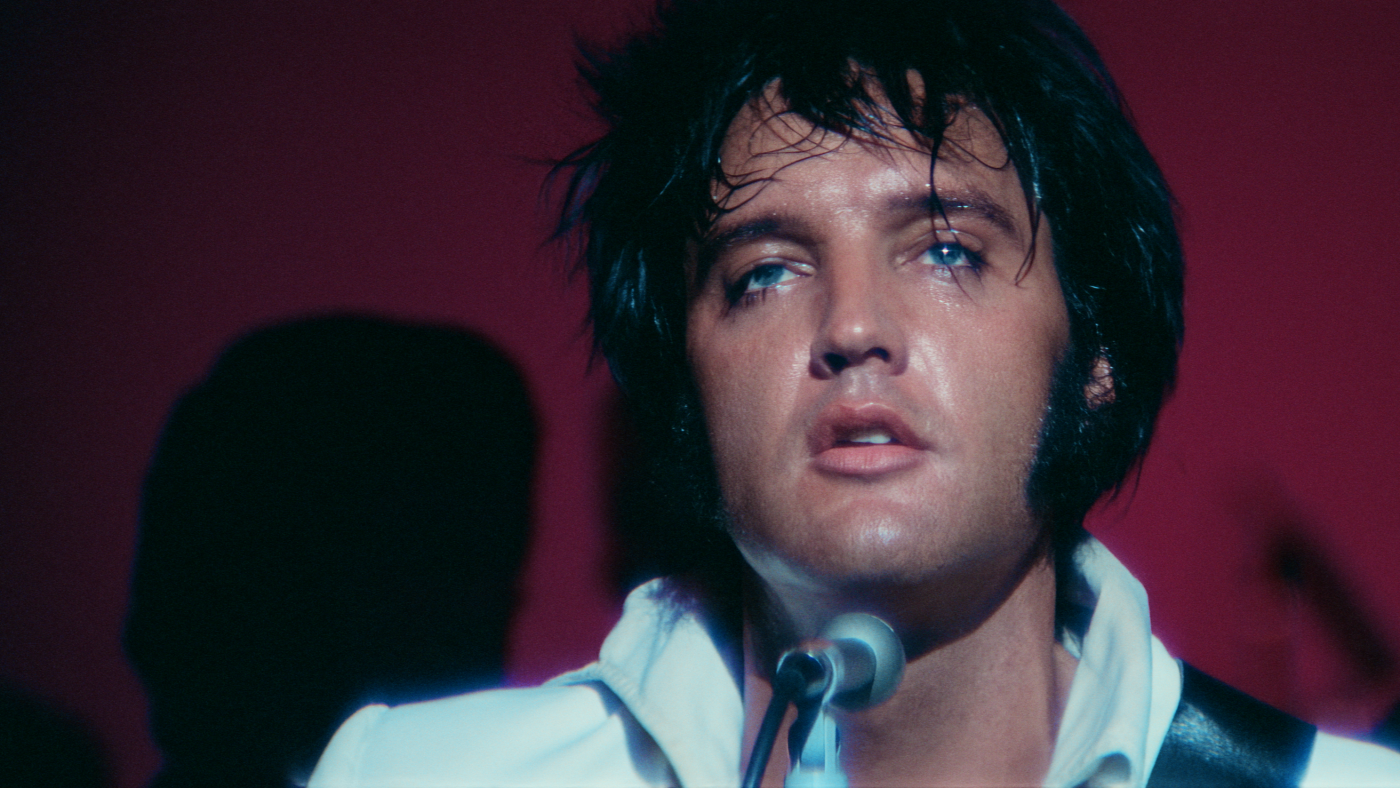
Baz Luhrmann will make you fall in love with Elvis Presley

Here’s your first look at Kratos in Amazon’s God of War show

State Dept authorizes non-essential US Embassy personnel in Jerusalem to depart ahead of possible Iran strikes

Florida High School Football Rankings: Top 25 teams – Oct. 21

Cleary's 21 help Le Moyne down Central Connecticut State 69-64 in OT

How old is Bo Nix? What to know about Oregon quarterback ahead of 2024 NFL Draft

99th annual Pony Swim held in Virginia

Indiana Members Credit Union announced as new anchor tenant at Bottleworks District

Where Iran’s ballistic missiles can reach — and how close they are to the US

Has India’s influence in Afghanistan grown under the Taliban?

Bill Clinton to testify before House committee investigating Epstein links

Read Judge Schiltz’s Order

Vulnerable House Dem lashes out at Trump’s ‘racist’ SOTU challenge: ‘That was uncomfortable’
-

 World2 days ago
Exclusive: DeepSeek withholds latest AI model from US chipmakers including Nvidia, sources say
-

 Massachusetts2 days ago
Mother and daughter injured in Taunton house explosion
-

 Montana1 week ago
2026 MHSA Montana Wrestling State Championship Brackets And Results – FloWrestling
-

 Oklahoma1 week ago
Wildfires rage in Oklahoma as thousands urged to evacuate a small city
-

 Louisiana4 days ago
Wildfire near Gum Swamp Road in Livingston Parish now under control; more than 200 acres burned
-

 Technology6 days ago
YouTube TV billing scam emails are hitting inboxes
-

 Denver, CO2 days ago
10 acres charred, 5 injured in Thornton grass fire, evacuation orders lifted
-

 Technology6 days ago
Stellantis is in a crisis of its own making