Sign up for the Today newsletter
Get everything you need to know to start your day, delivered right to your inbox every morning.

BETHEL PARK, Pa. — FBI Director Christopher Wray revealed on Wednesday that Thomas Crooks’ family had more than a dozen firearms in their Pennsylvania home and that father Matthew Crooks legally sold his son the weapon that the 20-year-old would use in his assassination attempt on former President Trump.
“We located a number of firearms associated with the shooter and his family,” Wray told the House Judiciary Committee. “I think it was a total of … 14 in the house.”
“The weapon that he used for the attempted assassination was an AR-style rifle that was purchased legally,” Wray said. “We believe, based on what we’ve seen, that his father, after purchasing the gun, legally sold the gun to his son.”
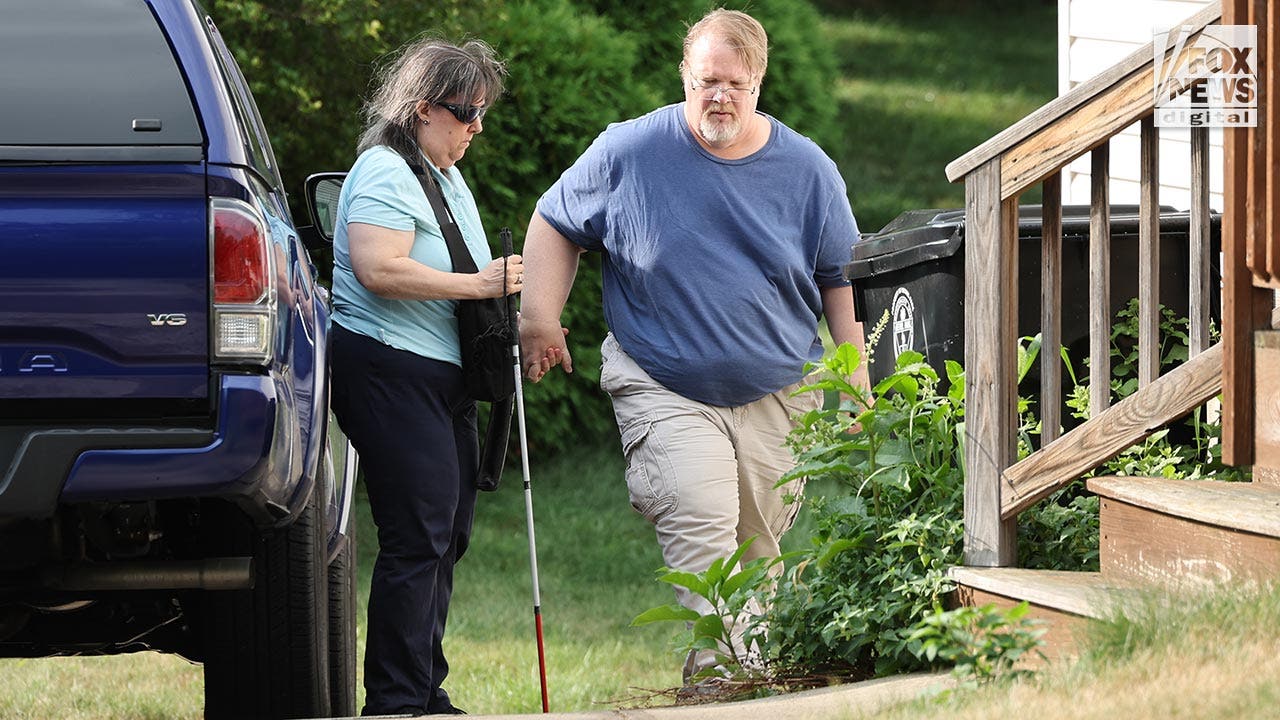
This revelation came on the same day that Mary Crooks, the mother of the would-be Trump assassin, was pictured outside for the first time since her son opened fire at the rally in Butler.
The gunman’s mother, who is blind, was guided by her husband from their blue Toyota Tacoma into their Bethel Park home around 7 p.m. on Wednesday. Matthew Crooks opened her car door for her and held her hand as they entered the house.
TRUMP SHOOTING: TIMELINE OF ASSASSINATION ATTEMPT RAISES QUESTIONS ABOUT HOW GUNMAN EVADED SECURITY
The younger Crooks was a “fairly avid shooting enthusiast,” Wray said during Wednesday’s testimony.
In addition to the AR-15 and magazines for the rifle, a bulletproof vest and “crude” explosive devices that could be detonated remotely were found in Crooks’ car after he was shot dead by a Secret Service sniper, Wray said.
The FBI director said the agency is still searching for a manifesto or other clues that could determine the 20-year-old Crooks’ motive for the attack that nearly killed Trump, injured two rallygoers and killed retired volunteer fire chief Corey Comperatore on July 13. He added that the bureau’s behavioral analysis unit was assembling a profile of the shooter.
DETAILS ABOUT HOW TRUMP SHOOTER SCALED BUTLER RALLY ROOF EMERGE IN FBI DIRECTOR CHRISTOPHER WRAY’S TESTIMONY
Thomas Matthew Crooks (Handout via AFP)
TRUMP SHOOTER WAS NOT ONLY SUSPICIOUS PERSON AT BUTLER RALLY: PENNSYLVANIA STATE POLICE COMMISSIONER
The FBI has conducted more than 400 interviews in their investigation of the shooting. Typically, the FBI does not discuss ongoing investigations, but Wray said on Tuesday that “the attempted assassination of the former president was an attack on our democracy” and that he “recognize[d] the congressional and public interest in this case.”
The gunman’s father told reporters this week that his family was not ready to comment on their son’s actions.
Matthew Crooks leaves a supermarket in Bethel Park, Pennsylvania, on July 22, 2024. (Derek Shook for Fox News Digital)
“We’re going to release a statement when our legal counsel advises us to do so. Until then, we have no comment,” he told Fox News Digital before beginning to load groceries into his vehicle outside a Shop ‘n Save near the family’s home. “We just want to try to take care of ourselves right now. Please, just give us our space.”
Read the full article from Here

NEWYou can now listen to Fox News articles!
GOT A SCOOP ON CAMPUS? SEND US A TIP HERE
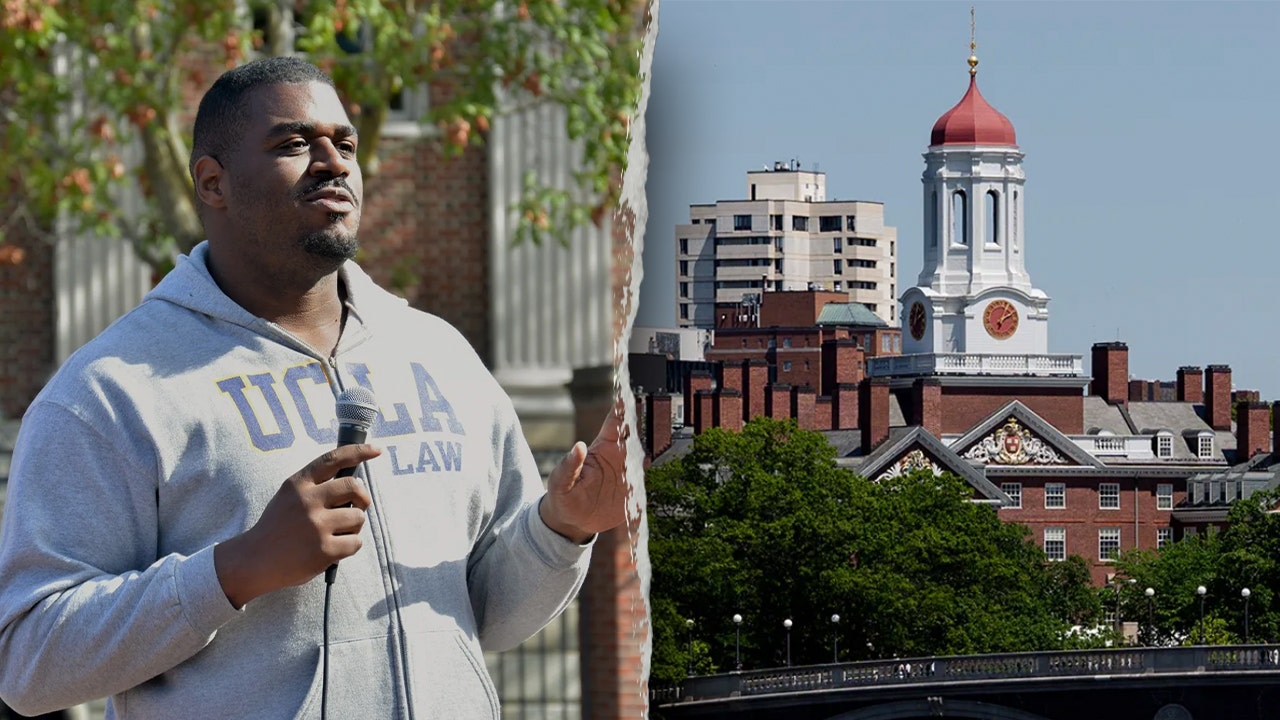
A Harvard University dean has been removed after a student-run news outlet exposed social media posts slamming Whiteness, police and advocating for looting and rioting.
Gregory Davis, the former Dunster House Allston Burr resident dean, found himself in the hot seat after a Harvard student-run news outlet called Yard Report resurfaced the problematic posts. Davis was on leave last semester for reasons unrelated to the controversy.
While Harvard did not confirm that Davis was removed for the inflammatory posts, Fox News Digital obtained the text from an email sent by the faculty deans of Dunster House confirming Davis’ removal.
“We are writing to confirm that Gregory Davis is no longer serving as the Allston Burr Resident Dean of Dunster House, effective today,” the email said. “We thank Gregory for serving in this role and wish him and his family the best in their future endeavors.”
Dunster House along the Charles River on the Harvard University campus in Cambridge, Massachusetts, on Tuesday, May 27, 2025. (Sophie Park/Bloomberg via Getty Images)
40-YEAR HARVARD PROFESSOR PENS SCATHING PIECE ON SCHOOL’S ‘EXCLUSION OF WHITE MALES,’ ANTI-WESTERN TRENDS
The email message also announced that Emilie Raymer, who served as interim dean during Davis’ absence, would take over the role full time.
“We look forward to seeing everyone again in the coming weeks,” the email said. “As always, we welcome hearing from you on any issues affecting the Dunster community.”
The posts in question were made between 2019 and 2024, mostly on X but also on Instagram. Davis became the dean of the dormitory in 2024.
HARVARD ALUM BLASTS DEI POLICIES AFTER ‘WOKE’ VALUES DRIVE LONGTIME PROFESSOR’S EXIT
“It’s almost like Whiteness is a self-destructive ideology that annihilates everyone around it. By design,” he said on X in 2019.
During 2020, when tensions between police and left-wing rioters reached a fever pitch after George Floyd was killed, Davis slammed police.
An AutoZone store burns as protesters gather outside of the Third Precinct in Minneapolis on Thursday, May 28, 2020, in the days after George Floyd’s death. (Mark Vancleave/Star Tribune via AP)
“You should ask your cop friends to resign since they’re racist and evil,” he said on X at the time.
As rioters and looters wreaked havoc in major metropolitan areas nationwide, Davis defended the chaos.
“Something to keep in mind: rioting and looting are parts of democracy just like voting and marching,” he said on X. “The people WILL be heard.”
In the same year, around the time President Donald Trump tested positive for COVID-19, Davis said on X that he didn’t blame people who wished Trump ill. He followed that post with a second, captioned “But also, f— that guy,” attaching a meme that said “If he dies, he dies.”
STATE DEPARTMENT PROPOSING CUTTING RESEARCH TIES WITH DOZENS OF UNIVERSITIES OVER DEI HIRING PRACTICES: REPORT
Just before Davis accepted his role as dean of the Dunster House in 2024, he made a post about Pride Month on Instagram.
“Wishing everyone a great Pride. Remember to love each other and hate the police,” the post said.
When confronted with the posts, Davis wrote to Dunster House residents in an email about the scandal, which was obtained by Fox News Digital.
Demonstrators gather on Cambridge Common to protest Harvard’s stance on the war in Gaza and show support for the Palestinian people, outside Harvard University in Cambridge, Massachusetts, April 25, 2025. (JOSEPH PREZIOSO/AFP via Getty Images)
CLICK HERE TO DOWNLOAD THE FOX NEWS APP
“Recently, some media organizations have inquired regarding comments that I made on my personal social media accounts prior to my start in the Resident Dean role,” he wrote. “These posts do not reflect my current thinking or beliefs. I deeply appreciate the responsibility inherent in the Resident Dean role and I value the trust that individuals have placed in me. I regret if my statements have any negative impact on the Dunster community.”
“Since becoming the Allston Burr Resident Dean, I have worked hard to ensure that Dunster House is a welcoming, warm and supportive space for all of its members,” the message continued. “That continues to be the guiding force of my work today. As events outside of Harvard have affected our House and me personally, my commitment to each of you, our students, has not wavered. In my role, I have enjoyed the opportunity to work collaboratively with members of HUPD and other colleagues across campus. I respect the work they do to support our community.”
Davis did not return a request for comment.
Read the full article from Here

new video loaded: Hochul and Mamdani Announce Plan for Universal Child Care
transcript
transcript
“Today, we’re working together with the mayor at this incredible place to announce the first major steps to make child care universal — truly universal — here in New York City, transforming the lives of children and parents all across the state.” “We will build on the city’s existing three-K program, and say, no longer will a family in Flatbush be offered a seat, but have to find out that seat is in Astoria. We will add seats in the neighborhoods where demand has not been met. This will be felt by expanded subsidies for tens of thousands of additional families. It will be felt when parents look at their bank accounts at the end of the year, and see that they have saved more than $20,000 per child.” “And today, I’m proud to announce that New York State is paying the full cost to launch 2-care. For the first time — universal daycare for 2-year-olds, as proposed by Mayor Mamdani. We’re not just paying for one year of the program. We don’t usually go one year out in our budget, but just to let you know how serious we are, we’re taking the unprecedented step to not just commit for the 2027 budget, which I’m working on right now, but also the following year as well to show you we’re in this for the long haul.”
By Meg Felling
January 8, 2026

Local News
A Boston nightclub where a woman collapsed on the dance floor and died last month will have its entertainment license reinstated after the Boston Licensing Board found no violations Thursday.
Anastaiya Colon, 27, was at ICON, a nightclub in Boston’s Theater District, in the early hours of Dec. 21 when she suffered a fatal medical episode. Following the incident, her loved ones insisted that the club’s staff did not respond professionally and failed to control crowds.
City regulators suspended ICON’s entertainment license pending an assessment of any potential violations. During a hearing Tuesday, they heard from attorneys representing the club and people who were with Colon the night she died.

As EMTs attempted to respond, crowds inside the club failed to comply with demands to give them space, prompting police to shut down the club, according to a police report of the incident. However, the club and its representatives were adamant that staff handled their response and crowd control efforts properly.
Kevin Montgomery, the club’s head of security, testified that the crowd did not impede police or EMTs and that he waited to evacuate the club because doing so would have created a bottleneck at the entrance. Additionally, a bouncer and a bartender both testified that they interacted with Colon, who ordered one drink before collapsing, and did not see any signs of intoxication.
Angelica Morales, Colon’s sister, submitted a video taken on her phone to the board for them to review. Morales testified Tuesday that the video disproves some of the board’s claims and shows that ICON did not immediately respond to the emergency.
“I ran to the DJ booth, literally bombarded everybody that was in my way to get to the DJ booth, told them to cut the music off,” Morales said. “On my way back, the music was cut off for a minute or two, maybe less, and they cut the music back on.”
Shanice Monteiro, a friend who was with Colon and Morales, said she went outside to flag down police officers. She testified that their response, along with the crowd’s, was inadequate.
“I struggled to get outside,” Monteiro said. “Once I got outside, everybody was still partying, there was no type of urgency. Nobody stopped.”
These factors, along with video evidence provided by ICON, did not substantiate any violations on the club’s part, prompting the licensing board to reinstate their entertainment license at a subsequent hearing Thursday.
“Based on the evidence presented at the hearing from the licensed premise and the spoken testimony and video evidence shared with us from Ms. Colon’s family, I’m not able to find a violation in this case,” Kathleen Joyce, the board’s chairwoman, said at the hearing.
However, Joyce further stated that she “was not able to resolve certain questions” about exactly when or why the club turned off the music or turned on the lights. As a result, the board will require ICON to submit an emergency management plan to prevent future incidents and put organized safety measures in place.
“This plan should outline detailed operational procedures in the event of a medical or any other emergency, including protocols for police and ambulance notification, crowd control and dispersal, and procedures regarding lighting and music during an emergency response,” Joyce said.
Though the club will reopen without facing any violations, Joyce noted that there were “lessons left to be learned” from the incident.
“This tragedy has shaken the public confidence in nightlife in this area, and restoring that confidence is a shared obligation,” she said. “People should feel safe going out at night. They should feel safe going to a club in this area, and they should feel safe getting home.”
Keeana Saxon, one of three commissioners on the licensing board, further emphasized the distinction Joyce made between entertainment-related matters and those that pertained to licensing. Essentially, the deciding factor in the board’s decision was the separation of the club’s response from any accountability they may have had by serving Colon liquor.
“I hope that the family does understand that there are separate procedures for both the entertainment and the licensing, just to make sure that on the licensing side, that we understand that she was only served one drink and that it was absolutely unforeseeable for that one drink to then lead to some kind of emergency such as this one,” Saxon said.
Get everything you need to know to start your day, delivered right to your inbox every morning.


2 hospitalized after shooting on Lodge Freeway in Detroit


Power bank feature creep is out of control


Defensive coordinator candidates who could improve Cowboys’ brutal secondary in 2026


Viral New Year reset routine is helping people adopt healthier habits


Oregon State LB transfer Dexter Foster commits to Nebraska


Pat McAfee praises Audi Crooks, plays hype song for Iowa State star

Nebraska-based pizza chain Godfather’s Pizza is set to open a new location in Queen Creek

Spotify digs in on podcasts with new Hollywood studios