Northeast
Squad member Ayanna Pressley announces decision on challenging Ed Markey in primary

NEWYou can now listen to Fox News articles!
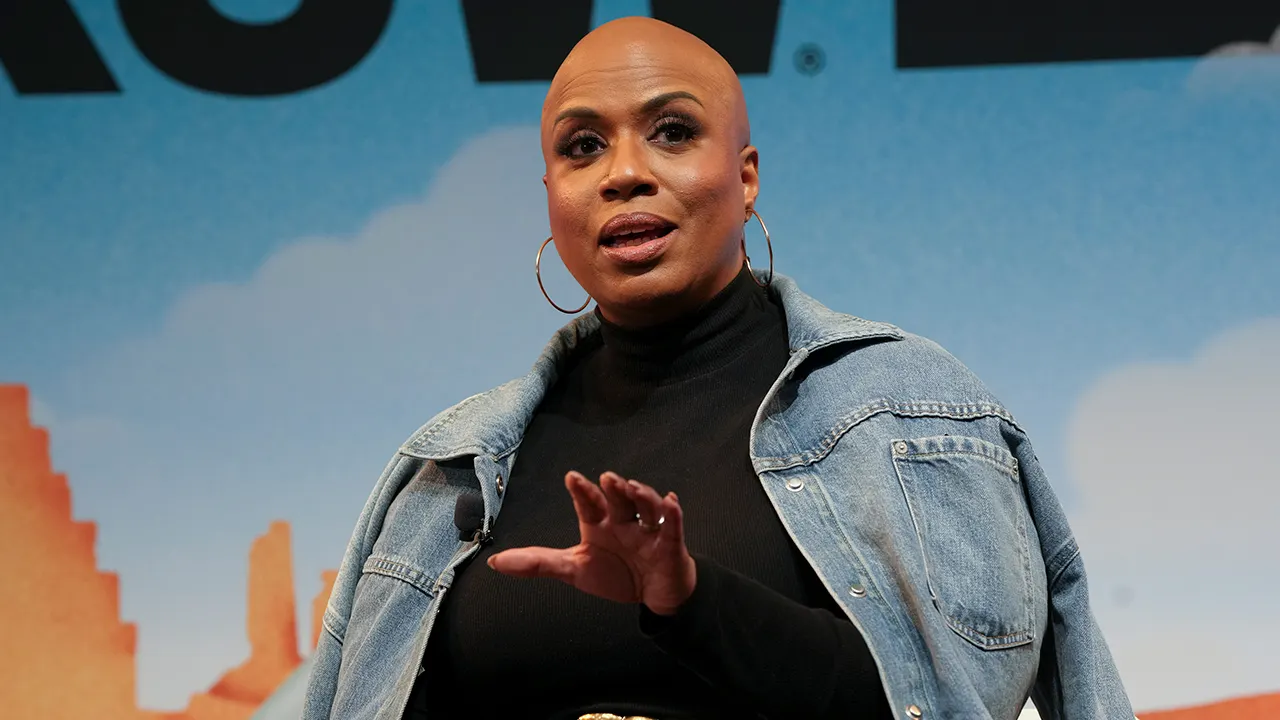
Rep. Ayanna Pressley, D-Mass., a key member of the progressive “Squad,” announced Tuesday she will run for re-election in Massachusetts’s 7th Congressional District rather than challenge Sen. Ed Markey for his U.S. Senate seat.
Her decision, shared in a statement, ends months of speculation that she might enter the Democratic primary.
Pressley said in her statement that the encouragement she received from voters across the state was “deeply humbling.”
“Hearing from so many people from throughout our Commonwealth encouraging me to run for the United States Senate was deeply humbling and a testament to the strength of our movement,” Pressley said.
MAINE GOV. MILLS JOINS CROWDED DEM PRIMARY IN RACE TO CHALLENGE LONGTIME GOP SENATOR
Rep. Ayanna Pressley, D-Mass., listens during a news conference near the U.S. Capitol Building Sept. 25, 2025, in Washington, D.C. (Anna Moneymaker/Getty Images)
She also emphasized that the timing was not right for a statewide bid. With her daughter entering her final year at home before college, Pressley emphasized that she wanted to be present for key family moments, which would be complicated by a Senate bid.
“It would be an honor to serve the whole Commonwealth, but with our daughter in her last year at home before college and a district that has been in the crosshairs of this White House, I am certain that the Massachusetts 7th is where I belong in this moment,” Pressley added.
MAINE REP. LAUREL LIBBY WON’T SEEK RE-ELECTION, PARTNERS WITH SENTINEL ACTION FUND IN $4M BOOST FOR SEN COLLINS
Rep. Ayanna Pressley has sponsored legislation to guarantee voting rights for felons in federal elections. (AP Photo/Mariam Zuhaib, File)
Pressley also told The Boston Globe she was not closing the door on a future Senate run.
“I’m not closing the door to a Senate run down the line,” she told the outlet.
Her decision not to enter the race this cycle avoids a potentially awkward matchup between the two progressives. Markey has long been aligned with the party’s left flank.
AOC DISTANCES HERSELF FROM HAKEEM JEFFRIES PRIMARY CHALLENGER
Sen. Ed Markey, D-Mass., attends the second day of the Democratic National Convention at the United Center Aug. 20, 2024, in Chicago. (Andrew Harnik/Getty Images)
The race already features Rep. Seth Moulton, D-Mass., who has sought to draw a generational contrast with the 79-year-old senator.
A Suffolk University–Boston Globe poll released before Thanksgiving also showed Markey leading Moulton 45% to 22% among likely Democratic primary voters.
But when Pressley was included in a hypothetical matchup, she narrowly edged Markey 35% to 34%, with Moulton falling to 16%.
CLICK HERE TO DOWNLOAD THE FOX NEWS APP
In her announcement Tuesday, Pressley highlighted accomplishments from her tenure in Congress, ranging from expanding mental health support to securing tens of millions in federal funds for her district.
She also vowed to continue fighting for a more just and equitable Massachusetts. Pressley did not announce any endorsement in the Senate race.
Read the full article from Here



Foreign ministers from Pakistan, Saudi Arabia, Turkey and Egypt will meet in Islamabad today in an attempt to come up with a plan to de-escalate the Iran war.
The meeting comes as several thousand more U.S. troops arrived in the region and after another group got involved in the expanding conflict: Yemen’s Houthis.
The Iran-backed Houthis launched missiles towards Israel, and there’s concern their involvement could threaten another vital global shipping lane in the Red Sea.
Here are more updates on day 30 of the Iran war.
Diplomacy Push in Pakistan
The four foreign ministers from regional powers will meet in Islamabad today and Monday for a push towards diplomacy to end the war.
In a statement ahead of the meeting, the Egyptian government said: “Discussions are expected to focus on recent developments related to regional military escalation and ongoing diplomatic efforts to contain tensions and promote de-escalation.”
“The talks come amid heightened concerns about regional stability, with participating countries seeking to coordinate their stances and support political solutions to emerging crises,” it added.
Whether whatever consensus the countries known as “the quad” come up with will be accepted by the US, Israel, and Iran is another question.
Pakistan has emerged as a possible peace-broker in the conflict, passing messages between the U.S. and Tehran. Foreign Minister Ishaq Dar said Saturday that “dialogue, diplomacy, and such confidence-building measures are the only way forward.”
Dar also welcomed the fact Iran has agreed to allow 20 Pakistan-flagged ships – or two a day – through the Strait of Hormuz.
Houthis enter war
Iranian-backed Houthi militants in Yemen launched the first missile they have fired since the war began toward Israel on Saturday. Israel’s military successfully intercepted it but the Houthis’ attack opens another front in a war that has now moved into its second month.
Up until Saturday’s missile launch the Houthis had stayed out of this war. But a Houthi spokesman said attacks will continue until “the aggression on all resistance fronts stops.”
Pakistan Ministry of Foreign Affairs / AP
/
AP
The Yemen-based rebels were active during Israel’s war in Gaza, firing on cargo ships in the Red Sea and disrupting global commercial traffic.
With Iran essentially blockading the Strait of Hormuz, driving up global oil prices, there are concerns that if the Houthis start attacking ships in the Red Sea again global shipping will be even more disrupted.
Iran also hit multiple sites around Tel Aviv and Jerusalem Saturday and Israel’s military says Iran is increasingly using cluster bombs.
Designed to detonate at high altitude the munition disperses dozens of smaller bombs that are more challenging for Israel’s multi-layered air defense system to intercept and can cause damage over a wider area.
Dozens of countries have signed onto a cluster munitions treaty banning the weapons – except Iran, Israel and the U.S.
Iran threatens U.S. universities in region
Iranian authorities and residents say more airstrikes hit them overnight. Social media videos from across Iran showed strikes hitting all over the country.
Israel’s military said it had completed what it called a wide-scale wave of strikes targeting weapons production and storage sites.
Iran claims U.S.-Israeli strikes hit a Tehran university over the weekend and Iran’s Revolutionary Guard Corps threatened American university campuses in the Middle East in retaliation.
“We advise all employees, professors, and students of American universities in the region and residents of their surrounding areas” to stay a kilometer away from campuses, the statement, carried by Iranian media, said.
Several US universities have campuses in the Gulf, including New York University in the United Arab Emirates and Texas A&M University, among others, in Qatar.
Meanwhile, Iran continues to fire drones and missiles at Gulf countries, with Kuwait saying it was intercepting missile and drone attacks early Sunday. Saudi Arabia said it intercepted and destroyed ten drones.
Iran also claimed it had attacked two major aluminium sites in Bahrain and the United Arab Emirates (UAE). Emirates Global Aluminium confirmed an Iranian attack wounded several and caused significant damage to its plant.
U.S. Troops injured, more arrive
At least 15 U.S. service members were wounded Friday in an Iranian strike on a Saudi air base that hosts American troops, according to the Associated Press, including at least five in serious condition. The missile and drone strikes targeted Saudi Arabia’s Prince Sultan air base, located outside the capital Riyadh.

Iran has targeted U.S. service members at bases throughout the region since the war began a month ago, in retaliation for the U.S. attacks and seeking to drive troops out of the region. Overall, the Pentagon has put the U.S. casualty toll at 13 killed and more than 300 injured.
On Saturday, troops from the Japan-based 31st Marine Expeditionary Unit, made up of around 3,500 sailors and Marines, arrived in the Middle East, according to U.S. Central Command.
The U.S. military will not say where and how they might be deployed. Thousands more soldiers from the U.S. military’s 82nd Airborne Division are also expected to be deployed.
Journalists killed in Lebanon
Three Lebanese journalists covering the Israeli invasion of the country’s south were killed in an Israeli airstrike in Jezzine.

One of them worked for a TV channel affiliated with Hezbollah and Israel accuses him of being a militant rather than a journalist – but has not provided evidence. The journalist Israel says it targeted was Ali Shaeb, a veteran TV correspondent and household name in Lebanon. After killing him, Israel’s military issued a statement accusing him of exposing the locations of Israeli troops.
The other two journalists killed were siblings, TV correspondent Fatima Ftouni and her cameraman brother, Mohammed Ftouni. Afterward their father appeared on TV, saying he was proud of his children.
All three had been covering Israel’s invasion of southern Lebanon.
Lebanese officials called the attack a flagrant violation of international law, and said they’re complaining to the UN Security Council. Hundreds of fellow journalists marched at a protest vigil in Lebanon’s capital.
The three journalists were among at least 47 people killed Saturday in Israeli attacks, according to Lebanese health officials.
Nine of those killed were paramedics, which the head of the World Health Organization called “a tragedy,” noting health workers are protected under international law.

Israel has intensified its attacks across Lebanon, mostly in the South, where Israeli ground troops are moving northward to try to oust Hezbollah militants.
Another Israeli soldier was also killed in Lebanon, with Prime Minister Benjamin Netanyahu expressing his condolences on X over the weekend.
Developments in Syria, Iraq
The war is spreading to more parts of the Middle East. On Sunday, Syria said it had intercepted a drone strike from Iraq targeting a U.S. military base. Pro-Iran Iraqi groups have claimed responsibility for some attacks on US interests.
Separately, the Syrian and UAE governments condemned an attack targeting the residence of the Kurdish region’s president Nechirvan Barzani.
French President Emmanuel Macron also condemned the attack saying: “The sovereignty of Iraq, and of Kurdistan within it, is essential to regional stability. Everything must be done to prevent Iraq from being drawn into the ongoing escalation.”
On Sunday, the Israeli army said it had launched its “first” attack into Lebanon from Syria.
Jane Arraf in Amman, Emily Feng in Van, Turkey, Lauren Frayer in Jezzine, Lebanon, Carrie Khan in Tel Aviv, and Kate Bartlett in Johannesburg contributed to this report.
Copyright 2026 NPR


NJ voter turnout hard to predict due to low response rates
Conducting surveys during elections becomes difficult due to low responses from voters, according to experts.
While this fall’s midterm election may still feel like ages away, the process has already started for potential candidates.
March 23 was the filing deadline for politically affiliated folks to get on the ballot in this June’s primary election – the stepping stone for November.
All 12 seats representing New Jersey in the House are on the ballot as well as one seat in the U.S. Senate.
The heated contest to succeed Rep. Bonnie Watson-Coleman in District 12 is going to draw much of the attention this spring.
There are more contested races as well, though only three involving incumbents.
Here’s a breakdown of who is running to represent the Garden State in Washington this year, according to the unofficial list made available by the state’s Division of Elections.
U.S. Senate
Democratic Sen. Cory Booker is running for his fourth term. He won’t face any opposition this spring. The Republicans running for a chance to represent their party this fall are Richard Tabor, Justin Murphy, Alex Zdan and Robert Lebovics.
Congressional District 1
Democratic Rep. Donald Norcross is running unopposed in the primary. Republican Damon Galdo will also run unopposed.
Congressional District 2
Republican Rep. Jeff Van Drew is running unopposed in the primary. There are four Democrats running, Tim Alexander, Terri Reese, Zack Mullock and Bayly Winder.
Congressional District 3
Democratic Rep. Herb Conaway is running unopposed in the primary. Three Republicans will face off to represent their party. They are Justin Barbera, Jason Culler and Michael McGuire.
Congressional District 4
Republican Rep. Chris Smith is running unopposed in the primary. Two Democrats, John Blake and Rachel Peace, will face off in their party’s primary.
Congressional District 5
Democratic Rep. Josh Gottheimer is running unopposed in the primary. Republicans Sean Kirrane and John Aslanian will square off to represent their party.
The story continues below the gallery.
Congressional District 6
There are three challengers running against Rep. Frank Pallone in the Democratic primary. They are Katie Bansil, Hillary Herzig and John Hsu.
Congressional District 7
Republican Rep. Tom Kean is running unopposed in the primary. There are four Democrats squaring off to run against him this fall. They are Rebecca Bennett, Michael Roth, Tina Shah and Brian Varela.
Congressional District 8
For the Democrats, Rep. Rob Menendez will face off against Mussab Ali, a former Jersey City school board member.
Congressional District 9
Democratic Rep. Nellie Pou is running unopposed in the primary. Republicans Tiffany Burress and Rosie Pino will square off in their primary.
Congressional District 10
Rep. LaMonica McIver is facing one challenger in the Democratic primary, Lawrence Poster. Carmen Bucco is running unopposed for the Republicans.
Congressional District 11
The story continues below the gallery.
This seat is currently vacant after Gov. Mikie Sherrill resigned to run the state. Democrat Analilia Mejia won a special primary in February and is on the ballot for a special election in April to fill her seat. Mejia is running in the primary in June against Justin Strickland, Donald Cresitello and Joseph Lewis. Republican Joe Hathaway, who is also on the ballot in April, is running unopposed in the June primary.
Congressional District 12
There are 13 people running in the Democratic primary to fill the seat being left by Bonnie Watson Coleman, who announced earlier this year that she would retire at the end of her term.
They are Assemblywoman Verlina Reynolds-Jackson, Brad Cohen, Squire Servance, Samuel Wang, Sue Altman, Sujit Singh, Adrian Mapp, Adam Hamawy, Elijah Dixon, Kyle Little, Jay Vaingankar, Matt Adams, Shanel Robinson and Gregg Mele.

Stacy McGarrity speaks at Franklin County’s America250 kickoff
The state treasurer and GOP gubernational candidate was among several speakers at Franklin County’s America250 kickoff on Jan. 22, 2026, at the 11/30 Visitors Center in Chambersburg,
An oversized check presented to Greencastle’s Rescue Hose Co. by Pennsylvania Treasurer Stacy Garrity on Thursday, March 26, 2026, is a small representation of billions of dollars of unclaimed property her office wants to return to its owners.
The $16,000 was uncovered by Larry Booker, who works in regional outreach for the Pennsylvania Treasury Department, during an unclaimed property event hosted in Greencastle by state Rep. Chad Reichard, a Republican who represents part of Franklin County.
“Near the end of the event, Larry asked for the local municipalities and fire stations so he could look them up,” according to Josh Peters, Reichard’s district director.
When Reichard’s office called the Rescue Hose Co. with a message about the money, Bill Hull, president, recalled he quickly asked, “What do we have to do?”
Paperwork was completed, a regular check deposited in the general fund and the money will be used to pay bills, according to Tom Bricker, fire company treasurer.
Garrity, a Republican who took office in 2021, is running for governor of Pennsylvania this year. She stopped by the Rescue Hose Co. before attending the Franklin County Republican Committee’s annual Lincoln Day Dinner in the Marion Fire Hall.
What to know about unclaimed property
At the check presentation, Garrity took some time to talk about unclaimed property in Pennsylvania, some $5 billion, including $17.5 million in Franklin County.
One in 10 Pennsylvanians has unclaimed property, she said.
“It’s not the state’s money, it belongs to the hard-working people of Pennsylvania,” Garrity said. It also belongs to municipalities, organizations, fire companies and other groups. The total includes $17.5 million in Franklin County.
Antrim Township Administrator Chris Ardininger got some laughs at the presentation when he said his township recently claimed $67.
The money ends up in the state’s hands from a variety of sources, such as uncashed checks, closed bank accounts, rebates, old insurance policies, a misspelling or a wrong address.
There’s also tangible property from abandoned safe deposit boxes, police evidence lockers, nursing homes and college dorms. The list includes things as diverse as jewelry, fine china and guitars, according to Jake Sarwar, deputy press secretary.
Garrity is a retired U.S. Army Reserve colonel and returning military medals – Purple Hearts, Bronze Stars and even a World War I Mothers and Widows Gold Star Pilgrimage Medal – to veterans and their families is very meaningful to her and her staff, Sarwar said.
How to claim unclaimed property
“We do whatever we can to help find the owners,” Sarwar said.
Treasury outreach representatives participated in about 1,300 events last year, Garrity said. They can help people search and file the paperwork to claim unclaimed property.
Anyone can look for money on their own by going to patreasury.gov/unclaimed-property or calling 800-222-2046.
The check really is in the mail
Money Match is a new way for the Pennsylvania Treasury Department to return unclaimed property. Supported unanimously by the General Assembly and signed into law by the Gov. Josh Shapiro, it went into effect last year.
When individuals with unclaimed property of $500 or less, who meet other criteria of the bill, are identified by the treasury, their money will automatically be sent to them.
“If you receive a letter from the Pennsylvania Treasury Department indicating that you have money coming thanks to Money Match, hold on to it. You should receive your check about 45 days later,” says the treasury department website.
The payout was $50 million in 2025. The first round of checks for this year – 100,000 totaling $23 million – was just sent out, according to a news release from the Treasury Deparment.

Thousands without power in Henderson neighborhood after mylar balloon causes outage
Pakistan hosts diplomatic discussions on ending war

Who is running for U.S. House, Senate in New Jersey? Here’s the list
![~!@[WATCHLIVE!TV]>> NOW New Mexico United vs Colorado Springs Switchbacks FC Match 𝐋𝐈𝐕𝐄 Free Streams ON Tv Channel](https://i2.wp.com/unicornriot.ninja/wp-content/uploads/2018/09/LiveChannel334x212v2.png?w=80&resize=80,80&ssl=1 "~!@[WATCHLIVE!TV]>> NOW New Mexico United vs Colorado Springs Switchbacks FC Match 𝐋𝐈𝐕𝐄 Free Streams ON Tv Channel")
~!@[WATCHLIVE!TV]>> NOW New Mexico United vs Colorado Springs Switchbacks FC Match 𝐋𝐈𝐕𝐄 Free Streams ON Tv Channel

Disputes grow between NC Bar, legislative committee tasked with reforming it

Florida High School Football Rankings: Top 25 teams – Oct. 21

How old is Bo Nix? What to know about Oregon quarterback ahead of 2024 NFL Draft

Cleary's 21 help Le Moyne down Central Connecticut State 69-64 in OT

99th annual Pony Swim held in Virginia

Indiana Members Credit Union announced as new anchor tenant at Bottleworks District

JD Vance says he was ‘obsessed’ with UFOs, believes aliens are actually ‘demons’
The EU's recipe for trade deals : easy on beef, tough on wine

Photos: ‘No Kings’ protests across the country

Jeffries declines to break with indicted Democrat after ethics panel’s guilty verdict

Hundreds of thousands march through London in stand against the far right
-

 Sports1 week ago
IOC addresses execution of 19-year-old Iranian wrestler Saleh Mohammadi
-

 New Mexico7 days ago
Clovis shooting leaves one dead, four injured
-

 Tennessee6 days ago
Tennessee Police Investigating Alleged Assault Involving ‘Reacher’ Star Alan Ritchson
-

 Technology7 days ago
YouTube job scam text: How to spot it fast
-

 Minneapolis, MN3 days ago
Boy who shielded classmate during school shooting receives Medal of Honor
-

 Science1 week ago
Record Heat Meets a Major Snow Drought Across the West
-

 Politics1 week ago
Schumer gambit fails as DHS shutdown hits 36 days and airport lines grow
-

 Texas1 week ago
How to buy Houston vs. Texas A&M 2026 March Madness tickets