Rhode Island
R.I. Governor McKee should veto the General Assembly’s end run around judicial merit selection – The Boston Globe


Not so long ago, the Rhode Island judiciary was an object of scorn. In 1993, Thomas Fay became the second consecutive chief justice of the Rhode Island Supreme Court to resign after reports surfaced that he was abusing his judicial office. Confidence in the integrity of the state’s judicial system was flagging. Joseph R. Weisberger, who became chief justice after Fay’s ignominious departure, understood what was at stake. He took the job in part, he explained, because he felt that “someone had to make a visible sacrifice and demonstrate that the court was more important than his own personal plans.”
What a difference 30 years have made. Chief Justice Weisberger and successive chief justices, their colleagues on the state’s highest court, and the judges on all of Rhode Island’s courts, restored the integrity of the judicial branch. With few exceptions, since 1994, Rhode Island’s judges have served the state honorably. Many believe, as I do, that the merit selection system adopted in 1994 has contributed in some measure to this remarkable recovery.
The rehabilitation of the judiciary is a success story, and it should make Rhode Islanders proud. (Perhaps particularly as we witness the decline of the United States Supreme Court, which is suffering from the fallout of jaw-dropping ethical lapses of some of the justices).
However, some in the General Assembly are still angry that after the Fay debacle, Rhode Island voters decisively chose to reduce the role of the Assembly in judicial selection by putting the governor and a Judicial Nominating Commission at the heart of a merit-based process. The commission screens all candidates for judicial vacancies and sends a short list to the governor. The governor nominates one of those approved candidates, and the Senate — or the Senate and House in the case of Supreme Court appointments — has the power to confirm or reject the nominee.
The General Assembly hit on a clever strategy to circumvent the selection process. It created a new breed of judicial officers, called magistrates, who are not subject to the merit selection process. Bill after bill was passed increasing their ranks. There were no magistrates in 1994, and today, according to the Secretary of State’s website, there are 22. Most are selected by the presiding justice of the court to which they are assigned, and subject to Senate confirmation. They serve 10-year renewable terms, and they are well-compensated. (Annual salaries range from $176,000 to $211,000).
Some have gone on to become judges. After all, is there better evidence an applicant for a judicial vacancy will be successful as a judge than a record of success as a magistrate? However, the bill on Governor McKee’s desk goes further by blurring the line between the powers of family court magistrates and family court judges, even though the latter are selected in a much more transparent, public, systematic, and open process.
I have great respect for Rhode Island’s magistrate judges, many of whom I know personally. My concern lies not with them but with the threat to public confidence posed by the two-track system for judicial selection the General Assembly has created. It seems that too many people in power have forgotten the lessons of 1993 and take for granted the public’s respect for the judiciary. They seem unaware that the judiciary commands respect today because of decades of hard work by countless individuals in and out of government. The public’s respect is not guaranteed. A two-track system for judicial appointments and a blurring of the lines between magistrates and judges signal that some judicial officers are the product of a patronage system.
The best fix would be to make magistrates subject to the merit selection system adopted by the voters in 1994. But for now, Governor McKee should veto this bill. If the camel gets further under the tent, it will be even harder to get it back outside.
Michael Yelnosky is a professor and previously served as dean at RWU Law. He has been writing and speaking for decades about judicial selection.



Lixeandro Andrade, 28, and Zahir Fortes, 19, were both arrested Monday on charges of carrying a pistol or firearm without a license and large capacity feeding devices prohibited, the state police said in a media release.
Andrade and Fortes were processed at the Lincoln Woods Barracks and arraigned, according to the release.

Awilda Perez Goris was arrested shortly after 2 p.m. Tuesday on charges of obtaining more than $10,000 under false pretenses and accessing a computer for fraudulent purposes, the Rhode Island State Police said in a media release.
Perez Goris, a resident of Uxbridge, was processed at the Wickford Barracks, arraigned and issued a notice to appear in court, according to the release.
Rhode Island
Rhode Island Foundation is offering three composers $30,000 grants — applications due Aug. 10 – What’s Up Newp

Rhode Island composers have until August 10 to apply for $30,000 fellowships from the Rhode Island Foundation, with three grants available to emerging and mid-career musicians looking to advance their work.
The grants come through the Foundation’s Robert and Margaret MacColl Johnson Fellowship Fund and are unrestricted — meaning recipients can use the money however best serves their artistic growth, whether that’s creating new work, purchasing equipment, traveling, researching, or training in new technologies and techniques.
Applicants must have lived in Rhode Island for at least 12 months before the deadline. Current high school and college students, graduate students enrolled in degree programs, and composers at advanced levels of career achievement are not eligible. Submissions may be in any genre, including chamber, choral, contemporary, electronic, experimental, jazz, opera, musical theater, symphonic, and world music.
Recipients are selected by a panel of out-of-state industry professionals managed by the Artist Communities Alliance. Previous fellows include cellist Adrienne Taylor, multi-instrumentalist and vocalist Courtney Swain, and electroacoustic composer Kristina Warren.
The MacColl Johnson Fellowships rotate among composers, writers, and visual artists on a three-year cycle; next year’s round will go to writers. The fund was established in 2003 in honor of Rhode Islanders Robert and Margaret MacColl Johnson, both devoted to the arts throughout their lives.
More information and applications are at artistcommunities.org.
-
 Entertainment5 minutes ago
‘Hail Satan? Not me.’ Charley Crockett fires satanic duo Twin Temple, so Jack White hires them
-
 Lifestyle11 minutes ago
It’s time for the night trip to the beach — the grunion are running
-
 Politics17 minutes ago
After lawsuit, ICE pauses construction of Bay Area detention facility
-
 Science23 minutes ago
Anger grows in Boyle Heights as warehouse fire leaves stench, flies and vermin in its wake
-
 Sports29 minutes ago
Spain delivers surprise rout of France, clinches berth into World Cup final
-

 World41 minutes ago
US says latest Iran strike wave over, IRGC claims damage to US Naval HQ
-
 News1 hour ago
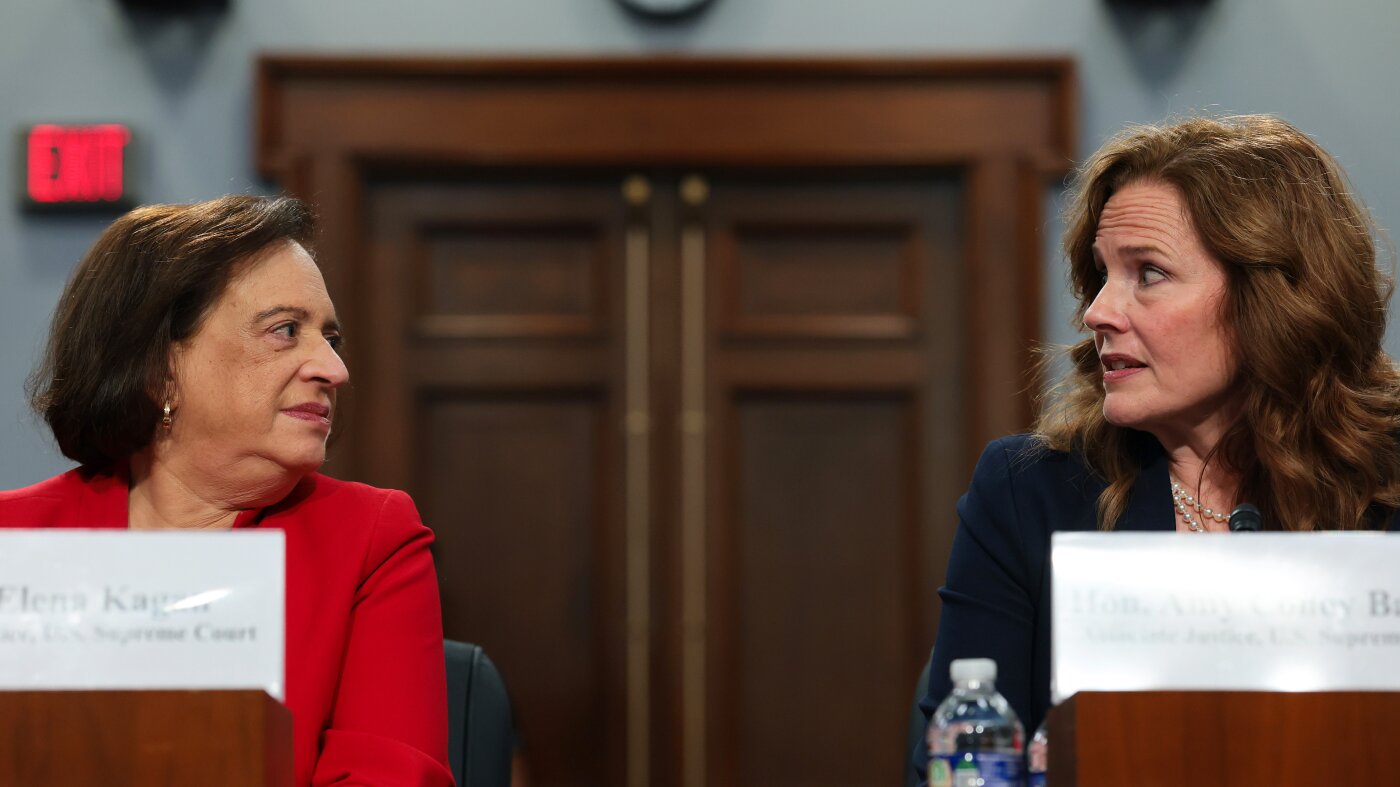
Supreme Court Justices give chilling accounts of threats to their safety
-

 Los Angeles, Ca3 hours ago
Stabbing at Chino Hills liquor store ends in attempted murder arrest

